
Reviewed · TICKETS
Florence: Santa Maria Novella Entry Ticket & Audioguide
Santa Maria Novella is the kind of church that rewards a slow look. Michelangelo called it his bride, and you can see why: Gothic structure, Renaissance design, painted chapels, cloisters, and polished architectural detail share one compact site. The multimedia guide adds useful context without tying you to a live group.
I like the timed entry, especially when Florence’s station area is crowded, and I like the way the tablet combines audio, high-definition images, and 3D reconstructions. The art selection is exceptional, with works linked to Giotto, Masaccio, Brunelleschi, Botticelli, Vasari, Uccello, Ghirlandaio, and Filippino Lippi.
The main catch is value. At $18, this can cost more than buying admission and an audio guide directly, and the ticket office instructions have caused confusion. You also need to arrive at the exact time booked, leave a valid ID while using the tablet, and allow extra time if the equipment gives you trouble.
Key points to know before booking
- Michelangelo’s bride: Santa Maria Novella brings Gothic and Renaissance ideas together in one of Florence’s most important churches.
- A one-hour route: Your visit covers the basilica and cloisters, with time to see frescoes, paintings, chapels, and architectural details.
- Tablet-based interpretation: The 7-inch multimedia guide uses audio, images, video, and 3D recreations in five languages.
- Timed skip-the-line admission: Your reserved entry can save waiting, but the chosen date and time are binding.
- A slightly awkward pickup: Redeem your ticket to the right of the church, through the tourist office entrance on the north or station side, not necessarily at the main front doors.
- A practical tradeoff: The $18 price may be worthwhile for convenience and commentary, but direct admission can be cheaper.
Why Santa Maria Novella deserves your time
Santa Maria Novella was the first great basilica in Florence, and its story reaches back to the early 13th century, when the first Dominican friars settled in the city. The complex grew over the centuries, gaining artistic and religious importance as Florence changed around it.
That long development is what makes the visit so rewarding. You are not looking at one clean architectural style. You are seeing Gothic foundations alongside Renaissance additions, religious spaces beside cloisters, and major works of art placed within the building they were made for.
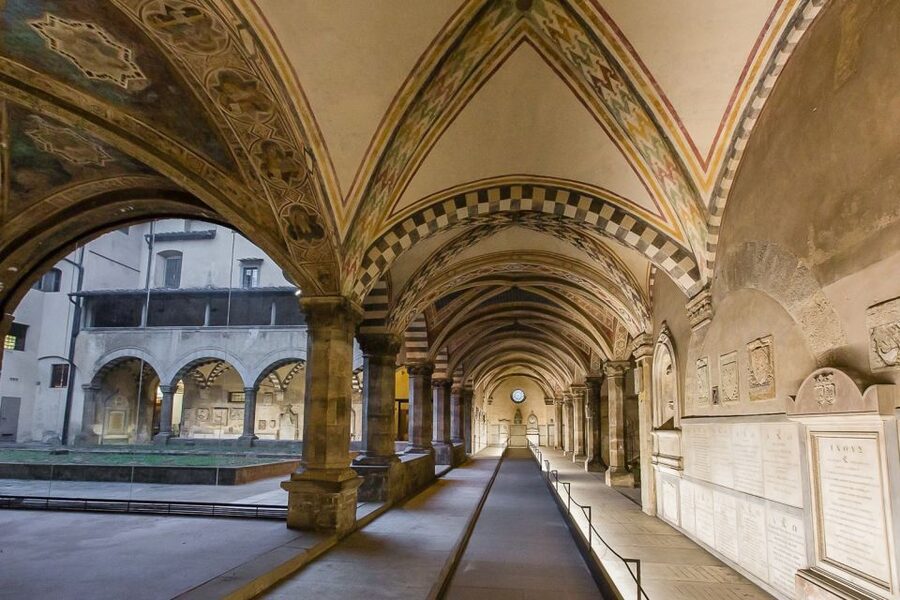
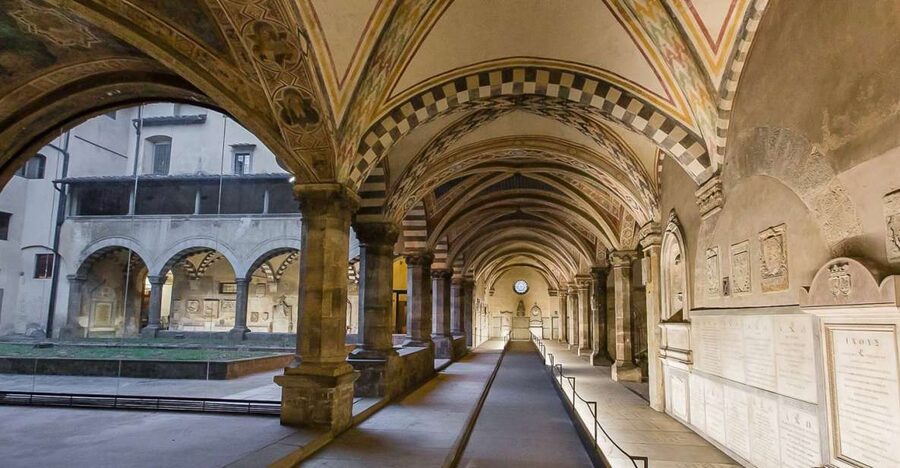
I especially like the contrast between the church’s large public spaces and the quieter cloister areas. The covered walkways and painted surfaces give the visit a different pace from Florence’s busy streets. You get a sense of the site as a working religious complex, not only as a gallery filled with detached paintings.
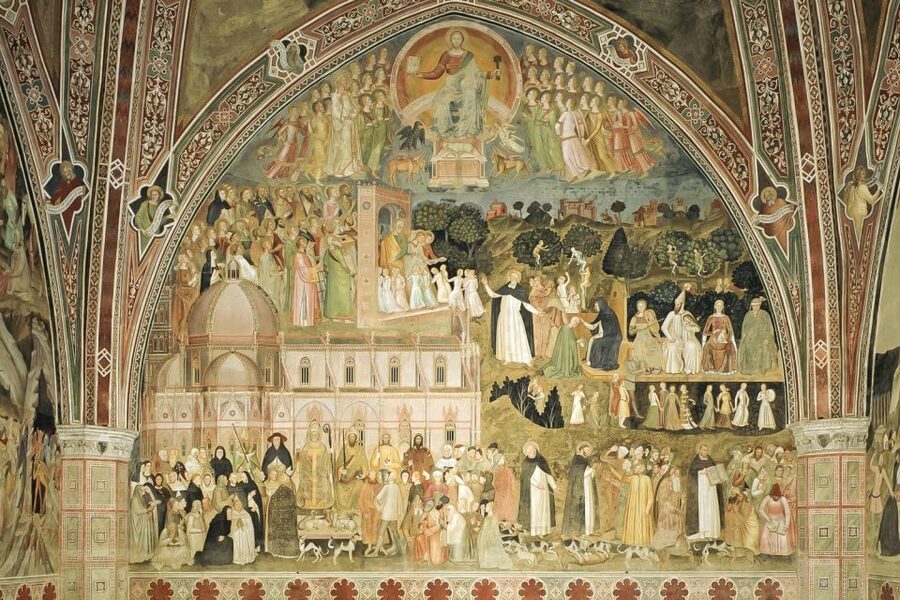
The famous artists are not just names on a list. Giotto, Masaccio, Filippo Brunelleschi, Paolo Uccello, Domenico Ghirlandaio, and Filippino Lippi represent key steps in the development of medieval and Renaissance art. The guide helps you connect those names to what is directly in front of you.
A few other Florence mornings to weigh against this
- Florence: Skip-The-Line Uffizi Gallery Timed Entry Ticket
★ 4.5 · 27,832 reviews - Florence: Timed Entrance Ticket to Michelangelo’s David
★ 4.6 · 16,983 reviews - Florence: Michelangelo’s David Skip-the-Line Entry Ticket
★ 4.5 · 12,764 reviews
What you see during the one-hour visit
The advertised visit lasts about one hour and includes the basilica and cloisters. That is enough for a focused first visit, though you may want longer if you stop for every fresco, painting, and architectural feature.
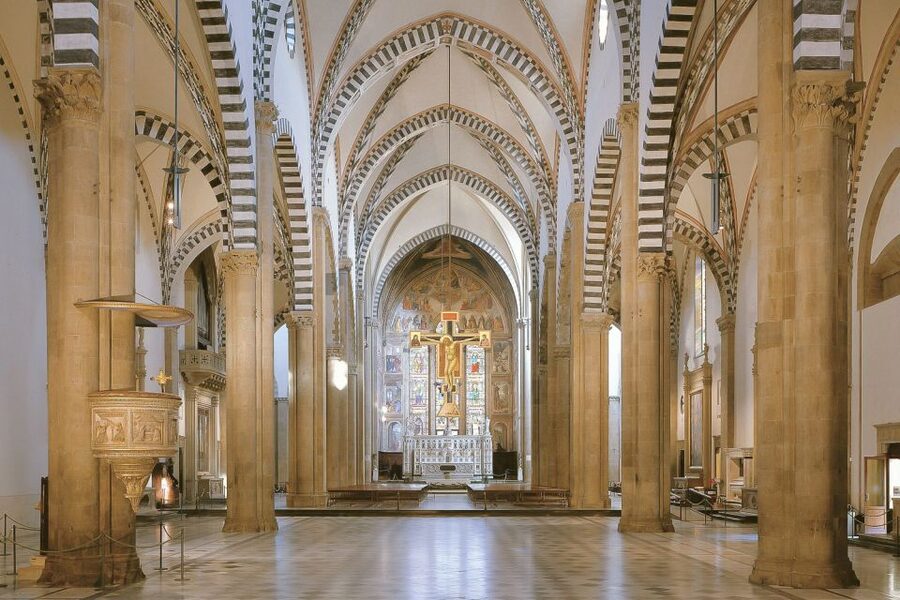
Begin with the basilica itself. Look up and around rather than walking straight toward the altar or the next room. The appeal here is the combination of structure and decoration: Gothic forms provide the framework, while Renaissance work adds a more measured, mathematically ordered feel.
The experience is strongest when you use the guide selectively. You do not need to listen to every stop in full. Pick the works that catch your eye, then use the tablet to understand who made them and why they matter.
The cloisters add another layer. Their covered walkways feature murals and painted decoration, creating a calmer setting than the main church. One area may be closed during your visit, as parts of the complex have occasionally been unavailable. That is worth keeping in mind when planning your expectations.
There is also an exhibition of relics within the complex. Its presence adds another angle to the visit, particularly if you are interested in the devotional side of Santa Maria Novella rather than only its famous art.
How the multimedia guide works
The guide is provided on a 7-inch tablet. It offers audio and video narration, high-definition images, and 3D recreations designed to show details and explain the building’s development.
Five languages are available: English, Italian, Spanish, French, and German. The main exhibition information is in English and Italian, so the tablet is especially useful if you want fuller explanations in another language.
The content itself is a strong reason to consider this option. Santa Maria Novella contains enough art and architectural detail to leave you wondering what you just saw. A well-timed explanation can turn a quick glance at a fresco into a more meaningful stop.
The equipment is less impressive than the content. The tablet can lock itself or time out, and the controls may not feel natural at first. Some people have found the commands difficult to press, while others simply stopped using the guide after struggling with it.
If you pick up the tablet, give yourself a moment to understand how it works before entering the main route. Keep an eye on the screen and do not assume it will remain active indefinitely. If it times out, ask the staff for help rather than losing time trying to solve it alone.
You must leave a valid passport or identity card at the ticket office while you use the guide. That is an unusual arrangement, and you should be comfortable with it before booking. Bring an ID that you can hand over temporarily, and do not forget to collect it when returning the tablet.
Finding the correct entrance near the station
This is the most important practical detail. The meeting instructions can sound as if you should go to the front of the basilica, but prepaid ticket collection is handled to the right of the church, through the tourist office area on the north side, across from Florence’s Santa Maria Novella train station.
Look for the ticket office and redemption point rather than joining a general line at the main entrance. The exact route has confused people, so arrive early enough to get your bearings. The timed entry is mandatory, and arriving at the wrong door can turn a simple visit into a rushed one.
The entry time is binding once booked. You can be refused if you miss the allotted slot, so do not treat the time as a loose suggestion. This matters even more if you are coming from another Florence sight, since delays on a busy sightseeing day are common.
A security reminder is also sensible here. The piazza and station area can be crowded, and one visitor had a wallet stolen from a bag. Keep your bag closed and in front of you while finding the entrance and waiting to redeem the ticket.
Same city, an entirely different afternoon:
- Tuscany Day Trip from Florence: Siena, San Gimignano, Pisa and Lunch at a Winery
★ 5.0 · 21,634 reviews - The Best tour in Florence: Renaissance & Medici Tales – guided by a STORYTELLER
★ 5.0 · 12,316 reviews - Florence: Leonardo Interactive Museum Entry Ticket
★ 4.5 · 11,763 reviews - The Best Tour in Florence: Renaissance and Medici Tales
★ 5.0 · 10,810 reviews
Is $18 a fair price?
The listed price is $18 per person. That is reasonable if you place a high value on timed entry and interpretation, but it is not automatically the cheapest way into Santa Maria Novella.
Some people have found that buying admission and the audio guide directly at the church costs less. In that case, the extra money is mainly paying for the advance booking, the convenience of a reserved time, and the ability to avoid the ticket line.
The value depends on your day. If your Florence schedule is tight, a timed ticket can be useful because it gives you a fixed place in the plan. If you are visiting during a quiet period and do not mind handling admission yourself, the package may feel expensive.
The audio guide also affects the calculation. Its content is informative and available in five languages, but the tablet controls can be awkward. You are paying for a multimedia format, not a personal guide. There is no live tour guide included.
I would choose this ticket for a first visit when you want structure but do not want to join a group. I would think twice if you are comfortable walking in, buying a cheaper ticket, and exploring with only the church’s own written information.
How long should you allow?
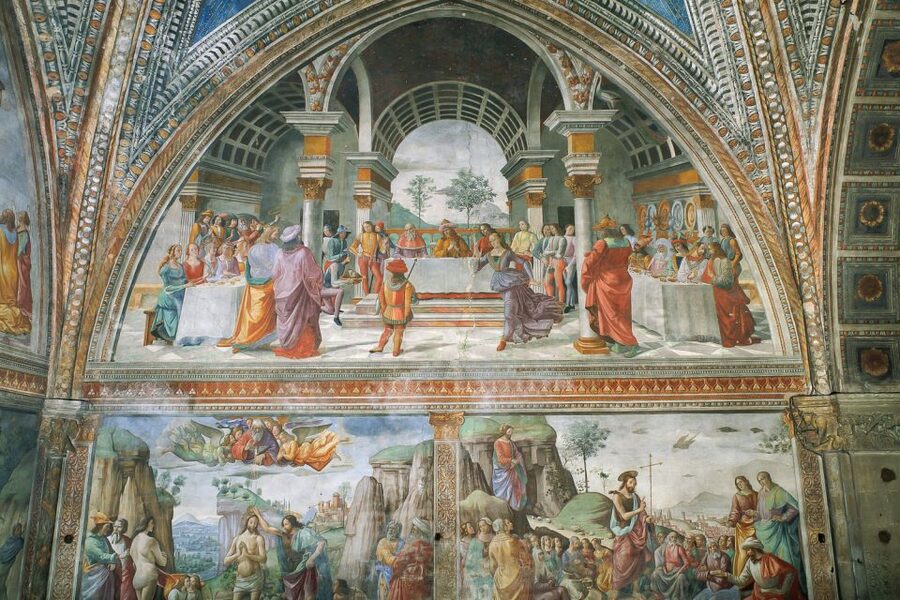
The stated visit is one hour, and that works for a focused route through the basilica and cloisters. You can see the main spaces, listen to selected explanations, and take in the major visual details without making Santa Maria Novella consume half your day.
Still, the building may hold your attention longer than expected. Frescoes, paintings, chapels, cloisters, and small architectural accents reward patience. If you are an art enthusiast, you may want to build in more time than the basic one-hour estimate.
Do not arrive at the last moment. You need time to find the correct office, redeem the ticket, leave your ID, and collect the tablet. A late afternoon booking can feel rushed if the multimedia office closes before you have finished, so earlier time slots are the safer choice.
The visit is easy to pair with other central Florence sights because Santa Maria Novella is beside the main train station. The supplied information does not promise a particular route beyond the basilica and cloisters, so plan around those areas rather than assuming every part of the wider complex will be open.
The art and architecture in context
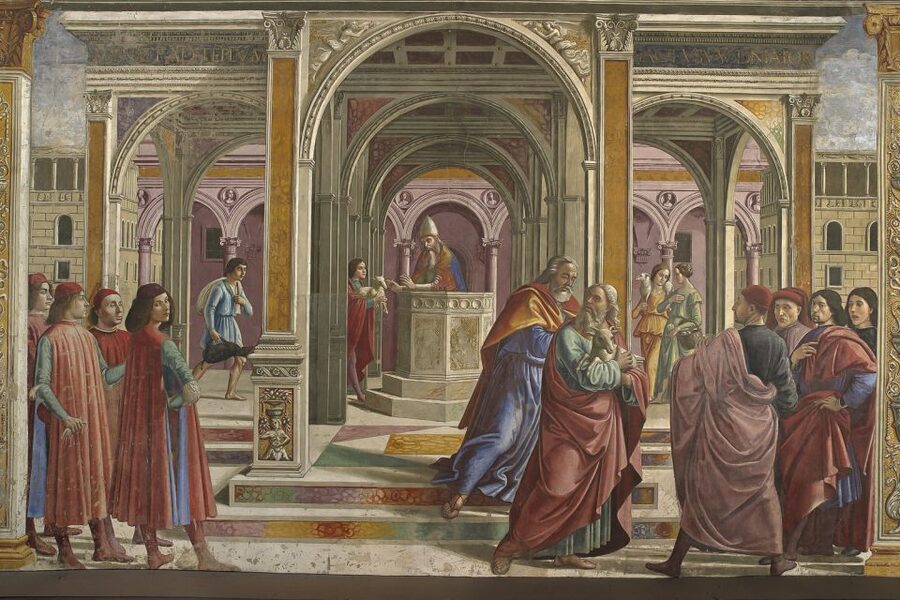
Santa Maria Novella is valuable because the setting and the art belong together. You are not simply moving through a room where famous works have been placed for display. You are seeing paintings, frescoes, religious objects, and architectural forms in a historic basilica and its associated cloisters.
The Gothic and Renaissance mix is central to the experience. The Gothic side gives the church its medieval character, while Renaissance work brings in a different sense of proportion, design, and artistic ambition. The result is more layered than a quick exterior visit suggests.
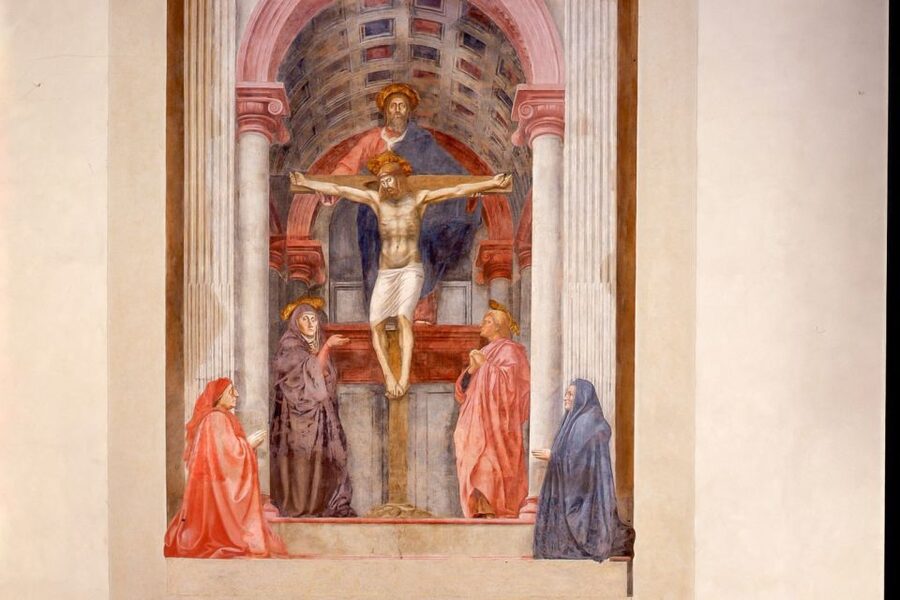
Brunelleschi’s name is especially important because he represents Florence’s Renaissance architectural tradition. Masaccio, Ghirlandaio, Uccello, and Lippi show how painting developed across the same broad period. Botticelli and Vasari add further links to Florence’s artistic story.
The multimedia guide’s images and 3D recreations are useful here. They can help you notice details that are easy to miss from floor level, and they give you a way to compare what you see with reconstructed views or close-up images.
Even with the guide, do not rush from one numbered stop to the next. Take a few quiet minutes to look without headphones. The church’s scale, surface decoration, and changing light are part of the experience, and no audio track can replace that.
Who should book this experience?
I would recommend it for first-time Florence visitors who want the main facts without joining a live group. It also suits art lovers who want help identifying the work of major medieval and Renaissance artists.
The ticket makes sense for people who prefer a fixed schedule and want to avoid standing in the general admission line. It is also a good match for visitors who enjoy audio commentary but want to move at their own pace.
Families should note that the same multimedia guide is used for children and adults. There is no separate child version listed, so younger children may not find every explanation engaging.
You may prefer a cheaper direct-entry option if you are comfortable with a self-guided visit. This is also true if you dislike handling tablets, do not want to leave an ID at the office, or plan to arrive late in the day.
Booking advice and final verdict
Book this Santa Maria Novella ticket if the $18 price fits your budget and you value a reserved entry time plus detailed commentary. Go to the station-side ticket office, arrive early, and keep your booking time in mind. Those three steps prevent most avoidable problems.
I like the experience for its access to an important church, beautiful cloisters, and a thoughtful introduction to Florence’s art. The audio content is the strongest feature, while the tablet handling, unclear entrance directions, possible closures, and higher-than-direct price are the main weaknesses.
For a smooth, self-guided look at one of Florence’s essential churches, I would book it when the schedule is tight or when you want explanations in English, Spanish, French, German, or Italian. If you have plenty of time and want the lowest admission cost, check the direct price first and decide if skipping the line is worth the difference.
FAQ
How long does the Santa Maria Novella visit last?
The planned visit to the basilica and cloisters lasts about one hour. You may spend longer if you stop at many of the frescoes, paintings, chapels, and architectural details.
Is a live tour guide included?
No. The ticket includes admission and a multimedia guide on a 7-inch tablet, but it does not include a live tour guide.
Which languages are available for the multimedia guide?
The guide is available in Spanish, English, French, German, and Italian.
Where do I redeem the ticket?
Go to the right of Santa Maria Novella church to redeem the ticket. The prepaid ticket entrance is accessed through the tourist office area on the north side, across from the train station.
Do I need to bring identification?
Yes. You need to bring a passport or ID card, and a valid ID must be left at the ticket office while you use the multimedia guide.
Can I change my entry time after booking?
The selected date and time slot are binding once booked. You can be refused entry if you do not arrive at the allotted time. Free cancellation is available up to 24 hours in advance for a full refund.
Fresh on the Florence list
- Florence: Uffizi Guided Tour with Skip-the-Line Entry Ticket★ 4.8 · 499 reviews
- The Best of Florence Walking Tour in a Small Group★ 5.0 · 503 reviews
- Florence: Uffizi Gallery Tickets with Optional Audio Guide★ 4.1 · 503 reviews
- Premium Pasta and Gelato Cooking Class in Florence★ 5.0 · 508 reviews
- From Florence: Tuscany & San Gimignano Tour with 2 Tastings★ 4.8 · 511 reviews
- Florence: Guided Tour of Medici Family Secrets and Chapels★ 4.7 · 512 reviews
- Tuscany Vespa Tours Through the Hills of Chianti★ 5.0 · 515 reviews
- Pasta and Tiramisu Cooking Class with optional Local Market Tour★ 5.0 · 515 reviews
Tickets, compared.
Vatican: Museums & Sistine Chapel Entrance Ticket
Read our review →
Cathedral and Duomo’s Terraces Entrance Ticket
Read our review →
Skip-The-Line Uffizi Gallery Timed Entry Ticket
Read our review →
Naples Underground Entry Ticket and Guided Tour
Read our review →
Pantheon Fast-Track Ticket and Official Audio Guide
Read our review →
Entry Ticket and Guided Tour with an Archaeologist
Read our review →
Timed Entrance Ticket to Michelangelo’s David
Read our review →Browse the lists this tour appears in