
Reviewed · TICKETS
Florence: Entrance Ticket to Pitti Palace
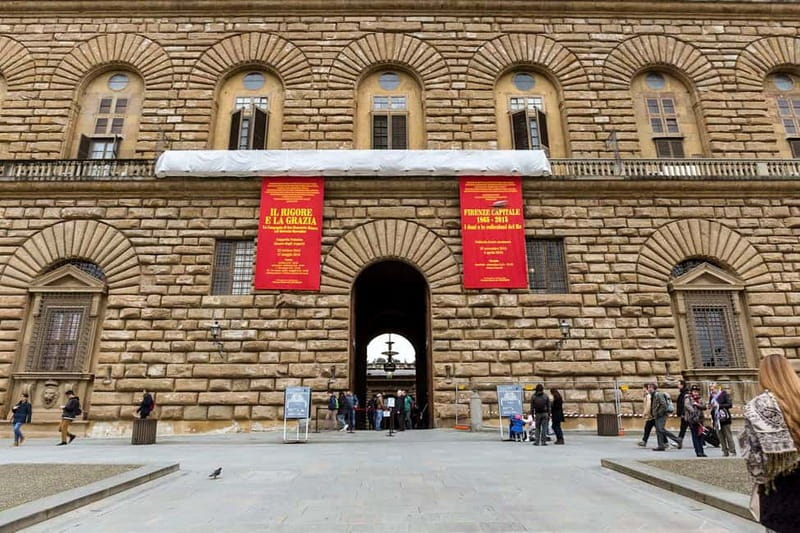
Pitti Palace is Florence’s grand, slightly stern-looking answer to the Uffizi. Inside, it opens into lavish rooms packed with Medici paintings, royal furnishings, costumes, sculpture, and views toward Santo Spirito and the Boboli Gardens. The surprise is how much variety you get under one roof.
I like the priority entrance, especially in the morning when the regular line can grow long. I also like the mix of art and rooms: the Palatine Gallery gives you major Renaissance and Baroque paintings, while the Costume Gallery offers a welcome break from endless religious scenes.
The main drawback is scale. You can rush through in an hour, but you should allow two to three hours if you want the palace rooms, three main museum areas, and Treasury to feel worthwhile. The outside is plain, and the ticket process still requires an exchange at the ticket office.
Key points at a glance

- Priority entry at ticket-office window 3: Exchange your voucher there, then use the reserved entrance rather than joining the regular purchase line.
- Medici paintings in the Palatine Gallery: See works connected with Raphael, Caravaggio, Titian, Pietro da Cortona, and Rubens.
- Royal Apartments with ornate interiors: Explore rooms furnished during the 19th-century remodeling and used by later rulers.
- Italian art from the late 18th century to World War I: The Gallery of Modern Art gives the visit a different rhythm from the Renaissance collections.
- Costume Gallery and Treasury included: These collections add fashion, objects, and court life to the paintings.
- A flexible one-day ticket: You can cancel up to 24 hours ahead, and the reserve-now, pay-later option helps if your Florence schedule is still shifting.
Why Pitti Palace deserves a place on your Florence plan
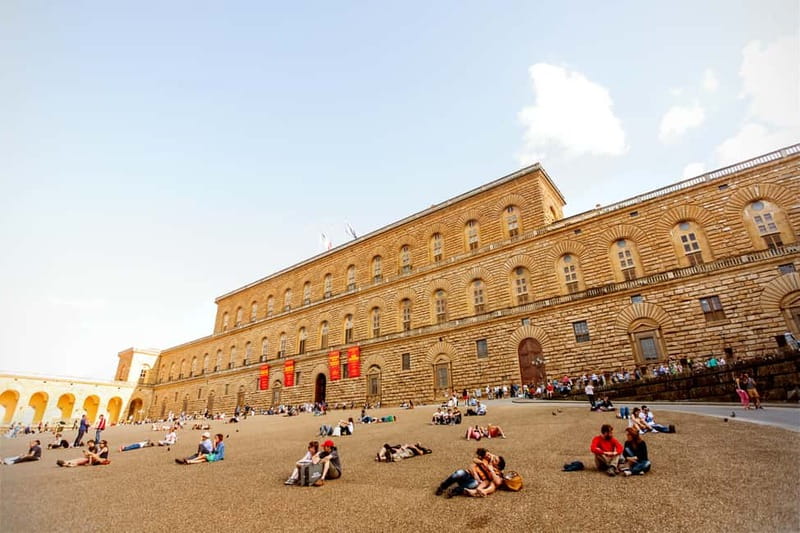
Florence is full of famous art museums, but Pitti Palace gives you something different. It is not only a picture gallery. It is a palace, former residence, decorative-arts museum, costume collection, and modern Italian art museum in one large complex.
That variety matters. If you have reached your limit with rows of Madonnas and crucifixions, Pitti Palace changes the subject. You move from crowded walls of 16th and 17th-century paintings to formal apartments, then to clothing and sculpture, and finally to Italian art from the late 18th century through World War I.
The palace began as a residence for the Pitti family in 1457 and is attributed here to Filippo Brunelleschi. The Medici later acquired it and used it as a residence. That family connection explains the grand scale and the concentration of paintings gathered during Medici rule.
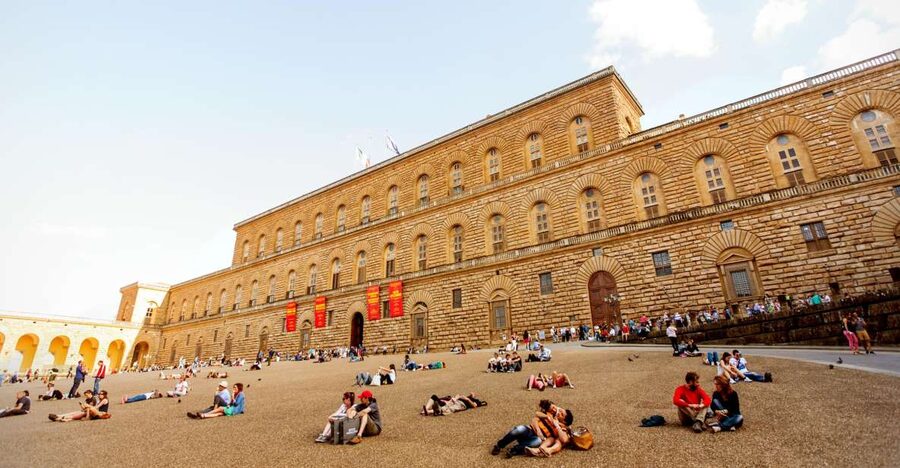
I find the building itself almost as important as the collection. The exterior is austere and heavy, with none of the immediate sparkle you may expect from Florence’s best-known palaces. Inside, however, the mood changes quickly. Chandeliers, decorated ceilings, elaborate rooms, and polished furnishings give you a clear sense of court life.
A few other Florence mornings to weigh against this
- Florence: Skip-The-Line Uffizi Gallery Timed Entry Ticket
★ 4.5 · 27,832 reviews - Florence: Timed Entrance Ticket to Michelangelo’s David
★ 4.6 · 16,983 reviews - Florence: Michelangelo’s David Skip-the-Line Entry Ticket
★ 4.5 · 12,764 reviews
Picking up your ticket at window 3
Your visit begins at the ticket office, where you exchange your voucher at window number 3. This is a small but important detail. Do not simply join the line on the right, which may be for people buying tickets. The reserved-ticket line is on the left, and using it can save a useful amount of time.
The difference can be dramatic during busy periods. A morning arrival may find the regular line growing while the reserved entrance remains clear. At quieter times, including late afternoon, there may be little or no queue, so the value of priority entry depends on the day.
Bring your passport or identity card. If you selected the physical audio guide, collect it with your ticket at the same time. You can also use the digital audio app included with the activity.
The ticket is valid for one day, with the available starting time shown when you book. This is not a guided walking tour, so you can set your own pace once inside. That suits independent museum visits, especially if you prefer to linger over a few paintings instead of following a fixed group.
The Palatine Gallery and the Medici collection
Start on the first floor with the Palatine Gallery. This is the heart of the visit for many art lovers, with paintings from the 16th and 17th centuries and works associated with Raphael, Caravaggio, Titian, Pietro da Cortona, and Rubens.
The display is not arranged like a modern white-walled gallery. Paintings cover the walls in the old palace style, surrounded by elaborate decoration. That can make the rooms feel crowded, but it also shows how rulers once lived with art. These were not isolated objects placed for quiet study. They were part of a display of wealth and power.
Give yourself time to look up as well as straight ahead. The ceilings, chandeliers, wall decoration, and furniture compete with the paintings for attention. The setting can make it harder to focus on a single work, but it also makes the Palatine Gallery feel like a lived-in royal collection rather than a standard museum.
The collection is especially useful if you want to see how the Medici assembled art across generations. You will encounter famous names, but the pleasure is not limited to ticking off masterpieces. The gallery also shows the taste of a ruling family, with grand religious, mythological, and courtly images placed in rooms designed to impress.
If you use the audio guide, expect basic information about the works and rooms. It is available as a physical add-on in Italian, English, French, Spanish, and German, while a digital audio app is also provided. If you prefer to read labels, you may find enough room information without paying extra for the physical device. For a more analytical discussion of individual paintings, the audio material may feel limited.
Royal Apartments and palace rooms
The Royal Apartments are part of the first-floor route and contain furnishings from a 19th-century remodeling. These rooms were used by later rulers, including the Lorraine grand dukes, and they show a different chapter of the building’s life.
Here, the furniture and decoration matter as much as the objects on display. The rooms give you a better sense of ceremony, privacy, and court routine than a painting alone can provide. You can also see how the palace changed after the Medici period rather than treating Florence’s story as if it ended in the Renaissance.
I would not rush through these interiors. The palace can look plain from outside, but the interior rooms are where the building reveals itself. Ornate decoration, chandeliers, and formal arrangements turn the visit into more than an art survey.
The route is not always self-explanatory. Clearer guidance between the different areas would make the experience easier, particularly if you are trying to fit the palace into a tight Florence schedule. Plan to pause at junctions and check signs before moving on.
Same city, an entirely different afternoon:
- Tuscany Day Trip from Florence: Siena, San Gimignano, Pisa and Lunch at a Winery
★ 5.0 · 21,634 reviews - The Best tour in Florence: Renaissance & Medici Tales – guided by a STORYTELLER
★ 5.0 · 12,316 reviews - Florence: Leonardo Interactive Museum Entry Ticket
★ 4.5 · 11,763 reviews - The Best Tour in Florence: Renaissance and Medici Tales
★ 5.0 · 10,810 reviews
The Gallery of Modern Art changes the pace
On the second floor, the Gallery of Modern Art covers Italian paintings and sculpture from the late 18th century to World War I. The title can be slightly misleading if you expect contemporary art. This is modern in the historical sense, with works from the period of neoclassicism, romanticism, and later 19th-century developments.
The gallery is valuable because it breaks up the Renaissance-heavy pattern found elsewhere in Florence. You see how Italian artists responded to changing politics, ideas, and styles after the era of the Medici.
The rooms inhabited by the Lorraine grand dukes are decorated with works from the neoclassical and romantic periods. That makes the setting part of the story again. You are not simply walking into a neutral exhibition hall. You are seeing later Italian art in rooms tied to the palace’s ruling families.
Allow extra time here if you enjoy sculpture and 19th-century painting. If your main aim is only to see the most famous Renaissance names, you may be tempted to hurry through. I think that would miss one of Pitti Palace’s strengths. The later collection gives the visit a broader view of Italian art.
Costume Gallery and Treasury of the Grand Dukes
The Costume Gallery is one of the most useful stops for anyone who wants a change from paintings. Clothing makes court life more physical and immediate. Fabrics, shapes, and details show how status was displayed and how fashion changed over time.
The collection can also be a relief after the intense visual density of the Palatine Gallery. Instead of comparing one painting with another, you look at materials and garments. It is a different kind of historical evidence, and it helps make the palace feel connected to real people rather than only to famous artists.
The Treasury of the Grand Dukes is included as well. Its objects add another layer to the visit, showing the value placed on luxury goods and court possessions. Together, the Treasury and Costume Gallery make Pitti Palace feel broader than a traditional fine-art museum.
The exact arrangement of rooms and exhibitions can change, so follow the signs inside and check which temporary exhibitions are open during your visit. Temporary exhibitions are included with the reserved palace ticket.
Views toward Santo Spirito and Boboli Gardens
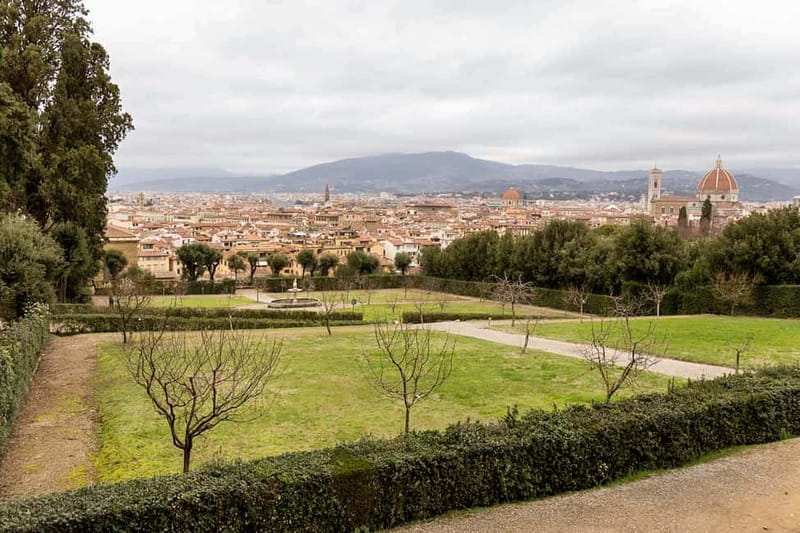
Look out from the palace windows for views toward Brunelleschi’s Santo Spirito Basilica and the Boboli Gardens. These glimpses help you place Pitti Palace within the Oltrarno side of Florence rather than treating it as a closed museum world.
The ticket information includes access to the palace museums and collections. Do not assume that a Pitti Palace ticket automatically covers entry to every part of the Boboli Gardens unless your booking specifically says so. The gardens may be connected to the palace complex, but the museum ticket and garden admission are not necessarily the same thing.
Some visitors combine the palace with the gardens, while others use the palace ticket as a focused indoor visit. If you are planning both, check the exact admission details before booking so you know what is covered.
How long should you plan?
The ticket is valid for one day, but that does not mean you need to spend the entire day inside. A fast visit can cover the key rooms in about an hour, but that pace leaves little room for labels or second looks.
I would set aside two to two and a half hours for the palace museums. That gives you time for the Palatine Gallery, Royal Apartments, Gallery of Modern Art, Costume Gallery, and Treasury without treating each room as a quick photo stop.
If you want to study the paintings closely, add another hour. One morning is enough to see a great deal, but you may still wish you had longer. The complex is large, and the route contains more than the headline galleries suggest.
A late-afternoon visit can work well if your schedule is crowded. At around 4 p.m., there may be no entrance line, although you should not count on that during every season or busy period. Morning is the safer choice if saving time is your priority.
Is the $18 ticket good value?
At about $18 per person, this is a strong value for Florence if you want more than one type of museum experience. The ticket covers the palace, Palatine Gallery, Gallery of Modern Art, temporary exhibitions, Treasury of the Grand Dukes, and Costume Gallery.
The price is especially sensible for people who would otherwise pay separately for several attractions. You are buying access to a large collection in a historic building, not just a single gallery.
Priority entry adds value when the regular ticket line is long. It may matter less during a quiet afternoon, when you can walk straight in without much waiting. Still, reserving ahead gives you a fixed plan and reduces the risk of losing time in line.
The reserve-now, pay-later option is useful if your Florence itinerary is not settled. Free cancellation up to 24 hours before the visit also gives you some room to adjust plans. Those terms do not make the ticket a bargain by themselves, but they reduce the risk of booking too early.
A physical audio guide costs extra if selected. Since labels and room information are available, I would choose it only if you prefer listening while walking or want information in one of the listed languages. The digital audio app is another option included with the activity.
The Hard Rock Shop and Hard Rock Cafe discounts are included, but I would treat them as minor extras rather than part of the ticket’s real value. The palace collections are the reason to book.
Who will enjoy this visit most?
I recommend Pitti Palace to you if you want a break from Florence’s most familiar Renaissance displays. It works well for art lovers, architecture fans, families with mixed interests, and anyone who enjoys seeing how rulers lived as well as what they collected.
It is also a good choice if you have already visited the Uffizi and want another major Florentine museum with a different feel. The Costume Gallery and modern Italian collection give the visit more variety than a painting-only itinerary.
You may be less satisfied if you want a tightly guided explanation of every major work. This is a self-guided admission ticket, not a tour led by a named expert. The audio options provide help, but they may not offer the detailed analysis you want.
The palace is wheelchair accessible. Because the complex is large, it is still sensible to allow plenty of time and avoid rushing between floors.
Practical tips for a smoother visit
- Go early if you want the best chance of avoiding a long regular line.
- At the ticket office, head to window 3 to exchange your voucher.
- If a purchase line forms on the right, use the reserved-ticket side on the left.
- Bring your passport or ID card.
- Collect the physical audio guide when you pick up your ticket if you added one.
- Allow two to three hours rather than trying to squeeze the palace into a short gap.
- Look at the ceilings and furniture, not only the paintings.
- Check whether garden admission is included before assuming the Boboli Gardens are part of your ticket.
- Wear comfortable shoes, since the palace route covers several galleries and floors.
- Consider visiting in the morning for the clearest time-saving advantage.
FAQ
Where does the Pitti Palace visit begin?
Go to window number 3 at the ticket office to exchange your voucher for the admission ticket. The activity ends back at the meeting point.
What does the ticket include?
It includes reserved entry to Pitti Palace, the Palatine Gallery, the Gallery of Modern Art, temporary exhibitions, and the Treasury of the Grand Dukes. Access to the Costume Gallery is also listed among the highlights.
Is priority entry included?
Yes. The ticket provides reserved entry and lets you skip the regular ticket-purchase line.
How long is the ticket valid?
The ticket is valid for one day. Available starting times are shown when you check the booking calendar.
Is an audio guide included?
A digital audio app is included. A physical audio guide is available only if you select it as an add-on, with Italian, English, French, Spanish, and German options.
What identification should I bring?
Bring your passport or identity card.
Can I cancel the booking?
You can cancel up to 24 hours in advance for a full refund.
Is the palace wheelchair accessible?
Yes, the activity is listed as wheelchair accessible.
Should you book the Pitti Palace ticket?
I would book it if you want a substantial Florence museum visit with art, royal rooms, costumes, and decorative objects in one place. The $18 price is fair for the number of collections included, and priority entry can save real time when queues build.
Book for the morning if you want the safest line-saving strategy. Choose the physical audio guide only if you value listening support, since the room information and digital option may be enough for a self-guided visit.
Skip it only if your schedule is so tight that you can spare less than an hour, or if you want a fully guided, painting-by-painting tour. For most independent visitors, Pitti Palace is one of Florence’s better-value museum tickets, and its mix of art, palace interiors, fashion, and later Italian work makes it a welcome change of pace.
Fresh on the Florence list
- Florence: Uffizi Guided Tour with Skip-the-Line Entry Ticket★ 4.8 · 499 reviews
- The Best of Florence Walking Tour in a Small Group★ 5.0 · 503 reviews
- Florence: Uffizi Gallery Tickets with Optional Audio Guide★ 4.1 · 503 reviews
- Premium Pasta and Gelato Cooking Class in Florence★ 5.0 · 508 reviews
- From Florence: Tuscany & San Gimignano Tour with 2 Tastings★ 4.8 · 511 reviews
- Florence: Guided Tour of Medici Family Secrets and Chapels★ 4.7 · 512 reviews
- Tuscany Vespa Tours Through the Hills of Chianti★ 5.0 · 515 reviews
- Pasta and Tiramisu Cooking Class with optional Local Market Tour★ 5.0 · 515 reviews
Tickets, compared.
Vatican: Museums & Sistine Chapel Entrance Ticket
Read our review →
Cathedral and Duomo’s Terraces Entrance Ticket
Read our review →
Skip-The-Line Uffizi Gallery Timed Entry Ticket
Read our review →
Naples Underground Entry Ticket and Guided Tour
Read our review →
Pantheon Fast-Track Ticket and Official Audio Guide
Read our review →
Entry Ticket and Guided Tour with an Archaeologist
Read our review →
Timed Entrance Ticket to Michelangelo’s David
Read our review →Browse the lists this tour appears in