
Reviewed · SKIP-THE-LINE TICKETS
Florence: Accademia and David Skip-the-Line Entry Ticket
Michelangelo’s David is the reason most people come to Florence’s Accademia, and the first sight of this five-meter marble figure explains the fuss. Carved from one block between 1501 and 1504, David fills the Tribune with a calm, alert power that photographs never quite capture.
I like the simple ticket arrangement: a host meets you near Via Guelfa, leads you to the proper entrance, and helps you avoid the long public queue. I also like that you can see the museum at your own pace, from Michelangelo’s unfinished Prisoners to paintings by Giotto, Botticelli, and Fra Angelico.
The catch is that this is not a guided tour. The host gets you inside, then you explore alone. You also need to collect the ticket away from the gallery, so arrive early enough to find Via Guelfa 12 Red before your chosen time.
Key points to know
- David gets the spotlight: See Michelangelo’s colossal marble statue in the purpose-built Tribune.
- The host handles entry: Meet at Via Guelfa 12 Red and follow the host to the separate entrance.
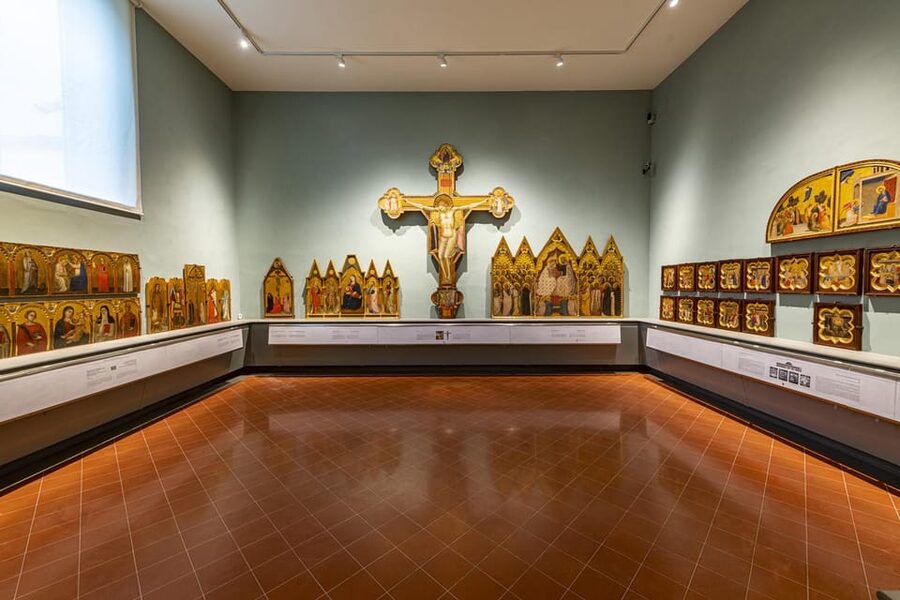
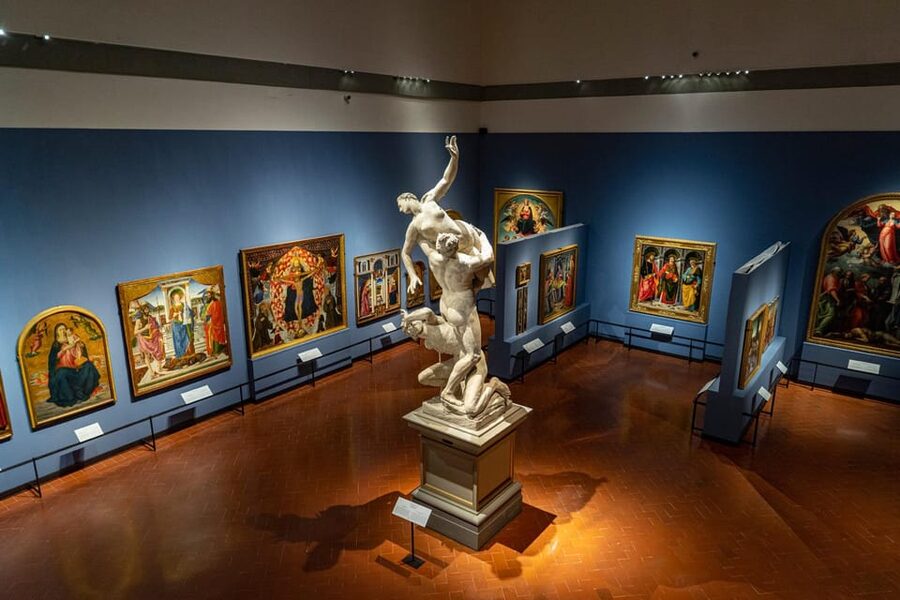
- The museum is more than one statue: Look for the Prisoners, St. Matthew, Florentine paintings, Medici instruments, and plaster casts.
- Skip the public queue: The separate entrance can save substantial time, though security checks still apply.
- Plan for independent viewing: No guide or audio guide is included, although the museum sells audio guides.
- Good flexibility: You can cancel up to 24 hours ahead for a full refund and reserve now while paying later.
Why David is worth the trip
The Accademia Gallery is one of Florence’s easiest museums to underestimate. Many people think they are buying a quick look at a famous statue. In practice, David gives you a strong central experience, while the surrounding rooms explain how Florentine art changed over several centuries.
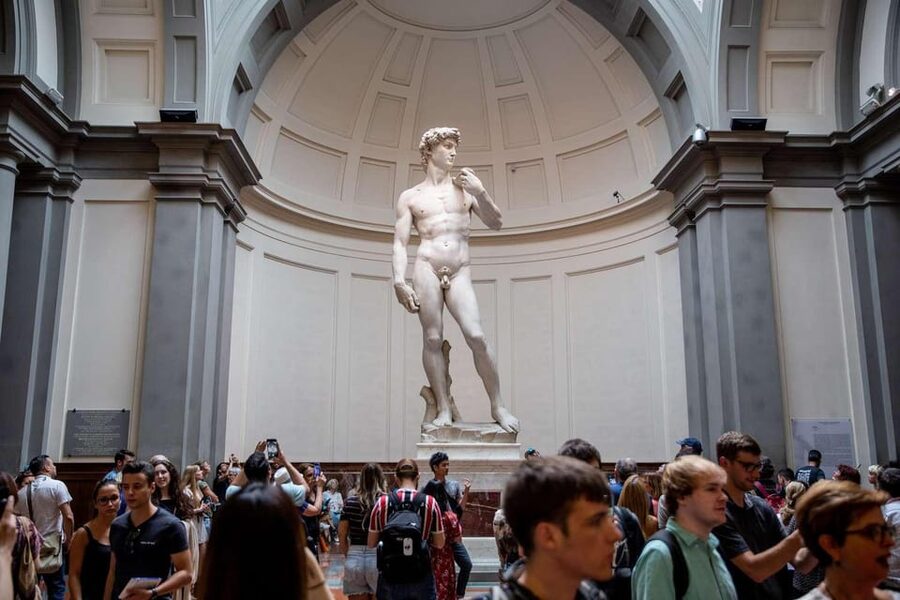
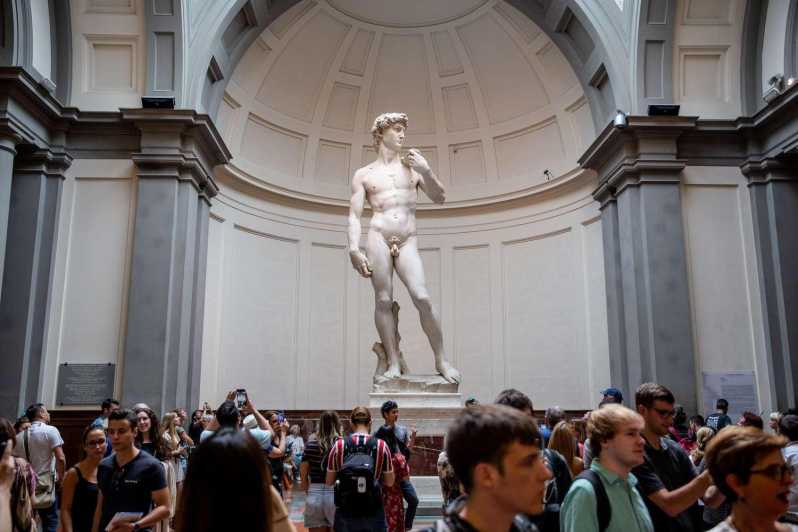
David is not displayed in a cramped corner. He is placed at the end of a long, specially designed hall called the Tribune. As you approach, the statue’s scale becomes clear. He is over five meters tall, but the impression is not simply size. Michelangelo gave him a concentrated expression and a poised stance, as if the decisive moment is still just ahead.
The statue represents ideal human beauty and strength, but it also reveals the artist’s struggle with a difficult piece of marble. Michelangelo carved David between 1501 and 1504 from a single block. That detail matters when you look closely at the figure’s body, hands, face, and careful balance. You can consider not only the finished image, but the physical problem of turning stone into a convincing person.
You will probably want to circle the statue slowly. Look at the tension in the hands and the slight turn of the body. The view from the front is the classic one, but the side angles help you understand how the pose was designed for the Tribune rather than for a flat photograph.
More Skip-the-Line Tickets in Florence
- Florence: Skip-The-Line Uffizi Gallery Timed Entry Ticket
★ 4.5 · 27,832 reviews - Florence: Michelangelo’s David Skip-the-Line Entry Ticket
★ 4.5 · 12,764 reviews - Florence: Skip-the-Line Uffizi Small Group Tour
★ 4.6 · 5,926 reviews
Meeting the host at Via Guelfa 12 Red
Your visit begins at the Florence and Global Tours Company office at Via Guelfa 12 Red, in front of the Via Guelfa McDonald’s and next to Via Guelfa 2. The red address notation is important in Florence, where red-numbered commercial addresses can differ from ordinary street numbers.
Find the office before your scheduled start time. The ticket collection point is around the corner from the Accademia, and this is the one part of the arrangement that can cause confusion. A few minutes spent locating it in advance can prevent a stressful start.
The host or greeter may speak Arabic, English, German, Italian, or Spanish. The host provides the entry ticket or voucher and directs you to the correct queue. Several people have found the process quick, especially for early morning visits. At busy times, the public line outside the museum can be very long, so the meeting step is a small price in time for a much shorter wait.
This is not a private escort through the museum. The host’s job is to get you through the entry process. Once you pass inside, you are free to set your own pace.
What skip-the-line entry really means
The separate entrance is the main practical value of this ticket. You do not simply walk past every delay, however. You still need to join the appropriate entry queue and pass security.
The wait after receiving the voucher may be around 15 to 20 minutes at some times. That is far better than facing a large public queue, but it is not the same as instant admission. At 8 a.m., the process can be especially smooth. Around 10 a.m., the regular line may already be substantial.
The arrangement also offers some useful flexibility. People who arrived about five minutes late were still directed into the correct queue, and one late arrival was accepted at a later time. I would not build your day around that kindness, since admission depends on crowd levels and staff decisions, but it is reassuring if Florence traffic or a misplaced turn slows you down.
Security remains part of the visit. One person reported having a water bottle taken during the bag check, even after seeing other people inside with bottles. The information provided does not give a clear museum-wide rule about water, so check current instructions and avoid relying on bringing a large bottle. In hot weather, this is worth thinking about before you arrive.
Michelangelo’s unfinished figures
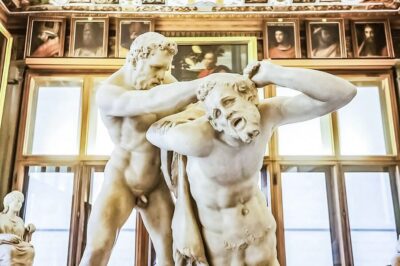
After David, make time for the other Michelangelo works. The Prisoners are especially useful because they show figures appearing to push their way out of rough marble. They do not have David’s polished finish, and that is exactly their value.
These sculptures let you think about the artist’s method. Instead of seeing only a completed masterpiece, you see the contrast between raw stone and a fully formed body. The difference makes David’s finish feel more remarkable.
The St. Matthew continues this theme of incomplete or partly worked sculpture. The Pietà of Palestrina is also attributed to Michelangelo in the museum’s presentation, and it gives you another chance to compare the artist’s handling of bodies, drapery, and emotional expression.
I would not rush through these pieces simply because you came for David. The unfinished works are among the most revealing objects in the collection. They turn the visit from a single-photo stop into a short lesson in sculpture.
Same city, an entirely different afternoon:
- Tuscany Day Trip from Florence: Siena, San Gimignano, Pisa and Lunch at a Winery
★ 5.0 · 21,634 reviews - Florence: Timed Entrance Ticket to Michelangelo’s David
★ 4.6 · 16,983 reviews - The Best tour in Florence: Renaissance & Medici Tales – guided by a STORYTELLER
★ 5.0 · 12,316 reviews - Florence: Leonardo Interactive Museum Entry Ticket
★ 4.5 · 11,763 reviews
Florentine painting from Cimabue to the Renaissance
The Accademia’s paintings trace the development of Florentine art from the 13th through the 16th century. The names can blur together if you move too quickly, so give yourself time to notice broad changes.
Works by Cimabue and Giotto show earlier approaches to religious painting. Fra Angelico and Lorenzo Monaco continue the spiritual focus, with careful figures and decorative details. Later works by Botticelli and Ghirlandaio show a different confidence in form, composition, and the human presence within a scene.
You do not need to be an art specialist to get something from this section. Start by asking simple questions. How flat or three-dimensional do the figures seem? How much attention goes to gold decoration? Do the people look symbolic, or do they begin to feel like individuals with weight and expression?
The collection helps place David in context. Michelangelo did not appear from nowhere. He worked in a city shaped by generations of painters, sculptors, patrons, and teachers. The paintings show the long artistic movement that made Florence such an important center.
If your main goal is only the statue, allow at least some extra time for these rooms. They are quieter than the Tribune and give you a more rounded picture of Florentine art.
The Medici musical instrument collection
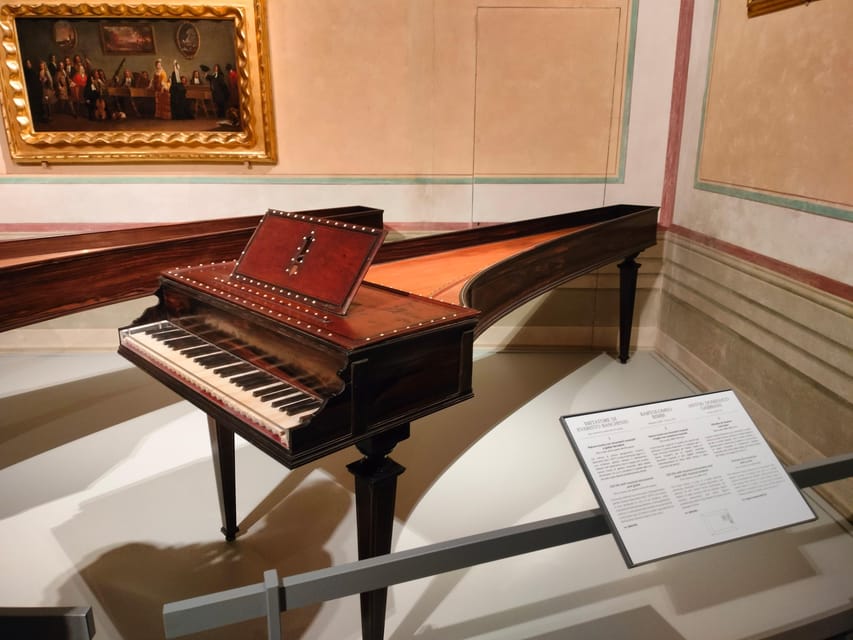
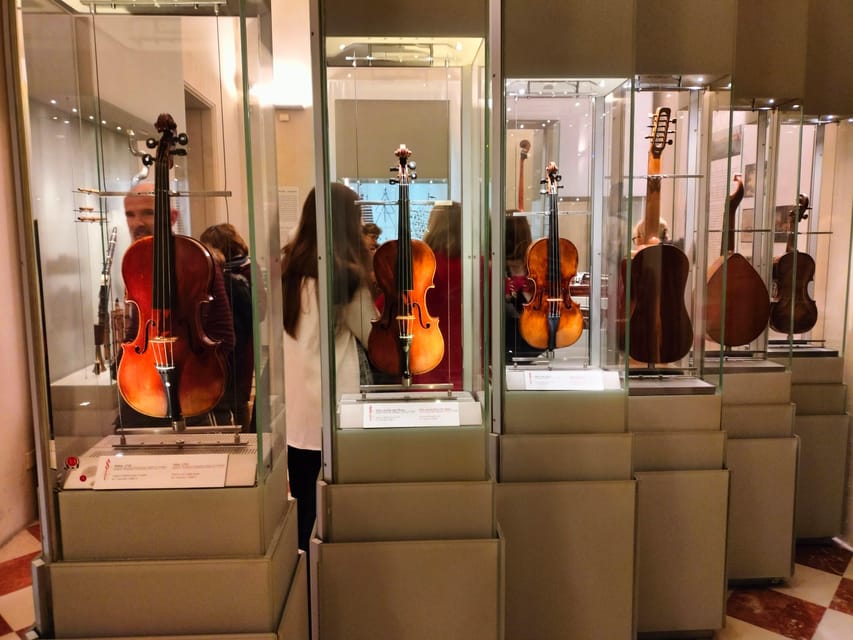
The musical instrument exhibit is an easy section to miss, but it adds variety to a museum visit otherwise dominated by marble and religious painting. The collection includes rare instruments connected with the Medici family, dating from the 17th to the 19th century.
You can see violins, harpsichords, and pianos. These objects connect court life with craftsmanship and music. They also remind you that the Medici world was not built around painting alone. Instruments were part of the family’s culture, status, and daily setting.
This section works well if you need a change after looking at sculptures. It is also a good stop for anyone who enjoys design, woodwork, or the history of music. The displays are not a substitute for hearing the instruments played, but their shape and construction provide another way to understand Florentine taste.
The plaster cast gallery
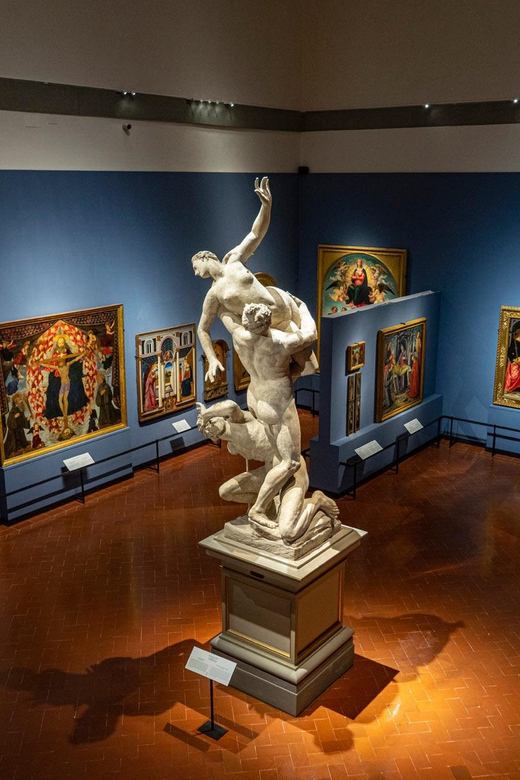
The plaster cast gallery contains copies of sculptures from antiquity through modern times. These casts were once used as teaching tools for art students.
Some visitors may find copies less exciting than original marble. That is a fair reaction, especially after seeing David. Still, the gallery explains how artists learned by studying earlier works and repeating established forms. For students, it was a practical classroom. For you, it offers a chance to compare poses, proportions, and sculptural ideas across periods.
I would treat this room as an optional but worthwhile addition rather than the main reason to buy the ticket. If you have limited time, see David and Michelangelo’s other works first. If the museum is less crowded or you enjoy sculpture beyond famous originals, continue into the casts.
How much time should you allow?
The advertised activity duration is one hour, but that appears to describe the entry arrangement and scheduled visit window rather than a strict guided walk through the entire museum. You receive access to all museum sections and can explore independently at your own pace.
If you want only David and a quick look at the nearby Michelangelo sculptures, one hour may be enough. If you want to examine the paintings, instruments, and plaster casts, plan more time if your admission conditions permit it.
There is no guide setting the rhythm, so you control the visit. I like that freedom. You can spend ten minutes studying David or move on when you have had enough. The drawback is that you must supply your own context. The museum audio guide is available to purchase, but it is not included.
For a first visit to Florence, I would pair this museum with nearby sights rather than treating it as an all-day stop. The Accademia is compact compared with Florence’s largest museums, but the quality of its main works makes a focused visit worthwhile.
Is $36 a fair price?
At $36 per person, this ticket costs more than a basic museum admission might cost without assistance. You are paying for the reserved entry arrangement, the host at the meeting point, and the chance to avoid a potentially long public queue.
That extra cost can make sense during busy periods, particularly if your time in Florence is limited. Losing an hour in line has a real cost when you have the Duomo, Uffizi, churches, markets, and evening plans competing for attention. Early morning availability may also help you see David before the gallery becomes more crowded.
The value is less clear during a quiet period, or if you are comfortable waiting and have a flexible schedule. You are not paying for a guided explanation, private access, or a small-group tour. Once admitted, you are on your own.
I see this as a time-saving ticket rather than a luxury experience. If avoiding queues is important, the price is reasonable. If you want expert art commentary, spend your money on a guided tour or add the museum’s audio guide instead.
Who should book this Accademia ticket?
I would recommend it to you if:
- You have a short stay in Florence and cannot afford a long queue.
- David is high on your list.
- You prefer to explore alone rather than follow a guide.
- You want access to the full museum, not only the Tribune.
- You need a wheelchair-accessible entry option.
- You value flexible booking, including reserve now and pay later.
Families and independent art lovers may like the freedom to move at different speeds. A person who wants a detailed explanation of every painting may be disappointed because no guide is included.
I would also set expectations carefully. The Accademia is famous for David, Michelangelo’s other sculptures, paintings, instruments, and casts. If your interests lie mainly in large architectural sights or broad city history, another Florence attraction may feel more rewarding. The museum is focused, and its appeal depends heavily on your interest in sculpture and Florentine art.
Practical tips for a smoother visit
Arrive before your scheduled time and find Via Guelfa 12 Red first. The office is not at the museum entrance, and the red address system can be confusing if you are hurrying.
Keep your voucher or booking details ready. The host then directs you to the proper queue. Follow the instructions carefully, since entering the wrong line can erase the time you hoped to save.
Plan for security, even with skip-the-line access. The separate entrance reduces queue time, but it does not remove bag checks. Since water bottles have caused confusion during security, check the current policy before arriving and do not assume every item will be accepted.
If you can choose among starting times, an early slot may be the calmest option. The exact crowd level changes, but early entry has proved easier than arriving around the middle of the morning.
Finally, do not leave immediately after David. Give the Prisoners a thoughtful look, then walk through the painting galleries. The museum’s best story is not simply David’s fame. It is the connection between unfinished stone, finished sculpture, changing painting styles, Medici collecting, and the training of future artists.
Should you book it?
Book this experience if you want a straightforward way into the Accademia and value your time more than the lowest possible ticket price. The queue assistance is the strongest feature, and early visits can save you from a frustrating wait outside.
Do not book it expecting a tour guide. You receive admission help, not art commentary. If you are happy to explore independently and David is a priority, $36 can be a sensible Florence expense. If you want a broad, guided introduction to the city’s art, choose a different format or add an audio guide.
For most first-time visitors with limited time, I would choose the skip-the-line option, arrive early, and spend at least part of the visit beyond the famous statue. David is the headline, but the surrounding collection is what makes the ticket feel like a museum visit rather than a single-photo stop.
FAQ
Where do I meet for the Accademia ticket?
Meet at the Florence and Global Tours Company office at Via Guelfa 12 Red, in front of the Via Guelfa McDonald’s and next to Via Guelfa 2.
Is this a guided tour?
No. A host or greeter helps you collect the ticket and reach the appropriate entrance, but you explore the Accademia independently after entry.
Is an audio guide included?
No. An audio guide is not included, but you can purchase one from the museum.
What does the ticket include?
It includes skip-the-line entry to the Accademia Gallery and access to all sections of the museum.
How long does the activity last?
The listed duration is one hour. You should check the available starting times when booking. The ticket allows you to explore at your own pace, and the entry assistance is not a guided tour.
Is the Accademia accessible by wheelchair?
Yes. The activity is listed as wheelchair accessible.
Can I cancel the booking?
Yes. You can cancel up to 24 hours in advance for a full refund. You can also reserve now and pay later.
Fresh on the Florence list
- Florence: Uffizi Guided Tour with Skip-the-Line Entry Ticket★ 4.8 · 499 reviews
- The Best of Florence Walking Tour in a Small Group★ 5.0 · 503 reviews
- Florence: Uffizi Gallery Tickets with Optional Audio Guide★ 4.1 · 503 reviews
- Premium Pasta and Gelato Cooking Class in Florence★ 5.0 · 508 reviews
- From Florence: Tuscany & San Gimignano Tour with 2 Tastings★ 4.8 · 511 reviews
- Florence: Guided Tour of Medici Family Secrets and Chapels★ 4.7 · 512 reviews
- Tuscany Vespa Tours Through the Hills of Chianti★ 5.0 · 515 reviews
- Pasta and Tiramisu Cooking Class with optional Local Market Tour★ 5.0 · 515 reviews
Skip-the-Line Tickets, compared.
Skip-The-Line Uffizi Gallery Timed Entry Ticket
Read our review →
Vatican Museums & Sistine Chapel Skip-the-Line Entry Ticket
Read our review →
Skip-the-Line Group Tour of the Vatican, Sistine Chapel & St. Peter’s Basilica
Read our review →
Michelangelo’s David Skip-the-Line Entry Ticket
Read our review →
Vatican Museums & Sistine Chapel Skip-The-Line Ticket
Read our review →
Vatican, Sistine Chapel & St. Peter’s Skip-the-Line Tour
Read our review →
Skip-the-Line Vatican, Sistine Chapel & St. Peter’s | Small Group
Read our review →
Vatican: Vatican Museums Sistine Chapel Skip-the-Line Ticket
Read our review →Browse the lists this tour appears in