
Reviewed · MUSEUMS
Florence: Pitti Palace and Palatina Gallery Ticket and Tour
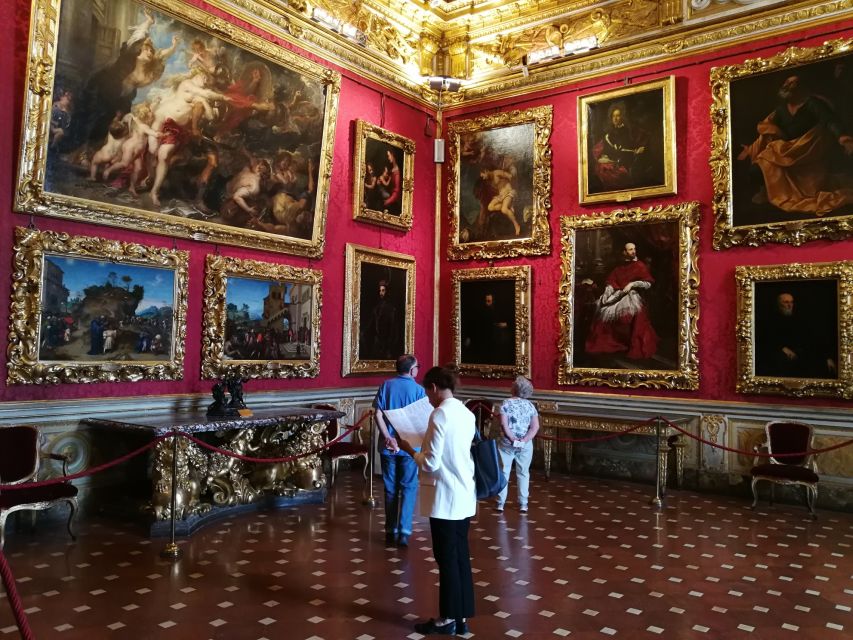
Pitti Palace gives you Florence from the other side of the Arno: less civic showpiece, more grand ducal home. Inside the Palatina Gallery, paintings by Caravaggio, Rubens, Titian, and Raphael hang among rooms dressed with frescoes and stucco, so the building itself competes with the art.
I like two things here. First, a strong guide can connect the Medici family, Florentine politics, and painting techniques instead of treating each artwork as an isolated stop. Second, your ticket lets you continue through the other Pitti Palace museums after the guided visit. The possible drawback is simple: you spend most of the 110 minutes standing or walking, and the palace is too large to see properly in a hurry.
Key points to know before booking
- Expect an art-focused visit: The Palatina Gallery is the main guided section, with works by Caravaggio, Rubens, Titian, and Raphael.
- The rooms are part of the attraction: Paintings hang in lavish palace rooms decorated with frescoes, stucco, and ornate details.
- Guide quality matters: Camilla, Maurizio, Roberta, Daniela, Marta, and other English-speaking guides have led this experience at different times.
- Your ticket reaches beyond the tour: Afterward, you can visit the Treasury of the Grand Dukes and the Gallery of Modern Art in the same palace.
- Plan extra time: The guided portion lasts about 110 minutes, but Pitti Palace deserves longer if you want to see its other collections.
- Pack light: Large bags, luggage, rucksacks, and big umbrellas must go to the cloakroom. Non-flash photography is allowed.
Why Pitti Palace deserves time beyond the Uffizi
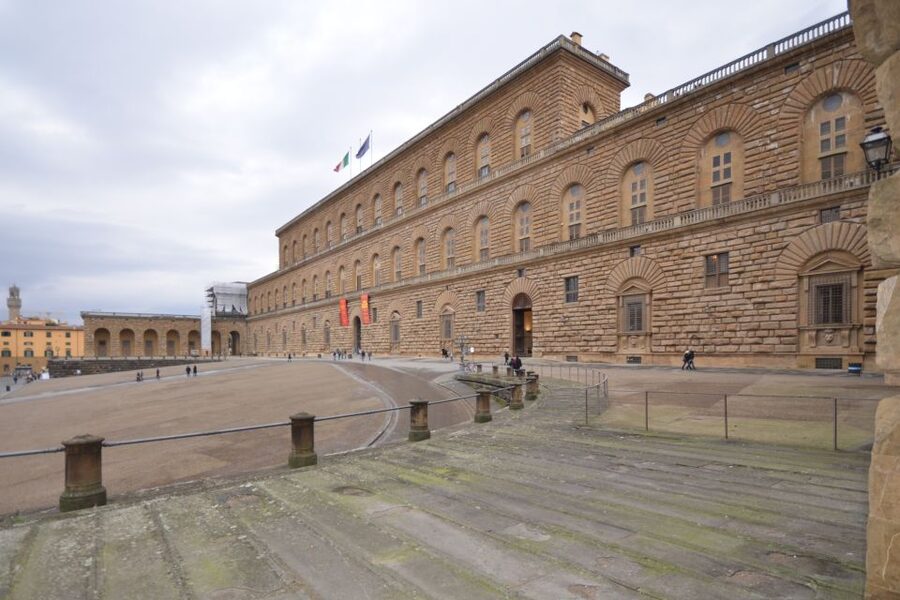
Florence’s Uffizi gets most of the attention, and rightly so. But Pitti Palace offers a different museum experience. The Uffizi feels like a purpose-built sequence of art galleries, while Pitti places important paintings inside the former residence of Tuscany’s ruling family.
That setting changes how you read the collection. You are not just looking at a Raphael or a Caravaggio on a white wall. You are seeing art displayed in rooms designed to signal rank, money, and power. The palace interiors tell you what the Medici and later rulers wanted visitors to feel before they even studied the paintings.
The Palatina Gallery is described as Florence’s second most important painting gallery after the Uffizi. That does not mean it is a consolation prize. It means you can see major European painting in a less familiar setting, with the added weight of royal and ducal rooms around you.
I especially like this combination for a first visit to Florence. The tour gives you art, architecture, and political history in one sitting. If you visit on your own without much background, it is easy to admire the gilded rooms and move on without understanding why the paintings are there. A good guide gives the palace a clear story.
More Museums in Florence
- Florence: Skip-The-Line Uffizi Gallery Timed Entry Ticket
★ 4.5 · 27,832 reviews - Florence: Leonardo Interactive Museum Entry Ticket
★ 4.5 · 11,763 reviews - Florence Accademia Gallery Tour with Entrance Ticket Included
★ 4.5 · 6,148 reviews
Meeting your guide at Piazza Pitti
The meeting point is Piazza Pitti, outside the central and main entrance of Palazzo Pitti. This is convenient once you are in the Oltrarno area, but give yourself enough time to arrive calmly. The square is the obvious place to orient yourself, yet the entrance area can feel busy at popular times.
You will need to find the guide before entering. The tour is in English, and the experience includes a live guide rather than a self-guided audio visit. Guide assignments can change, but several names appear repeatedly in the tour’s history, including Camilla, Maurizio, Roberta, and Daniela.
The strongest pattern is clear: the guide is the heart of this experience. Camilla has been praised for making details in the art easier to see and for explaining the Medici family in a way that connects to modern Florence. Maurizio has a scholarly style, with careful attention to historical and political context. Roberta has been described as an art historian who speaks several languages and gives useful advice for exploring the palace afterward.
That does not guarantee a particular person on your date. It does tell you what kind of tour this is intended to be: a guided interpretation of the palace, not simply a ticket escort.
The Palatina Gallery, painting among palace rooms
The guided visit centers on the Palatina Gallery. Here, paintings are displayed on dividers and walls between grand rooms decorated with elaborate frescoes and stucco work.
This arrangement is beautiful but not always easy. The ornate interiors can pull your attention away from the paintings, while the paintings themselves can seem crowded compared with a modern gallery. I think that is part of the charm, but it rewards a guide who knows how to direct your eyes.
Expect attention to major European artists such as Caravaggio and Rubens. The tour also covers artists including Titian and Raphael, with explanations of their methods and artistic choices. You are not simply told who painted what. The guide may point out details, composition, technique, symbolism, and the way a work fits into the broader development of European painting.
Caravaggio is an obvious draw. His paintings are known for dramatic light, strong physical presence, and emotional tension. Seeing his work in the context of a palace collection helps explain why powerful patrons wanted such art. Rubens offers a different experience, with energetic compositions and a grand scale suited to rooms built for display.
Titian and Raphael give you another useful comparison. You can watch how the tour shifts between color, drawing, balance, expression, and the demands of patronage. For someone who feels unsure in an art museum, this kind of comparison is useful because it replaces vague admiration with a few practical things to look for.
The collection spans several centuries, and the guide’s job is to give the sequence shape. You will not study every painting in the palace. In 110 minutes, the sensible approach is to focus on standout works and use them as a way into the collection.
Frescoes, stucco, and the palace as a work of art
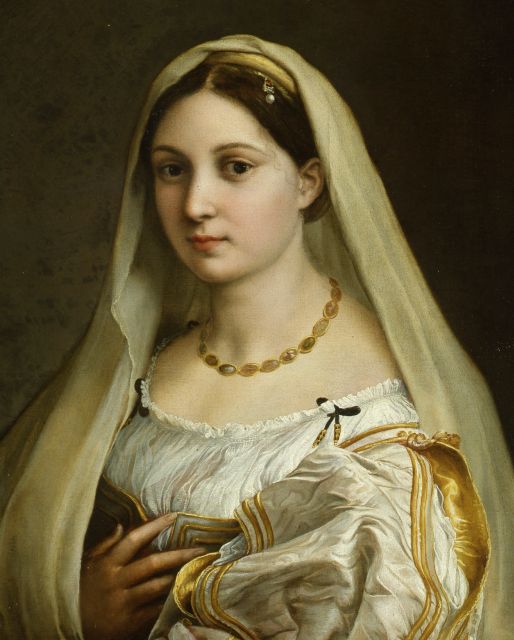
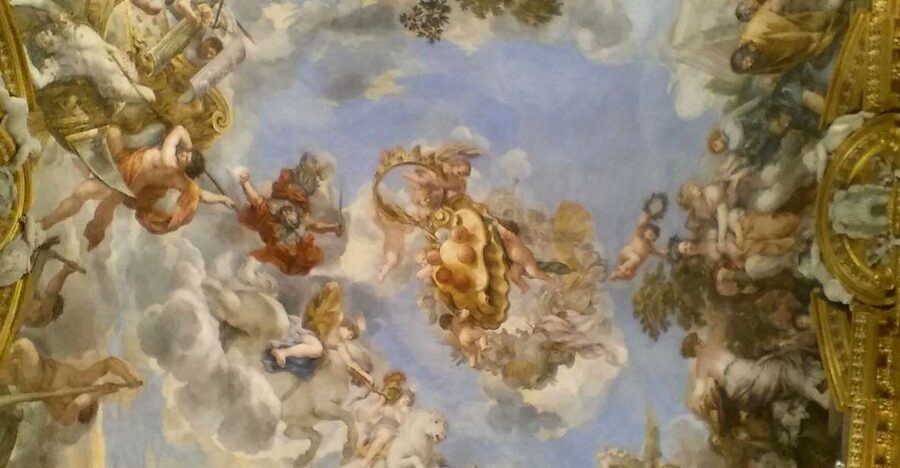
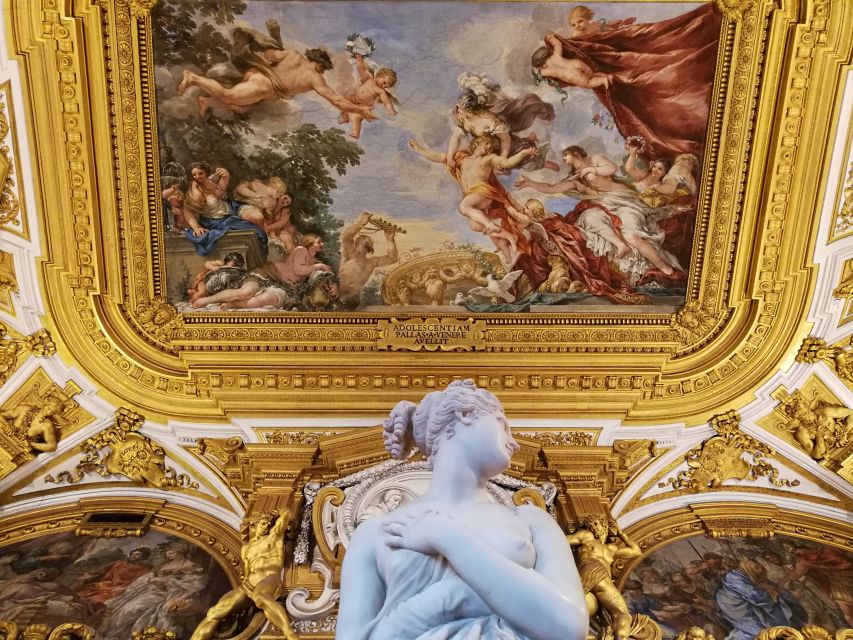
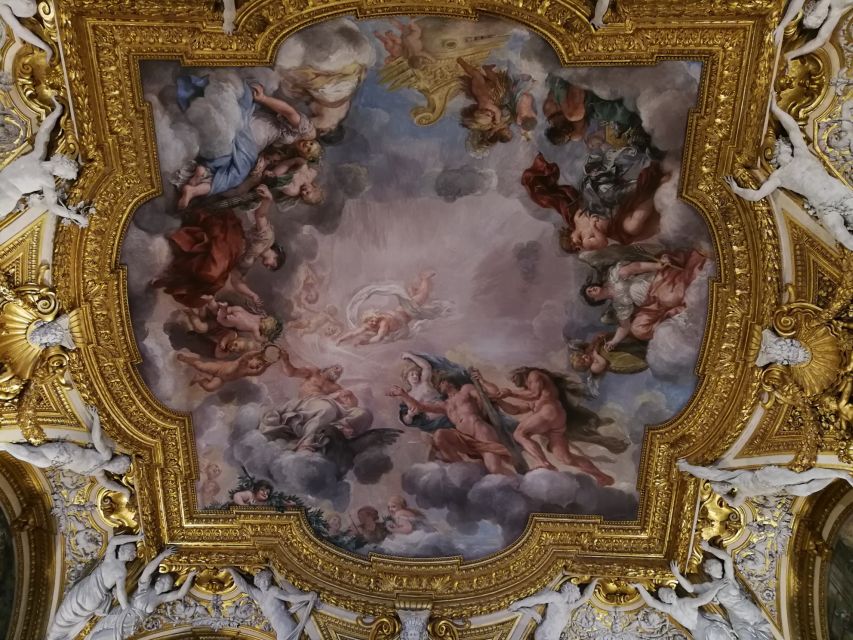
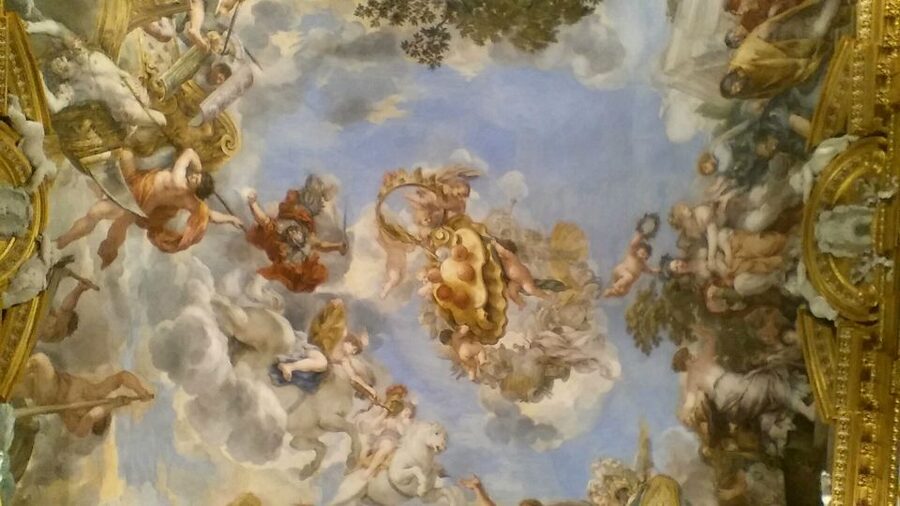
Pitti Palace is not a neutral box for paintings. The interiors were built to impress. Frescoes cover ceilings and walls, while stucco decoration frames the rooms with a theatrical sense of abundance.
I recommend looking up often. The paintings naturally pull you forward, but the ceiling decoration explains the environment in which the collection was meant to be seen. These rooms were part residence, part political stage, and part display of wealth.
The palace belonged to the grand-dukes of Tuscany and later became a residence of the King of Italy. That history gives the visit more weight than a standard gallery walk. The rooms were not decorated lavishly just for museum visitors. They were designed for people who lived, worked, entertained, and ruled here.
Your guide can help connect the decoration to the people who commissioned it. This is where the historical context becomes especially useful. The Medici story is complicated, with family relationships, political strategy, artistic patronage, and changing power all tangled together. A good explanation keeps it from becoming a list of names.
Several participants have found that this political background made the art easier to understand. I agree with that approach. Renaissance and Baroque art often makes more sense once you know who paid for it, where it was displayed, and what message it was meant to send.
Same city, an entirely different afternoon:
- Tuscany Day Trip from Florence: Siena, San Gimignano, Pisa and Lunch at a Winery
★ 5.0 · 21,634 reviews - Florence: Timed Entrance Ticket to Michelangelo’s David
★ 4.6 · 16,983 reviews - Florence: Michelangelo’s David Skip-the-Line Entry Ticket
★ 4.5 · 12,764 reviews - The Best tour in Florence: Renaissance & Medici Tales – guided by a STORYTELLER
★ 5.0 · 12,316 reviews
What the 110-minute guided visit feels like
The stated duration is 110 minutes, although the activity is also described as a two-hour guided tour. In practical terms, plan for roughly two hours, with the exact pace depending on the group, the guide, and how many questions come up.
The tour involves walking and standing throughout. One useful caution is that the palace does not offer many natural pauses during the guided section. If anyone in your group is older or finds long periods on their feet difficult, keep that in mind before booking.
The upside of the steady pace is that you cover a meaningful selection of art without losing the thread. Guides have been praised for answering questions fully, adding historical context, and keeping the visit interactive. Some have a lecture style, while others invite questions and adapt the discussion to the group.
I would ask questions when you have them. The guides associated with this experience have often been praised for handling questions well, and the palace offers plenty of openings: why a work was commissioned, how a painting was made, what a symbol means, or how a Medici patron shaped the collection.
The tour is also suitable for people who already know a little about art. One participant compared Maurizio’s presentation to a college-level course, while others appreciated the accessible explanations. That suggests a useful balance: enough substance for serious art lovers, but not so technical that newcomers are left behind.
After the tour: use the ticket for more of Pitti Palace
Once the guided portion ends, you are free to continue on your own. This is an important part of the value because the ticket is valid for all of Pitti Palace’s museums, not just the Palatina Gallery.
On the ground floor, you can visit the Treasury of the Grand Dukes. The collection adds decorative and luxury objects to the painting-centered visit. If you have already spent nearly two hours looking at canvases, this gives you a change of pace.
On the top floor, the Gallery of Modern Art presents Italian art from the eighteenth and twentieth centuries. It broadens the visit beyond the Renaissance and Baroque material that dominates the guided portion.
Do not treat these additions as a quick bonus if you care about museums. Pitti Palace is large, and one participant sensibly suggested planning a whole day for it. You may not want that much time, but I would reserve at least another hour after the tour if your schedule allows.
The information provided also notes that the museum tickets cover all of Pitti Palace’s museums and can be used at your own pace after the guided tour. The stated ticket information does not say that the guided experience includes a separate Boboli Gardens tour, so do not book it expecting a garden guide.
Is $80 a fair price?
At $80 per person, this is not a budget museum entry. You are paying for the admission ticket plus an English-language guided visit, with the main value coming from the explanation rather than from access alone.
That price makes sense for you if you want help understanding art, palace decoration, and Medici power in one visit. It is less attractive if you prefer moving quickly, reading labels independently, or spending only a short time inside.
The ticket’s wider access improves the calculation. You can stay after the guided visit and see the Treasury of the Grand Dukes and the Gallery of Modern Art without buying separate Pitti Palace admission for each museum. The practical value depends on your pace: if you leave immediately after the Palatina Gallery, $80 feels steep; if you spend several more hours exploring, it becomes easier to justify.
I would also compare this with the cost of making sense of the palace on your own. A self-guided visit may cost less, but you would need to research the artists, the Medici family, and the meaning of the rooms before or during your visit. Here, that work is built into the tour.
The price is easiest to defend for first-time visitors, art lovers, and anyone who has already found the Uffizi overwhelming without a guide. It is harder to defend for repeat visitors who know the collection well.
Practical details that can affect your visit
The tour is wheelchair accessible, which makes it a workable choice for visitors who need accessible museum access. The long period of standing remains worth considering, even with accessible routes.
Large bags, luggage, rucksacks, and big umbrellas are not allowed in the museum galleries and must be left in the cloakroom. Arrive with only what you need for the visit. A small bag is more convenient than trying to manage a large daypack in crowded rooms.
Non-flash photography is allowed. Flash photography is not permitted, so check your camera or phone settings before you enter.
The booking terms are flexible. You can cancel up to 24 hours before the start time for a full refund, and the reserve-now, pay-later option lets you hold a place without paying immediately. Check the available starting times for your date, since the tour lasts 110 minutes and the rest of your Florence day may depend on the schedule.
Who will enjoy this Pitti Palace tour most?
I would choose this for you if you want a guided introduction to Florence’s ruling families and artistic culture, especially if names such as Caravaggio, Rubens, Titian, and Raphael mean something to you.
It also suits people who feel that art museums can become a blur of paintings. The guide gives you a small group of works to remember and explains why they matter. That is often more useful than trying to see every room.
Families and mixed-age groups may appreciate the storytelling and question-based format, though the amount of standing can be tiring. Visitors with limited time should book only if they can spare the full guided period and resist rushing off immediately afterward.
I would not make this my first choice if you want a quiet, unstructured museum visit. You will follow a guide’s pace, and the ornate rooms can feel crowded with information. For an independent afternoon, buy a ticket and explore on your own.
Should you book the Palatina Gallery tour?
Book it if you want the Pitti Palace to make sense, not just look impressive. The strongest reason to go is the combination of first-rate painting, lavish rooms, and a guide who can connect Medici politics with what you see on the walls.
The best value comes from staying after the tour to visit the other palace museums. Bring a small bag, wear comfortable shoes, and allow extra time beyond the advertised 110 minutes. If you prefer your museums self-guided, $80 may be more than you need to spend, but for a focused explanation of one of Florence’s grandest collections, this is a strong choice.
FAQ
Where does the Pitti Palace tour meet?
Meet your English-speaking guide in Piazza Pitti, outside the central and main entrance of Palazzo Pitti.
How long does the guided tour last?
The activity lasts 110 minutes. It is also described as a two-hour guided tour, so plan for roughly two hours inside the palace.
What language is the tour offered in?
The live guided tour is offered in English.
Which artworks and artists will I see?
The Palatina Gallery includes works by major European artists such as Caravaggio, Rubens, Titian, and Raphael. The exact works discussed can vary with the guide and group.
Can I visit other Pitti Palace museums with my ticket?
Yes. The ticket provided for the activity is valid for all Pitti Palace museums. After the guided section, you can visit the Treasury of the Grand Dukes on the ground floor and the Gallery of Modern Art on the top floor in your own time.
Can I take photographs inside?
Non-flash photography is allowed. Flash photography is not permitted.
Can I bring luggage or a large backpack?
No. Luggage, large bags, rucksacks, and big umbrellas must be left in the cloakroom. The museum is wheelchair accessible.
Fresh on the Florence list
- Semi Private Deep Wine Chianti and San Gimignano from Florence★ 5.0 · 191 reviews
- From Florence: Wine Tasting and Dinner in Chianti Vineyards★ 4.6 · 192 reviews
- Small Group Florence Cathedral Guided Tour with Priority Access★ 4.0 · 192 reviews
- Hard Rock Cafe Florence with Set Menu for Lunch or Dinner★ 4.5 · 193 reviews
- Florence Sunset Food Tour with Wine & Dine at a Tuscan farmhouse★ 5.0 · 194 reviews
- Wine Experience In Chianti Hills from Florence★ 4.5 · 195 reviews
- Brunelleschi’s Dome and Cathedral Complex Reserved Ticket★ 4.5 · 195 reviews
- Florence: Duomo Complex Guided Tour★ 4.2 · 195 reviews
Museums, compared.
Vatican: Museums & Sistine Chapel Entrance Ticket
Read our review →
Vatican Museums & Sistine Chapel Tour with Optional Basilica
Read our review →
Vatican Museums, Sistine Chapel & St Peter’s Basilica Guided Tour
Read our review →
Skip-The-Line Uffizi Gallery Timed Entry Ticket
Read our review →
Vatican Museums, Sistine Chapel & Basilica Tour
Read our review →
Vatican Museums & Sistine Chapel Skip-the-Line Entry Ticket
Read our review →Vatican Museums, Sistine Chapel & Basilica Tour
Read our review →
Vatican Museums & Sistine Chapel Guided Tour
Read our review →Browse the lists this tour appears in