
Reviewed · WALKING TOURS
Rome: Guided Small Group Walking Tour of City Highlights
Rome’s historic center is best understood on foot, and this two-hour route gives you a brisk first look at several big sights without asking you to spend half a day on one attraction. You start near the Roman Forum and finish in Piazza Navona, passing grand monuments, Baroque fountains, and ancient Roman remains along the way.
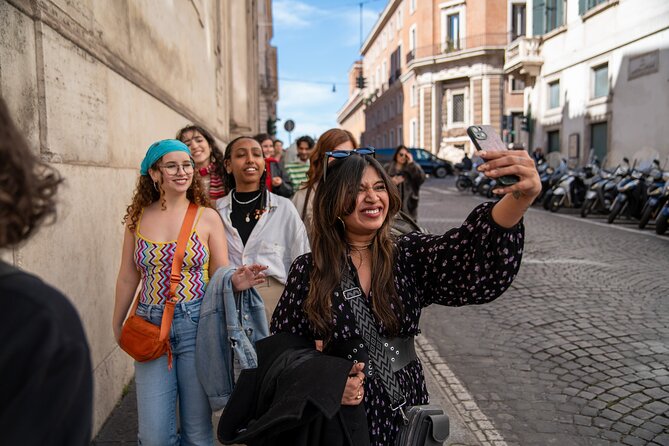
I like the small-group limit of 15 people, which makes it easier to hear the guide and ask questions. I also like the useful finish: Piazza Navona puts you close to places for lunch, dinner, coffee, or another gelato stop. Guides including Sharon, Dan, Sila, Dan, Vlad, Anna, and Paulina are praised for clear stories and practical local tips.
The main drawback is the meeting point. Some people have had trouble locating the guide at Piazza d’Aracoeli, so arrive early, read the directions carefully, and keep mobile data available. The Pantheon is discussed from outside unless you pay separately for entry, and this is an overview walk rather than a full tour of every monument.
Key points to know before booking
- See five major Roman sights in about two hours: The route covers the Vittorio Emanuele II Monument, Trevi Fountain, Pantheon, Trajan’s Column, and Piazza Navona.
- Start near the Colosseum and Roman Forum: Piazza d’Aracoeli is a handy place to begin if you are already exploring ancient Rome.
- Finish in Piazza Navona: You can continue sightseeing or stop at one of the nearby cafés and restaurants as soon as the walk ends.
- Expect an English-speaking local guide: Guides such as Sharon, Dan, Sila, Paulina, and Dominica bring different personalities and storytelling styles.
- Keep the group manageable: The maximum group size is 15, though some departures may be smaller.
- Bring a phone with data and good walking shoes: The meeting point can be hard to identify, and Rome’s old streets are cobbled in places.
A fast introduction to Rome’s historic center
This walk is designed to help you get your bearings quickly. It does not take you inside the Colosseum or Roman Forum, despite beginning close to both, and it does not include a full interior visit to the Pantheon. Instead, you move between landmarks while the guide explains how ancient Rome, Renaissance Rome, and Baroque Rome overlap in the same compact center.
That makes the tour especially useful on your first morning or afternoon in the city. You get a framework for later sightseeing: the ancient monuments make more sense after you hear the basic story of Roman power, while the fountains and churches feel less random once you understand the city’s Baroque transformation.
The pace is brisk but not intended as a race. Each listed stop receives roughly 10 to 20 minutes, with walking time between them. Your guide may pause for traffic, bells, or crowded streets, and the small group helps keep the walk together.
The published price is $30.23 per person. For Rome, that is a fair price for a local guide, a compact route, and several useful orientation stops. It is not good value if you want lengthy interior visits, long photo breaks, or detailed archaeological instruction at each site. Think of it as a city primer, not a substitute for Colosseum, Forum, or Pantheon tickets.
More City Tours in Rome
- Rome: City Sightseeing Hop-on Hop-off Bus with Audioguide
★ 4.0 · 16,045 reviews - City Sightseeing Rome Hop-On Hop-Off Bus Tour
★ 3.5 · 5,446 reviews - Rome: Fettuccine Pasta Cooking Class in Rome’s City Center
★ 4.8 · 2,414 reviews
Piazza d’Aracoeli and the first Roman view
The meeting point is Piazza d’Aracoeli, at Via di S. Venanzio 8, near the Colosseum and Roman Forum. This location gives the tour a useful ancient-Rome setting from the start, but it also deserves careful attention before you leave your hotel.
The directions have caused confusion for some people, including one case in which a group could not find the guide after waiting for a long time. Another person found the meeting location difficult without mobile data. I would arrive at least 15 minutes early, compare the address with your booking confirmation, and contact the operator before the start if anything looks unclear.
Once the group is assembled, the walk heads toward the Monumento a Vittorio Emanuele II. This opening stretch lets you move from the ancient center into the monumental city built after Italian unification.
Monumento a Vittorio Emanuele II in 10 minutes
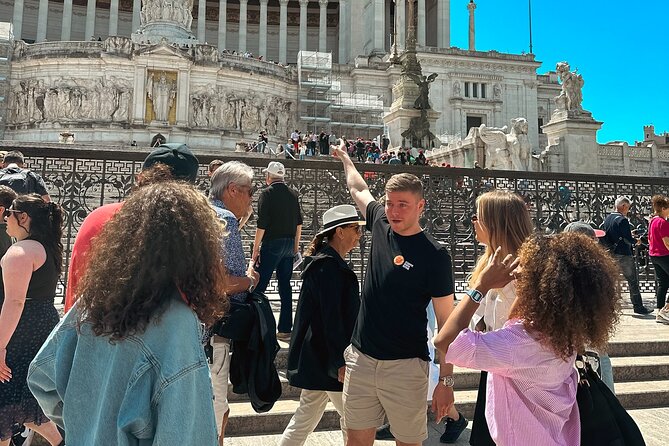
The Monumento a Vittorio Emanuele II is impossible to miss. Its white stone mass rises high above the surrounding streets, and the guide explains its connection to Vittorio Emanuele II and the unification of Italy.
This is a short stop, around 10 minutes, so expect an explanation and time for photographs rather than a full visit inside. The monument can feel oversized beside Rome’s older buildings, which is exactly why it works well as an early talking point. It shows you that Rome is not only an ancient city. It is also the capital of a modern nation, with grand public symbols from a much later period.
Admission to this stop is free. The value comes from the guide’s context, not from entering a paid attraction. If you are interested in how Rome changed after becoming the capital of unified Italy, listen closely here.
Trajan’s Column and the story carved in stone
Trajan’s Column receives about 10 to 15 minutes. The guide focuses on Emperor Trajan, his life, and his military conquests, using the column’s carved reliefs as a way to explain Roman ambition and propaganda.
You may not be able to read every detail of the spiral relief from street level, but the guide can point out what to look for. This is one of those stops where a good explanation matters more than simply taking a photograph. Without context, it is a tall marble column. With context, it becomes a record of how Rome wanted to present its victories.
The stop is free and outdoors. It also gives the tour a strong ancient Roman element before the route shifts toward the famous fountains, churches, and squares of the historic center.
More Walking Tours in Rome
- Rome: Trastevere & Campo de Fiori Street Food Walking Tour
★ 4.9 · 2,768 reviews - Rome: Paranormal Night Walking Tour & Secret Backstreets
★ 4.9 · 1,921 reviews - Rome by Night Walking Tour – Legends & Criminal Stories
★ 4.5 · 1,003 reviews - Rome: Guided City Center Evening Sightseeing Walking Tour
★ 4.4 · 953 reviews
Trevi Fountain, wishes, and a short stop
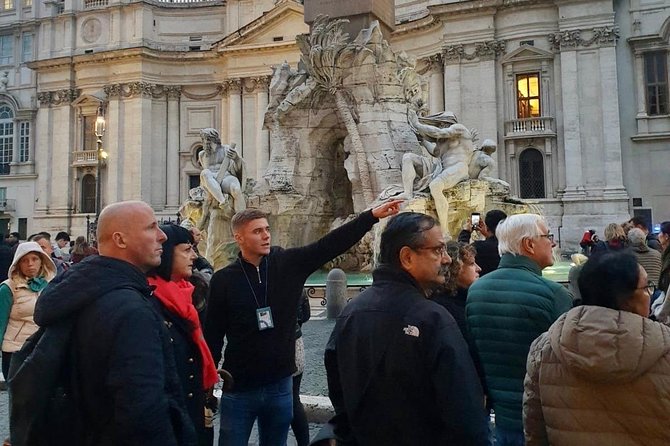
Trevi Fountain is allotted about 15 minutes. That is enough to admire the Baroque design, toss a coin, take photographs, and hear the story behind one of Rome’s most famous meeting places.
Do not expect a quiet visit. The fountain is one of the city’s most popular sights, and the space around it can be crowded. A guide helps by giving you a clear point of reference and explaining the design before you try to find the best angle for a photo.
The stop includes time for a nearby gelato recommendation, though food and drinks are not included. That small detail is useful because Trevi is surrounded by tempting cafés and sweets, but the tour itself keeps moving. If you want an unhurried fountain visit, return later on your own.
I like the balance here. You get the essential story and a chance to take in the scene without spending a full morning at one fountain. The trade-off is that you will need to move quickly if you want both photographs and a close look at the details.
The Pantheon from the outside and inside
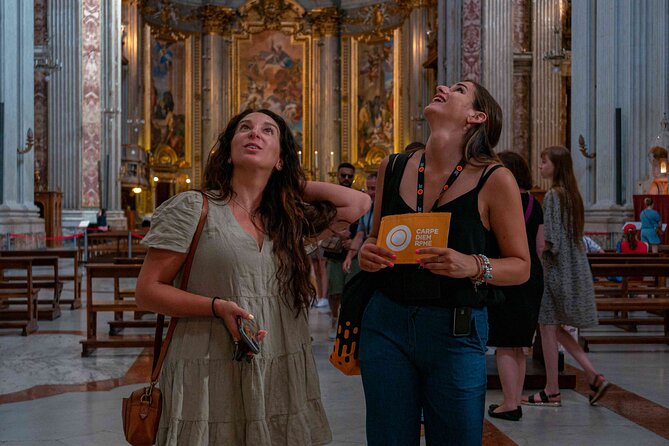
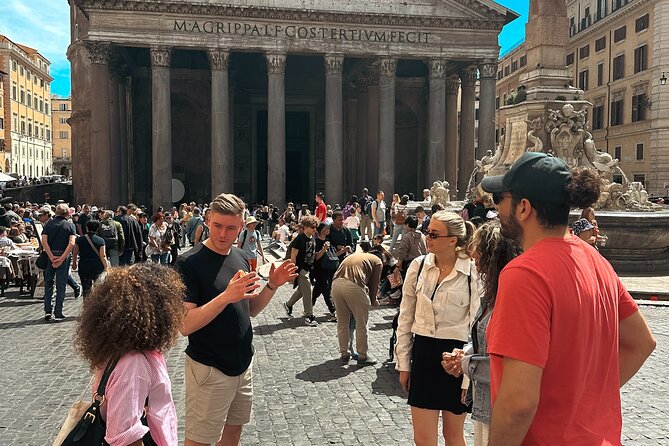
The Pantheon is one of the strongest parts of the route. After walking through Rome’s cobbled side streets, the building seems to appear suddenly in its square. The guide spends about 20 minutes explaining its origins, its later use as a church, and the extraordinary concrete dome built nearly 2,000 years ago.
The dome is the key detail. It remains the largest unreinforced concrete dome in the world, an engineering achievement that feels even more impressive when you see the building in person. The guide can also help you understand why the Pantheon’s present identity is more complicated than its ancient name suggests.
Entry is not included. This matters when you compare the tour with a ticketed Pantheon visit, because your two-hour walk may give you only an exterior explanation and time in the square. If you want to see the interior, check the entry arrangements separately and allow extra time after the tour or on another visit.
Even without going inside, this stop is valuable. The surrounding streets show how Rome’s historic center works: ancient structures, churches, shops, and cafés all share the same small area. You get a better sense of the city by walking through that setting than by seeing the Pantheon in isolation.
Piazza Navona is a useful place to finish
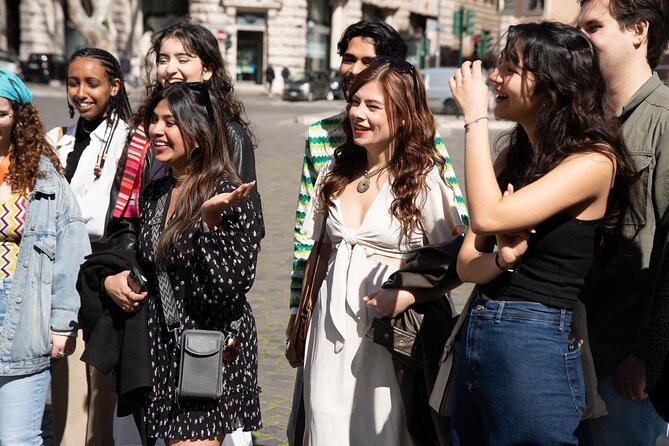
The tour ends in Piazza Navona after about 20 minutes in the square. This is a smart finish because the piazza gives you room to linger, take photos, and decide what to do next without having to find another neighborhood.
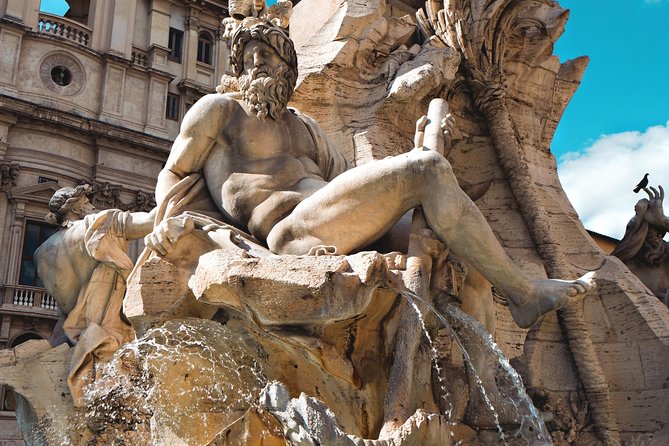
The square is known for three fountains and the Baroque church of Sant’Agnese in Agone. Your guide explains the architecture and the role of the piazza, then points you toward nearby bars, restaurants, and rooftop terraces.
I would not rush away when the formal tour ends. Piazza Navona is a good place to review what you have learned and choose a meal. The tour does not include food or drinks, so any restaurant, coffee, or gelato stop is at your own expense.
The ending also works well for an evening departure. You can continue with dinner nearby, walk toward the Pantheon, or use the square as a starting point for more wandering. Since the tour does not return you to the starting location, plan your next stop from Piazza Navona rather than assuming you will end near the Forum.
What the guides add to the walk
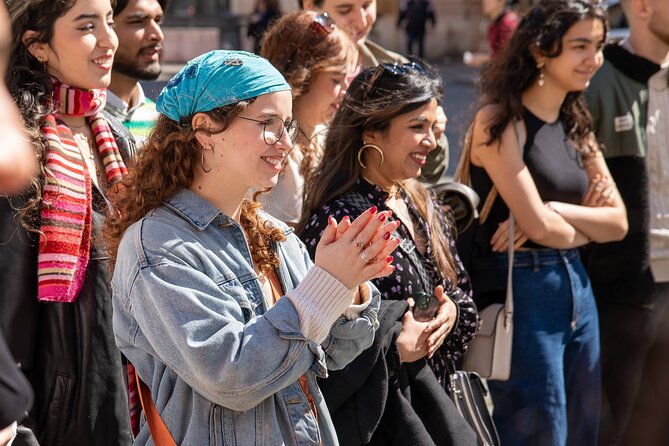
The guide makes or breaks a short overview tour. With only two hours, the presentation needs to be clear, well paced, and selective. The strongest comments focus on guides who combine facts with stories instead of delivering a long lecture.
Sharon is repeatedly praised for her warmth, local suggestions, and ability to keep the tour going in difficult weather. Dan is described as especially strong on Roman history and as someone who welcomes questions. Sila is praised for combining history, architecture, culture, and lighter details in a way that holds attention.
Other named guides include Paulina, Dominica, Christian, Keisha, Vlad, Anna, Yousouf, Sandy, and Vladimir. Their styles may differ, but the tour’s best feature is the chance to ask about the rest of your time in Rome. Guides have offered suggestions for food, sightseeing, and things to do after the walk.
That advice can be more useful than another memorized fact. Ask where to eat near Piazza Navona, which sights deserve a return visit, and how to plan your next day. A short orientation walk pays off when it helps shape the rest of your stay.
Group size, sound, and walking comfort
The maximum group size is 15. That is small enough for a more personal feel, and it is easier to hear one guide than on a large city tour. One particularly small group had about seven people, which allowed plenty of questions and made it easier to stay close to the guide.
Rome is not silent. Traffic, church bells, and crowds can interrupt explanations. One guide handled this by pausing when a loud car or bells made hearing difficult. That is a good habit, but you should still stay near the guide and avoid drifting behind for photos.
Most people can participate, and the tour is near public transportation. The route uses city streets and includes cobbled areas, so comfortable shoes are sensible. No hotel pickup is listed, and you are responsible for reaching Piazza d’Aracoeli on time.
The walk lasts approximately two hours. It is long enough to introduce the center but short enough to fit before lunch, dinner, or another booked attraction. Leave some breathing room afterward, especially if you plan to enter the Pantheon or stop for food.
Who should book this Rome walk
I would recommend this tour to a first-time visitor who wants a clear overview before exploring Rome independently. It suits couples, families, and solo visitors who prefer a guide but do not want a large group or a full-day commitment.
It is also a good choice if your schedule is tight. You see several famous locations, learn the basic story behind them, and finish in one of the city’s most useful squares. The advice from guides such as Sharon, Dan, Sila, and Paulina can help you use the rest of your trip wisely.
You may want something else if your main goal is entering major monuments. This tour does not include the Colosseum, Roman Forum, or Pantheon interiors, and the time at each outdoor stop is limited. A private upgrade is available if you want a more personal experience, more questions, or a pace shaped around your interests.
The tour is offered in English. The published score is 4.9 from 682 ratings, with 97 percent recommending it, which fits the strongest parts of the experience: good guides, a sensible route, and a useful introduction to Rome.
Booking details worth noting
Confirmation is provided at booking, and free cancellation is available up to 24 hours before the start time. Cancellations or changes made less than 24 hours before the tour do not receive a refund.
The experience requires good weather. If poor weather forces a cancellation, you are offered another date or a full refund. I would avoid scheduling the walk immediately before a costly timed attraction, since city traffic, crowds, or meeting-point confusion could make your morning tighter than expected.
Should you book it?
Book this walk if you want a practical first look at central Rome, a local English-speaking guide, and a small group at a reasonable price. The route covers the city’s headline sights without consuming your entire day, and ending at Piazza Navona is genuinely convenient.
Skip it if you want long interior visits or detailed archaeological study. For everyone else, arrive early at Piazza d’Aracoeli, bring mobile data, wear comfortable shoes, and treat the tour as your Rome orientation. Then use the guide’s suggestions to decide where you want to return and spend more time.
FAQ
How long is the Rome walking tour?
The tour lasts approximately two hours.
Where does the tour begin?
The meeting point is Piazza d’Aracoeli, Via di S. Venanzio 8, 00186 Rome, near the Colosseum and Roman Forum.
Where does the tour end?
The walk ends in Piazza Navona, near restaurants, cafés, bars, and rooftop terraces.
Is entry to the Pantheon included?
No. The guide discusses the Pantheon and its surrounding square, but entry is not included in the tour price.
What language is the tour offered in?
The tour is offered in English.
What happens if the weather is poor?
The tour requires good weather. If it is canceled because of poor weather, you can choose another date or receive a full refund.
Fresh on the Rome list
- Exclusive Golf Tour Private VIP with Local & Gelato o Wine★ 5.0 · 500 reviews
- Colosseum, Palatine Hill and Roman Forum with Guided Tour★ 5.0 · 500 reviews
- Rome Trastevere Pasta Making Class with Eating Europe★ 5.0 · 505 reviews
- Rome by Night Walking Tour★ 4.5 · 506 reviews
- Rome: Colosseum Express Tour with Forum & Palatine Access★ 4.5 · 511 reviews
- Rome Food Experience Max 6 People Group Tour | w/Private Option★ 5.0 · 516 reviews
- Rome: Navona Square Underground Ticket with Audio Guide★ 4.0 · 518 reviews
- Rome: Escorted Papal Audience Experience with Entry Ticket★ 4.4 · 518 reviews
Walking Tours, compared.
Guided Walking Tour & Last Supper Visit with Ticket
Read our review →
Rialto Bridge & Offbeat Unusual Venice Walking Tour
Read our review →
Private 3 hrs Venice Tour: St Mark’s, Walking tour & Boat tour
Read our review →
Skip the line: Uffizi and Accademia Small Group Walking Tour
Read our review →Browse the lists this tour appears in