
Reviewed · SKIP-THE-LINE TICKETS
Rome: Pantheon Skip The Line Tickets
The Pantheon’s great surprise is above you: a huge unreinforced concrete dome with a round opening to the sky. This ticket lets you get inside without spending your Roman morning in a long queue, then gives you time to look up, wander, and study the building at your own pace.
I like two things here. First, the price is modest at $12.41 per person, especially if the regular entry line is long. Second, you are not tied to a guide’s pace or a large walking group. The catch is that this is mainly an escorted ticket service, not a full historical tour, and meeting the host away from the Pantheon can be confusing.
Key points to know before booking
- The dome and oculus are the main event: Light, rain, and changing shadows enter through the open roof.
- You meet a host before entering: The host validates your booking and provides or transfers the entry ticket.
- This is mostly self-guided: Expect about 45 minutes inside, without a guide staying with you.
- The meeting point matters: Go directly to the stated meeting location rather than waiting at the Pantheon entrance.
- Audio help can vary: Some bookings include phone-based audio material, but device arrangements have not always been clear.
- The group limit is 20 people: That is a maximum for the hosted entry, not necessarily a guided group inside the building.
What you are really buying for $12.41
This experience sells convenience more than interpretation. You pay $12.41 for a timed Pantheon entry arranged by KAY KAY Tour Ltd., plus an escort to help you get through the first part of the process. Once inside, you set your own pace.
That distinction matters. If you want a historian to explain Roman construction, Christian transformation, tombs, and art as you walk, this is not the safest choice. The service is closer to a skip-the-line admission ticket with a host than to a traditional guided tour.
Still, the price can make sense on a crowded day. The Pantheon sits in central Rome, and its location makes it easy to fold into a walk between Piazza Navona, Trevi Fountain, and other sights. If the line is moving slowly, avoiding it can save valuable sightseeing time. If the entrance is quiet, the extra cost may feel less worthwhile, especially since some direct buyers have found the official route cheaper.
The smart question is not simply is $12.41 cheap? Ask what your time is worth. For a first morning in Rome, a reliable fast entry can be useful. For a flexible day with no queue, buying admission directly may offer better value.
More Skip-the-Line Tickets in Rome
- Vatican Museums & Sistine Chapel Skip-the-Line Entry Ticket
★ 4.4 · 13,838 reviews - Skip-the-Line Group Tour of the Vatican, Sistine Chapel & St. Peter’s Basilica
★ 4.5 · 12,779 reviews - Vatican, Sistine Chapel & St. Peter’s Skip-the-Line Tour
★ 4.5 · 7,770 reviews
Meeting the host before the Pantheon
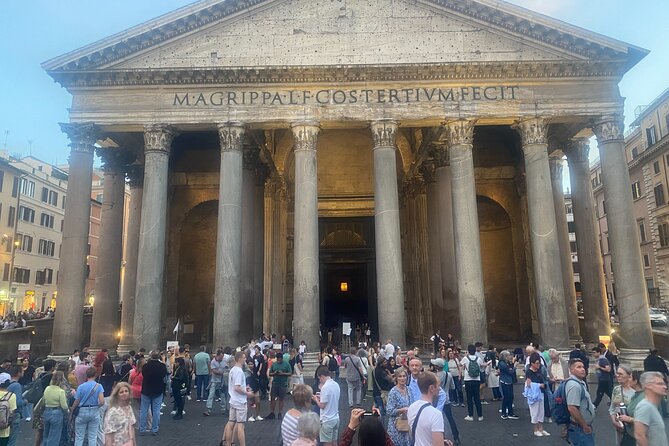
The most important practical detail is also the easiest to miss: you do not simply walk to the Pantheon entrance and show your booking. You first meet the host at the stated meeting point, receive the ticket, and are escorted toward entry.
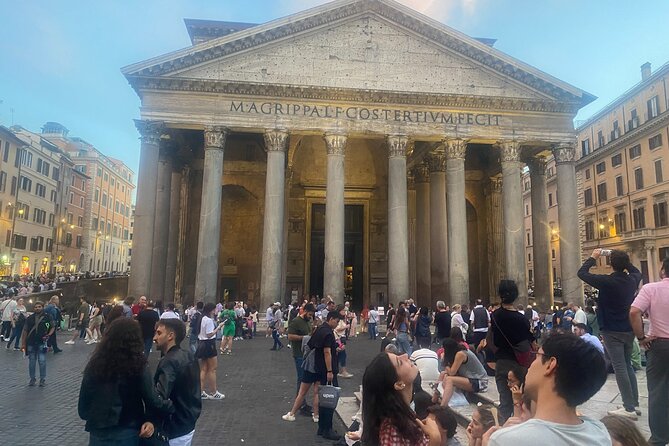
Some hosts communicate actively by phone or message. One host, for example, sent a photo showing exactly where he was and identified the flag he was holding. That kind of contact can make the handoff quick, even in a busy square. Other bookings have been less smooth, with delayed hosts, unclear directions, or nobody visible at the meeting point.
I recommend arriving early enough to locate the meeting spot without panic. Keep your phone charged, make sure your booking messages are available, and read the meeting instructions before leaving your hotel. Do not assume the Pantheon entrance is the meeting place.
This arrangement explains a common frustration. You may see the Pantheon and its queue before you have collected your ticket, but entering that line first will not help. The host must validate the booking and provide the admission pass. A few minutes spent finding the correct contact can prevent a much longer wait later.
The service allows a maximum of 20 people. That number is not especially large, but it does not mean you receive a 20-person guided explanation inside. In practice, the host may hand over the ticket, walk you to the entrance, and leave you to explore.
Entering a building rebuilt under Hadrian
The Pantheon began with Marcus Agrippa during Augustus’s reign in 27 BC. The building you see today was rebuilt under Emperor Hadrian around AD 126. That long timeline is worth keeping in mind because the Pantheon is not just an old shell. It is a Roman building that survived, changed purpose, and remained remarkably complete.
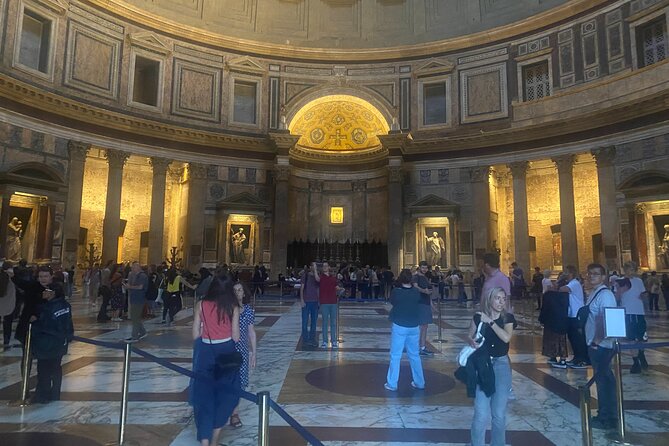
At the front, the portico gives you a grand first view, but the interior is where this ticket earns its keep. Step inside and let your eyes adjust. The space is circular, tall, and calm compared with the busy streets outside.
The original marble floor is one of the details worth seeking out. Look down as well as up. The colored patterns and geometric arrangement help you understand how carefully the Romans balanced structure and decoration.
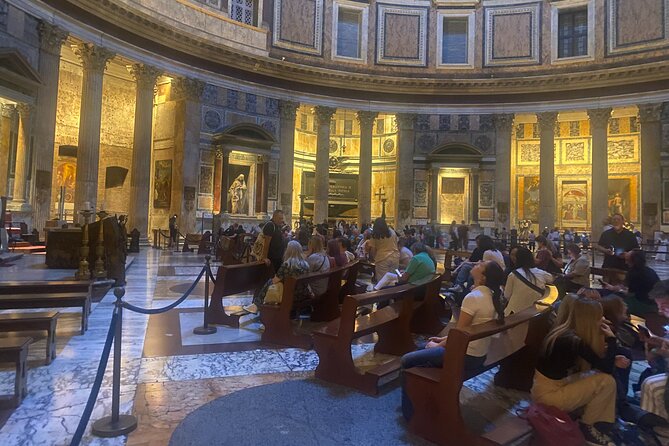
You will also see statues and tombs. The Pantheon became a Christian church called the Basilica of Santa Maria ad Martyres, and that later use is part of the building’s story. It is not a frozen pagan temple. Its identity shifted over time, and the interior reflects that change.
Because you are on your own, you can pause wherever you like. You can spend five minutes studying the floor, move beneath the dome, and return to a statue without holding up a group. Families and independent sightseers often prefer this freedom.
Looking up through the oculus
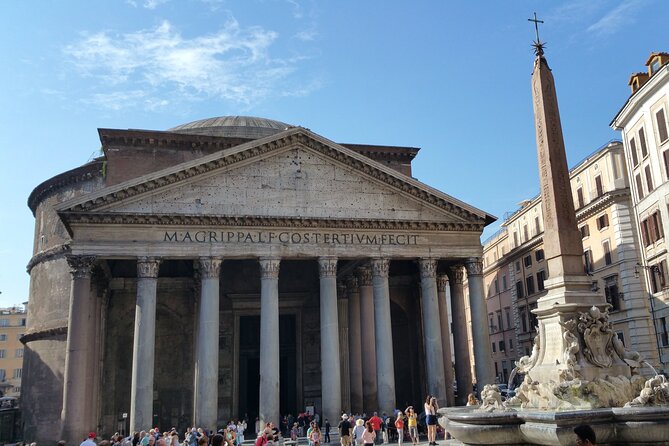
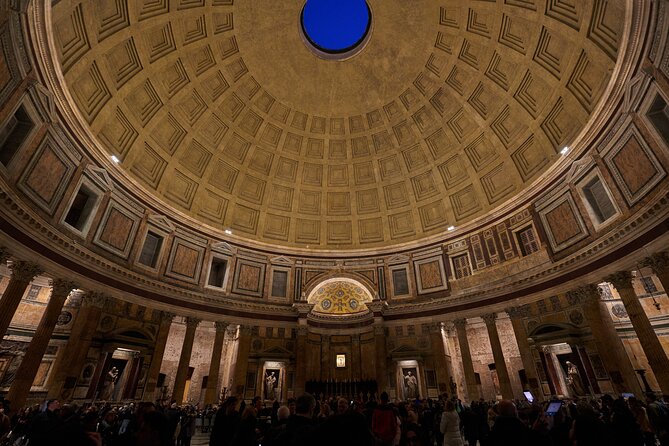
The oculus is the Pantheon’s most memorable feature. It is a perfectly circular opening at the top of the dome, allowing daylight to enter directly. The beam of light moves as the sun shifts, so the interior never looks quite the same from one visit to the next.
The opening also gives the room a direct connection to the outside. You can see changing sky conditions through it, and rain can enter the building. The oculus is not covered by glass in the description of this experience, so look up for the open circle rather than a painted ceiling or a modern skylight.
The dome is among the largest unreinforced concrete domes in the world. That phrase can sound technical, but the visual effect is simple: the Romans created a vast overhead space without modern steel reinforcement. The dome grows lighter toward the top, an engineering choice that helped support its enormous span.
A self-guided visit works well here because the architecture rewards quiet observation. You do not need a long lecture to understand the basic drama. Walk toward the center, look straight up, then study how the dome meets the circular walls. The changing light does much of the storytelling.
Allow the full 45 minutes if you can. A rushed ten-minute stop gives you the famous view, but not much else. The floor, tombs, statues, dome, and Christian furnishings deserve a slower circuit.
Same city, an entirely different afternoon:
- Vatican Museums & Sistine Chapel Tour with Optional Basilica
★ 4.3 · 67,413 reviews - Colosseum, Roman Forum & Palatine Guided Tour
★ 4.7 · 63,148 reviews - Vatican Museums, Sistine Chapel & St Peter’s Basilica Guided Tour
★ 4.5 · 39,149 reviews - Rome: Colosseum, Palatine Hill and Roman Forum Guided Tour
★ 4.8 · 32,814 reviews
Self-guided touring and the audio question
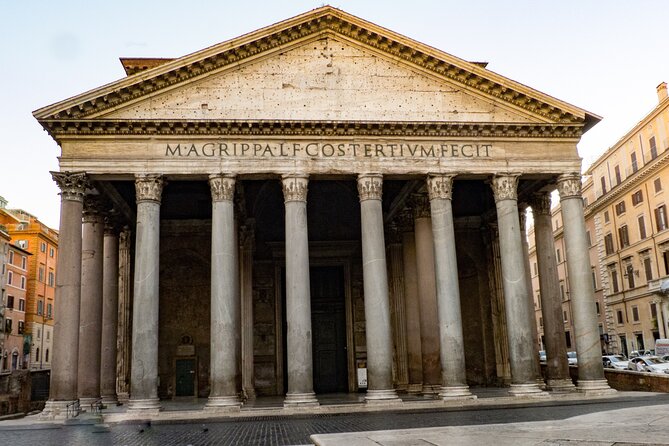
The advertised format gives you independence, but the audio side needs a little caution. Some bookings have included a phone-based audio guide or a short video supplied when the group meets. In one case, five people received only one audio device, making it hard for everyone to hear.
That is a practical issue, not a minor technical quirk. If you are paying for several people, ask how many devices or access codes are included. If the material is delivered to your phone, bring headphones or earbuds if you have them. The supplied details do not guarantee one separate device per person.
Some visitors have simply used the Rick Steves Audio Europe app instead. I cannot treat that as part of this ticket, but it shows why you may want your own backup. The admission service and the interpretation are separate needs. The ticket can get you inside, while an independent audio source can supply the explanation.
Do not book this expecting the host to remain inside and point out every feature. A few hosts have been especially helpful, offering extra suggestions for nearby sights or guiding visitors through the entry process. But the standard arrangement is still self-guided.
That can be a strength. You can listen to your own material, take photographs where permitted, and linger without waiting for a group. It can also be a weakness if you want clear context about Roman religion, Hadrian’s rebuilding project, or the building’s later Christian role.
The biggest risk: timing and communication
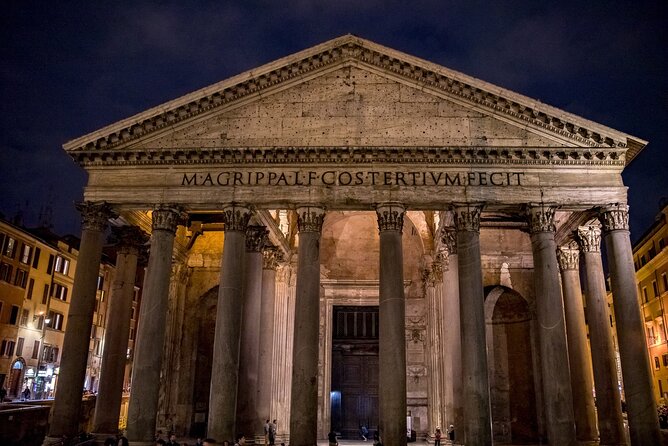
The positive experiences share a pattern: clear contact, an easy handoff, and quick entry. Hosts have sent messages, made phone calls, found late arrivals, and helped people enter on crowded days. That support is the main reason to use a third-party ticket rather than handling admission alone.
The negative experiences share a different pattern: the host did not appear on time, the meeting location was unclear, or the ticket arrived by message without enough guidance. Some people waited beyond the scheduled time and never entered. That is a serious problem when you have reserved a precise time in a tightly planned Rome itinerary.
Give yourself a buffer before and after the booking. Do not schedule a train, museum reservation, or restaurant immediately after the 45-minute visit. The stated duration is approximate, and the handoff can take longer if communication breaks down.
You should also keep all contact information handy. The booking confirmation is received at the time of reservation, and the operator may use messaging to explain where to meet. Check those instructions carefully rather than relying on a general map pin.
The operator has responded to complaints by pointing out that the meeting location is clearly stated and that visitors should not go to the entrance first. That makes the instructions especially important. Even so, a clearly printed meeting point does not remove the need for dependable on-site communication.
When the skip-the-line ticket is worth it
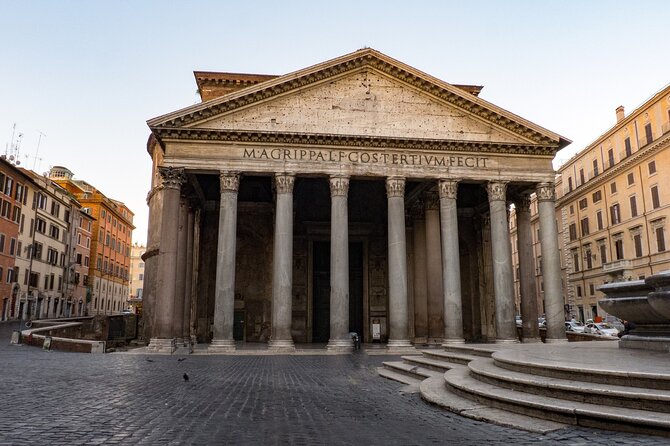
I would consider this ticket when the Pantheon is a high priority and your Rome schedule is tight. It is also useful if you dislike standing in a queue or are visiting during a very busy period. The modest price may be fair payment for arranging a timed entry and reducing uncertainty at the door.
It is less attractive when you are already nearby and can buy a ticket directly without delay. One of the clearest criticisms is that the host meeting point may be farther from the Pantheon than expected. You may spend time walking away from the monument, collecting a ticket, and returning to an entrance you could have reached directly.
The third-party route can also be awkward for a larger family. If the audio portion comes on only one device, five people cannot comfortably listen together. For a group of two, the self-guided format may feel simple. For a family wanting one shared explanation, a proper private or group tour could be a better match.
The free cancellation policy helps reduce the risk. You can cancel for a full refund up to 24 hours before the local start time. Changes or cancellations made inside that 24-hour window are not accepted for a refund.
Who should book this experience
This suits you if you want:
- Fast entry without committing to a full guided walk.
- A short visit that fits between other central Rome sights.
- Freedom to study the dome, oculus, floor, statues, and tombs alone.
- A host who can help with the ticket handoff.
- A low-cost way to avoid a potentially long line.
I would be more cautious if you need guaranteed live commentary, dislike meeting-point arrangements, or are traveling on a strict schedule. The Pantheon is easy to appreciate without a guide, but the ticket service itself depends heavily on the host appearing promptly and explaining the next step.
Most people can participate, and the site is near public transportation. Food and drinks are not included, though you will find plenty of places to eat in central Rome outside the experience.
Should you book the Pantheon ticket?
Book it if saving time matters more to you than getting a full tour, and only after reading the meeting instructions closely. The best version of this experience is simple: a responsive host meets you, hands over the ticket, gets you through the entrance, and lets you enjoy one of Rome’s finest interiors without a queue.
Skip it if you expect a guide to stay inside, explain the monuments, and manage the whole visit. In that case, look for a clearly advertised guided tour instead. You can also compare the direct Pantheon booking option, especially on a quiet day.
My practical choice would be this: use the ticket when your date is busy, the Pantheon is a must-see, and the time saving is worth the small surcharge. Arrive early, confirm the meeting point, keep your phone ready, and bring your own audio option if interpretation matters. That preparation turns a potentially confusing handoff into a short, flexible visit beneath an extraordinary Roman dome.
FAQ
How long does the Pantheon experience last?
The visit lasts approximately 45 minutes.
What does the ticket include?
It includes a Pantheon skip-the-line ticket and escorted entry with a host.
Is this a fully guided tour?
No. The host helps with entry, but the visit is mainly self-guided. The host may not remain inside with you.
What can I see inside the Pantheon?
You can see the dome and oculus, statues, tombs, and the original marble floor.
Where do I meet the host?
You meet the host at the stated meeting point before going to the Pantheon entrance. Read the booking instructions carefully because the meeting point is not necessarily at the monument itself.
Is food or drink included?
No. Food and drinks are not included.
How many people can join?
The activity has a maximum group size of 20 people.
Is an audio guide included for every person?
The supplied information does not guarantee one audio device per person. Audio material may be provided through a phone or another format, so confirm the arrangement if several people need to listen.
Can I cancel for a refund?
Yes. You can cancel up to 24 hours before the experience start time for a full refund. Cancellations or changes made less than 24 hours before the start time are not refunded or accepted.
Fresh on the Rome list
- Rome: Guided Catacombs Tour & Capuchin Crypt (Audio Guide)★ 4.3 · 191 reviews
- Guided tour of the Colosseum, Roman Forum and Palatine in Spanish★ 4.5 · 191 reviews
- Rome: Borghese Gallery Guided Tour with Skip-the-Line Ticket★ 4.5 · 192 reviews
- Rome: Arena Colosseum Tour with Arena Access★ 4.6 · 193 reviews
- Colosseum, Forum, Palatine Hill with audio guide and Arena or Bus option★ 4.0 · 193 reviews
- Rome: Colosseum & Roman Forum Guided Tour★ 5.0 · 194 reviews
- Rome: Domus Aurea Guided Tour and Virtual Reality Experience★ 4.7 · 194 reviews
- Rome Vintage Fiat 500 car Tour With Photographer★ 5.0 · 194 reviews
Skip-the-Line Tickets, compared.

Skip-The-Line Uffizi Gallery Timed Entry Ticket
Read our review →
Vatican Museums & Sistine Chapel Skip-the-Line Entry Ticket
Read our review →
Skip-the-Line Group Tour of the Vatican, Sistine Chapel & St. Peter’s Basilica
Read our review →
Michelangelo’s David Skip-the-Line Entry Ticket
Read our review →
Vatican Museums & Sistine Chapel Skip-The-Line Ticket
Read our review →
Vatican, Sistine Chapel & St. Peter’s Skip-the-Line Tour
Read our review →
Skip-the-Line Vatican, Sistine Chapel & St. Peter’s | Small Group
Read our review →
Vatican: Vatican Museums Sistine Chapel Skip-the-Line Ticket
Read our review →Browse the lists this tour appears in