
Reviewed · CYCLING TOURS
Rome E-Bike Tour with a Local! Top Attractions & Hidden Gems!
Rome is easier to understand from a bicycle than from a pavement. In three hours, this small-group ride links the Colosseum, Pantheon, Trevi Fountain, Piazza Navona, and other major sights with quieter streets that buses and walking tours often miss. Luigi, who leads the tour personally, knows how to thread the city together.
I like the excellent Trek e-bikes, which make Rome’s hills manageable, and the maximum of eight people, which keeps the group from becoming a rolling traffic jam. I also like the practical extras: water, helmets, rain ponchos, and child seats on request. The main consideration is pace. You see many places, but most stops are for views and explanations, not inside visits or long historical talks.
Key points to know before you pedal
- Three hours cover a remarkable amount: You pass 13 major sights, from the Colosseum to the Vittoriano, with time for photos and short explanations.
- Luigi leads personally: His local knowledge helps the group use quieter streets and shortcuts between central Rome’s famous monuments.
- Bosch-powered Trek bikes are included: The central motor, comfortable saddle, and puncture-resistant tires reduce the strain of hills and distance.
- The group is capped at eight: That matters on Rome’s busy streets, where close guidance feels safer and questions are easier to ask.
- This is an overview, not an archaeological seminar: You normally see monuments from outside, then return later if you want a longer visit.
- Bring a reasonable comfort level on a bike: The tour requires moderate physical fitness, and the opening ride through traffic can feel tense for inexperienced riders.
Why an e-bike makes sense in Rome
Rome’s sights are spread across a broad central area. On foot, you can spend half a day moving between them, especially when heat, uneven paving stones, and hills enter the picture. An e-bike lets you cover more ground without turning the day into a march.
The bikes are Trek models with Bosch central motors, comfortable seats, and puncture-proof tires. You still pedal, but the electric assistance takes much of the bite out of climbs. That is especially useful around the Aventine Hill and Campidoglio, and it helps older riders or anyone who has not cycled for years keep a steady pace.
You receive a helmet and bottled water. Disposable ponchos are supplied if the weather turns wet, and a child seat can be arranged for a child from one to four years old. Gratuity is optional, and luggage storage is not included, so arrive ready to ride rather than with large bags.
The tour begins at JO&JOE Roma, 113 Via delle Quattro Fontane, and returns there. The meeting point is near public transportation. The bikes are kept in the open patio area inside the large entrance, a useful detail when you arrive and wonder if you are in the right place.
More Bike Tours in Rome
- Rome EBike Tour: Appian Way, Catacombs & Roman Aqueducts
★ 5.0 · 1,766 reviews - Rome: Top Highlights & Hidden Gems Tour by Cannondale E-Bike
★ 4.9 · 1,760 reviews - Rome: Appian Way, Catacombs, & Roman Aqueducts E-bike Tour
★ 4.9 · 1,421 reviews
Starting beside the Colosseum
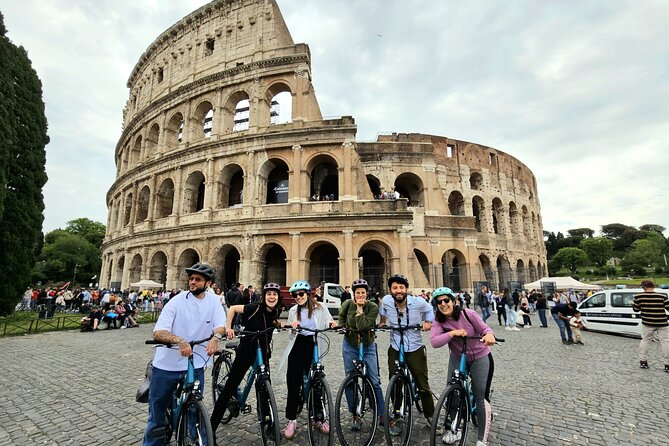
The Colosseum is the natural opening scene. Rather than entering the amphitheater, you ride around it and view it from several angles. That gives you a quick sense of its size and position in the old city, while avoiding the time commitment of an interior visit.
The stop lasts about 10 minutes. That is enough for photographs and a short introduction, but not enough for a full account of Roman games, construction, or later use. If the Colosseum is a top priority for you, book a separate timed entry for another part of your trip.
This arrangement is one of the tour’s strengths for a first morning in Rome. You see where the monument sits in relation to the Forum, Circus Maximus, and Capitoline Hill. Later, you can return with a better idea of how to approach it.
Circus Maximus and the Aventine view
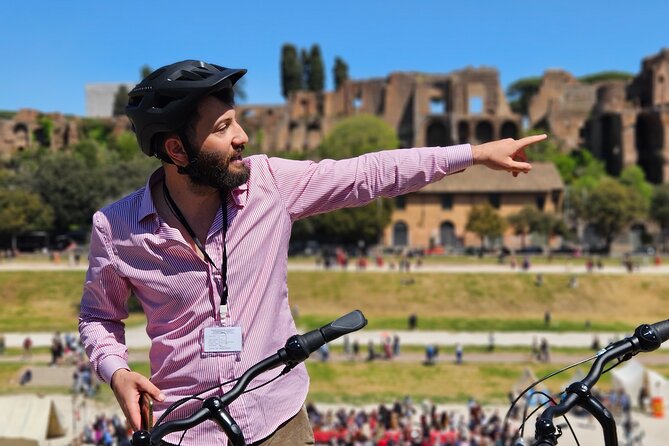
The ride continues around Circus Maximus, the long open valley once used for chariot racing. The stop also gives you a view toward Aventine Hill. You get an important piece of Rome’s geography here: the ancient racing ground below, the hills around it, and the dense modern city beyond.
The stop is brief, about 10 minutes, but the open space provides a welcome change after the Colosseum’s crowds and traffic. It is also one of the points where the electric assistance earns its keep. The route includes hills, and the motor helps keep the ride comfortable.
Through Rome’s Jewish Quarter
The Jewish Quarter receives only about five minutes, yet this short passage adds variety to the route. You ride through its streets and hear about the neighborhood’s past rather than simply stopping at another famous facade.
This is the kind of link that makes a bicycle tour useful. You are not only moving from monument to monument. You are also seeing how Rome’s neighborhoods connect, including streets that you might skip if you were following a straight route between headline sights.
Because the stop is short, do not expect an extended neighborhood walk or a detailed cultural tour. Think of it as a well-placed introduction, then return on foot if you want more time.
More bike days in Rome:
- Rome City Small Group Bike Tour with quality Cannondale EBike
★ 5.0 · 1,380 reviews - Rome by Night – Ebike Small Group Tour – Food and Wine (Option)
★ 5.0 · 1,275 reviews - Rome:Appian Way E-bike Tour with Catacombs, Aqueducts & Food
★ 4.9 · 1,210 reviews - Rome: E-Bike Night Tour with Food and Wine Tasting
★ 4.9 · 1,131 reviews
Campidoglio and views across the Eternal City
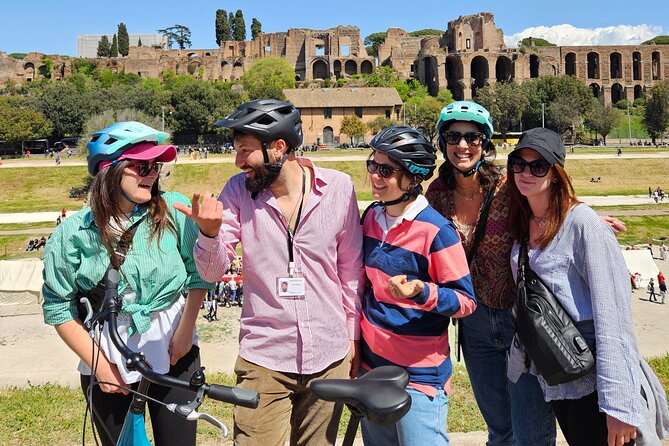
At Piazza del Campidoglio, the reward is the view. The square sits on Capitoline Hill and is one of Rome’s most carefully designed public spaces. The tour pauses for about 10 minutes, giving you time to look across the city and hear why the hill matters.
This is another point where the e-bike changes the experience. A conventional bicycle can make Rome’s inclines tiring, while electric assistance keeps the group moving without making the hill the main event.
You should also expect to get off the saddle often. The ride is not a three-hour sprint. It is a stop-and-go circuit with photo breaks, short talks, and time to take in the setting.
Teatro di Marcello and the Roman Forum from above
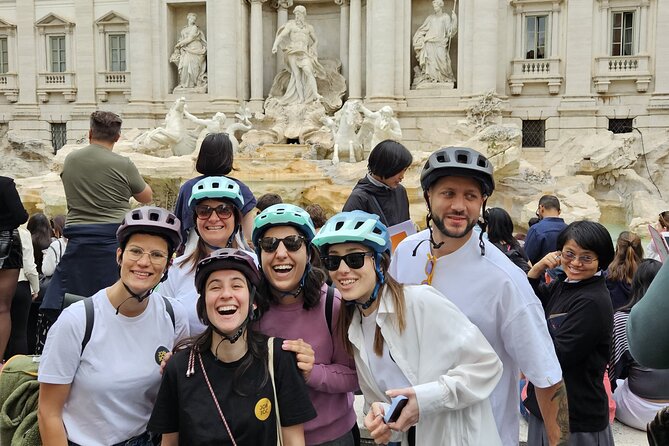
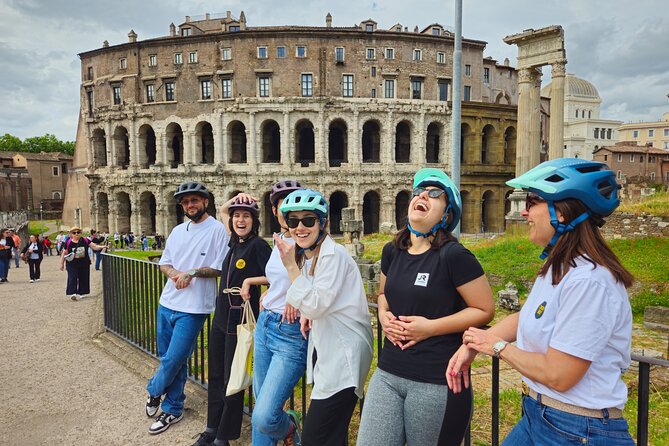
The ancient Theater of Marcellus is a compact, striking ruin, and the tour stops for about five minutes. It is not as famous as the Colosseum, but that is part of its appeal. Its curved stone remains show another side of Roman public architecture without requiring a long detour.
You then view the Roman Forum from above. This is a smart use of limited time. Entering the Forum would require tickets and a much longer pause, while an elevated view helps you understand the spread of temples, arches, and civic buildings.
The tradeoff is clear: you gain range, not detailed exploration. If you want to walk among the Forum ruins, plan that separately. This ride helps you decide what deserves your later time.
A close look at the Pantheon
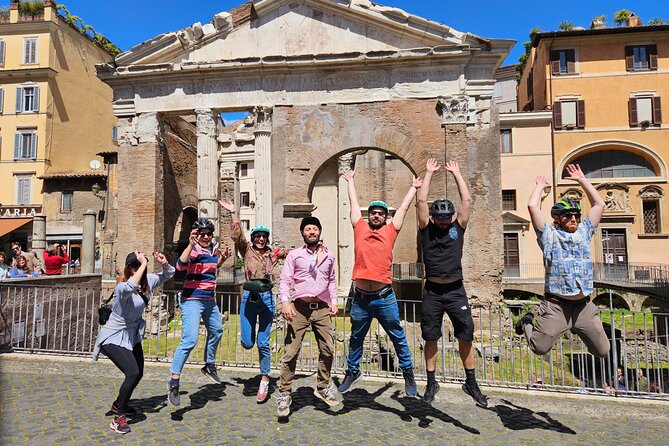
The stop in front of the Pantheon lasts around 10 minutes. This is one of the most rewarding exterior stops because the building remains remarkably intact compared with many ancient Roman structures.
You can study the massive columns and domed form while Luigi explains the site. The tour does not include interior admission, so you will need another visit if you want to see the famous inside space.
The Pantheon is also a good example of the tour’s overall method. You get a clear orientation, a chance to take photographs, and enough context to make a later visit more meaningful. You do not spend the morning standing in one ticket line.
Trevi Fountain and the busy center
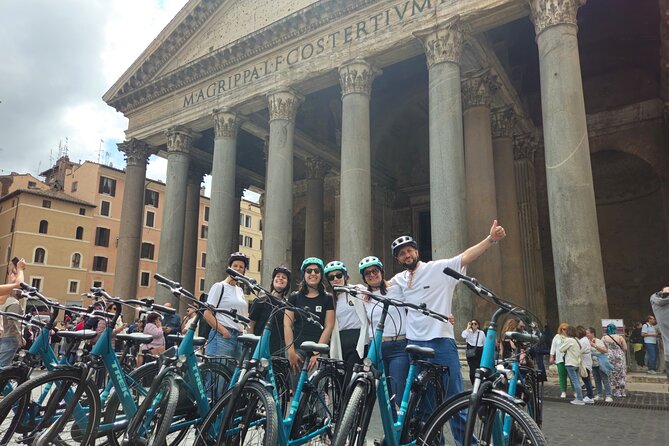
At the Trevi Fountain, the group takes about 10 minutes. This is a popular stop for good reason, but it is also one of the most crowded places on the route. Keep your expectations realistic. You may need to stay close to the group and watch your bike while taking photographs.
The traditional coin toss is part of the fun. More important, the stop places the fountain within the wider route, so you can see how quickly Rome shifts from ancient monuments to Baroque showpieces and narrow commercial streets.
The tour’s small size helps here. Eight riders are easier to keep together than a large group, especially when the streets are crowded. Still, this is not a quiet photo stop.
Campo de’ Fiori and a welcome snack
Campo de’ Fiori is a quick five-minute stop at one of Rome’s best-known markets. A traditional snack is included along the way, and this break adds a taste of everyday Rome to a route otherwise packed with monuments.
The snack is a small but valuable touch. It gives you something local to try without turning the experience into a formal food tour. It also breaks up the riding and gives the group a chance to pause.
The short timing means you will not browse every market stall. If you want to shop or linger, return later on foot. The tour gives you a first look and a useful location to mark on your map.
Ancient columns, the Quirinale, and Piazza Navona
The Column of Marcus Aurelius is another five-minute stop. The monument commemorates Emperor Marcus Aurelius and gives you a chance to look at an ancient column in the middle of modern Rome.
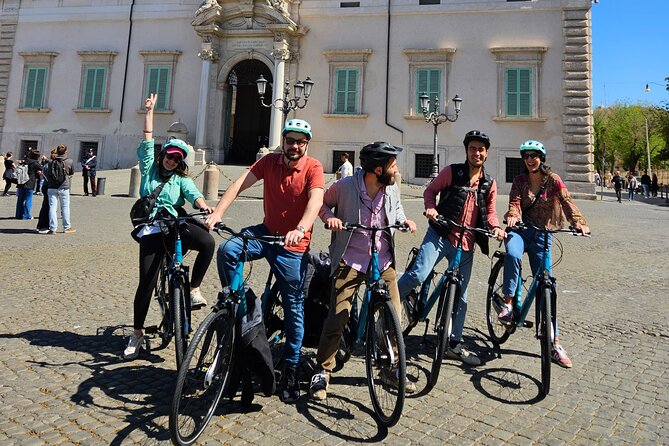
The group then pauses at Palazzo del Quirinale, the Italian Presidential Palace. Its facade is the focus here. You do not tour the palace, but the stop adds political and modern civic history to the ancient and religious sights.
Piazza Navona follows, with about five minutes to see the Baroque setting. Bernini’s Fountain of the Four Rivers and Borromini’s Church of Saint Agnes provide a compact lesson in Rome’s dramatic seventeenth-century style.
Five minutes can feel short in Piazza Navona, especially if you want to study the fountains or take careful photos. Still, the ride lets you see the square as part of a larger sequence rather than as an isolated attraction.
The Vittoriano and Piazza Venezia
The final major stop is the Monumento a Vittorio Emanuele II, viewed from Piazza Venezia. The large white monument is hard to miss, and its history and meaning can be more complicated than its bright appearance suggests.
The five-minute pause is enough for an exterior view and a basic explanation. It is not an interior visit or a long discussion of modern Italian unification. By this point, you have crossed a wide slice of central Rome, from imperial ruins to the symbols of modern Italy.
The ride then returns to the JO&JOE meeting point. Since the experience ends where it starts, you do not need to arrange a second pickup across town.
How much history will you actually hear?
Luigi’s style appears best suited to an overview. He explains each site, answers questions, and uses his local knowledge to connect the sights. Several accounts describe him as friendly, patient, and attentive to different ages and riding abilities. Families appreciated his willingness to stop for water, find shade in hot weather, and help nervous riders feel safe.
You should not book this expecting a long lecture at every monument. The schedule includes 13 stops in three hours, so each explanation must be concise. One rider found the route less satisfying because the commentary felt too brief and the riding lacked a clear goal. That is a fair warning for anyone who wants detailed archaeology or a tightly scripted academic tour.
I would choose this experience to get your bearings fast. It works especially well early in a Rome visit, when you want to learn where the major sights sit before returning to the ones that catch your interest.
Traffic, comfort, and the right time to ride
The most important practical issue is cycling in Rome. Some riders found the first stretch through congestion nerve-racking, while others felt safe under Luigi’s guidance and appreciated the use of quieter backstreets. Your comfort will depend on your cycling experience, traffic confidence, and ability to follow instructions.
This is not a strenuous race, but you need moderate physical fitness. You ride for roughly three hours, with repeated stops and hills. The e-bike reduces effort, but it does not remove the need to balance, pedal, watch traffic, and stay with the group.
Morning may be the smartest choice if you can select a time. A morning ride can help you avoid some of the day’s crowds, and one rider specifically recommended going before the streets grow busier. The experience can also operate at night in some circumstances, though the supplied details do not promise a particular departure time.
Weather matters. Ponchos are provided if rain arrives, but the tour requires good weather and may be canceled when conditions are poor. In that case, you are offered another date or a full refund. You can cancel for a full refund up to 24 hours before the start time, but late cancellations and changes are not accepted.
Is $59.28 a fair price?
At $59.28 per person, the value rests on the amount of ground covered and what is included. You receive a Trek e-bike with Bosch motor, helmet, water, a poncho if needed, a local guide, and a child seat on request. You are also paying for route planning and the confidence of moving through Rome without constantly stopping to check a map.
The price is strongest for first-time visitors with only a few days in town. Seeing the Colosseum, Forum, Pantheon, Trevi Fountain, Piazza Navona, Circus Maximus, and several other sites in three hours would be difficult on foot.
The value is weaker if you already know central Rome well or want interior access. No admission tickets are included because the stops are exterior views. You will still need separate tickets and time for the Colosseum, Forum, Pantheon, or any other site you want to enter.
Who will enjoy this Rome e-bike tour?
I would recommend it to first-time Rome visitors, families with older children, couples, and active adults who want a broad introduction without walking all day. The e-bike is especially helpful if hills or long distances concern you. A family group ranging from age eight to adults enjoyed the ride, while child seats are available for ages one to four on request.
It also suits people who like local routes rather than only major avenues. Luigi uses side streets and shortcuts, giving you glimpses of ordinary neighborhoods between the famous monuments.
I would hesitate to recommend it to someone seeking a slow, detailed history lesson, a food tour, or a fully traffic-free cycling path. It is also not ideal if you dislike bikes, have limited balance, or are uncomfortable riding in city traffic.
My final take: book it for orientation
Book this tour if you want to see a large share of historic Rome quickly, with a local guide and a small group. The combination of well-kept e-bikes, short stops, side streets, water, and a snack makes the experience practical as well as enjoyable.
Skip it if your main goal is to enter the monuments or study each site in detail. For everyone else, especially on the first day of a three-day Rome visit, it offers a smart outline of the city. Ride in the morning if possible, stay close to Luigi, and mark the places you want to revisit on foot.
FAQ
Where does the Rome e-bike tour begin and end?
The tour begins at JO&JOE Roma, 113 Via delle Quattro Fontane, Rome. It ends back at the same meeting point.
How long is the tour?
The experience lasts approximately three hours.
How many people can join the tour?
The maximum group size is eight people.
Are bikes and helmets included?
Yes. A Trek e-bike with a Bosch central motor, comfortable seat, and puncture-proof tires is included, along with a helmet.
Is water provided?
Yes. Bottled water is included. Disposable rain ponchos are also supplied in case of rain.
Can young children join?
A child seat is available on request for children from one to four years old. The tour also requires a moderate level of physical fitness.
What happens if bad weather cancels the tour?
If poor weather causes a cancellation, you are offered a different date or a full refund. Free cancellation is also available when you cancel at least 24 hours before the start time.
More E-bike Rides in Rome
- Appian Way, Catacombs and Aqueducts Park Tour with Top E-Bike
★ 5.0 · 735 reviews - Rome: Appian Way E-Bike Tour Catacombs, Aqueducts & Picnic
★ 4.6 · 727 reviews - Rome: Appian Way & Catacomb Sunset E-bike Tour with Aperitif
★ 4.5 · 682 reviews - Appian Way & Aqueducts small group e-bike tour(catacombs & food)
★ 5.0 · 531 reviews
Fresh on the Rome list
- Rome: Guided Catacombs Tour & Capuchin Crypt (Audio Guide)★ 4.3 · 191 reviews
- Guided tour of the Colosseum, Roman Forum and Palatine in Spanish★ 4.5 · 191 reviews
- Rome: Borghese Gallery Guided Tour with Skip-the-Line Ticket★ 4.5 · 192 reviews
- Rome: Arena Colosseum Tour with Arena Access★ 4.6 · 193 reviews
- Colosseum, Forum, Palatine Hill with audio guide and Arena or Bus option★ 4.0 · 193 reviews
- Rome: Colosseum & Roman Forum Guided Tour★ 5.0 · 194 reviews
- Rome: Domus Aurea Guided Tour and Virtual Reality Experience★ 4.7 · 194 reviews
- Rome Vintage Fiat 500 car Tour With Photographer★ 5.0 · 194 reviews
Cycling Tours, compared.
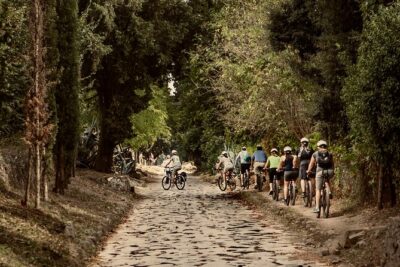
Rome EBike Tour: Appian Way, Catacombs & Roman Aqueducts
Read our review →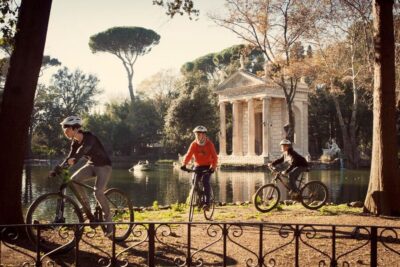
Top Highlights & Hidden Gems Tour by Cannondale E-Bike
Read our review →
Appian Way, Catacombs, & Roman Aqueducts E-bike Tour
Read our review →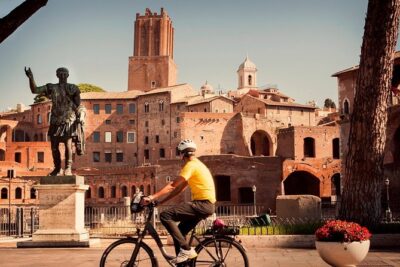
Rome City Small Group Bike Tour with quality Cannondale EBike
Read our review →
Tuscany Bike Tours Through the Chianti Hills with Wine Tasting
Read our review →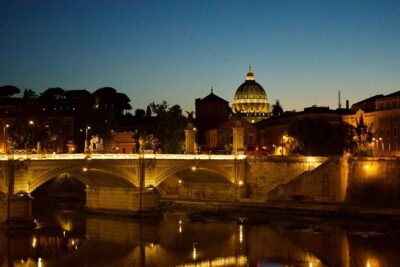
Rome by Night – Ebike Small Group Tour – Food and Wine (Option)
Read our review →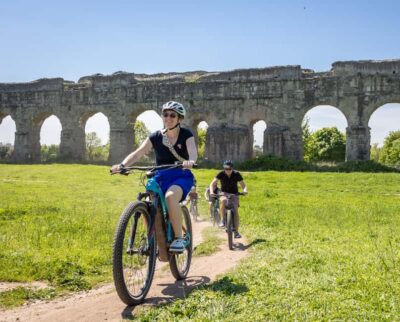
Appian Way E-bike Tour with Catacombs, Aqueducts & Food
Read our review →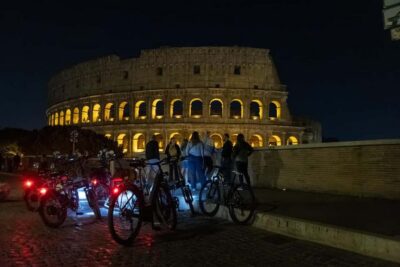
Browse the lists this tour appears in