
Reviewed · NAPLES TOURS
Naples Underground Spanish Quarters with Guide
Beneath Naples, an ancient aqueduct becomes a World War II refuge. This one-hour walk takes you through a small section of the city’s underground water system, then shows how the same stone chambers protected people during air raids. It is history you can feel in the walls, not just read on a sign.
I like the official Napoli Sotterranea guide, since the ruins and wartime spaces need explanation to make sense. I also like the low price, about $18.14, and the choice of start times. The catch is clear: some tunnels are very narrow, there are many steps, and the English delivery can vary by guide.
- Forty meters below Naples: The route includes a substantial descent, followed by a climb back toward street level.
- Ancient waterworks: You explore part of an aqueduct system described as stretching about 120 kilometers.
- World War II shelter: The underground chambers gained a new purpose when Neapolitans sought safety from bombing.
- Narrow passages: Some sections require you to bend, squeeze through, or choose an alternate route.
- Guide-led storytelling: Alex, Eduardo, Alessandro, Grazia, Mario, and Massimo are among the guides praised for lively explanations.
- A short, affordable outing: The tour lasts about an hour and costs $18.14 per person.
What You Actually See Beneath the Spanish Quarter
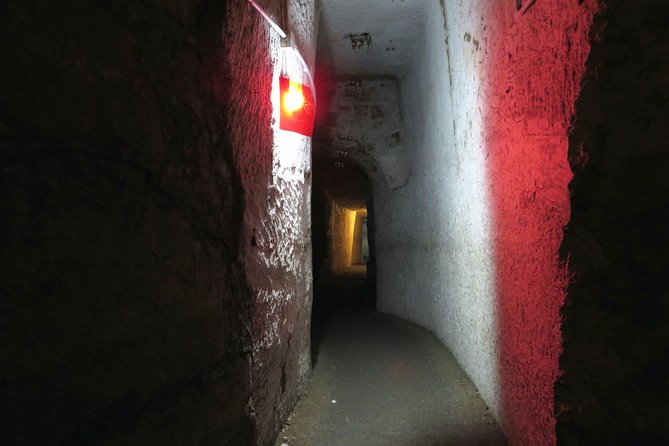
This is not a long underground expedition. You spend roughly an hour below Naples, covering about one kilometer of the old aqueduct network according to the tour explanation. That is enough to give you a clear sense of the place without taking over your whole day.
The route centers on two layers of Naples’ past. First comes the ancient water system, cut and shaped below the city. Then comes the more recent story of the bomb shelter, when these same underground spaces offered protection during World War II.
That change of purpose is the tour’s strongest idea. The aqueduct was built to carry water. Centuries later, it became a place where families waited out air raids. The stone chambers connect engineering, daily life, war, and local memory in a way that a standard city walk cannot.
You are not simply looking at old masonry. You are walking through a space that served a practical role in different eras. The guide supplies the links between those periods, along with local stories and legends that help Naples feel like a lived-in city rather than a museum display.
The Descent at Vico S. Anna di Palazzo
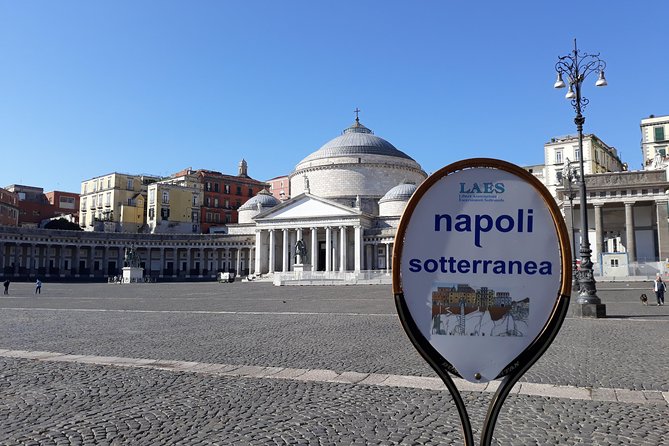
The meeting point is Vico S. Anna di Palazzo, 52, in the Spanish Quarter area. The entrance can be less obvious than expected, so allow a little time to find the correct doorway and look for the sign over the street.
This matters because Naples has several underground attractions, and their entrances are not interchangeable. Check the address on your booking before setting out. Starting at the wrong site could cost you valuable time, especially if you have a train, meal, or other timed visit afterward.
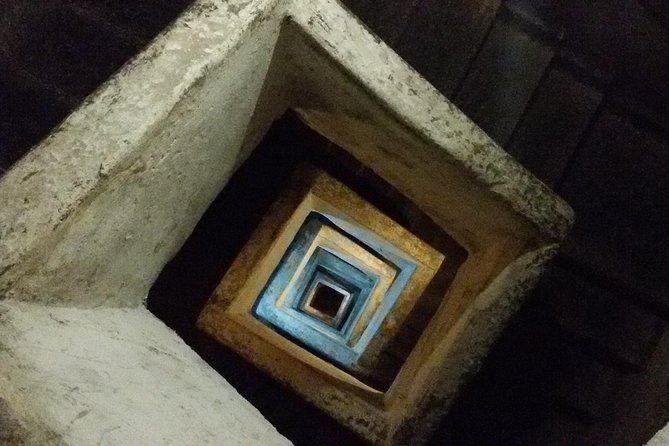
Once inside, the route heads downward. Several descriptions put the descent at about 40 meters, with a later climb of around 16 meters back up. That is not an athletic challenge for most people, but it is more demanding than a flat museum visit.
The steps are part of the setting. As you go down, the modern street fades and the scale of the underground spaces becomes easier to grasp. Still, wear shoes with a firm grip and avoid bringing anything cumbersome. You will appreciate having your hands free in the tighter sections.
A few other Naples mornings to weigh against this
- Naples: Naples Underground Entry Ticket and Guided Tour
★ 4.4 · 21,781 reviews - Naples: Catacombs of San Gennaro Entry Ticket & Guided Tour
★ 4.6 · 7,941 reviews - Naples: Spanish Quarters Underground Guided Tour
★ 4.8 · 5,064 reviews
Ancient Aqueducts Under Modern Naples
The aqueduct is the main historical subject. The underground network is described as extending about 120 kilometers, though this tour covers only a small portion. That limited route is useful because it gives you a focused introduction instead of trying to explain an enormous system all at once.
Your guide helps interpret the engineering. Without that context, a dark passage can look like a rough stone corridor. With an explanation of how the water system worked and why it was built below the city, the walls become evidence of planning and labor.
The tour also places Naples in its Greek and ancient setting. Several guides connect the underground waterworks with Greek construction and explain how the system later served the city in practical ways. Exact details are delivered by the guide on the day, so the quality of the spoken explanation matters.
Alex, Alessandro, Eduardo, Emmanuello, Massimo, Mario, and Grazia are among the English-speaking guides associated with especially lively tours. The best guides do more than list dates. They use jokes, local legends, and human stories to make the aqueduct easier to remember, and they keep younger members of the group involved.
English clarity is one point to watch. Most comments about the guides are strongly positive, but at least one visitor found the speech too quick, quiet, and difficult to follow. If your understanding of spoken English is limited, stay near the guide and ask for repetition when needed.
From Water System to Wartime Shelter
The World War II section gives the tour its emotional weight. During air raids, the underground chambers were used as bomb shelters. The same spaces that once carried water became places of fear, waiting, and survival.
This part works best when the guide connects the broad events of the war to ordinary Neapolitan families. The underground setting makes the subject immediate. You can picture people leaving the streets above and gathering below, often with little control over how long they would have to remain there.
The shelter story also explains why the underground is not simply an ancient ruin. Naples’ past is layered, and the tour keeps moving between distant antiquity and the twentieth century. That mix gives the hour more range than a single-period archaeological stop.
Massimo has been praised for explaining how the Greek aqueducts helped save lives during the war. Eduardo has been noted for making the waterworks and shelter history easy to follow. Alex and Alessandro are also praised for adding humor and energy without losing the serious side of the subject.
Expect a guided interpretation rather than a large display of objects. The attraction is the setting itself, supported by the guide’s narration. If you want a quiet, self-guided ruin with time to study every surface, this may feel brisk. If you like history explained as you move, the format works well.
The Narrow Tunnels Need a Realistic Warning
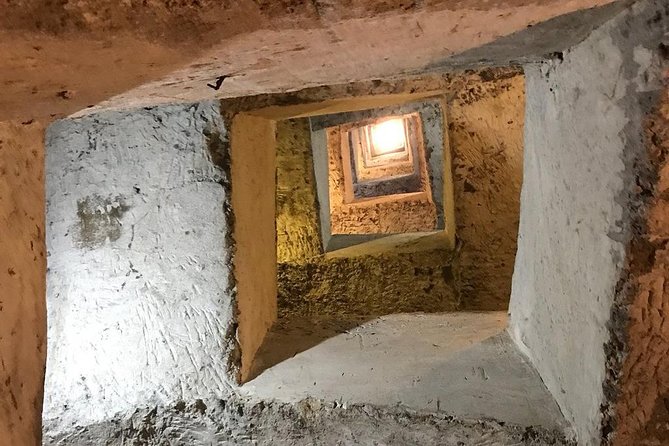
The biggest practical issue is the confined space. Some passages are very narrow, and you may need to bend for a short stretch. Several descriptions make the same point: this is not a good choice if you are strongly claustrophobic.
The tight sections are not constant. There are also larger chambers and alternate routes in some places, but you should not assume every part can be bypassed. One person is reported to have left before the tour began because the conditions felt too uncomfortable.
Body size can matter as well. One description specifically warns that the tour may not suit people who are large in either height or build, since some passages leave little room. That is not a criticism of the attraction, but it is useful information to have before you book.
The physical demands are moderate, not extreme. You face stairs, a descent, a climb, and narrow passages rather than a strenuous hike. The official information advises against the tour for people with mobility difficulties and says it is not suitable for children under seven.
Service animals are allowed, and the activity is near public transportation. Most people can participate, but the underground conditions are the deciding factor. If you are unsure, consider your comfort with stairs and enclosed spaces first, then think about the history.
Same city, an entirely different afternoon:
- From Naples: Pompeii Ruins & Mount Vesuvius Day Tour
★ 4.3 · 11,459 reviews - From Naples: Sorrento, Positano and Amalfi Full-Day Tour
★ 4.6 · 10,988 reviews - From Naples: Sorrento, Positano & Amalfi Coast – Small Group Tour
★ 5.0 · 8,643 reviews - Naples: Downtown Tour with Veiled Christ & St Clare Tickets
★ 4.9 · 6,462 reviews
Guides Make the One Hour Count
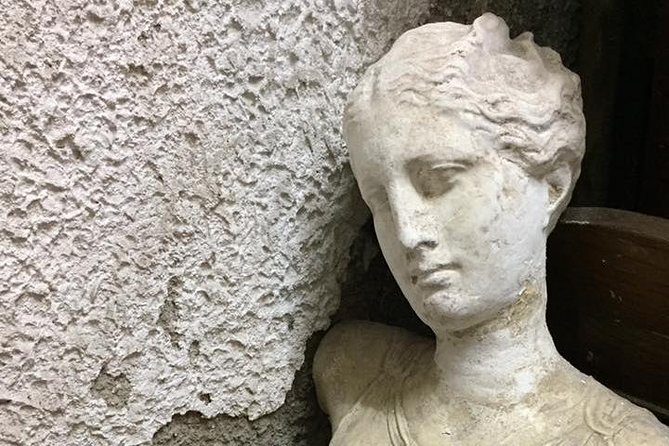
At about an hour, this is an easy visit to fit between other sights in central Naples. The short length also keeps the underground setting from becoming tiring, particularly if you are visiting in warm weather or have already spent the morning walking.
The guide is central to the value. An official Napoli Sotterranea guide explains what you are seeing, gives the aqueduct its scale, and links it to the wartime shelter. Without that voice, much of the route would be atmospheric but hard to interpret.
The strongest guide style combines facts with personality. Eduardo is described as entertaining and clear. Grazia is praised for passion and engagement. Mario is noted for turning stories into a memorable hour, while Emmanuello used jokes to keep teenagers interested.
Local legends also appear in the storytelling. One tour includes an explanation of the famous red chili-shaped charms associated with Naples, including the reminder that they are not actually chilies. Details like this give the walk a local flavor without changing its main focus on the aqueduct and shelter.
Group size can reach 40 people. That is not an intimate private tour, even though it is presented as a small-group experience. A group that size can make it harder to hear in a narrow passage, so stand where you can see the guide and avoid drifting toward the back.
Is $18.14 Good Value?
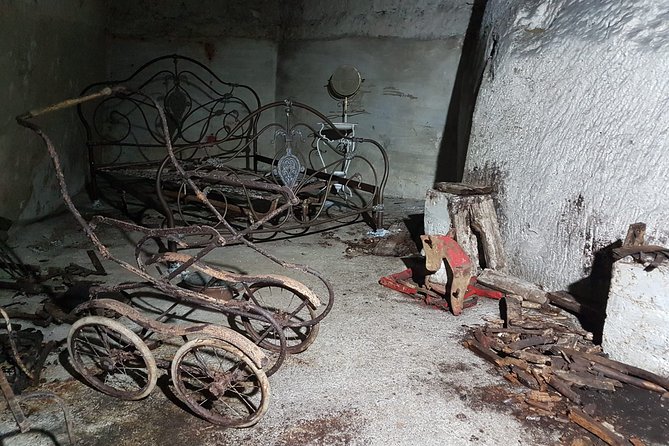
At $18.14 per person, I consider this a strong-value activity if you want a guided historical stop in Naples. The price is modest for an hour with admission included, especially since the underground site is difficult to understand without someone explaining its purpose.
The value comes from the combination of access and interpretation. You get below the streets, enter an unusual part of the city, and hear how the aqueduct later served as a bomb shelter. That is more distinctive than another general walking tour through streets you can explore on your own.
The short duration helps the value too. You are not committing half a day or paying for a long transfer. You can place the visit around time in the Spanish Quarter, a meal near Via Chiaia, or another central Naples sight.
Do not book it expecting a vast underground complex open for unrestricted wandering. You see only part of the larger network, and the pace is guided. The price is fair because the experience is focused, not because it gives you access to every underground chamber in Naples.
Timing, Meeting Points, and Cancellation
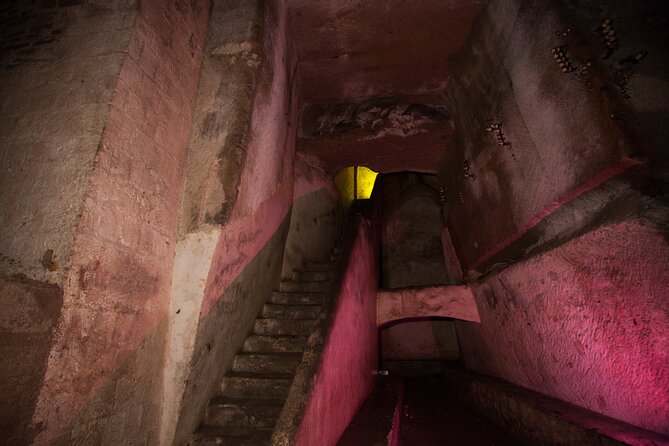
The tour offers a choice of start times, which makes it easier to fit into a sightseeing plan. It begins at Vico S. Anna di Palazzo, 52, and ends on Via Chiaia. Since the beginning and end are listed at different streets, you can continue exploring rather than returning to the original entrance.
The tour is booked an average of 14 days ahead, so reserving early is sensible during busy periods. Advance booking also protects you from arriving in Naples with a free hour but no available place.
You receive confirmation at booking, and free cancellation is available up to 24 hours before the start time. Cancel later than that and the payment is not refunded. Changes made within 24 hours are not accepted, with the cut-off based on local Naples time.
Bring the booking details on your phone, since the ticket is mobile. Check the start address carefully, especially because other underground tours operate in the city under different names and at different entrances.
Who Will Enjoy This Naples Underground Walk?
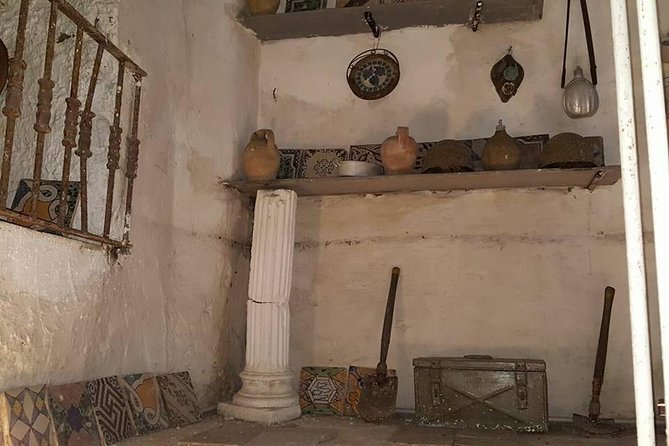
I would recommend this to you if you like history that connects ancient construction with modern human stories. It is also a good choice if you want something different from churches, piazzas, and museums above ground.
Families with older children may enjoy the adventure, especially when the guide uses humor and legends. Children under seven are not suitable for the tour, and even older children should be comfortable with stairs and tight spaces.
The tour is a better fit for active visitors who can manage steps and short stretches of bending. It is not the right choice for anyone with serious mobility limitations or a strong fear of enclosed spaces.
English-speaking visitors should find the format straightforward, though guide-to-guide delivery can differ. The guide names associated with particularly good sessions include Alex, Eduardo, Alessandro, Grazia, Mario, Massimo, Emmanuello, and Luca. You cannot choose a particular guide from the supplied details, so plan for the general format rather than a guaranteed individual.
My Recommendation for Booking
Book this tour if you want a compact, affordable way to understand Naples below street level. The ancient aqueduct and World War II shelter make a memorable pairing, and a good guide can turn dark tunnels into a clear story about water, war, and local life.
Skip it if narrow passages cause real anxiety, if stairs are difficult, or if you want a spacious archaeological visit with plenty of time for independent wandering. Also check the address carefully, since Naples has more than one underground attraction.
For the right visitor, this is an excellent use of an hour. You get an unusual setting, useful historical context, and a strong sense of how Naples has reused its hidden spaces across the centuries.
FAQ
How long does the Naples Underground Spanish Quarter tour last?
The tour lasts approximately one hour.
What does the tour include?
The route includes part of the ancient Neapolitan aqueduct and the underground chambers used as a World War II bomb shelter. Admission is included.
Is the tour offered in English?
Yes. The experience is offered in English with a Napoli Sotterranea guide.
Where does the tour begin and end?
The tour begins at Vico S. Anna di Palazzo, 52, Naples, and ends at Via Chiaia, 80132 Naples.
Is the tour suitable for children and people with mobility difficulties?
The tour is not suitable for children under seven and is not recommended for people with mobility difficulties. It includes stairs and some very narrow passages.
Can I cancel for a full refund?
Yes. You can cancel at least 24 hours before the start time for a full refund. Cancellations or changes made less than 24 hours before the start time are not accepted for a refund.
Fresh on the Naples list
- Naples Pasta Class: Fettuccine & Ravioli with Grandma’s Recipe★ 5.0 · 506 reviews
- Naples Walking Tour with Underground Roman Ruins Ticket★ 4.5 · 510 reviews
- Private Day tour of Positano, Amalfi and Ravello from Naples★ 5.0 · 522 reviews
- Naples: Street Art & History Tour in the Spanish Quarters★ 4.9 · 540 reviews
- Private Day Tour: Sorrento, Positano, Amalfi, Ravello from Naples★ 4.5 · 546 reviews
- Day Trip of Pompeii, Herculaneum and Vesuvius from Naples★ 4.5 · 547 reviews
- Day Trip of Pompeii, Sorrento and Positano from Naples/Salerno★ 5.0 · 560 reviews
- Naples Underground Official Skip-the-line Ticket★ 4.0 · 563 reviews
Naples Tours, compared.
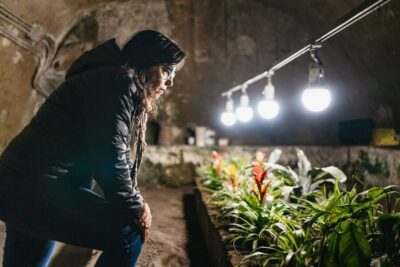
Naples Underground Entry Ticket and Guided Tour
Read our review →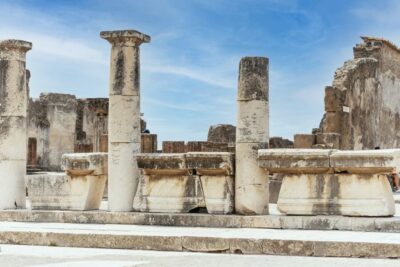
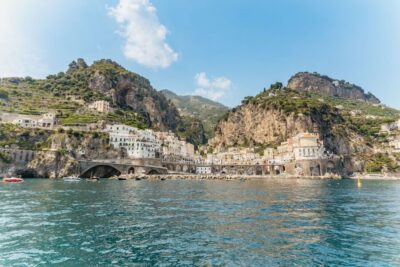
Sorrento, Positano and Amalfi Full-Day Tour
Read our review →
Sorrento, Positano & Amalfi Coast – Small Group Tour
Read our review →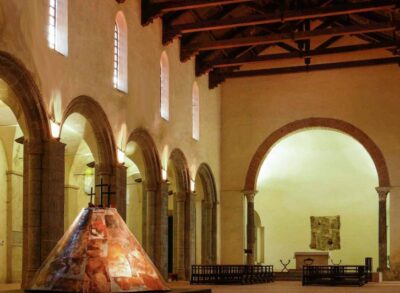
Catacombs of San Gennaro Entry Ticket & Guided Tour
Read our review →
Downtown Tour with Veiled Christ & St Clare Tickets
Read our review →
Pizza-Making Workshop with Drink and Appetizer
Read our review →
Browse the lists this tour appears in