
Reviewed · CITY TOURS
Discover Matera, the ancient city – English tour
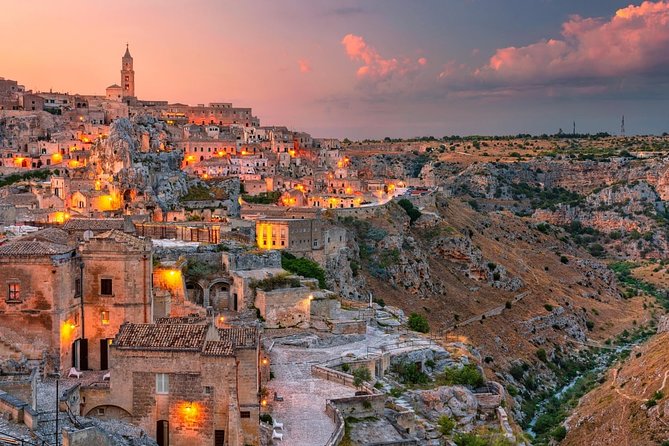
Matera is best understood on foot, one stone lane and cave doorway at a time. This English walking tour takes you through Sasso Caveoso and part of Sasso Barisano, explaining how people lived in homes cut into rock, why the city was once called Italy’s shame, and how it became a UNESCO World Heritage site.
I like the personal angle, especially when Renato shares his family’s connection to a cave house. I also like the small-group format, with a maximum of 20 people, and the chance to see parts of the Sassi without wasting time on wrong turns. The main consideration is that this is not a church-by-church tour, and one person found the explanations repetitive.
Key points
- A people-first history: Learn about daily life, displacement, poverty, and the long road to Matera’s revival.
- Sasso Caveoso and Sasso Barisano: Walk through two of the city’s most atmospheric districts, including less obvious corners.
- Personal stories from local guides: Renato, Sara, Domenico, and Gaetano guide the walks, with family memories adding a human touch.
- Cave homes and water systems: See how houses, bakeries, and public and private cisterns shaped life in the Sassi.
- A relaxed small-group walk: The group can include up to 20 people, and there is time for photographs and questions.
- Good orientation for your stay: Use the guide’s restaurant and sightseeing suggestions to plan the rest of your time in Matera.
Why Matera makes more sense with a guide
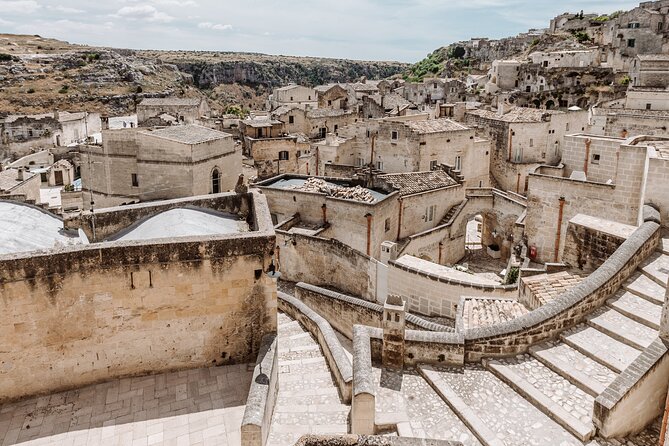
At first glance, Matera can look like a beautiful maze of pale stone. That is part of its charm, but it can also hide the city’s real story. A cave doorway, a blocked window, or a narrow passage may seem like a picturesque detail until you learn who lived there, how families shared the space, and why thousands of people were moved out of the Sassi.
This tour gives you that background while you walk. Instead of treating Matera as a set of scenic viewpoints, the guide explains its social history, architecture, and anthropology together. You learn how the city grew, how its cave homes worked, and why its reputation changed so dramatically.
I like this approach because Matera is not only an old town to photograph. It is a place shaped by hard choices, public health concerns, government action, and the pride of people who continued to feel attached to their home. A guide helps you see all of that in the rock.
The experience lasts about two to three hours. Most recent outings appear to run close to two hours, though the exact length can vary. That is enough time for a serious introduction without taking up your whole day.
A few other Italy mornings to weigh against this
- Rome: City Sightseeing Hop-on Hop-off Bus with Audioguide
★ 4.0 · 16,045 reviews - Milan: City Sightseeing Hop-On Hop-Off Bus with Audio Guide
★ 4.0 · 6,256 reviews - City Sightseeing Rome Hop-On Hop-Off Bus Tour
★ 3.5 · 5,446 reviews
Sasso Caveoso, where the old city feels most exposed
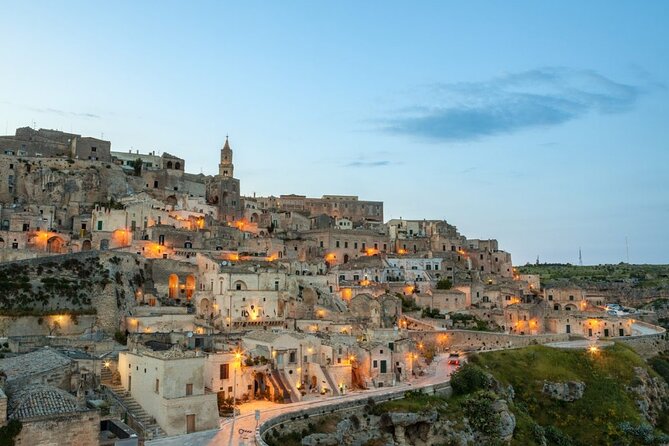
The walk develops through the most suggestive sections of ancient Matera, beginning with Sasso Caveoso and continuing into part of Sasso Barisano. These districts are not simply two names on a map. They offer different views into the shape and texture of the Sassi.
Sasso Caveoso is often associated with a more open, rugged appearance. As you move through its lanes, the city’s old homes and carved spaces reveal how closely people once lived with the rock. The guide’s job here is not just to point out pretty facades. You will hear how the spaces were used, how families organized life, and how the city’s physical form affected daily routines.
You should expect uneven stone surfaces, steps, slopes, and narrow lanes. The walk is described as not too strenuous, but sensible shoes are a smart choice. This is not the place for smooth-soled dress shoes or flimsy sandals.
The pace is relaxed enough for questions and photographs. That matters in Matera, where the best details can be easy to miss. A doorway or small passage may not look important until the guide explains its place in the old community.
The cave home and the human story behind the Sassi
One of the most memorable elements can be a visit to a cave house, including the former family home associated with Renato. This brings the past down to a personal scale. Instead of hearing only broad dates and official labels, you get a clearer sense of what it meant to live in a room carved into the stone.
The tour explains the people of Matera as much as the buildings. You will hear about families who lived in the Sassi, the conditions they faced, and the reasons for their displacement. The city’s old nickname, the Shame of Italy, makes more sense once you understand the poverty and health problems that drew national attention.
That part of the story needs care. Matera’s revival is often presented as a simple success story: neglected cave homes become stylish hotels, restaurants, and film locations. The reality is more complicated. The Sassi’s renewal brought pride and new income, but it also changed the relationship between the old neighborhoods and the people who once lived there.
A strong guide can hold both ideas at once. The past was difficult, but it was not empty. The Sassi were communities, not just poor housing. That distinction is one of the most valuable things you take from this walk.
Water, bread, and the practical details of old Matera
The tour also looks at the systems that made life possible in a city carved into rock. Public and private water collection systems are part of the story, showing how residents had to manage a basic resource with care.
These details are easy to overlook when you walk alone. A cistern or water channel may not attract attention, yet it can explain much about how homes were built and how households functioned. The guide connects the city’s design to the everyday needs of its residents.
Traditional bakeries are another practical stop or topic. Bread was not an afterthought in the old Sassi. Its preparation and baking formed part of the rhythm of community life. Details like these give the walk a welcome change from grand architecture and famous viewpoints.
I especially like this kind of explanation because it answers the questions you may not think to ask. How did people collect water? Where did bread come from? How did several generations use a small home? Matera becomes easier to understand when the guide focuses on these ordinary matters.
Same city, an entirely different afternoon:
- Vatican: Museums & Sistine Chapel Entrance Ticket
★ 4.5 · 144,003 reviews - Vatican Museums & Sistine Chapel Tour with Optional Basilica
★ 4.3 · 67,413 reviews - Colosseum, Roman Forum & Palatine Guided Tour
★ 4.7 · 63,148 reviews - Milan: Cathedral and Duomo’s Terraces Entrance Ticket
★ 4.6 · 61,054 reviews
Part of Sasso Barisano and the changing face of Matera
The route continues into part of Sasso Barisano, giving you another view of the old city’s lanes and built spaces. The walk is not designed as a checklist of every major church or cathedral. Instead, it follows the meanders of Matera and uses them to explain the city’s growth.
That choice suits anyone who wants context rather than a rapid procession of monuments. You will still see striking views over the valley and encounter memorable historic spaces, but the main subject remains the city itself.
The guide may point out places connected to modern film productions, including a well-known filming site for the James Bond movie No Time to Die. This adds a current layer to the city’s story. Matera now attracts filmmakers and international attention, yet the tour keeps that fame in perspective by connecting it to the much longer story of the Sassi.
The route can also take you away from the most obvious paths. That is useful if you have limited time and want help finding corners you might otherwise pass. Do not expect every section to feel empty or secret, though. Matera’s old districts are a major attraction, and the walk remains focused on seeing the city rather than avoiding every other person.
Guides who bring local memory into the walk
The experience is led by Renato Favilli, with Sara, Domenico, or Gaetano also possible guides. Gaetano receives especially strong praise for combining humor with clear explanations. He is also described as easy to understand in English, which is important when the subject involves unfamiliar names, social changes, and local customs.
Renato brings a different strength: his family connection to Matera and personal stories passed down through earlier generations. His account of a family cave home can make the city feel less like an archaeological site and more like a lived-in place.
The guide’s personality matters here. This is a two-hour-plus conversation while walking, not a silent audio route. You will have opportunities to ask questions, stop for photographs, and follow up on details that interest you.
Several elements make the guide especially useful beyond the formal history. Gaetano has offered restaurant suggestions based on whether you want a casual or more formal meal. The guides can also point you toward areas to explore after the tour. I would treat these suggestions as a helpful starting point, then choose based on your own plans and appetite.
One note of balance: the tour is information-heavy. Most of the feedback praises the detail and enthusiasm, but one person felt that some points were repeated and wanted less talking and more sightseeing. If you prefer a short route with only a few facts, this may feel too full. If you like a clear historical explanation, the depth is a major benefit.
What the small group and pace mean for you
The maximum group size is 20 people. That is not an intimate private walk, but it is still more manageable than a large city tour. You should be able to hear the guide, ask questions, and keep a reasonable connection with the group.
The pace is described as relaxed and not too strenuous. Still, Matera is made for walking on stone, and the terrain can include slopes and stairs. Sensible footwear is the most important practical tip.
Most people can participate, and service animals are allowed. The tour is near public transportation, though the available information does not specify the exact meeting point or transport route. You will receive confirmation when booking, and the mobile ticket makes it easy to keep the reservation on your phone.
The experience is offered in English. The guides are described as speaking clear English, but the subject is detailed, so you should be ready to concentrate. A little attention pays off when the guide explains how the old homes, cisterns, bakeries, and community spaces fit together.
Is $36.28 a fair price?
At $36.28 per person, this is reasonably priced for a two to three hour guided walk in one of Italy’s most unusual historic cities. The value does not come from a long list of admissions. It comes from having someone explain what you are seeing and help you make sense of a complicated place.
You are paying for orientation, local memory, and time saved. Without a guide, you can walk through the Sassi and enjoy the views, but you may not understand why the homes look the way they do or why the city’s modern identity carries so much weight.
The price looks especially fair if you are visiting Matera for the first time and want a foundation for the rest of your stay. You can use the route to decide which areas deserve another look, which restaurants to consider, and where to spend time after the walk.
It is less useful for someone who wants a formal museum tour or a series of church interiors. The experience specifically avoids being a classic church-focused route. If religious art and cathedral architecture are your main interests, you may need another activity alongside this one.
When to schedule the walk
I would schedule this tour early in your Matera visit. Its greatest practical value is orientation. After two or three hours, the lanes should feel less confusing, and you will have a better sense of which parts of Sasso Caveoso and Sasso Barisano you want to revisit.
The experience requires good weather. If poor weather causes a cancellation, you are offered another date or a full refund. You can cancel for a full refund up to 24 hours before the start time, but cancellations or changes inside that window are not refunded or accepted.
Because the route is outdoors and takes place on old stone streets, weather can affect both comfort and footing. Check the forecast, wear practical shoes, and leave room in your day rather than placing the walk directly before a fixed appointment.
Who will get the most from this Matera tour?
This tour is a strong fit for you if you want to understand the people behind the scenery. It suits first-time visitors, history fans, architecture fans, photographers who want more context, and anyone curious about how a neglected district became a UNESCO World Heritage site.
It also works well if you enjoy personal stories. Renato’s family connection and the guides’ local ties add a human layer that a general audio guide cannot easily provide.
Families and older adults may find the moderate pace helpful, but you should still consider the uneven ground and steps. The tour is not described as fully step-free, so anyone with mobility concerns should think carefully about the terrain before booking.
You may want to skip it if your main goal is to visit many churches, enter a large number of buildings, or move quickly from landmark to landmark. This is a historical walking conversation with scenic moments, not a building-admission tour.
Should you book Discover Matera, the ancient city?
I would book it if you want Matera to become more than a beautiful backdrop. The best parts are the focus on ordinary life, the explanation of the Sassi’s difficult past, the cave-home connection, and the guides’ ability to mix facts with humor and personal stories.
Gaetano appears to be a particularly good match if you want an energetic guide with clear English. Renato may appeal most if you value family memories and local experience. Since the guide can vary, you should see the assigned name as part of the booking details rather than assume one specific person.
The main tradeoff is simple: you get more explanation than sightseeing. For me, that is the right balance in Matera, where the most important sights are often the things that need explaining. Book this walk near the start of your stay, wear sensible shoes, and keep the rest of the day open for your own exploring.
FAQ
How long does the Matera walking tour last?
The tour lasts approximately two to three hours. Many outings take about two hours, but the exact duration can vary.
What areas of Matera does the route cover?
The route passes through Sasso Caveoso and part of Sasso Barisano, including old lanes, scenic views, cave spaces, and less obvious parts of the Sassi.
Is the tour offered in English?
Yes. The experience is offered in English.
Who might guide the tour?
The guides include Renato Favilli, Sara, Domenico, and Gaetano. The specific guide may vary.
Is this a church and cathedral tour?
No. The tour is not focused on visiting churches or cathedrals. It explains Matera through its lanes, cave homes, people, architecture, water systems, bakeries, and social history.
How many people can join the group?
The maximum group size is 20 people.
Is the walk physically difficult?
The tour is described as not too strenuous, and most people can participate. Matera has uneven stone streets, slopes, and steps, so sensible shoes are recommended.
Is public transportation nearby?
Yes. The experience is located near public transportation. The supplied details do not specify the exact transport route or meeting point.
What is the cancellation policy?
You can cancel at least 24 hours before the start time for a full refund. Cancellations or changes made less than 24 hours before the start time are not accepted and are not refunded. If poor weather cancels the tour, you can receive a different date or a full refund.
Fresh on the Italy list
- Florence: Uffizi Guided Tour with Skip-the-Line Entry Ticket★ 4.8 · 499 reviews
- Milan: Last Supper and Sforza Castle Guided Tour★ 4.6 · 498 reviews
- Boat trip La Maddalena Archipelago – Departure from Palau★ 4.5 · 499 reviews
- Exclusive Golf Tour Private VIP with Local & Gelato o Wine★ 5.0 · 500 reviews
- Turin: Egyptian Museum Skip-the-Line Group Tour★ 4.7 · 500 reviews
- Itria Valley: Polignano, Ostuni, and Locorotondo, from Bari★ 4.6 · 502 reviews
- Colosseum, Palatine Hill and Roman Forum with Guided Tour★ 5.0 · 500 reviews
- Catania: Etna Nature Tour with Hiking, Cave Visit, & Tasting★ 4.7 · 502 reviews
City Tours, compared.
City Sightseeing Hop-On Hop-Off Bus with Audio Guide
Read our review →
City Sightseeing Rome Hop-On Hop-Off Bus Tour
Read our review →

Fettuccine Pasta Cooking Class in Rome’s City Center
Read our review →
Vatican Museums & Sistine Chapel Entry Ticket
Read our review →
City Sightseeing Florence Hop-On Hop-Off Bus Tour
Read our review →
Browse the lists this tour appears in