
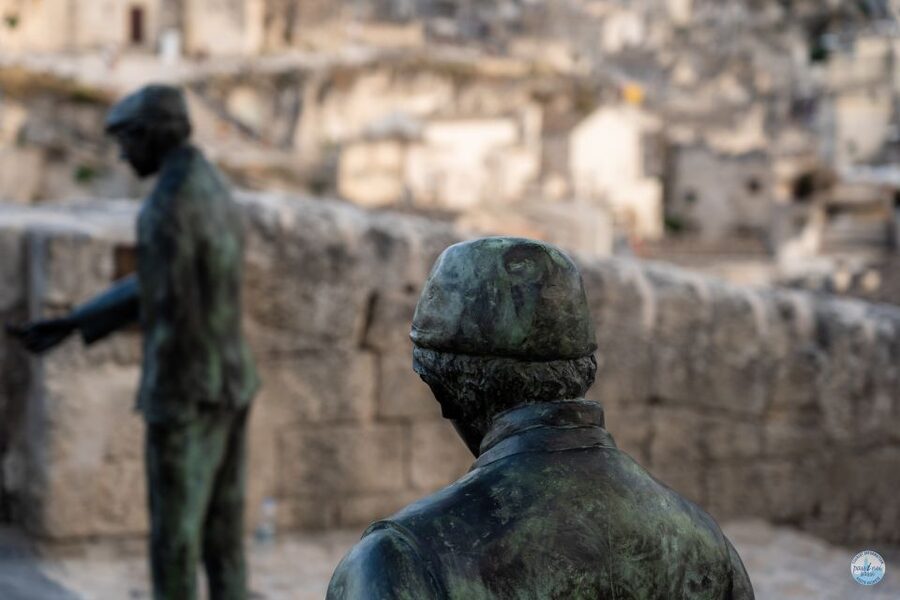
Reviewed · MATERA TOURS
Matera: Sassi Tour with Entry to Rock Houses and Churches
Matera’s Sassi are best understood from inside the caves, not just from a viewpoint. This two-hour walk takes you from Piazza Vittorio Veneto through the old center, into Sasso Caveoso, and inside a furnished cave home and two rock churches. You also get views of film locations and the city’s layered neighborhoods.
I like the way the tour combines admission tickets with a licensed guide, so you do not have to sort out the cave house and church visits yourself. I also like its clear route: you begin with a broad view of Sasso Barisano and finish near Sasso Caveoso, having seen the main old-town sights.
The main drawback is physical. Expect steps and uneven walking, and the tour is not suitable for people with mobility impairments, baby strollers, baby carriages, or electric wheelchairs. In hot weather, the pace matters, although guides such as Patrizia and Adrienne have adjusted routes and walking speed to suit the group.
Key points at a glance
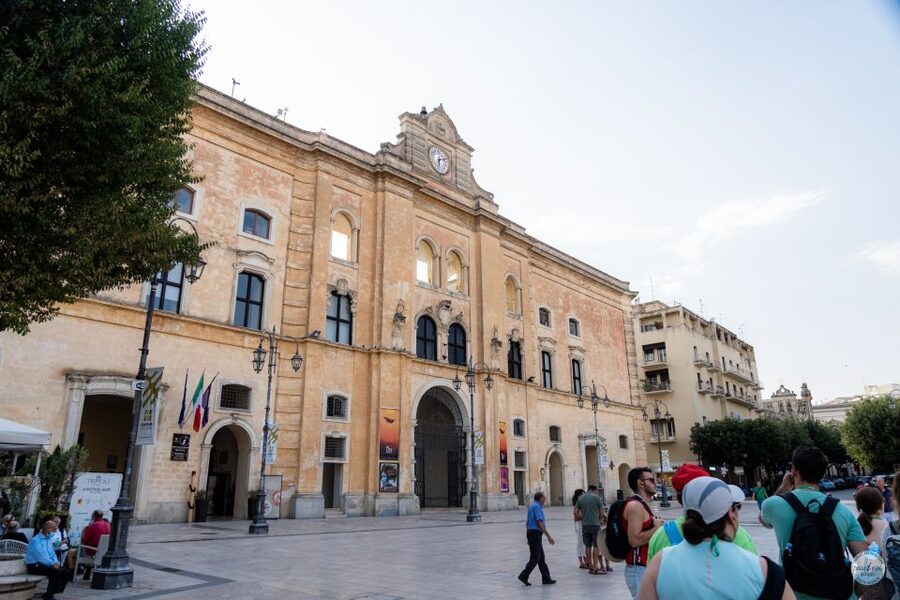
- See Matera from Piazza Vittorio Veneto: Begin with a panoramic view over Sasso Barisano before entering the old streets.
- Enter a furnished cave home: Casa Grotta shows how peasant families once lived inside the rock.
- Visit two rock churches: Your ticket covers Santa Maria de Idris and San Giovanni in Monterrone.
- Hear the story from a licensed local guide: English, Italian, German, French, and Spanish tours are available.
- Follow a useful two-hour route: The walk includes Piazza Duomo, Sasso Caveoso, the old neighborhoods, and a barbaric cemetery.
- Pay about $40 per person: The price is fair if you want context, access, and a route through the main Sassi sights.
Why Matera makes more sense from inside the Sassi
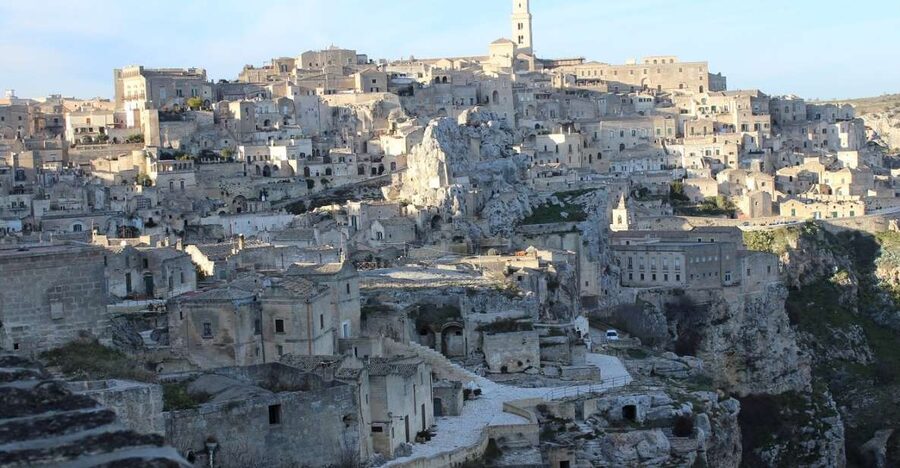
At first glance, Matera can seem like a dramatic wall of stone houses, stairways, churches, and caves. A viewpoint gives you the picture, but it does not explain how people used the rock, where families lived, or why the old neighborhoods matter.
This tour supplies that missing context. Your guide explains the development of Matera’s historic center while leading you through the Sassi, the cave districts carved into the ravine. You see the city as a place where people lived, worshiped, worked, and were eventually forced to leave before parts of the old quarters were restored.
The route also helps you read the city’s shape. From Piazza Vittorio Veneto, you look toward Sasso Barisano. Later, you move through the older lanes toward Piazza Duomo and then into Sasso Caveoso. That progression gives you a useful sense of how Matera’s neighborhoods fit together.
Guides are central to the experience. Anna, Guido, Patrizia, Maria, Andrea, Analisa, and Adrienne are among the guides who have led this tour. Their approach may differ, but the strongest part of the experience is consistent: you get explanations about architecture, daily life, local history, and details you would likely pass without noticing on your own.
A few other Italy mornings to weigh against this
- Matera: Sassi Tour with Cave House and Rupestrian Church
★ 4.7 · 6,618 reviews - Discover Matera, the ancient city – English tour
★ 5.0 · 1,771 reviews - Guided Tour of Matera Sassi
★ 4.5 · 1,312 reviews
Starting at Piazza Vittorio Veneto and Sasso Barisano
The walk begins from the main square in Matera’s historic center, Piazza Vittorio Veneto. The meeting point is described by the arch-shaped fountain, though the exact starting place can vary according to the option you book. Check your confirmation carefully, especially if you are arriving by bus or on a tight schedule.
This opening stop is useful because it gives you a wide view before the route becomes more enclosed. Sasso Barisano spreads out below and across the ravine, with pale stone buildings and cave dwellings stacked into the slope. Your guide uses the view to explain the neighborhoods and point out features that are hard to understand once you are among the narrow lanes.
You will also hear about Matera’s links to cinema. The old stone streets and biblical-looking scenery have attracted film productions, and the guide points out several locations. The film connection is a pleasant extra, but the tour is more valuable for the real stories of the people who lived here.
The square is a good place to get your bearings. From here, the walk continues through the historic center toward Piazza Duomo. Since the tour is on foot, wear shoes with a firm sole. Sandals or smooth shoes can be awkward on stone steps and sloping streets.
Piazza Duomo and the outside of Matera Cathedral
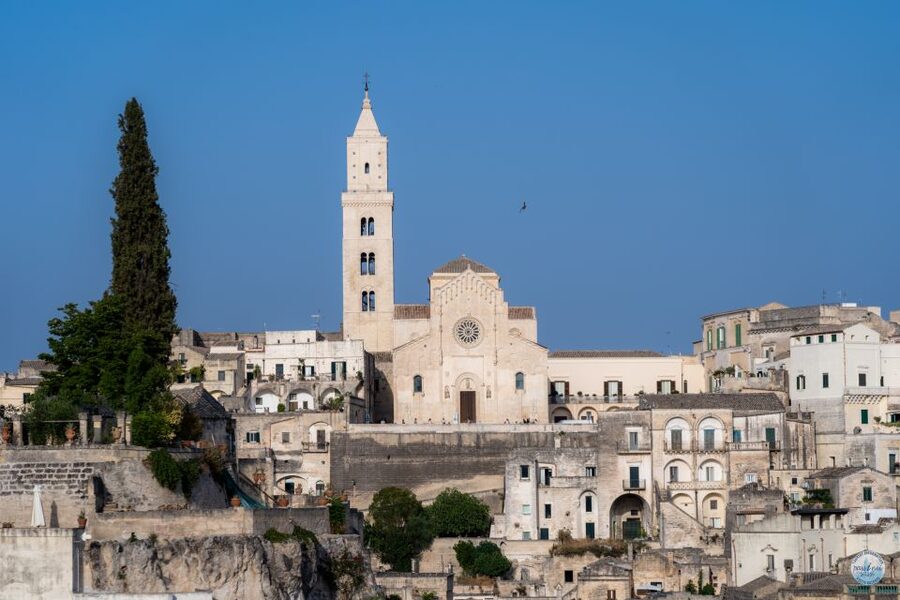
Piazza Duomo provides a change of scale. Here you can view Matera Cathedral from outside before the tour turns toward Sasso Caveoso. The cathedral itself is not listed as an interior visit, so do not book this tour expecting entry there.
The value of this stop is the way it links the formal city above with the cave districts below. Your guide explains what you are seeing as part of Matera’s wider urban story, rather than treating the Sassi as a separate attraction.
The route then heads toward Sasso Caveoso, one of the key areas of the old city. The streets can involve stairs, inclines, and uneven surfaces. The walking is manageable for many people who are comfortable on foot, but this is not a flat sightseeing stroll.
That distinction matters. The tour lasts about two hours, but the route is active throughout. In summer heat, carry water and use the tour’s slower pace when needed. Food and drinks are not included, so plan your refreshments before or after the walk.
Casa Grotta and the life of a cave-dwelling family
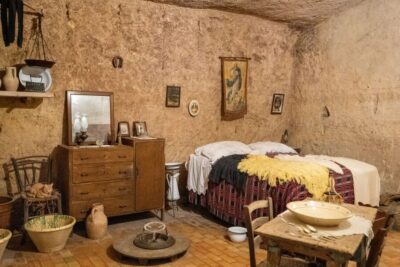
Casa Grotta is one of the most useful stops because it turns an abstract story into a physical room. You enter a furnished cave house arranged to show aspects of peasant life in Matera.
The room helps you understand how a family could share a compact space with household objects and animals. The exact details of the display are explained by your guide, who connects the furnishings to the older way of life in the Sassi. Instead of simply looking at stone walls, you begin to picture the routines that once filled them.
The guided visit is scheduled for about 15 minutes. That is enough time for a focused explanation and a close look around, though it is not a long museum visit. I see this as a strength for a short tour. The stop gives you a clear image of daily life without taking over the whole morning or afternoon.
Maria has been especially effective at linking the old residents’ lives with Matera today, while other guides have used the stop to answer detailed questions about the house and its architecture. Your guide’s style will shape the experience, but the setting itself is strong.
Same city, an entirely different afternoon:
- Vatican: Museums & Sistine Chapel Entrance Ticket
★ 4.5 · 144,003 reviews - Vatican Museums & Sistine Chapel Tour with Optional Basilica
★ 4.3 · 67,413 reviews - Colosseum, Roman Forum & Palatine Guided Tour
★ 4.7 · 63,148 reviews - Milan: Cathedral and Duomo’s Terraces Entrance Ticket
★ 4.6 · 61,054 reviews
Santa Maria de Idris and San Giovanni in Monterrone
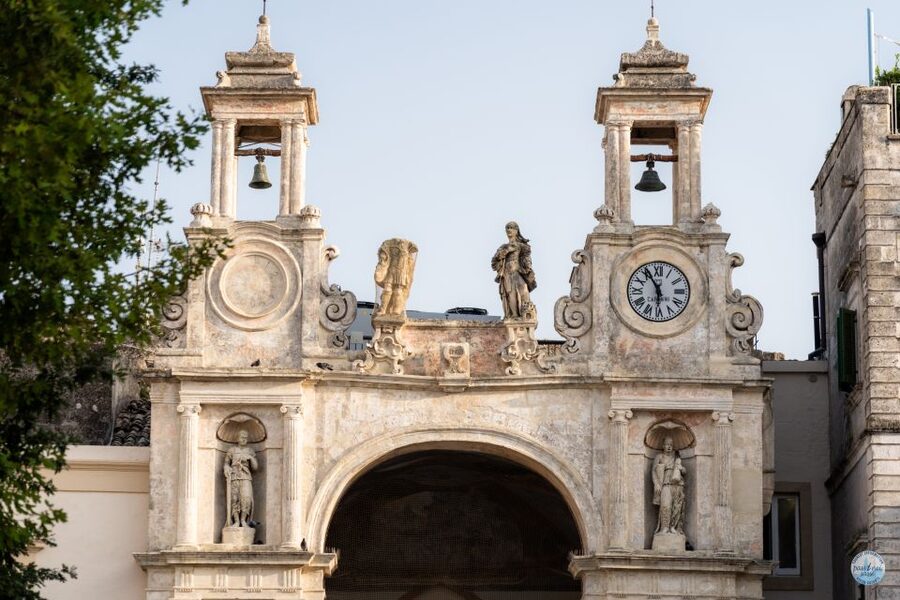
The tour includes entry to the rock churches of Santa Maria de Idris and San Giovanni in Monterrone. These are not ordinary churches built beside the caves. They are carved into the rock, making them important examples of Matera’s religious and architectural past.
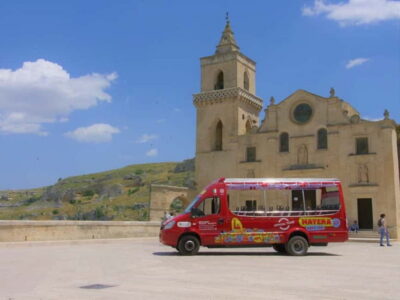
Santa Maria de Idris is the more iconic stop. It occupies a striking rocky outcrop in Sasso Caveoso and is one of the images most associated with Matera. Inside, the space feels spare and unusual, with the stone itself forming much of the church’s character. Your guide explains the frescoes and the way worship spaces were shaped in the rock.
San Giovanni in Monterrone is included with the same entrance arrangement. Having both churches covered makes the $40 price easier to justify, especially if you want more than exterior views. The churches are places where a guide adds real value because the wall paintings, forms, and historical changes are not always self-explanatory.
Allow about 15 minutes for the Santa Maria de Idris visit, with the wider guided tour including San Giovanni in Monterrone. You may find the interiors dim or uneven underfoot, so move carefully and follow the guide’s directions.
The church stops also break up the walking. You move from open viewpoints to lanes, then into cool stone interiors before returning to the neighborhoods. That variety keeps the two-hour route from feeling like one long sequence of similar streets.
The old neighborhoods, cemetery, and details you might miss
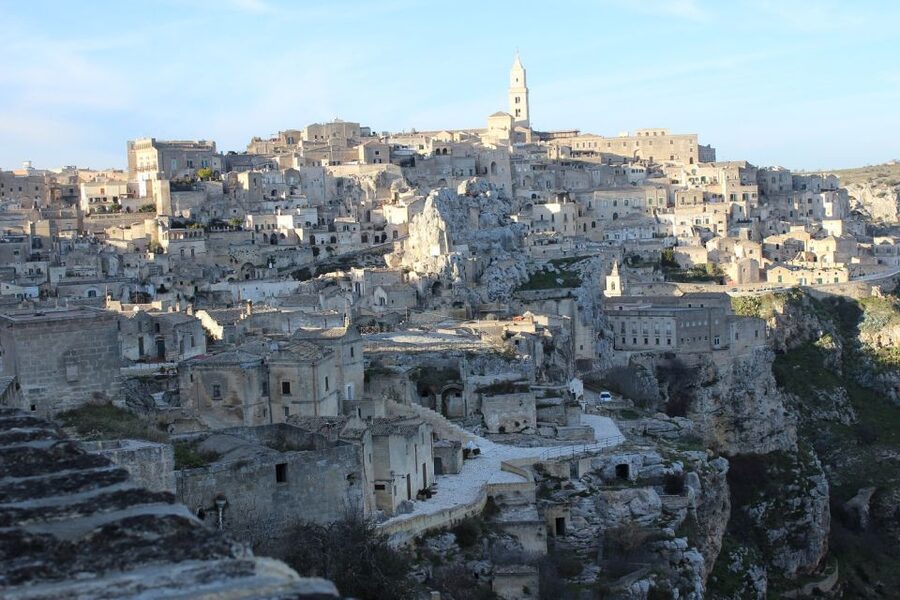
After the main church visits, the guide continues through the various Sassi neighborhoods and points out a barbaric cemetery. These smaller details help explain that Matera was not just a collection of picturesque caves. It was a functioning settlement with homes, sacred places, burial areas, and shared spaces.
This is where the tour’s local voice matters most. A guide can point out architectural styles, explain changes in the stonework, and show how the old districts relate to one another. One guide has been praised for making technical details clear and adding humor, which is useful when a tour covers a lot of information in a short time.
You should also expect regular photo stops. Analisa has allowed time for pictures, and other guides have chosen routes that avoid some of the busiest spots. Still, the exact amount of free time depends on the group and guide. If photography is your main goal, tell the guide early rather than assuming the walk will pause whenever you want.
The tour ends in Piazza Giovanni Pascoli, near Sasso Caveoso and still within the historic center. This is a convenient finish for continuing your own walk, finding a café, or returning to a sight you want to explore more slowly.
How much value do you get for $40?
At $40 per person, this is not the cheapest way to walk around Matera. It is also more than a simple viewpoint visit. The price includes an authorized guide and entrance tickets to Casa Grotta’s museum of peasant civilization, Santa Maria de Idris, and San Giovanni in Monterrone.
That bundled access is important. If you explored only the public streets, you would see the outside of the Sassi but miss the furnished cave house and the interiors of the rock churches. You would also have to arrange admissions separately and build your own route.
The tour is particularly good value on a first visit. It gives you a working map of the city and enough historical background to decide where you want to return. One useful way to use it is as an orientation walk early in your stay, leaving later time for slower photography and independent exploration.
The limitation is depth. Two hours cannot cover every church, viewpoint, and cave district in Matera. A three-hour experience has been possible on some outings, but the advertised duration is two hours, so plan around that. If you want a specialized archaeology tour or an extended look at religious art, you may need a separate visit.
Languages, weather, and practical comfort
The live guide is available in English, Italian, German, French, and Spanish. An optional audio guide is listed in Spanish. If you need a particular language, confirm the selected option when booking rather than relying on the general language list.
Wear comfortable shoes. This is the most important practical advice because the route includes stone streets, steps, and uneven ground. The tour is not suitable for people with mobility impairments, and baby strollers, baby carriages, and electric wheelchairs are not allowed.
The walk operates in light rain. A wet day may make the stone more slippery, so take care on steps and bring suitable outerwear. Food and drink are not provided. Since Matera can be hot, especially during the walking sections, carry water unless you plan to buy it before or after the tour.
Cancellation is flexible up to 24 hours before the start for a full refund, and you can reserve now and pay later. Those terms are helpful if your plans around Basilicata are still moving, but the central decision is still physical comfort: you need to be happy walking uphill and on historic stone surfaces.
Who should book this Sassi walk?
I would choose this tour if you are visiting Matera for the first time and want the old city explained rather than simply photographed. It suits couples, friends, and independent visitors who like to explore alone afterward but want a strong introduction first.
It is also a good fit if you care about ordinary life, not only grand monuments. Casa Grotta and the stories about former residents give the Sassi a human scale. The rock churches add art and atmosphere, while the viewpoints and film locations provide the visual moments.
Families with older children may enjoy it, provided everyone can manage the walking. The tour is not suitable for strollers, and younger children who tire easily may find the steps demanding.
You may want a different option if you have limited mobility, dislike guided pacing, or want to spend most of your time inside Matera Cathedral. This experience focuses on the historic center, Sasso Caveoso, cave homes, rock churches, and neighborhood history.
Should you book it?
Book this tour if you want a well-priced introduction to Matera that includes the places you cannot fully appreciate from the street. The combination of a licensed guide, Casa Grotta, Santa Maria de Idris, San Giovanni in Monterrone, and the main Sassi route makes it a practical first look at the city.
I would book it early in a Matera stay, wear sturdy shoes, and keep the rest of the day open for revisiting the viewpoints and lanes that catch your eye. Choose another plan only if the steps are a serious concern or you prefer a self-guided visit at your own pace.
FAQ
How long does the Matera Sassi tour last?
The advertised duration is two hours. Check availability for the starting times, as these can vary.
What sights are included?
The route includes Matera’s historic center, Piazza Vittorio Veneto, a view of Sasso Barisano, Piazza Duomo, Sasso Caveoso, the old neighborhoods, a barbaric cemetery, Casa Grotta, Santa Maria de Idris, and San Giovanni in Monterrone.
Are entrance tickets included?
Yes. The price includes entrance tickets for Santa Maria de Idris, San Giovanni in Monterrone, and the museum of peasant civilization in Casa Grotta.
Which languages are available?
Live tours are available in English, Italian, German, French, and Spanish. An optional audio guide is available in Spanish.
Where does the tour end?
The tour ends in Piazza Giovanni Pascoli in Matera’s historic center, close to Sasso Caveoso.
What should I bring?
Bring comfortable shoes. The route includes walking on historic streets, steps, and uneven surfaces.
Is the tour suitable for people using mobility equipment or strollers?
No. The activity is not suitable for people with mobility impairments, and baby strollers, baby carriages, and electric wheelchairs are not allowed.
Fresh on the Italy list
- Florence: Uffizi Guided Tour with Skip-the-Line Entry Ticket★ 4.8 · 499 reviews
- Milan: Last Supper and Sforza Castle Guided Tour★ 4.6 · 498 reviews
- Boat trip La Maddalena Archipelago – Departure from Palau★ 4.5 · 499 reviews
- Exclusive Golf Tour Private VIP with Local & Gelato o Wine★ 5.0 · 500 reviews
- Turin: Egyptian Museum Skip-the-Line Group Tour★ 4.7 · 500 reviews
- Itria Valley: Polignano, Ostuni, and Locorotondo, from Bari★ 4.6 · 502 reviews
- Colosseum, Palatine Hill and Roman Forum with Guided Tour★ 5.0 · 500 reviews
- Catania: Etna Nature Tour with Hiking, Cave Visit, & Tasting★ 4.7 · 502 reviews
Matera Tours, compared.
Sassi Tour with Cave House and Rupestrian Church
Read our review →
Discover Matera, the ancient city – English tour
Read our review →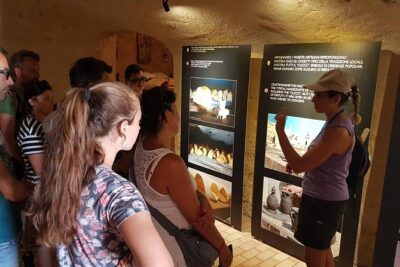
Browse the lists this tour appears in