
Reviewed · WALKING TOURS
Rome: Paranormal Night Walking Tour & Secret Backstreets
Rome gets more interesting after the tour buses leave. This two-hour walk turns Campo de’ Fiori, old bridges, narrow lanes, and quiet churches into a stage for stories about executions, murders, doomed popes, emperors, and artists. It is part history lesson, part ghost tale, and part evening stroll.
I like the way the route mixes famous places with small details you might otherwise miss, including roadside Madonnelle and the Chapel of Our Lady of Prayer and Death. I also like the guide-led storytelling. Ana, Antonio, Maham, Domenica, Sara, and Yousef are among the guides praised for warmth, humor, and a strong voice.
The main consideration is the tone. This is not a serious academic walk or a theatrical haunted house. Some stories are grim, some are playful, and the ghostly claims are part of Rome’s legends rather than proven fact. A group of up to 20 can also feel less intimate than the name suggests.
Key points to know before you book
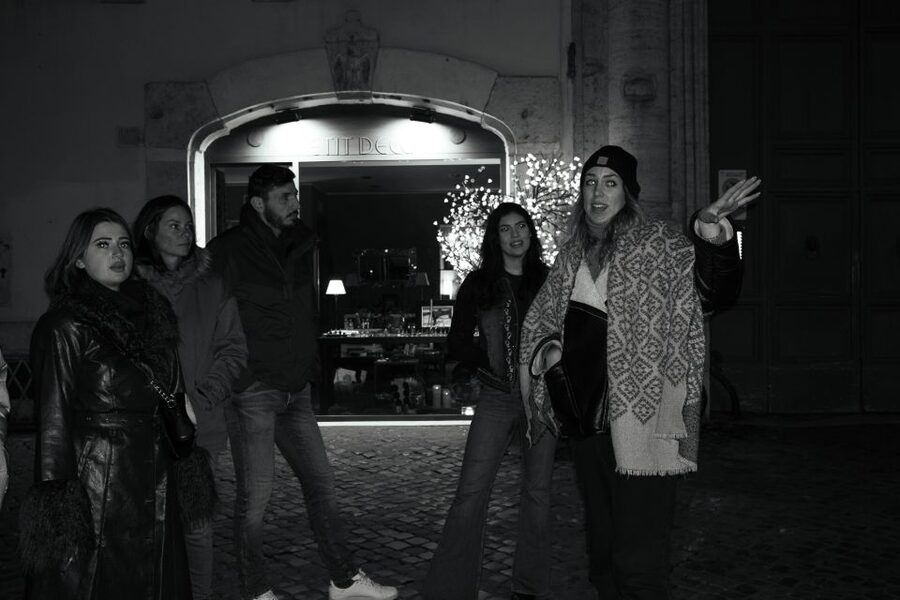
- Start beneath Giordano Bruno: Meet at Campo de’ Fiori, under the statue, with the yellow Carpe Diem Tours sign.
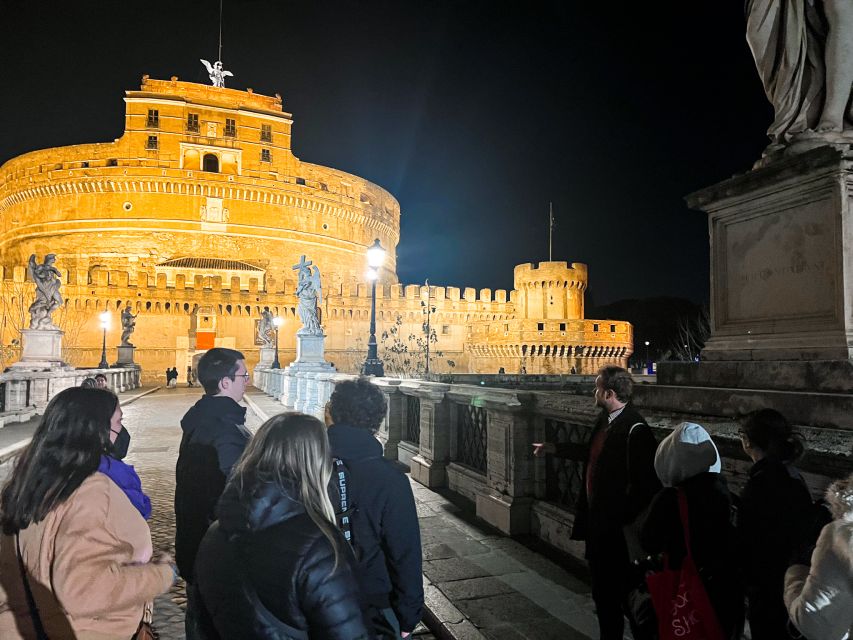
- The route ends at Castel Sant’Angelo: You finish near one of Rome’s best-known fortified landmarks, not back at the starting point.
- Expect dark stories with humor: Murder, executions, bones, and ghosts are balanced by jokes and lively delivery.
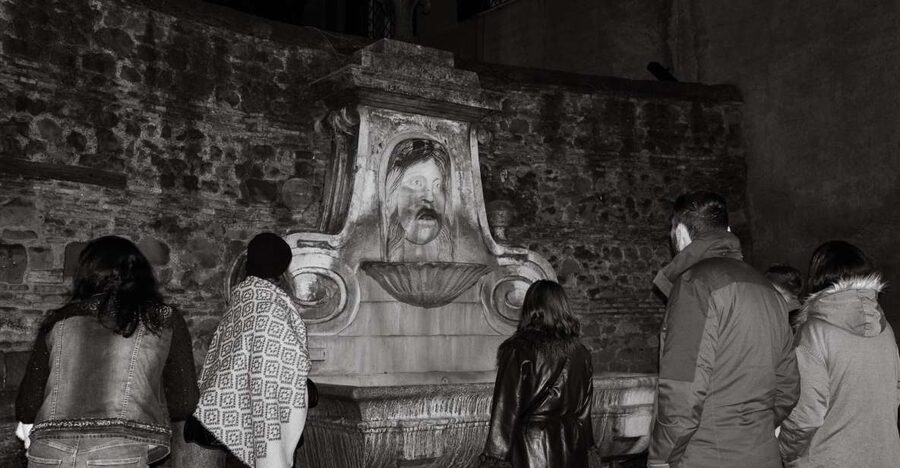
- The walk includes lesser-noticed corners: Look for small Madonnelle, the Fountain of the Mask, Via Giulia, and Clivo di Rocca Savella.
- Guides make the difference: Ana, Antonio, Maham, Domenica, Sara, and Yousef have all been singled out for engaging storytelling.
- At $34, the value is solid: You get two hours of guiding and sightseeing, but no food, drinks, or interior admissions are included.
Why Rome’s dark side works so well at night
Rome is already a city of ruins, churches, tombs, and grand political dramas. Add darkness, a quiet lane, and a good story, and familiar streets take on a new mood.
This tour focuses on the city’s sinister past rather than its standard ancient highlights. You hear about bloody executions, ghastly murders, famous figures, and places linked with death. The guide also points out small symbols and corners that are easy to pass during the day.
I would not book this as your main history tour of Rome. You will not get the same structured coverage as a Colosseum tour or a Vatican visit. But as an evening activity, it gives you a different way to read the city. Afterward, Campo de’ Fiori is no longer just a market square, and Ponte Sant’Angelo is more than a photogenic crossing over the Tiber.
The tone matters. The stories are spooky, but the tour is also designed to be fun. Several guides are praised for jokes, warmth, and an ability to keep the group involved. Maham is described as gentle and expressive, while Ana is noted for her energy and humor. Antonio is praised for his storytelling and historical detail. Since the guide can vary, your evening will depend partly on who leads your group.
More Walking Tours in Rome
- Rome: Trastevere & Campo de Fiori Street Food Walking Tour
★ 4.9 · 2,768 reviews - Rome by Night Walking Tour – Legends & Criminal Stories
★ 4.5 · 1,003 reviews - Rome: Guided City Center Evening Sightseeing Walking Tour
★ 4.4 · 953 reviews
Campo de’ Fiori and Giordano Bruno set the mood
The meeting point is beneath the statue of Giordano Bruno in Piazza Campo de’ Fiori. Arrive at least 10 minutes early and look for the yellow Carpe Diem Tours flag or sign.
This is a useful meeting point because the statue is easy to identify, but the square can be crowded and active. Do not wait at the edge of the piazza or assume the guide will find you. Go directly to the statue.
Campo de’ Fiori gives the tour an immediate sense of place. By day, it is known for its market and open public space. At night, the square becomes a fitting opening scene for Rome’s darker stories. The statue of Bruno recalls a painful episode in the city’s religious and political past, and the guide begins here before leading you into nearby streets.
You will spend about 15 minutes at this first stop, listening and looking rather than entering a museum or attraction. That pattern continues through much of the evening. This is a walking storytelling tour, so the guide’s voice and pacing matter more than formal exhibits.
Piazza Farnese adds grand architecture and darker history
From Campo de’ Fiori, the group walks to Piazza Farnese. The square is known for its grand setting and monumental fountains, but here it becomes part of a wider story about Rome’s powerful families, church figures, and public life.
The route allows about 15 minutes for guided sightseeing. You can expect the guide to connect the square with the people and events that shaped Rome’s darker reputation.
This is one of the tour’s strengths. Rather than simply pointing at a building and naming it, the guide uses the setting as a backdrop for people, crimes, legends, and political drama. You get a reason to look more closely at the streets around you.
The drawback is that you are seeing these sites from the outside. If you want detailed architectural commentary or time to study every fountain and facade, this walk may feel brisk. Its purpose is to keep the story moving through the city.
Small Madonnelle reward careful attention
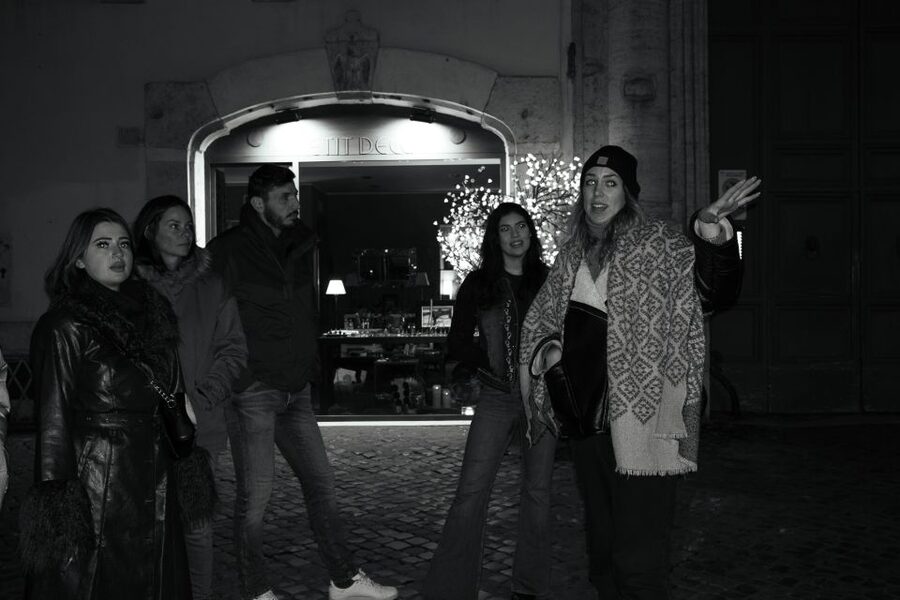
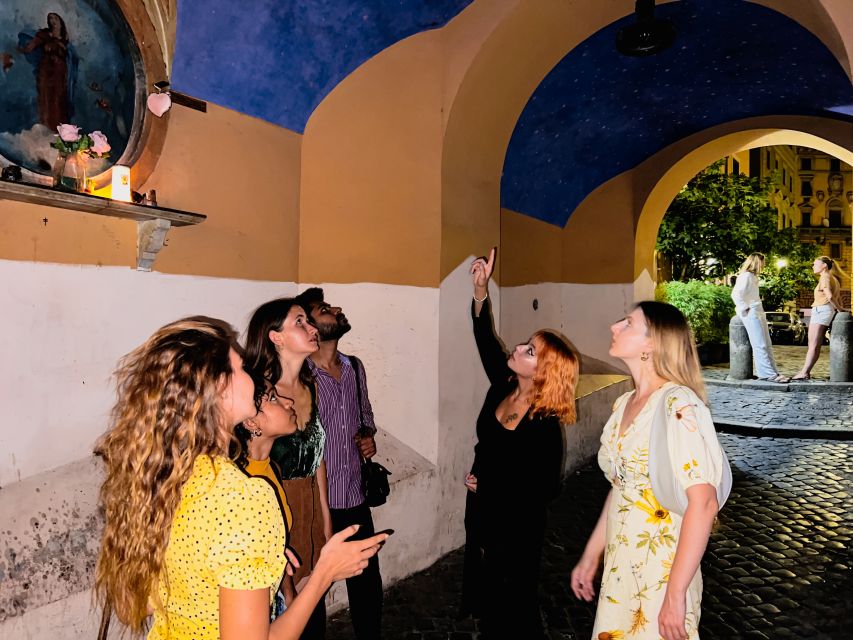
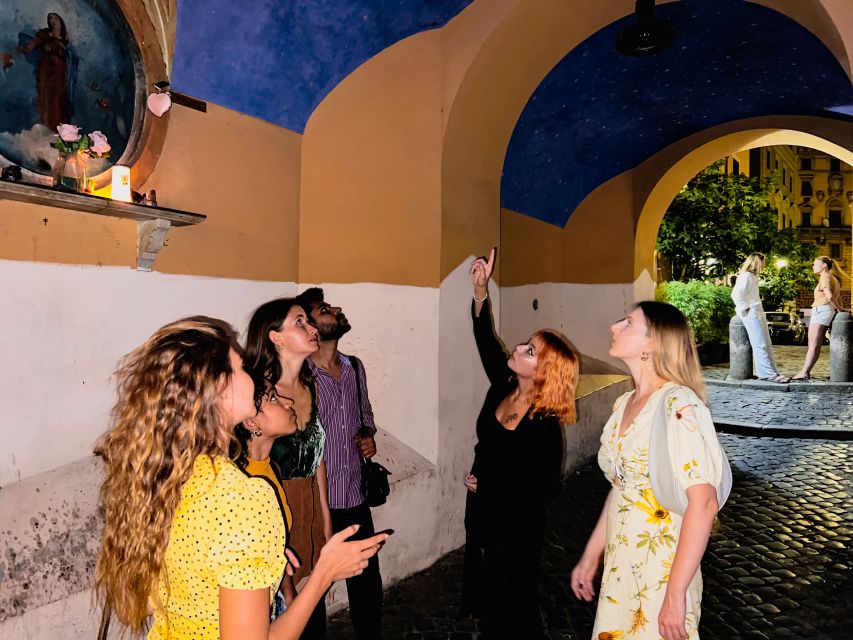
The stop at Madonna della Pietà and the Madonnelle introduces one of Rome’s easy-to-miss details. Madonnelle are small images of the Madonna placed around the city, often in streets and on building walls.
These tiny religious images can disappear into the background when you are rushing between major sights. With a guide drawing attention to them, you begin to notice how Rome’s streets hold layers of belief, memory, and local tradition.
This is a good example of what makes the route more than a standard ghost walk. The appeal is not only the frightening material. It is also the chance to see overlooked pieces of the city that you might pass without a second thought.
Again, the stop lasts about 15 minutes. Keep your focus on the guide and stay near the group, since the route moves through public streets rather than enclosed attractions.
Same city, an entirely different afternoon:
- Vatican Museums & Sistine Chapel Tour with Optional Basilica
★ 4.3 · 67,413 reviews - Colosseum, Roman Forum & Palatine Guided Tour
★ 4.7 · 63,148 reviews - Vatican Museums, Sistine Chapel & St Peter’s Basilica Guided Tour
★ 4.5 · 39,149 reviews - Rome: Colosseum, Palatine Hill and Roman Forum Guided Tour
★ 4.8 · 32,814 reviews
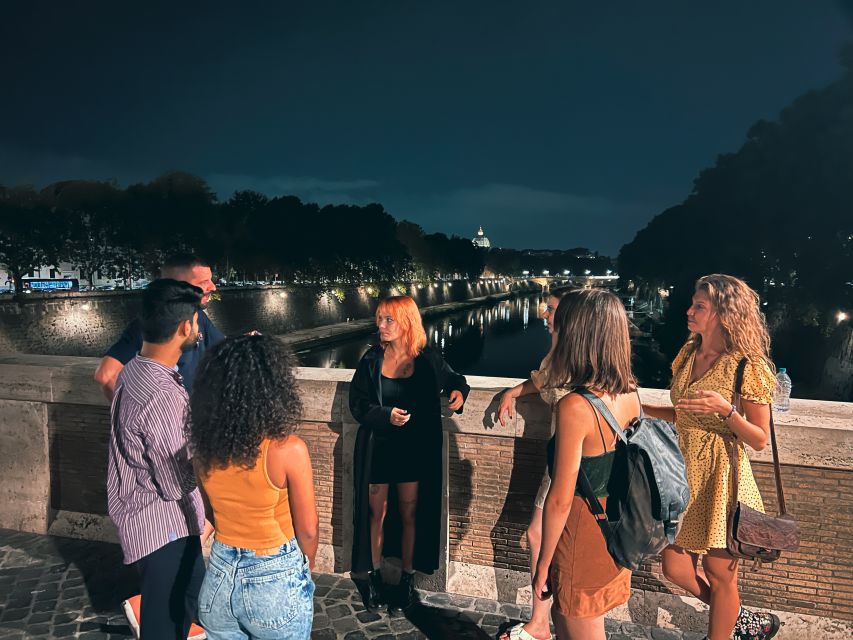
Ponte Sisto brings the walk onto the river route
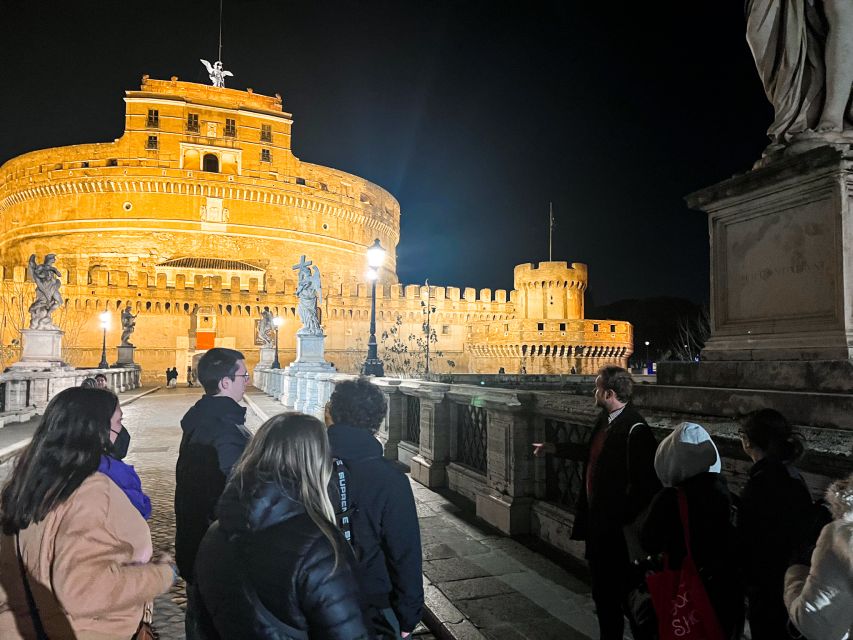
Ponte Sisto is one of the bridges included along the walk. Crossings over the Tiber are natural places for legends, disappearances, processions, and stories of people moving between Rome’s neighborhoods.
The bridge also gives the tour a change of rhythm. After the squares and side streets, you have an open crossing with views along the river. At night, the setting helps the guide create a more dramatic pause before the group continues.
The tour description also highlights Via Giulia, another historic street in this part of Rome. Together, Ponte Sisto and the nearby backstreets provide some of the route’s best atmosphere. You are not confined to one piazza or a single famous landmark.
Expect a walk rather than a long stop for photographs. The scheduled time at each point is short, and the evening works best if you are ready to listen while moving.
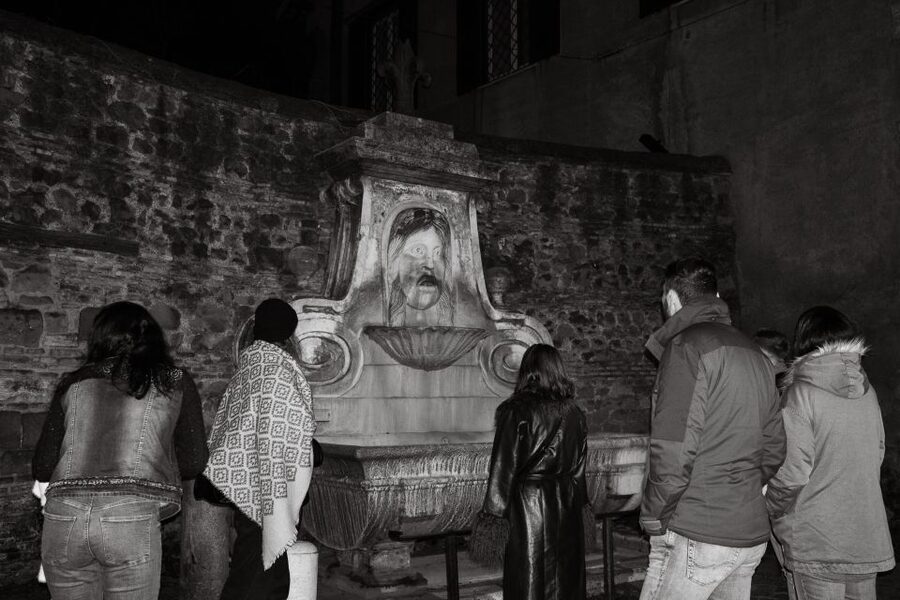
The Fountain of the Mask adds a strange little detail
The Fountain of the Mask is the sort of stop that rewards a guide who knows Rome’s odd corners. It is less famous than the Trevi Fountain or the fountains of Piazza Navona, which makes it a better fit for a route focused on side streets and unusual stories.
The name itself gives the guide an opening for a curious tale. You will spend roughly 15 minutes on guided sightseeing here before moving onward.
This stop helps prevent the tour from becoming a simple parade of famous landmarks. You get a mix of recognizable Rome and small features that are easy to overlook. I find that balance more satisfying than a ghost walk that only uses the city’s biggest attractions.
Do not expect a major attraction with a long visit. The value comes from the explanation and the setting, not from spending an hour at the fountain.
A chapel devoted to prayer and death
The Chiesa di Santa Maria dell’Orazione e Morte is one of the most striking stops on the route. The name refers to prayer and death, and the tour’s description connects the chapel with unsettling imagery, including decoration involving human bones.
This is the point most likely to appeal to you if you enjoy macabre history. It gives the evening a physical focus: not just a story about death, but a place shaped by the way earlier communities remembered and confronted it.
The stop is scheduled for about 15 minutes. Since the provided details do not promise an interior visit, you should not assume you will enter the church or see every decoration up close. The guide may discuss the site from the street or explain what lies inside, depending on the evening’s arrangements.
That limitation is worth keeping in mind. The tour sells atmosphere and storytelling, not guaranteed access to private or restricted spaces.
Santa Maria in Monserrato connects Rome with Spanish history
Santa Maria in Monserrato degli Spagnoli adds another layer to the route. The church’s name points to Rome’s long connection with Spanish visitors, residents, and religious communities.
On a tour about Rome’s darker past, this stop is useful because it broadens the subject beyond ghosts. The city’s stories are also about migration, faith, politics, artists, and the many communities that have shaped its streets.
The guide spends around 15 minutes here, using the church as another setting for a story. You get the best value if you listen for the connection between the building and the people around it, rather than treating it as a quick photo stop.
As with the other churches, do not book this expecting a full art-history lecture. The evening has a clear focus: unusual stories and the mood of Rome after dark.
Clivo di Rocca Savella leads toward Castel Sant’Angelo
Clivo di Rocca Savella is among the route’s quieter and less familiar locations. Its inclusion gives the walk a more local feel, with the group moving through a part of Rome that many first-time visitors would not plan on their own.
This is where the title’s promise of secret backstreets matters most. You are not spending the whole evening in the busiest squares. The route uses lesser-known passages and corners to create a sense of discovery.
The exact historical story at this stop can depend on the guide’s presentation, but the format remains the same: about 15 minutes of explanation and sightseeing. Guides such as Yousef and Simon have been praised for keeping everyone involved while walking, which is especially useful on streets where the group may need to stay close together.
The walk ends at Castel Sant’Angelo, giving the evening a strong final landmark. The castle’s association with Rome’s rulers, prisoners, military power, and dramatic history makes it a natural finish for a tour about the city’s darker side.
What the two-hour format feels like
The experience lasts two hours and covers several stops, so the pace is steady. Each listed location receives roughly 15 minutes of guided attention, with walking time between them.
That format suits you if you prefer stories in manageable pieces. You are unlikely to become stuck at one place for too long, and the changing streets keep the evening moving. It also means you need comfortable shoes and enough stamina for a full city walk, even though the route is described as easy by one participant.
Rome’s paving can be uneven in places, and night brings its own distractions, so stay with the group. The tour does not include food or drinks. You might want to eat beforehand or plan a drink after finishing near Castel Sant’Angelo.
A group can include up to 20 people. That is small enough for a guide to speak to the whole group without the event becoming a giant procession, but it is not a private walk. A private group option is available if you want more control over the pace and atmosphere.
The tour is offered in English with a live guide. The guide names associated with especially strong evenings include Ana, Antonio, Maham, Domenica, Sara, Dinara, Yousef, Yusuf, Simon, and Csenge. Assignments can change, so book for the route and subject rather than expecting one particular person.
Is $34 a fair price for the evening?
At $34 per person, I consider this a fair price for two hours of guided walking in central Rome. You are paying for a route, a live storyteller, and historical context that would be hard to assemble on your own in one evening.
The value is strongest if you have already seen Rome’s standard sights and want something different after dark. It is also useful early in a trip because the walk points out places you may want to revisit later, including Campo de’ Fiori, Via Giulia, bridges, churches, and the area around Castel Sant’Angelo.
The value is weaker if you want guaranteed ghost sightings, interior access, or a serious study of Roman history. No tour can promise that you will meet a ghost, and the supernatural side is presented through legends and stories.
Still, the price includes the main part that makes this kind of walk work: the guide. The best moments depend on voice, timing, humor, and the ability to make a familiar street feel new. The high overall rating and repeated praise for guides’ storytelling point to that being the tour’s strongest feature, though your exact guide will shape the experience.
Who should book this Rome ghost walk?
I would recommend it to adults, older children, couples, friends, and solo visitors who enjoy history with a spooky edge. It suits anyone who wants an evening activity that is lighter and more active than a restaurant meal, but less formal than a museum tour.
It is especially good for people who like stories about famous figures, crimes, religion, unusual customs, and local legends. The walk also works well for someone who has already visited Rome once and wants to see a different side of the city.
I would think twice if you dislike macabre subjects or want a purely factual tour. The material includes executions, murder, death, bones, and ghost lore. The guides add humor, but the subject matter does not disappear.
Arrive early at the statue of Giordano Bruno, wear sensible shoes, and dress for the weather. A winter evening can be cold and rainy, and the route runs outdoors. Cancellation is free up to 24 hours before departure, and you can reserve now and pay later, which gives you some flexibility if your plans are still shifting.
Should you book the Paranormal Night Walking Tour?
Book it if you want a well-priced evening walk that shows Rome through its strangest stories and quieter streets. The mix of Campo de’ Fiori, small Madonnelle, old bridges, the chapel linked with human bones, and Castel Sant’Angelo gives the route plenty of variety.
Skip it if you want a major attraction tour, guaranteed access inside churches, or a fully scholarly account of Rome’s past. For everyone else, this is a lively way to spend two hours, especially when you choose it for the storytelling rather than expecting a parade of actual ghosts.
FAQ
Where does the Rome paranormal walking tour start?
The tour starts in Piazza Campo de’ Fiori, beneath the statue of Giordano Bruno. The guide will hold a yellow Carpe Diem Tours flag or sign.
Where does the tour finish?
The walk finishes at Castel Sant’Angelo.
How long does the tour last?
The tour lasts two hours.
What language is the tour conducted in?
The live guided tour is conducted in English.
What places are included on the route?
Stops include the statue of Giordano Bruno, Piazza Farnese, Madonna della Pietà and the Madonnelle, Ponte Sisto, the Fountain of the Mask, Santa Maria dell’Orazione e Morte, Santa Maria in Monserrato degli Spagnoli, Clivo di Rocca Savella, and Castel Sant’Angelo.
How large is the group?
The group can include up to 20 people. A private group option is also available.
Does the tour include food or drinks?
No. Food and drinks are not included.
How much does the tour cost?
The listed price is $34 per person.
Can I cancel or pay later?
You can cancel up to 24 hours in advance for a full refund. You can also reserve your place and pay later.
More Evening Experiences in Rome
- Rome: City Highlights Open-Top Bus Night Tour
★ 4.1 · 2,038 reviews - Vespa Sidecar Tour By Night with Pickup
★ 5.0 · 1,803 reviews - Rome by Night – Ebike Small Group Tour – Food and Wine (Option)
★ 5.0 · 1,275 reviews - Colosseum Sunset Tour with Entry
★ 4.5 · 1,230 reviews
Fresh on the Rome list
- Exclusive Golf Tour Private VIP with Local & Gelato o Wine★ 5.0 · 500 reviews
- Colosseum, Palatine Hill and Roman Forum with Guided Tour★ 5.0 · 500 reviews
- Rome by Night Walking Tour★ 4.5 · 506 reviews
- Rome Trastevere Pasta Making Class with Eating Europe★ 5.0 · 505 reviews
- Rome: Colosseum Express Tour with Forum & Palatine Access★ 4.5 · 511 reviews
- Rome Food Experience Max 6 People Group Tour | w/Private Option★ 5.0 · 516 reviews
- Rome: Navona Square Underground Ticket with Audio Guide★ 4.0 · 518 reviews
- Rome: Escorted Papal Audience Experience with Entry Ticket★ 4.4 · 518 reviews
Walking Tours, compared.
Guided Walking Tour & Last Supper Visit with Ticket
Read our review →
Rialto Bridge & Offbeat Unusual Venice Walking Tour
Read our review →
Private 3 hrs Venice Tour: St Mark’s, Walking tour & Boat tour
Read our review →
Skip the line: Uffizi and Accademia Small Group Walking Tour
Read our review →Browse the lists this tour appears in