
Reviewed · SKIP-THE-LINE TICKETS
Rome: Pantheon Small Group Tour and Skip-the-Line Ticket
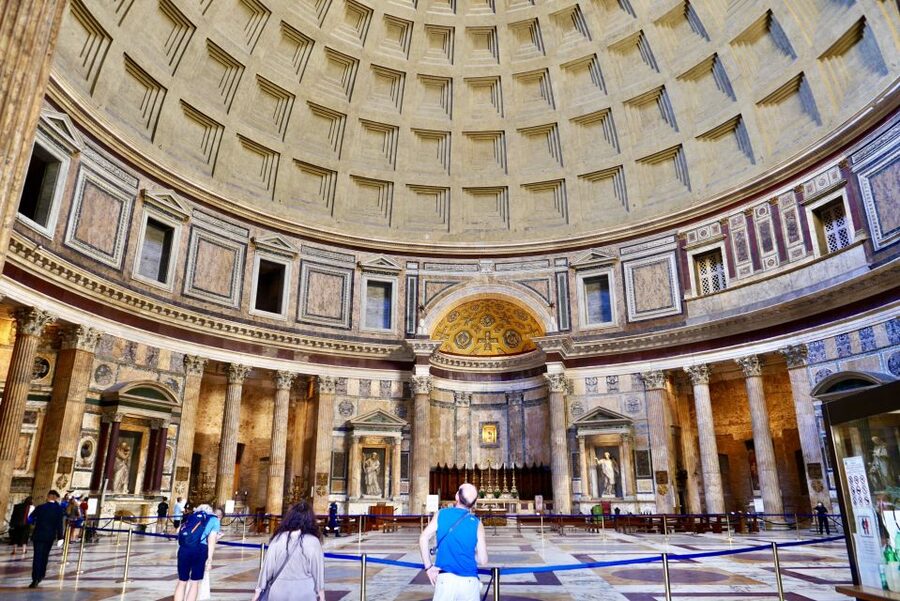
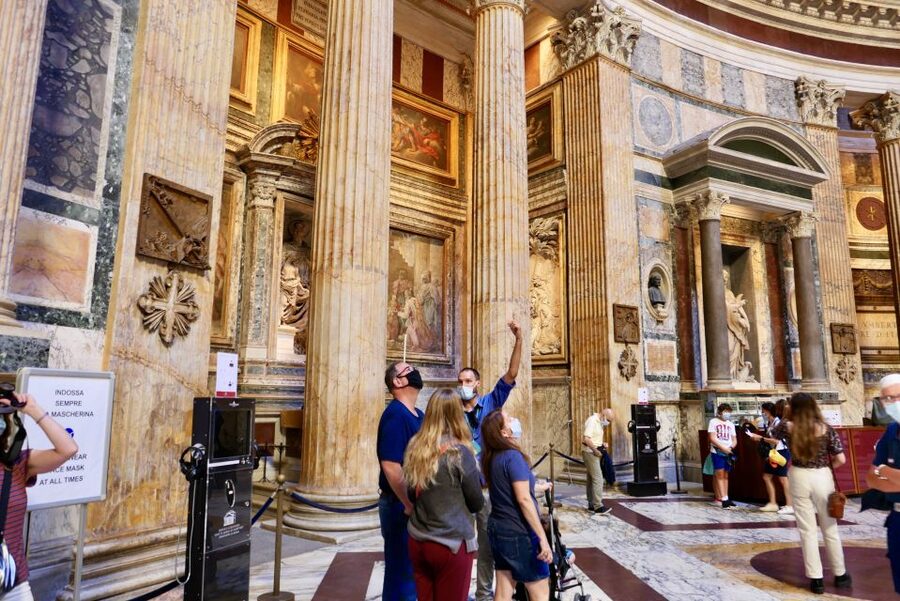
The Pantheon’s great surprise is not simply its age. It is the way the building still feels whole: Egyptian granite columns, ancient marble flooring, and a vast concrete dome with its famous open oculus. A good guide turns that visual shock into a clear story about Roman engineering, pagan beliefs, and the building’s later life as a church.
I especially like the small maximum of 10 people, which gives you a fair chance to hear and ask questions. I also like the choice of adding a second 40-minute walk through nearby piazzas and churches, giving you more than a quick look inside. The main consideration is time: the basic visit can last only 40 minutes, so travelers who want a slow, quiet look at every detail may find it brisk.
- Ancient structure, living church: See the Pantheon’s pagan design in a building that is still used for Christian worship.
- Engineering explained clearly: Learn how the dome, proportions, and weight distribution helped the building survive.
- Egyptian granite columns: Walk beneath Corinthian columns brought from Egypt for the original Roman temple.
- Raphael’s tomb: See the burial place of the famous Renaissance artist, along with Italian royal tombs and other important figures.
- Optional central Rome walk: Extend the tour to Piazza della Minerva, the Temple of Hadrian, and Piazza Navona.
- Languages and group size: Tours are offered in six languages, with private and small-group options available.
Why the Pantheon Deserves a Guided Visit
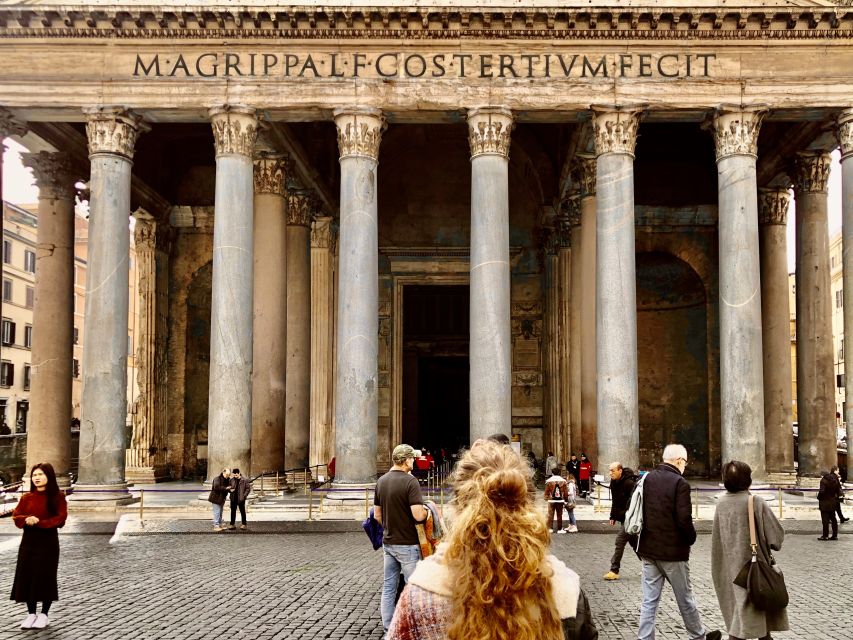
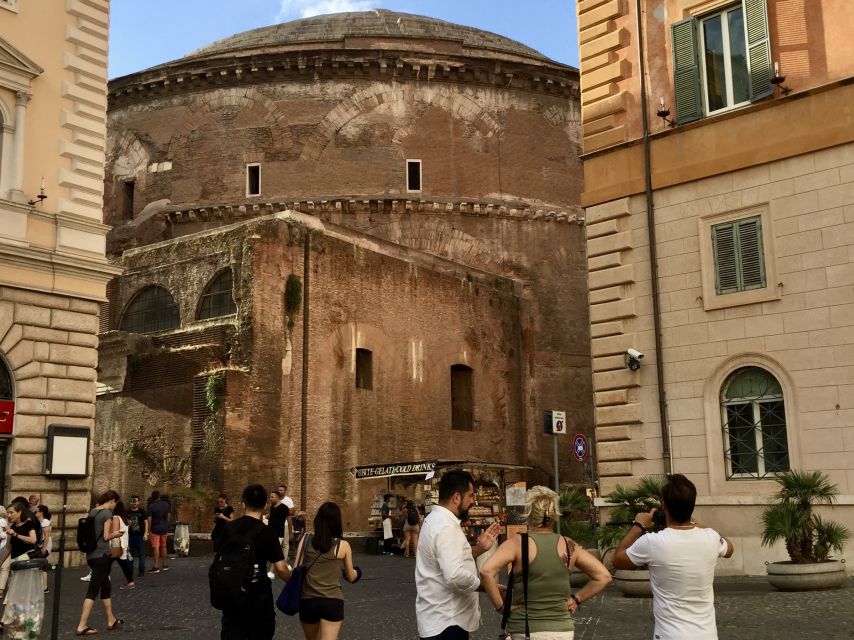
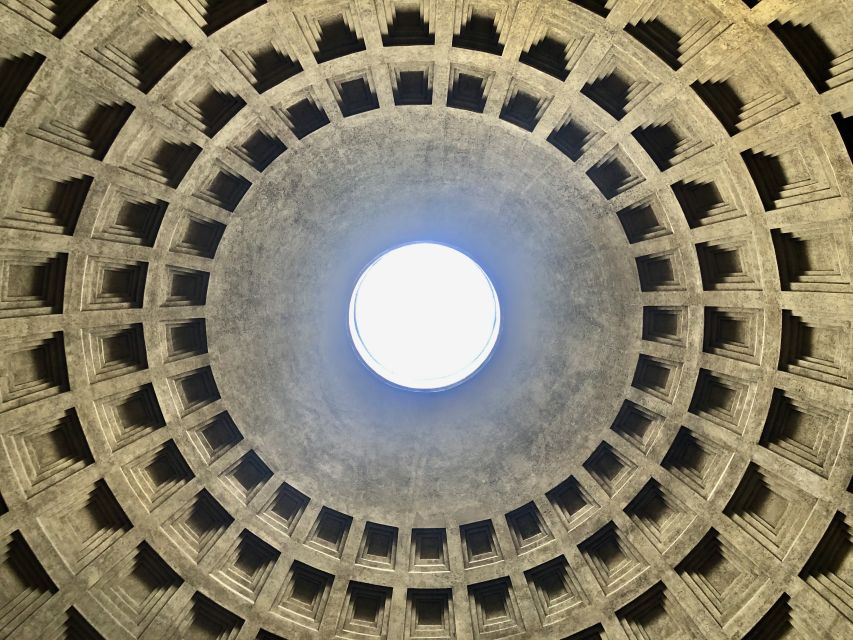
You can look at the Pantheon on your own, but the building gives up its secrets slowly. From outside, you see a classical portico and a massive rounded structure. Inside, the dome seems to float above you, and the oculus lets in a sharp circle of daylight while rain can fall onto the floor below.
A guide helps you notice the logic behind the beauty. The tour explains the building’s proportions, the purpose of its original pagan design, and the engineering choices that allowed a structure of this size to survive for so long. That context matters because the Pantheon can otherwise become a quick photo stop: impressive, yes, but not fully understood.
The guide also helps connect different chapters of Roman life. This was first a temple dedicated to all the gods. It later became a Christian church, a place linked with Christian martyrs, and a burial site for Italian royals and artists including Raphael. You are not just looking at old stone. You are seeing a building that changed use while remaining part of the city’s daily life.
Meeting at the Pantheon Fountain
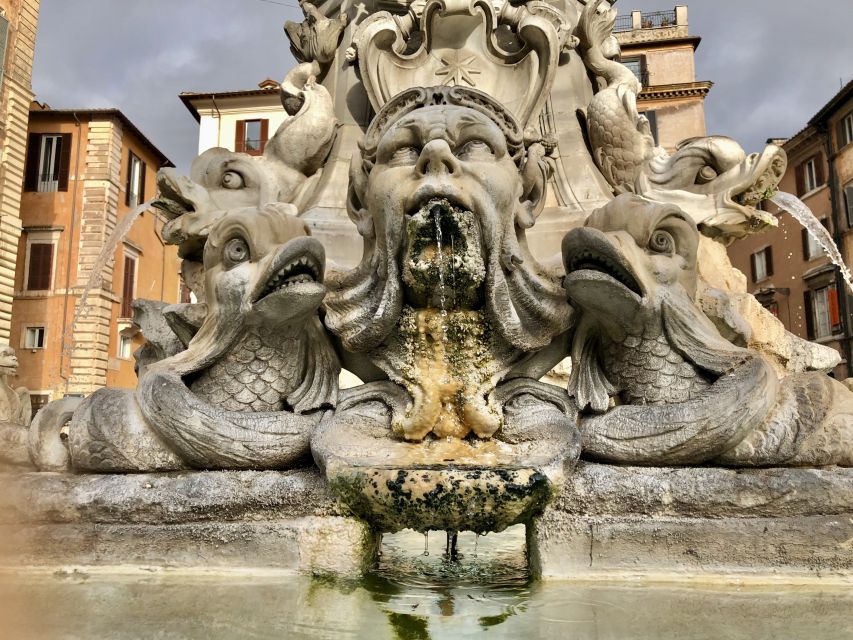
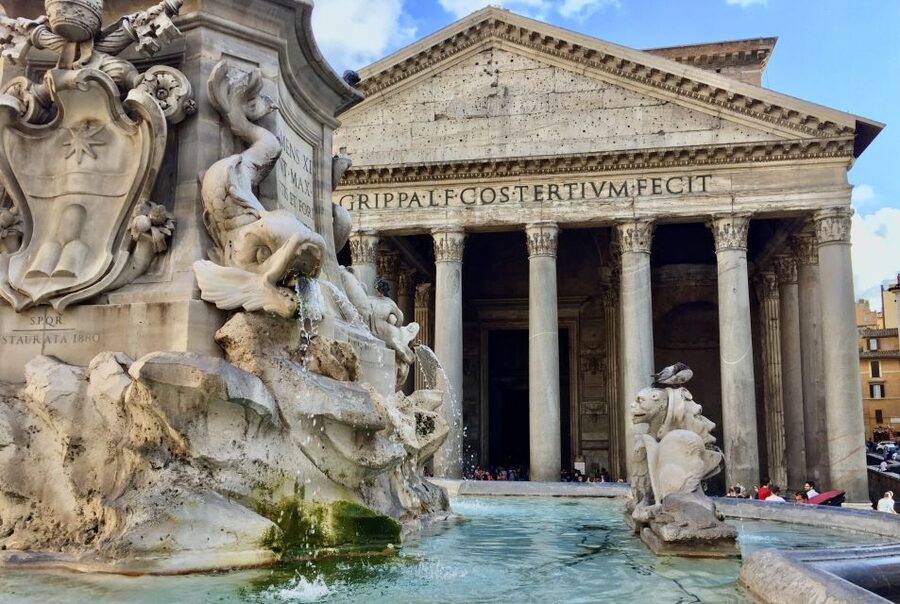
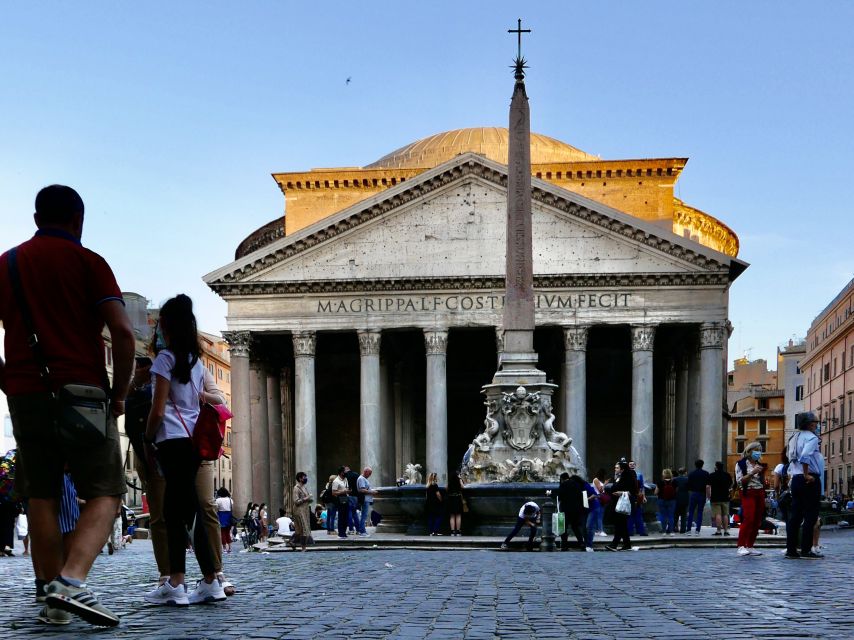
The meeting point is the fountain in front of the Pantheon entrance. Look for the guide carrying a yellow sign with the Touriks logo, and arrive at least five minutes early.
This is a busy central Roman square, so give yourself enough time to find the fountain rather than cutting it close. The meeting point is easy to describe, but the area can feel crowded, and a late arrival can make the first few minutes stressful.
The first part of the tour is a short introduction near the fountain. This is useful because your guide can point out the Pantheon’s exterior before you enter. You begin to understand the contrast between the grand portico, with its tall columns, and the broad, heavy body of the ancient building behind it.
More Skip-the-Line Tickets in Rome
- Vatican Museums & Sistine Chapel Skip-the-Line Entry Ticket
★ 4.4 · 13,838 reviews - Skip-the-Line Group Tour of the Vatican, Sistine Chapel & St. Peter’s Basilica
★ 4.5 · 12,779 reviews - Vatican, Sistine Chapel & St. Peter’s Skip-the-Line Tour
★ 4.5 · 7,770 reviews
Entering Through the Egyptian Columns
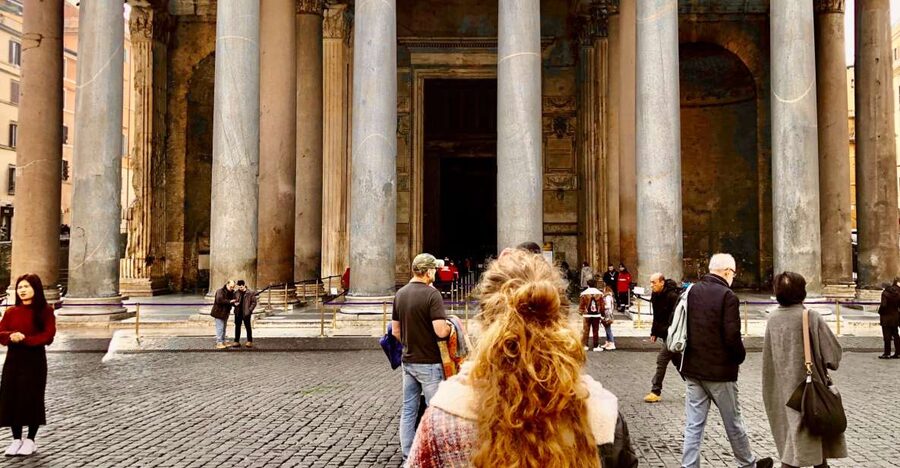
The Pantheon’s entrance is one of its strongest moments. You walk through a line of Corinthian columns made from granite brought from Egypt. Their size gives you an immediate sense of the resources and ambition behind Roman public architecture.
Inside, the original marble floor remains remarkably well preserved. Look down as well as up. The floor’s patterns and materials help show that the Pantheon was designed as a complete work, not just a shell for the dome.
The guide uses the interior to explain how the building was made and why it has lasted. Expect discussion of the dome’s construction, the distribution of weight, and the role of its opening at the top. The oculus is both a practical and symbolic feature, and the changing light gives the interior a different character as the day goes on.
A headset is included. That is important here because the Pantheon can be noisy, especially when other people are entering, praying, or listening to different guides. One past booking had trouble hearing the guide because radios were not available for everyone, but headsets are part of the stated arrangement. It is sensible to check that yours is working before the explanation gets underway.
The Dome and Its Roman Logic
The dome is the heart of the visit. Its scale is easy to admire, but the better question is how it remains standing. Your guide explains the engineering choices that made the dome lighter toward the top and how the design works with the building’s circular interior.
You will also hear about the Pantheon’s proportions. The balance between the height and width of the interior was not random. Roman builders used geometry to create a space that feels calm and complete, and the guide connects this design to the pagan ideas behind the temple.
This is where a short guided visit earns its price. The dome is a sight you can appreciate in seconds, but the explanation gives you a reason to look again. You may notice the transition from the lower walls to the rounded ceiling, the orderly placement of the interior spaces, and the way the oculus keeps your eye moving upward.
The tour does not turn the Pantheon into a dry construction lesson. Guides such as Francesca, Paul, Samuel, Chiara, and others have been praised for mixing facts with humor, stories, and room for questions. The strongest guides make the building understandable without burying you in dates.
Raphael, Royals, and the Pantheon as a Church
The Pantheon’s later life is just as important as its Roman beginning. It is a church today, so you enter a working religious space rather than a simple archaeological monument. That explains the dress rule: your knees and shoulders must be covered. Shorts, short skirts, and sleeveless shirts are not allowed.
Inside, you see the tomb of Raphael, one of Italy’s most famous artists. The building also contains the tombs of Italian royals and other significant figures. These burials give the interior a different mood. The Pantheon is not only a monument to ancient Rome; it has continued to serve as a place of remembrance.
The guide explains the change from pagan temple to Christian church and the connection with Christian martyrs. This part is especially helpful if you want to understand how Rome repeatedly reused older buildings instead of treating them as sealed-off relics.
Keep in mind that special religious events can close the Pantheon to visitors. If that happens, you are offered the choice of rescheduling or receiving a full refund. The possibility is outside the tour operator’s control, but it is worth knowing before you build a tightly packed day around this visit.
Same city, an entirely different afternoon:
- Vatican Museums & Sistine Chapel Tour with Optional Basilica
★ 4.3 · 67,413 reviews - Colosseum, Roman Forum & Palatine Guided Tour
★ 4.7 · 63,148 reviews - Vatican Museums, Sistine Chapel & St Peter’s Basilica Guided Tour
★ 4.5 · 39,149 reviews - Rome: Colosseum, Palatine Hill and Roman Forum Guided Tour
★ 4.8 · 32,814 reviews
The Optional 40-Minute Walk Beyond the Pantheon
The basic tour focuses on the Pantheon and lasts about 40 minutes. You can add another 40-minute section during booking, making the full activity roughly 80 minutes.
The extended route begins around Piazza della Minerva. This area gives you a different view of central Rome, with nearby churches and public spaces that are easy to overlook when you rush between major monuments. Your guide continues the story beyond the Pantheon, helping you see how ancient and Christian Rome fit together in the same neighborhood.
The Temple of Hadrian is another stop. The surviving columns offer a useful reminder that Roman ruins are often woven into the modern city rather than isolated behind fences. A guide can explain what you are seeing and place it within the broader story of imperial Rome.
The walk finishes at Piazza Navona, one of Rome’s best-known squares. This is a pleasant endpoint because the route shifts from a single interior monument to streets, fountains, churches, and urban life. It also gives you a useful location from which to continue exploring on your own.
The extension is not a replacement for a full city walking tour. It is a compact add-on that gives you extra context and a few more central Roman sights. If you are already planning to visit Piazza Navona independently, the basic Pantheon tour may be enough. If you want help getting oriented, the longer option adds real value.
The Guides Make the Difference
The most consistently praised part of this experience is the guiding. Francesca is often singled out for her energy, humor, and command of the Pantheon’s architecture and past. Paul is described as an enthusiastic storyteller with a wide grasp of Roman history, while Samuel is noted for patience, warmth, and thoughtful answers.
Other guides named in bookings include Chiara, Federica, Annalisa, Aly, and Mario. The experience can vary by guide, as it does with any guided activity, but the format gives you the chance to ask questions rather than simply follow an audio track.
That personal exchange is useful in the Pantheon. You may want to know why the oculus is open, how the floor handles rain, what happened to the original temple, or why Raphael was buried here. A live guide can adjust the explanation to your interests.
Several bookings also received extra time or informal help beyond the stated route. One guide continued for nearly two hours on an 80-minute option, and another accompanied a couple toward the Trevi Fountain and suggested restaurants. Treat such extras as pleasant surprises, not guaranteed features. The published schedule remains 40 or 80 minutes.
Is $53 a Fair Price?
At $53 per person, this is not the cheapest way to enter the Pantheon. The building itself may have a separate entry arrangement, and you are paying for more than admission. The price includes a live professional guide, headsets, and entrance fees.
For a first visit, I think the cost can make sense. You get a focused explanation of one of Rome’s most important buildings, skip-the-line access, and a small group capped at 10 people. If the queue is long, moving inside without wasting a large part of your morning has practical value.
The price is easier to justify if you choose the extended route. Eighty minutes of guiding through the Pantheon and nearby central sights gives you a compact orientation to this part of Rome. For a family, first-time visitor, or anyone who prefers clear explanations, that can be better value than trying to piece together the building’s story alone.
It is less compelling for repeat visitors who already understand the Pantheon or for people who prefer to spend a long time sitting quietly inside. You should also compare the price with your day’s priorities. If your schedule is packed, a 40-minute guided visit fits neatly between other sights. If you want a full architectural study, you may need more time on your own afterward.
Who Should Book This Tour?
I would choose this for a first visit to Rome, especially if the Pantheon is high on your list but you do not want a long lecture. The tour suits families and teenagers because the guides use stories, humor, and questions to keep the building approachable.
It also works well for people who want a short activity in the heart of Rome. The meeting point is central, the route requires no hotel transfer, and the optional walk ends at Piazza Navona. You can combine it with nearby sightseeing instead of setting aside half a day.
The language choice is another strength. Live tours are available in English, Spanish, French, German, Italian, and Portuguese. Private and small-group formats are offered, so you can choose the level of personal attention that fits your budget and plans.
Dress properly before you arrive. Cover your shoulders and knees, even in hot weather, because the Pantheon is a church. Bring patience for the meeting point, arrive early, and check your headset before the guide begins.
Should You Book the Pantheon Tour?
Book it if you want the Pantheon to make sense, not just look impressive. The strongest reasons are the small group, the skip-the-line entry, the clear explanation of the dome, and the chance to understand Raphael’s tomb and the building’s Christian chapter.
Choose the extended option if you want a little more Rome after the interior, especially around Piazza della Minerva, the Temple of Hadrian, and Piazza Navona. Skip the extension if you already have those sights planned or want to linger inside.
At $53, this is a focused guided experience rather than a bargain entry ticket. For most first-time visitors, the expert storytelling and saved queue time make it a sensible purchase. The free cancellation up to 24 hours ahead and reserve-now, pay-later option also make it easier to fit into a changing Rome itinerary.
FAQ
How long does the Pantheon tour last?
The standard tour lasts about 40 minutes. You can add an optional 40-minute walk through nearby sights, making the full activity about 80 minutes.
Where do I meet the guide?
Meet by the fountain in front of the Pantheon entrance. The guide carries a yellow sign with the Touriks logo.
How early should I arrive?
You should arrive at the meeting point five minutes before the scheduled start time.
What is included in the price?
The price includes a live professional guide, headsets, and entrance fees.
Is skip-the-line entry included?
Yes. Skip-the-line entry to the Pantheon is included with the tour.
How large is the group?
The small group has a maximum of 10 participants. Private options are also available.
Which languages are offered?
Tours are available in English, Spanish, French, German, Italian, and Portuguese.
Is the Pantheon still a church?
Yes. The Pantheon is currently a church, and appropriate clothing is required for entry.
What clothing is not allowed?
Shorts, short skirts, and sleeveless shirts are not allowed. Your knees and shoulders must be covered.
What happens if the Pantheon closes for a special event?
You can choose to reschedule the tour or receive a full refund if the church closes its doors to visitors because of a special event.
Fresh on the Rome list
- Exclusive Golf Tour Private VIP with Local & Gelato o Wine★ 5.0 · 500 reviews
- Colosseum, Palatine Hill and Roman Forum with Guided Tour★ 5.0 · 500 reviews
- Rome Trastevere Pasta Making Class with Eating Europe★ 5.0 · 505 reviews
- Rome by Night Walking Tour★ 4.5 · 506 reviews
- Rome: Colosseum Express Tour with Forum & Palatine Access★ 4.5 · 511 reviews
- Rome Food Experience Max 6 People Group Tour | w/Private Option★ 5.0 · 516 reviews
- Rome: Navona Square Underground Ticket with Audio Guide★ 4.0 · 518 reviews
- Rome: Escorted Papal Audience Experience with Entry Ticket★ 4.4 · 518 reviews
Skip-the-Line Tickets, compared.

Skip-The-Line Uffizi Gallery Timed Entry Ticket
Read our review →
Vatican Museums & Sistine Chapel Skip-the-Line Entry Ticket
Read our review →
Skip-the-Line Group Tour of the Vatican, Sistine Chapel & St. Peter’s Basilica
Read our review →
Michelangelo’s David Skip-the-Line Entry Ticket
Read our review →
Vatican Museums & Sistine Chapel Skip-The-Line Ticket
Read our review →
Vatican, Sistine Chapel & St. Peter’s Skip-the-Line Tour
Read our review →
Skip-the-Line Vatican, Sistine Chapel & St. Peter’s | Small Group
Read our review →
Vatican: Vatican Museums Sistine Chapel Skip-the-Line Ticket
Read our review →Browse the lists this tour appears in