
Reviewed · WALKING TOURS
Rome: Ghostly Nighttime Walking Tour
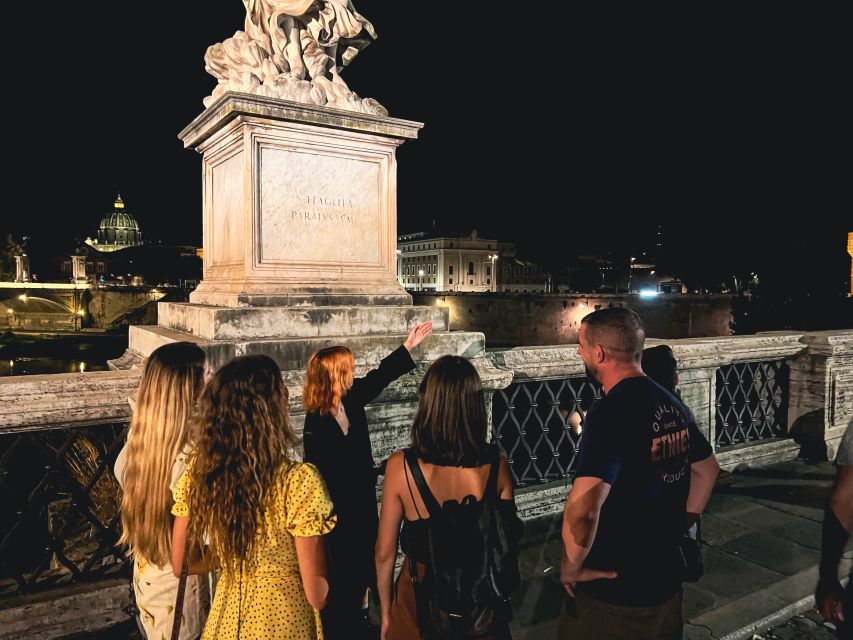
Rome’s sinister side comes alive after sunset, when Campo de’ Fiori, old bridges, quiet lanes, and shadowy churches make a fitting stage for stories of ghosts, murders, executions, and infamous popes. This two-hour walk takes you from Giordano Bruno’s statue to Castel Sant’Angelo, using Rome’s famous sights as clues to its darker past.
I like the timing: you avoid the midday heat and see central Rome with fewer daytime crowds. I also like the mix of history and storytelling. Guides such as Maham, Dinara, Sarah, Diletta, and Domenica are praised for clear English, strong energy, and lively presentations. The main consideration is that the tour is more historical than supernatural, so anyone expecting constant jump scares may find it gentler than the title suggests.
Key points to know before booking
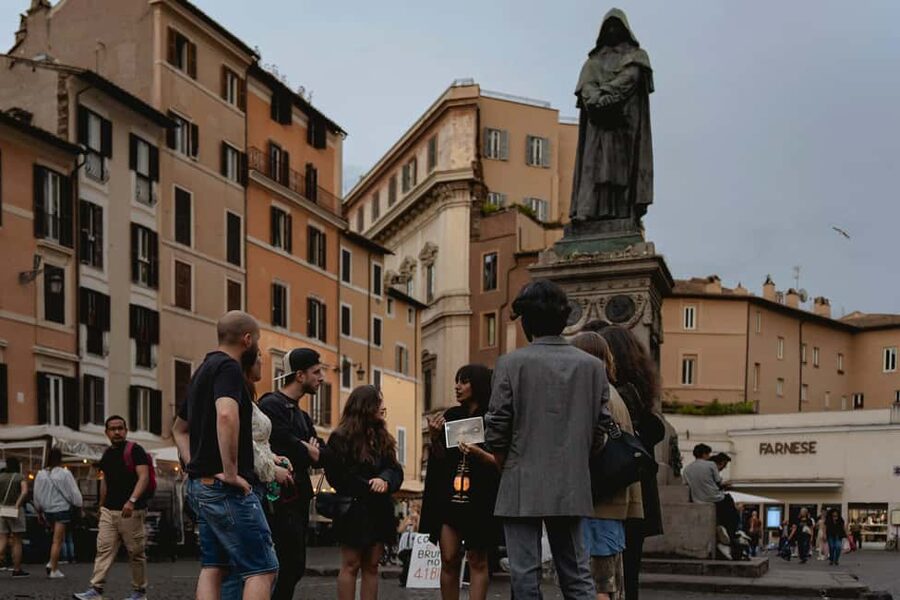
- Giordano Bruno begins the story: Meet directly in front of his statue in Campo de’ Fiori, where your guide holds an iPad or red sign.
- The route crosses central Rome: Stops include Piazza Farnese, Ponte Sisto, Via Giulia area sights, Santa Maria dell’Orazione e Morte, and Castel Sant’Angelo.
- The mood is eerie, not theatrical: Expect gruesome facts, ghost tales, and dark legends rather than a haunted-house performance.
- English guiding matters here: Clear storytelling and audience interaction are central to the experience, and guides often bring pictures or books to support the stories.
- The price is modest: At $28 per person, two hours of guiding and nighttime sightseeing offer fair value for a first or final evening in Rome.
- Wear good shoes: This is a walking route through historic streets and bridges, with no transport included.
Why Rome after dark changes the experience
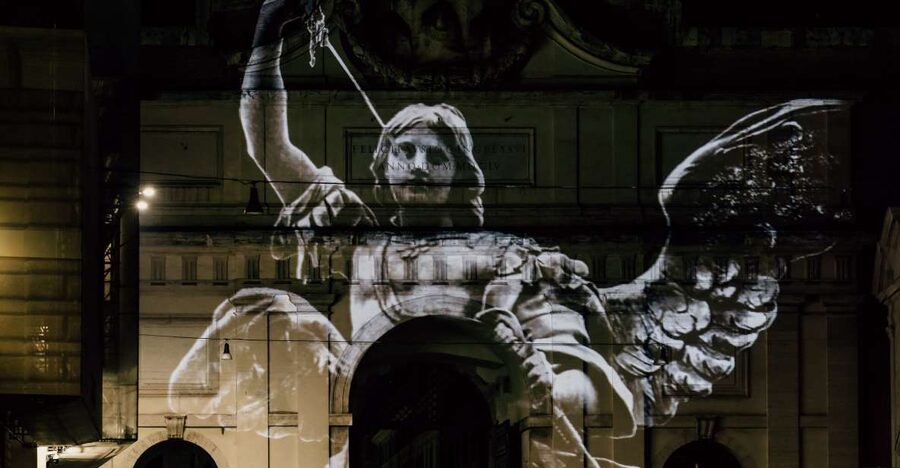
Rome is dramatic in daylight, but night gives its darker stories more room. A statue in a busy square can seem like a standard landmark at noon. After sunset, the same statue becomes the opening scene for a tale about a condemned thinker, a public execution, or a city that treated punishment as public entertainment.
That shift in mood is the real appeal here. You are not simply walking from one famous address to another. You are learning to look at Rome through a different lens. Churches become places tied to death rituals. Bridges recall public punishment. Squares reveal the less polished side of papal and imperial power.
The tour lasts two hours, which is long enough to cover a good stretch of central Rome without turning into an exhausting all-night march. Each listed stop allows about 15 minutes for explanation, sightseeing, or walking. The pace should suit you if you want stories and atmosphere but still hope to have dinner or another evening plan afterward.
The tour is conducted in English. That makes the guide’s delivery especially important, and the strongest comments focus on clear speech, good energy, interactive storytelling, and the ability to answer questions. Some guides, including Sarah and Diletta, are praised for making the group feel involved rather than simply delivering a speech.
More Walking Tours in Rome
- Rome: Trastevere & Campo de Fiori Street Food Walking Tour
★ 4.9 · 2,768 reviews - Rome: Paranormal Night Walking Tour & Secret Backstreets
★ 4.9 · 1,921 reviews - Rome by Night Walking Tour – Legends & Criminal Stories
★ 4.5 · 1,003 reviews
Starting with Giordano Bruno in Campo de’ Fiori
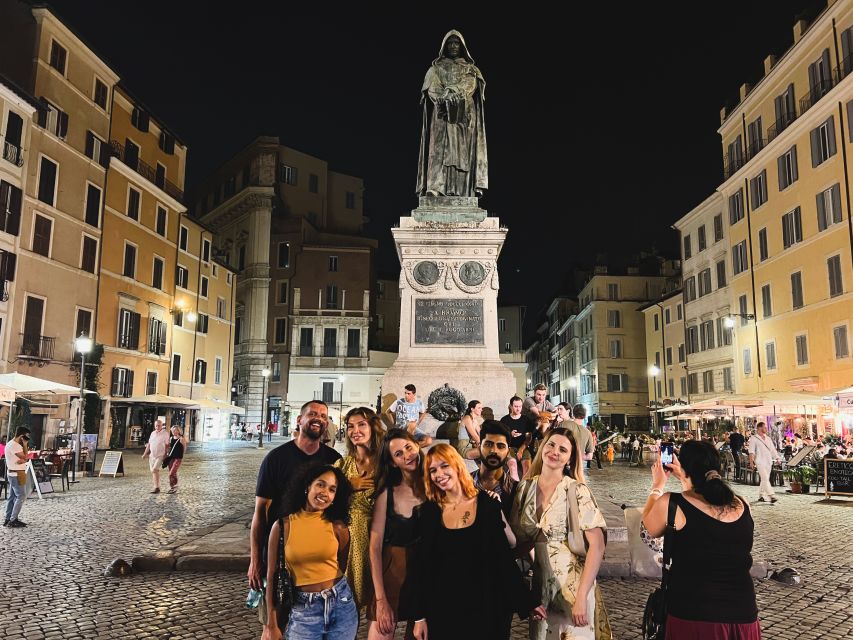
Your meeting point is directly in front of the statue of Giordano Bruno in the center of Campo de’ Fiori. Look for a guide holding an iPad or red sign. This is a practical meeting point, but Campo de’ Fiori can be busy and visually confusing, so arrive with enough time to locate the statue rather than searching at the last minute.
Bruno’s statue sets the tone immediately. His story connects Rome with religious conflict, free thought, and execution. The point is not just to hear a frightening tale. You begin by considering how the city handled people it viewed as dangerous.
The statue itself becomes more interesting because of the setting. Campo de’ Fiori is one of Rome’s best-known squares, yet the tour asks you to focus on its grim associations instead of its restaurants and evening atmosphere. That contrast gives the opening some bite.
This is also where the guide’s personality starts to matter. Maham is repeatedly praised for charisma, enthusiasm, and storytelling, while Dinara is noted for clear English and a strong command of the material. The exact guide can vary, but you can expect a live guide rather than an audio recording or self-guided route.
Piazza Farnese and Rome’s public face
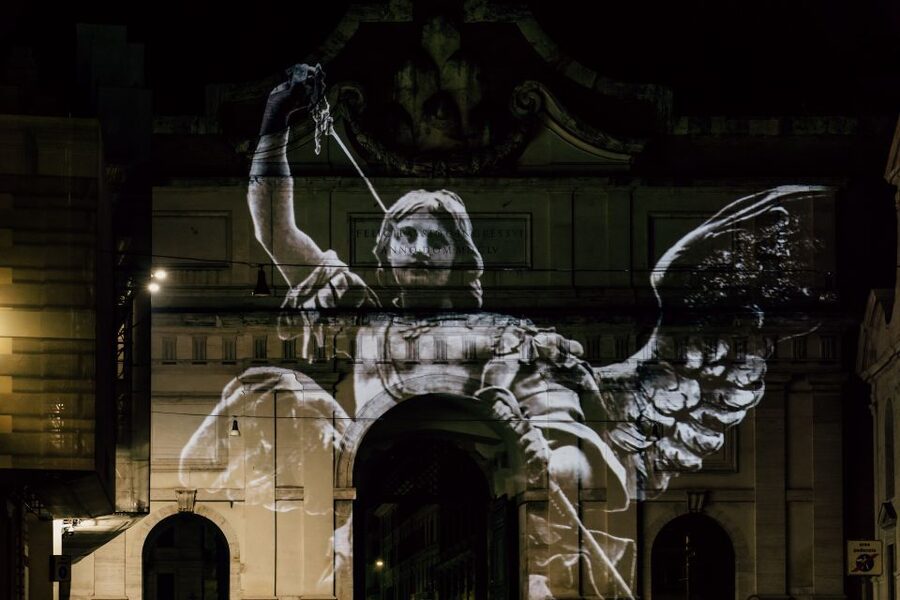
From Campo de’ Fiori, the walk continues to Piazza Farnese. The square is grand and open, and its fountains and palaces can look polished and peaceful at night. The tour uses that setting to show how Roman beauty often sits close to harsher stories.
You should expect about 15 minutes here for guided sightseeing and walking. The value of this stop is not a long architectural lecture. It is the way the guide adds a darker layer to a place you might otherwise pass through quickly.
This is a recurring strength of the route. You still see major Roman sights, but you are not receiving the standard daytime introduction. The tour focuses on infamous popes, emperors, artists, executions, and violent episodes. If you have already visited Rome’s major museums and ancient monuments, this can give familiar streets a fresh angle.
I would not book this as a replacement for a full art or architecture tour. It is selective and story-led. You get memorable episodes rather than a complete account of every building you see.
Small Madonnas and the details you might miss
One stop is Madonna della Pietà, described as one of Rome’s small Madonna images, or Madonnelle. These modest religious images are easy to overlook when you are walking through the city. A guide can make such a small detail useful by explaining how it fits into Rome’s religious and street life.
This stop also helps keep the tour from becoming a parade of only famous monuments. Rome’s dark character is found in small corners as much as in grand squares. A short pause at a lesser-known image gives you something to watch for during the rest of your stay.
The stop is listed for about 15 minutes. That is enough time to see the detail and hear its story without lingering so long that the walk loses its rhythm. You might find this kind of pause especially useful if you enjoy noticing signs, carvings, chapels, and small devotional objects that standard sightseeing routes often skip.
Same city, an entirely different afternoon:
- Vatican Museums & Sistine Chapel Tour with Optional Basilica
★ 4.3 · 67,413 reviews - Colosseum, Roman Forum & Palatine Guided Tour
★ 4.7 · 63,148 reviews - Vatican Museums, Sistine Chapel & St Peter’s Basilica Guided Tour
★ 4.5 · 39,149 reviews - Rome: Colosseum, Palatine Hill and Roman Forum Guided Tour
★ 4.8 · 32,814 reviews
Ponte Sisto and the walk across the river
The route continues to Ponte Sisto, a historic bridge linking central neighborhoods across the Tiber. The bridge provides one of the tour’s atmospheric walking sections. At night, the river and surrounding streets change the pace from square-based storytelling to movement through the city.
You should keep your attention on the guide while crossing. A nighttime walking tour is only enjoyable if you can hear the story and stay with the group. Sarah is praised for making sure the group stayed together, an important practical skill on a route that includes bridges and busy central streets.
Ponte Sisto is also a useful transition. The tour moves away from the opening execution story and toward tales linked to death, punishment, and religious institutions. The route feels like a connected walk through central Rome rather than a series of unrelated ghost stops.
There is no transportation included, and that is not a problem for most people who enjoy walking. Still, comfortable shoes are essential. The experience is only two hours, but cobbled and uneven historic streets can make poor footwear a needless nuisance.
The Fountain of the Mask and Rome’s stranger details
The Fountain of the Mask gives the guide another compact sight around which to build a story. Roman fountains often seem decorative at first glance, but their faces, symbols, and locations can carry unsettling associations when explained in context.
This is the kind of stop where the guide makes the difference. The tour’s best moments depend on delivery, timing, and the ability to connect a small object with a larger story. Several guides are praised for bringing pictures or a book to support the narration. Visual material can help when a tale involves a person, artwork, or event that is difficult to imagine from the street alone.
You should expect the tone to remain accessible rather than frightening. The stories are described as chilling, morbid, spicy, and bone-chilling, but the experience is also interactive and often funny. That balance suits people who want a spooky evening without a full horror production.
Santa Maria dell’Orazione e Morte and the bone-filled chapel
The Church of Santa Maria dell’Orazione e Morte is likely the most distinct stop on the route. The tour highlights a chapel decorated with human bones, giving the evening a physical reminder of Rome’s old relationship with death.
This stop adds weight to the ghost stories. You are not only hearing about strange events in the past. You are visiting a religious setting where death is represented directly and deliberately. The result can be unsettling, especially after dark, but it also gives useful context for the city’s older customs and beliefs.
Keep in mind that the tour description does not promise a full interior visit or extended church access. The schedule allows about 15 minutes for guided sightseeing. Your guide may focus on the exterior, the chapel, or the story connected with the site, depending on access and timing.
That uncertainty is worth accepting because the church is one of the route’s most unusual points. If you prefer a conventional sightseeing walk, the subject matter may feel too grim. If you enjoy unusual religious art and macabre history, this should be one of the most memorable sections.
Santa Maria in Monserrato degli Spagnoli
The route then reaches Santa Maria in Monserrato degli Spagnoli. This church adds an art and religious dimension to the evening. The tour does not treat Rome’s churches as neutral monuments. Instead, it considers the people, beliefs, and troubling events attached to them.
Diletta is praised for combining historical and art knowledge, and this is the sort of stop where that wider background can add real value. A good guide can explain more than the scary part, helping you understand why the site matters and how the darker story fits into the setting.
The stop is again planned for about 15 minutes. That keeps the experience from becoming a full church tour. You will get a focused story and a chance to look around, not a detailed survey of every painting or chapel.
I like this balance. The tour has enough art and architecture to feel rooted in Rome, but it does not lose its main subject. You are here for the city’s unsettling stories, not a standard church circuit.
Castel Sant’Angelo and the final stretch
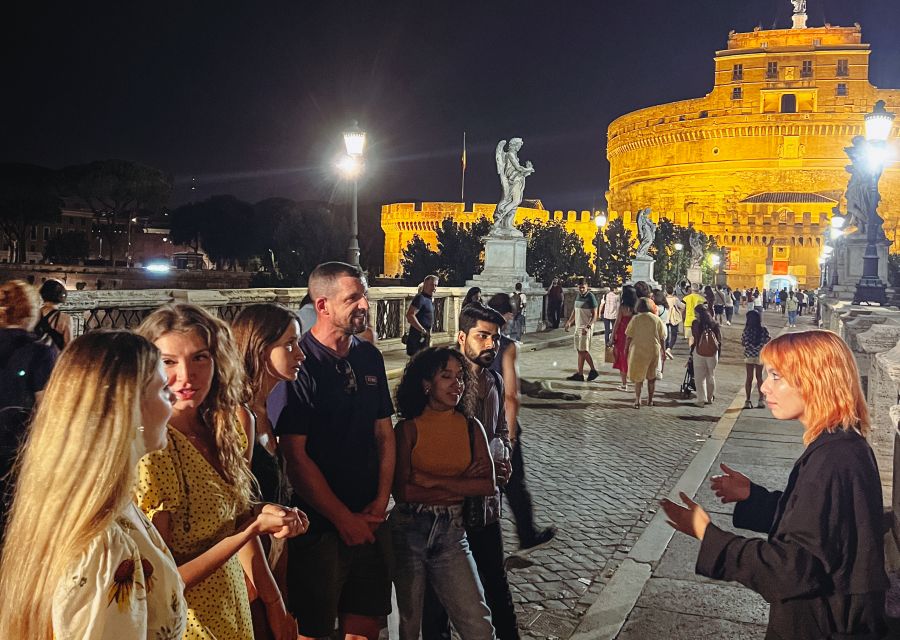
The walk finishes at Castel Sant’Angelo, one of Rome’s strongest nighttime backdrops. The fortress-like structure has long been tied to power, imprisonment, religion, and death, so it makes sense as the final major sight on a tour about haunted Rome.
The route description lists Castel Sant’Angelo as the final stop, with about 15 minutes for guided sightseeing and walking. The ending gives the tour a satisfying visual finish: you have crossed central streets and the river, then arrived at one of Rome’s most imposing landmarks.
The meeting information says the activity ends back at the meeting point, while the route details place the finish at Castel Sant’Angelo. Because those details do not perfectly match, confirm the exact end arrangement when you book. Either way, you should plan your evening around a route that concludes in the Castel Sant’Angelo area or follows the provider’s stated return arrangement.
Do not expect entry into Castel Sant’Angelo as part of this experience. The included service is a ghost walking tour with a local guide. The focus is on seeing the site and hearing its stories from outside or along the route.
What the guides add to the evening
The strongest part of this tour is the guide’s performance. The material includes executions, murder, ghosts, paranormal activity, and grim religious traditions, but a flat delivery would make even good stories forgettable.
The guide names praised in the supplied feedback include Maham, Mahan, Moham, Dinara, Sarah, Sara, Diletta, Domenica, and Cayie. Names may vary by departure, but the repeated qualities are clear: engaging English, clear explanations, humor, enthusiasm, and a willingness to answer questions.
Maham is singled out for charisma, inspiration, and strong storytelling. Dinara is praised for clear English and entertaining delivery. Sarah receives especially warm praise for her energy, detailed explanations, and care in keeping the group together. Diletta is noted for art and history knowledge, kindness, and the ability to handle detailed questions.
One guide brought a book with pictures to support the stories. That is a small but useful touch. Rome’s darker characters and past events are easier to follow when you can connect a face or image to the tale.
The experience is also described as interactive. You can ask questions and take part in the group setting. If you want a silent walk with little audience involvement, this may not be your ideal format. If you enjoy a guide who responds to the mood of the group, it should work well.
Is $28 a fair price?
At $28 per person, this is a reasonably priced evening activity in central Rome. You get two hours of live guiding, a carefully chosen route, nighttime sightseeing, and stories you would be unlikely to assemble on your own.
The value is strongest if you are already planning to walk around central Rome. The tour adds structure and interpretation to places such as Campo de’ Fiori, Ponte Sisto, and Castel Sant’Angelo. You are paying for the guide’s research, pacing, and storytelling, not for admission to a monument.
The price is less attractive if you want a serious paranormal investigation or a fully staged ghost show. There is no indication of special effects, actors, equipment, or guaranteed supernatural encounters. The experience leans toward dark history with a ghostly frame.
A private group is available, which may suit families or friends who want a more personal pace. The standard format is a shared group experience with like-minded people, and the interactive atmosphere appears to be part of its appeal.
Free cancellation up to 24 hours before the tour and a reserve-now, pay-later option make the booking fairly flexible. These terms are useful if your Rome schedule is still shifting.
Who should book this nighttime walk?
I would recommend this tour to you if you enjoy:
- Dark history, ghost stories, and unusual religious sites
- Walking through central Rome after sunset
- Small details and lesser-known stories alongside famous sights
- A lively English-speaking guide
- A first or final evening activity that does not require monument entry
- A tour that mixes real historical events with legends and paranormal tales
Families with older children may enjoy it, but the subject matter includes murder, executions, corpses, and human bones. The tour is not presented as a children’s attraction, so use your judgment based on your group.
It also suits repeat visitors who have already seen the Colosseum, Trevi Fountain, and major churches. The route gives you a different reason to revisit familiar areas. You might even leave with food or neighborhood suggestions, since one guide is praised for offering useful local tips.
I would skip it if you dislike walking at night, grim stories, or group interaction. You should also choose a different tour if your main goal is detailed art history, interior access, or a formal study of Roman archaeology.
Practical advice for making the walk work
Meet in the center of Campo de’ Fiori, directly in front of the Giordano Bruno statue. Look for the guide’s iPad or red sign, and do not rely on finding the group by a generic meeting-point description.
Wear comfortable shoes and bring a camera. The camera is useful for the nighttime streets, fountains, statues, and bridges, though the best photographs may depend on low light and local rules around church interiors.
Check the available starting times before booking. The tour is specifically designed for after-dark sightseeing, so the mood will change with the season and departure hour. You should also leave room in your evening schedule for the final section at Castel Sant’Angelo and confirm the exact end point.
The route is listed as two hours, with several 15-minute stops. That makes it manageable for most people who are comfortable walking, but the experience is not a seated storytelling session. Stay close to the guide and be ready to listen while moving between locations.
Should you book the Ghostly Nighttime Walking Tour?
Book it if you want Rome to feel stranger and more layered after sunset. The tour’s best qualities are its central route, fair $28 price, unusual church and bridge stops, and guides who bring energy to gruesome material.
Go in expecting dark Roman history with ghost stories, not a haunted-house spectacle. That expectation is the key to enjoying it. With guides such as Maham, Dinara, Sarah, and Diletta often praised for clarity and enthusiasm, this is a good-value way to spend two evening hours, especially near the beginning or end of your Rome visit.
FAQ
How long does the Ghostly Nighttime Walking Tour last?
The tour lasts two hours. Check the available dates to see the starting times.
Where does the tour begin?
Meet directly in front of the statue of Giordano Bruno in the center of Campo de’ Fiori. The guide will hold an iPad or red sign.
Where does the tour finish?
The route details list Castel Sant’Angelo as the final stop. The meeting information also says the activity ends back at the meeting point, so confirm the exact end arrangement when booking.
What language is the tour conducted in?
The live tour guide speaks English.
What is included in the price?
The $28 price includes the ghost walking tour and a local guide. Entry tickets to monuments are not listed as included.
What should I bring?
Bring comfortable shoes and a camera. You should be prepared for a two-hour walk through Rome’s historic streets and bridges.
Can I cancel the booking?
You can cancel up to 24 hours in advance for a full refund. A reserve-now, pay-later option is also available.
Fresh on the Rome list
- Rome: Guided Catacombs Tour & Capuchin Crypt (Audio Guide)★ 4.3 · 191 reviews
- Guided tour of the Colosseum, Roman Forum and Palatine in Spanish★ 4.5 · 191 reviews
- Rome: Borghese Gallery Guided Tour with Skip-the-Line Ticket★ 4.5 · 192 reviews
- Rome: Arena Colosseum Tour with Arena Access★ 4.6 · 193 reviews
- Rome: Colosseum & Roman Forum Guided Tour★ 5.0 · 194 reviews
- Colosseum, Forum, Palatine Hill with audio guide and Arena or Bus option★ 4.0 · 193 reviews
- Rome: Domus Aurea Guided Tour and Virtual Reality Experience★ 4.7 · 194 reviews
- Rome Vintage Fiat 500 car Tour With Photographer★ 5.0 · 194 reviews
Walking Tours, compared.
Guided Walking Tour & Last Supper Visit with Ticket
Read our review →
Rialto Bridge & Offbeat Unusual Venice Walking Tour
Read our review →
Private 3 hrs Venice Tour: St Mark’s, Walking tour & Boat tour
Read our review →
Skip the line: Uffizi and Accademia Small Group Walking Tour
Read our review →Browse the lists this tour appears in