
Reviewed · CYCLING TOURS
Rome: City Highlights Electric Bike Tour
Rome is easier to understand from a bicycle seat. On this four-hour electric bike tour, you move from ancient ruins to Baroque fountains, across the Tiber and through lanes that a sightseeing bus cannot reach. The route covers nearly all of Rome’s headline sights, with local guides such as Daniela, Fabio, Giorgio, and Alessio bringing the stones and stories to life.
I like the small groups of up to eight per guide, which make it easier to ask questions and keep a comfortable pace. I also like the way the tour uses the Tiber bike path and back streets to reduce time in traffic. The catch is simple: you must already be able to ride a bicycle, and the e-bike still requires pedaling. Busy crossings and crowded monuments may also mean walking the bike.
Key points to know before you book
- Four hours, nearly 17 kilometers for some routes: You cover far more ground than on foot, but this is still an active outing.
- A smart first look at Rome: The route passes the Colosseum, Pantheon, Trevi Fountain, Piazza Navona, and St. Peter’s.
- Mostly quieter riding: Much of the route follows the Tiber path, parks, side streets, and back roads, though traffic cannot be avoided completely.
- Local guides shape the experience: Daniela, Fabio, Giorgio, Alessio, and other guides are praised for clear stories, patience, photos, and route adjustments.
- Good for mixed-age families: Children can ride in a seat or use a tag-along arrangement, while riders aged 12 and older may operate an e-bike.
- Not a sightseeing ride for non-cyclists: A short riding test comes first, and the guide can refuse participation if you cannot handle the bike safely.
Why an e-bike works so well in Rome
Rome is spread out. The Colosseum, Vatican, Trevi Fountain, Piazza del Popolo, and the Jewish Ghetto are not next door to one another. Walking between them can take much of a day, especially in summer heat or after several hours on museum floors.
An e-bike gives you a motor boost while still keeping you outdoors and involved. You pedal, but the battery helps with distance and effort. Riders often describe the bikes as easy to use and comfortable, though one important point needs repeating: this is not a motor scooter. If your knees, balance, or fitness make ordinary cycling difficult, the electric assist will not solve every problem.
The route is designed to keep you moving without turning the tour into a race. You ride along the Tiber path when possible, use quieter roads, and stop near major sights. In crowded places such as the Colosseum or Trevi Fountain, you may need to walk beside the bike. That is normal in central Rome, where pedestrians can fill a street in seconds.
The tour lasts four hours, so you get an overview rather than long visits inside monuments. There is no entry to the Colosseum, Pantheon, Vatican Museums, or St. Peter’s Basilica included. Think of this as a fast, lively introduction that helps you decide where to return on foot later.
More Bike Tours in Rome
- Rome EBike Tour: Appian Way, Catacombs & Roman Aqueducts
★ 5.0 · 1,766 reviews - Rome: Top Highlights & Hidden Gems Tour by Cannondale E-Bike
★ 4.9 · 1,760 reviews - Rome: Appian Way, Catacombs, & Roman Aqueducts E-bike Tour
★ 4.9 · 1,421 reviews
Starting beside the Tiber
The listed meeting point is at Lungotevere delle Armi, 44, though the exact meeting place can vary with the option you book. Confirm it before setting out, especially if you are staying on the opposite side of central Rome.
Your guide provides an e-bike or mountain bike, depending on your booking, along with a helmet cover. A child seat and rain poncho are available when needed. Wear clothes that let you pedal comfortably and bring identification, as requested by the operator. Water is a sensible addition, particularly from late spring through summer.
Before departure, the guide checks that you can control the bike. Take this seriously. Rome’s streets can be confusing, and the group needs riders who can brake, steer, start, and stop without trouble. The minimum age to operate an e-bike is 12. Infants up to 20 kilograms can ride free in a child seat, while children under 139 centimeters must use a bike extension, tag-along, or trailer arrangement.
Tiber Island and the old river crossings
The first stop is Tiber Island, reached by the river path and central streets. It is a useful opening scene because Rome’s river explains much about the shape of the city. From here, the group can reach the ancient center, the Jewish Ghetto, and Trastevere without following a large traffic road for every block.
Your guide may pause for a short introduction and point out the island’s long connection with healing and pilgrimage. This is also a good moment to get used to the bike before the more crowded center. Stay close to the guide and watch for pedestrians sharing the path.
Circus Maximus and the Colosseum
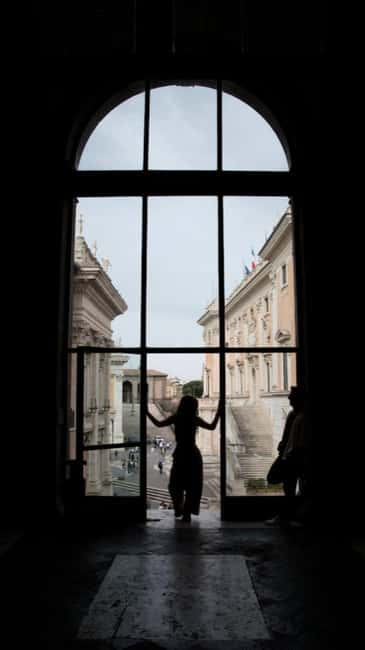
At Circus Maximus, the scale of ancient Rome becomes clear. The broad valley once held huge public spectacles, and today its open space gives you one of the few places in the center where you can step back and see the relationship between the Palatine Hill and the Roman Forum area.
The next major stop is the Colosseum. You stop for photographs and a short explanation rather than entering. That distinction matters. If the Colosseum is a priority, reserve a separate timed visit, preferably after this tour has shown you where the major ancient sites fit together.
The approach can be crowded. You may walk the bike for part of the way, and your guide will manage the group around foot traffic. This is one of the places where an e-bike saves energy on the distance but does not remove the need for patience.
More City Tours in Rome
- Rome: City Sightseeing Hop-on Hop-off Bus with Audioguide
★ 4.0 · 16,045 reviews - City Sightseeing Rome Hop-On Hop-Off Bus Tour
★ 3.5 · 5,446 reviews - Rome: Fettuccine Pasta Cooking Class in Rome’s City Center
★ 4.8 · 2,414 reviews - Vatican City: Vatican Museums & Sistine Chapel Entry Ticket
★ 4.3 · 2,185 reviews
Piazza Venezia and the Jewish Ghetto
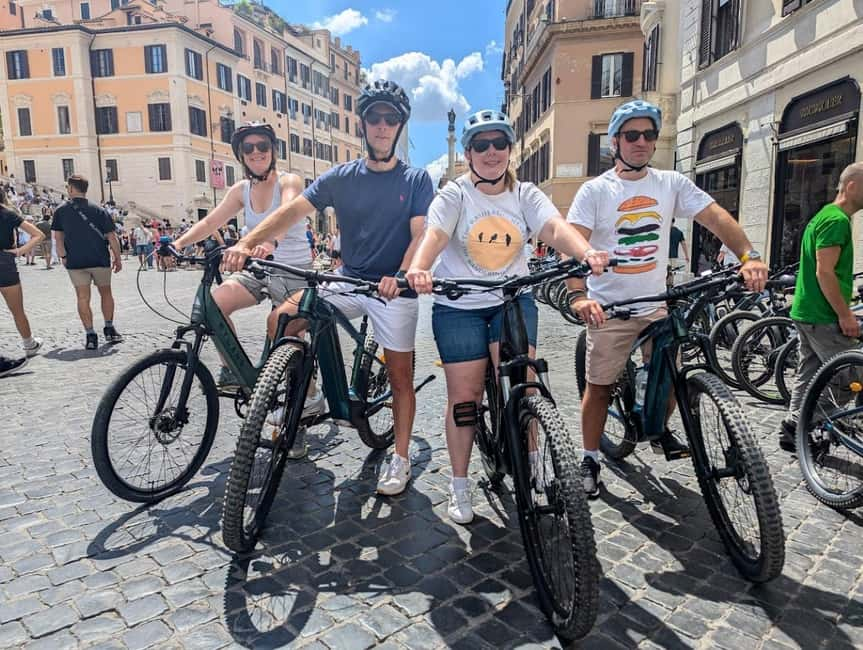
Piazza Venezia brings you into the center of modern Rome’s traffic and grand civic architecture. It is a busy junction, so listen carefully to the guide and expect a short stretch where road awareness matters more than sightseeing.
From there, the route reaches the Jewish Ghetto. This is one of the tour’s more rewarding changes of mood. Instead of seeing only the famous monuments, you pass through a historic quarter with a distinct character and quieter lanes. The guide can connect the neighborhood to Rome’s long religious and civic story, giving you context that a quick fountain stop cannot provide.
The small group helps here. A guide can point out details, answer questions, and keep the pace together without shouting across a large line of bicycles.
Campo de’ Fiori and Piazza Navona
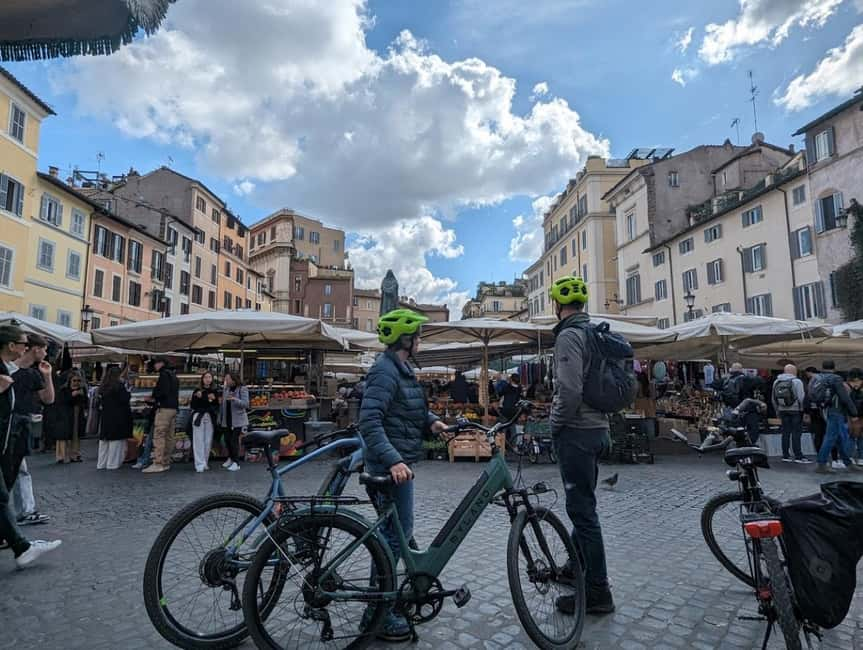
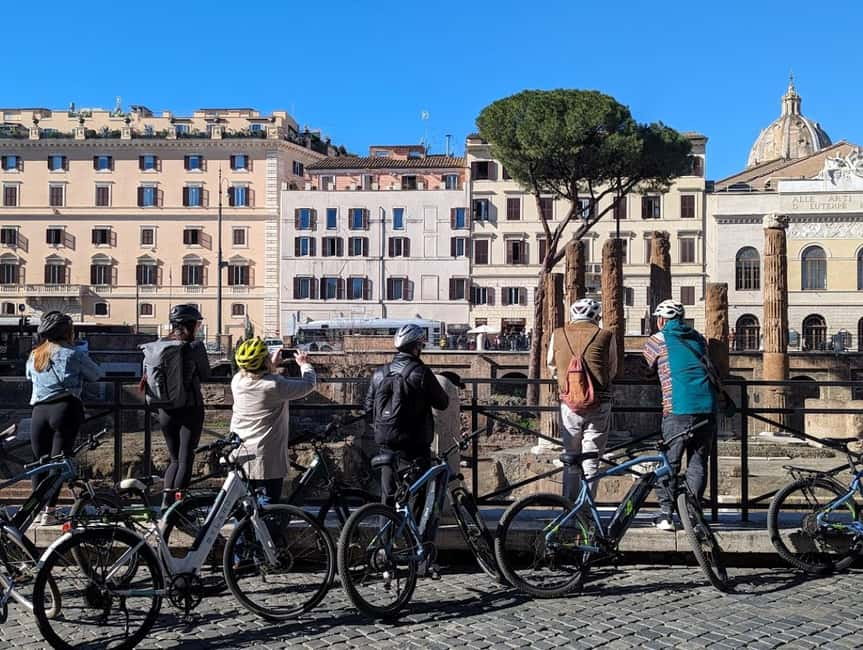
Campo de’ Fiori is a lively square and a natural photo stop. Depending on the time and day, market activity may make the area crowded. You will likely leave the bikes briefly or move at walking speed around pedestrians.
Piazza Navona is one of Rome’s great public spaces, built over the shape of an ancient stadium and framed by Baroque architecture. Its fountains, churches, artists, and cafés make it a fine place to pause, but it is not a quiet stop. Keep personal belongings secure and stay alert when moving through the square.
The value here is not only the photograph. A good guide explains how Rome repeatedly built new city life over older foundations. The tour’s strongest guides, including Daniela, Fabio, and Giorgio, are praised for giving enough history to make the place meaningful without burying you in dates.
Castel Sant’Angelo and St. Peter’s Basilica
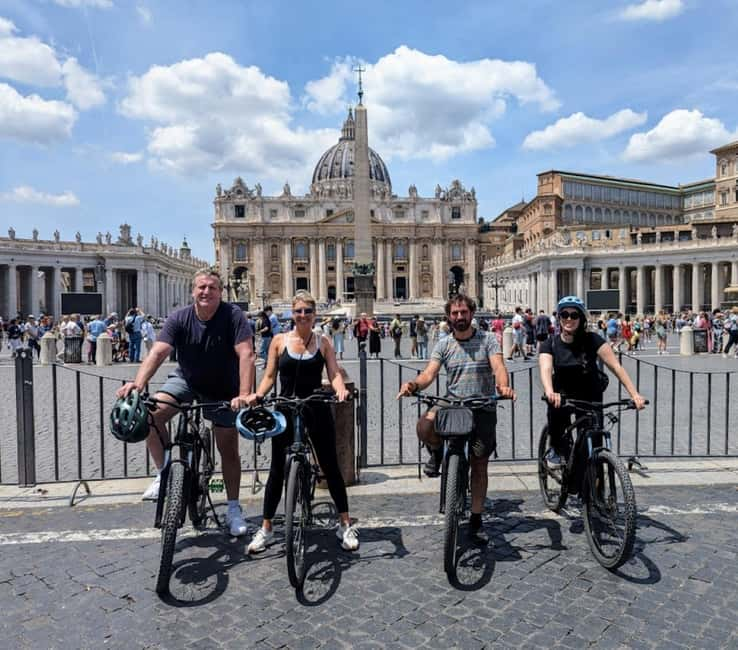
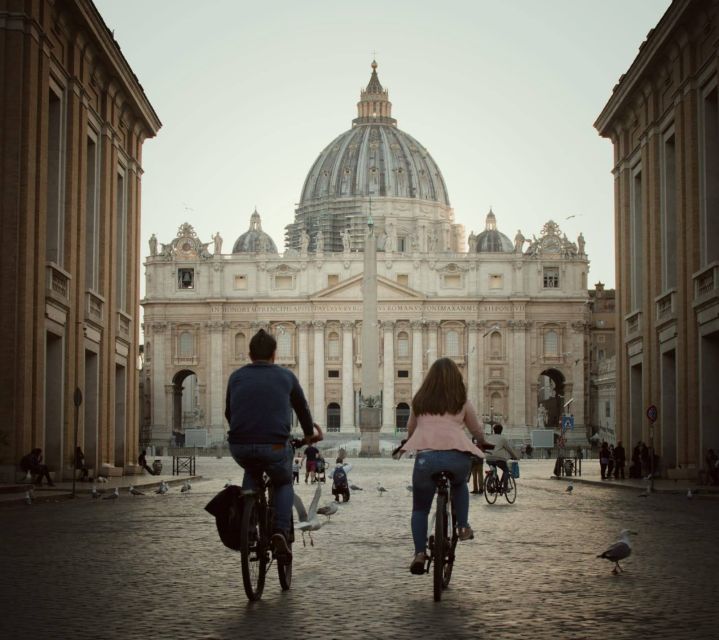
The ride toward Castel Sant’Angelo follows the Tiber and opens up a different view of the city. The fortress began as a mausoleum and later served as a stronghold, prison, and papal refuge. You stop outside for photographs and a brief account of its changing roles.
St. Peter’s Basilica follows. Again, this is an exterior stop, not a basilica visit. That makes the tour useful as a planning tool. You can see the approach, understand its position beside the river, and return later when you have time for security lines and the interior.
This section also shows why the route is not simply a cycle along tourist streets. The river path gives you breathing room, while the nearby monuments offer a strong sequence of views. Several guides have also taken photos for participants, a small but welcome touch when you want a picture with the whole group.
The Pantheon and Trevi Fountain
The Pantheon is among Rome’s most memorable exterior sights. Its ancient columns and later Christian use tell a compact story of how the city changes while preserving its old surfaces. The square is often crowded, so expect to stop nearby and walk the bike if needed.
At Trevi Fountain, you get the classic view and the usual coin-tossing tradition. The area can be packed, particularly during the middle of the day. One guide has even supplied change for the fountain, but do not count on that as part of the standard inclusions. Bring a few euros if the tradition matters to you.
A useful detail from the route is that guides may point out less obvious traces of Rome’s water system, including aqueduct details tucked into modern surroundings. These small discoveries are part of what makes a bike tour more interesting than a simple monument checklist.
Piazza di Spagna and Piazza del Popolo
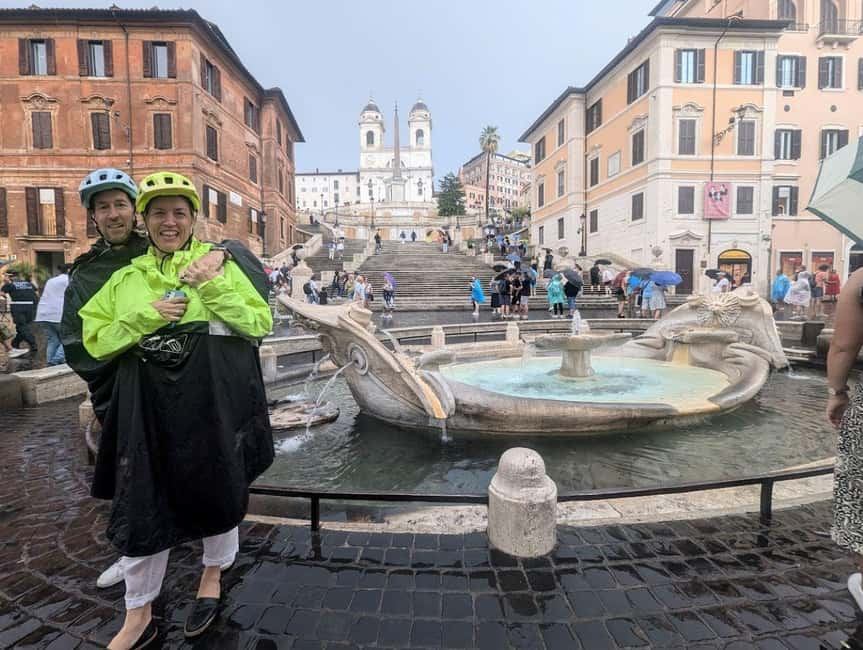
The Spanish Steps area is another place where you will probably dismount. The steps themselves are not a cycling feature, and the surrounding lanes can be thick with pedestrians. Your guide will position the group for a look and photographs before moving on.
Piazza del Popolo provides a spacious finish to the central sightseeing loop. Its broad design, twin churches, and obelisk give the tour a strong final stop before returning to the Tiber. You may finish at Lungotevere delle Armi, 44, or another listed drop-off point depending on the option booked.
By the end, you will have crossed a large part of central Rome. You will not know every street, and you will not have entered the major monuments, but you will have a clear map in your head and a good list of places to revisit.
The guides make the difference
The guide is the main variable in any bike tour, and this one has a strong record of personal, flexible guiding. Daniela is repeatedly praised for energy, local insight, tailoring the route, and taking excellent photographs. Fabio is described as calm, patient, and easy to follow, with a good balance of facts and conversation.
Giorgio has been especially well received for patience and charm, while Alessio is praised for using back roads and adjusting the route to the group’s interests and ability. Other named guides include Marco, Noam, Ricardo, Martina, Ilenia, Alberto, Azzurra, and Philippe.
You should tell the guide at the start what you have already seen and what you plan to visit later. The route can sometimes be adjusted around your interests, fitness, and cycling ability. It may also change for public events or safety reasons, so do not treat every stop as guaranteed.
Safety, traffic, and comfort
The operator favors quiet roads and the Tiber bike path, but this is still Rome. You will encounter occasional traffic, busy crossings, pedestrians, uneven surfaces, and crowded squares. Riders who expect a protected cycle track from start to finish may feel uncomfortable.
The guides generally keep the group together and check on riders at difficult points. Still, you need basic confidence on a bicycle. The tour is not suitable for people who cannot ride, have vertigo, serious mobility limits, heart problems, recent surgery, low fitness, or a pregnancy. It is also not suitable for anyone over 100 kilograms, according to the stated restrictions.
Rain does not automatically end the ride. Ponchos are provided, and one guide has led the group to a coffee stop during heavy rain. Conditions can alter the route, though, and you should dress for changeable weather. In hot months, bring water and protect yourself from the sun.
Is $80 a fair price?
At $80 per person, this is not the cheapest way to see Rome. You are paying for four hours of equipment, a guide, route planning, and the ability to cover a large area without arranging transport between each sight.
The value is strongest if you have only a short time in Rome, if long walks are hard for you, or if you want a city orientation on your first day. One four-hour outing can show you the ancient center, riverfront, Baroque squares, Vatican area, and northern historic center. A taxi or hop-on bus may cover distance, but neither gives you the same street-level feel.
The price is less attractive if you want in-depth visits inside monuments. You will need separate tickets and time for those. I would use this tour as the overview, then spend the next day on one or two interiors rather than trying to see everything in a single rush.
Free cancellation up to 24 hours ahead and the option to reserve now and pay later add useful flexibility. The tour requires at least four participants. If that minimum is not reached, an alternative date or full refund is offered.
Who should book this Rome bike tour?
This suits confident cyclists who want to see a lot in one morning or afternoon. It is particularly good for families with teenagers, couples who want more than a walking tour, and mixed-age groups trying to keep younger and older adults interested together.
It also works well for first-time visitors. You can use the ride to choose which places deserve a longer return visit. If you have already spent several days in Rome and prefer quiet neighborhood wandering, the tour may feel too broad and fast.
Choose the private option if your group wants a slower pace or has specific priorities. A private guide can focus more closely on your interests, though the main route can also be adjusted in a regular small group when practical.
Final decision: book it for the overview
I would book this tour early in a Rome stay, especially if you have only half a day or want to avoid spending your first day walking long distances. The combination of e-bike assistance, river paths, side streets, major landmarks, and local storytelling gives you a useful feel for the city quickly.
Skip it if you cannot ride confidently, dislike traffic near busy crossings, or expect detailed monument visits. For everyone else, $80 buys a very efficient first look at Rome, with enough flexibility to feel personal rather than mechanical.
FAQ
How long does the Rome electric bike tour last?
The tour lasts four hours. Availability determines the available starting times.
What sights are included on the route?
The route includes Tiber Island, Circus Maximus, the Colosseum, Piazza Venezia, the Jewish Ghetto, Campo de’ Fiori, Piazza Navona, Castel Sant’Angelo, St. Peter’s Basilica, the Pantheon, Trevi Fountain, Piazza di Spagna, and Piazza del Popolo.
Does the tour enter the Colosseum or other monuments?
The activity provides guided stops and photo stops at the major landmarks. Admission to the Colosseum, St. Peter’s Basilica, the Pantheon, and other monuments is not listed as included.
Do I need previous cycling experience?
Yes. You need a minimum level of cycling ability, and the guide conducts a test before departure. Participation can be refused if you cannot safely operate the bike or if health concerns make riding unsuitable.
Can children and infants join the tour?
Infants up to 20 kilograms can ride free in a provided child seat. Children under 139 centimeters must use a bike extension, tag-along, or trailer. Riders must be at least 12 years old to operate an e-bike themselves.
What languages are available, and how large is the group?
Guiding is available in English, Spanish, French, and Italian. Groups are limited to eight people per guide, and a private group option is available.
More E-bike Rides in Rome
- Appian Way, Catacombs and Aqueducts Park Tour with Top E-Bike
★ 5.0 · 735 reviews - Rome: Appian Way E-Bike Tour Catacombs, Aqueducts & Picnic
★ 4.6 · 727 reviews - Rome: Appian Way & Catacomb Sunset E-bike Tour with Aperitif
★ 4.5 · 682 reviews - Appian Way & Aqueducts small group e-bike tour(catacombs & food)
★ 5.0 · 531 reviews
More Bike Days in Rome
- Rome City Small Group Bike Tour with quality Cannondale EBike
★ 5.0 · 1,380 reviews - Rome by Night – Ebike Small Group Tour – Food and Wine (Option)
★ 5.0 · 1,275 reviews - Rome:Appian Way E-bike Tour with Catacombs, Aqueducts & Food
★ 4.9 · 1,210 reviews - Rome: E-Bike Night Tour with Food and Wine Tasting
★ 4.9 · 1,131 reviews
Fresh on the Rome list
- Rome: Guided Catacombs Tour & Capuchin Crypt (Audio Guide)★ 4.3 · 191 reviews
- Guided tour of the Colosseum, Roman Forum and Palatine in Spanish★ 4.5 · 191 reviews
- Rome: Borghese Gallery Guided Tour with Skip-the-Line Ticket★ 4.5 · 192 reviews
- Rome: Arena Colosseum Tour with Arena Access★ 4.6 · 193 reviews
- Colosseum, Forum, Palatine Hill with audio guide and Arena or Bus option★ 4.0 · 193 reviews
- Rome: Colosseum & Roman Forum Guided Tour★ 5.0 · 194 reviews
- Rome: Domus Aurea Guided Tour and Virtual Reality Experience★ 4.7 · 194 reviews
- Rome Vintage Fiat 500 car Tour With Photographer★ 5.0 · 194 reviews
Cycling Tours, compared.
Rome EBike Tour: Appian Way, Catacombs & Roman Aqueducts
Read our review →
Top Highlights & Hidden Gems Tour by Cannondale E-Bike
Read our review →
Appian Way, Catacombs, & Roman Aqueducts E-bike Tour
Read our review →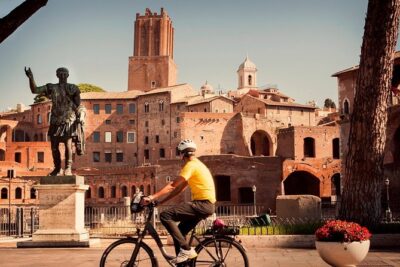
Rome City Small Group Bike Tour with quality Cannondale EBike
Read our review →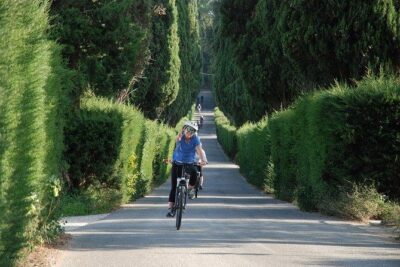
Tuscany Bike Tours Through the Chianti Hills with Wine Tasting
Read our review →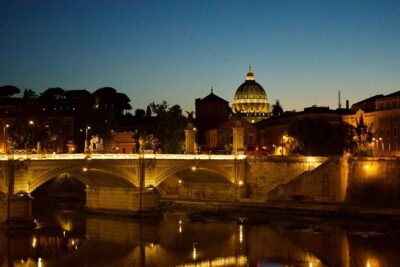
Rome by Night – Ebike Small Group Tour – Food and Wine (Option)
Read our review →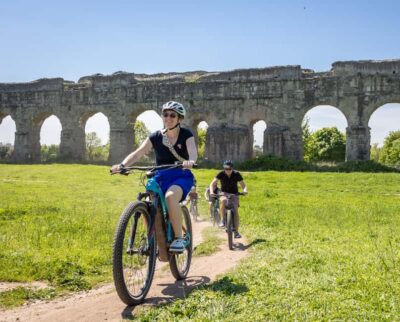
Appian Way E-bike Tour with Catacombs, Aqueducts & Food
Read our review →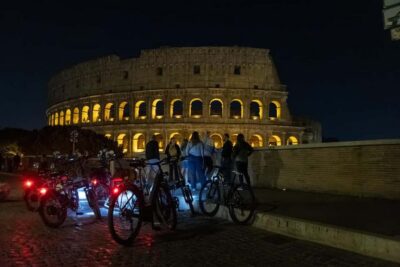
Browse the lists this tour appears in