

Reviewed · POMPEII & VESUVIUS TOURS
Pompeii: Archaeological Park Tour with Ticket on request
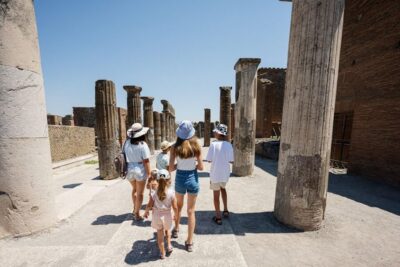
Pompeii is easiest to understand when someone shows you how the ruins once worked. On this two-hour archaeological tour, you walk ancient streets, enter Roman homes, and see theaters, a gymnasium, frescoes, and casts of people and pets caught in the eruption of Vesuvius in 79 AD.
I like two things here: the guide turns scattered stones into an everyday town, and the short format leaves you free to continue exploring afterward. Guides such as Lara, Emiliana, Maria, Eraldo, and Marco have been praised for clear explanations, humor, and a good pace. The main catch is that the meeting point can be confusing, and you must choose carefully between the ticket and no-ticket options.
Key points to know before you book
- The tour begins at the Circumvesuviana station: Meet on the first floor beside the Tempio Travel Info Point to exchange your voucher for an entry ticket.
- The two-hour route covers major highlights: Expect the Roman amphitheater, small theater, gymnasium, houses, frescoes, public spaces, and everyday objects.
- The express ticket is an extra option: Confirm that your booking includes entry if you do not already have a ticket.
- The guide adds meaning you would miss alone: Explanations cover Roman daily life, buildings, fountains, entertainment, banquets, and the eruption.
- You can stay after the guided walk: The tour ends back at the meeting point, but you may continue around the park independently.
- Bring shade and water in warm weather: The site is large, exposed, and paved with uneven ancient streets.
Why a guide helps at Pompeii

Pompeii can look like a giant field of broken walls if you arrive without a plan. The streets are real, the buildings are real, and the preserved details are remarkable, but much of the story is not obvious from a simple plaque.
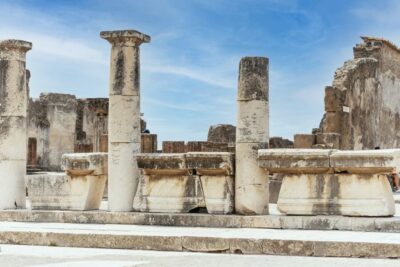
A guide gives you the missing frame. A fountain becomes evidence of how residents collected water. A house reveals how rooms were arranged. A theater is not just a semicircle of stone, but a place where Romans gathered for entertainment. This kind of explanation is the main reason I would choose a guided visit for a first trip to Pompeii.
The tour focuses on how ordinary people lived before the eruption. You see homes, public buildings, places for exercise, spaces for banquets, and objects left behind under volcanic ash. The result is less a march through famous ruins and more a look at an imperial town at street level.
The guides are archaeologists, and that matters. The strongest guide-led moments come when a professional points out small details you might otherwise walk past. The tour also gives you a basic map of the park, which helps if you stay longer and explore on your own.
A few other Pompeii mornings to weigh against this
- Pompeii: Entry Ticket and Guided Tour with an Archaeologist
★ 4.8 · 19,459 reviews - Pompeii: Entry Ticket with Optional Audio Guide
★ 4.2 · 12,360 reviews - Pompeii: Small Group Tour with an Archaeologist
★ 4.8 · 12,264 reviews
Starting at the Circumvesuviana station
Your meeting point is on the first floor next to the entrance of the Tempio Travel Info Point inside the Circumvesuviana Train Station. You exchange your voucher there for your ticket before entering the archaeological park.
Allow extra time to find this spot. The station meeting point has caused confusion for some people who expected a booth with the tour company name or a guide waiting at the main entrance. Look for the Tempio Travel Info Point rather than relying only on a large company sign.
This arrangement has one useful advantage: you can sort out your ticket and entry with the tour team before the walking portion begins. It also places you close to transport links and food options near the station. Luggage storage is available at the same meeting point for 6 euros, according to the supplied tour information.
If you are driving, check the parking details on the day. Free parking may be available at Osteria Nonna Cherubina on Via Andolfi 46, if the business is open and spaces are available. One reported route was affected by construction, and paid parking closer to the site was available at 3 euros per hour. Treat free parking as a possibility, not a guarantee.
Choosing the Pompeii ticket option
The listed price is $31.89 per person, but the ticket choice deserves close attention. The express entry ticket is included only if you select the ticket option or add it as the extra. The booking information also offers a no-ticket choice, so do not assume that the basic tour price includes admission.
If you already have a valid Pompeii ticket, the no-ticket option may suit you. If you need entry, select the ticket version before paying. This is the most important booking detail because a guided tour without park admission will not get you through the entrance.
The express ticket is valuable during busy periods. Pompeii is a major attraction, and avoiding a long ticket queue gives you more time inside the ruins. The benefit is practical rather than glamorous: you spend your limited sightseeing time walking through the ancient city instead of waiting outside.
On the first Sunday of each month, admission is free, but tickets cannot be reserved ahead of time and entry is not guaranteed. If your schedule is fixed, do not build your entire plan around free admission. The paid ticket option provides more certainty.
The two-hour route through the ancient city
The exact order can vary, but the tour centers on the best-known parts of Pompeii. You will walk along ancient Roman roads and stop at buildings that show both public life and private routines.
The Roman Amphitheater is one of the major stops. It gives you a clear sense of the scale of Roman entertainment and the crowds these events could draw. A guide can help you picture how this structure fitted into the life of the town, rather than leaving you to see it as only a large stone bowl.
The small theater offers a different view of Roman leisure. Its more intimate scale helps explain that entertainment in Pompeii was not limited to one enormous venue. The contrast between the amphitheater and smaller performance space makes the city feel more complete.
You also visit the public gymnasium, a reminder that Roman life included exercise and shared civic spaces. The tour connects these places to daily routines, social life, and the way the town was organized.
Private houses add another layer. You can see rooms, walls, decorative work, and household details that survived beneath the ash. Frescoes frozen in place are especially effective when the guide explains what you are looking at and how the rooms were used.
The route also includes public fountains and other everyday features. One guide was praised for explaining the purpose and design of the water fountains, a good example of the small information that brings Pompeii to life. Without that context, you might simply pass a fountain as another piece of old masonry.
Same city, an entirely different afternoon:
- Pompeii Small Group Tour with an Archaeologist
★ 5.0 · 6,593 reviews - Pompeii: Skip-the-Line Entrance Ticket with Audio Guide
★ 4.0 · 2,509 reviews - Naples: Pompeii and Mt. Vesuvius with Lunch and Wine Tasting
★ 4.5 · 2,454 reviews - Discover the Ancient Ruins of Pompeii: Day Trip from Rome
★ 3.5 · 2,247 reviews
Frescoes, household objects, and the human cost
Pompeii is not only about grand buildings. Some of its strongest moments come from humble objects and ordinary rooms. The ash preserved details that make the city feel immediate: household spaces, decoration, tools, and signs of how people ate, worked, rested, and entertained themselves.
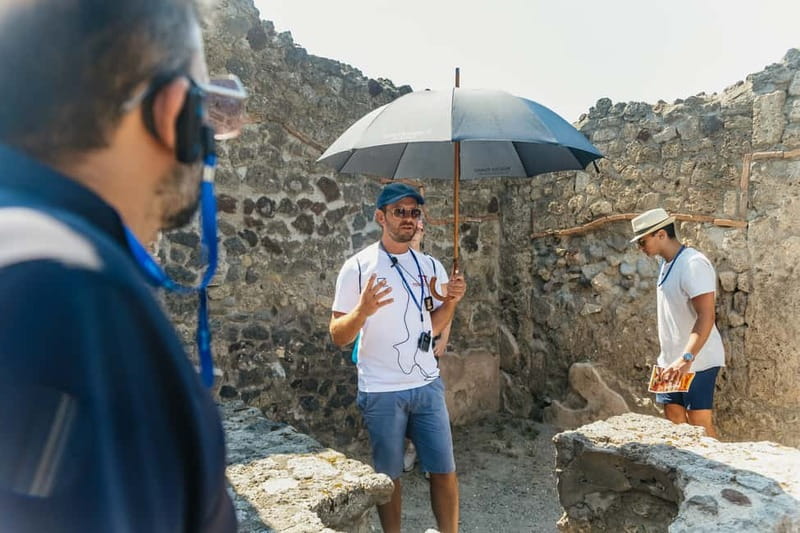
The frescoes are valuable because they show the visual world of Roman homes. Colors, patterns, and painted scenes survived in places where you might expect only bare walls. Your guide explains their setting and purpose, helping you understand why they mattered to the people who lived with them.
The casts of citizens and pets are the most emotionally difficult part of the visit. They show the human cost of the eruption in a direct way. The tour treats these remains as part of the city’s story, not as a cheap spectacle.
That balance matters. Pompeii can feel exciting because so much survives, but the preserved bodies also make the disaster painfully real. Families with children and teenagers may want to prepare younger visitors for this section.
What the guide adds to the experience
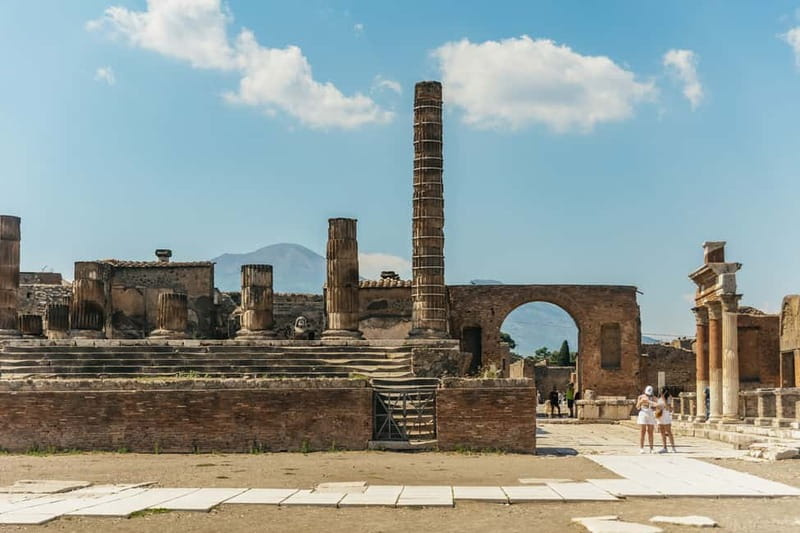
The strongest part of this tour is the guide’s storytelling. Several guides have received praise for clear English, humor, patience, and the ability to explain life before and during the eruption.
Lara was described as energetic, detailed, and funny. Emiliana used humor while leaving time for photographs and independent looking. Eraldo kept a group of more than 20 people together and directed the walk toward shaded areas during extreme heat. Maria was praised for handling ticket questions and helping people who arrived late because of rail problems.
These details tell you what to value when choosing a group tour. You are not paying only for a person to lead you from gate to gate. You are paying for interpretation, orientation, and help with the practical parts of entering a huge site.
Headsets are available for groups of 16 or more. This is important because Pompeii is open, noisy, and spread out. A large group can make it hard to hear a guide without audio equipment. One report noted that the ear piece worked well, while another found that headphones helped manage a larger-than-expected group.
Group size can vary. Some people found groups of 20 or more manageable, while others felt the start was chaotic. The two-hour length helps keep the group moving, but you should not expect a private visit or a leisurely stop at every building.
Heat, walking, and the limits of two hours
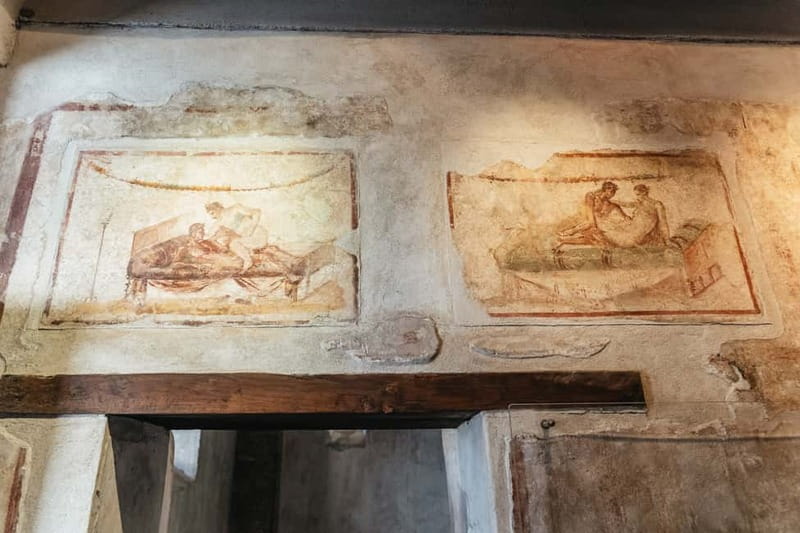
Pompeii is a walking tour over old roads and exposed ground. The site is vast, and two hours covers only a portion of it. That is not a flaw so much as a choice: you get a focused introduction rather than a full-day survey.
The short duration works well in hot weather. One guide adjusted the route toward shaded areas during a 35-degree day, and another guide’s pacing kept the visit comfortable. Still, much of the park is open to the sun, and there is little reason to treat this as a casual stroll.
Wear shoes suited to uneven stone streets. Bring water, a hat, and sun protection. If you visit late in the day, check the available start time carefully. One booking ran into darkness by 5 p.m., which limited how much could be seen clearly.
The tour leaves time for pictures and independent exploration, but not endless lingering at each stop. If you are fascinated by Roman houses, political buildings, or smaller streets away from the main route, plan to stay after the guided portion.
Staying longer after the guided walk
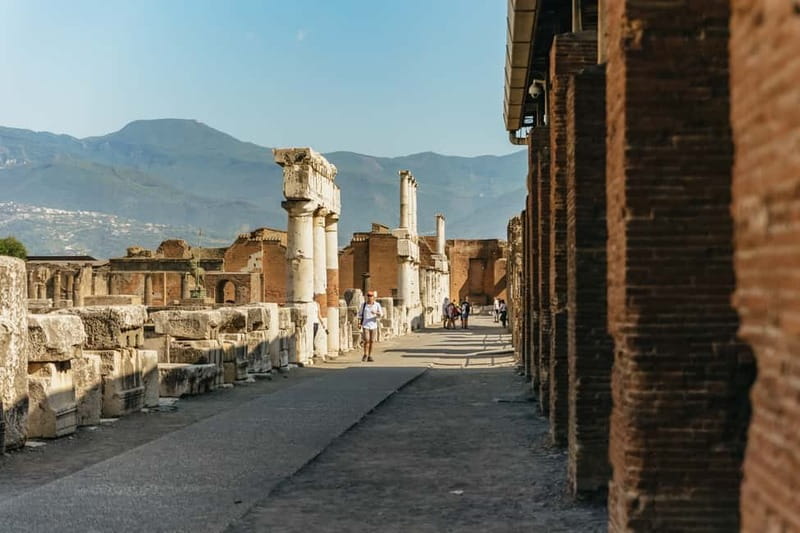
The tour ends back at the meeting point, and you can continue exploring the archaeological park after the main walk. This is one of the best features for visitors who want both structure and freedom.
Use the guided portion to learn how Pompeii fits together. Then choose your own priorities. You might revisit a house with frescoes, seek out additional streets, or spend more time with the buildings that interested you most.
The guide can also point out areas worth seeing after the tour. That advice saves you from wandering without direction inside a very large site. You still need to manage your own time and energy, especially in the heat.
If you have only one day in the area, the guided introduction is efficient. You see a good range of major themes, then use the remaining time for personal interests. If you want a slower look at every accessible building, this two-hour tour alone will not be enough.
Is $31.89 good value?
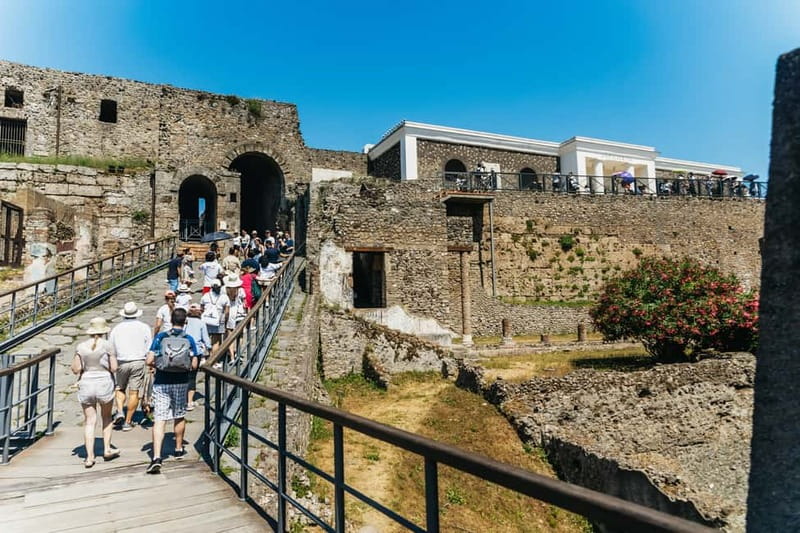
At $31.89 per person, the tour is reasonably priced for a two-hour guided visit, particularly if the express entry ticket is included in the option you select. The value comes from three things: avoiding the ticket queue, having an archaeologist explain the ruins, and getting a useful route through a very large park.
The price is less attractive if you choose the no-ticket version and still need to buy admission separately. Check the final booking details before confirming. The distinction between ticket and no-ticket options is clear in the activity information, but easy to overlook during a quick reservation.
For a first visit, I think the guide earns the cost. Pompeii rewards context, and the site can be hard to navigate efficiently on your own. Repeat visitors or people who have already studied the ruins may prefer independent entry and a longer self-guided day.
Free cancellation up to 24 hours before the tour and reserve-now, pay-later booking add useful flexibility. They do not change the core value, but they help if your Campania plans depend on trains, weather, or changing day trips.
Who should book this Pompeii tour?
I would choose this tour for a first-time visitor, a family with older children, or anyone who wants the main story without spending a full day on the site. The two-hour format is particularly sensible in hot weather or when Pompeii is one stop in a larger Campania itinerary.
It also suits you if you prefer to learn as you walk. Guides explain Roman daily life, entertainment, homes, fountains, frescoes, and the eruption in a way that makes the remains easier to read.
I would think twice if you dislike group tours, need a slow photographic visit, or want to explore every section. You may also prefer independent entry if you already have a ticket and a strong plan for the park.
Should you book it?
Book this Pompeii tour if you want a clear, guided introduction with the option to continue alone afterward. The guide’s explanations are the real strength, and the express ticket can save time when selected correctly.
Before booking, confirm three details: the meeting point inside the station, the ticket option, and the starting time. Arrive early, wear proper shoes, and prepare for sun. With those details handled, this is a practical way to make sense of Pompeii without giving up the freedom to explore on your own.
FAQ
How long does the Pompeii tour last?
The guided walking tour lasts two hours. Afterward, you may continue exploring the archaeological park independently.
Where does the tour begin?
Meet your guide on the first floor next to the entrance of the Tempio Travel Info Point in the Circumvesuviana Train Station. You will exchange your voucher there for a ticket.
Does the tour include Pompeii admission?
It depends on the option you select. The express ticket is included only with the ticket option or selected extra. A no-ticket option is also available.
What languages are offered?
The live tour guide is available in English and Italian.
Is the ticket line skipped?
Yes, the activity offers skip-the-line entry, but you need to select the option that includes the express Pompeii ticket.
What should I bring?
Bring your passport or ID card. Water, sun protection, and comfortable walking shoes are also sensible for the exposed ancient streets.
Are headsets provided?
Headsets are available for groups of 16 or more so you can hear the guide more clearly.
Can I cancel the booking?
You can cancel up to 24 hours in advance for a full refund. Reserve-now, pay-later booking is also available.
Fresh on the Pompeii list
- Explore Pompeii with an Archaeologist★ 5.0 · 511 reviews
- Pompeii Skip-the-line Tour with Archaeologist Guide★ 5.0 · 559 reviews
- Pompeii Private Tour with an Archaeologist and Skip The Line – 3 hours★ 5.0 · 564 reviews
- Ercolano: Herculaneum Entry Ticket with Optional Audio Guide★ 4.1 · 581 reviews
- Pompeii private tour with an Official Guide★ 5.0 · 631 reviews
- Pompeii: Exclusive Tour with Archaeologist and Entry Tickets★ 4.9 · 634 reviews
- Pompeii Ticket + Tour with Optional Tasting Experience at Pompeii★ 5.0 · 663 reviews
- From Naples: All-Inclusive Mount Vesuvius Half-Day Tour★ 4.2 · 674 reviews
Pompeii & Vesuvius Tours, compared.

Entry Ticket and Guided Tour with an Archaeologist
Read our review →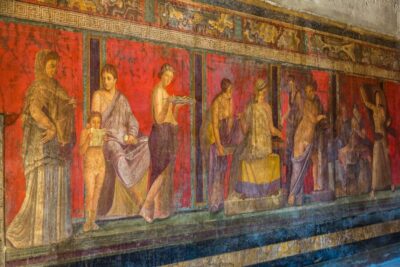


Pompeii Small Group Tour with an Archaeologist
Read our review →
Pompeii, Amalfi Coast and Positano Day Trip from Rome
Read our review →Browse the lists this tour appears in