
Reviewed · POMPEII & VESUVIUS TOURS
From Naples: Pompeii & Herculaneum with Archaeologist Guide
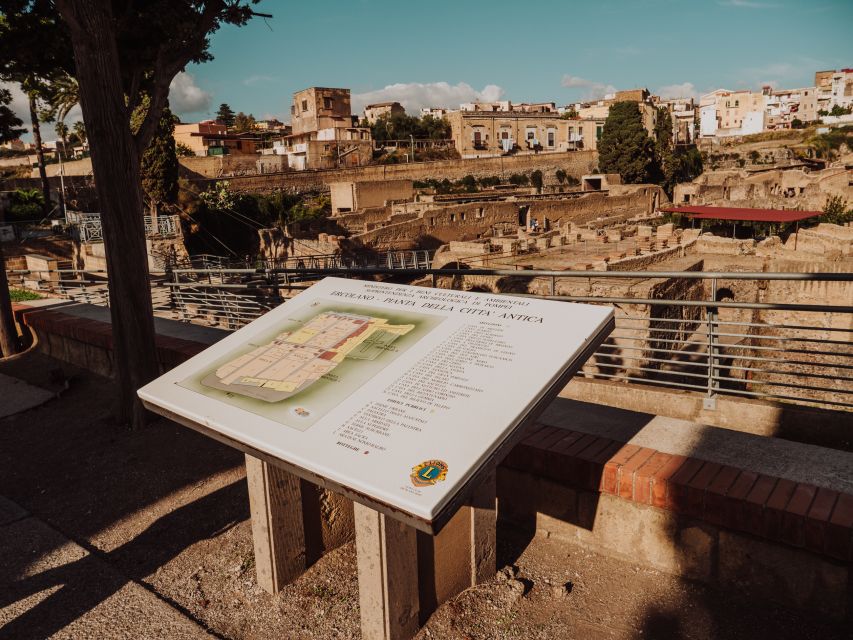
Herculaneum and Pompeii tell two different stories of the same volcanic disaster. Herculaneum was buried beneath roughly 20 meters of mud, preserving carbonized wood, bright wall paintings, mosaics, and even a waterfront area lined with skeletons. Pompeii, covered in ash from Mount Vesuvius in AD 79, gives you a larger Roman town to walk through.
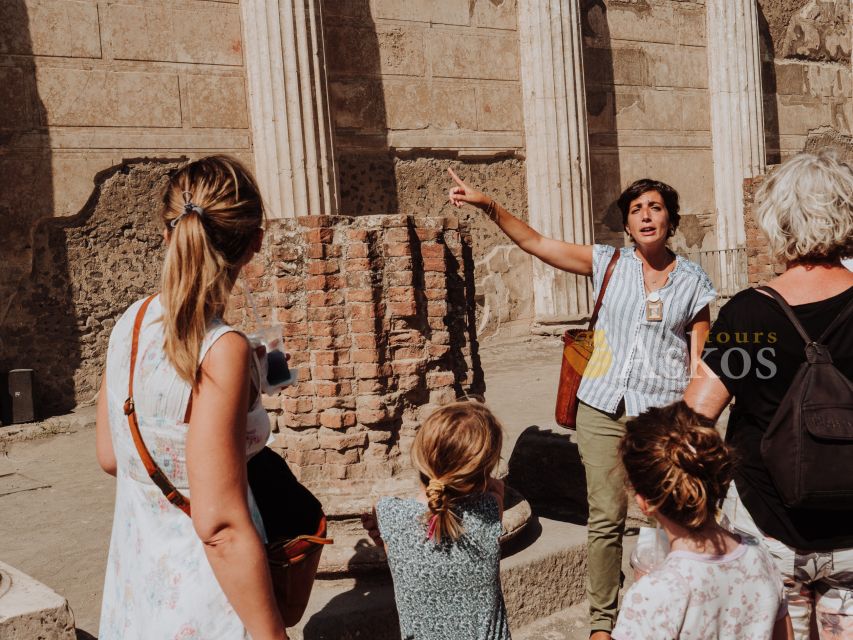
I like the archaeologist-led touring, which turns broken walls and empty streets into clues about daily life. I also like the skip-the-line entry and shared minibus, since you spend your limited Naples time seeing the sites instead of waiting for tickets or sorting out transport.
The tradeoff is pace. Two hours at each site is enough for the main sights, but not enough to see every open house or street. Expect uneven paving, steps, and steep sections, so this is a poor match for anyone with limited mobility.
Key points to know before booking

- Herculaneum comes first, with two hours among unusually well-preserved woodwork, mosaics, paintings, baths, and ancient homes.
- Pompeii follows after a short lunch break, with a two-hour walk through the forum, basilica, brothel, bakery, houses, and plaster casts.
- The archaeologist guide is the main value, with guides such as Raphael, Roberta, Gennaro, Vito, and Michele praised for clear explanations, humor, and attention to small details.
- The group can include up to 20 people, a useful middle ground between a private tour and a large coach outing.
- The day begins and ends at Starhotels Terminus, opposite Naples Central Station, making onward rail travel practical.
- Bring good walking shoes and weather protection, and leave large luggage behind.
Why seeing both sites in one day makes sense
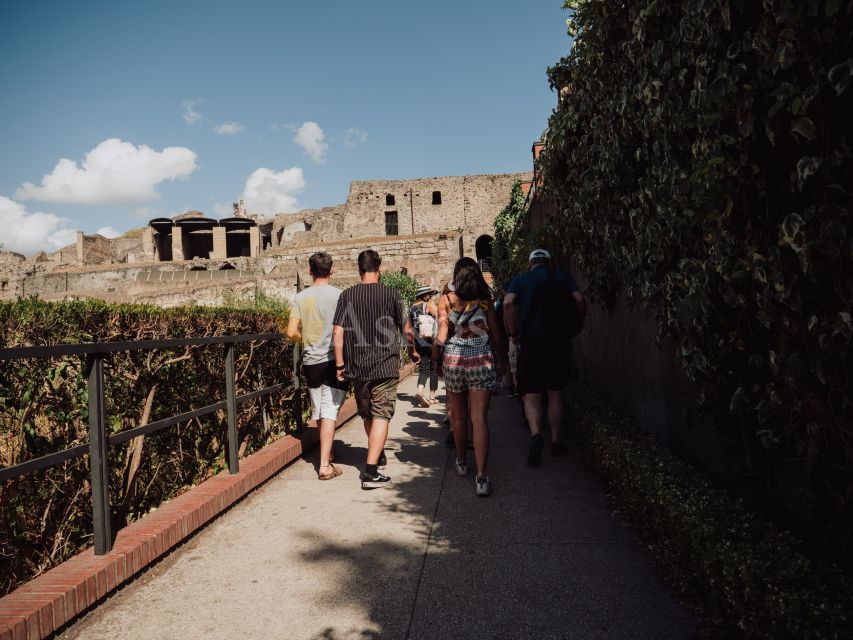
Pompeii and Herculaneum are often treated as a single attraction, but they reward you in different ways. Pompeii was a functioning city of streets, shops, public buildings, villas, and working neighborhoods. Its size helps you picture Roman urban life, but it can also feel sprawling and hard to read without help.
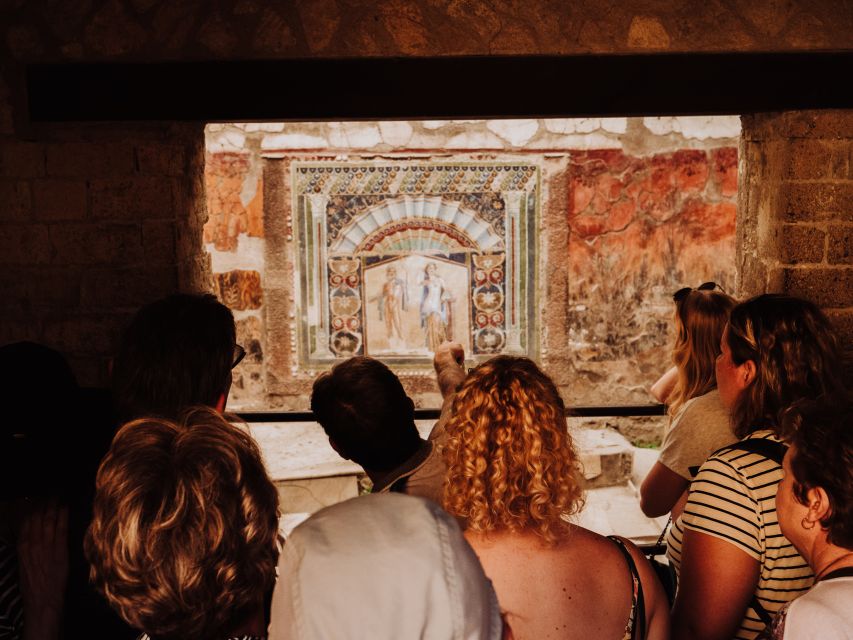
Herculaneum is smaller and more compact. The volcanic mud sealed parts of the town with remarkable force, preserving details that usually vanish at archaeological sites. You might see carbonized wooden objects, intact mosaics, and painted rooms that make the ancient town feel close and personal.
I like the pairing because each site fills gaps in the other. Herculaneum gives you domestic detail and striking preservation. Pompeii gives you scale, civic buildings, and a clearer sense of how a whole Roman town worked.
The guide is especially useful here. An archaeologist can explain why one eruption produced different results in two nearby towns, then point out ordinary details such as shop counters, household layouts, baths, and street design. The strongest guides, including Raphael, Roberta, Michele, and Gennaro, are described as warm, funny, and able to answer questions without turning the walk into a dry lecture.
A few other Naples mornings to weigh against this
- From Naples: Pompeii Ruins & Mount Vesuvius Day Tour
★ 4.3 · 11,459 reviews - Naples or Sorrento: Full-Day Pompeii and Mount Vesuvius Tour
★ 4.6 · 4,235 reviews - Herculaneum: Skip-the-Line Guided Tour with Archaeologist
★ 4.8 · 3,439 reviews
Meeting in Naples and settling into the minibus
You meet in front of the entrance to Starhotels Terminus, directly opposite Naples Central Station. Look for the guide holding an Askos Tours sign. This is a practical meeting point if you arrive by train, but give yourself enough time to find the correct side of the station and be ready promptly.
The driver waits for only five minutes if you are late. That rule matters on a tightly timed day, so do not count on a last-minute coffee or a slow walk from your hotel.
The shared minibus takes about 45 minutes to reach the first site. Transportation, tolls, and parking are included, and the vehicle is described as modern, clean, and air-conditioned. The minibus avoids the work of arranging separate trains or taxis, though seating space can feel a little tight for some people.
A group of up to 20 is large enough to keep the price below that of a private tour, yet small enough for a guide to manage questions and keep the walk together. Headsets may be provided, which helps when the site is busy or you are standing several steps away from the guide.
Herculaneum: two hours of remarkable preservation
The first guided visit lasts about two hours. You enter with a Herculaneum ticket included in the price, avoiding the standard ticket queue.
The town was buried by a deep mudslide during the eruption. That material covered buildings more thoroughly than the ash at Pompeii, protecting objects that would normally decay. Carbonized wood is one of the great surprises here. It gives you a rare look at doors, furnishings, and structural details from Roman homes.
Your route includes the Temple of the Augustali, a religious building connected with the imperial cult, along with the thermal baths, forum, Samnite House, Gymnasium, and House of the Deer. These names matter less than the variety they represent. You move from public religion to bathing, education, domestic life, and elite housing within a fairly compact area.
The ancient waterfront is another powerful stop. More than 300 skeletons were found near the beach, showing the human cost of the eruption in a direct and difficult way. The site asks you to look closely, but also to pause. This is not simply a collection of attractive mosaics and painted walls.
Herculaneum can be easier to understand than Pompeii because the route is more concentrated. You are less likely to spend your two hours crossing long stretches of exposed paving. Still, the ground is uneven, and you will need to manage steps and changes in level.
The guide’s role is vital in the houses. Without explanation, a painted wall may look decorative and a wooden fragment may look like debris. With context, those objects show how Romans arranged their rooms, used public spaces, and built homes for different levels of wealth.
The lunch break: keep it simple

After Herculaneum, the minibus takes about 30 minutes to Pompeii. You have a break of roughly 40 to 45 minutes before the second site visit.
Meals are not included. One practical warning is worth taking seriously: a set restaurant meal can cost around €30 per person, so bring your own food if you prefer a quicker and cheaper lunch. The break is not long enough for an elaborate meal and a relaxed wander.
Use this pause to drink water, eat something easy, and reset your legs. The afternoon walk through Pompeii is another two hours, and the ancient paving is harder on your feet than a normal city sidewalk.
Same city, an entirely different afternoon:
- Naples: Naples Underground Entry Ticket and Guided Tour
★ 4.4 · 21,781 reviews - From Naples: Sorrento, Positano and Amalfi Full-Day Tour
★ 4.6 · 10,988 reviews - From Naples: Sorrento, Positano & Amalfi Coast – Small Group Tour
★ 5.0 · 8,643 reviews - Naples: Catacombs of San Gennaro Entry Ticket & Guided Tour
★ 4.6 · 7,941 reviews
Pompeii: the Roman city in broad view
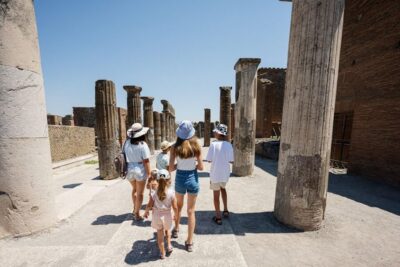
The Pompeii visit begins with skip-the-line admission to the Pompeii Archaeological Site, also called Pompei Express. You then walk for about two hours through the main public buildings and private homes.
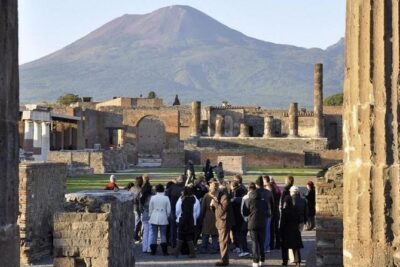
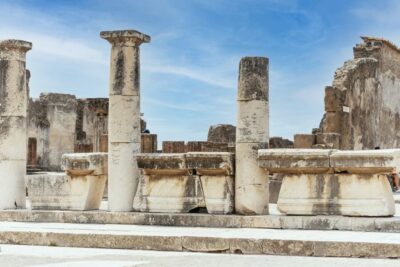
The route includes Marina Gate, one of the city entrances, followed by the basilica and forum. The forum was the civic center, while the basilica served legal and commercial functions. These stops help you see Pompeii as a working town rather than a frozen collection of ruins.
You also visit the Forum Baths, the Lupanar, a bakery, and the Termopolium Capuano. A thermopolium was a Roman food and drink counter, so the stop offers a glimpse of ordinary commerce. The bakery helps connect the city to the daily work of producing staple food.
The private houses add another layer. The House of the Faun is one of Pompeii’s grand residences, while the House of the Tragic Poet offers a smaller domestic setting. Mosaics, wall decoration, courtyards, and room arrangements reveal how Roman homes displayed status and organized family life.
The plaster casts are among the most recognizable sights. They preserve the shapes of people caught in the eruption, and they can be emotionally heavy. Your guide can provide the historical setting, but you should expect this part of the visit to be serious rather than scenic.
Pompeii is much larger than the portion covered in this tour. You will see the principal highlights, not every street and house. That is a reasonable plan for a seven-hour excursion, especially if this is your first visit, but you should not book the tour expecting a full archaeological study.
What the archaeologist adds to the experience
The best reason to choose this tour instead of visiting independently is the explanation. You can walk through Pompeii alone and see impressive walls, but the meaning of those spaces is easy to miss.
Guides named in the tour feedback include Raphael, Roberta, Gennaro, Vito, Michele, and Giarno. Their styles may differ, but the strongest qualities are consistent: clear English, patience with questions, a sense of humor, and an eye for details that are easy to overlook.
Michele is described as having worked at Herculaneum, which gives his commentary a particularly useful practical angle. Raphael is praised for bringing Roman life into focus while keeping the group moving through crowded areas. Roberta is noted for thorough explanations and a friendly manner. These names are not a guarantee of your assigned guide, but they show the level of archaeological experience that may shape the day.
A good guide also manages time. Pompeii can tempt you to stop at every doorway, while crowds can slow a group down. The guide has to choose the best examples and keep the route moving. Several people would have preferred more time, but that complaint points to the scale of the sites rather than poor organization.
Price, group size, and overall value
The listed price is $168.79 per person. That is not a bargain-basement day trip, but it covers shared transportation, parking and tolls, the Pompeii entrance, the €16 Herculaneum ticket, and an archaeologist guide.
The value depends on what you want to avoid. If you are happy arranging local transport, waiting in ticket lines, and researching the sites yourself, you could potentially spend less. You would also need to manage the timing between Herculaneum and Pompeii and decide which buildings to prioritize.
For many people, the guide is what makes the price fair. You get two major archaeological sites in one day, direct transport from Naples, reserved entry, and explanations in English. A private guide would cost more, while a large coach tour might give you less personal contact.
The group limit of 20 keeps the experience reasonably personal. It is not the same as touring alone, and you may occasionally wait for the group to gather. Still, it offers a useful balance for a shore excursion or a short Naples stay.
Walking demands, weather, and what to pack
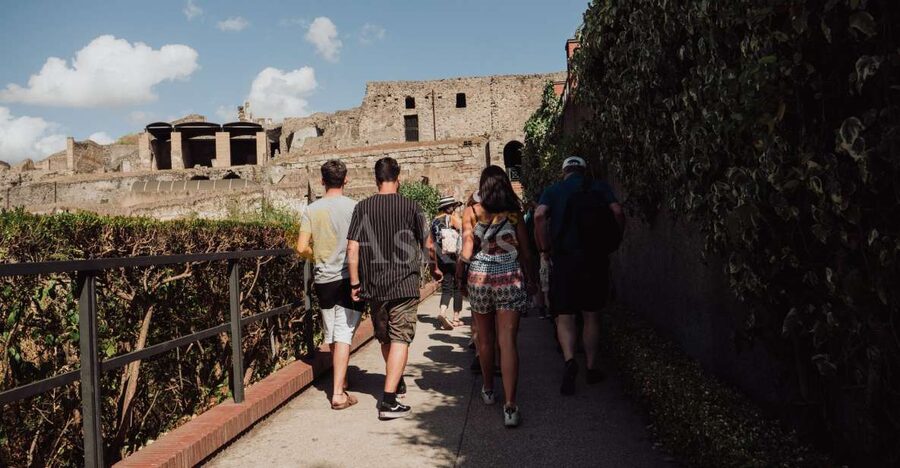
This is a physically demanding day. Both sites include uneven Roman paving, grades, steps, and some significant ascents and descents. The tour is not suitable for wheelchair users or people with mobility impairments.
Wear supportive walking shoes. Sandals with thin soles will make the ancient paving more tiring, especially during the Pompeii portion. Bring water, your passport or ID card, and a raincoat if the forecast looks uncertain.
The tour operates rain or shine. Shade and shelter may be limited in parts of the archaeological sites, so weather can affect your comfort. Large bags and luggage are not allowed, which is especially important if you are connecting from Naples Central Station with suitcases.
Baby seats are available by request. If you need one, arrange it in advance rather than assuming one will be waiting.
Who should book this day trip?
I would choose this tour if you have one free day in Naples and want both sites without the strain of planning every connection. It also suits first-time visitors who want the main sights explained in a clear order.
It is a good fit for history fans, cruise passengers, couples, families with older children, and anyone who prefers an expert voice over reading signs alone. The English-only format works well if you are comfortable following a live guide in English.
I would think twice if you want long, quiet time inside individual houses. You may also prefer separate visits if you have several days in the area and can spend three or four days exploring Pompeii at your own speed.
The tour returns to Starhotels Terminus after about 45 minutes on the road from Pompeii. That makes the final drop-off useful for a train connection, but leave extra time for your onward departure. Traffic can affect any road transfer, even when the schedule runs well.
Should you book the Pompeii and Herculaneum tour?
Book it if your priority is seeing the two sites efficiently, with an archaeologist who can explain what you are looking at. The combination of Herculaneum’s preserved interiors and Pompeii’s broad city plan gives you a fuller picture than either site alone.
Skip it if you dislike fixed schedules, group pacing, or substantial walking. You will not see every corner, and lunch is your own responsibility. For most visitors with limited time in Naples, though, the included transport, reserved entry, and strong guide-led route make $168.79 a sensible investment in a very full day.
FAQ
Where does the tour start?
Meet in front of the entrance to Starhotels Terminus, opposite Naples Central Station. Look for the guide holding an Askos Tours sign.
Where does the tour finish?
The activity ends back at Starhotels Terminus, the same meeting point in Naples.
How long does the tour last?
The total duration is seven hours. Check availability for the exact starting time.
Which languages are available?
The live tour guide speaks English.
Are Pompeii and Herculaneum entrance tickets included?
Yes. The Pompeii entrance ticket and the Herculaneum entrance ticket are included. The Herculaneum ticket is listed as €16.
Is transportation included?
Yes. Shared minibus transportation, tolls, and parking expenses are included.
Is lunch included?
No. Meals are not included. You have a lunch break of about 40 to 45 minutes before the Pompeii visit.
Is this tour suitable for wheelchair users?
No. The tour is not suitable for wheelchair users or people with mobility impairments because of uneven ground, steps, and grades.
What should I bring?
Bring your passport or ID card, comfortable walking shoes, and a raincoat if needed. Large bags and luggage are not allowed.
Can I cancel the booking?
You can cancel up to 24 hours in advance for a full refund. A reserve-now, pay-later option is also available.
Fresh on the Naples list
- Naples Pasta Class: Fettuccine & Ravioli with Grandma’s Recipe★ 5.0 · 506 reviews
- Naples Walking Tour with Underground Roman Ruins Ticket★ 4.5 · 510 reviews
- Private Day tour of Positano, Amalfi and Ravello from Naples★ 5.0 · 522 reviews
- Naples: Street Art & History Tour in the Spanish Quarters★ 4.9 · 540 reviews
- Private Day Tour: Sorrento, Positano, Amalfi, Ravello from Naples★ 4.5 · 546 reviews
- Day Trip of Pompeii, Herculaneum and Vesuvius from Naples★ 4.5 · 547 reviews
- Day Trip of Pompeii, Sorrento and Positano from Naples/Salerno★ 5.0 · 560 reviews
- Naples Underground Official Skip-the-line Ticket★ 4.0 · 563 reviews
Pompeii & Vesuvius Tours, compared.

Entry Ticket and Guided Tour with an Archaeologist
Read our review →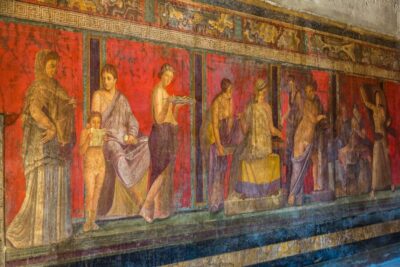
Pompeii Small Group Tour with an Archaeologist
Read our review →
Pompeii, Amalfi Coast and Positano Day Trip from Rome
Read our review →Browse the lists this tour appears in