
Reviewed · LECCE TOURS
Lecce guided tour with underground discoveries
Lecce’s most surprising sight is not always above street level. This two-hour walk pairs the city’s extravagant Baroque architecture with the Faggiano Archaeological Museum, where rooms, walls, and buried traces reveal how much older Lecce is beneath its polished historic center. Guides such as Fabio Grasso, Elena, Ilenia, and Francesca are praised for clear explanations and an obvious love of the city.
I like the way the tour links grand facades to the people and beliefs behind them. I also like that the Faggiano Museum ticket is included, so the underground stop is not an extra-cost afterthought. The main consideration is the title: most of the guided walk is above ground, and the museum visit comes at the end, with the guide leaving you there to explore its underground displays.
Key points at a glance
- Two ways to read Lecce: Look up at carved Baroque churches and palaces, then look below street level at archaeological remains.
- Piazza Duomo is a major highlight: The cathedral bell tower and surrounding buildings create one of Lecce’s most impressive architectural spaces.
- The Faggiano Museum ticket is included: You visit the museum and its underground areas without paying a separate admission fee.
- Guides explain details clearly: Fabio Grasso is often praised for architecture and urban history, while Elena, Ilenia, Antonella, Francesca, and Fabrizio have also led highly rated tours.
- A compact two-hour introduction: It works well if your time in Lecce is limited and you want context before exploring alone.
- Church entries cost extra: Paid churches are not included, so the walk focuses on exterior architecture unless you choose to pay separately.
Lecce is easy to admire and surprisingly easy to misunderstand. At first glance, the city seems to be one long display of honey-colored stone, curly columns, smiling saints, and dramatic church fronts. A good guide helps you see that this ornament is not random decoration. It reflects local stone, religious devotion, civic pride, and centuries of building and rebuilding.
This tour gives you that framework in two hours. You walk through the old center, pause at major squares and churches, and finish at the Faggiano Archaeological Museum. The route is short enough for a first look, but it offers more substance than a simple photo walk.
Why Lecce’s Baroque needs a guide
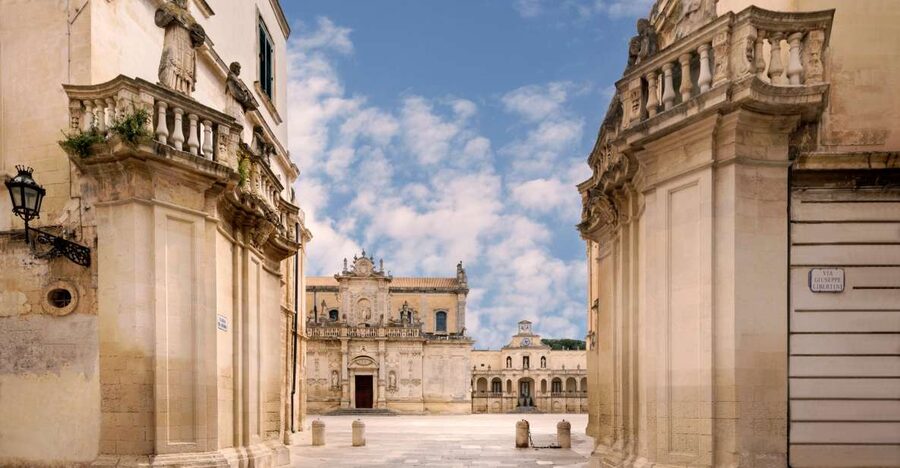
The Baroque style in Lecce is famous for its theatrical stone carving. Facades are crowded with figures, plants, animals, shields, columns, and other details. Without explanation, you may simply see a beautiful wall. With a guide, you begin to understand how the design communicated faith, status, and local identity.
The guides on this tour are particularly strong at architecture. Fabio Grasso is repeatedly singled out for explaining buildings, monuments, art, and the way the historic center was planned. Fabrizio is also praised for architectural history and the city’s development. Other guides, including Elena, Ilenia, Antonella, and Francesca, are noted for clear speech, patience, and an easy way with questions.
That matters because Lecce is a city where small details do much of the talking. A carved symbol or unusual figure can mean more once you know what you are looking at. The best guides also check that the group can hear and follow along, an important point in narrow streets where sound can bounce around.
A few other Lecce mornings to weigh against this
- Lecce: City Highlights Guided Tour by Bike
★ 4.8 · 362 reviews - Lecce: Guided Street Food Walking Tour with Food and Wine
★ 4.6 · 273 reviews - Lecce: City Highlights Guided Tour by Rickshaw
★ 4.8 · 236 reviews
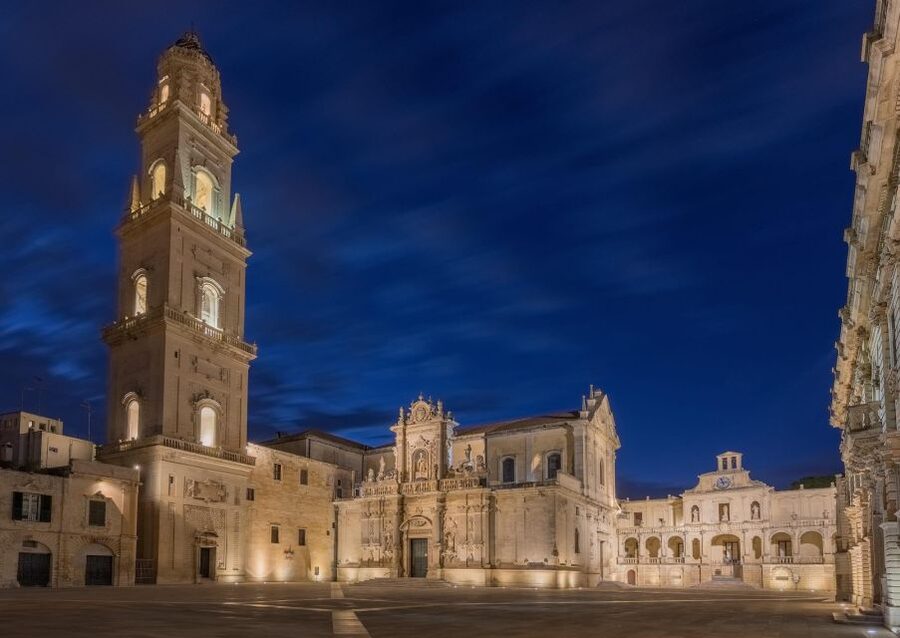
Piazza Duomo and the cathedral bell tower
The walk begins among the old city streets and leads to Piazza Duomo, one of Lecce’s strongest architectural settings. The square feels carefully composed, with the cathedral, bell tower, and other buildings working together rather than appearing as isolated monuments.
The cathedral bell tower is an especially useful point of orientation. It gives the square height and helps you understand the scale of Lecce’s historic center. Your guide explains how the buildings relate to each other, rather than treating the cathedral as a single object to photograph.
This is one of the stops where a guide earns the tour price. You can walk into Piazza Duomo on your own, of course, but you may not notice why the space feels so controlled and grand. A few well-placed explanations turn the square from a pretty stop into a lesson in Baroque city design.
The tour does not include admission to every paid church. That keeps the base price lower, but you should not expect a long interior visit at each religious building. The emphasis is on the streets, exteriors, history, and selected museum access.
Santa Croce and the language of the facade
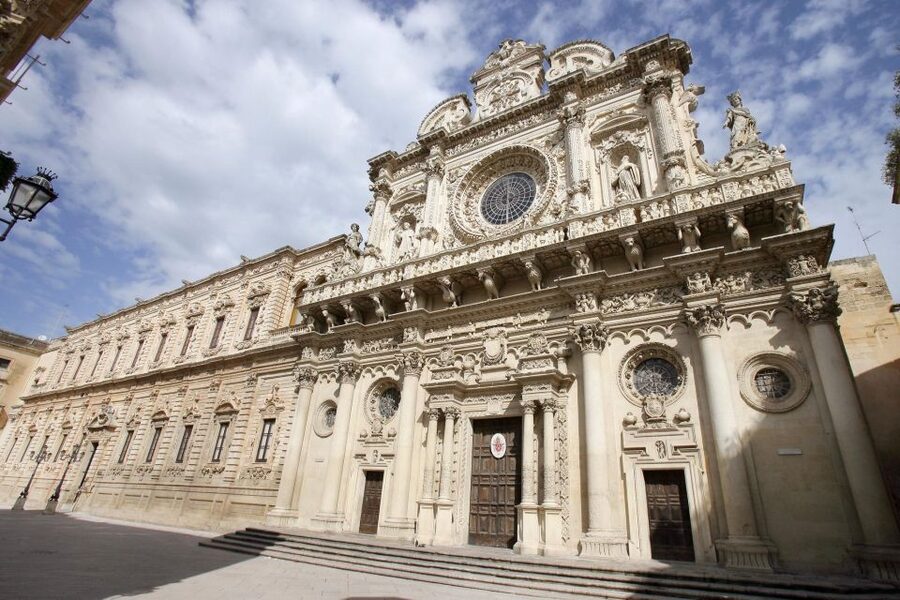
The Basilica of Santa Croce is one of the tour’s most rewarding visual stops. Its facade is famous for elaborate carving, and the guide uses it to show how Lecce’s local stone allowed craftsmen to create unusually fine detail.
This is where Fabio Grasso’s background in architecture and history can be especially useful, though the exact guide depends on the departure. He is praised for explaining not just what a building looks like, but how its design works. Elena and Antonella are also praised for keeping explanations clear and making room for questions.
Give yourself time to look closely. Santa Croce is not a building you understand with one wide photograph. Scan the facade from the lower level upward and notice how the decoration changes. Your guide points out details that might otherwise blend together into one ornate surface.
The stop also shows the one challenge of a walking tour in Lecce. The city’s best details are spread across busy visual scenes, and the group may need to stop in a particular spot to hear properly. On a hot day, the guide may need to project over street noise and general activity. One tour in poor rainy and windy weather would have benefited from more sheltered stopping points, so weather can affect comfort.
Corso Vittorio Emanuele and the old center
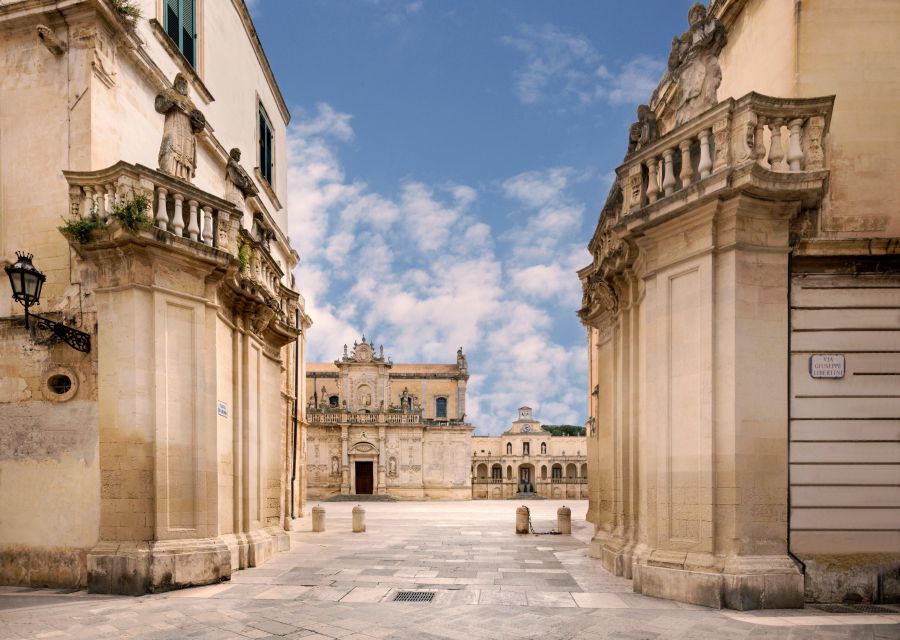
Corso Vittorio Emanuele connects several important parts of Lecce’s center. Walking along it gives you a sense of how the grand churches and palaces fit into everyday city life.
This is not a bus tour with a distant view of monuments. You move through cobbled lanes and streets at walking pace, with time to notice doorways, balconies, stonework, and the changing scale of the buildings. The route helps you connect the formal squares with the smaller passages between them.
The guide’s commentary is valuable here because the street itself does not come with labels. A good explanation can show how noble residences, religious buildings, and public spaces shaped one another. Several guides have been praised for connecting individual buildings to Lecce and the wider Salento area.
One recorded group had about 10 to 12 people, a comfortable size for hearing the guide and asking questions. Group size can change, but this experience works best when it stays small enough for the guide to keep people together. The walking pace is also easier to manage when nobody wanders far ahead.
Same city, an entirely different afternoon:
- Lecce: Baroque Architecture and Underground Walking Tour
★ 4.7 · 842 reviews - Small group tour of the caves of Santa Maria di Leuca
★ 5.0 · 806 reviews - 3 Hour Group Tour by Boat to the Caves of Santa Maria di Leuca
★ 5.0 · 472 reviews - Snorkelling-Tour in Porto Cesareo with typical aperitif
★ 5.0 · 452 reviews
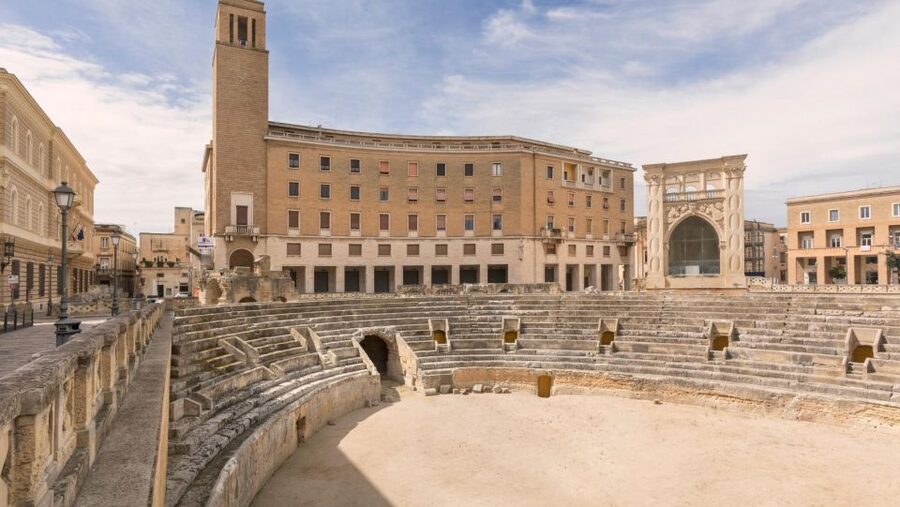
Piazza Sant’Oronzo and the city’s public face
Piazza Sant’Oronzo gives the tour another perspective on Lecce. While Piazza Duomo feels controlled and ceremonial, Sant’Oronzo is a larger public meeting place with a different energy and a stronger connection to daily city life.
The stop helps balance the tour. You are not seeing only churches and aristocratic facades. You are also seeing how Lecce organizes its public center around a major square. Your guide adds the historical and architectural context that makes the space easier to read.
The route includes roughly half a dozen principal stops, though the exact rhythm depends on the guide and the group. That is enough to cover the main center without turning the walk into a race. If you want to study every facade at length or enter several churches, you will need extra time after the tour.
Chiese e palazzi, churches and palaces
The tour’s church and palace stops are best understood as a connected lesson in Lecce’s Baroque character. The churches show public devotion and elaborate religious art. The palaces show how the same local stone and decorative language were used to announce family status.
You will hear about decorated facades, architectural choices, and the people or institutions behind the buildings. The strongest guides do not bury you in dates. They explain enough chronology to show how the city changed while keeping your attention on what you can see.
I would pay special attention to the contrast between restrained building shapes and exuberant surface decoration. That tension is one reason Lecce is so memorable. The basic forms can be quite orderly, while the carved details seem determined to keep adding one more flourish.
The tour is conducted in English or Italian. English delivery is a real strength for several guides, particularly Fabio, Elena, and Francesca. Clear projection also matters, and Antonella is praised for making sure the whole group could hear.
Entering the Faggiano Archaeological Museum
The final major stop is the Faggiano Archaeological Museum. Its appeal comes from the way it presents archaeology inside an ordinary urban building. Instead of visiting an isolated archaeological site outside town, you enter a place where layers of earlier life were found beneath a more recent structure.
The included ticket is a good part of the $41 price. The museum adds a different kind of evidence to the tour. Above ground, you study grand design and public image. Below, you see physical traces of past activity, construction, and daily life.
The museum is not a huge state archaeological complex. That is part of its character, but it also sets a limit on expectations. The underground area offers a focused look at discoveries and buried remains rather than a vast collection spread over many halls.
The experience is also structured in a particular way. The guided walk ends at the museum, and you are left there to continue through the displays and underground areas. If you expect the guide to accompany you through every chamber, check the arrangement before booking. The title may suggest a long subterranean expedition, but the underground portion is a compact museum visit at the end of an above-ground city walk.
What you see below street level
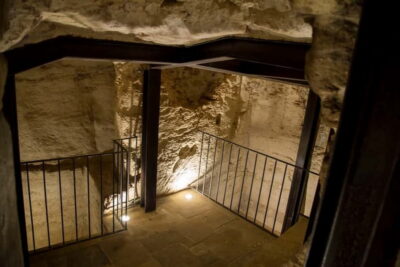
The underground areas contain ancient corridors, chambers, artifacts, and remnants from earlier periods of Lecce’s life. Their value lies in the sense of layers. The city you see today was built over older structures and habits, and the museum makes that idea concrete.
You might find the underground more evocative than polished. Archaeological remains rarely have the instant drama of a Baroque facade. Their interest grows as you understand what they reveal about work, storage, domestic life, construction, and buried traditions.
This stop also gives the tour a useful change of pace. After two hours of looking up at stone carving, you move into a more enclosed setting and look down at foundations and excavated traces. The contrast makes both parts stronger.
Still, keep your expectations measured. The museum offers some insight into underground discoveries, but it does not replace a full archaeological tour of Lecce. If the underground is your main reason for booking, this distinction matters.
Is $41 a fair price?
At $41 per person, the tour is reasonably priced if you want a guide who can interpret Lecce’s architecture and a museum ticket bundled into the visit. You are paying for two hours of local explanation, the route through the main historic center, and admission to the Faggiano Archaeological Museum.
The value is highest for a first visit or a short stay. One visitor with limited time in Lecce found the tour especially useful because it delivered an organized introduction without taking up half a day. I agree with that logic. A good first walk can save you from looking at the city as a series of unrelated church fronts.
The price is less compelling if you prefer to wander alone, already understand Baroque architecture, or mainly want a long underground exploration. You will also need to budget separately if you choose to enter paid churches.
Free cancellation up to 24 hours before the tour and reserve-now, pay-later booking make the commitment easier. Starting times vary, so check availability when you choose your date.
Who will enjoy this two-hour walk?
I would recommend it to first-time visitors, architecture fans, history-minded sightseers, and anyone with only a morning or afternoon in Lecce. It also suits people who want a clear introduction before returning to the center alone for photographs and church interiors.
The tour is a good fit for travelers who like to ask questions. Fabio, Elena, Ilenia, Francesca, Antonella, and Fabrizio are all praised in the supplied feedback for being approachable, clear, and willing to explain a point more than once.
You should think twice if you dislike walking on cobbled streets, want extensive free time at each stop, or expect the guide to lead the entire museum visit. The tour is compact and structured, not a slow private stroll.
In hot weather, choose a starting time carefully if options are available. One guide kept the group informed and cheerful as the heat rose, but Lecce’s stone streets can still feel demanding in summer. In rain and wind, comfort may depend on where the group can stop.
Should you book the Lecce underground tour?
Book it if you want a well-organized introduction to Lecce that combines the city’s best-known Baroque sights with a museum visit most independent walkers might miss. The guides’ strongest quality is their ability to explain architecture in plain terms, with Fabio Grasso receiving especially strong praise for his command of buildings, monuments, and city planning.
Do not book it expecting two hours underground. The walk is mainly above street level, and the Faggiano Museum comes at the end. For most visitors, that is a strength: you see Lecce’s public face first, then learn what lies beneath it.
At $41, the included guide and museum admission make good sense, especially on a short visit. If you want context, a manageable route, and a memorable final stop, this is a solid way to get your bearings fast.
FAQ
How long does the Lecce guided tour last?
The tour lasts two hours.
What language is the tour offered in?
The live guided tour is available in English and Italian.
What sights are included on the route?
The route includes Piazza Duomo, Corso Vittorio Emanuele, Piazza Sant’Oronzo, churches and palaces, and the Faggiano Archaeological Museum with its underground areas.
Is the Faggiano Museum ticket included?
Yes. The ticket for the Faggiano Archaeological Museum is included in the tour price.
Are paid church admission tickets included?
No. Entry tickets for churches that charge admission are not included.
Does the guide accompany the group through the entire underground museum?
The tour ends at the museum, where you continue through the museum and underground areas. The guide does not necessarily remain with you for the full museum visit.
How much does the tour cost?
The listed price is $41 per person.
Can I cancel the booking?
Yes. You can cancel up to 24 hours in advance for a full refund. Reserve-now, pay-later booking is also available.
Fresh on the Lecce list
- Ostuni, Alberobello and Polignano a Mare. Departing from Lecce★ 5.0 · 195 reviews
- Lecce: Street Food Tasting and Sightseeing Tour★ 4.8 · 197 reviews
- Orecchiette Cooking Class and Wine Pairing in Lecce★ 4.5 · 205 reviews
- Porto Selvaggio kayak tour + cliff diving + cold spring immersion★ 5.0 · 227 reviews
- 3-hour Boat Tour in Santa Maria di Leuca★ 5.0 · 233 reviews
- Lecce: City Highlights Guided Tour by Rickshaw★ 4.8 · 236 reviews
- Santa Maria di Leuca: Capo di Leuca Boat Tour★ 4.8 · 245 reviews
- Discovering Lecce★ 5.0 · 247 reviews
Lecce Tours, compared.
Baroque Architecture and Underground Walking Tour
Read our review →
Small group tour of the caves of Santa Maria di Leuca
Read our review →
3 Hour Group Tour by Boat to the Caves of Santa Maria di Leuca
Read our review →Snorkelling-Tour in Porto Cesareo with typical aperitif
Read our review →
Pasta Making Class in 1400s-Era Courtyard with Wine
Read our review →
Tour to 4 Towns of Salento: Otranto, Leuca, Gallipoli, Galatina
Read our review →
Cooking class, dinner and wine tasting near Lecce
Read our review →Browse the lists this tour appears in