
Reviewed · WALKING TOURS
Lecce: Baroque Architecture and Underground Walking Tour
Lecce’s golden stone is the star here, but the underground Jewish Museum gives this walk a welcome turn. You move from ornate churches and Roman ruins to the less visible story of Lecce’s Jewish community, all within the compact old town.
I like the clear route and the local guides, especially names such as Max, Angela, Antonio, and Luigi, who are praised for lively explanations and good English. I also like that the museum ticket is included and that you can choose a small group or private format. The main drawback is price: the online fare is $28, while some people found the same local walk advertised for about $15 at the guide office.
Key points at a glance
- The underground Jewish Museum adds depth: This is not only a church-and-palace stroll. The museum brings Lecce’s Jewish past into the picture.
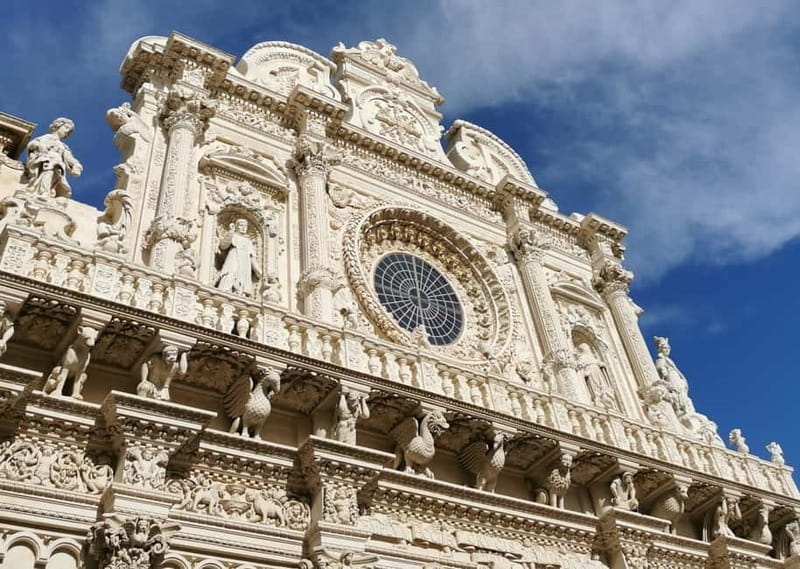
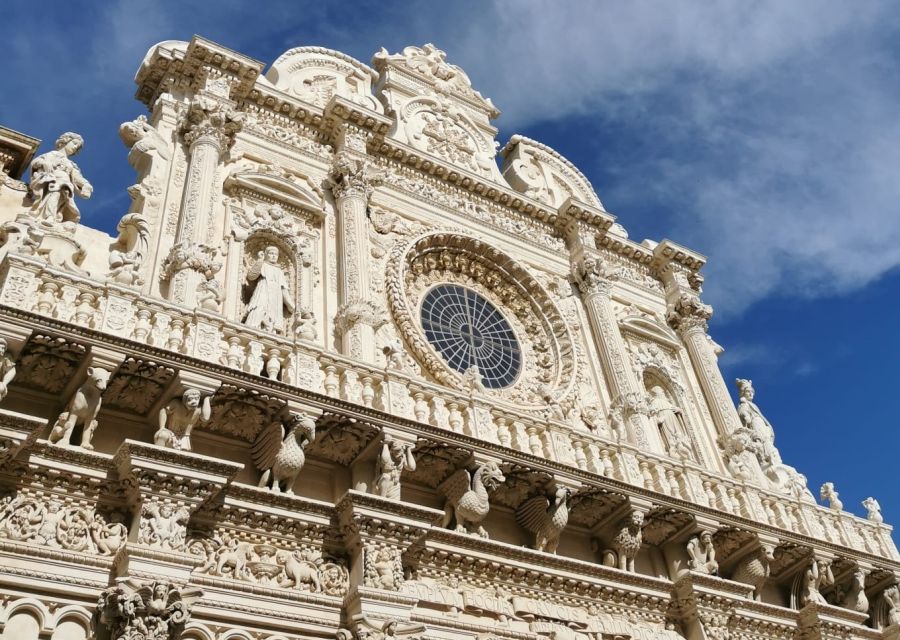
- Santa Croce sets the tone: Begin with Lecce’s most famous Baroque facade, packed with carved stone detail.
- Roman and Baroque history share one route: Piazza Sant’Oronzo pairs a Roman amphitheater and column with later civic buildings.
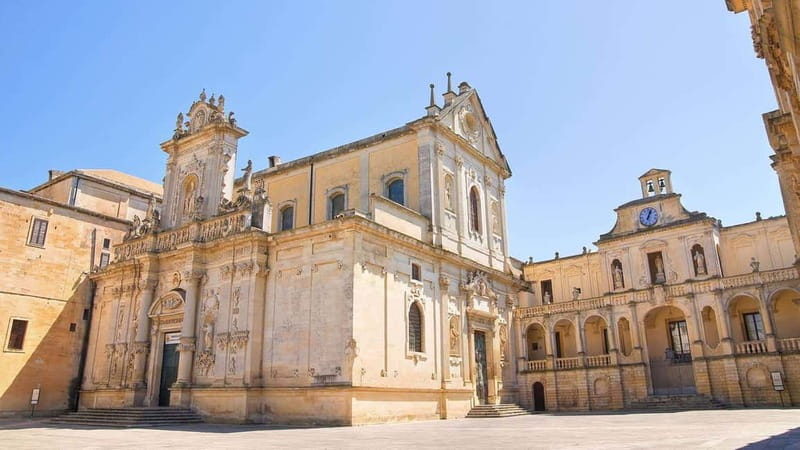
- Piazza Duomo is the grand finale: See the cathedral, bell tower, seminary, and Archbishop’s Residence as one carefully framed ensemble.
- The guides are a major strength: Max, Angela, Antonio, Anita, Massimiliano, and Luigi are singled out for clear, warm, engaging commentary.
- It is short enough for a first look: The 1.5 to 2-hour length works well at the start of a Lecce stay, though some stops may feel brisk.
Why this Lecce walk works so well
Lecce can feel almost too decorative at first. Every street seems to offer another carved balcony, twisted column, or church facade made from the city’s honey-colored local stone. Without some guidance, it is easy to admire the surfaces while missing the forces that shaped them.
This tour gives you a useful framework. You see the Roman foundation, the grand Baroque rebuilding, the civic heart of the city, and the Jewish quarter’s story in one compact outing. I would use it as an introduction, then return later to the places that caught your eye.
The route lasts about 1.5 to 2 hours. That is long enough to cover the main sights without turning into an all-day history lecture. It is also short enough to fit around lunch, an evening reservation, or a separate visit to Lecce’s churches.
The strongest part is the human element. Guides named in the feedback include Max, Angela, Antonio, Anita, Massimiliano, and Luigi Bianco. Max is praised for humor and clear explanations, while Luigi is described as especially animated and strong on archaeology, religion, and local history. One guide even helped with restaurant and gelato suggestions, which is the sort of practical local advice that can make a short tour more useful.
More walking tours in Italy:
- Milan: Guided Walking Tour & Last Supper Visit with Ticket
★ 4.7 · 5,409 reviews - Naples: Street Food Walking Tour with Local Guide
★ 4.8 · 4,256 reviews - Venice Walking Tour and Gondola Ride
★ 3.5 · 3,630 reviews
Santa Croce and Lecce’s carved stone
The walk begins with an outside look at the Church of the Holy Cross, usually called Santa Croce. This is Lecce Baroque in its most theatrical form. The facade is crowded with figures, plants, animals, columns, and other carved details that reward a slow look.
You will not simply be pointed toward the church and sent on your way. The guide explains what you are seeing and places the building within Lecce’s wider development. Since the listed stop includes about 15 minutes of guided attention, expect an introduction rather than a full, unhurried study of every detail.
That distinction matters. If you are an architecture fan, you may want to return to Santa Croce on your own after the tour. A short guided visit gives you the visual vocabulary to understand the facade, but it cannot cover every sculptural detail in depth.
Some people also report entering several churches during the walk, although the planned description specifically guarantees an external visit to Santa Croce and names the included Jewish Museum entry. Church access can depend on opening hours, services, or the route chosen that day, so treat any interior visit as a welcome possibility rather than the central promise.
Piazza Sant’Oronzo and the Roman layer
From Santa Croce, the route continues toward Piazza Sant’Oronzo, once the town’s market square and still one of Lecce’s key gathering places. Here, the past is unusually easy to read because Roman remains sit beside later civic architecture.
The Roman Column is one of the main reference points. It helps connect present-day Lecce with the Roman era, when the city was known as Lupiae. Nearby, the remains of a large Roman amphitheater show the scale of that earlier settlement.
The amphitheater is partly below the current street level, which makes it especially effective as a history lesson. You are not looking at a complete arena, but the surviving curve and stonework make the Roman footprint clear. The guide can explain how the ruins fit into the modern square rather than treating them as an isolated monument.
Piazza Sant’Oronzo also includes the Old Town Hall. This mix of Roman remains, municipal buildings, and later religious architecture is one reason I like a guided walk in Lecce. The city’s periods overlap in plain sight, and a good guide helps you connect them.
The stop is listed at roughly 15 minutes. That is enough to orient you, learn the main facts, and take a few photographs. If you want extensive archaeological detail, you may find the timing a little tight.
Corso Vittorio Emanuele and Sant’Irene Church
The walk then follows Corso Vittorio Emanuele, where Baroque palaces line the route. This is a good stretch for understanding that Lecce’s Baroque style is not limited to churches. Private and civic buildings also use the local stone for balconies, doorways, cornices, and decorative frames.
The route includes Sant’Irene Church, described as recently restored. Its exterior gives you another example of the city’s religious architecture and helps break up the longer sequence of palaces and street views.
This part of the walk benefits most from commentary. A palace facade can look like a pretty background until someone points out the details that reveal its date, purpose, or connection to local power. The exact stops may vary, and one of the itinerary entries is not named, so do not expect a rigid checklist of every building along the street.
Several guides are praised for making this kind of material easy to follow. Max is described as funny and witty, while Antonio is praised for combining facts with humor and enthusiasm. That style matters in Lecce, where the sheer amount of ornament can blur together if the explanations become too formal or technical.
A few other Italy mornings to weigh against this
- Small group tour of the caves of Santa Maria di Leuca
★ 5.0 · 806 reviews - 3 Hour Group Tour by Boat to the Caves of Santa Maria di Leuca
★ 5.0 · 472 reviews - Snorkelling-Tour in Porto Cesareo with typical aperitif
★ 5.0 · 452 reviews
Piazza Duomo, Lecce’s grand architectural room
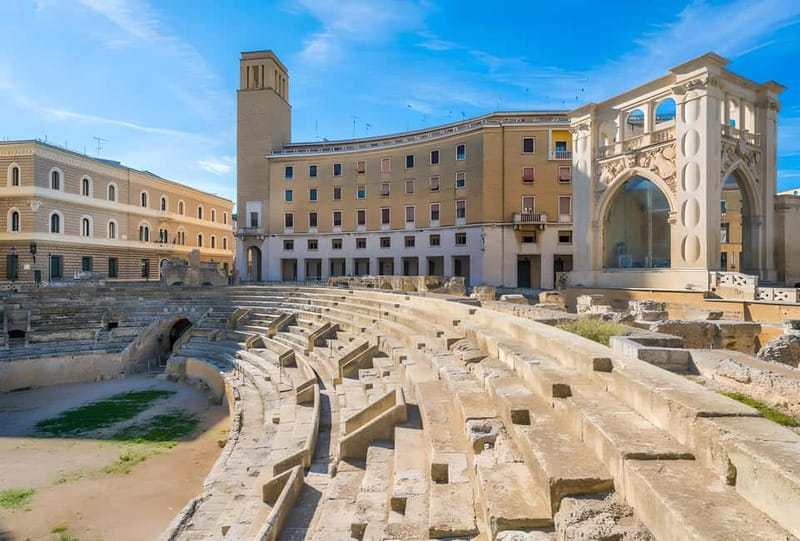
The walk finishes its outdoor sightseeing in Piazza del Duomo. This is one of Lecce’s most impressive spaces because the buildings work together as a single architectural composition.
You see the cathedral, bell tower, Seminary, and Archbishop’s Residence around the square. The enclosed feeling is part of the appeal. Instead of one monument competing with another, the buildings create a carefully shaped setting that feels more like an outdoor room.
The bell tower gives the square vertical drama, while the cathedral and surrounding buildings provide the carved detail. Your guide will explain the exteriors, but the schedule again allows about 15 minutes, so you should plan a separate return if you want quiet photographs or a closer look.
Piazza Duomo is also the practical end point. The activity finishes back at the meeting point or at one of the listed Piazza Duomo drop-off points. Since the meeting location can vary by booking option, check the exact address before setting out. The two starting options are connected with the Infotab Lecce Walking Tours office, but the precise meeting point should come from your confirmation.
The underground Jewish Museum
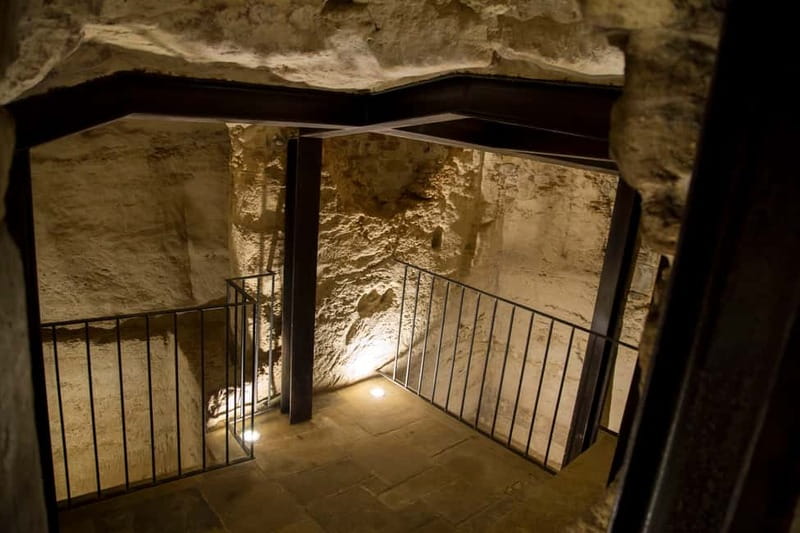
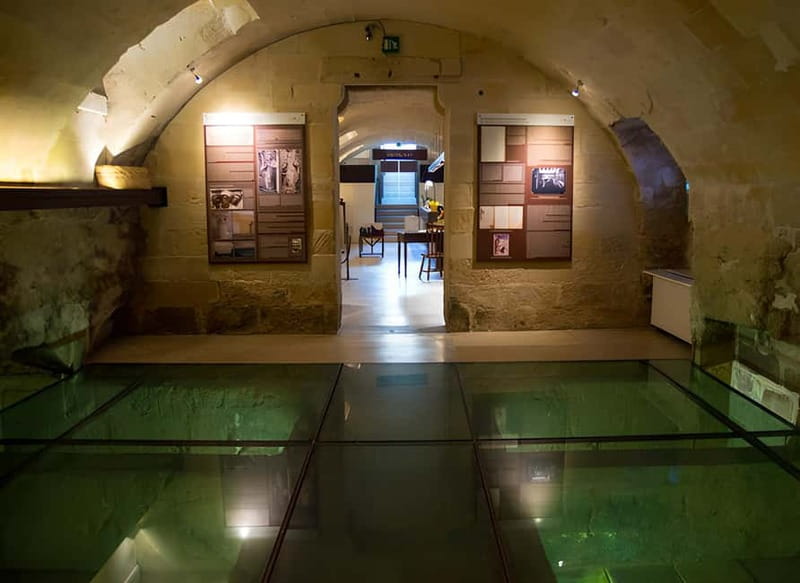
The Jewish Museum changes the pace and subject of the tour. Located underground, it introduces Lecce’s Jewish history in a setting that feels physically connected to the city’s older layers.
The visit is listed at about 15 minutes, with the entrance ticket included. That makes this a concise museum stop, not a long independent museum visit. You get an important piece of Lecce’s story without having to arrange another ticket or find the site yourself.
I consider this the most distinctive feature of the tour. Many city walks focus on the obvious Baroque sights and Roman remains. This one also asks you to consider the people and communities whose presence is less visible in the grand central squares.
Because the museum visit is brief, listen closely and ask questions while you are there. Guides are available in English, Italian, and French, and the best use of the stop is to connect what you see underground with the streets and buildings above.
The tour is listed as wheelchair accessible. Since the museum is underground, you should still confirm how accessibility is handled for your specific departure and booking option before paying, especially if you need detailed assistance.
Guides, language, and group size
The guide can make or break a compact walking tour, and this experience has a strong record in that area. Names repeatedly associated with the best feedback include Max, Angela, Antonio, Anita, Massimiliano, and Luigi Bianco.
Max is described as highly informed, funny, and easy to understand in English. Angela receives praise for energy and subject knowledge. Antonio is noted for humor, passion, and useful advice. Anita is praised for excellent commentary and the use of whisper-style Bluetooth headsets, which can make a big difference when you are walking through a busy square.
Luigi Bianco is singled out for an especially engaging style, with an animated voice and interesting anecdotes. Massimiliano is praised for explaining both Lecce’s past and present life. These details suggest that the quality may depend partly on the guide assigned to your departure, but the overall standard appears consistently strong.
You can choose a shared small-group or private tour. A small group usually offers a better balance of cost and conversation. A private tour makes more sense if you want to ask many questions, move at your own pace, or focus heavily on architecture, archaeology, or Jewish history.
One caution: a few people felt that parts of the route were rushed or that a guide could have invited more questions. That is a fair concern on a tour with roughly 15 minutes allocated to each major stop. If you want a slow, exhaustive architectural study, this is not the right format.
Price, timing, and what you receive
The listed price is $28 per person. It includes the walking tour, a local guide, and entry to the Jewish Museum. Food, drinks, hotel pickup, and hotel drop-off are not included.
At that price, the tour offers fair value if you want a structured introduction and the museum visit. You are paying for the route, commentary, and convenience of connecting several major sights in one go. The included ticket matters because it adds something beyond a standard free orientation walk.
There is one price warning worth taking seriously. Some people report seeing the same or a similar walk advertised at the local guide office for about $15 per person, roughly half the online price. Local pricing can change, and the cheaper offer may not match every departure or booking format, but I would compare the office price if you are already near the meeting point.
The tour allows free cancellation up to 24 hours before departure for a full refund. You can also reserve now and pay later, which helps if your Lecce schedule is still shifting.
Starting times vary, so check availability rather than assuming a morning departure. The walk ends in the Piazza Duomo area, making it convenient to continue sightseeing there after the guide leaves.
Who should book this Lecce tour?
I would recommend it for a first visit to Lecce, especially if you want the main landmarks explained in a manageable amount of time. It suits couples, families, and independent visitors who prefer some guidance but still want plenty of free time afterward.
It is also a good choice for anyone interested in more than Baroque decoration. The Roman amphitheater, Roman Column, Jewish Museum, religious buildings, and modern city life all appear in the same route.
You should think twice if you dislike group walks, need long periods for photography, or want to enter and study every church at length. The route is compact and efficient, but efficiency can mean a brisk pace.
For the best experience, wear comfortable shoes and arrive early enough to identify the correct meeting point. Bring questions. Guides such as Max and Luigi appear to respond well when people show genuine interest, and a short walk becomes much more rewarding when you take part in the conversation.
Should you book it?
Book this tour if you want a well-rounded first look at Lecce with a guide who can connect Roman ruins, Baroque churches, civic buildings, and Jewish history. The Jewish Museum entry and the strong record of guides such as Max, Angela, Antonio, Anita, Massimiliano, and Luigi add real value.
I would compare the local office price with the $28 online fare before booking, since the difference may be substantial. Even with that caveat, the tour is a sensible choice when you value clear orientation, local context, and a short route that covers the city’s essential historic center.
FAQ
How long does the Lecce walking tour last?
The tour lasts approximately 1.5 to 2 hours. Starting times vary, so check availability for the date you want.
What sights are included?
The route includes Santa Croce Church, Piazza Sant’Oronzo, the Roman Column, the remains of a Roman amphitheater, Corso Vittorio Emanuele, Sant’Irene Church, and Piazza Duomo with its cathedral, bell tower, Seminary, and Archbishop’s Residence.
Is entry to the Jewish Museum included?
Yes. The Jewish Museum entry ticket is included in the tour price, and the visit lasts about 15 minutes.
Which languages are available?
The live guide is available in English, Italian, and French.
Can I book a private tour?
Yes. You can choose between a shared small-group tour and a private tour, depending on the option available for your chosen date.
Is the tour wheelchair accessible?
The activity is listed as wheelchair accessible. Since part of the experience takes place in an underground museum, confirm the arrangements for your specific booking if you need accessibility support.
Fresh on the Italy list
- Florence: Uffizi Guided Tour with Skip-the-Line Entry Ticket★ 4.8 · 499 reviews
- Milan: Last Supper and Sforza Castle Guided Tour★ 4.6 · 498 reviews
- Boat trip La Maddalena Archipelago – Departure from Palau★ 4.5 · 499 reviews
- Exclusive Golf Tour Private VIP with Local & Gelato o Wine★ 5.0 · 500 reviews
- Turin: Egyptian Museum Skip-the-Line Group Tour★ 4.7 · 500 reviews
- Itria Valley: Polignano, Ostuni, and Locorotondo, from Bari★ 4.6 · 502 reviews
- Colosseum, Palatine Hill and Roman Forum with Guided Tour★ 5.0 · 500 reviews
- Catania: Etna Nature Tour with Hiking, Cave Visit, & Tasting★ 4.7 · 502 reviews
Walking Tours, compared.
Guided Walking Tour & Last Supper Visit with Ticket
Read our review →
Rialto Bridge & Offbeat Unusual Venice Walking Tour
Read our review →
Private 3 hrs Venice Tour: St Mark’s, Walking tour & Boat tour
Read our review →
Skip the line: Uffizi and Accademia Small Group Walking Tour
Read our review →Browse the lists this tour appears in