
Reviewed · POMPEII & VESUVIUS TOURS
Herculaneum: Skip-the-Line Entry Ticket with Audio Guide
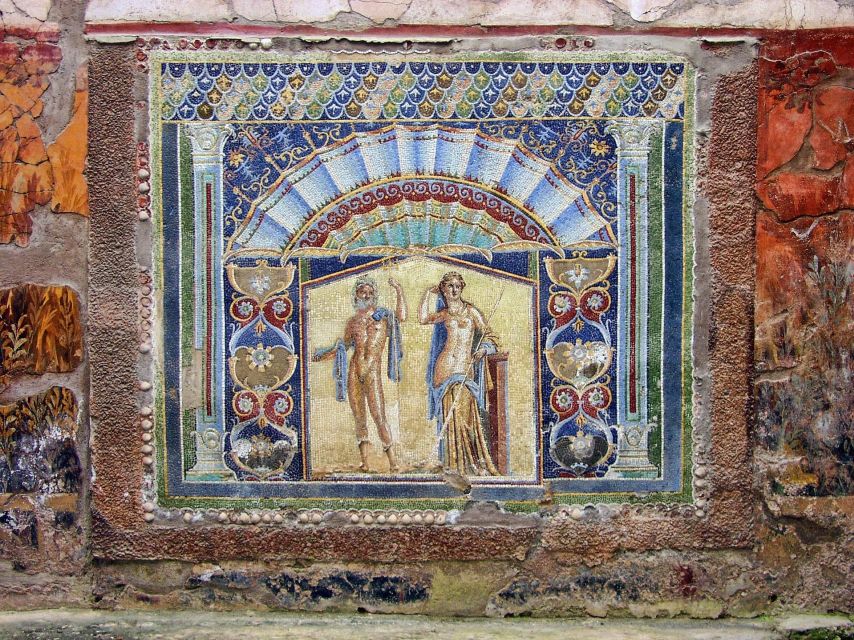
Herculaneum is the ancient Roman town that can make Pompeii feel almost too big. Here, you walk past original wooden doors, colorful frescoes, mosaics, and furniture, often close enough to study the details without a sea of people between you and the ruins. The boathouses near the end are especially moving, showing the human cost of the eruption in a way that no textbook can.
I like the freedom of the self-guided audio tour, since you can linger in a villa, skip a less interesting building, or turn around when your legs need a rest. I also like the compact layout and included map, which make three or four hours feel productive rather than exhausting. The main drawback is that the audio guide’s numbers do not always match the site perfectly, and collecting the entry ticket and device can involve more than one desk.
Key points to know before you go
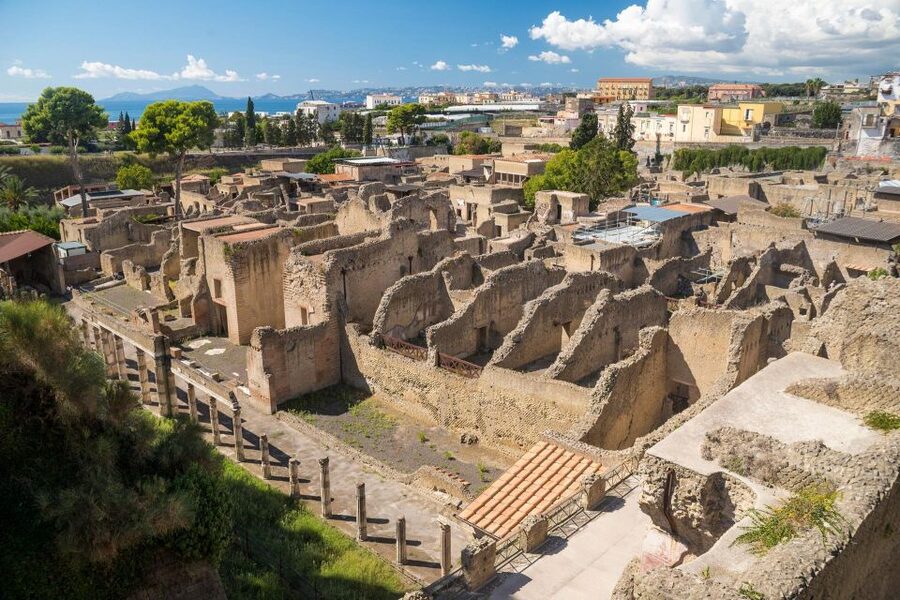
- See unusually well-preserved Roman details: Wooden doors, beams, wall paintings, mosaics, statues, and household objects survived beneath volcanic material.
- Plan on two to four hours: The site is smaller than Pompeii, but there is enough to see for a slow half-day visit.
- Use the audio guide flexibly: Follow the numbers in any order, but expect some confusing location cues and occasional closed areas.
- Clarify your ticket option: Some bookings include only the audio guide, with the Herculaneum ticket selected separately as an extra.
- Expect cobblestones and steep steps: Comfortable shoes matter, and you will find places to sit along the route.
- Go early for a calmer visit: The entrance and ruins are generally easier to handle before the site gets busier.
Why Herculaneum feels different from Pompeii
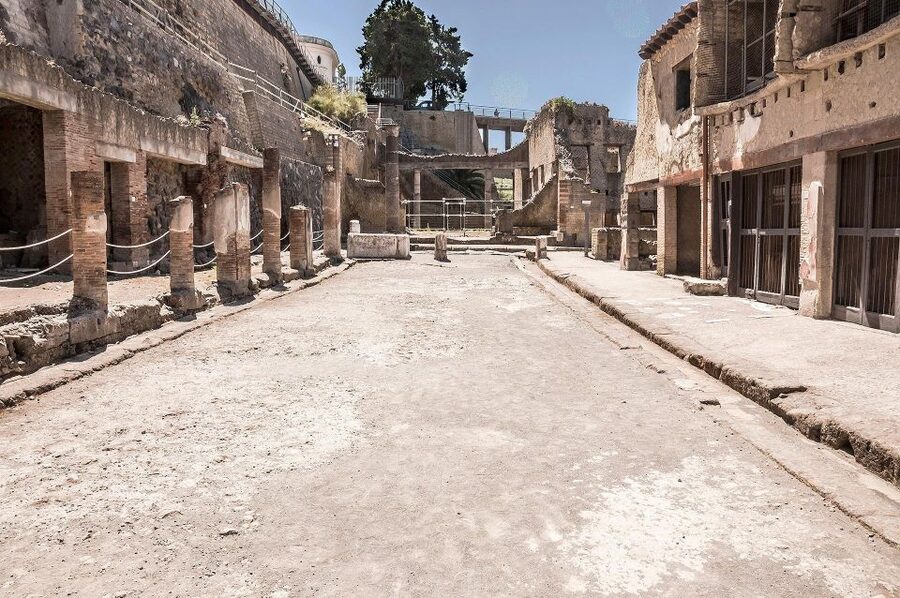
Herculaneum was smaller than Pompeii, but the volcanic eruption preserved it in a different way. Pompeii was buried mainly under ash and pumice, while Herculaneum was covered by hot volcanic material that sealed buildings and household objects in place. The result is a town with a remarkable amount of detail still visible.
I find the scale easier to understand here. Streets, shops, fountains, temples, villas, and public buildings sit within a more contained area. You can form a clearer picture of a Roman neighborhood, then compare a wealthy home with the much plainer spaces used by enslaved people.
That does not mean Herculaneum is a quick stop. Some visitors finish in about two hours, while others spend three or four hours moving slowly through the houses and museum displays. I would not squeeze it into a rushed hour between trains. Give yourself at least two hours, and more if Roman domestic life interests you.
More Skip-the-Line Tickets in Naples
- Herculaneum: Skip-the-Line Guided Tour with Archaeologist
★ 4.8 · 3,439 reviews - Mount Vesuvius: Skip-the-Line Ticket and Smart Digital Guide
★ 4.2 · 2,780 reviews - From Naples: Pompeii Skip-the-Line Entry Ticket and Tour
★ 4.4 · 2,753 reviews
Getting inside and collecting the audio guide
You show your ticket at the Herculaneum Archaeological Park ticket office. The phrase skip-the-line needs a little caution here. On quiet days, there may be no meaningful line to skip. During busier periods, the ticket may still save time, but the process is not always as direct as the name suggests.
The audio guide is collected separately from the entry process. Several people have found themselves moving between desks to collect the device, confirm the ticket, and enter the park. In some cases, you may need to leave a passport, identity document, or accepted form of identification as security for the audio guide. Bring your passport or ID card so this does not catch you unprepared.
The ticket arrangement also deserves careful reading. The listed option can refer to Audio Guide no ticket, with the Herculaneum entry ticket selected as an extra. At about $15 per person, the experience can be good value when admission is included, but you should check your exact booking before arrival. Otherwise, you may need to buy the entrance ticket at the park.
Some visitors have been admitted earlier than their booked time when staff had space, but I would not count on that. Check the available starting time and arrive with enough margin to sort out the device and ticket without rushing.
Starting with the villas and Roman homes
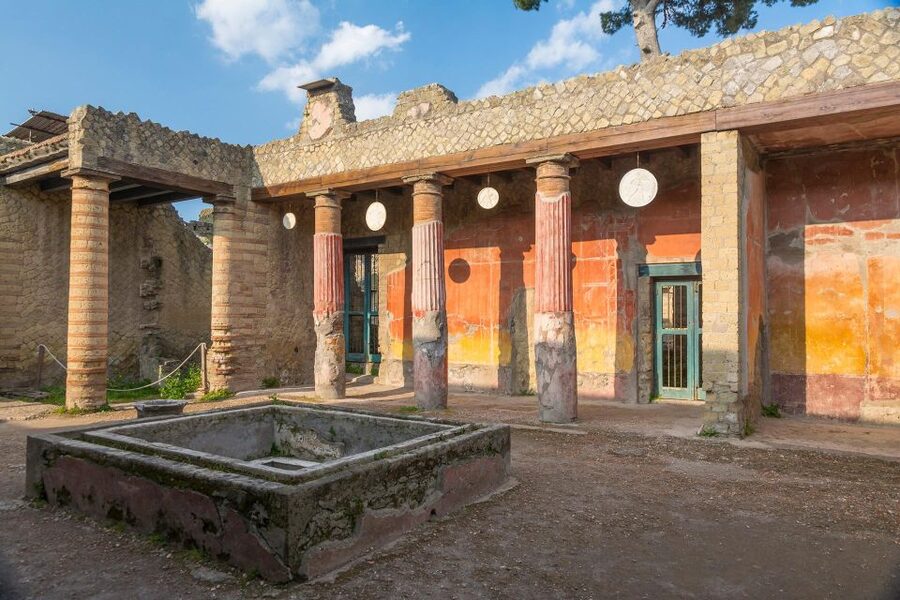
Once inside, use the map before pressing play. The guide is not best treated as a fixed walking tour. You can choose the buildings that interest you, listen in any order, and return to a house after seeing another part of the town.
The homes are the star of Herculaneum. You can look closely at painted walls, patterned floors, mosaics, statues, doors, and wooden elements that would usually be lost at an archaeological site. The preserved details help you picture rooms as lived spaces rather than empty stone shells.
The audio guide adds the missing layer. It explains what you are looking at and how Roman households were arranged, including the contrast between luxurious rooms and basic quarters. The commentary is generally detailed and easy to use once you understand the number system.
That last part matters. The numbers on the device or app do not always line up neatly with the numbers you see on the ground. Some buildings may be closed, some marked areas may not appear in the guide, and the commentary can occasionally jump to another location. Take a moment to match the map with the building in front of you. If the sequence feels wrong, skip ahead and return later rather than assuming you have missed something.
Market streets, fountains, and daily life
Herculaneum works best when you look beyond the grand houses. The ancient market area, public fountains, and ordinary streets show how people bought food, collected water, worked, and moved through town.
The audio guide helps turn these remains into a daily scene. A fountain is not simply a stone feature. It becomes part of the town’s public life. A shop is not just another doorway. It suggests the practical rhythm of buying and selling in a Roman settlement.
You will also see temples and religious spaces with depictions of ancient gods. These areas add balance to the private homes. Roman life was not divided into separate boxes for home, work, politics, and religion. The town’s streets connected all of them.
The route includes cobblestones, uneven surfaces, and some steep steps. The ruins are not difficult for every visitor, but they demand attention. Wear comfortable shoes with a secure sole, and allow time to stop rather than trying to walk and listen at the same time.
A few other Naples mornings to weigh against this
- From Naples: Pompeii Ruins & Mount Vesuvius Day Tour
★ 4.3 · 11,459 reviews - Naples or Sorrento: Full-Day Pompeii and Mount Vesuvius Tour
★ 4.6 · 4,235 reviews - Pompeii & Mt.Vesuvius Day Tour from Naples with Pizza Lunch
★ 4.0 · 2,901 reviews - Naples: Pompeii & Mt Vesuvius All-Inclusive Small Group w/ Lunch
★ 4.5 · 2,748 reviews
Frescoes, mosaics, and wooden doors
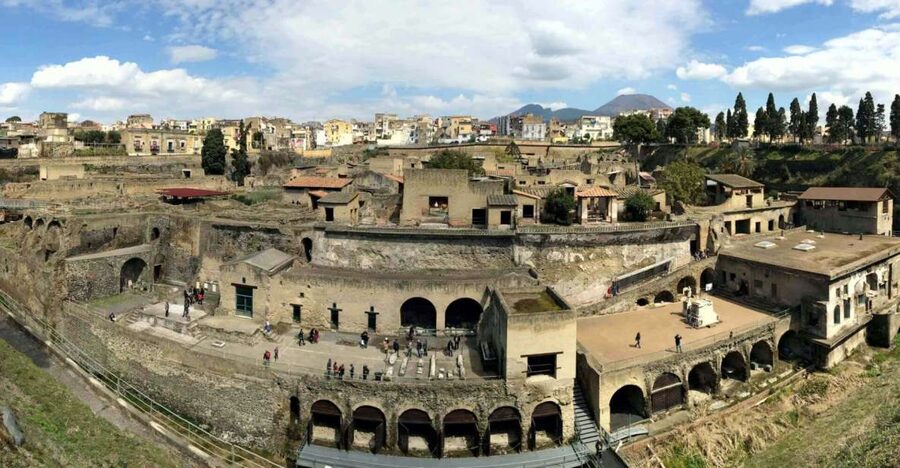
The visual reward here is the amount of color and texture still present. Frescoes remain on walls, mosaics cover floors, and wooden doors and beams give the buildings an unexpected warmth. These details can make Herculaneum feel more immediate than ruins built entirely from bare masonry.
Look at the rooms as a whole before focusing on individual objects. The floor pattern, wall painting, doorway, and room size work together. You begin to understand how a wealthy Roman homeowner used decoration to signal status, while more modest spaces served basic household needs.
The audio guide is useful here because it points out features you might otherwise walk past. It also includes facts and stories about the eruption and the people who lived in the town. The commentary is available in English, French, German, Italian, and Spanish.
There are a few practical audio issues. Some devices have been described as quiet, and the number system can be awkward. If you bring your own earbuds, do not assume they will connect by Bluetooth. One version of the device can be held to the ear, and another may work with a headset or earbuds, but the exact setup can vary. Ask at collection if you want to use your own headphones.
The boathouses and the hardest part of the visit
Near the sea-facing area, the boathouses provide the most sobering section of the park. This is where 300 people perished while waiting for rescue, and the evidence of that moment gives the eruption a human scale.
You may encounter skeletons and the boat display in this part of the visit. It is not an easy exhibit, but it is important. The grand villas explain how some people lived. The boathouses show what happened to those who could not escape.
I recommend saving this area for last if you want the visit to build toward its most serious point. Some people choose the opposite route to avoid crowds, and that is also sensible. The site can be explored in either direction, so you have room to choose the pace and order that suits you.
The museum and objects near the exit
Do not rush out after the main streets. The museum area near the entrance or exit adds useful context, with artifacts, furniture, statues, and other objects from the town. Seeing these pieces indoors helps you understand how much of Herculaneum’s domestic life survived beyond the walls and floors.
The museum is particularly helpful if you have already visited Pompeii. The two sites overlap in subject, but Herculaneum’s smaller footprint and preserved household details give it its own character. If you visit both, you will notice the contrast rather than feel you are repeating the same attraction.
There is a café and a place to buy snacks and drinks. A restaurant sits opposite the entrance, which is convenient after several hours on the stones. You can also find places to sit and eat a packed lunch, though toilets have received less favorable practical marks, so plan accordingly.
How much value do you get for $15?
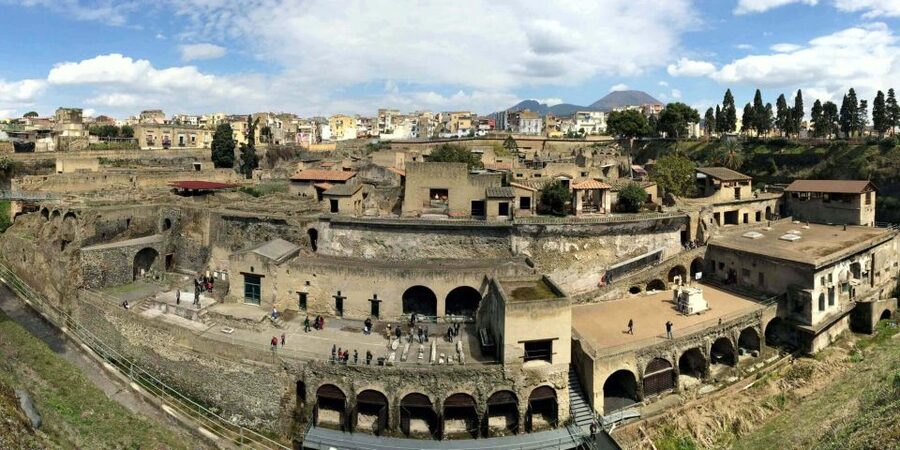
At roughly $15 per person, this is a reasonable price for a self-guided visit if the entry ticket is included in your selected option. Herculaneum itself offers enough detail to justify the admission, and the audio guide gives you structure without the cost or fixed pace of a private guide.
The value depends on what you want. If you mainly need access and prefer reading signs, the audio guide may feel unnecessary. If Roman architecture is new to you, the commentary helps explain why a painted wall, shop counter, or household room matters.
Check the ticket wording before paying. The option described as an audio guide without a ticket requires you to add the park entrance separately. This is the most important booking detail because an apparently low price can become less clear at the entrance if you have assumed admission was included.
Free cancellation up to 24 hours before the visit and reserve-now, pay-later booking make this easier to fit into a changing Naples or Campania itinerary. Those policies are useful, but they do not replace checking the admission option and arrival instructions.
Audio guide or live guide?
The audio guide is the right choice if you want independence. You can stop for photographs, sit in the shade, choose your own order, and spend extra time in the houses that catch your eye. A typical visit with the audio guide takes about three hours, though you can stay longer.
A live guide may suit you better if you want the story explained in a clear route. Upgrades have sometimes been offered, with guides including Fabio, Tony, and Amara receiving strong praise for their explanations and steady pacing. Tony was especially careful on a hot day, keeping longer talks in the shade.
That upgrade is a different product, so do not assume a live guide is included with this audio-guide booking. I would choose the audio option for flexibility and the guided option if you prefer asking questions and letting someone else connect the buildings into one story.
Timing, crowds, and getting the best visit
Arriving at opening time is the best practical move. Herculaneum is often calmer early in the day, and an early start gives you room to pause before more people arrive. Later, the site may still be manageable, but the narrow streets and interiors can feel less relaxed.
A visit can work well as a half-day outing. You can explore the ruins, spend time in the museum, and stop for food afterward. The site is easy to navigate once you understand the map, but do not assume the audio numbers create a perfect walking sequence.
If you are coming from Naples, the EAV train is one reported way to reach the area, followed by a walk of about 12 minutes from the station. If you are staying nearby, the entrance is convenient to local hotels and restaurants. The supplied meeting instruction is simple: show your ticket at the Herculaneum ticket office.
Who should book this experience?
I would recommend it to anyone interested in Roman homes, ancient art, archaeology, or the eruption of Vesuvius. It is also a strong choice if Pompeii sounds overwhelming. Herculaneum gives you a smaller, more focused visit with exceptionally preserved domestic details.
Families can enjoy the freedom to move at different speeds, though cobbles and steps may test younger children or anyone with mobility concerns. History fans may want the full three or four hours. People with limited time can still see a great deal in two hours if they use the map and focus on the major houses, museum, and boathouses.
I would hesitate only if you dislike self-guided technology or need a perfectly marked route. The audio commentary can be quiet, the numbers can be confusing, and some areas may be closed. If those issues would frustrate you, pay for a live guide instead.
Should you book the Herculaneum audio guide?
Yes, if you want a flexible and fairly priced visit to one of Campania’s most rewarding ancient sites. The best parts are the preserved homes, painted walls, mosaics, wooden features, and the powerful boathouse display. You can explore at your own speed, and the audio guide gives enough context to make the remains readable.
Book with care. Confirm that your option includes the entry ticket, ask where to collect the audio device, and request the map at the start. Arrive early, wear sturdy shoes, and allow at least two hours. If you want a smoother route and personal explanations, see if a live-guide upgrade with someone such as Fabio or Tony is available.
FAQ
Is the Herculaneum entry ticket included?
It depends on the option you select. The audio-guide-only option does not include admission, while the Herculaneum entry ticket can be selected as an extra. Check your booking details carefully.
How long does the visit last?
The activity is valid for one day. Most people need at least two hours to see the main areas, while a slower visit with the audio guide can take three or four hours.
Where do I enter?
Show your ticket at the Herculaneum Archaeological Park ticket office.
Is a live guide included?
No. This experience includes an audio guide and map, but not a live guide. A guided-tour upgrade may sometimes be available separately.
What languages are offered for the audio guide?
The audio guide is available in English, French, German, Italian, and Spanish.
Do I need identification?
Bring a passport or ID card. Identification may be requested when you collect the audio-guide device.
What should I wear?
Wear comfortable shoes. The park has cobblestones, uneven ground, and some steep steps.
Can I cancel the booking?
You can cancel up to 24 hours in advance for a full refund.
Can I reserve now and pay later?
Yes. The booking terms allow you to reserve your place and pay later, which keeps your plans flexible.
More Audio Tours in Naples
- Pompeii: Entry Ticket with Optional Audio Guide
★ 4.2 · 12,360 reviews - Venice: La Fenice Opera House Entry Ticket with Audio Guide
★ 4.6 · 11,742 reviews - Rome: St. Peter’s Basilica & Dome Entry Ticket & Audio Tour
★ 4.2 · 7,537 reviews - Florence: Cathedral & Brunelleschi’s Dome Ticket & Audio App
★ 4.4 · 6,973 reviews
More Self-Guided Tours in Naples
- Pompeii: Skip-the-Line Entry Ticket with Audio Guide or Tour
★ 4.1 · 1,364 reviews - Naples: National Archaeological Museum Ticket & Audio App
★ 4.4 · 617 reviews - Rome: Colosseum & Forum with Audio Guide App -Optional Arena
★ 4.2 · 24,770 reviews - Rome: Pantheon Fast-Track Ticket and Official Audio Guide
★ 4.3 · 21,008 reviews
Fresh on the Naples list
- Naples Pasta Class: Fettuccine & Ravioli with Grandma’s Recipe★ 5.0 · 506 reviews
- Naples Walking Tour with Underground Roman Ruins Ticket★ 4.5 · 510 reviews
- Private Day tour of Positano, Amalfi and Ravello from Naples★ 5.0 · 522 reviews
- Naples: Street Art & History Tour in the Spanish Quarters★ 4.9 · 540 reviews
- Private Day Tour: Sorrento, Positano, Amalfi, Ravello from Naples★ 4.5 · 546 reviews
- Day Trip of Pompeii, Herculaneum and Vesuvius from Naples★ 4.5 · 547 reviews
- Day Trip of Pompeii, Sorrento and Positano from Naples/Salerno★ 5.0 · 560 reviews
- Naples Underground Official Skip-the-line Ticket★ 4.0 · 563 reviews
Pompeii & Vesuvius Tours, compared.

Entry Ticket and Guided Tour with an Archaeologist
Read our review →


Pompeii Small Group Tour with an Archaeologist
Read our review →
Pompeii, Amalfi Coast and Positano Day Trip from Rome
Read our review →Browse the lists this tour appears in