
Reviewed · COLOSSEUM & ROMAN FORUM TOURS
Ultimate Colosseum, Roman Forum & Palatine Hill Small Group Tour
The most useful thing about this tour is that it links three major ancient sites into one clear walk: the Colosseum, Roman Forum, and Palatine Hill. Instead of seeing the arena as an isolated monument, you follow the story of Roman public life, political power, and imperial luxury across the ruins themselves.
I like the small-group format, which gives you a better chance to hear the guide and ask questions in the crowds. I also like the mix of famous sights and less obvious details, from the House of the Vestal Virgins to the funeral of Julius Caesar. The main drawback is the setting itself: Rome’s ancient center can be extremely crowded, hot, and difficult to navigate, and parts of the Forum may be closed during restoration.
Key points to know before booking
- Three sites in about three hours: The tour covers the Roman Forum, Palatine Hill, and Colosseum in one compact visit.
- Reserved Colosseum entry: Advance tickets help you avoid the longest admission lines, though security and crowd movement still take time.
- Small group, not private: The current information gives a maximum of 10 people, while other tour details refer to groups of up to 16.
- Strong guide reports: Donatella, Luca, Alessandro, Francesco, Marco, Amanda, John Tinto, and others are praised for clear English, humor, and solid command of Roman history.
- No lower Colosseum levels: This tour does not include a visit to the underground areas of the arena.
- Bring water and good shoes: Expect steps, uneven stones, stairs, and a fair amount of walking.
Why this three-hour route works
Ancient Rome is a puzzle of broken columns, arches, temples, and walls. Without context, it can be hard to understand what you are looking at. This route gives you a guide to explain how the pieces once fit together.
The order and timing can vary, but the experience begins near the Roman Forum at Largo Corrado Ricci. You then move through the Forum, climb Palatine Hill, and finish at the Colosseum. That finish works well: you build from the political center of Rome to the imperial palaces, then arrive at the huge arena most people are eager to see.
Three hours is long enough for a serious introduction, but not so long that the heat and uneven ground become unbearable for most people. You should still treat it as an active walking tour. The ancient stones are not polished museum floors, and the Palatine includes slopes and stairs.
The group size deserves a close look. The experience is described as a small-group tour, with one section stating no more than 16 people and the additional information stating a maximum of 10. Either way, it is not a private tour. A group of 10 is a useful size in Rome, since it is easier to stay together and easier for a guide to answer questions than with a large coach group.
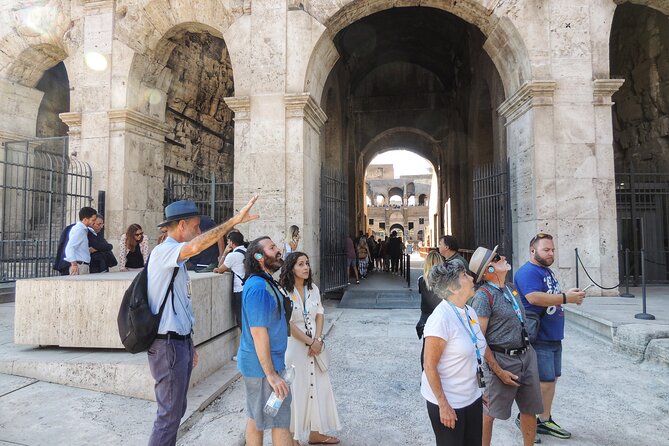
Headsets are provided for groups of six or more. That matters in the Forum and Colosseum, where other guides, street noise, and large crowds can make a normal conversation hard to follow.
A few other Rome mornings to weigh against this
- Colosseum, Roman Forum & Palatine Guided Tour
★ 4.7 · 63,148 reviews - Rome: Colosseum, Palatine Hill and Roman Forum Guided Tour
★ 4.8 · 32,814 reviews - Rome: Guided Tour of Colosseum, Roman Forum & Palatine Hill
★ 4.7 · 27,897 reviews
Walking the Roman Forum’s ancient center
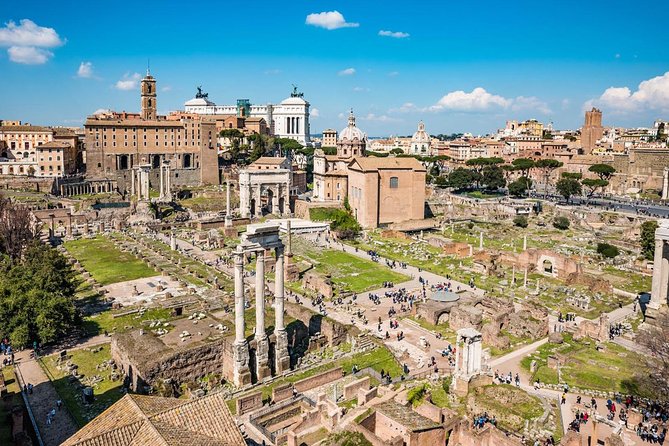
The Roman Forum is the heart of the first part of the tour. This long, open area began as a marketplace and became the center of Roman government, worship, business, and public life.
You walk along ancient streets and see the remains of buildings that once shaped the daily life of the city. The ruins can look scattered at first, but a good guide helps you picture the Forum as a working neighborhood rather than a field of stones.
The tour includes the House of the Vestal Virgins, located beside the round Temple of Vesta. The Vestal Virgins guarded the sacred flame and held an unusual position in Roman society. Their residence gives you a glimpse of religious life and the importance Rome placed on ritual.
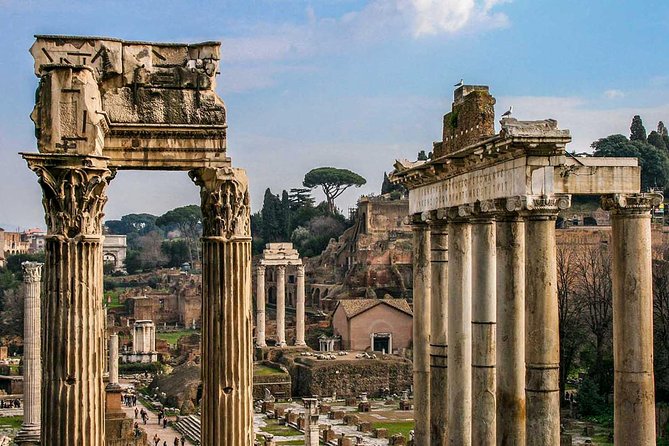
You also see the area associated with the Temple of Saturn at the western end of the Forum. Its tall surviving columns are among the easiest Forum remains to recognize, but the site also carries political meaning. Saturn’s temple was tied to the state treasury and Roman public ceremony.
The Basilica Julia and Basilica of Maxentius show another side of Forum life. Roman basilicas were not churches in the later Christian sense. They served as public buildings for meetings, legal matters, and official business.
The Basilica Julia is now mostly a low, open foundation, but that simplicity helps you see the scale of the Forum’s public architecture. The Basilica of Maxentius is far more dramatic. It was the largest building in the Forum and the last Roman basilica built in the city, with huge vaulted spaces that still suggest the power of imperial construction.
The Forum section is scheduled for about an hour, though the full walking route includes additional points before the Colosseum. Expect history to come in layers. One moment you are looking at a temple, and the next you are hearing about public trials, funerals, political speeches, or ordinary people buying and selling goods.
Two stories singled out on the route are the funeral of Julius Caesar and the beheading of Cicero. These events help connect the stones to the human drama of Roman politics. The Forum was not just a ceremonial center. It was where power was displayed, debated, celebrated, and sometimes enforced with violence.
One practical warning: parts of the Forum may be closed for restoration, including during the Jubilee period. That can change the exact views and walking path. Ask the guide early in the tour what is open that day so you know what to expect.
Palatine Hill, imperial homes, and Rome’s founding myth
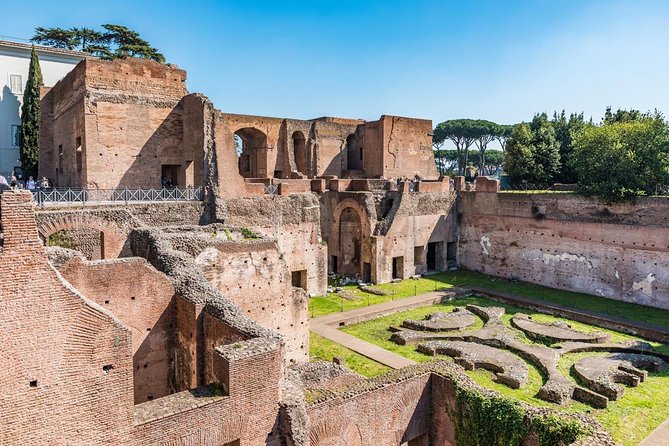
From the Forum, you climb Palatine Hill. This is the most physically demanding part for some people, but it rewards you with open views over the Forum and Colosseum.
The Palatine was associated with Rome’s earliest settlement and later became the preferred address of emperors and the Roman elite. The English word palace is linked to the hill’s name, a reminder of how strongly this place became associated with imperial residence.
The route includes ruins of the Flavian Palace, the Stadium of Domitian, and the Baths of Septimius Severus. These remains do not always reveal their original purpose at a glance, so the guide’s explanation is especially valuable here.
The Flavian complex belonged to the emperors who ruled after the first century. The Stadium of Domitian may look like a garden or long courtyard today, but it was part of a vast imperial residence. The Baths of Septimius Severus show how comfort, bathing, and ceremony were built into elite Roman life.
Palatine Hill is also where the story of Romulus and Remus enters the tour. Roman tradition held that the twin founders were raised by a she-wolf, with Romulus eventually founding the city. The tale was political as well as mythical. It gave the hill a special place in Rome’s origin story and helped later emperors connect themselves with the city’s first rulers.
You should allow time to stop for views here. Several guides are praised for choosing good overlooks and for taking the group into shaded areas when possible. That is not a minor courtesy in the Roman sun. The Palatine is exposed, and a bottle of water is essential.
The hill is scheduled for about 30 minutes, but the setting can feel rushed if your group wants many photographs. If pictures matter to you, tell the guide. Some guides have been especially good at balancing the schedule with stops for photos and older family members.
Approaching the Colosseum through the city
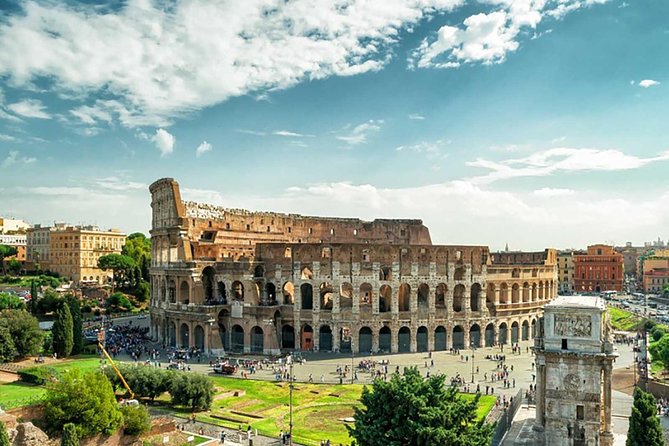
The tour passes through Piazza del Colosseo before entering the arena. This short exterior stop helps place the Colosseum within modern Rome, where the Metro’s Colosseo station brings a steady stream of people to the monument.
You may also see the Arch of Constantine nearby. Built in AD 315, it commemorates Constantine’s victory over Maxentius and is known for its three arches. It is easy to overlook when the Colosseum is right beside it, but the arch adds another chapter to Rome’s long political story.
The transition from Forum and Palatine to Colosseum can be crowded. Stay close to the guide and keep your ticket details and identification ready. The operator requires the full names of all people on the booking, and each person must show a valid passport or government-issued photo ID matching the booking name.
Same city, an entirely different afternoon:
- Vatican Museums & Sistine Chapel Tour with Optional Basilica
★ 4.3 · 67,413 reviews - Vatican Museums, Sistine Chapel & St Peter’s Basilica Guided Tour
★ 4.5 · 39,149 reviews - Rome: Colosseum & Forum with Audio Guide App -Optional Arena
★ 4.2 · 24,770 reviews - Rome: Colosseum, Roman Forum and Palatine Hill Guided Tour
★ 4.5 · 23,903 reviews
Entering the Colosseum and understanding the spectacle
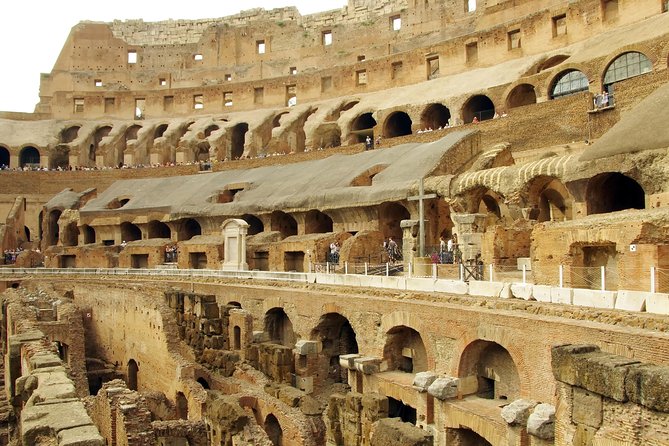
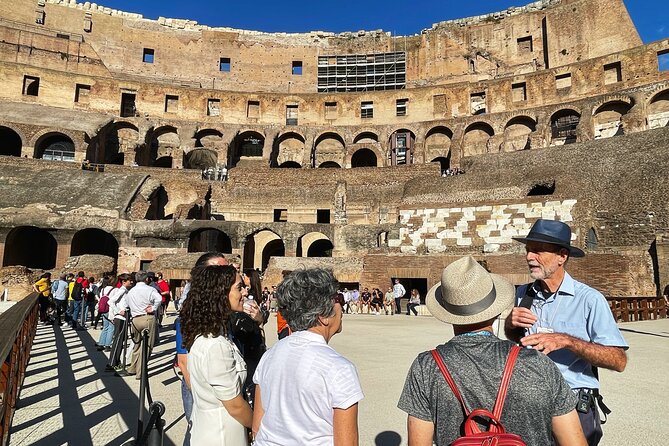
The Colosseum portion lasts about an hour. The building was designed to hold more than 50,000 spectators for gladiator contests, animal hunts, executions, and other public spectacles.
The most worthwhile part of a guided visit is not simply seeing the curved walls. It is understanding how the show worked. You hear about gladiators and enslaved people who fought and died in the arena, along with the preparation required behind the scenes to stage events on such a huge scale.
A good guide also gives you a sense of the audience. Roman spectacles were entertainment, but they were also a display of imperial generosity and control. The arena showed that the emperor could provide food, excitement, punishment, and public order on a massive scale.
The reserved entry is valuable here. The Colosseum is one of Rome’s busiest sights, and the ticket includes the €18 entrance cost plus a €2 reservation fee. At a total price of $94.37 per person, the ticket itself accounts for only part of what you pay. The rest covers the guide, planning, group management, headsets, and tour services.
That price makes the tour most worthwhile if you want historical explanation and help managing the site. If you only want to enter, take a few photographs, and walk around on your own, a guided tour may not offer the best value for you. If this is your first visit to ancient Rome, the explanation can prevent the Forum and Palatine from becoming a blur of ruins.
One limitation is important: the tour does not include the lower or underground sections of the Colosseum. If you specifically want the arena floor, hypogeum, or underground passages, you need a different ticket or tour. This experience focuses on the main Colosseum visit alongside the Forum and Palatine.
Guides vary in style. Donatella is praised for detailed explanations, patience with older participants, and helping families enjoy the route. Alessandro is noted for letting a family move at a comfortable pace while still covering the planned sights. Luca is described as an archaeologist and historian, while Marco is praised for clear English and well-timed information.
Other guides named in the feedback include Francesco, Tom, Frank, Ricardo, Amanda, and John Tinto. Their reported strengths vary from humor and energy to careful pacing and strong answers to questions. The exact guide is not guaranteed, so book for the route and format rather than for a particular person.
Crowds, heat, and the pace of the experience
Crowds are the main factor you cannot control. Even a small group does not make the Colosseum quiet. The Forum can also be packed, especially around the most recognizable temples and viewpoints.
An early start can help. One morning group found the Forum nearly empty, which made it easier to hear the guide and look at the ruins without constant interruption. The tour does not promise an empty site, so think of this as a possible advantage of choosing an early departure, not a guarantee.
The pace can also change with the day. Some guides move quickly to keep the group on schedule, while others pause for questions and photographs. Past experiences have included both well-balanced tours and moments when too much information was delivered while the group sat in the sun.
You can improve your own experience by wearing supportive shoes, bringing water, and carrying sun protection. The route includes uneven surfaces, steps, and staircases. If anyone in your group has mobility concerns, mention that during booking so the operator can advise on the best arrangements.
The meeting point is Largo Corrado Ricci 43, near the Forum. The tour ends at Piazza del Colosseo 1, beside the Colosseum. Transportation is not included, but the area is near public transportation. Arrive at least 10 minutes early. Late arrivals may be left behind because timed monument entry and group schedules are strict.
Who should book this tour
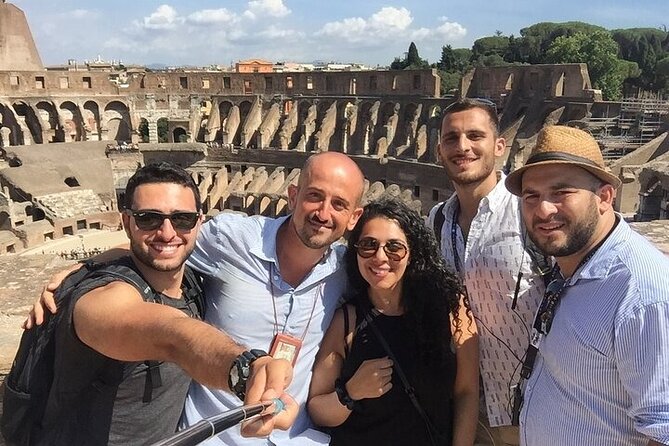
I would choose this tour for a first visit to Rome, especially if you want the three major ancient sites explained as one connected story. It also suits families, provided everyone can manage several hours of walking and uneven ground.
It is a good match for anyone who wants a fluent English-speaking guide, reserved entry, and a group small enough for questions. The consistently high rating of 4.8 from 236 ratings, along with a 95 percent recommendation rate, supports the idea that guide quality is usually the strongest part of the experience.
I would think twice if you dislike group tours, want a private pace, or need extensive time for photography. I would also skip it if the underground Colosseum is your main goal, since those areas are not included.
Free cancellation is available up to 24 hours before the start time. Changes or cancellations inside that window are not accepted for a refund.
Should you book it?
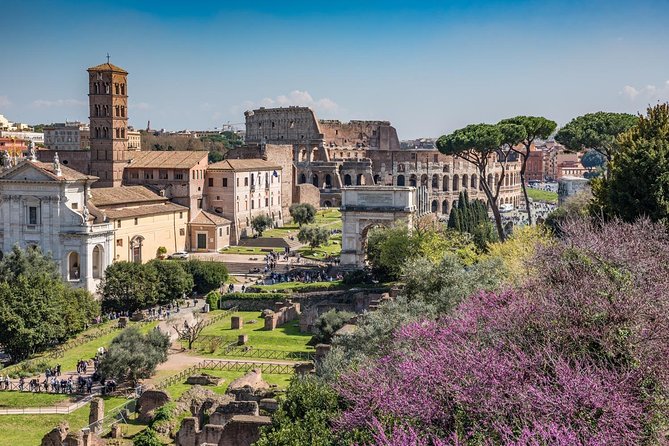
Book this tour if you want a focused introduction to ancient Rome with a guide who can explain what the ruins meant, not just point at them. The small group, included entry, headsets, and three-site route give you solid value at $94.37, particularly on a first visit.
Go in prepared for crowds, sun, stairs, and some schedule pressure. Confirm everyone’s name and identification details, arrive early, and ask about any Forum closures that day. If you do that, this is a practical way to turn Rome’s most famous ruins into a story you can actually follow.
FAQ
How long does the tour last?
The tour lasts approximately three hours.
Which sites are included?
The tour includes the Roman Forum, Palatine Hill, and Colosseum. It also passes points such as Piazza del Colosseo and the Arch of Constantine.
Is Colosseum entry included?
Yes. The Colosseum entrance ticket and reservation fee are included.
What language is the tour offered in?
The tour is offered in English with a fluent English-speaking guide.
How large is the group?
The additional tour information gives a maximum of 10 participants. Other details describe groups of up to 16, so check the current booking information for your date.
Is the underground Colosseum included?
No. The tour does not include the lower or underground parts of the Colosseum.
What should I bring?
Wear comfortable walking shoes and bring a bottle of water. The route includes steps, staircases, uneven surfaces, and outdoor areas.
What identification is required?
Each participant must bring a valid passport or government-issued photo ID matching the name supplied at booking. Full names must be provided for all people in the group.
Fresh on the Rome list
- Rome: Guided Catacombs Tour & Capuchin Crypt (Audio Guide)★ 4.3 · 191 reviews
- Guided tour of the Colosseum, Roman Forum and Palatine in Spanish★ 4.5 · 191 reviews
- Rome: Borghese Gallery Guided Tour with Skip-the-Line Ticket★ 4.5 · 192 reviews
- Rome: Arena Colosseum Tour with Arena Access★ 4.6 · 193 reviews
- Rome: Colosseum & Roman Forum Guided Tour★ 5.0 · 194 reviews
- Colosseum, Forum, Palatine Hill with audio guide and Arena or Bus option★ 4.0 · 193 reviews
- Rome: Domus Aurea Guided Tour and Virtual Reality Experience★ 4.7 · 194 reviews
- Rome Vintage Fiat 500 car Tour With Photographer★ 5.0 · 194 reviews
Colosseum & Roman Forum Tours, compared.
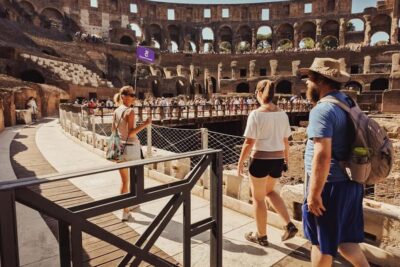
Colosseum, Roman Forum & Palatine Guided Tour
Read our review →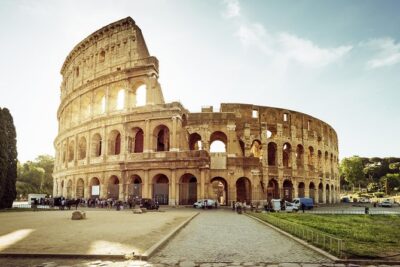
Colosseum, Palatine Hill and Roman Forum Guided Tour
Read our review →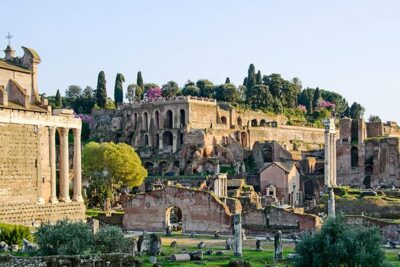
Guided Tour of Colosseum, Roman Forum & Palatine Hill
Read our review →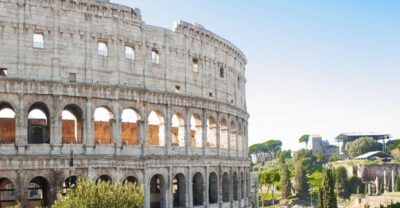
Colosseum & Forum with Audio Guide App -Optional Arena
Read our review →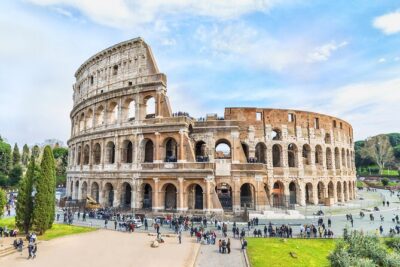
Colosseum, Roman Forum and Palatine Hill Guided Tour
Read our review →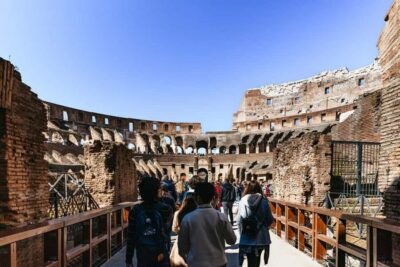
Colosseum, Forum & Palatine Hill Tour & Optional Arena
Read our review →
Colosseum, Roman Forum, Palatine with Multimedia Video
Read our review →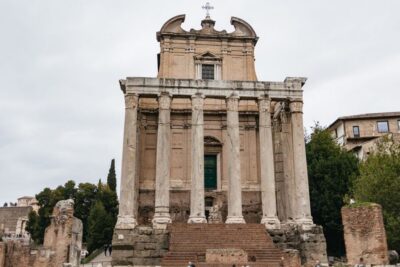
Colosseum, Palatine Hill & Roman Forum Guided Tour
Read our review →Browse the lists this tour appears in