

Reviewed · TRAPANI TOURS
Trapani: 2-Hour Salt Flats Tour
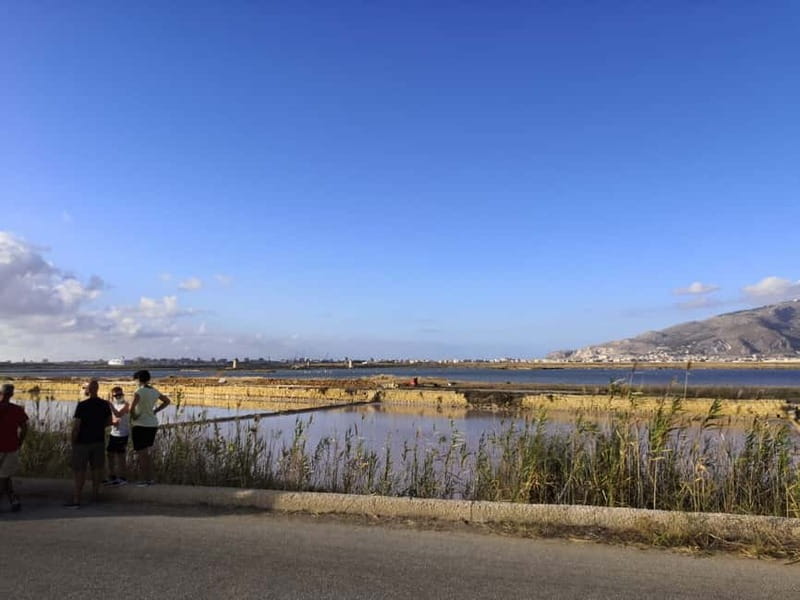
Trapani’s salt flats turn an everyday ingredient into a surprisingly good outing. You’ll see shallow pools, old windmills, nesting flamingos, and sunset reflections while learning how seawater becomes the salt on your table. The subject sounds plain until a guide such as Alessio explains how much work, timing, and weather go into each harvest.
I like the small group of no more than eight, which keeps the van comfortable and makes it easy to ask questions. I also like the mix of salt-making, birdwatching, a museum visit, and flavored-salt tasting. The main consideration is that the experience is promoted as a two-hour salt-flats tour but takes about three hours overall, and you may pass some salt pans without stopping for a full walk at each one.
Key points to know before booking
- Alessio is the guide to hope for: He is praised for clear English, local knowledge, humor, and a real enthusiasm for salt production and Sicily.
- The sunset timing can be special: Some departures are timed or delayed so you reach the pools when the light is soft and reflective.
- The old mill adds useful context: The salt museum shows the tools and working methods behind the scenery.
- Flamingos are possible, not guaranteed: Keep your eyes on the pools, but treat bird sightings as a bonus rather than the main promise.
- The van saves you from needing a car: Roundtrip transport from central Trapani is included in a clean, air-conditioned vehicle.
- The walking is modest but not fully accessible: Comfortable shoes are required, and the outing is not suitable for people with mobility impairments.
Why Trapani’s salt flats are worth your afternoon
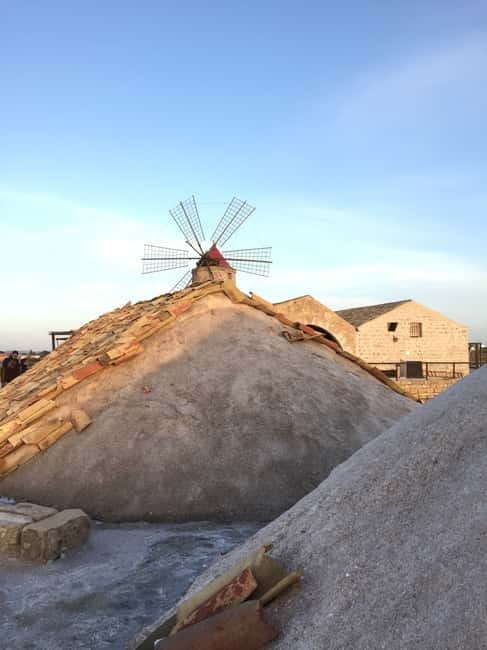
The salt pans south of Trapani are not simply white pools beside a road. They are working places shaped by sun, wind, seawater, and long-standing local practice. As you move between the pans, the guide explains the process rather than leaving you to admire the colors without context.
That explanation changes what you see. A windmill becomes part of a water-management system, a shallow pool becomes one stage in salt production, and a bright crust of salt becomes the result of evaporation rather than a decorative feature. I like tours that make ordinary local work easier to understand, and this one does that well.
The area also attracts birds, including flamingos. Their presence gives the tour a second focus. You may spend part of the walk studying the pools and part of it scanning for pale birds in the distance. The information provided describes nesting flamingos and migratory birds that change color over time, so the birdwatching has an unusual link to the salt environment.
Still, this is not a full wildlife safari. The birds may be far away, and sightings can vary. Bring patience and use the salt flats themselves as the main attraction.
A few other Trapani mornings to weigh against this
- Lucca: 2-Hour City Center Walking Tour
★ 4.7 · 1,314 reviews - Milan Duomo and Rooftop 2-Hour Guided Tour
★ 4.6 · 1,076 reviews - Vatican Museums & Sistine Chapel Express 2-Hour Guided Tour
★ 4.5 · 1,037 reviews
Starting at Via Ammiraglio Staiti, 101
The meeting point is on Via Ammiraglio Staiti, close to the fire station. The tour ends at the same place, which is helpful if you are staying in central Trapani or arriving without a rental car.
There is no hotel pickup or drop-off. You’ll need to reach the meeting point yourself, so allow enough time to find the exact spot. Clear communication about the pickup area is one of the practical strengths of this outing, but you should still check the meeting instructions before leaving your accommodation.
From the starting point, you board an air-conditioned van. The small group limit, eight people, matters here. You avoid the feel of a large coach party, and the guide can adjust explanations and answer questions without shouting across a crowd.
The van is especially useful in warm weather. The salt flats offer little shade, and the vehicle connects sites that are spread across the Trapani and Nubia area. For $51.24 per person, the transport is a meaningful part of the value, particularly if you do not have a car.
The first ride toward Trapani’s salt works
The first transfer takes about 20 minutes. Rather than treating this as dead time, use it to get oriented. The guide provides commentary about the region and the salt industry, and the drive sets up the difference between Trapani’s urban waterfront and the open salt-working area beyond it.
The route then includes a short guided walk in Trapani, listed at about 10 minutes. This is not the main salt-pan visit, but it helps place the industry within the local setting. Keep your expectations measured: the tour is built around several short stops rather than one long, uninterrupted hike.
That format suits you if you want an informative half-day without giving up an entire day of sightseeing. It is less suited to you if you want a slow nature walk with plenty of time at every pool.
Maria Stella and the family-owned salt pan
One of the central stops is the Maria Stella salt pan, described as family-owned. This is where the traditional side of the experience becomes most direct. Your guide explains how salt is made and points out the practical stages of the work while you walk along the edge of the pans.
The walk gives you a close view of the water, salt deposits, and surrounding bird habitat. The ground may not be difficult for most people, but the activity specifically says it is not suitable for people with mobility impairments. Wear comfortable shoes, as requested, rather than sandals or footwear you would not want exposed to dust and uneven surfaces.
The tour description refers to visiting three different salt pans. In practice, the route includes views of more than one area, but one account of the experience found that the group drove past the first pan without stopping and had a fuller visit at the museum and another pan. I would book this for the overall salt-flat experience, not on the assumption that you will take three separate, extended walks.
That distinction is worth knowing. The route still offers variety, but the number of formal stops can depend on timing, access, and how the guide handles the day.
Same city, an entirely different afternoon:
- From Trapani: Cruise to Favignana and Levanzo with lunch
★ 4.2 · 2,286 reviews - Boat Tour Egadi Day discover Favignana and Levanzo from Trapani
★ 5.0 · 1,183 reviews - From Trapani: Favignana and Levanzo Mini Cruise with Lunch
★ 4.2 · 814 reviews - Favignana and Levanzo, Egadi islands tour by boat from Trapani
★ 5.0 · 720 reviews
Nubia, windmills, and the old salt museum
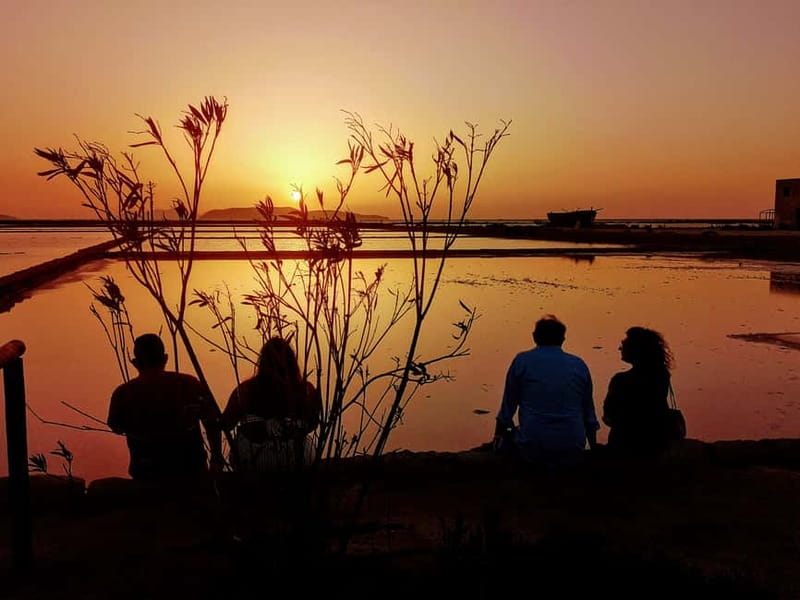
After roughly 15 minutes in the van, the group reaches Nubia for another guided walk and scenic views. This section helps you see the salt pans as a broad working system rather than a single photo point.
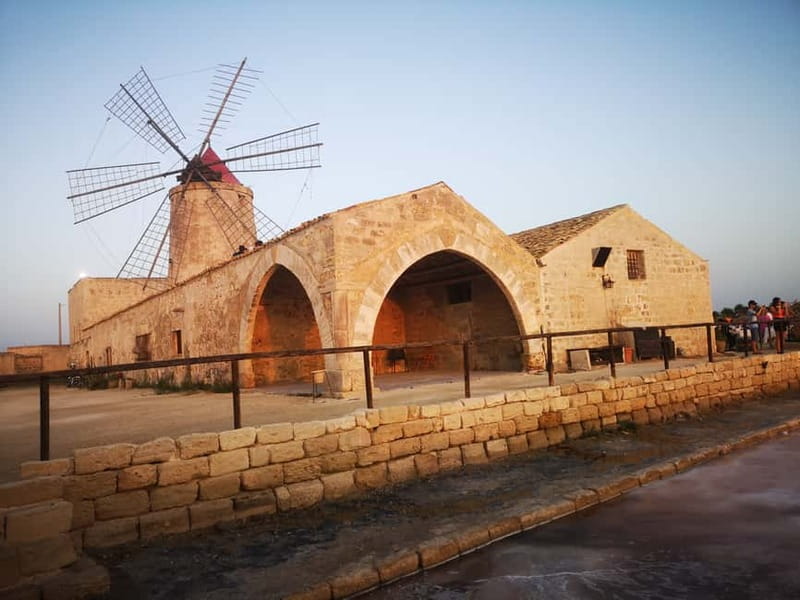
The salt museum sits inside a renovated old mill. This is one of the most useful parts of the tour because it gives you tools and machinery to look at, not just scenery. You learn how earlier salt production worked and can compare those methods with the current process explained outside.
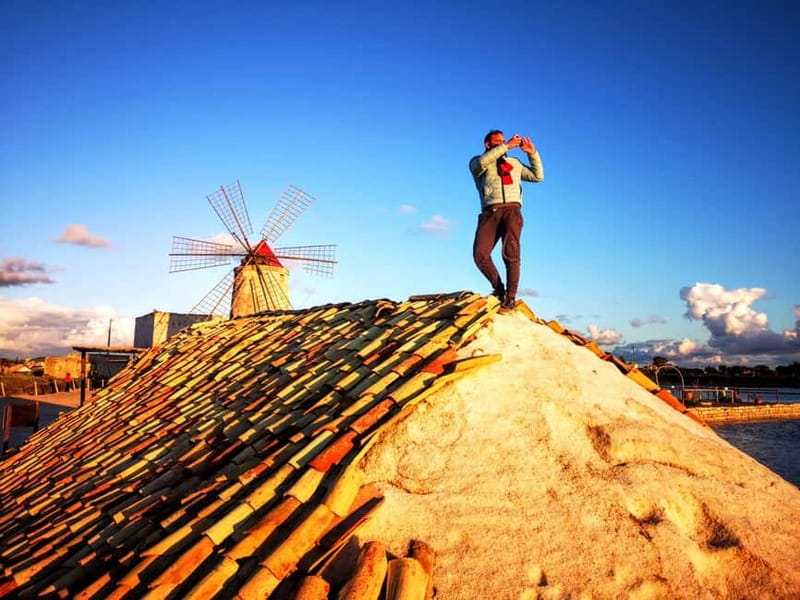
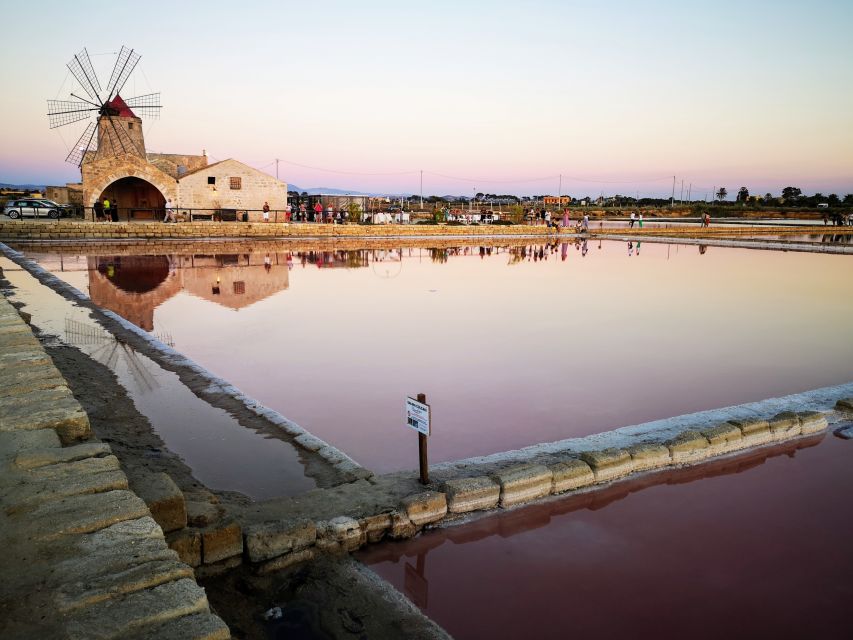
The old windmills are another key stop, with about 30 minutes set aside for a visit and guided tour. They are among the most recognizable features of the area, but the guide gives them a job to do in your imagination. Instead of seeing them as picturesque props, you understand their connection to moving water through the pans.
I would give this section your full attention. The best part of a salt tour is not simply seeing a white pool. It is learning why the pools are arranged as they are and how water moves from one stage to the next.
A short stop for flavored salt
The itinerary includes a 10-minute secret stop for food tasting. The listed inclusion is salt tasting, with flavored salt available at the museum or during this part of the route.
This is a small detail, but it gives the lesson a physical finish. You can taste differences rather than hearing only about production and flavor. It also makes clear that salt is not just an industrial product. It is part of local food culture.
Meals are not included, so do not treat the tasting as lunch. The stop is brief and works best as a sample, souvenir-shopping prompt, or a new idea for the kitchen.
Souvenirs are also not included. If you want to buy salt, plan to pay separately.
The viewpoint and the best light of the day
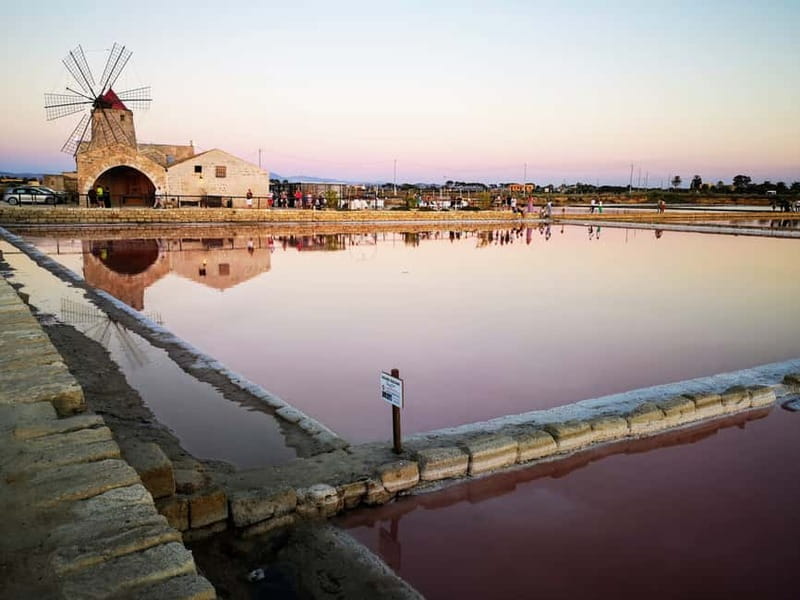
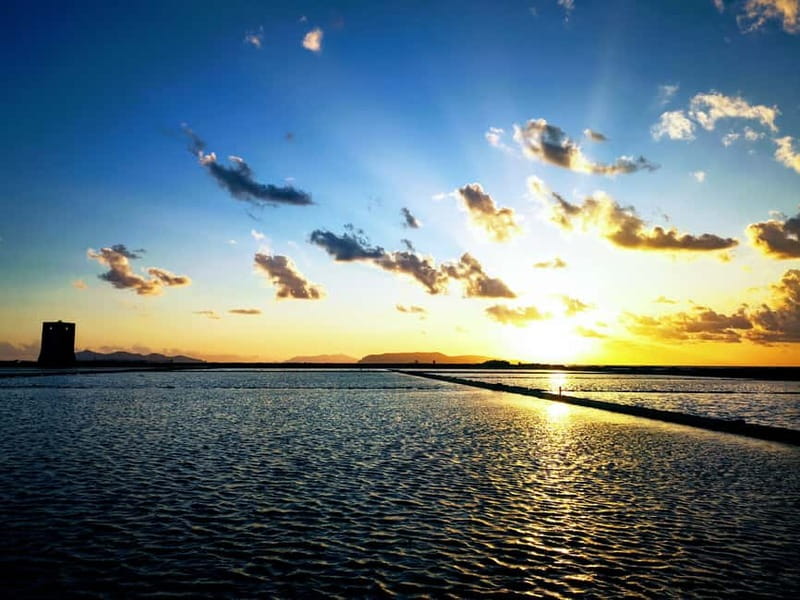
A viewpoint stop lasts about 15 minutes and allows time for photographs. The reflections in the pools are strongest when the sun is low, and several accounts of the outing point to sunset as a highlight.
If you can choose a later departure, I would favor it. The afternoon light can soften the hard glare of the salt flats and bring out reflections in the water. The guide has sometimes delayed departure or adjusted the timing so the group reaches the pans close to sunset.
That timing is not just about getting a pretty photograph. The cooler air makes the open walk more pleasant, and the changing light gives the pools a different character from what you see in midday sun. Still, starting times vary, so check availability rather than assuming every departure ends at sunset.
Bring a phone or camera, but do not spend the whole stop looking through a screen. The combination of windmills, shallow water, birds, and reflected light is the reason to be there.
What the guide adds to the experience
The guide can make or break a tour about a process that may seem technical. Alessio receives especially strong praise for his explanations of salt production, local history, wine, and Sicily more generally. He is also described as warm, humorous, clear in English, and good with groups that include older people and children.
That range matters. You are not limited to a fixed museum speech. The guide can connect the salt pans to the wider area and answer questions along the way. A guide with a scientific background, described in one account as a geologist, can also explain the physical side of evaporation and salt formation in a way that makes the subject easier to follow.
You cannot guarantee a particular guide unless the booking allows you to choose one. The listed languages are Italian and English, so select the language that suits you when checking availability.
Good communication begins before the tour. The guide has been praised for sending clear meeting information and staying in touch when needed. That is useful in Trapani, where a precise starting point matters more than a vague instruction to meet near the port.
How the three-hour timing works
The experience is described as a two-hour guided salt-flats tour, while the full activity duration is about three hours. The difference comes from van transfers and several short visits.
The route includes:
- About 20 minutes by van from the meeting point
- A 10-minute guided walk in Trapani
- About 15 minutes by van to Nubia
- A 15-minute guided walk with views
- About 10 minutes by van to the windmills
- A 30-minute guided windmill visit
- A 15-minute viewpoint stop
- A 10-minute tasting stop
- About 20 minutes by van back to Via Ammiraglio Staiti
These timings are a useful guide, not a promise that every stop will run like a train schedule. Sunset departures may be adjusted, and the guide may spend more time explaining a topic that interests the group.
I see the three-hour duration as a fair use of your time. You get transport, a local guide, museum entry, salt-pan entry, and tasting for $51.24. A self-guided visit might cost less in principle, but without a car you would have to solve the transport problem, and you would lose the explanations that give the windmills and pools their meaning.
The value is strongest for solo visitors, couples, and small families who want a simple way to reach the salt flats. Families should note that one guide has been particularly good at keeping children interested, but the tour remains educational and outdoors-focused rather than a child-specific activity.
Practical comfort and access
The air-conditioned van is a real plus in Sicily’s heat. It also keeps the group together between the scattered stops and avoids the need to navigate unfamiliar roads.
The outdoor portions are walks along the edge of the pans, with scenic viewpoints and open exposure. Comfortable shoes are the only listed item to bring, but sensible preparation means protecting yourself from sun and carrying water, especially for a warmer departure. Those suggestions are practical rather than tour requirements.
The activity is not suitable for people with mobility impairments. The information does not specify the exact surface or step-free access at each stop, so contact the provider before booking if you need detailed access guidance.
The small group makes the outing calmer than a large bus tour. You should expect conversation and shared photo stops, not complete solitude.
Cancellation and booking flexibility
You can cancel up to 24 hours in advance for a full refund. The reserve-now-and-pay-later option lets you hold a place without paying immediately, which is useful when your Sicily schedule is still shifting.
Check the available starting times carefully. A morning outing gives you cooler light and a different feel, while a late departure may offer the strongest sunset views. The timing you select can shape the experience as much as the salt museum itself.
Who should book the Trapani salt flats tour
I would book this if you want to see a less obvious side of western Sicily and prefer local work, scenery, and explanation over another church or palace. It is also a good choice if you are staying in Trapani without a car, since roundtrip van transport is built in.
Food-focused visitors will find the tasting worthwhile, especially if you like knowing where basic ingredients come from. Birdwatchers and photographers should enjoy the chance to look for flamingos and capture reflections, though neither should be treated as guaranteed.
I would think twice if you want a long, strenuous hike, a guaranteed close view of birds, or a full stop at three separate salt pans. The route is compact and guided, with some drive-by viewing. Its strength is the combination of access, context, and a small group.
Should you book it?
For $51.24, this is a good-value introduction to the Trapani salt flats. The museum, windmills, tasting, local transport, and guide give you more than a quick photo stop, while the three-hour schedule leaves room for other plans in Trapani.
Choose a sunset departure if one is available, wear comfortable shoes, and arrive at Via Ammiraglio Staiti, 101 with realistic expectations about the short walks and changing bird sightings. If Alessio is leading your departure, you can expect an especially engaging explanation. If not, the basic format still offers a practical and memorable way to understand one of Sicily’s most distinctive working environments.
FAQ
How long does the Trapani salt flats tour last?
The full activity lasts about three hours, including van transfers and stops. The guided salt-flats portion is described as two hours.
What is the price?
The listed price is $51.24 per person.
Where does the tour start?
It starts at Via Ammiraglio Staiti, 101, near the fire station in Trapani.
Where does the tour end?
The activity returns to the same meeting point at Via Ammiraglio Staiti, 101.
Is hotel pickup included?
No. Hotel pickup and drop-off are not included, so you must reach the meeting point yourself.
What languages are available?
The live guide is available in Italian and English.
How many people are in the group?
The tour is limited to eight participants.
Is transportation included?
Yes. Roundtrip transport is provided in an air-conditioned van.
Are the salt museum and salt pans included?
Yes. Entrance to the salt museum and the salt pans is included in the tour price.
Is food included?
A salt tasting, including flavored salt, is included. Full meals are not included.
What should I bring?
Bring comfortable shoes for the walks along the salt pans.
Is the tour suitable for people with mobility impairments?
No. The activity is listed as unsuitable for people with mobility impairments.
Can I cancel the booking?
Yes. You can cancel up to 24 hours in advance for a full refund.
Can I reserve now and pay later?
Yes. The reserve-now-and-pay-later option allows you to book without paying immediately.
Fresh on the Trapani list
- From Trapani: Favignana and Levanzo Shuttle Tour★ 4.0 · 211 reviews
- From Trapani: Egadi Islands Favignana & Levanzo Cruise★ 4.9 · 229 reviews
- Mini Cruise to Favignana and Levanzo with lunch on board★ 4.0 · 270 reviews
- Full Day Boat Tour San Vito Lo Capo to Castellammare del Golfo★ 5.0 · 292 reviews
- 8-Hour Boat Tour from Castellammare del Golfo to San Vito Lo Capo★ 5.0 · 357 reviews
- Guided tour of the Trapani Salt Pans and Salt Museum★ 4.7 · 423 reviews
- From Trapani: Favignana and Levanzo Egadi Island Day Cruise★ 4.8 · 477 reviews
- Egadi Islands Tour: Favignana and Levanzo from Trapani★ 5.0 · 607 reviews
Trapani Tours, compared.
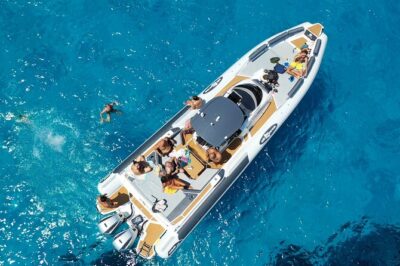
Boat Tour Egadi Day discover Favignana and Levanzo from Trapani
Read our review →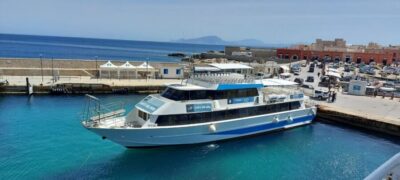

Favignana and Levanzo, Egadi islands tour by boat from Trapani
Read our review →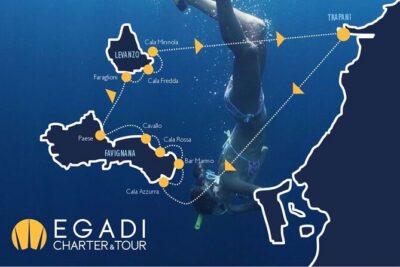
Boat tour to Egadi Favignana and Levanzo islands from Trapani
Read our review →
Egadi Islands Tour: Favignana and Levanzo from Trapani
Read our review →

Guided tour of the Trapani Salt Pans and Salt Museum
Read our review →Browse the lists this tour appears in