

Reviewed · MUSEUMS
Guided tour of the Trapani Salt Pans and Salt Museum
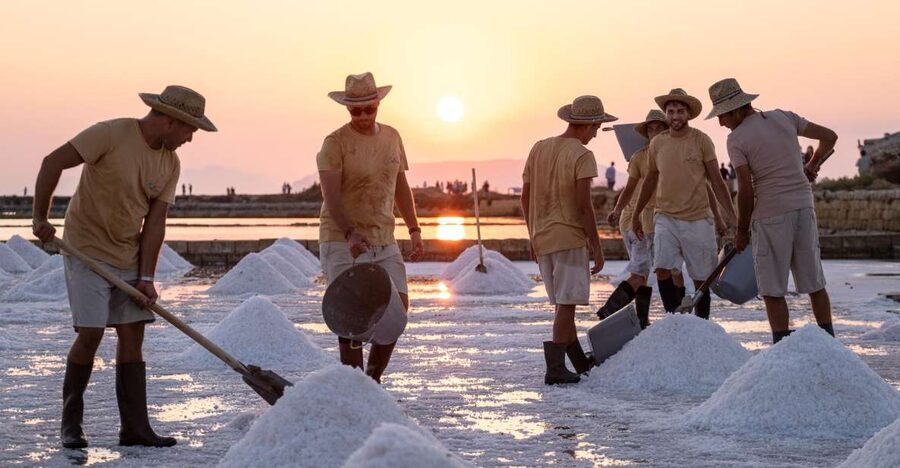
The most unusual part of this Trapani outing is simple: you can touch salt as it forms in the pans, then follow its path from seawater to the crystals on your table. The setting adds plenty of color, too, with white salt, gray clay, pink pools, blue water, and sky reflections.
I like the mix of outdoor walking and family history, and I like that the tasting includes whole salt and flavored fleur de sel from the Culcasi production. The main catch is the one-hour walk, which requires a basic level of fitness. That detail matters, especially since one booking was made before the walking requirement became clear.
Key points to know
- A working salt pan, not just a museum: You see salt forming in the tanks and can collect a little with your hands.
- Four generations of salt workers: The Culcasi family story gives the visit a personal connection to the trade.
- A 1400s mill and farmhouse museum: The second half moves indoors and adds historical context to the outdoor work.
- Flavored fleur de sel tasting: You sample whole salt and several aromatic salts made on site.
- A protected natural setting: The salt pans lie within the WWF reserve, with protected plants and birds.
- Short, but not entirely easy: The visit lasts 75 minutes, including about an hour on foot.
Why Trapani’s salt pans are worth your time
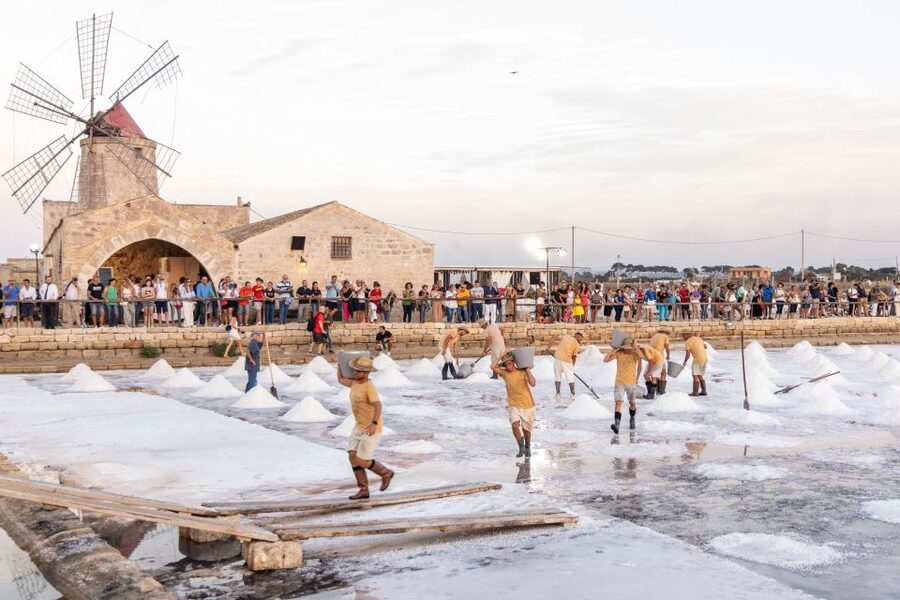
Trapani’s salt pans offer a glimpse of work that depends on sun, wind, seawater, and patience. Salt does not arrive as a finished white mound. It forms through a series of shallow tanks as seawater slowly loses its moisture.
That process is the heart of this visit. You are not simply looking at an old building or a scenic viewpoint. You follow the edge of the salt pan, reach the banks, look into the tanks, and see how the water reflects the sky while salt gathers below.
I find this kind of experience especially useful if you want more than churches and archaeological sites during a Sicily trip. The tour connects nature, food, family work, and local industry in one compact stop.
The colors change as you walk. You may see bright white salt, gray clay, pink-toned pools, and the blue of the sea. The exact look depends on the light and the condition of the pans, but the variety gives the walk more interest than a simple stroll beside open water.
The setting is also part of a protected area. Plants and birds share the salt pans, so you get a nature stop along with the working salt production. This is a good choice for families and for anyone who likes seeing how a local product is made.
More museums in Trapani:
- Vatican: Museums & Sistine Chapel Entrance Ticket
★ 4.5 · 144,003 reviews - Vatican Museums & Sistine Chapel Tour with Optional Basilica
★ 4.3 · 67,413 reviews - Vatican Museums, Sistine Chapel & St Peter’s Basilica Guided Tour
★ 4.5 · 39,149 reviews
Starting beneath the windmill at Saline Culcasi

The meeting point is the ticket office in the forecourt below the windmill at Via Salina Chiusa, 1. Look for the guide behind the salt sales counter. This is a useful detail because the site includes a sales area, a windmill, and the museum, so knowing where to begin saves time.
The Culcasi family has worked with salt for four generations. That family connection shapes the visit. You are not being shown an abandoned industrial site with a generic explanation. The tour centers on a place still connected to salt production and the people who have carried the work forward.
The guide leads in English or Italian. No individual guide names are provided, so you should not expect to book a particular person. The tour is live rather than self-guided, which helps when you want to understand the stages of production or ask about the family’s methods.
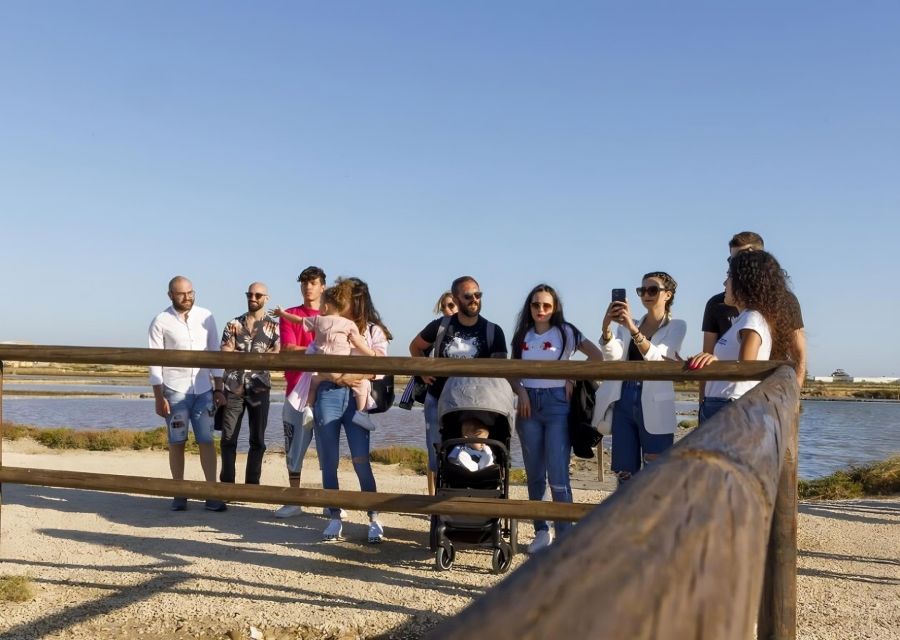
I would arrive ready to walk rather than treating this as a quick photo stop. Comfortable shoes, a hat, and comfortable clothes are sensible choices. The salt pans are open and exposed, and the tour information describes roughly one hour of walking within the 75-minute visit.
Walking the salt pan perimeter
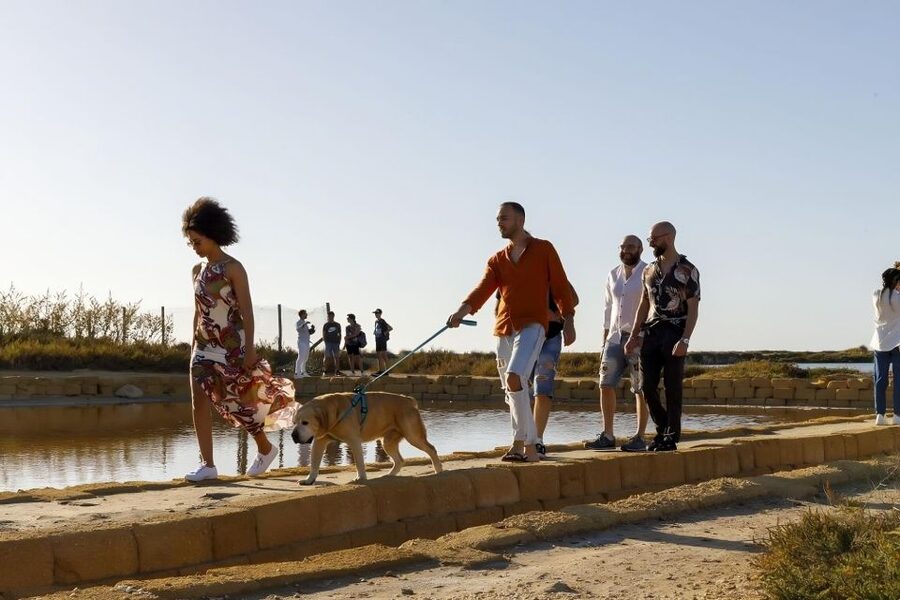
The first section follows the perimeter of the salt pan. This is where the tour feels most connected to the daily work of making salt. You move toward the banks, where shallow pools mirror the sky and the water gradually changes as evaporation continues.
The guide explains the process step by step. Seawater enters the system, passes through the tanks, and becomes more concentrated until salt forms. You get to see the material at the point where it changes from seawater into the crystals used in cooking.
The hands-on element is a real advantage. You can collect salt from the production tanks with your hands and feel the crystals rather than only hearing about them. It is a small action, but it makes the process easier to understand, especially for children.
The walk also gives you time to notice the textures and colors of the pans. White salt against pink water makes a stronger visual memory than a technical explanation alone. Gray clay and blue water add further contrast, while the open setting keeps the pace relaxed.
Still, this is not a fully effortless walk. A basic level of fitness is required, and the tour information calls it a one-hour hike. The site is listed as wheelchair accessible, but the walking requirement is worth discussing in advance if you have limited stamina or mobility. Accessibility does not remove the need to cover the route.
The walk may be most comfortable earlier or later in the day, though specific start times depend on availability. Since you are outdoors for much of the visit, a hat is more than a packing suggestion. Wear shoes that you can walk in comfortably on the salt pan route.
Seeing salt form in the production tanks
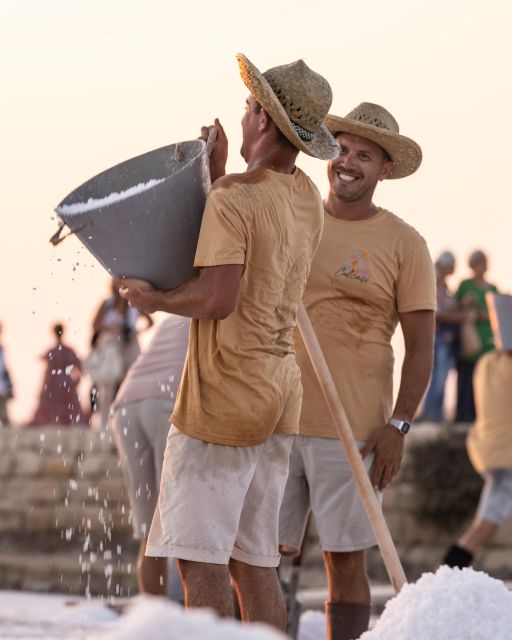
The production tanks are the point where the tour becomes more than a scenic walk. You can watch the salt crystals gather in the shallow water and connect that sight with the work done by salt workers over generations.
The guide’s explanation helps you understand why the pans are arranged as a sequence rather than one large pool. Seawater needs time and space to evaporate. As the water changes, the salt becomes easier to collect.
You may also gain a clearer sense of how much the process depends on natural conditions. The sun and wind do much of the work, but people must manage the pans and gather the finished salt. The result is a local product shaped by both nature and labor.
That is why I consider this tour a good value for food-minded visitors. You learn where the ingredient comes from, see it in production, and taste it before leaving. The experience gives context to a product that most of us use without thinking much about its origin.
The protected setting adds another layer. This is still a place of work, but it also supports plants and birds. The tour lets you see how production and a protected natural area exist side by side, without turning the visit into a separate wildlife excursion.
A few other Trapani mornings to weigh against this
- Colosseum, Roman Forum & Palatine Guided Tour
★ 4.7 · 63,148 reviews - Rome: Colosseum, Palatine Hill and Roman Forum Guided Tour
★ 4.8 · 32,814 reviews - Rome: Guided Tour of Colosseum, Roman Forum & Palatine Hill
★ 4.7 · 27,897 reviews - Rome: Colosseum & Forum with Audio Guide App -Optional Arena
★ 4.2 · 24,770 reviews
Inside the ancient salt museum and 1400s mill
The second part takes you into the salt museum, located in an ancient farmhouse. The museum is included in the tour price and is listed in the official guide of the European Union.
The building contains an ancient mill dating from the 1400s. After walking through the active salt pans, entering this older structure gives the visit a change of pace. You move from open tanks and sunlight to the tools, spaces, and family story connected with earlier salt production.
The museum focuses on the hard work involved in running a salt pan, but it also follows the history of the Culcasi family. That personal story matters because it shows how salt production was not just an isolated trade. It was a way of life passed through generations.
You can expect the museum to explain the long connection between salt and the sea. The farmhouse is described as a strong reminder of that relationship, and its setting makes the subject feel practical rather than abstract.
The indoor section is not a substitute for the outdoor route. The walk is where you see the salt forming and understand the production process. The museum then gives you historical background and a closer look at the tools and family tradition behind it.
If you prefer a tour with a clear beginning and ending, the two-part structure works well. First you see the natural process, then you learn how people worked with it over time. At 75 minutes, the experience remains manageable for a half-day plan.
Tasting whole salt and flavored fleur de sel
The tasting is included, and it covers whole salt plus fleur de sel in different aromas produced by the Culcasi operation. Fleur de sel is the delicate salt that forms at the surface of the water, so tasting it after seeing the pans makes the food connection more direct.
I like that the tasting is not an unrelated snack at the end. It follows naturally from the walk. You have just seen the salt forming, heard about the work involved, and then get a chance to compare the finished product.
The flavored versions add variety. You can notice how the same basic ingredient changes when combined with different aromas. The tasting also gives you a practical way to decide if you want to buy salt to take home.
The salt is connected with the Slow Food Presidium, which gives the product added importance for people interested in traditional regional food. This is not a full meal, so you should think of the tasting as a small conclusion to the tour rather than a replacement for lunch.
At the end, you can also have an aperitif with a broad view or eat at the restaurant. These options are not part of the 75-minute guided tour, but they make it easier to turn the visit into a longer stop. If you are planning dinner, check the restaurant arrangements separately rather than assuming the meal is included.
Is $21 a fair price?
At $21 per person, the price is reasonable if you value a guide, the museum admission, the salt-pan walk, and the tasting. You are paying for more than entry to a viewpoint. The cost covers a live explanation of the production process, access to the family museum, and a sample of the finished salts.
The value is strongest when you would otherwise spend time trying to understand the salt pans on your own. From the outside, you can see water, banks, and windmills, but you may miss how the tanks work or why the salt changes as it moves through the system.
The tour also saves you from choosing between a nature stop and a history stop. You get both in one visit, with food at the end. For a short outing near Trapani, that combination makes the price easier to justify.
The value is weaker if you dislike guided walks or only want a quick photo. The one-hour route is the main commitment, and the museum will be less appealing if you have no interest in traditional work, local food, or family history.
The overall rating is 4.7 from 423 bookings, with strong praise for the clear information about salt and harvesting and for the chance to taste different salts and spice salts. There are also low ratings tied to disappointment with the site and, more importantly, to the walking requirement not being understood before booking. I would treat the fitness note as essential, not minor fine print.
Who will enjoy this salt-pan visit
I would recommend the tour to you if you want a hands-on stop that feels specific to western Sicily. The salt pans, the Culcasi family, the old mill, and the tasting combine into an experience you cannot duplicate by visiting a general food museum.
It suits families because the colors, shallow tanks, and chance to touch salt give children something concrete to focus on. The museum adds a second part for adults who want more history and background.
Food lovers will get extra value from the fleur de sel tasting and the chance to compare flavored salts. You can also continue with an aperitif or dinner if you want to make the visit longer.
The tour is less suitable if you are unwell, recovering from illness, or unable to walk for about an hour. One booking was rated poorly because the participant had not realized the walking requirement until after signing up. You can avoid that problem by planning around the stated fitness level before paying.
English and Italian are available, and the tour is listed as wheelchair accessible. At the same time, the route still involves substantial walking. If you need specific assistance, contact the provider before booking so the accessibility information matches your needs.
Free cancellation is available up to 24 hours before the start, and you can reserve now and pay later. Those options help if your Trapani plans are still shifting, but they do not change the need to check the walking conditions first.
Should you book the Culcasi salt pans tour?
Book it if you want to see salt being made, learn about a four-generation family business, and taste the product in the same place. The combination of working pans, protected nature, a 1400s mill, and a short tasting gives you a useful look at an important local trade.
Skip it if you want a passive visit or cannot manage the one-hour walk. For everyone else, $21 is a fair price for a focused 75-minute experience, especially if you add an aperitif or dinner afterward. Bring a hat, wear comfortable shoes, and arrive at the ticket office beneath the windmill ready to walk.
FAQ
How long does the Trapani salt-pan tour last?
The guided visit lasts 75 minutes. About one hour of that time is spent walking around the salt pans.
Where is the meeting point?
Meet at the ticket office in the forecourt below the windmill at Via Salina Chiusa, 1. The guide is behind the salt sales counter.
What languages are available?
The live tour is offered in English and Italian.
Is the salt museum included?
Yes. The entrance ticket includes a guided tour of the Culcasi salt pan and the salt museum, including the ancient mill dating from the 1400s.
Is salt tasting included?
Yes. You can taste whole salt and fleur de sel in different aromas produced by the Culcasi operation.
What should I bring?
Bring comfortable shoes, a hat, and comfortable clothes. The tour includes about an hour of walking and requires a basic level of fitness.
Fresh on the Trapani list
- From Trapani: Favignana and Levanzo Shuttle Tour★ 4.0 · 211 reviews
- From Trapani: Egadi Islands Favignana & Levanzo Cruise★ 4.9 · 229 reviews
- Mini Cruise to Favignana and Levanzo with lunch on board★ 4.0 · 270 reviews
- Trapani: 2-Hour Salt Flats Tour★ 4.9 · 286 reviews
- Full Day Boat Tour San Vito Lo Capo to Castellammare del Golfo★ 5.0 · 292 reviews
- 8-Hour Boat Tour from Castellammare del Golfo to San Vito Lo Capo★ 5.0 · 357 reviews
- From Trapani: Favignana and Levanzo Egadi Island Day Cruise★ 4.8 · 477 reviews
- Egadi Islands Tour: Favignana and Levanzo from Trapani★ 5.0 · 607 reviews
Museums, compared.

Vatican: Museums & Sistine Chapel Entrance Ticket
Read our review →
Vatican Museums & Sistine Chapel Tour with Optional Basilica
Read our review →
Vatican Museums, Sistine Chapel & St Peter’s Basilica Guided Tour
Read our review →
Skip-The-Line Uffizi Gallery Timed Entry Ticket
Read our review →
Vatican Museums, Sistine Chapel & Basilica Tour
Read our review →
Vatican Museums & Sistine Chapel Skip-the-Line Entry Ticket
Read our review →Vatican Museums, Sistine Chapel & Basilica Tour
Read our review →
Vatican Museums & Sistine Chapel Guided Tour
Read our review →Browse the lists this tour appears in