Reviewed · ROME TOURS
The Original Roman Crypts and Catacombs Tour with Transfers
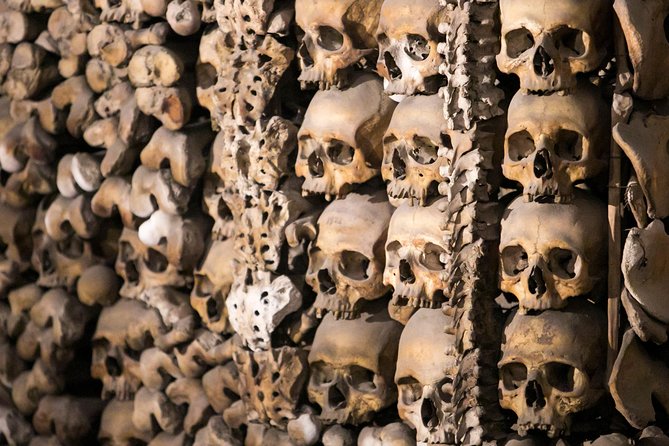
Rome keeps some of its most startling sights below street level. This tour takes you from the Capuchin Crypt, decorated with the bones of nearly 4,000 friars, into the ancient Domitilla Catacombs, then beneath San Martino ai Monti. It is a strong choice if you want Rome beyond the Colosseum and piazzas.
I like the way three very different sites fit into one afternoon. I also like the included coach transfers, since the catacombs are outside the city center and awkward to reach on your own. Guides such as Andrea, Alan, Heather, and Paula have been praised for clear explanations, humor, and patience with questions.
The catch is that this is not a gentle sightseeing stroll. You walk through narrow underground passages, manage stairs and uneven footing, and follow a fairly tight schedule. The Capuchin Crypt uses an audio guide rather than a live explanation, and the group can reach 25 people.
Key points to know before booking
- The Capuchin Crypt uses nearly 4,000 monks’ bones: The unsettling decoration has a religious purpose, explained through the venue’s audio guide.
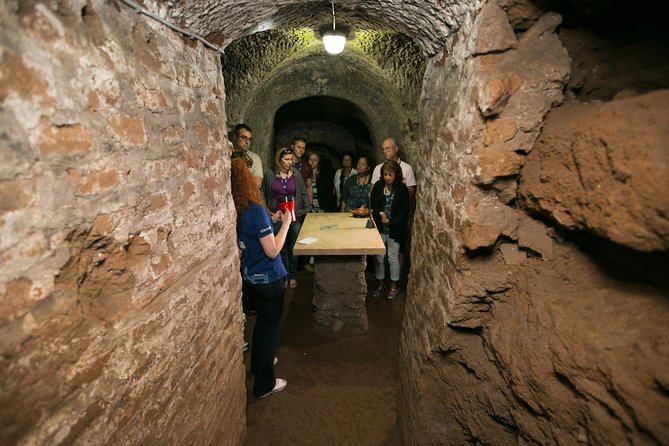
- Domitilla is the main underground experience: Expect about an hour in narrow volcanic-rock corridors with frescoes, symbols, tombs, and former worship spaces.
- San Martino ai Monti adds Roman layers: Baroque frescoes, early Christian mosaics, and ruins beneath the church give the tour a strong final chapter.
- A private air-conditioned coach connects the sites: This matters because the catacombs lie beyond the compact central sightseeing zone.
- The tour lasts about three and a half hours: The after-hours version starts at 5 p.m., lasts about two and a half hours, and changes the final stop.
- Dress modestly and skip this if enclosed spaces bother you: Knees and shoulders must be covered, and photography is not allowed inside the venues.
Why Rome’s underground world is worth your afternoon
Most first visits to Rome focus on imperial ruins, grand churches, and famous fountains. This experience gives you a different view: death, burial, persecution, ritual, and the way later churches were built over earlier religious sites.
The mood changes at each stop. The Capuchin Crypt is carefully arranged and theatrical. Domitilla feels older, rougher, and more archaeological. San Martino ai Monti ties the two together by showing how Christian worship developed within a city already packed with Roman structures.
I would not book this simply because you have a spare afternoon. Book it because you are curious about the stranger side of Rome and want someone to explain what you are seeing. Without context, bones and dark corridors can become a quick novelty. With a good guide, they form a clear story about faith and burial in ancient Rome.
The group size can reach 25 people. That is manageable, but not intimate. A guide with strong crowd control makes a real difference, especially at the crypt, where you are given time to move through the exhibits independently.
A few other Rome mornings to weigh against this
- Vatican Museums & Sistine Chapel Tour with Optional Basilica
★ 4.3 · 67,413 reviews - Colosseum, Roman Forum & Palatine Guided Tour
★ 4.7 · 63,148 reviews - Vatican Museums, Sistine Chapel & St Peter’s Basilica Guided Tour
★ 4.5 · 39,149 reviews
Starting at Piazza Barberini and reaching the Capuchin Crypt
The meeting point is Fontana del Tritone at Piazza Barberini. From there, you walk with the guide to the nearby Museum and Crypt of Capuchin Friars. Hotel pickup is not included, so plan your route to Barberini and allow time to arrive before the stated start.
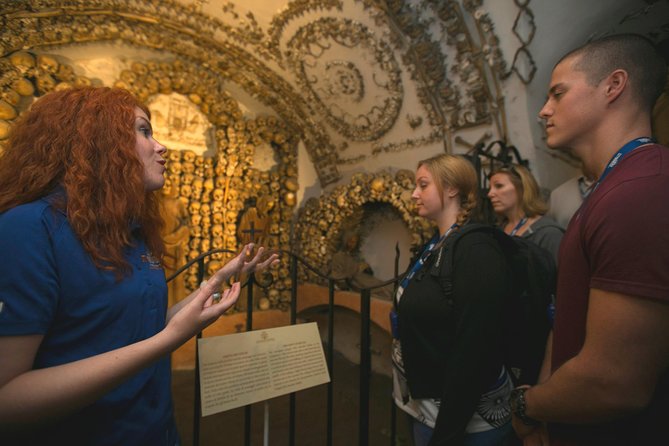
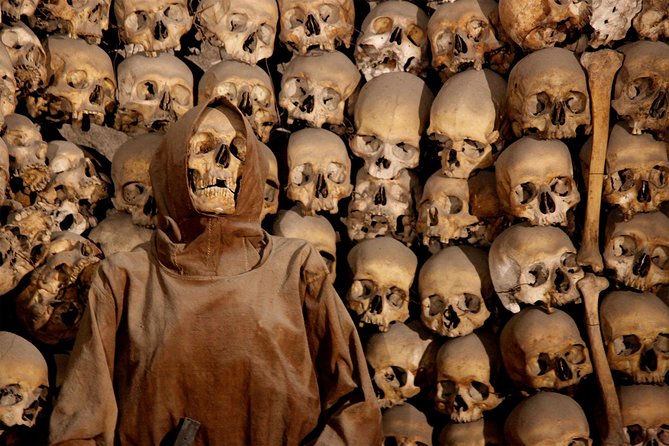
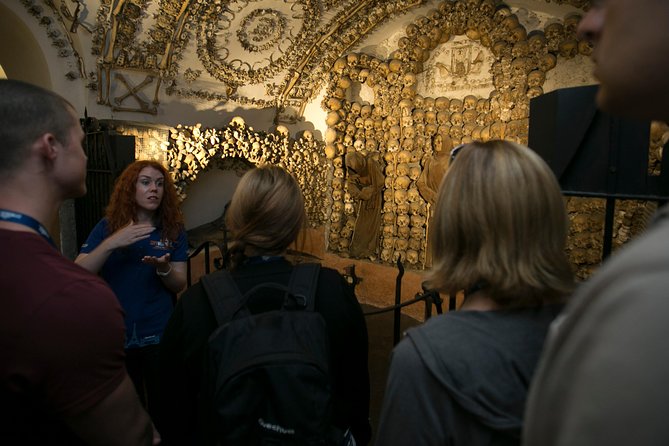
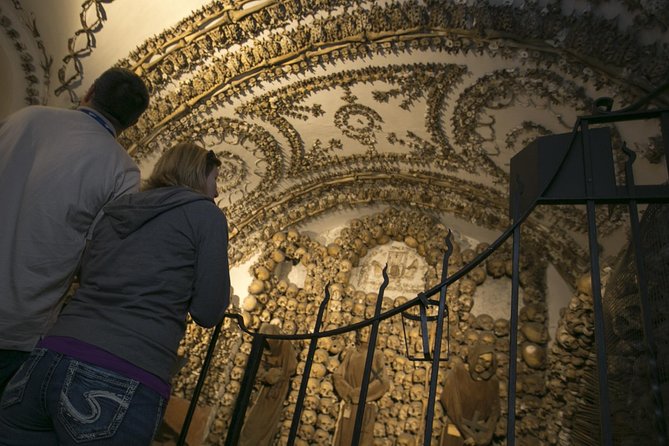
The first stop lasts about 45 minutes, with admission included. The crypt is decorated with the remains of Capuchin friars, arranged in intricate floor-to-ceiling patterns. The practice dates to the 18th century, when monks created the unusual surroundings from the bones of their predecessors.
This is not a conventional museum visit. The setting is solemn, macabre, and deliberately symbolic. You will hear explanations of the monks’ practice through an audio guide while moving through the rooms.
That arrangement has two sides. It lets you explore at your own pace and hear the museum’s prepared commentary. But if you expect your tour guide to lead an animated explanation inside the crypt, you may be disappointed. The live guide’s role is mainly to bring the group there, explain the plan, and gather everyone afterward.
Keep your timing in mind. The schedule gives you less than an hour, and busy conditions can make the visit feel rushed. Stay aware of the agreed meeting time. The tour cannot wait indefinitely for people who linger in a room or lose track of the group.
Photography is not allowed inside the venues. That rule is particularly important here, since the crypt’s unusual decoration may tempt you to reach for your phone. Treat the place as a religious site first and a curiosity second.
The Domitilla Catacombs, Rome’s most atmospheric stop
After the Capuchin Crypt, the coach carries you toward the Domitilla Catacombs. This transfer is one of the tour’s practical strengths. Rome’s catacombs are not all within easy walking distance of the center, and a private air-conditioned coach saves you the trouble of arranging public transport or a taxi.
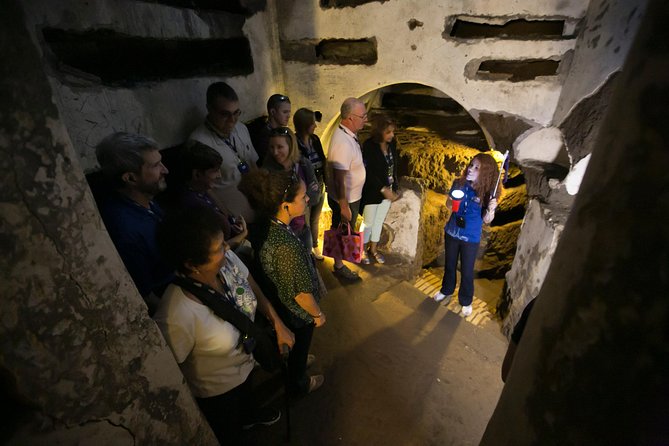
The Domitilla site is one of Rome’s largest catacomb networks. You descend into corridors cut through soft volcanic rock, where early Christians created burial places and worship spaces during periods of persecution.
The guide helps you find the details that are easy to miss in a dark underground setting. Look for early Christian symbols, frescoes, unusual iconography, and the arrangement of the burial spaces. The point is not just that these tunnels are old. They show how burial and worship could share the same underground world.
This section lasts about an hour and is the most physically demanding part of the experience. The paths are narrow, and you spend a long stretch walking below ground. Some people find the confined passages fascinating. If you have claustrophobia, this is the part to take seriously.
Comfortable shoes are a must. The tour description calls for moderate physical fitness, and that is a fair warning. You should be ready for underground walking, possible stairs, and a pace set by the group rather than by your own sightseeing rhythm.
The catacombs also have a cooler feel than the streets above. One guide specifically advised dressing warmly, so bring a light layer even if Rome feels hot outdoors. You do not need to overpack, but shorts or sleeveless clothing may not be accepted at religious sites. Knees and shoulders must be covered.
The quality of this stop depends heavily on the guide. The live explanations are central here, and several guides have been singled out for clear storytelling, humor, and useful answers. Andrea, Alan, and Heather are among the names associated with strong guide experiences, although the person assigned to your group can vary.
San Martino ai Monti and Rome built in layers
The final regular stop is the Basilica dei Santi Silvestro e Martino ai Monti, usually shortened to San Martino ai Monti. The church sits in Rome’s historic core, on top of earlier Roman remains.
You spend about 30 minutes here, with admission included. That may sound brief, but the stop works well as a final piece because it brings the underground story back into a church you can see from the street.
Inside, you can expect Baroque frescoes, early Christian mosaics, and access to ruins beneath the basilica. The remains include an early Christian worship site known as a titulus. Seeing the upper church and the lower remains in one visit helps you understand how Rome’s religious buildings changed over centuries.
This is less eerie than the Capuchin Crypt and less maze-like than Domitilla. Its value comes from the layers. A church founded in the 4th century sits above earlier structures, while later decoration reflects changing tastes and religious priorities.
The regular daytime tour ends at San Martino ai Monti, on Viale del Monte Oppio. That location is useful if you plan to continue toward the Colosseum area or central Rome. The tour does not include a return to your hotel.
Sunday visitors should note one uncertainty: church access is not guaranteed because of liturgical activities. If this basilica is the main reason you are booking, avoid relying on a Sunday visit unless you are comfortable with that possibility.
Same city, an entirely different afternoon:
- Rome: Colosseum, Palatine Hill and Roman Forum Guided Tour
★ 4.8 · 32,814 reviews - Rome: Guided Tour of Colosseum, Roman Forum & Palatine Hill
★ 4.7 · 27,897 reviews - Rome: Colosseum & Forum with Audio Guide App -Optional Arena
★ 4.2 · 24,770 reviews - Rome: Colosseum, Roman Forum and Palatine Hill Guided Tour
★ 4.5 · 23,903 reviews
Daytime or after-hours tour?
The standard experience lasts about three hours and 30 minutes. It begins at Piazza Barberini and ends at San Martino ai Monti. The after-hours option starts at 5 p.m., lasts about two and a half hours, and ends at Piazza della Repubblica.
The after-hours version is designed for people who prefer a later outing and fewer daytime crowds. However, the inclusions differ. The Basilica of San Martino ai Monti is not included in the after-hours option, so check the exact choice before paying if that church matters to you.
I would choose the daytime tour if you want all three locations and prefer to finish near the ancient center. I would choose after-hours if the timing works better for your evening and the church is not essential.
Do not assume the evening option is simply the same tour in darker light. It has a shorter duration, a different endpoint, and a different site plan. Those details affect the value.
Is $66.51 a fair price?
At $66.51 per person, the tour is priced as a midrange guided outing. The fee includes admission to the Capuchin Crypt and Museum, entry to the Rome catacombs, admission to San Martino ai Monti on the daytime version, a live English or Spanish-speaking guide, and transfers in a private air-conditioned coach.
That package has real value if you would otherwise pay separately for transport and entry tickets. The catacombs are the logistical challenge, and the coach removes a lot of friction. You also get historical commentary instead of wandering through the sites without context.
The value is weaker if you mainly want a long, detailed visit at the Capuchin Crypt. That section is audio-guided, and the group moves on at a set time. You are paying for the combination of sites and transport, not for a private museum experience.
The tour is often booked well in advance, with an average booking lead time of 49 days. That does not guarantee it will sell out on your dates, but it suggests that planning ahead is sensible, especially during popular travel periods.
Group discounts may be available. Since the maximum group size is 25, ask about the exact group arrangement when comparing options. A larger group may lower the price per person, but it can make it harder to hear every explanation in tight spaces.
What the guide can add
The best part of this experience is the interpretation. You are not simply shown a bone chapel and a tunnel. A good guide explains why these places exist, how Christian burial worked, and how Rome’s buildings accumulated new purposes over old foundations.
Guide quality can vary, as it does on any scheduled group tour. Strong examples include Alan for historical detail and patience, Andrea for warmth and clear explanations, Heather for keeping the group engaged, Paula for taking time with questions, and Emiliano for energy and enthusiasm.
Those names are useful as examples of the style you want, not as a promise that one of them will lead your departure. The operator assigns the guide, and the catacombs may also use a site guide.
Listen carefully to meeting instructions. One poor experience involved confusion after the audio-guided crypt visit, when people were separated from the main group. The safest approach is simple: stay close, note the meeting point, and return early rather than at the last second.
Practical preparation for a smoother visit
Wear sturdy, comfortable shoes. You will walk between some locations and spend a substantial amount of time on underground paths.
Cover your shoulders and knees from the start. This avoids having to adjust clothing at the entrance to a religious site.
Bring a light sweater or jacket. Underground areas can feel cool, even on a warm Roman day.
Leave large expectations of personal space at home. A group of up to 25 people is not enormous, but narrow corridors can make it feel larger.
Keep your phone away inside the sites unless the guide or venue gives different instructions. Photography is prohibited during the tour.
Build flexibility into your day. Traffic, site demand, and church activities can affect the schedule. Some visits may be shortened slightly during busy periods, and severe weather can cause an authority-led closure of the catacombs. If one location is canceled for reasons beyond the operator’s control, a full refund is not guaranteed when the rest of the tour continues.
The cancellation policy is strict inside 24 hours. Cancel at least 24 hours before the start time for a full refund. Last-minute cancellations and changes are not accepted, so do not wait until the morning of the tour if you are unsure.
Who should book this Roman crypts tour?
I recommend it for adults, older teenagers, and history-minded visitors who have already seen some of Rome’s famous sights and want something less predictable. It also suits anyone without a car who wants to reach the catacombs without handling the transport alone.
It is not a good match for young children who may find the subject matter upsetting or lose patience with the explanations. It is also a poor choice for anyone with claustrophobia or limited tolerance for narrow underground paths.
The tour works best for someone who likes a clear schedule. You see three sites in one outing, receive transportation between the central and outlying locations, and finish with a church visit that adds context to the darker material.
Should you book it?
Book this tour if you want Rome’s quieter, stranger side and value a guide who can explain what you are seeing. The combination of the Capuchin Crypt, Domitilla Catacombs, and San Martino ai Monti is unusual, and the coach makes the day easier than arranging the pieces yourself.
Skip it if you dislike enclosed spaces, need a slow pace, or want a deeply personal museum visit. The Capuchin stop is partly self-guided, the group may be large, and the catacomb corridors demand steady walking.
For most curious adults, the daytime version offers the better deal because it includes all three sites and ends near the historic center. Choose after-hours only if the later start suits your plans and you are willing to give up San Martino ai Monti.
FAQ
Where does the tour start?
The tour starts at Fontana del Tritone in Piazza Barberini, Rome.
Where does the daytime tour end?
The daytime tour ends at the Basilica dei Santi Silvestro e Martino ai Monti on Viale del Monte Oppio.
Where does the after-hours tour end?
The after-hours option ends at Piazza della Repubblica.
How long does the regular tour last?
The regular tour lasts approximately three hours and 30 minutes.
How long does the after-hours option last?
The after-hours option starts at 5 p.m. and lasts about two and a half hours.
Is transportation included?
Yes. Transfers between the locations are provided in a private air-conditioned coach. Hotel pickup and drop-off are not included.
Is entry to the sites included?
Yes. The daytime tour includes admission to the Capuchin Crypt and Museum, the Rome catacombs, and San Martino ai Monti. The Basilica is not included in the after-hours option.
What language is the tour offered in?
The experience is offered in English. Depending on the option selected, a Spanish-speaking guide may also be available.
What should I wear?
Knees and shoulders must be covered for entry into some sites. Comfortable shoes are recommended, and a warm layer can help in the underground areas.
Can I take photographs inside?
No. Photography is not permitted inside the venues during the tour.
Is the tour suitable for someone with claustrophobia?
No. The activity is not recommended for people who suffer from claustrophobia because the catacombs contain narrow underground passages.
What happens if I need to cancel?
You can receive a full refund if you cancel at least 24 hours before the experience starts. Cancellations or changes made less than 24 hours before the start time are not refunded.
Fresh on the Rome list
- Exclusive Golf Tour Private VIP with Local & Gelato o Wine★ 5.0 · 500 reviews
- Colosseum, Palatine Hill and Roman Forum with Guided Tour★ 5.0 · 500 reviews
- Rome Trastevere Pasta Making Class with Eating Europe★ 5.0 · 505 reviews
- Rome by Night Walking Tour★ 4.5 · 506 reviews
- Rome: Colosseum Express Tour with Forum & Palatine Access★ 4.5 · 511 reviews
- Rome Food Experience Max 6 People Group Tour | w/Private Option★ 5.0 · 516 reviews
- Rome: Navona Square Underground Ticket with Audio Guide★ 4.0 · 518 reviews
- Rome: Escorted Papal Audience Experience with Entry Ticket★ 4.4 · 518 reviews
Rome Tours, compared.
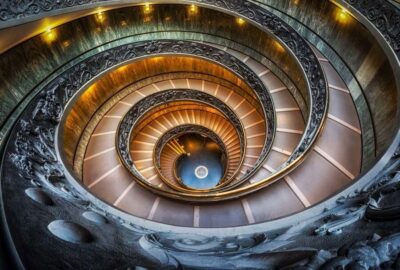
Vatican Museums & Sistine Chapel Tour with Optional Basilica
Read our review →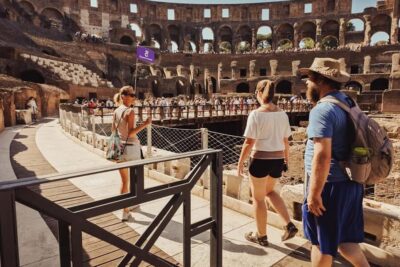
Colosseum, Roman Forum & Palatine Guided Tour
Read our review →
Vatican Museums, Sistine Chapel & St Peter’s Basilica Guided Tour
Read our review →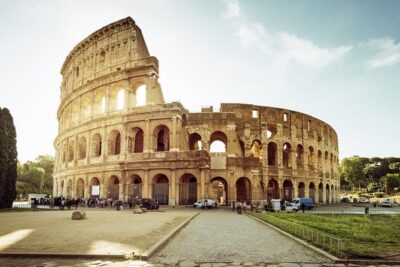
Colosseum, Palatine Hill and Roman Forum Guided Tour
Read our review →
Guided Tour of Colosseum, Roman Forum & Palatine Hill
Read our review →
Colosseum & Forum with Audio Guide App -Optional Arena
Read our review →
Colosseum, Roman Forum and Palatine Hill Guided Tour
Read our review →