
Reviewed · VATICAN & SISTINE CHAPEL TOURS
Rome: Vatican Museums & Sistine Chapel Skip-the-Line Tour
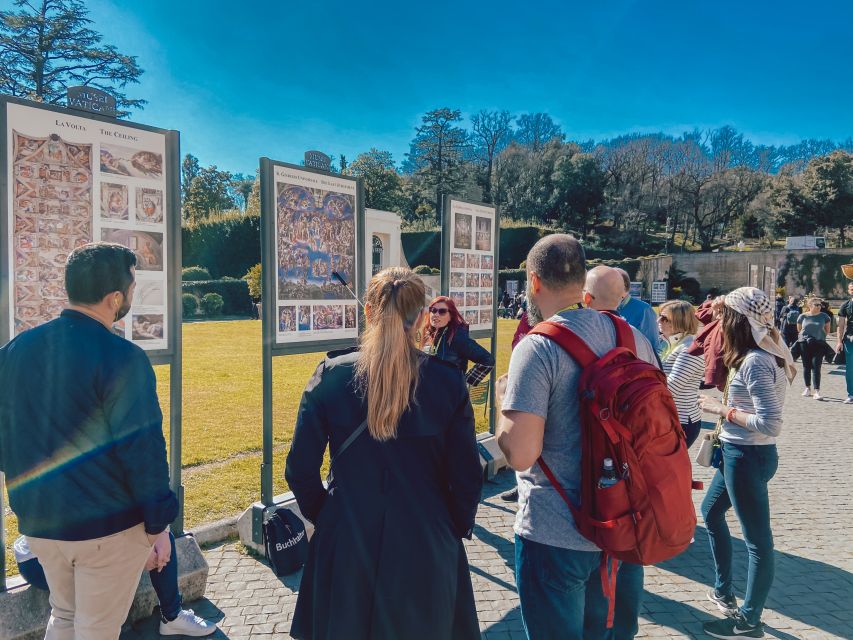
The smartest feature here is simple: priority entry gets you past the long ticket queue and into the Vatican Museums with a guide at your side. In a city where a line can eat half a morning, that matters. Inside, you move through ancient sculpture, Renaissance frescoes, the Raphael Rooms, and the Sistine Chapel in about two and a half hours.
I like the focused route, which gives you the Vatican’s major sights without pretending you can see everything in one visit. I also like the headsets. Guides such as Valeria, Erik, Maria Theresa, Rose, and Rafaela have been praised for lively explanations, clear pacing, and a real feel for the art.
The trade-off is the setting itself: the Vatican can be hot, packed, and tiring, and two and a half hours requires a brisk introduction rather than a slow museum study. The tour also does not clearly include a guided visit to St. Peter’s Basilica, so you should not book it expecting a full Vatican City tour.
Key points to know before booking
- Priority entry saves valuable Rome time: You avoid the main ticket line, though security and entrance procedures can still take time.
- The route covers the Vatican’s big names: Expect the Laocoön, Gallery of Maps, Raphael Rooms, and Sistine Chapel.
- English guidance adds essential context: The artwork is easier to understand when someone explains its symbols, patrons, techniques, and setting.
- Headsets help in crowded galleries: You can hear the guide even when other tour groups are nearby.
- The 2.5-hour format is efficient but not leisurely: It works well for a first visit, but the museums deserve much longer if you want detail.
- Dress and identification rules matter: Cover your shoulders and knees, arrive 30 minutes early, and bring matching passport or ID details.
Why the Vatican works better with a guide
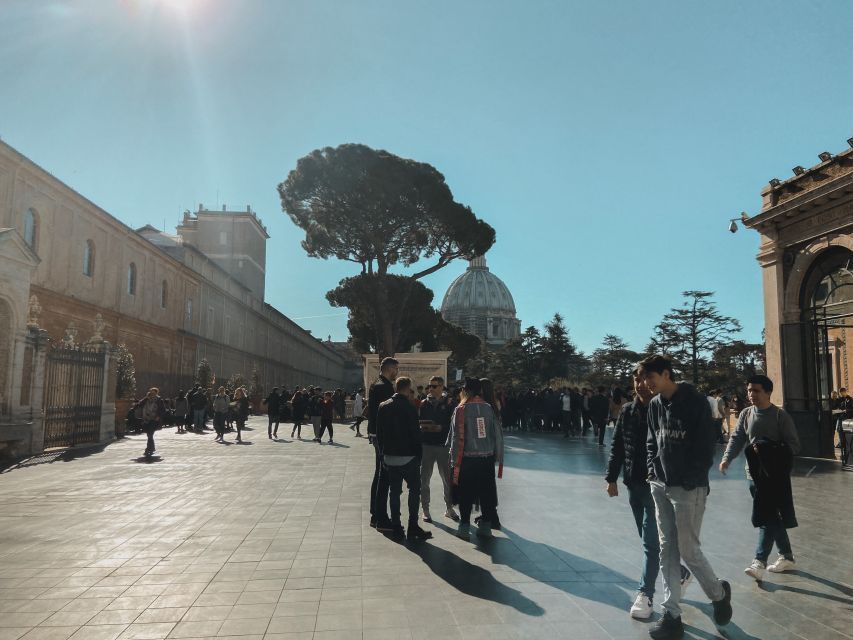
The Vatican Museums are not a tidy little gallery with ten rooms and a clear exit. They are a huge collection spread through grand corridors, courtyards, chapels, and exhibition rooms. Even if you know the main names, it is easy to walk past something important without understanding why it matters.
That is where this tour earns its price. A guide gives you a route and a story. Instead of seeing a long line of marble statues or frescoed walls, you learn what to look for, who commissioned the work, and how it fits into the Vatican’s larger artistic program.
I especially value a guide here because many of the best details are not obvious at first glance. A ceiling may look decorative until you learn that its scenes express a religious argument. A map may seem like a pretty wall painting until you notice how Renaissance artists understood Italy’s geography.
The current rating is 4.1 from 221 reviews, which suggests a generally solid experience rather than universal perfection. Praise centers on the guides, the useful audio equipment, and the time saved at the entrance. The recurring cautions are also practical: expect crowds, heat, plenty of walking, and a fairly quick pace.
More Museums in Rome
- Vatican Museums & Sistine Chapel Tour with Optional Basilica
★ 4.3 · 67,413 reviews - Vatican Museums, Sistine Chapel & St Peter’s Basilica Guided Tour
★ 4.5 · 39,149 reviews - Rome: Vatican Museums, Sistine Chapel & Basilica Tour
★ 4.3 · 13,872 reviews
Meeting the tour and getting through the entrance
The meeting point is near the Vatican Museums entrance. You should arrive at least 30 minutes before your scheduled start, not at the exact start time. That extra buffer allows the operator to check names, organize the group, distribute headsets, and get everyone through the opening steps.
Bring the passport or ID used for the booking. The names must match the reservation exactly, including the first and last names of every participant. Children also need a passport or ID, and a copy is accepted according to the tour information.
The phrase skip-the-line needs a little common sense. It means you use priority admission rather than standing in the main ticket queue. You still need to meet the operator, pass security, and follow the museum’s entry rules. On busy days, those steps can create delays even when the ticket line itself is bypassed.
Do not bring large bags, luggage, sharp objects, weapons, alcohol, drugs, or explosive substances. Wear comfortable shoes and clothes. The Vatican dress code is strict: shoulders and knees must be covered. A light layer or a scarf can save you from an avoidable problem at the door.
Pio Clementino Museum and the Laocoön
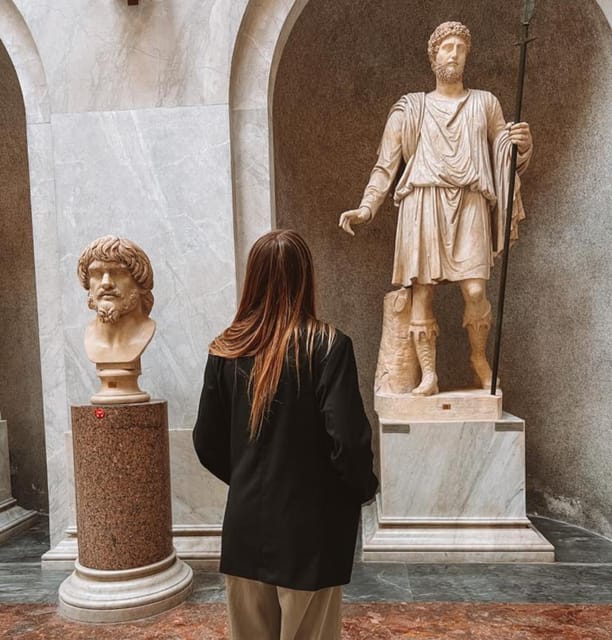
The Pio Clementino Museum usually provides the first major artistic jolt. It is known for classical Greek and Roman sculpture, displayed in grand rooms that make the works feel even more imposing.
The star here is Laocoön and His Sons. The sculpture shows Laocoön and his sons struggling against sea serpents, their bodies twisted in pain and effort. A guide can point out the movement, emotion, and technical skill that make the marble feel almost physical.
This stop also gives you a useful introduction to the Vatican’s collecting tradition. You are not simply seeing isolated statues. You are seeing how ancient art became central to the education and public image of Renaissance Rome.
The drawback is that this part of the museum can be packed. You may need to listen closely and wait for a clear view. That is where the headsets help. You can stand slightly away from the guide and still follow the explanation instead of pressing into a tight circle.
The Gallery of the Candelabra and Gallery of Tapestries
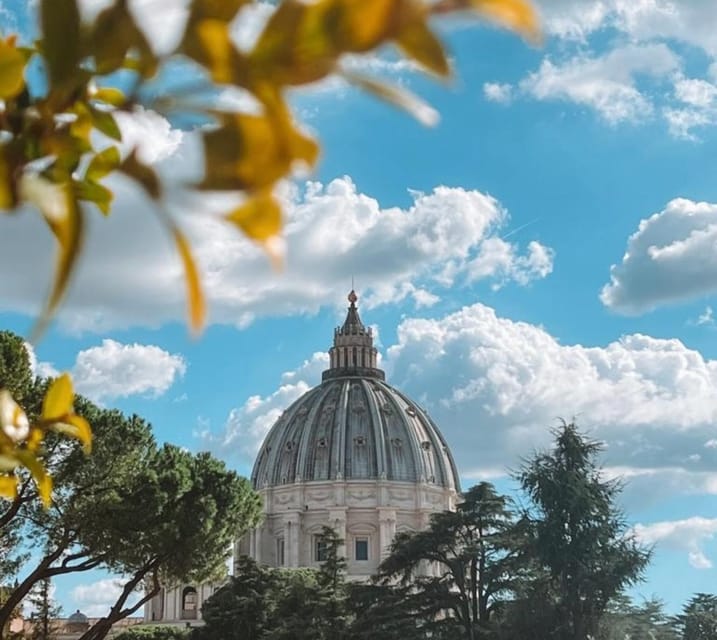
The Gallery of the Candelabra takes you through a lavish corridor filled with Roman artifacts and decorative details. The name comes from the large candelabra that help divide and decorate the gallery.
It is easy to treat this room as a passage toward the more famous sights, but a guide helps you slow down mentally. Roman objects, painted decoration, and the scale of the corridor reveal how the Vatican presents art as part of a grand setting, not just as separate pieces in glass cases.
The Gallery of Tapestries shifts your attention from marble and architecture to woven images. The works tell biblical and historical stories through figures, gestures, and carefully placed details.
You should expect to look upward and sideways as you walk. The galleries are long, and the crowd may keep you moving. A good guide, such as the highly praised Rose or Rafaela, can give you a few details worth remembering without asking you to stop for a long lecture at every object.
More Skip-the-Line Tickets in Rome
- Vatican Museums & Sistine Chapel Skip-the-Line Entry Ticket
★ 4.4 · 13,838 reviews - Skip-the-Line Group Tour of the Vatican, Sistine Chapel & St. Peter’s Basilica
★ 4.5 · 12,779 reviews - Vatican, Sistine Chapel & St. Peter’s Skip-the-Line Tour
★ 4.5 · 7,770 reviews - Skip-the-Line Vatican, Sistine Chapel & St. Peter’s | Small Group
★ 5.0 · 7,060 reviews
The Gallery of Maps and Renaissance geography
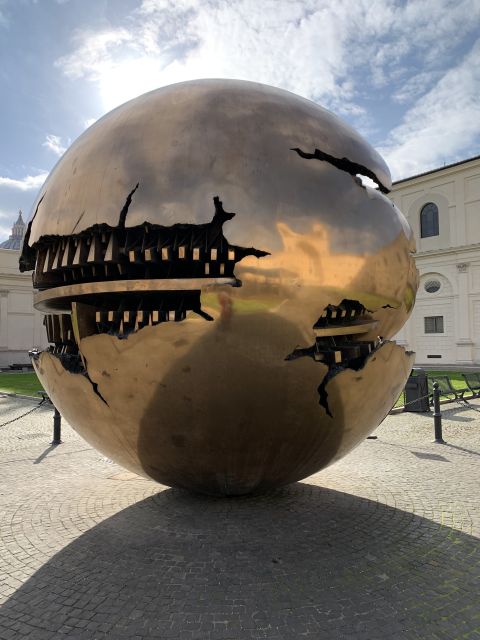
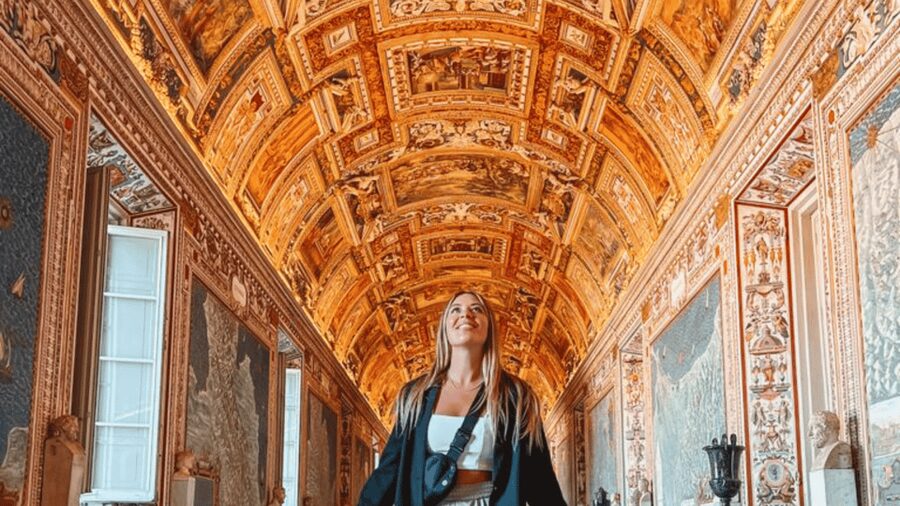
The Gallery of Maps is one of the most memorable stretches of the route. Its walls carry large painted maps of Italy, made with striking artistic detail during the Renaissance.
This is a good place to see how art and early geography worked together. The maps were not modern survey charts, and they were not made only for practical navigation. They also reflected power, knowledge, faith, and the Vatican’s view of the Italian peninsula.
Look beyond the maps themselves. The ceiling and surrounding decoration are part of the experience, and the length of the corridor gives the room a grand procession-like effect.
This is also where a guide’s voice can add real value. Without context, you may notice only the colors and outlines. With an explanation, you begin to see the maps as political and cultural statements as well as works of art.
Raphael Rooms and the power of fresco painting
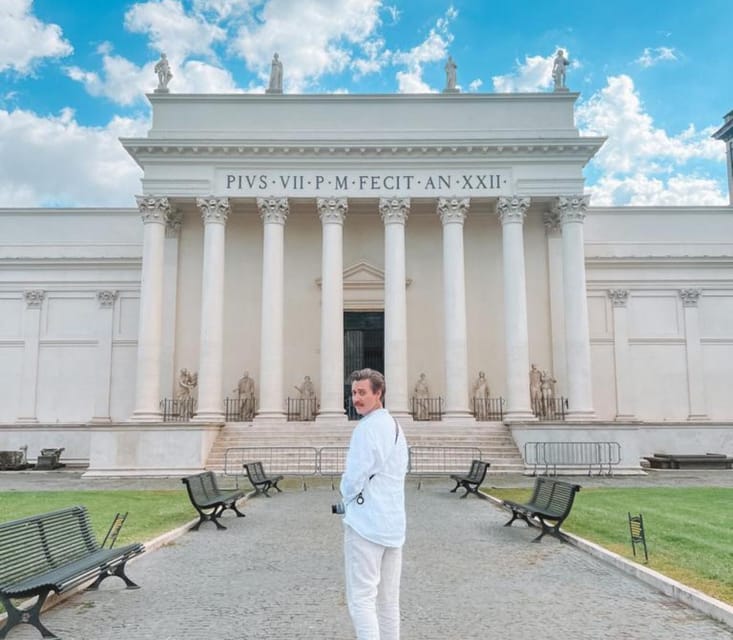
The Raphael Rooms are a major reason to choose this route. These rooms contain frescoes by Raphael and his workshop, with scenes that bring theology, philosophy, history, and papal ambition together.
The paintings are not just attractive wall decoration. They show how the Vatican used art to express ideas about learning, religion, authority, and the place of the Church in the world. The School of Athens is especially important for its gathering of philosophers, but your guide will determine how much time the group spends on each work.
You may find yourself wishing for more time here. The rooms reward close looking, and two and a half hours leaves limited space for standing back, studying faces, and asking several questions. Still, the guided format helps you see the central points instead of drifting through a vast series of rooms without a plan.
The strongest guide feedback has focused on this kind of interpretation. Maria Theresa has been praised for touching on many of the major highlights in a short visit. Erik was singled out for making the experience engaging, while other guides were appreciated for answering questions and keeping the tour moving without turning it into a dry lecture.
The Sistine Chapel and Michelangelo’s ceiling
The Sistine Chapel is the emotional high point, but it is not a quiet private finale. It is one of Rome’s most crowded interiors, and your time there is shaped by museum rules and the steady flow of people.
Here you see Michelangelo’s ceiling, including The Creation of Adam, along with The Last Judgment on the altar wall. These paintings are so familiar from books and photographs that the real scale can still surprise you.
Take a moment to look at the arrangement rather than only the famous detail. The ceiling presents a large sequence of biblical scenes, while the altar wall confronts you with a dramatic vision of judgment. A guide’s earlier explanations about patronage, religious imagery, and Renaissance technique help make these works more than famous pictures.
There are important limitations. You cannot expect a long, silent period for private study. The chapel can feel hot and crowded, and the route may require you to keep moving. Photography rules and chapel instructions must be followed, so listen carefully when the guide explains what is allowed.
The tour ends with the Sistine Chapel portion. Do not assume the guide will then escort you through St. Peter’s Basilica. One practical complaint was getting unclear directions afterward and ending up outside, so ask for precise instructions before separating from the group if you plan to continue toward the basilica.
The guide and headset make the difference
A Vatican tour rises or falls on the guide. The route itself is established, but the quality of the explanation determines whether you remember the visit as a sequence of rooms or as a connected story.
The named guides associated with strong feedback include Valeria, Erik, Maria Theresa, Rose, and Rafaela. The qualities to look for are clear speech, enthusiasm, humor, and the ability to explain art without rushing every stop. The best guide experiences described here turned the museum into something closer to a lively class than a parade past famous objects.
The supplied headsets are more important than they may sound. Crowded Vatican corridors often contain several groups speaking at once. The audio system lets you keep listening when you are a few steps behind or standing at the edge of a room.
Not every guide will suit every listener. One experience involved a guide who was difficult to understand and moved too quickly. If that happens, stay close, ask for repetition when needed, and use the headset to reduce the noise around you.
How tiring is the 2.5-hour route?
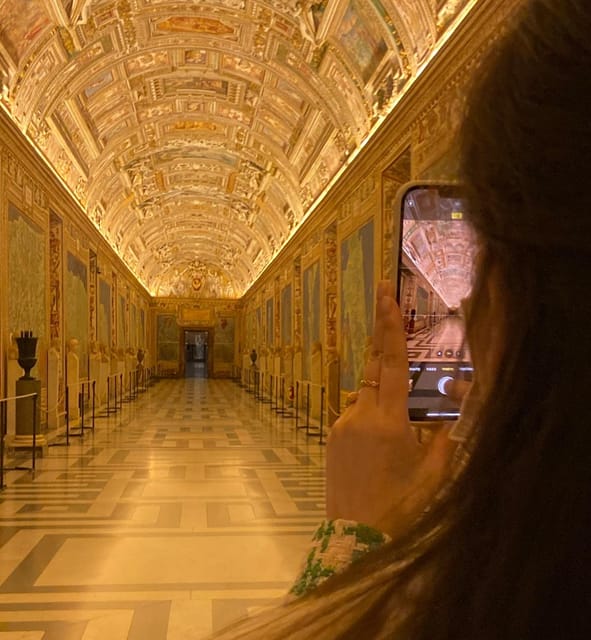
Two and a half hours is long enough for a useful first look, but short enough to fit into a busy Rome schedule. You will walk and stand for most of the visit, so comfortable shoes are not a minor suggestion.
The pace aims to cover the major rooms without making the tour drag. That works well if you want orientation and the famous highlights. It is less suitable if you plan to study individual paintings for ten minutes or stop often for extended questions.
Heat can add to the fatigue, especially when the museum is crowded. Bring water for before or after the tour, since food and drinks are not included. You will want to plan a break after the visit rather than scheduling another demanding activity immediately afterward.
This format suits first-time Vatican visitors, people with limited time in Rome, and anyone who prefers a guide to explain the essentials. Art students and repeat visitors may want a longer, more specialized experience.
Is $28 a good value?
At $28 per person, this is a low-cost way to combine admission, a live English guide, headsets, and priority access. The value depends on what you would otherwise spend in time and effort.
If the main ticket line is long, skipping it can protect several hours of your day. The guide also gives you context that a self-guided walk may not provide, especially in the Raphael Rooms and Sistine Chapel. For a first visit, those two benefits make the price reasonable.
The price does not buy a private tour or a slow, highly personal museum study. You are paying for an efficient group introduction. Food, drinks, and hotel pickup are not included, and the tour is non-refundable and cannot be modified, so check names, date, time, and clothing before paying.
You should also treat the price as covering the Vatican Museums and Sistine Chapel, not a guaranteed full visit to St. Peter’s Basilica. If the basilica is essential to your plan, confirm the route before booking or arrange it separately.
Who should book this Vatican tour?
I would choose this tour if you want the famous Vatican highlights with a clear route and live explanations. It is especially useful if you have only a few days in Rome and do not want to spend your morning guessing which corridor leads to the major rooms.
It is also a good match for families with older children, provided everyone can walk and stand for the full visit. The ID rules apply to children as well, and the dress code applies to everyone.
I would hesitate if you use a wheelchair, since the experience is listed as unsuitable for wheelchair users. I would also think twice if you dislike busy group settings, need a very slow pace, or want a detailed focus on one artist.
Book only when your schedule is firm. The tour is non-refundable, and arriving late can cause real trouble because the group has a fixed entry time. Plan to be at the meeting point 30 minutes early, dress for the rules, and bring matching identification.
Should you book it?
Book this Vatican Museums and Sistine Chapel tour if your priority is saving time while learning what you are seeing. The strongest part is the combination of priority admission, clear audio, and guides who can make difficult art approachable.
Do not book it expecting solitude, a quiet museum visit, or a guaranteed tour of St. Peter’s Basilica. The Vatican will be crowded and tiring, and the 2.5-hour route is an introduction rather than the final word.
For many first-time visitors, $28 is a fair price for a well-organized starting point. You leave with the major rooms, Michelangelo’s great chapel paintings, and enough context to return later with a better eye.
FAQ
How long does the Vatican Museums and Sistine Chapel tour last?
The guided tour lasts approximately 2.5 hours. Starting times vary, so check availability when booking.
Is the tour conducted in English?
Yes. The tour includes a live English-speaking guide.
Does the tour include skip-the-line admission?
Yes. Skip-the-line entrance tickets for the Vatican Museums and Sistine Chapel are included. You must still meet the operator, pass security, and follow entrance procedures.
Are headsets provided?
Yes. Headsets are included so you can hear the guide more clearly, including in crowded areas.
What identification should I bring?
Bring a passport or ID card that matches the exact first and last name used for the booking. Children also need a passport or ID card. A copy is accepted according to the tour information.
What clothing is required?
Your shoulders and knees must be covered to enter the Vatican Museums. Comfortable shoes and comfortable clothes are recommended because the tour involves moderate walking and standing.
More Vatican & Sistine Chapel Tours in Rome
- Rome: Vatican Museums, Sistine Chapel & Basilica Tour
★ 4.7 · 13,217 reviews - Rome: Vatican Museums & Sistine Chapel Guided Tour
★ 4.3 · 12,117 reviews - Vatican Museums & Sistine Chapel Skip-the-Ticket-Line Tour
★ 4.3 · 10,486 reviews - Rome: Vatican, Sistine Chapel & St. Peter’s Basilica Tour
★ 4.2 · 9,089 reviews
Fresh on the Rome list
- Rome: Guided Catacombs Tour & Capuchin Crypt (Audio Guide)★ 4.3 · 191 reviews
- Guided tour of the Colosseum, Roman Forum and Palatine in Spanish★ 4.5 · 191 reviews
- Rome: Borghese Gallery Guided Tour with Skip-the-Line Ticket★ 4.5 · 192 reviews
- Rome: Arena Colosseum Tour with Arena Access★ 4.6 · 193 reviews
- Colosseum, Forum, Palatine Hill with audio guide and Arena or Bus option★ 4.0 · 193 reviews
- Rome: Colosseum & Roman Forum Guided Tour★ 5.0 · 194 reviews
- Rome: Domus Aurea Guided Tour and Virtual Reality Experience★ 4.7 · 194 reviews
- Rome by Night Private Walking Tour★ 5.0 · 194 reviews
Vatican & Sistine Chapel Tours, compared.
Vatican: Museums & Sistine Chapel Entrance Ticket
Read our review →
Vatican Museums & Sistine Chapel Tour with Optional Basilica
Read our review →
Vatican Museums, Sistine Chapel & St Peter’s Basilica Guided Tour
Read our review →
Vatican Museums, Sistine Chapel & Basilica Tour
Read our review →
Vatican Museums & Sistine Chapel Skip-the-Line Entry Ticket
Read our review →Vatican Museums, Sistine Chapel & Basilica Tour
Read our review →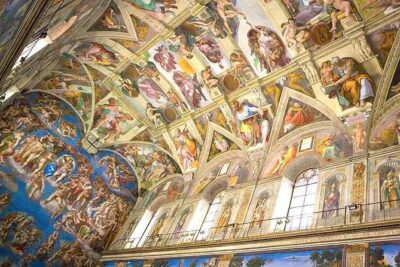
Skip-the-Line Group Tour of the Vatican, Sistine Chapel & St. Peter’s Basilica
Read our review →
Vatican Museums & Sistine Chapel Guided Tour
Read our review →Browse the lists this tour appears in