Reviewed · GUIDED
Rome: Trevi Fountain District Underground Domus Guided Tour
Rome’s Trevi District has a second life below street level. At Vicus Caprarius, you go about 9 meters underground to see Roman masonry, water channels, a former domus, coins, amphorae, and traces of daily life beneath one of the city’s busiest sights. I like the close look at Roman water engineering, and I like having an archaeologist guide turn a small excavation into a clear story.
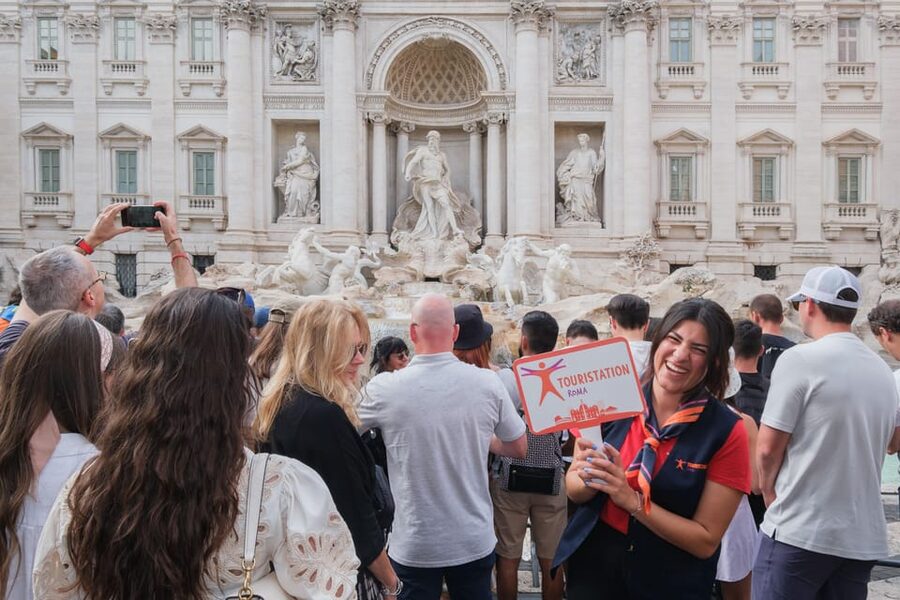
The main catch is the title. You do not go underneath the actual Trevi Fountain or receive a private visit to it. You explore an archaeological site next to the fountain, then spend about five minutes outside with the guide. The fountain itself is free, crowded, and not covered by skip-the-line entry.
Key points before you book
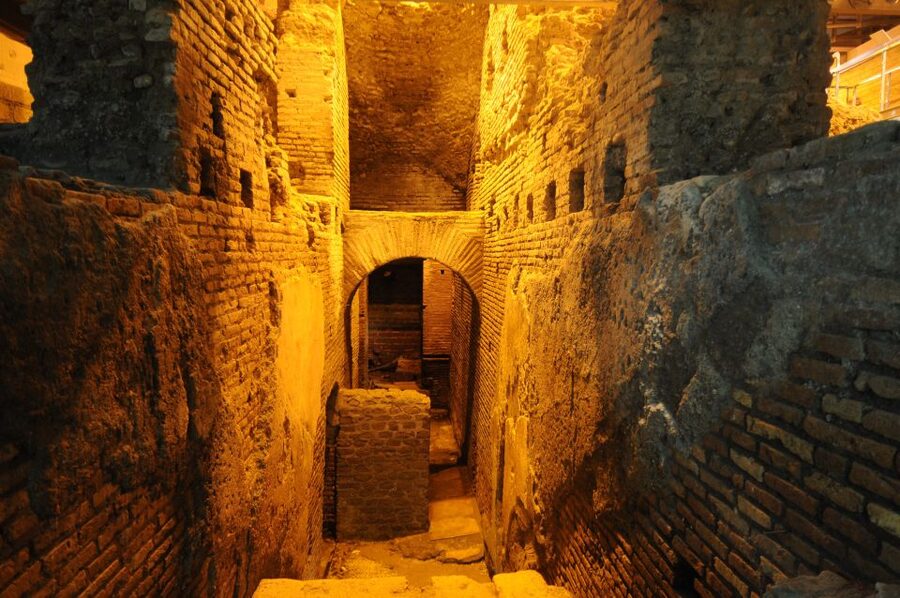
- Nine meters below the Trevi District: Walk through an underground archaeological site where Roman water systems and later layers remain visible.
- A real Roman water story: Follow the route of water linked to the Trevi Fountain and the aqueduct system that fed pools and pipes.
- Small finds with a big story: See ancient coins, African amphorae, polychrome marble, and the head of Alessandro Helios.
- Strong guide-led experience: Guides such as Erika, Naomi, Noemi, Alessia, and Michelle are praised for clear English, humor, and patient answers.
- Short and central: The visit takes 45 minutes and starts at Vicolo del Puttarello 25, right by Trevi Fountain.
- Know what is not included: There is no private fountain access, no skip-the-line advantage, and no wheelchair access.
Entering Vicus Caprarius at Vicolo del Puttarello 25

You meet your guide at the entrance to the Vicus Caprarius archaeological area on Vicolo del Puttarello 25. This is a useful location if you are already visiting Trevi Fountain, but do not assume the tour begins at the fountain itself. Look for the entrance to the archaeological site and arrive ready to identify your English-speaking guide.
The underground visit lasts about 40 minutes. That gives you enough time to move through the site with an explanation, rather than simply walking past exposed walls and trying to guess what they were used for.
I appreciate this kind of guided archaeology because the remains are not a grand, open-air monument like the Colosseum. The rooms are smaller, the walls are layered, and the meaning is easier to miss without help. A guide can point out how the structures fit together and explain what archaeologists can establish from the surviving material.
The group may be small, which helps in a confined space. Radios have also been used on some tours, making it easier to hear the guide when more than one group is visiting. Still, the excavation can feel busy, especially when groups in different languages are inside at the same time.
A few other Rome mornings to weigh against this
- Colosseum, Roman Forum & Palatine Guided Tour
★ 4.7 · 63,148 reviews - Vatican Museums, Sistine Chapel & St Peter’s Basilica Guided Tour
★ 4.5 · 39,149 reviews - Rome: Colosseum, Palatine Hill and Roman Forum Guided Tour
★ 4.8 · 32,814 reviews
The City of Water, nine meters under Rome
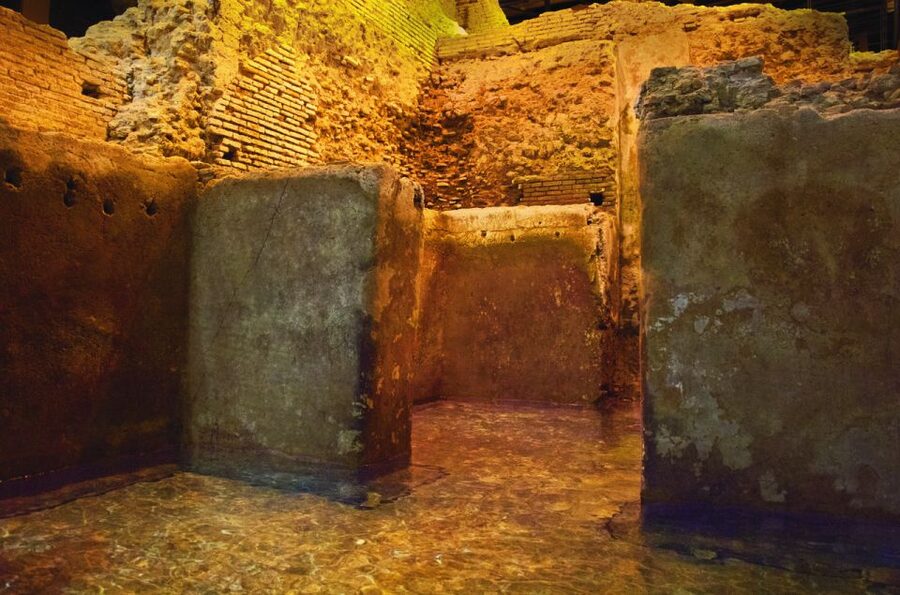
Vicus Caprarius is known as the City of Water. The name makes sense once you see the channels, masonry, pipes, and water-related structures beneath the modern district.
The route shows how Roman construction adapted to water. Water from the area associated with Trevi Fountain filtered through ancient masonry and helped supply pools and pipes connected with a luxurious domus, or Roman residence. You are not just looking at old stone. You are seeing part of the practical system that made urban Roman life possible.
That is the strongest reason to take this tour. Rome’s fountains can seem like isolated works of art when viewed from the street. Below ground, you get a sense of the older system behind the water. The experience connects the famous Baroque fountain with engineering that reaches back to ancient Rome.
The tour moves through three sections of the archaeological area. The supplied details do not assign separate names or exact functions to each section, so your guide provides the interpretation on site. Expect exposed ruins and water structures rather than a large museum-style display.
The location is also cool underground, a welcome break during Rome’s hot months. Wear comfortable shoes, since you will be walking through an archaeological area rather than a polished modern attraction.
Roman rooms, luxury, and daily life
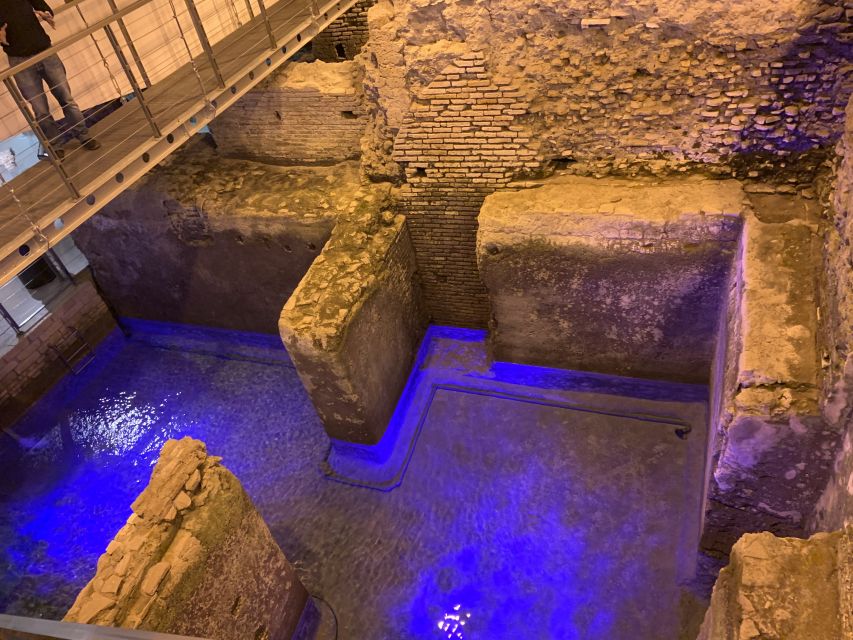
The site includes the remains of a luxurious domus residence. This gives the tour a human scale. Aqueducts and water channels matter, but the real question is what the water allowed people to do inside their homes.
The water once helped serve pools and pipes connected with the residence. That points to comfort and display as well as basic supply. A Roman home with decorative materials and water features tells you something about wealth, taste, and the way Roman architecture brought public engineering into private life.
The finds help fill out that picture. You may see polychrome marble, a head of Alessandro Helios, hundreds of ancient coins, and African amphorae that carried oil. These objects are more memorable than a bare wall because they suggest movement, trade, decoration, money, and household use.
The amphorae are especially useful for understanding how far goods traveled into Rome. The coins help mark activity across time. The marble and sculpture fragment suggest the visual standards of the residence. Together, the objects give the underground site more personality than a simple water tunnel.
Some interpretations at an excavation necessarily involve evidence and informed reconstruction. One visitor felt that parts of the story rested on assumptions, so you should expect archaeological explanation rather than a perfect, complete record of every room and event. A good guide makes that distinction clear.
Why the guide makes the difference

I would not choose this visit mainly for the size of the ruins. I would choose it for the person explaining them.
Guides including Erika, Naomi, Noemi, Alessia, Michelle, and Federica have been singled out for their command of Roman history, lively storytelling, humor, and willingness to answer questions. Erika is often praised for explaining the fountain and aqueduct system in an engaging way. Naomi is noted for a friendly style and strong storytelling. Noemi combines historical detail with a relaxed sense of humor.
The guide’s role matters because the site is compact. You will not spend hours wandering from chamber to chamber. Instead, the value comes from learning how the masonry, water flow, domus, and objects connect.
Several guides have made time for photographs and questions. Some have also pointed out extra details around the fountain after the underground portion. That depends on timing and the guide, so do not treat an extended visit as guaranteed.
The tour is in English. The guides are described as speaking clear English, though individual accents can vary. If you enjoy asking questions, this is a good setting to do so. If you prefer silent exploration with plenty of time for close photography, the fixed 45-minute format may feel brisk.
Same city, an entirely different afternoon:
- Vatican Museums & Sistine Chapel Tour with Optional Basilica
★ 4.3 · 67,413 reviews - Rome: Guided Tour of Colosseum, Roman Forum & Palatine Hill
★ 4.7 · 27,897 reviews - Rome: Colosseum & Forum with Audio Guide App -Optional Arena
★ 4.2 · 24,770 reviews - Rome: Colosseum, Roman Forum and Palatine Hill Guided Tour
★ 4.5 · 23,903 reviews
What the final five minutes at Trevi Fountain really offer
After roughly 40 minutes underground, the tour concludes with about five minutes at Trevi Fountain. The guide explains key aspects of the fountain’s history and design, then you can continue looking at it on your own.
This is a useful ending because the underground water system gives the fountain more context. You have just seen the older structures connected with Rome’s water supply, and now you see the later Baroque expression of that water in one of the city’s most famous settings.
But set your expectations carefully. The fountain is extremely crowded. The tour does not move you through a special private entrance, and it does not give you skip-the-line access. Entrance to the fountain is free, so the included access does not mean reserved front-row viewing.
You may have to wait to get close to the fountain after the guided portion. The guide can explain the monument, but you will likely need to manage your own time for photographs and the traditional coin wish.
This is the one part of the experience that can feel shorter than the promotional wording suggests. The underground archaeological site is the main attraction. Trevi Fountain is the finishing point, not an underground extension of the tour.
Is $50 a fair price for 45 minutes?
At $50 per person, this is not a bargain if you judge it by time alone. Forty-five minutes is short, and the fountain itself is free. The price makes more sense if you value reserved entry to Vicus Caprarius and the interpretation of an archaeological site that is easy to misunderstand on your own.
You are paying for access and explanation. The guide gives meaning to the water channels, domus, decorative fragments, coins, and amphorae. Without that context, you could still see the remains, but you would probably take away less.
The value is strongest for someone who has already seen Rome’s major monuments and wants a smaller, more focused experience. It is also useful early in a Rome visit because the explanation of aqueducts, Roman building, and historical layers can help you understand other sites afterward.
The value is weaker if you mainly want an unusual viewpoint of the Trevi Fountain itself. You will not go under the fountain, and you will not avoid the crowds at street level. For that purpose, the tour title may create an expectation the actual visit cannot meet.
Some bookings offer an ice cream option with a voucher for a nearby shop. The voucher can be used during your stay, not necessarily only during the tour. If that option is available when you book, it may add a pleasant extra, but the archaeological visit should be the reason you choose the experience.
Who will enjoy this underground visit?
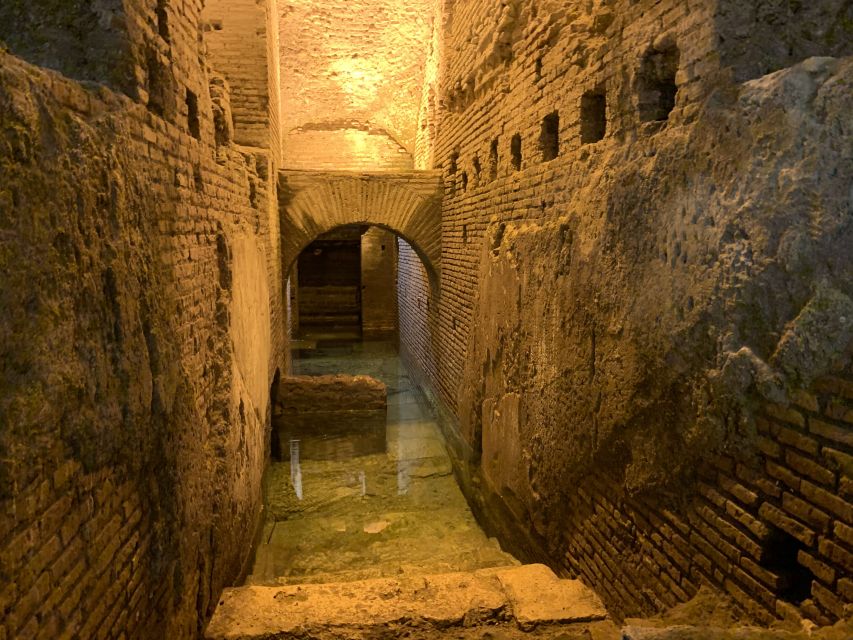
I would recommend it to adults and older children who like archaeology, Roman engineering, architecture, or the practical side of history. You will get more from it if you enjoy asking how ancient cities worked, not just admiring their grand monuments.
It also suits a first or second day in Rome. The material gives you useful context for aqueducts, fountains, Roman homes, and the city’s many layers. If you schedule it on your last day, it can still be rewarding, but you may wish you had learned some of these connections earlier.
The tour is a good choice during hot weather because the underground site is fresh and shaded. It is also a sensible short activity to pair with a Trevi District walk, though you should allow extra time afterward if you want to approach the fountain through the crowd.
I would not book it for a wheelchair user or anyone with mobility limitations. The activity is specifically unsuitable for wheelchair users and people with mobility impairments. Comfortable shoes are important for everyone.
The 45-minute length works well for a packed sightseeing day. You can fit it between other central Rome stops without giving up half a day. On the other hand, the short format means the guide may have more to explain than the clock allows, especially if the group asks many questions.
Practical advice for a better visit
Arrive at Vicolo del Puttarello 25 with enough time to find the archaeological entrance. The meeting point is not hotel pickup, and food and drinks are not included.
Wear shoes you can walk in comfortably. The underground setting is not suitable for visitors who need wheelchair access, and the route is best approached as an archaeological walk rather than a fully accessible museum visit.
Keep your camera ready, but listen first. The objects and masonry are worth photographing, yet the guide’s explanation is the part you cannot reproduce from a quick look.
If you want unobstructed fountain photographs, plan to stay after the tour and wait for your own chance at the edge of the crowd. The five-minute fountain segment is for orientation and explanation, not a long photo session.
Free cancellation is available up to 24 hours before the start time, and you can reserve while paying later. That flexibility is useful when your Rome schedule depends on weather, timed museum visits, or changing plans.
Should you book the Trevi underground tour?
Book it if you want to see the water system and Roman domus beneath the Trevi District, and if you value a lively guide who can connect small archaeological remains with the wider story of Rome. The strongest part is the underground Vicus Caprarius visit, especially when your guide is someone like Erika, Naomi, Noemi, or Alessia and you take advantage of the chance to ask questions.
Skip it if your main goal is private access beneath Trevi Fountain or a crowd-free fountain visit. You will not receive either. At $50, the tour is best understood as a short, specialist archaeology experience beside the fountain, with the famous monument as a useful finale.
FAQ
Where does the tour start?
Meet your English-speaking guide at the entrance to the Vicus Caprarius archaeological area at Vicolo del Puttarello 25 in Rome.
How long does the experience last?
The full experience lasts 45 minutes. About 40 minutes are spent on the guided visit to Vicus Caprarius, followed by about five minutes at Trevi Fountain.
Does the tour go underneath the actual Trevi Fountain?
No. The underground visit takes place at Vicus Caprarius, an archaeological site next to Trevi Fountain. The tour does not take you beneath the fountain itself.
Is skip-the-line access to Trevi Fountain included?
No. The fountain is free to enter, and skip-the-line access is not included. The area can be very crowded, so you may need to wait to get close.
What language is the tour in?
The live guided tour is conducted in English.
Is the tour suitable for wheelchair users?
No. The experience is not suitable for wheelchair users or people with mobility impairments. Comfortable shoes are recommended.
Fresh on the Rome list
- Exclusive Golf Tour Private VIP with Local & Gelato o Wine★ 5.0 · 500 reviews
- Colosseum, Palatine Hill and Roman Forum with Guided Tour★ 5.0 · 500 reviews
- Rome Trastevere Pasta Making Class with Eating Europe★ 5.0 · 505 reviews
- Rome by Night Walking Tour★ 4.5 · 506 reviews
- Rome: Colosseum Express Tour with Forum & Palatine Access★ 4.5 · 511 reviews
- Rome Food Experience Max 6 People Group Tour | w/Private Option★ 5.0 · 516 reviews
- Rome: Navona Square Underground Ticket with Audio Guide★ 4.0 · 518 reviews
- Rome: Escorted Papal Audience Experience with Entry Ticket★ 4.4 · 518 reviews
Guided, compared.
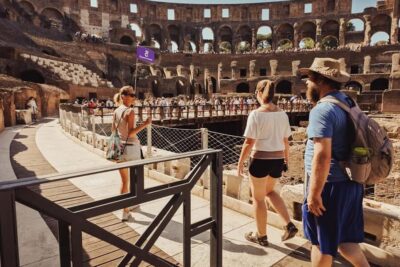
Colosseum, Roman Forum & Palatine Guided Tour
Read our review →
Vatican Museums, Sistine Chapel & St Peter’s Basilica Guided Tour
Read our review →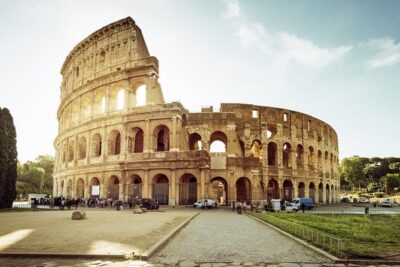
Colosseum, Palatine Hill and Roman Forum Guided Tour
Read our review →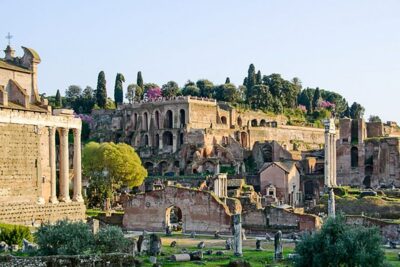
Guided Tour of Colosseum, Roman Forum & Palatine Hill
Read our review →
Colosseum & Forum with Audio Guide App -Optional Arena
Read our review →
Colosseum, Roman Forum and Palatine Hill Guided Tour
Read our review →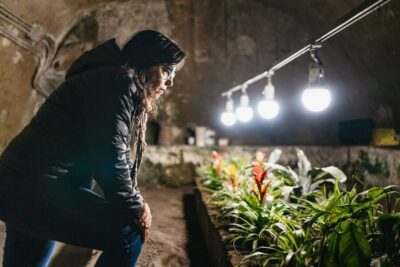
Naples Underground Entry Ticket and Guided Tour
Read our review →