Reviewed · GUIDED
Rome: Trevi Fountain District and Underground Domus Guided Tour
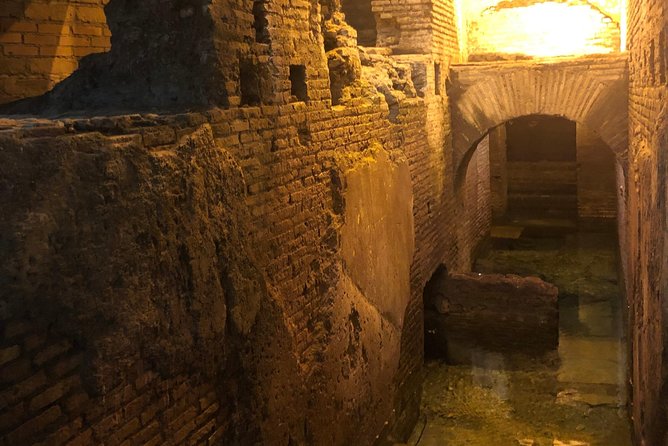
Beneath the crowded Trevi Fountain district, nine meters below street level, lies a compact archaeological site where ancient Roman walls, a cistern, and an aqueduct water tank tell a quieter story. I like that this 55-minute tour gets you away from the heat and noise while showing how Rome’s water system worked.
I also like the small group, limited to 15 people, and the way the best guides turn a tight archaeological space into a clear story. Guides named Erika, Michelle, and Noemi have been especially praised for their energy, humor, and command of the subject.
The main drawback is size. Vicus Caprarius is small, with only a few underground levels and rooms, not a long maze of tunnels. At $53.10 per person, the guided explanation must matter to you, since independent entry can cost far less.
Key Points at a Glance

- Nine meters below Trevi Fountain: Enter the Vicus Caprarius archaeological site beneath the modern city.
- Ancient Roman waterworks: See a tank connected to the Vergine aqueduct and learn why Rome is known as the City of Water.
- Striking finds: Look for polychrome marble, the head of Alessandro Helios, 800 Roman coins, and African oil amphorae.
- Short and focused: The underground visit lasts about 45 minutes, followed by roughly 10 minutes at Trevi Fountain.
- Small English-speaking group: The group can include no more than 15 people, with a guide leading the visit.
- Gelato included: The package includes Italian gelato, a welcome treat after the archaeological visit.
What This Trevi Underground Tour Really Covers
This is not a broad walking tour of every landmark around Trevi Fountain. It is a guided visit to one archaeological site, followed by time at the fountain itself.
That distinction matters. The name may suggest a detailed tour of the fountain district, with extensive stories about nearby streets, churches, fountains, and monuments. In practice, most of the substance is underground at Vicus Caprarius. The Trevi Fountain stop is brief and gives you a chance to take photographs, hear a little about the fountain and its legends, and toss in a coin if you wish.
I see this as a short specialist visit rather than a full neighborhood tour. If you want to understand the ancient water system beneath this part of Rome, it is a useful addition to your sightseeing day. If you want a long, sweeping account of Trevi Fountain and its surroundings, you may find the scope too narrow.
A few other Rome mornings to weigh against this
- Colosseum, Roman Forum & Palatine Guided Tour
★ 4.7 · 63,148 reviews - Vatican Museums, Sistine Chapel & St Peter’s Basilica Guided Tour
★ 4.5 · 39,149 reviews - Rome: Colosseum, Palatine Hill and Roman Forum Guided Tour
★ 4.8 · 32,814 reviews
Meeting Beneath Vicolo del Puttarello
You meet at Vicolo del Puttarello 25, just steps from Trevi Fountain. The ticket redemption point and the start of the guided visit are both at Vicus Caprarius, also called the City of Water.
There is no hotel pickup, so you need to make your own way there. The meeting point is near public transportation, but the information provided does not specify a particular station or route. Give yourself enough time to find the narrow street, especially if you are arriving during the busy Trevi Fountain period.
The staff assists with entry, then your guide leads the group below street level. Confirmation is provided when you book. The maximum group size is 15, which is a useful limit in a site where space is tight and a large crowd could make it hard to hear.
Entering the Vicus Caprarius Archaeological Site
Vicus Caprarius was discovered in 1999 in the basement of a cinema. That modern setting is part of the appeal. You are not entering a grand ruin in an open field. You are stepping into the older layers of Rome beneath an ordinary urban building.
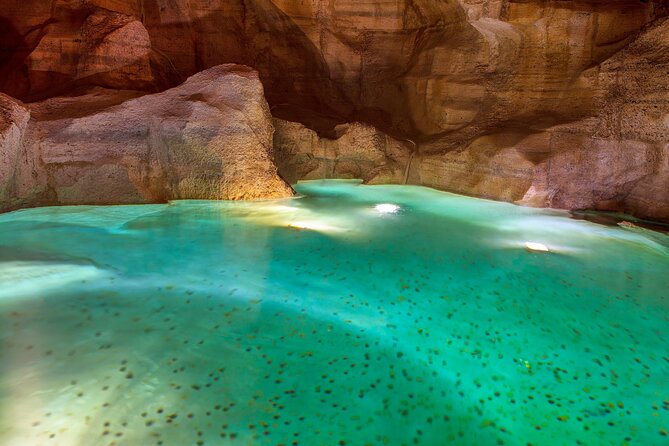
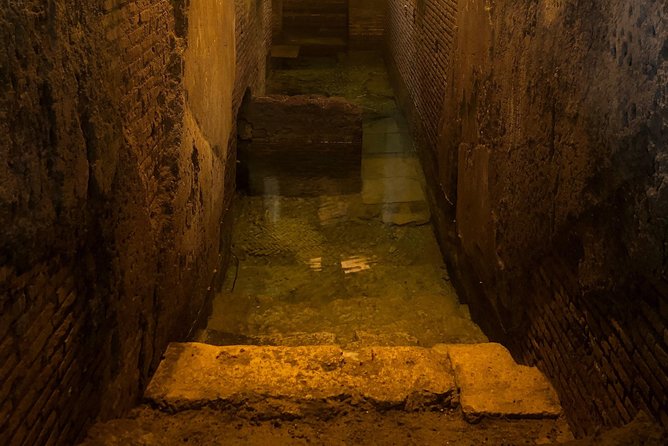
The site sits about 30 feet, or nine meters, below the streets. Inside, you see remains linked to a Roman villa and an ancient cistern. The excavation also reveals a water tank connected to the Vergine aqueduct, the water source associated with the fountains in this part of Rome.
The scale is modest. Several descriptions of the visit point out that the site is essentially a small archaeological area with two levels or a limited number of rooms. You should picture a compact underground exhibit, not miles of passageways. That can feel underwhelming if you arrive expecting an extensive subterranean city.
Still, the small scale lets the guide keep the story close to the evidence. You can look directly at the masonry, water structures, and objects rather than racing through a huge complex. A good guide makes the space feel purposeful, even when there is not much walking.
Rome’s Water Story, Told Below the Fountain
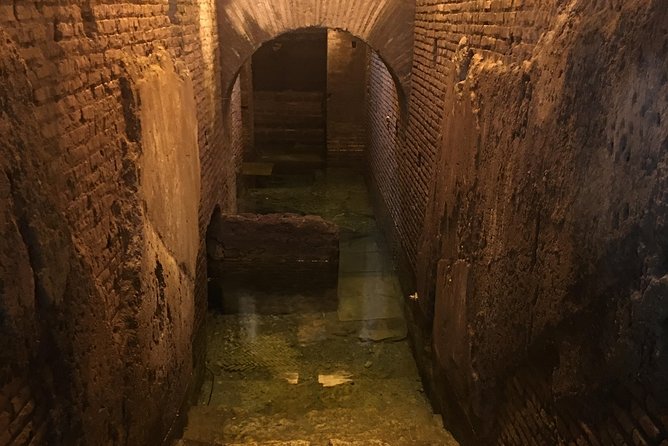
Water is the organizing theme of the visit. The guide explains how Roman engineers managed water thousands of years ago and how the aqueduct system supplied fountains and buildings.
The visible tank connected to the Vergine aqueduct gives the subject a physical anchor. Instead of hearing only about Rome’s ancient engineering at a museum or on a street corner, you see one of the structures tied to the system. This helps explain why the area is called the City of Water.
I like this angle because it changes how you look at Trevi Fountain afterward. The fountain is not just a dramatic Baroque monument where you pose for a photograph. It also belongs to a much older network that carried water into the city. The underground stop provides that missing layer.
The experience may also touch on sanitation and daily Roman life. One review describes a historical focus on the development of sanitation, including the history of toilets alongside fountains and other water landmarks. The exact emphasis can depend on the guide, but the theme is broader than engineering alone. Water affected cooking, washing, public life, health, and the design of Rome itself.
Same city, an entirely different afternoon:
- Vatican Museums & Sistine Chapel Tour with Optional Basilica
★ 4.3 · 67,413 reviews - Rome: Guided Tour of Colosseum, Roman Forum & Palatine Hill
★ 4.7 · 27,897 reviews - Rome: Colosseum & Forum with Audio Guide App -Optional Arena
★ 4.2 · 24,770 reviews - Rome: Colosseum, Roman Forum and Palatine Hill Guided Tour
★ 4.5 · 23,903 reviews
The Finds Inside the Underground Domus
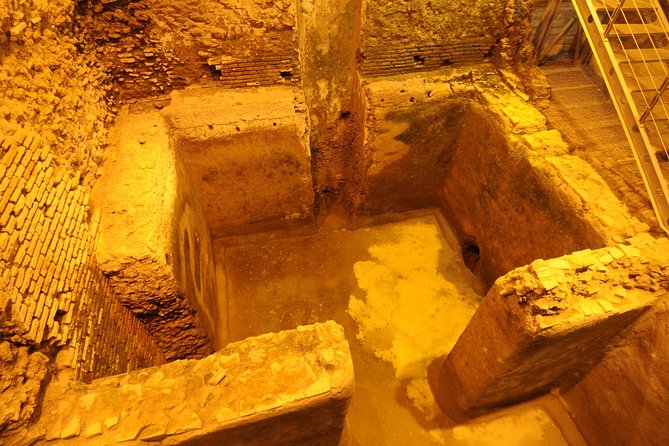
The archaeological objects add variety to the walls and water tank. You can see precious polychrome marble coverings, which give a sense of the decorative finish used in Roman interiors.
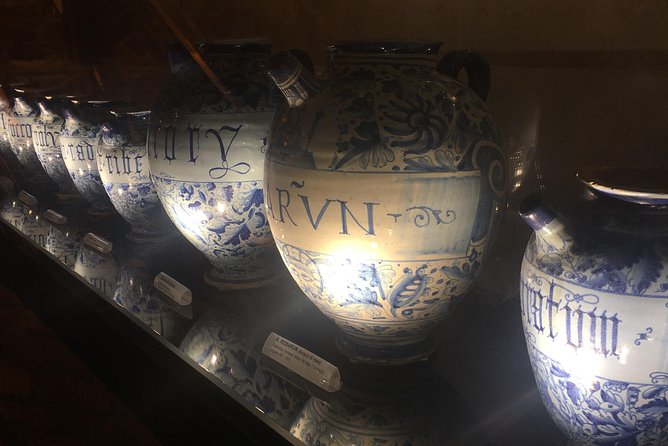
Another notable object is the head of Alessandro Helios. The site also contains a collection of 800 coins, described as a treasure trove found during the excavation. Coins can seem small compared with monumental ruins, but they help connect the site to ordinary trade, money, and movement through the ancient city.
The African amphorae called spatheia are another unusual feature. These were used to transport oil. Their presence points to commercial links across the Roman world and reminds you that Rome depended on goods arriving from far beyond central Italy.
The objects matter because they keep the tour from being only a lesson in plumbing. You see construction, decoration, money, and trade in one compact visit. The site gives you several ways to picture the people who used the buildings and water system.
The Guide Makes the Difference
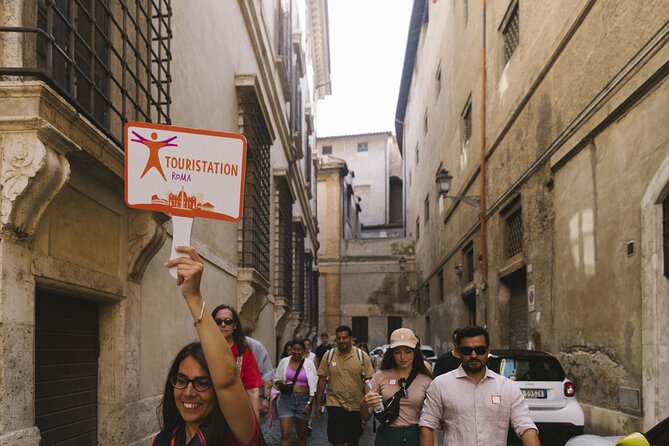
In a small underground space, the guide carries much of the experience. The strongest part of this tour is likely to be the explanation, not the amount of ground covered.
Erika has received repeated praise for making Roman history easy to follow, adding humor, answering questions, and keeping the pace personal. Michelle has been singled out for careful explanations, energy, and attention to detail. Noemi, also spelled Neomi in one account, has been praised for explaining the ancient water system with enthusiasm and clarity.
Guide assignments are not guaranteed, so you should not book on the assumption that one particular person will lead your visit. Still, these names give you a useful sense of the qualities to hope for: a guide who can connect the cistern, aqueduct, objects, and modern fountain into one story.
The tour is offered in English. A small group helps, but the site can still feel crowded. One description notes that the underground area becomes busy and that a screaming child affected the atmosphere during one visit. That is not a flaw unique to this experience, but it is worth keeping in mind when your expectations depend on a quiet archaeological setting.
Finishing at Trevi Fountain
After the underground visit, you return to street level and end at the iconic fountain. The time allocated here is about 10 minutes.
That is enough for a quick look, photographs, and the famous coin ritual. The legend says that tossing a coin into the fountain ensures your return to Rome someday. You can take part if you like, though the tour does not promise a private viewing area or special access to the fountain itself.
Trevi Fountain is usually crowded. You may have trouble hearing a detailed explanation at street level, and the short stop is not designed for a long architectural lecture. I would treat this as a convenient conclusion to the underground visit, not the central reason to buy the tour.
If you want better photographs, you may need to stay in the area after the formal visit and wait for a suitable opening. The tour gives you the location and basic orientation, but it does not remove the crowds.
What the Gelato Adds
Italian gelato is included. The supplied details do not specify the flavor, shop, or exact timing, so you should regard it as a small included treat rather than a full food stop.
That is a pleasant way to finish a short visit, especially after spending time below street level. It also adds a little immediate value to a package that otherwise consists mainly of admission and guiding.
Food and drinks beyond the included gelato are not covered. Do not plan on this being a meal or a tasting tour.
Is $53.10 a Fair Price?
At $53.10 per person, this is not the cheapest way to see Vicus Caprarius. One price comparison in the supplied material points out that self-guided admission can be around €4 per person. That makes the guided package expensive if you only want to enter the site and look around.
The price becomes easier to defend if you value interpretation. You are paying for reserved entry, a guide, assistance from Touristation staff, a small group, the Trevi Fountain component, and gelato. The guide explains the water tank, villa, cistern, artifacts, and link to the fountain in a way that a quick self-guided visit may not.
I would ask yourself three questions:
- Do you enjoy archaeological sites more when someone explains what you are seeing?
- Is your time in Rome limited, making a prearranged 55-minute visit useful?
- Would you pay extra for an English-speaking guide and a group capped at 15?
If the answer is yes, the price can work. If you are happy reading signs, using a guidebook, and spending only a few minutes inside, the self-guided option may be better value.
The tour is also booked, on average, 39 days ahead. That suggests you should reserve early if the time you want matters, though availability can change.
Who Should Book This Experience?
I would recommend it most to someone who has already seen Rome’s major monuments and wants a less obvious side of the city. It suits history fans, people interested in Roman engineering, and anyone curious about what lies under modern streets.
Families can take part, and most people can participate. The site is not suitable for people with mobility impairments, so check your own needs before booking. The details do not provide a full description of stairs or interior access, but the stated restriction is clear.
It also fits neatly into a day around Trevi Fountain. You can visit the underground site first, then spend more time at the fountain, nearby streets, and other central sights. Since the formal program lasts less than an hour, it will not consume a large part of your day.
I would be more cautious about recommending it to someone who wants a grand underground complex. The archaeological area is small, and several accounts describe it as basically one compact section or two levels. Set the right expectation and you are more likely to appreciate what is there.
Practical Tips for a Better Visit
Report directly to Vicolo del Puttarello 25. Do not wait at the fountain for the guide, since the tour begins at the archaeological site.
Arrive ready to spend most of the visit listening in a confined underground space. A small group is helpful, but you may still be close to other people.
Keep your expectations focused on archaeology and water. The tour explains the Trevi area through its ancient foundations and aqueduct, but it is not an extensive walking tour of the neighborhood.
Plan extra time after the formal 10-minute fountain stop if you want photographs or a closer look. The fountain is free to view, and the tour does not provide a private section away from the crowd.
The cancellation policy is flexible up to 24 hours before the start time, when you can receive a full refund. Cancellations or changes made within 24 hours are not accepted for a refund, and the experience requires a minimum number of participants. If that minimum is not met, you are offered another date or experience, or a full refund.
Should You Book the Vicus Caprarius Tour?
Book it if you want a short, guided look at Rome’s water system and ancient underground layers, and if a strong English-speaking guide adds real value for you. The cistern, aqueduct tank, marble, coins, Alessandro Helios head, and African amphorae give the visit more substance than a quick glance at old walls.
Skip it if you expect long tunnels, a large domus, or a detailed walking tour of Trevi Fountain. The site is compact, the fountain stop is brief, and the price is much higher than basic independent admission.
For the right audience, this is a smart small-scale addition to a Rome itinerary. It gives you a different way to understand a famous fountain, and it does so without taking half a day. Just buy it for the story beneath Trevi, not for an extensive tour of Trevi itself.
FAQ
Where does the tour start?
The tour starts at Vicolo del Puttarello 25, 00187 Rome, at the Vicus Caprarius archaeological site.
Where does the tour end?
The activity ends back at the meeting point after the underground visit and the Trevi Fountain stop.
How long does the tour last?
The experience lasts approximately 55 minutes. About 45 minutes are allocated to Vicus Caprarius and about 10 minutes to Trevi Fountain.
Is the tour offered in English?
Yes. The tour is offered in English.
How far underground does the tour go?
The visit takes you about 30 feet, or nine meters, below the streets of Rome.
What can I see at Vicus Caprarius?
You can see remains of a Roman villa, an ancient cistern, a water tank connected to the Vergine aqueduct, polychrome marble coverings, the head of Alessandro Helios, 800 coins, and African spatheia amphorae used to transport oil.
Is the Trevi Fountain ticket included?
Yes. Trevi Fountain access is included, though the fountain itself is free to view.
Is gelato included?
Yes. Italian gelato is included in the experience.
What is the maximum group size?
The tour has a maximum of 15 participants.
Is the tour suitable for people with mobility impairments?
No. The experience is not suitable for people with mobility impairments.
Is hotel pickup included?
No. You must make your own way to the meeting point, since hotel pickup and drop-off are not included.
Can I cancel for a full refund?
Yes, if you cancel at least 24 hours before the experience start time. Cancellations or changes made less than 24 hours before the start time are not refunded.
Fresh on the Rome list
- Rome: Guided Catacombs Tour & Capuchin Crypt (Audio Guide)★ 4.3 · 191 reviews
- Guided tour of the Colosseum, Roman Forum and Palatine in Spanish★ 4.5 · 191 reviews
- Rome: Borghese Gallery Guided Tour with Skip-the-Line Ticket★ 4.5 · 192 reviews
- Rome: Arena Colosseum Tour with Arena Access★ 4.6 · 193 reviews
- Rome: Colosseum & Roman Forum Guided Tour★ 5.0 · 194 reviews
- Colosseum, Forum, Palatine Hill with audio guide and Arena or Bus option★ 4.0 · 193 reviews
- Rome: Domus Aurea Guided Tour and Virtual Reality Experience★ 4.7 · 194 reviews
- Rome Vintage Fiat 500 car Tour With Photographer★ 5.0 · 194 reviews
Guided, compared.
Colosseum, Roman Forum & Palatine Guided Tour
Read our review →
Vatican Museums, Sistine Chapel & St Peter’s Basilica Guided Tour
Read our review →
Colosseum, Palatine Hill and Roman Forum Guided Tour
Read our review →
Guided Tour of Colosseum, Roman Forum & Palatine Hill
Read our review →
Colosseum & Forum with Audio Guide App -Optional Arena
Read our review →
Colosseum, Roman Forum and Palatine Hill Guided Tour
Read our review →
Naples Underground Entry Ticket and Guided Tour
Read our review →