Reviewed · ROME TOURS
Rome: Tour of St. Clement’s Basilica Underground Temples
Rome’s Basilica di San Clemente is a history book you walk through, one floor at a time. Begin in the 12th-century church, descend to a 4th-century Christian basilica, then continue below street level to a Roman house and one of the city’s best-preserved Mithraic temples. A small underground river adds a wonderfully strange final touch.
I like the way this tour links pagan Rome and early Christianity instead of treating them as separate subjects. I also like the guides’ strong command of the site. Francesca and Lorenzo receive repeated praise, while Paul has been described as an archaeologist and professor. The main drawback is practical: the underground rooms are not wheelchair accessible and may feel uncomfortable if you dislike tight, enclosed spaces.
Key reasons to consider this tour
- Fourteen meters below modern Rome: Follow the basilica downward through several periods of Roman history.
- A preserved Mithraic temple: See the remains of a secretive pagan cult and hear how its rituals fit into ancient Roman life.
- Early Christian frescoes: Study some of the oldest Christian paintings in Rome, including scenes of persecution and martyrdom.
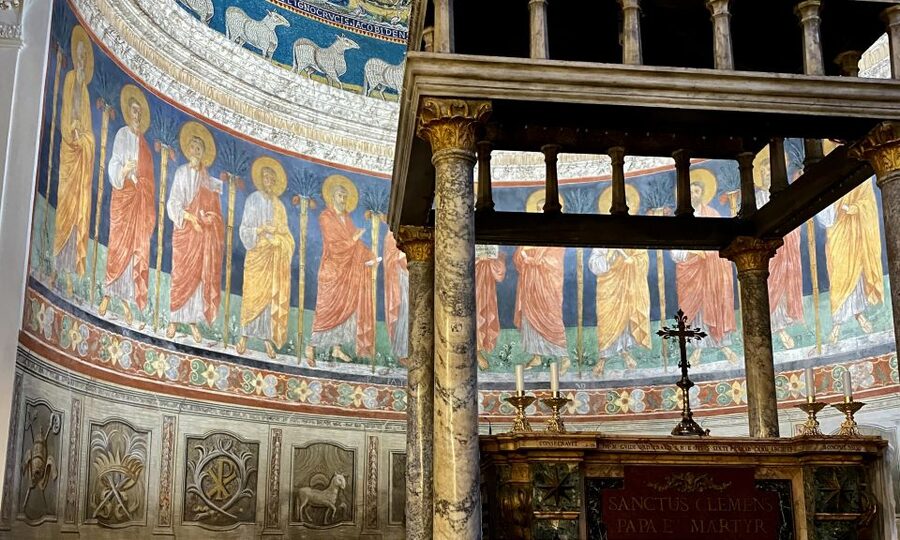
- A golden apse mosaic: Learn how the 12th-century basilica uses vines, animals, and Christian symbols to express its beliefs.
- Optional Santo Stefano Rotondo: Add 45 minutes of circular architecture and stark martyrdom frescoes.
- Strong guiding matters here: The site is fascinating, but much of its meaning is easy to miss without explanations.
Why San Clemente feels like Rome in layers
Rome can sometimes feel like a city where one monument competes with the next. San Clemente works differently. Its power comes from the fact that the buildings are stacked directly on top of one another.
You begin in the present church, built in the 12th century. Beneath it is a 4th-century Christian basilica. Farther down are older Roman structures, including a house associated with the site of St. Clement and a Mithraic sanctuary. The tour takes roughly an hour, but the sense of time stretches much farther.
I find this format especially useful if you want to understand how Rome changed without losing its earlier foundations. Christianity did not arrive on an empty stage. It developed in a city already filled with household shrines, public gods, private cults, Roman engineering, and older buildings. San Clemente lets you see that change in physical form.
The guide is important because the rooms below ground are not self-explanatory. A wall may look like a wall until you learn whether it belonged to a home, a church, or a sanctuary. A damaged fresco may seem like a patch of color until its subject and date are explained.
A few other Rome mornings to weigh against this
- Vatican Museums & Sistine Chapel Tour with Optional Basilica
★ 4.3 · 67,413 reviews - Colosseum, Roman Forum & Palatine Guided Tour
★ 4.7 · 63,148 reviews - Vatican Museums, Sistine Chapel & St Peter’s Basilica Guided Tour
★ 4.5 · 39,149 reviews
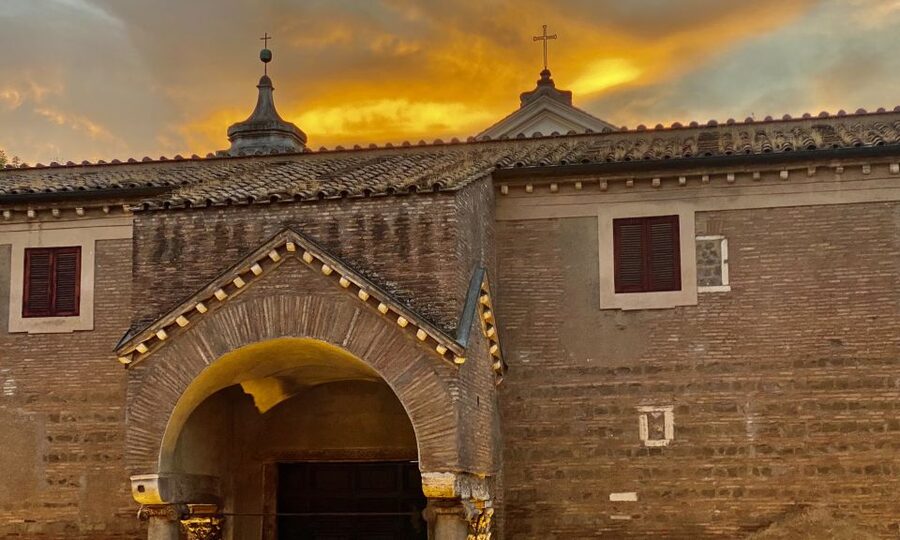
Starting in the 12th-century basilica
The tour begins at Piazza di San Clemente, outside the basilica. The meeting point can vary with the booking option, so check your confirmation carefully and arrive ready to start on time.
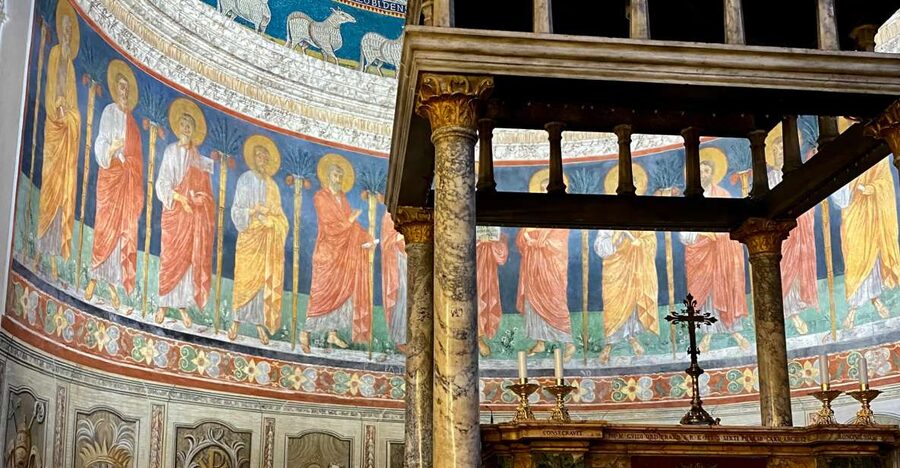
Before heading below ground, your guide introduces the present church. San Clemente is not Rome’s largest basilica, but its apse mosaic gives the visit a strong beginning. The gold catches the eye, then the details begin to emerge: Christian symbolism, interwoven decoration, and imagery tied to the church’s spiritual message.
This opening matters because it gives you a reference point. After seeing the medieval church above, the descent feels more dramatic. You are not simply entering an archaeological site. You are moving backward through the foundations of the building you just entered.
I would take a moment here before following the group downstairs. Look up at the apse, listen to the guide’s explanation, and notice how the church’s decoration reflects medieval Christianity. The underground levels can be dark and visually crowded, so this calmer first stop helps you understand the religious setting before the archaeology begins.
Photography is not permitted inside, and video recording is also prohibited. That may disappoint anyone hoping to document the mosaic or frescoes, but it also keeps the visit quiet and focused.
Descending to the 4th-century Christian church
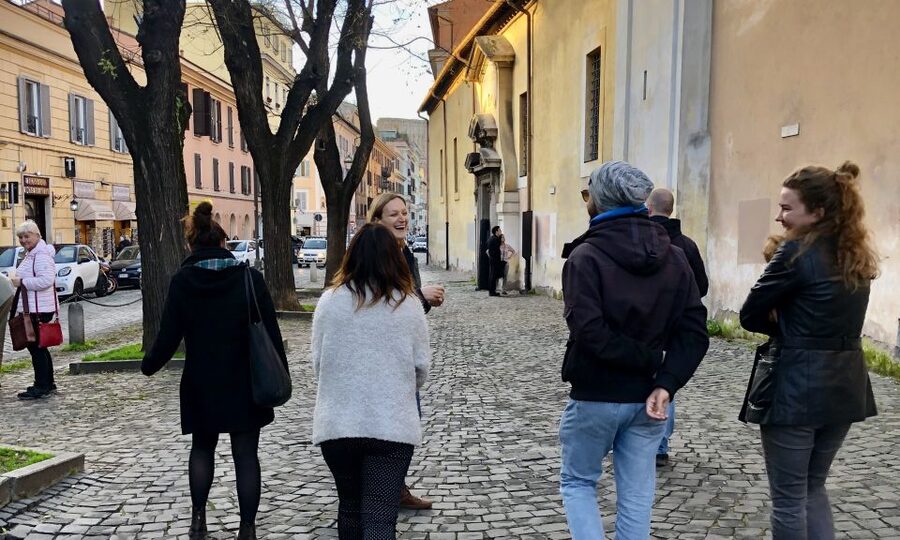
The first major underground stop is the 4th-century basilica. It was built over an earlier Roman house connected with St. Clement, traditionally regarded as the third pope of Rome.
This level brings you close to the earliest Christian communities in the city. The frescoes show Christian stories, including the suffering and martyrdom of early believers. They are not polished in the way later Renaissance paintings are, and that is part of their value. You are looking at an early stage of Christian art, preserved below a later church.
Your guide explains how these images relate to persecution and to the growth of Christianity in Rome. The paintings become easier to read once you know what to look for. You may notice figures, gestures, and scenes that would otherwise blend into the worn surfaces.
The atmosphere is a major part of the visit. The lower rooms are quiet, enclosed, and removed from the noise of Rome above. That mood can feel eerie, especially as the tour moves farther underground. If you have claustrophobia, take the warning seriously. This is not a quick look into a broad open crypt. The route uses enclosed archaeological spaces and stairs.
For anyone interested in early Christian Rome, this is likely the heart of the tour. The Colosseum can show you the scale of imperial power. San Clemente shows you the small rooms and fragile images tied to a different kind of community.
The Roman house and the city below street level
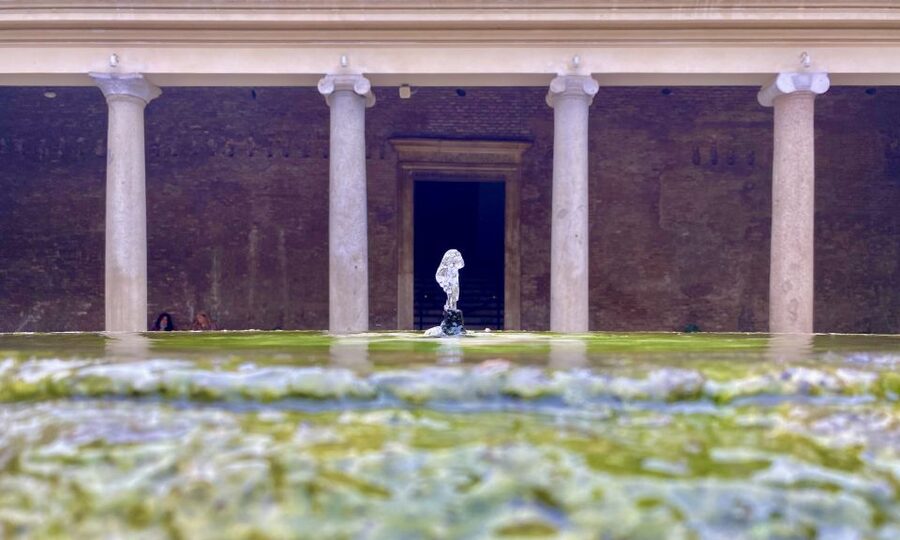
The lowest levels reveal the older Roman structures beneath the Christian church. The exact emphasis can vary with the guide and site conditions, but you should expect a close look at ancient walls, altered floor levels, and the way later builders used what was already there.
One useful idea is that ancient Rome was not always buried by a single dramatic disaster. Over centuries, streets, buildings, and floors rose. New structures were placed over old ones, and the city gradually gained height. At San Clemente, you can see that process rather than merely hearing about it.
The site also gives you a sense of ancient street level. A review of a past visit described this as a highlight, because it helped create a feeling for how far modern Rome has risen above the Roman city. That is a valuable distinction. You are not only viewing ruins. You are standing in a space that once belonged to daily Roman life.
The archaeology is less immediately decorative than the mosaic or frescoes. Some visitors may find the walls and foundations harder to picture. This is where a good guide earns the fee, by turning rough masonry into a readable sequence of construction, reuse, and religious change.
Same city, an entirely different afternoon:
- Rome: Colosseum, Palatine Hill and Roman Forum Guided Tour
★ 4.8 · 32,814 reviews - Rome: Guided Tour of Colosseum, Roman Forum & Palatine Hill
★ 4.7 · 27,897 reviews - Rome: Colosseum & Forum with Audio Guide App -Optional Arena
★ 4.2 · 24,770 reviews - Rome: Colosseum, Roman Forum and Palatine Hill Guided Tour
★ 4.5 · 23,903 reviews
Inside the Mithraic temple
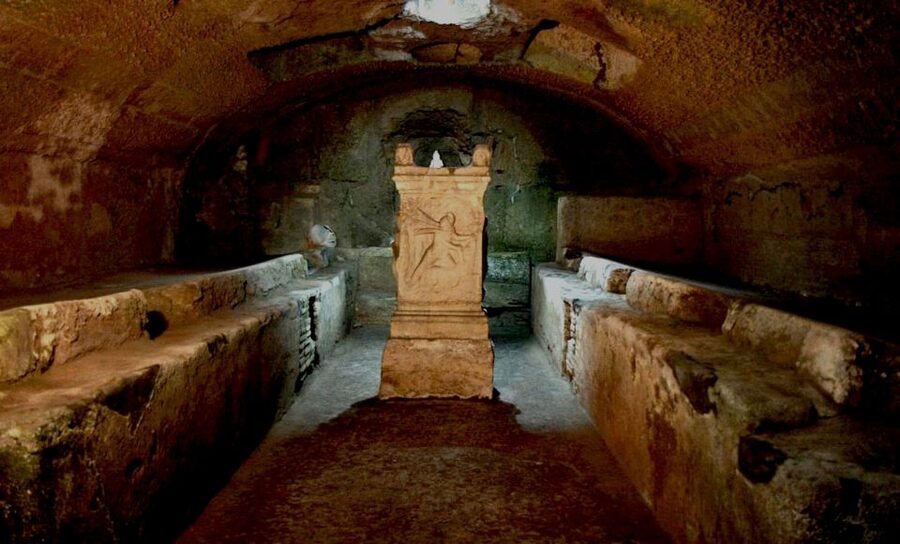
The Mithraic temple is the tour’s most unusual stop. Mithraism was a Roman mystery cult, and its sanctuaries were generally private spaces connected with initiation and ritual. San Clemente preserves one of the better examples in Rome.
The guide explains the beliefs and ceremonies associated with the cult, while also separating what is firmly known from what remains uncertain. That distinction is useful. Ancient mystery religions invite dramatic claims, but the evidence is often incomplete. A careful explanation makes the site more interesting, not less.
The temple’s scale helps you imagine how different religious life could be in ancient Rome. Alongside official public worship, people joined smaller groups with their own symbols, meals, ranks, and ceremonies. The Mithraic sanctuary gives you a glimpse of that private side of Roman religion before Christianity became dominant.
Nearby, you can hear or see the water of an underground river. It is a simple feature, but it changes the mood of the room. The sound makes the underground setting feel alive, and it reminds you that the ancient builders had to work with the physical conditions beneath the city.
This is one reason I would not visit San Clemente without a guide if the subject interests you. The temple is not a grand hall filled with obvious objects. Its importance lies in the combination of architecture, ritual use, Roman religious practice, and the layers above it.
Returning to the basilica and looking up again
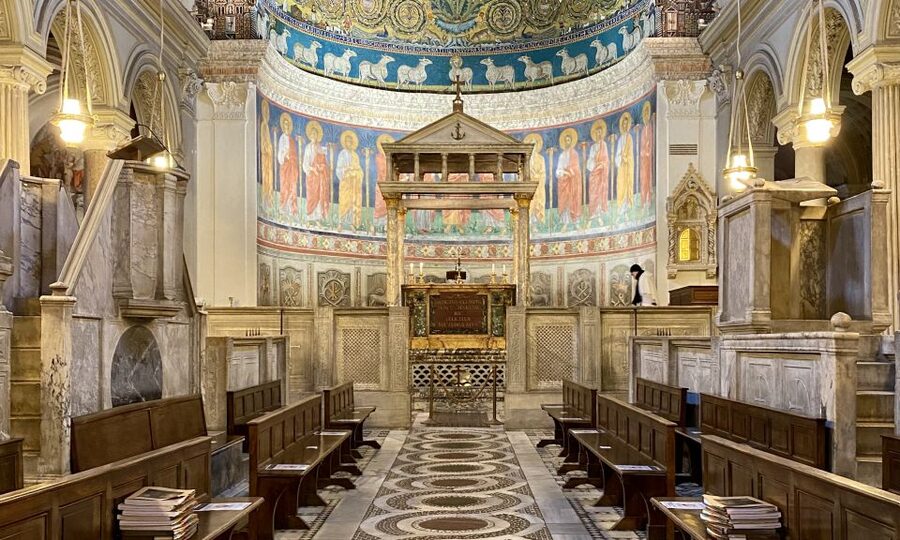
After the underground levels, you return to the 12th-century church. The ascent creates a neat visual and intellectual loop. You have seen what lies beneath the mosaic, then come back to view it with a clearer sense of the ground it occupies.
That contrast is one of the tour’s best teaching tools. The basilica is not an isolated medieval monument. It is the latest visible chapter in a much older site. The golden apse now carries more weight because you have just passed through earlier Christian and pagan spaces below.
The tour lasts about one hour at San Clemente. That is long enough to cover the major levels without turning the visit into an exhausting archaeology seminar. Guides such as Francesca, Lorenzo, and Paul have been singled out for their clear explanations, humor, and willingness to answer questions. Paul, in particular, has been described as an archaeologist and Rome-based professor, though your assigned guide may be someone else.
Headsets are provided, which matters in underground rooms where sound can bounce and group members may need to stand in different spots. The available guiding languages are English, Italian, Spanish, French, German, and Portuguese. A private group option is also available if you prefer a more personal format.
Adding 45 minutes at Santo Stefano Rotondo
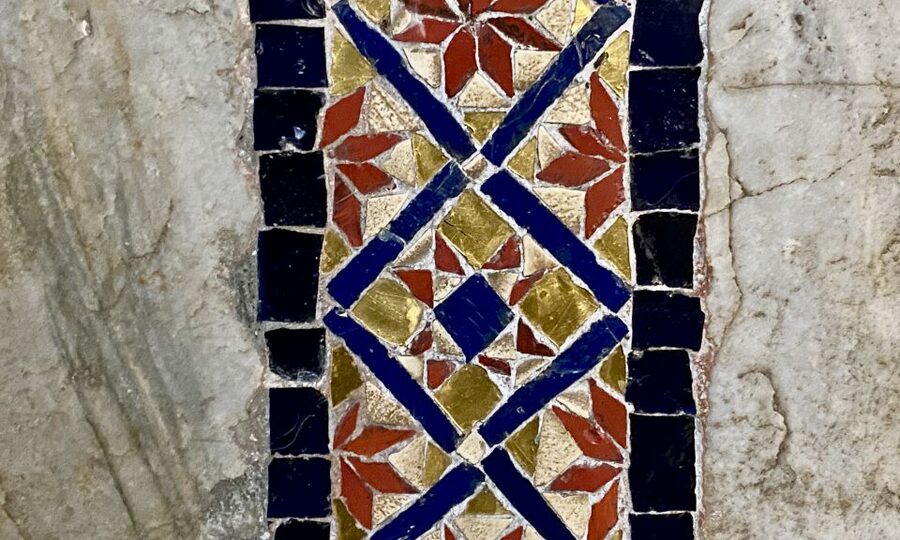
The optional extension continues on foot to Santo Stefano Rotondo, about 15 minutes away. The added visit takes roughly 45 minutes and brings a different mood from San Clemente.
Santo Stefano Rotondo is known for its circular design and graphic frescoes showing the martyrdom of early Christians. These paintings are direct and often disturbing. They are not a gentle introduction to Christian art, and the content may not suit young children.
The church makes a strong companion to San Clemente because the first site helps explain early Christian communities, while the second confronts you with the violence and suffering attached to Christian martyr stories. The circular architecture also changes the way you read the space. Instead of moving through a straightforward basilica, you take in a central, surrounding arrangement.
I would add this extension if you have a serious interest in Christian art or early church history. If your main goal is the underground temple, the one-hour San Clemente visit is enough. Santo Stefano adds depth, but it also adds emotionally heavy images and another 45 minutes on your feet.
The order can change. Depending on the schedule, you may visit Santo Stefano first and San Clemente second, or the other way around. The extension may also be unavailable during special events or liturgical celebrations.
Is $70 a fair price?
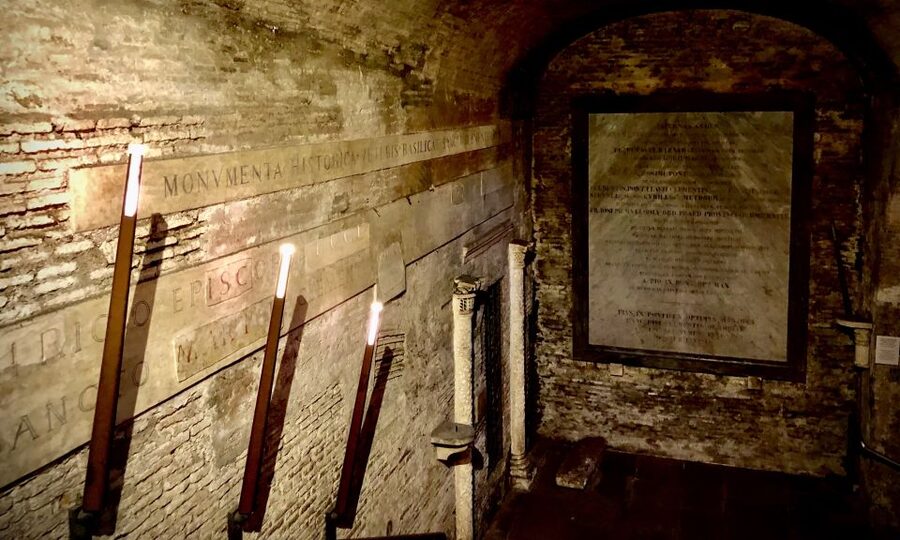
At $70 per person, this is not a bargain basement attraction. The cost includes the live guide, entrance to San Clemente, headsets, and Santo Stefano Rotondo only if you choose that option during booking. The Santo Stefano visit is not automatically included in every version, so check the selected package before paying.
I think the price makes sense for visitors who want interpretation, not just entry. San Clemente’s importance is hidden in the sequence of rooms and the connections between them. Without context, you could still admire the underground walls and frescoes, but you might miss why the levels matter.
The value is strongest when your guide brings specialist knowledge to the visit. Past guides have included Francesca, Lorenzo, Anestis, Daniel, Tara, Sam, and Paul. The consistently high rating of 4.8 from 242 ratings reflects the importance of the guiding, with repeated praise for clear English, humor, detailed explanations, and an inviting approach to questions.
The price is harder to justify if you only want a quick look at a church or if you dislike guided sightseeing. This is a compact history lesson with a fixed route. You will get more from it if you enjoy archaeology, Roman religion, Christian art, and places that require explanation.
Who will enjoy the underground route?
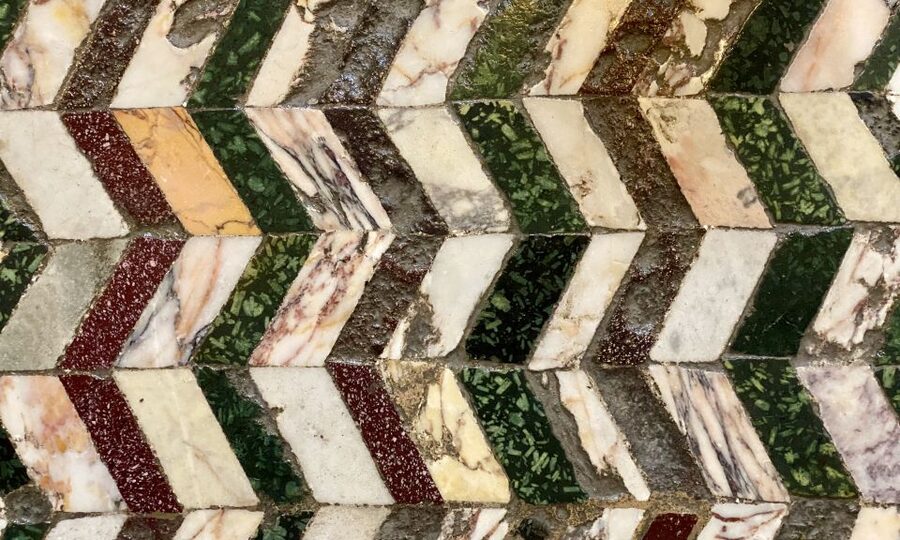
I recommend San Clemente to you if you have already seen Rome’s major imperial monuments and want a quieter, more unusual site. It is also a good choice early in a Rome visit because it gives you a useful way to think about the city’s many construction periods.
The tour suits:
- People interested in Roman archaeology and religious history
- Visitors who enjoy frescoes and early Christian art
- First-time visitors wanting something beyond the largest monuments
- Families with older children who can handle enclosed rooms and serious subject matter
- Anyone who prefers a guide to explain what bare ruins mean
It is less suitable for wheelchair users because of the architectural structures and underground route. Comfortable shoes are important. Shorts, short skirts, sleeveless shirts, food, drinks, pets, and sharp objects are not allowed, and alcohol and drugs are prohibited.
The lower rooms may be uncomfortable for people with claustrophobia. The frescoes at Santo Stefano Rotondo show graphic martyrdom scenes, so consider skipping the extension if children in your group may find such images upsetting.
Practical planning for the visit
Allow one to two hours, depending on whether you select Santo Stefano Rotondo. The core San Clemente tour lasts about an hour. With the extension and the 15-minute walk between sites, the visit takes longer and requires more time on foot.
The starting point is listed at Piazza di San Clemente, but the precise meeting details can vary by booking option. Read the confirmation rather than relying only on a map pin.
The tour can be canceled up to 24 hours before departure for a full refund, and a reserve-now, pay-later option is available. Weather and liturgical events can affect the schedule. If the tour is canceled, you are offered another date or a full refund. If one church area closes, the guide may adjust the route and use alternative sites while keeping the overall duration unchanged.
I would avoid placing this tour immediately before a hard-to-miss appointment. Church schedules and special events can affect the optional extension, and the underground visit deserves enough breathing room to ask questions and look carefully.
Should you book San Clemente?
Book it if you want to see Rome’s religious past as a physical sequence: medieval basilica above, early Christian church below, Roman structures farther down, and a Mithraic sanctuary near an underground stream. That combination is unusual even in Rome.
I especially recommend it for visitors who value a strong guide. The site rewards explanation, and guides such as Francesca, Lorenzo, and Paul have shown how much a lively, well-prepared leader can add.
Skip the extension if your interest is mainly pagan Rome, or add Santo Stefano if you want a heavier look at early Christian martyr art. At $70, the tour is best value for curious visitors who want meaning along with admission. If you are comfortable with stairs, enclosed rooms, strict church rules, and a little darkness underground, this is one of Rome’s most rewarding short visits.
FAQ
How long does the San Clemente underground tour last?
The guided visit to Basilica di San Clemente lasts about one hour. The optional Santo Stefano Rotondo visit adds 45 minutes, with about a 15-minute walk between the churches.
What is included in the tour price?
The price includes an expert live guide, entrance fees to Basilica di San Clemente, and headsets. Guided entry to Santo Stefano Rotondo is included only when you select that extension during purchase.
Does the tour include Santo Stefano Rotondo?
Only the extended option includes the guided visit to Santo Stefano Rotondo. The extension may occasionally be unavailable because of special events or liturgical celebrations.
Which languages are available?
Guiding is available in English, Italian, Spanish, French, German, and Portuguese.
Is the tour accessible to wheelchair users?
No. The architectural structures inside and below San Clemente mean that this tour is not accessible to wheelchair users.
Could the underground route be difficult for people with claustrophobia?
Yes. The underground spaces can feel enclosed, so the tour may not be suitable for people with claustrophobia.
Are children allowed at Santo Stefano Rotondo?
The tour information does not set a general age restriction, but the frescoes at Santo Stefano Rotondo show graphic scenes of martyrdom and may not be suitable for children.
Can I take photographs inside?
Photography and video recording are not allowed inside the churches.
What should I wear and bring?
Wear comfortable shoes. Shorts, short skirts, and sleeveless shirts are not allowed, and food and drinks cannot be brought inside.
Fresh on the Rome list
- Rome: Guided Catacombs Tour & Capuchin Crypt (Audio Guide)★ 4.3 · 191 reviews
- Guided tour of the Colosseum, Roman Forum and Palatine in Spanish★ 4.5 · 191 reviews
- Rome: Borghese Gallery Guided Tour with Skip-the-Line Ticket★ 4.5 · 192 reviews
- Rome: Arena Colosseum Tour with Arena Access★ 4.6 · 193 reviews
- Colosseum, Forum, Palatine Hill with audio guide and Arena or Bus option★ 4.0 · 193 reviews
- Rome: Colosseum & Roman Forum Guided Tour★ 5.0 · 194 reviews
- Rome: Domus Aurea Guided Tour and Virtual Reality Experience★ 4.7 · 194 reviews
- Rome Vintage Fiat 500 car Tour With Photographer★ 5.0 · 194 reviews
Rome Tours, compared.
Vatican Museums & Sistine Chapel Tour with Optional Basilica
Read our review →
Colosseum, Roman Forum & Palatine Guided Tour
Read our review →
Vatican Museums, Sistine Chapel & St Peter’s Basilica Guided Tour
Read our review →
Colosseum, Palatine Hill and Roman Forum Guided Tour
Read our review →
Guided Tour of Colosseum, Roman Forum & Palatine Hill
Read our review →
Colosseum & Forum with Audio Guide App -Optional Arena
Read our review →
Colosseum, Roman Forum and Palatine Hill Guided Tour
Read our review →