
Reviewed · FOOD TOURS
Rome Street Food Tour with Local Guide
Rome’s best street food is tied to its streets, markets, and old neighborhoods, and this tour makes a meal out of that connection. You begin at Campo de’ Fiori, then walk toward the Jewish Ghetto, the Portico of Octavia, and Largo Argentina while sampling Roman staples along the way.
I like the mix of food and sightseeing, especially the chance to try supplì, pizza, Roman-Jewish specialties, and handmade gelato in one outing. I also like the small-group limit of 15 people, which gives guides such as Ramona, Francesca, Mattia, and Matteo room to explain both the dishes and the city. The main catch is dietary: this tour cannot accommodate vegan, gluten-free, or dairy-free diets, and much of the experience takes place on foot and outdoors.
Key Points to Know Before You Book
- Start with Roman market food: Morning departures include tastings among the stalls at Campo de’ Fiori.
- Walk through important historic districts: The route links Campo de’ Fiori, the Jewish Ghetto, the Portico of Octavia, and Largo Argentina.
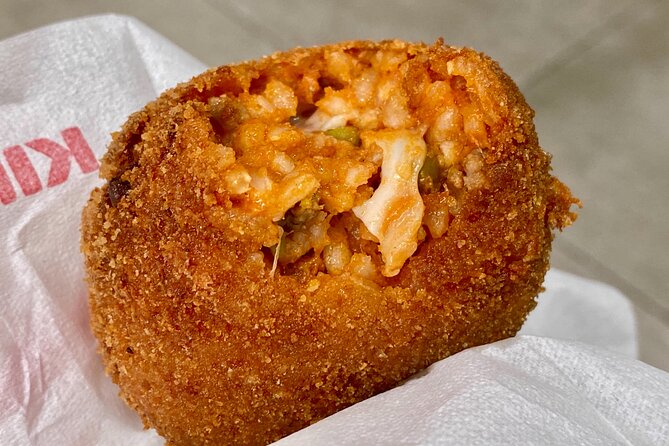
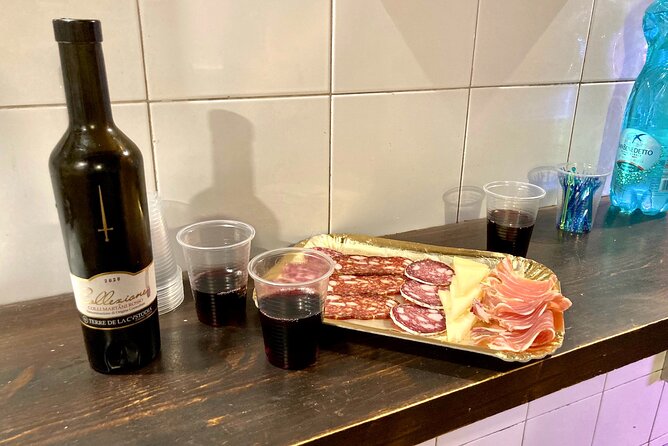
- Try classic Roman bites: Expect food such as supplì, pizza, cheese, cured meat, pastries, seasonal produce, and a Roman-Jewish specialty.
- Wine, beer, and gelato are part of the experience: Several drinks are included, but extra beverages cost more.
- Plan for outdoor walking: Seats are not guaranteed, and the tour runs in rain or shine.
- Book early: The average booking time is 44 days ahead, suggesting that popular dates can fill well before your arrival.
Why This Tour Works as a First Taste of Rome
At $54.42 per person, this is not the cheapest way to eat in Rome. It is also not simply a series of free samples. You are paying for a guided walk, several tastings, local wine and beer, neighborhood context, and a light meal spread over about two and a half hours.
That combination gives the tour its value. You see a slice of central Rome while learning what you are eating, rather than sitting in one restaurant and missing the streets outside. I especially like this format for your first day or evening in town, when you want an easy introduction to Roman food and a few practical tips for the rest of your stay.
The experience is limited to 15 people. That is large enough to meet other visitors but small enough for a guide to keep the group together in narrow streets and busy squares. Several guides have received especially warm praise for their friendly, personal approach. Ramona is noted for her energy and love of Rome, while Francesca, Mattia, Matteo, and Kristian have also led tours that mixed food advice with practical help about getting around the city.
The tour is described as suitable for lunch or dinner. Keep in mind that the Campo de’ Fiori food market operates in the morning, so evening groups will not see the market in its daytime form. Tastings also change with the season, which is a good thing for produce but means you should not expect an identical menu on every date.
More Food Tours in Rome
- Winner 2025 Rome Twilight Trastevere Food Tour by Eating Europe
★ 5.0 · 5,157 reviews - Rome: Trastevere or Jewish Quarter Street Food Tour
★ 4.8 · 3,839 reviews - Rome Food Tour: Unlimited Tastings with Fine Wine & Barolo
★ 5.0 · 3,365 reviews
Meeting Under Giordano Bruno in Campo de’ Fiori
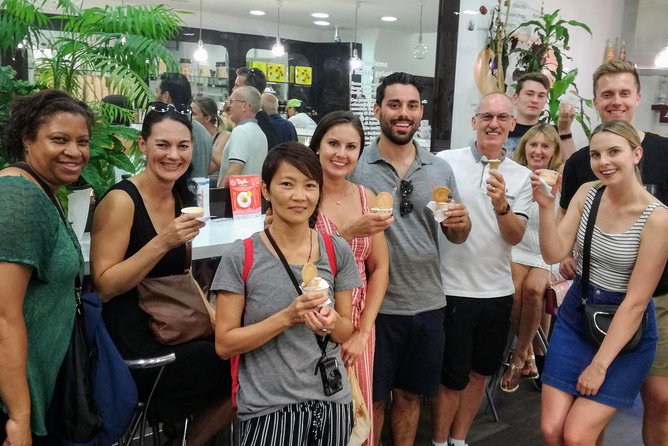
Your guide meets you in Piazza Campo de’ Fiori, under the statue of Giordano Bruno in the middle of the square. This is a clear central meeting point, but the square can be crowded, so arrive with enough time to locate the statue rather than rushing in at the last minute.
Campo de’ Fiori is a useful place to begin because it immediately puts food and Roman history side by side. The square is known for its market in the morning and for its place in Rome’s long civic story. You start with the setting before moving on to the tastings.
The first meeting stop lasts about 15 minutes. This is not a formal attraction visit, and there is no admission fee. Its purpose is to gather the group, introduce the guide, and set up the food walk.
Morning Market Tastings at Campo de’ Fiori
On morning departures, about 30 minutes are spent among the market stalls. You may sample cheese, cured meat, wine, seasonal fruit, and other local items. The appeal here is freshness and variety, with the guide helping you understand what is typical and what changes through the year.
This part of the walk is also where you get a feel for how ingredients appear in Roman cooking. Cheese and cured meat make sense as an opening bite, while seasonal produce gives the tour a link to what is actually being sold in the square at that time.
Do not assume the market portion is included on an evening tour. The food market is closed at night, so the route and tastings must change. If browsing market stalls matters to you, choose a morning departure and confirm the exact schedule when booking.
Some food stalls may offer products for sale. You are free to buy something, but you should not feel that shopping is required. The tour fee covers the planned tastings, not additional purchases.
Passetto del Biscione and Roman Street Food
The next stop is Passetto del Biscione, a short walk from the square. You spend about 15 minutes here, taking in a less obvious corner of central Rome while trying another local street food bite.
This stop helps break up the market visit and keeps the tour moving through real city streets rather than turning into a seated tasting session. The route is part of the appeal: you eat, walk, look up, and then eat again.
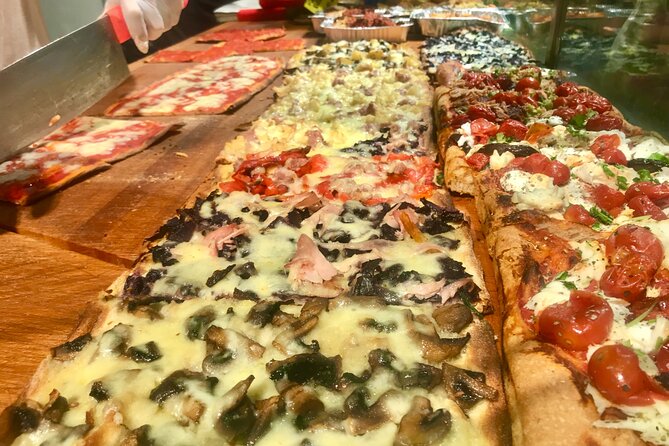
The food itself may change by season, but the tour highlights some of Rome’s most familiar quick dishes. Pizza and supplì are central to the experience. Supplì is a fried rice croquette with tomato and mozzarella inside. It is filling, crisp, and easy to understand as Roman street food: inexpensive, portable, and satisfying.
If you have only eaten pizza in a sit-down restaurant, this is a useful comparison. The tour presents food in smaller portions, so you can try several things without committing to a single large meal. Still, do not eat a full lunch before joining. The tastings are meant to add up to a light meal.
Same city, an entirely different afternoon:
- Vatican Museums & Sistine Chapel Tour with Optional Basilica
★ 4.3 · 67,413 reviews - Colosseum, Roman Forum & Palatine Guided Tour
★ 4.7 · 63,148 reviews - Vatican Museums, Sistine Chapel & St Peter’s Basilica Guided Tour
★ 4.5 · 39,149 reviews - Rome: Colosseum, Palatine Hill and Roman Forum Guided Tour
★ 4.8 · 32,814 reviews
The Jewish Ghetto and Its Food Traditions
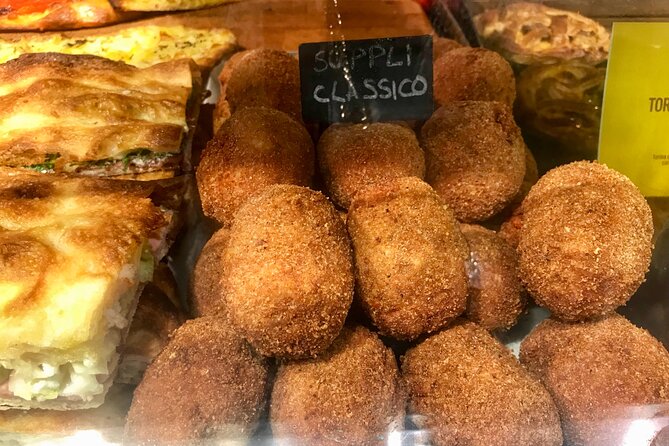
The route then reaches Rome’s old Jewish Ghetto, where the guide explains how the district was created under Pope Paul IV to segregate Jewish residents. The historical explanation adds weight to the food here. Roman-Jewish cooking is not just another regional menu. It grew from a distinct community and its long experience in Rome.
You spend about 30 minutes in the area, listening to the story of the neighborhood and tasting one of its best-known specialties. The exact dish depends on the season and the food arrangements for that departure.
This is one of the tour’s strongest pairings of place and plate. You are not simply told that a dish is Roman. You are shown the part of Rome connected with a particular food tradition, then given a chance to taste it.
The neighborhood also brings a change of mood from Campo de’ Fiori. The route is not a major-monument checklist. Instead, it gives you streets, religious history, food customs, and fragments of everyday Rome. If you already know the Colosseum and the Trevi Fountain, this kind of smaller-scale city walk can add useful depth.
Portico of Octavia and Ancient Roman Ruins
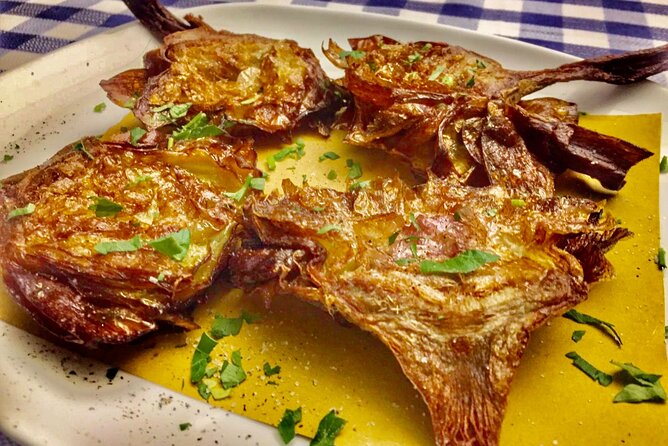
At the Portico of Octavia, the group pauses for around 30 minutes to see remains of monuments dating to the first century BC. The ruins are woven into the modern city, which is one of Rome’s great pleasures. You do not need a separate archaeological visit to notice how ancient structures sit beside later streets and buildings.
The guide uses the stop to connect the neighborhood’s history with the food and people around it. That context is valuable because the tour does not treat Rome’s ruins as isolated objects. You are walking through a district that has changed many times, with traces of different eras still visible.
This is also a good point to manage expectations. The tour does not provide entry into a major archaeological site, and the stop is about seeing and discussing the remains from the route. If you want an in-depth study of Roman engineering or imperial architecture, book a separate ancient Rome tour. Here, the ruins are part of a broader food walk.
Largo Argentina and the Final Gelato
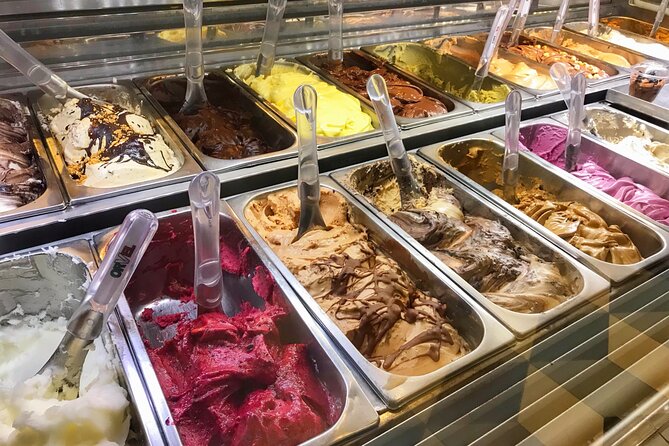
The final major stop is the sacred area at Largo Argentina, where Julius Caesar was assassinated. You spend about 30 minutes in the area and finish at a nearby family-run gelateria.
The gelato stop gives the tour a pleasant ending. You taste artisanal gelato and hear from the shop owner about how it is made. That direct explanation makes this more than a final sweet course. You get a small look at the craft behind one of Italy’s most famous treats.
The order of food is sensible. You begin with savory market items, move through pizza and supplì, taste a Roman-Jewish specialty, and end with gelato. Wine and beer are included during the experience, though extra drinks are not.
Gelato is often the part that wins over children and anyone who has reached the end of the afternoon needing a sugar boost. Families have found the tour easy to enjoy, including teenagers, because the portions are varied and the walking is broken up by food stops.
What You Actually Eat and Drink
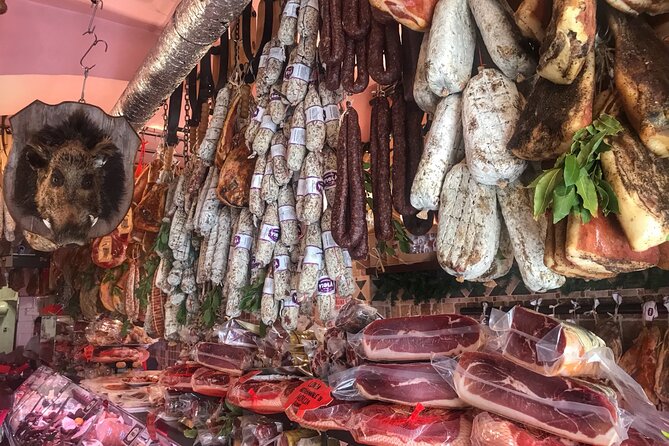
The menu is not fixed. Seasonal produce and vendor availability shape the tastings, so you should think in categories rather than promises. The experience includes several street food tastings, with examples such as:
- Cheese and cured meat
- Seasonal fruit and produce
- Roman pizza
- Supplì
- A Roman-Jewish specialty
- Pastries or other sweet bites
- Artisanal gelato
- Local wine and beer
The portions are tasting portions, not a long restaurant dinner. They are generally intended to make up a light meal. You may still want a fuller dinner later, especially if you join early or have a large appetite.
The value comes from range. At a restaurant, you might order one or two Roman dishes. Here, you can sample several in a short period and learn which ones deserve a return visit. One useful result is that you leave with a better sense of what to order during the rest of your time in Rome.
Tastings can change with the season. That is worth viewing as part of the experience rather than a flaw, but it does mean you should avoid booking with a rigid food wish list.
The Guides Make a Noticeable Difference
The guide is a major part of the tour. Names associated with different departures include Ramona, Francesca, Mattia, Matteo, Matthias, Kristian, Andreas, and Fabrizia, so your guide will depend on the date.
The strongest guiding approach here combines food facts, Roman history, and useful local advice. Kristian, for example, has helped explain Rome’s public drinking fountains and offered practical tips about trains. Ramona has been praised for making the walk lively while still giving substantial information about food, culture, and architecture.
That mix is important. A guide who only names dishes can make a food tour feel shallow. A guide who only lectures about history can leave you hungry. The better guides keep the conversation moving between what is on your plate and what is around you.
You should also use the walk to ask for restaurant ideas, neighborhoods to explore, and food names to remember. The experience can be especially useful at the start of a trip because you can apply those suggestions during the days that follow.
Walking, Weather, and Comfort
The tour lasts about 2 hours and 30 minutes and takes place outdoors. You walk from Campo de’ Fiori through several central neighborhoods, stopping to eat and listen.
The route is not described as especially long, and one account characterizes it as a moderate walk rather than a major hike. Still, you should be comfortable standing and walking for much of the time. Seats are not guaranteed during tastings, so this is not a good choice if you need regular seating or have limited mobility.
The tour runs rain or shine. On a chilly or wet day, bring a light waterproof layer and shoes that can handle Rome’s uneven streets. In hot weather, carry water and pace yourself with the food. The walk is not a problem by itself, but standing in sun while eating fried food can feel heavy.
The meeting point is near public transportation, and the tour ends at Piazza di Sant’Eustachio. That ending point is useful because it leaves you in central Rome rather than returning you to the start. Plan your next stop from there, but do not expect transportation to be included.
Dietary Limits You Should Take Seriously
This tour can accommodate vegetarians only if you advise the operator in advance. It does not accommodate vegan, gluten-free, or dairy-free diets, and nut cross-contamination is possible.
A few guides have managed to find gluten-free items for individual participants, but you should not treat that as a guarantee. The official food arrangements do not support a strict coeliac, gluten-free, vegan, or dairy-free diet.
If you have a serious allergy, contact Raphael Tours & Events before booking and explain exactly what you need. If the restriction is central to your safety, another food experience may be a better choice.
Is $54.42 a Fair Price?
At $54.42, the price is fair if you want a guided introduction rather than a self-guided snack crawl. You receive several tastings, wine and beer, a local guide, and a two-and-a-half-hour walk through some of Rome’s most interesting central districts.
You are not paying for a large banquet. You are paying for access to several food stops without having to choose them yourself, plus the guide’s explanations and route planning. That is useful in Rome, where it can take time to separate a good food stop from a place aimed mainly at passing crowds.
The value is strongest if you are new to Roman food, want help ordering later, or prefer an activity that combines sightseeing with eating. The value is weaker if you already know the city well, have strict dietary needs, or would rather spend $54.42 on one long restaurant meal.
Should You Book the Rome Street Food Tour?
I would book this tour if you want a friendly introduction to Roman food and central Rome in one outing. It is especially suitable for first-time visitors, families, couples, and anyone who likes history served in small portions alongside pizza, supplì, wine, and gelato.
Choose a morning departure if the Campo de’ Fiori market matters to you. Tell the operator about vegetarian needs before booking, and do not book if you require vegan, gluten-free, or dairy-free food. With free cancellation up to 24 hours before the start time, you have some flexibility, but changes or cancellations inside that window are not refunded.
For most people who can walk comfortably and eat the standard menu, this is a useful first or second activity in Rome. It gives you a taste of the city, a few memorable neighborhoods, and practical food knowledge you can use after the tour ends.
FAQ
How long does the Rome street food tour last?
The tour lasts approximately 2 hours and 30 minutes.
Where does the tour begin?
It begins at Piazza Campo de’ Fiori, under the statue of Giordano Bruno in the center of the square.
Where does the tour end?
The tour ends at Piazza di Sant’Eustachio in central Rome.
What food is included?
Tastings can include cheese, cured meat, seasonal produce, pizza, supplì, pastries, a Roman-Jewish specialty, and artisanal gelato. The exact selection changes by season.
Are wine and beer included?
A taste of local wine and beer is included. Extra drinks are not included.
Is the tour available at lunch and dinner?
Yes. The experience can be taken around lunch or dinner time, but the Campo de’ Fiori market tastings are available only in the morning because the market is closed in the evening.
Can vegetarians join the tour?
Yes, vegetarians can be accommodated if dietary needs are provided in advance.
Can vegans or people avoiding gluten and dairy join?
No. The tour does not accommodate vegan, gluten-free, or dairy-free diets. Nut cross-contamination is also possible, and seats are not guaranteed during the experience.
Fresh on the Rome list
- Exclusive Golf Tour Private VIP with Local & Gelato o Wine★ 5.0 · 500 reviews
- Colosseum, Palatine Hill and Roman Forum with Guided Tour★ 5.0 · 500 reviews
- Rome Trastevere Pasta Making Class with Eating Europe★ 5.0 · 505 reviews
- Rome by Night Walking Tour★ 4.5 · 506 reviews
- Rome: Colosseum Express Tour with Forum & Palatine Access★ 4.5 · 511 reviews
- Rome Food Experience Max 6 People Group Tour | w/Private Option★ 5.0 · 516 reviews
- Rome: Navona Square Underground Ticket with Audio Guide★ 4.0 · 518 reviews
- Rome: Escorted Papal Audience Experience with Entry Ticket★ 4.4 · 518 reviews
Food Tours, compared.
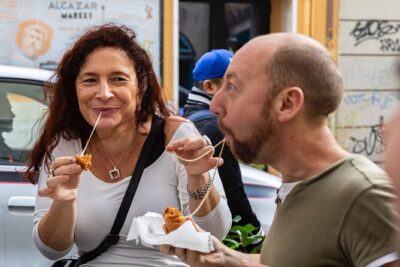
Winner 2025 Rome Twilight Trastevere Food Tour by Eating Europe
Read our review →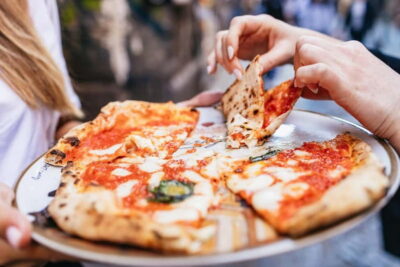
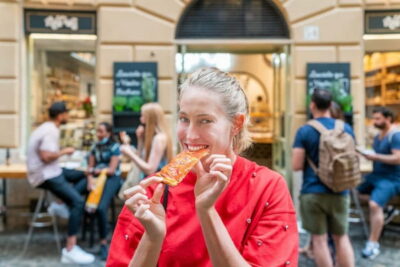
Trastevere or Jewish Quarter Street Food Tour
Read our review →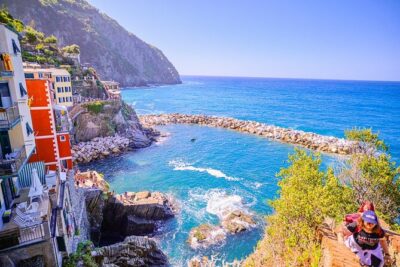
Cinque Terre Park Day Trip with Optional Street Food
Read our review →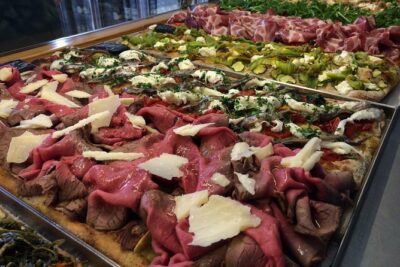
Rome Food Tour: Unlimited Tastings with Fine Wine & Barolo
Read our review →
Eat Like a Local: Venice 3-Hour Small-Group Food Tasting Tour
Read our review →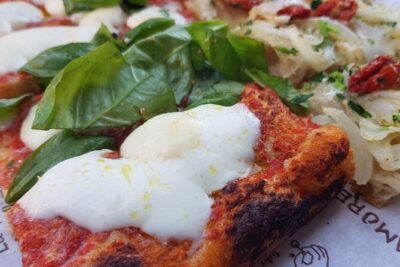
Trastevere Food tour with Free-Flowing Fine Wine
Read our review →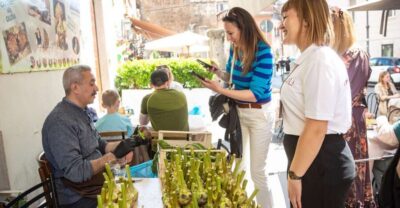
Trastevere & Campo de Fiori Street Food Walking Tour
Read our review →Browse the lists this tour appears in