
Reviewed · FOOD & DRINK
Rome: Private Golf Cart Tour with Artisanal Gelato Tasting
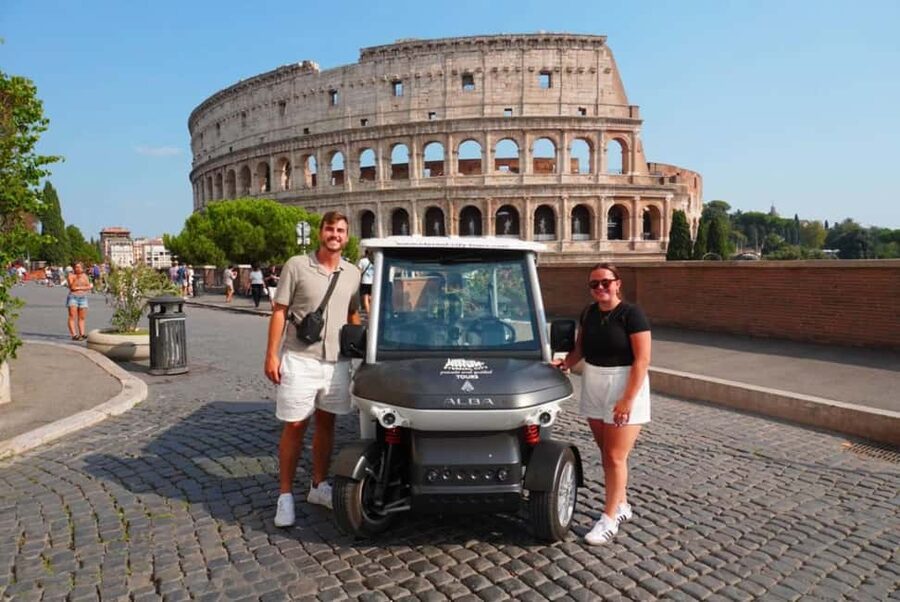
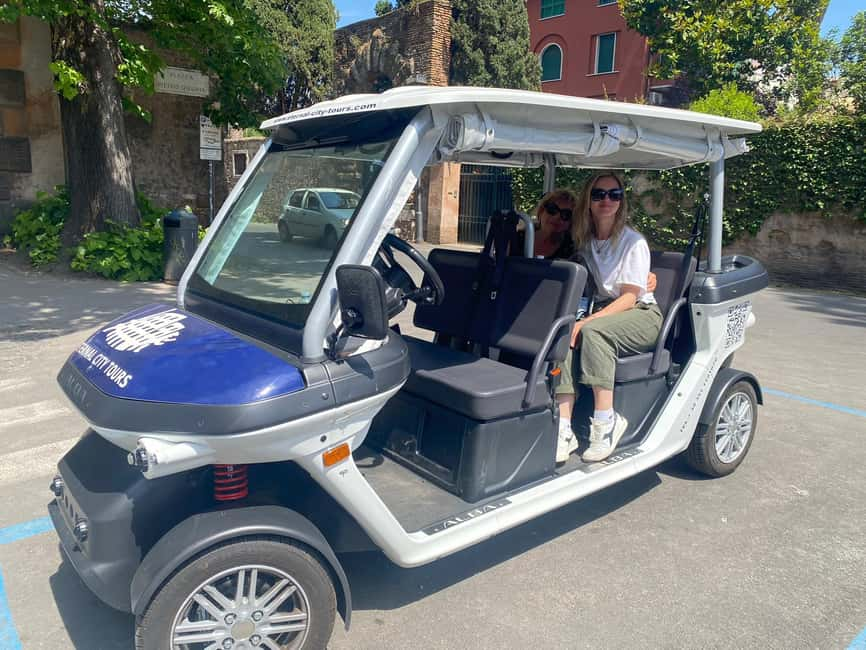
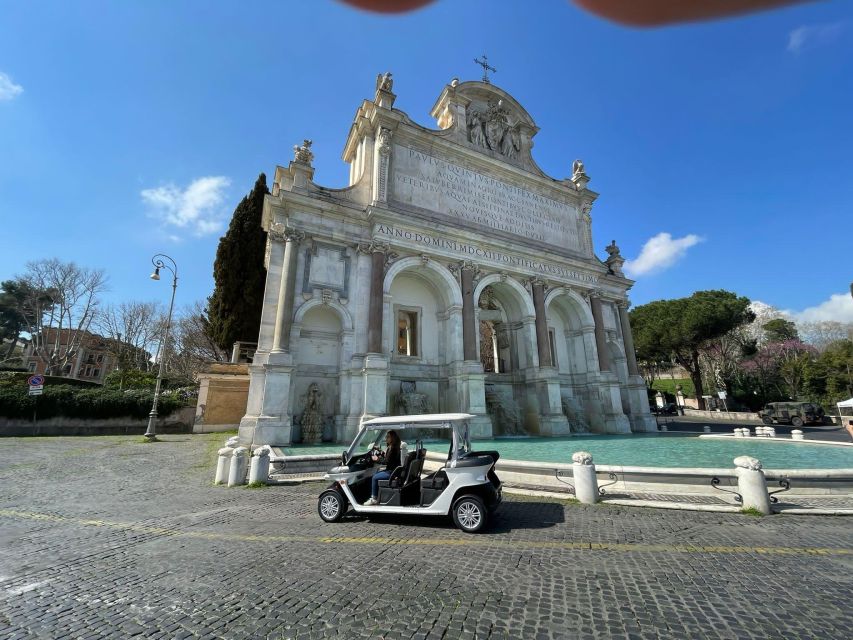
Rome is a city built for looking up, but not always for walking. This private golf cart tour gives you a quick, comfortable pass through more than 2,500 years of Roman history, using backstreets and restricted-access routes that larger vehicles cannot reach. The cart is quiet, covered, and emission-free, so you can hear your guide while avoiding some of Rome’s worst traffic.
I especially like the custom itinerary, which lets you focus on the places that matter most to you. I also like the local guides, including Ciro, Emilia, Giacomo, Emanuele, and Ludovico, who add restaurant tips, shortcuts, personal stories, and lesser-known viewpoints. The main limitation is time: two to two and a half hours is enough for an excellent overview, not a full visit to every stop.
Another practical point is that this tour can save your legs without turning Rome into a blur. You will still get out for photos and short walks, but the cart moves you between far-flung sights with much less effort. The tradeoff is that the tour is not wheelchair accessible, does not allow children under six, and excludes entry tickets.
Key points at a glance
- Private route built around your interests: Choose major monuments, viewpoints, churches, piazzas, or neighborhood stops instead of following a fixed script.
- A clever way through Rome: The small electric cart can use narrow streets and selected restricted areas, helping you avoid some traffic.
- Strong local guiding: Guides such as Ciro, Emilia, Giacomo, Emanuele, Samuel, and Ludovico are praised for history, humor, practical help, and flexible planning.
- More than a drive-by: You can stop for photos and short walks at places such as the Aventine Keyhole, Piazza Navona, and Trastevere.
- Gelato is part of the experience: The tour includes artisanal Italian gelato or coffee, plus bottled water.
- Best for a first look: It is especially useful on your first day, during a short Rome visit, or before a cruise departure.
Why a golf cart works so well in Rome
Rome’s major sights are spread across a large historic center. The Spanish Steps, Trevi Fountain, Pantheon, Colosseum, Aventine Hill, Vatican area, and Trastevere are not all next door to one another. Walking between them can take much of a day, especially in summer heat or after an early flight.
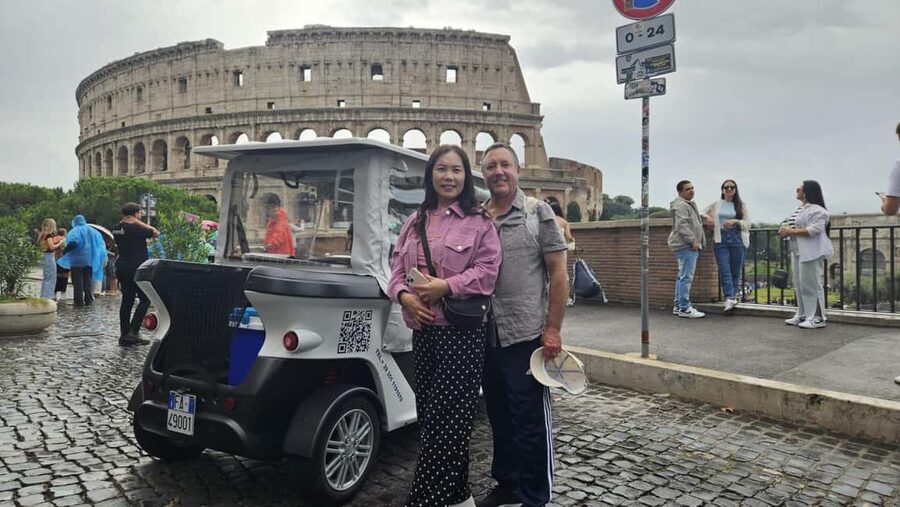
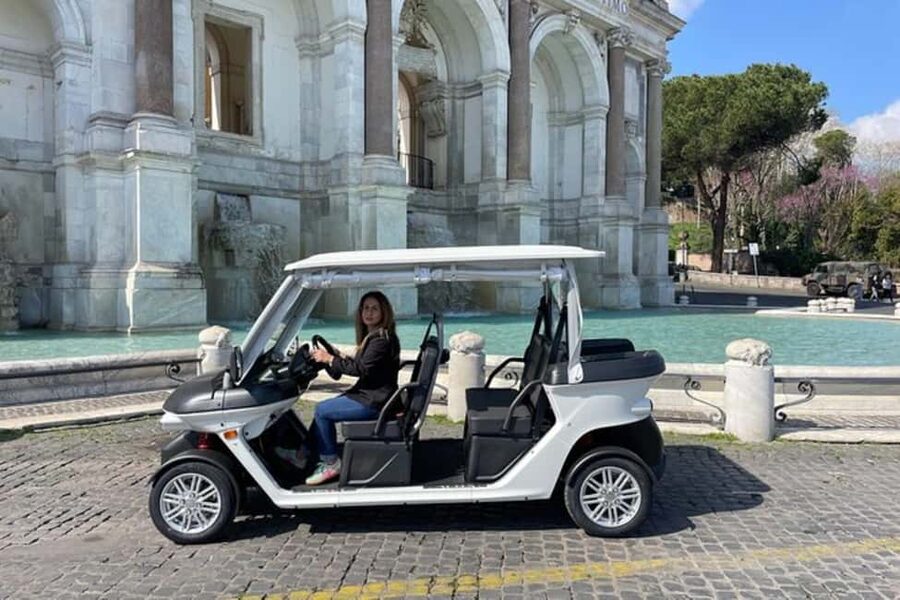
A private electric golf cart gives you a moving view of the city without the noise and fumes of a regular vehicle. The covered design helps in bright sun and light rain, while the open sides let you see streets, fountains, churches, and everyday Roman life as you pass.
The cart is street-legal and small enough for backstreets. That matters in Rome, where a direct route is not always the fastest route. Guides use shortcuts and side roads to work around traffic, road closures, and crowded central streets.
Still, do not think of this as a hop-on, hop-off bus. You have one guide and one vehicle, so the experience feels personal. You can ask questions, adjust the plan, stop for a better photo, or replace a sight you have already visited.
A few other Rome mornings to weigh against this
- Rome: Tuscany & Montepulciano Day Trip with Lunch & Wine Tasting
★ 4.5 · 5,232 reviews - Winner 2025 Rome Twilight Trastevere Food Tour by Eating Europe
★ 5.0 · 5,157 reviews - Rome: Trastevere or Jewish Quarter Street Food Tour
★ 4.8 · 3,839 reviews
What the private format adds
The tour begins with pickup from a city-center hotel when you provide the address at booking. If your accommodation is outside the designated pickup zone, you receive instructions for meeting at Largo d’Argentino 47, a central location.
The private format is the biggest reason to choose this experience over a standard city tour. If you care most about ancient Rome, you can give extra time to the Colosseum, Circus Maximus, and Aventine Hill. If fountains and piazzas are your priority, the Trevi Fountain, Pantheon, and Piazza Navona can lead the route.
You can also use the tour to get your bearings early in your stay. One smart plan is to take it on your first day, note the places you want to revisit, then return later for museum visits or longer walks. It works just as well for a short stop before a cruise, when you need to see a lot without spending the whole day on foot.
The itinerary supplied for the tour includes more places than can realistically receive a full visit in two hours. That is not a flaw in the private format, but you should discuss priorities at the start. A stop may be a photo pause and explanation rather than an interior visit.
Spanish Steps and Trevi Fountain
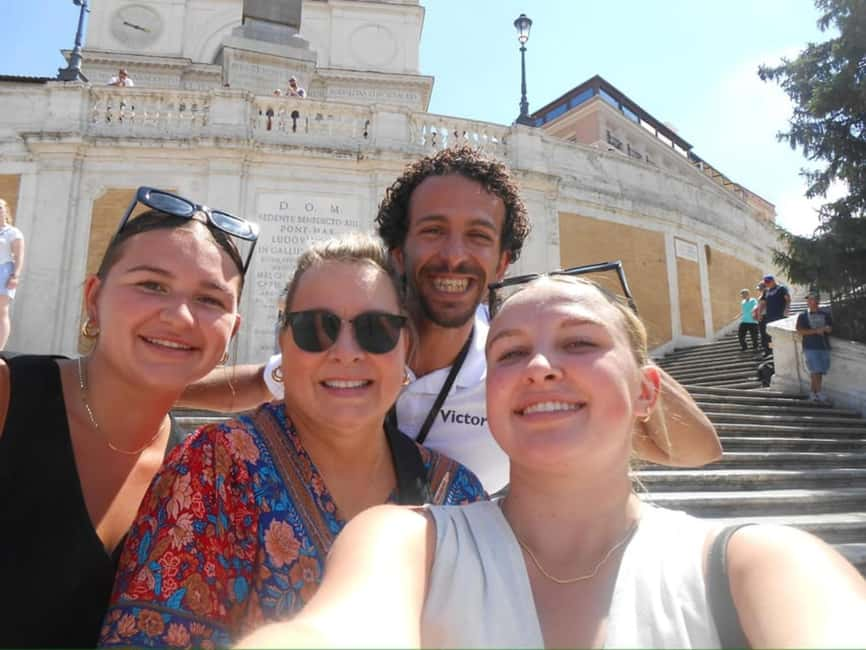
The Spanish Steps make a good early stop because they offer an immediate sense of central Rome. You can take photographs, hear the story behind the staircase and surrounding square, and watch the city move around you.
The stop is listed at about 20 minutes, including the scenic drive. That gives you enough time for photos and a short look, but not a long exploration of the surrounding streets. If you want to browse the designer shops nearby, save that for later.
The Trevi Fountain follows naturally on many routes. Its crowded square is difficult to approach by larger vehicles, so arriving in a small cart and getting out close by is useful. Expect a photo stop and commentary rather than a long quiet pause. The listed time is about 15 minutes, and crowd levels may affect how easily you reach the front.
This is one place where the guide adds real value. You can ask about the fountain’s design, the traditions connected with it, and the surrounding streets instead of simply taking a picture and moving on.
Pantheon and Piazza Navona
The Pantheon is one of Rome’s most rewarding quick stops because its plain exterior hides an extraordinary interior. The tour includes sightseeing and a photo stop, and one guide, Samuel, is specifically praised for going inside with the group to explain the building’s past.
Do not assume interior entry is included. Entry tickets are not part of the tour, and the overall route may focus on an outside explanation. If entering the Pantheon matters to you, ask your guide at the beginning whether the timing and ticket arrangements make sense.
Piazza Navona gives you a different view of Rome. It is a broad public square built around monumental fountains and surrounded by historic buildings, cafés, and street activity. The suggested stop lasts about 20 minutes and includes time to walk, look around, and take photos.
This is a good place to slow the pace slightly. After several moving views, a short walk through the piazza helps you connect the monuments with the daily life of the city.
Same city, an entirely different afternoon:
- Vatican Museums & Sistine Chapel Tour with Optional Basilica
★ 4.3 · 67,413 reviews - Colosseum, Roman Forum & Palatine Guided Tour
★ 4.7 · 63,148 reviews - Vatican Museums, Sistine Chapel & St Peter’s Basilica Guided Tour
★ 4.5 · 39,149 reviews - Rome: Colosseum, Palatine Hill and Roman Forum Guided Tour
★ 4.8 · 32,814 reviews
Circus Maximus, the Colosseum, and ancient Rome
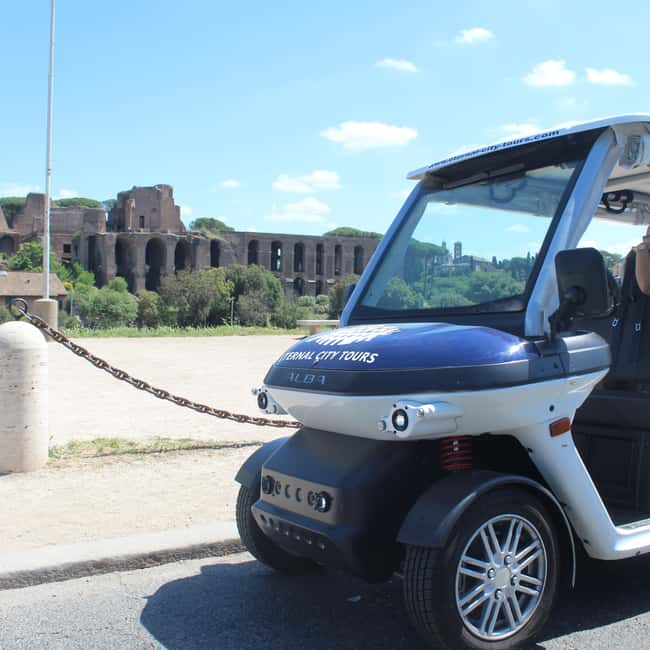
The Circus Maximus is a large open archaeological space where chariot races once drew huge crowds. Today, its scale is the story. From the cart, you can grasp the size of the ancient entertainment district more easily than you can from a book or a quick photograph.
The suggested stop is about 15 minutes. It is best treated as an explanation and viewpoint, not a full archaeological visit.
The Colosseum is usually the emotional high point of the route. The cart can bring you close for photographs and give you time to look at the exterior while your guide explains its role in Roman public life. The listed stop is about 20 minutes.
This is not a Colosseum admission tour. You will not enter as part of the included experience, and tickets are not covered. That distinction matters because an outside look and a proper interior visit are two different activities. I would use the golf cart tour to understand the area, then book a separate timed entry if you want the arena, underground levels, or upper tiers.
The advantage here is speed. You can see the Colosseum, Circus Maximus, and nearby ancient areas in one compact stretch without spending much of your limited sightseeing time walking between them.
Aventine Hill and the famous keyhole
The Aventine section adds some of the route’s most memorable views. The Giardino degli Aranci, or Orange Garden, provides a high viewpoint over Rome and is listed as a 15-minute photo stop and scenic drive.
The nearby Aventine Keyhole is a short walking stop of about 10 minutes. You look through a specially placed keyhole toward St. Peter’s Basilica, creating a neat framed view. It is a small experience, but it feels more personal than another pass by a major monument.
These stops also show why a private cart can reach parts of Rome that are less convenient on a large sightseeing bus. You get a taste of the city’s hills, gardens, and quiet corners without committing to a long uphill walk.
The time is tight, so you will not have much room for an extended garden visit. If this area interests you, tell the guide. You may choose it instead of a sight you have already seen.
St. Peter’s Basilica and the Vatican area
The suggested route includes a scenic stop near St. Peter’s Basilica Dome, with about 20 minutes for sightseeing and photographs. The cart tour can give you an outside look and explain the importance of the basilica and Vatican area.
The Vatican is the part of the route most affected by traffic and crowd conditions. One party asked about including it on a weekend and ultimately skipped it because of the risk of getting stuck. That is sensible advice: if St. Peter’s is a priority, a weekday may give the driver more flexibility, though no route can promise clear streets.
Again, this is not a Vatican Museums or basilica entry tour. Tickets are excluded, and the tour is designed as an overview. If you want the Sistine Chapel, Vatican Museums, or a complete basilica visit, plan a separate half-day and do not expect this short ride to replace it.
I would keep the Vatican stop if you have never seen the area, but I would not sacrifice the entire custom route for it without discussing traffic and timing first.
Trastevere and Rome’s local side
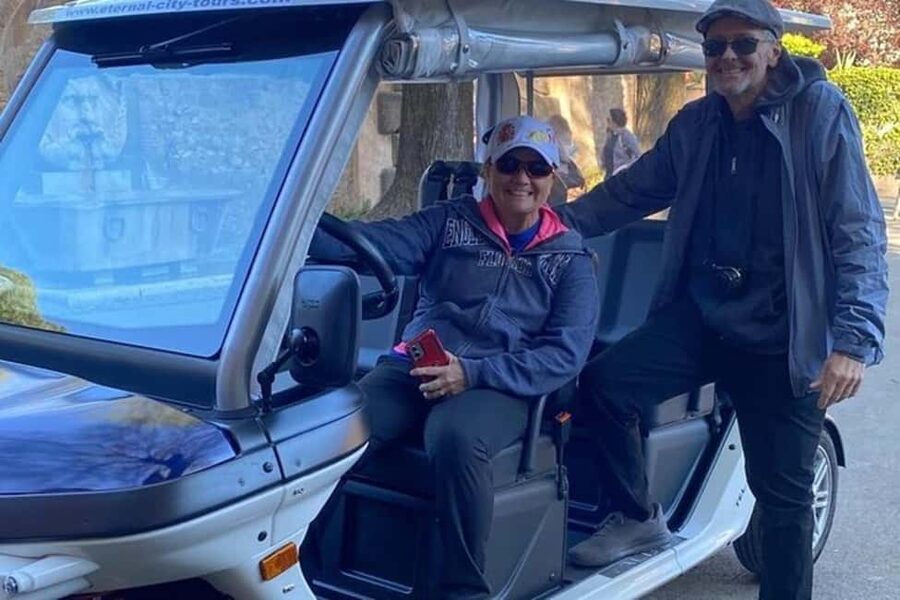
Trastevere is the final neighborhood-style stop on the sample route. The tour allows about 10 minutes for a photo stop, guided explanation, and free time. That is enough to see the character of the district, but not enough for a full meal or a long evening wander.
Some guides also help with practical choices after the tour. Pato, for example, was able to guide a group toward local food, drinks, and gelato, while other guides helped with restaurant and bar suggestions. Treat this as useful local advice, not a built-in dining tour.
If you want dinner in Trastevere, ask to finish there or request a nearby restaurant recommendation. The tour includes gelato or coffee, but meals and other purchases are not included.
Gelato, coffee, and the small extras
The final food stop is simple but well chosen. Authentic Italian artigiano gelato gives you a taste of Rome’s everyday pleasures, and coffee is offered as an alternative. You also receive a bottle of water.
The quality of this pause depends on the route and guide, but it adds a human touch to a sightseeing program packed with monuments. Guides such as Ludovico and Emanuele are praised for finding especially good gelato stops, and Ciro has also treated participants to espresso.
I like that the food stop is included rather than presented as a pressured shopping break. You can use it to ask about Roman eating habits, get restaurant advice, or simply take five minutes out of the historical commentary.
Guide quality and the value of local help
The strongest part of this tour is the guide. The best guides do more than recite dates. They explain why a building matters, point out a useful shortcut, adapt when streets close, and answer the practical questions that arise during a first visit.
Ciro is repeatedly praised for traffic skills, friendly English, useful food advice, and the ability to reach photo spots quickly. Emilia is noted for her command of Roman history and warm, flexible approach. Giacomo is especially good for travelers who enjoy art and detailed follow-up information.
Other named guides include Emanuele, Samuel, Alessandro, Andrea, Giancarlo, Jacopo, and Ludovico. The experience can vary by guide, but the common thread is an emphasis on conversation and personal attention.
That matters because Rome can feel confusing at first. A good guide helps you understand the shape of the city, then leaves you with ideas for the rest of your stay.
Is $76 a fair price?
At $76 per person, this is not the cheapest way to see Rome. Public transport and walking cost far less, and a group bus may offer a lower per-person rate.
The comparison changes when you consider what is included: a private vehicle, a live English-speaking guide, city-center pickup and drop-off in designated areas, a custom route, water, and gelato or coffee. For a couple or family trying to cover Rome in one short session, the price can be reasonable.
It is especially good value if you have limited mobility, a cruise departure, a hot-weather visit, or only one free afternoon. It can also save the cost of a taxi between scattered sights, though that depends on your plans.
The price does not include monument tickets. Budget separately for the Colosseum, Vatican Museums, or any other paid attraction you want to enter.
Practical limits you should know
The tour lasts two to two and a half hours. You should expect a fast overview with selected stops, not a full guided visit to every landmark named in the sample route.
Hotel pickup and drop-off apply only to designated areas in central Rome. If your accommodation is outside those zones, you will be directed to a central meeting point. Provide the complete hotel address when booking so the pickup plan is clear.
Bring an ID card, with a copy accepted. Large bags and luggage are not allowed, and the cart cannot take non-folding or electric wheelchairs. Strollers are also not allowed, and children under six cannot join.
The experience is not wheelchair accessible. If you can manage short walks but want to reduce the distance between sights, the cart may help, but you should confirm your personal needs before booking.
Who should book this Rome tour?
I would choose this for a first day in Rome, a short city visit, or a final morning before a cruise. It is also a strong option when heat, fatigue, or limited walking time would otherwise force you to cut major sights from your plan.
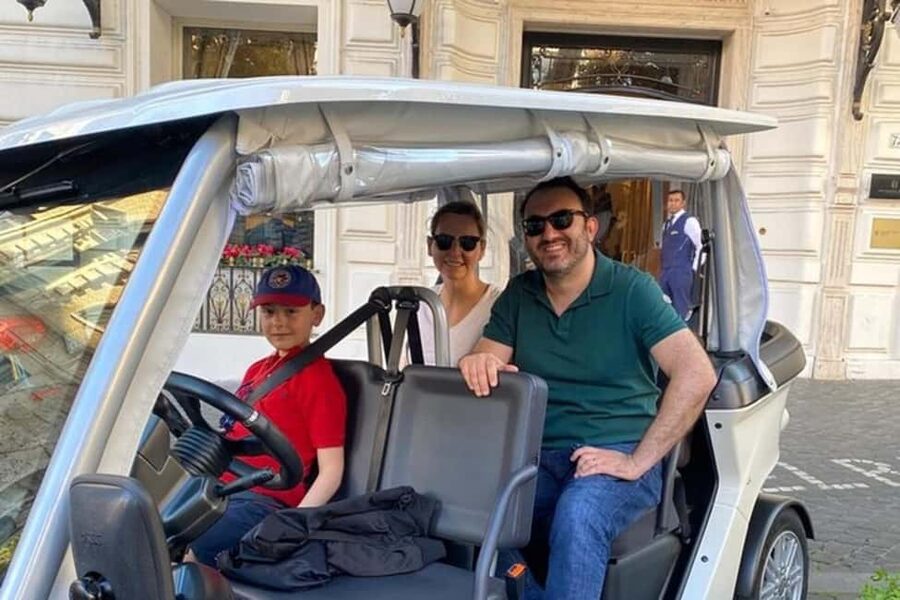
Families with children over six can appreciate the novelty of the cart, while couples may like the private pace and photo stops. It suits anyone who wants a local overview before deciding where to spend more time.
I would skip it if your main goal is entering the Colosseum, Vatican Museums, or Pantheon. Those require separate planning. I would also skip it if you prefer slow museum visits and long walks through one neighborhood.
Book this tour if you want to see Rome’s main landmarks efficiently and have a guide shape the route around you. Before the cart moves, name your top three priorities. That one step will turn a broad sightseeing ride into a much better personal introduction to Rome.
FAQ
How long does the golf cart tour last?
The tour lasts between two and two and a half hours, depending on the selected starting time and route.
Is the tour private?
Yes. The experience is for a private group, with an itinerary that can be adjusted to your interests.
Which language is the tour offered in?
The live tour guide service is offered in English.
Can I be picked up at my hotel?
Hotel pickup and drop-off are available for accommodations in designated areas within central Rome. If your hotel is outside those areas, you will receive directions to the nearest pickup point.
Where is the alternative meeting point?
If hotel pickup does not apply, the meeting point is Largo d’Argentino 47.
Are entry tickets included?
No. Entry tickets for attractions are not included in the tour price.
Is gelato included?
Yes. The experience includes artisanal gelato or coffee, as well as a bottle of water.
Is the tour wheelchair accessible?
No. The tour is not wheelchair accessible, and non-folding and electric wheelchairs are not allowed.
Can children of any age join the tour?
Children under six years old are not allowed to participate.
Fresh on the Rome list
- Rome: Guided Catacombs Tour & Capuchin Crypt (Audio Guide)★ 4.3 · 191 reviews
- Guided tour of the Colosseum, Roman Forum and Palatine in Spanish★ 4.5 · 191 reviews
- Rome: Borghese Gallery Guided Tour with Skip-the-Line Ticket★ 4.5 · 192 reviews
- Rome: Arena Colosseum Tour with Arena Access★ 4.6 · 193 reviews
- Colosseum, Forum, Palatine Hill with audio guide and Arena or Bus option★ 4.0 · 193 reviews
- Rome: Colosseum & Roman Forum Guided Tour★ 5.0 · 194 reviews
- Rome: Domus Aurea Guided Tour and Virtual Reality Experience★ 4.7 · 194 reviews
- Rome Vintage Fiat 500 car Tour With Photographer★ 5.0 · 194 reviews
Food & Drink, compared.
Small-Group Wine Tasting Experience in the Tuscan Countryside
Read our review →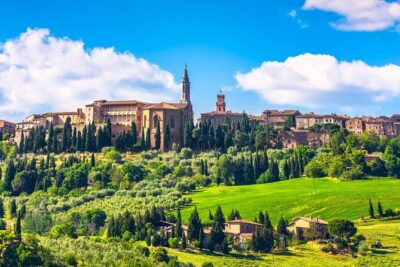
Tuscany & Montepulciano Day Trip with Lunch & Wine Tasting
Read our review →
Winner 2025 Rome Twilight Trastevere Food Tour by Eating Europe
Read our review →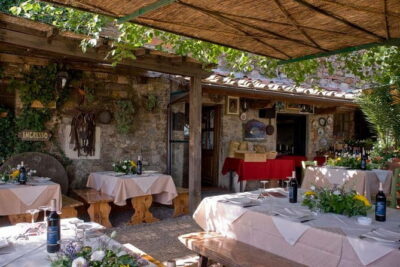
SMALL-GROUP Wine Safaris: Tuscan Wine Tasting Tours from Florence
Read our review →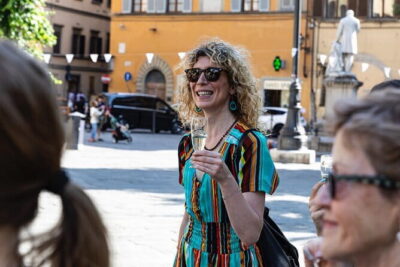
Winner 2025 Florence Sunset Food & Wine Tour by Eating Europe
Read our review →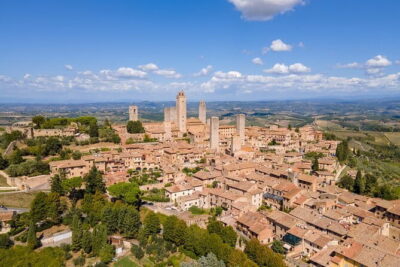
San Gimignano, Siena, Monteriggioni, Chianti Day Trip with Lunch & Wine Tasting
Read our review →
Browse the lists this tour appears in