Reviewed · PRIVATE
Rome: Private Golf Cart tour with a Local Guide
Rome is a city best understood in layers, but its famous center can be hard on your feet and confusing to cross. This private golf cart tour gives you a quick, comfortable ride between ancient ruins, grand piazzas, fountains, and quieter streets, with a local guide explaining what you are seeing.
I like the hotel pickup and drop-off, especially after a long flight or a tiring day of sightseeing. I also like the guides’ flexible approach. Riccardo, Eduardo, Victor, Edoardo, and Vincenzo are repeatedly praised for adjusting the route, stopping for photographs, and adding less-visited corners when time allows. The main consideration is that this is an overview, not a substitute for entering the Colosseum, Roman Forum, or other major monuments.
Key points at a glance
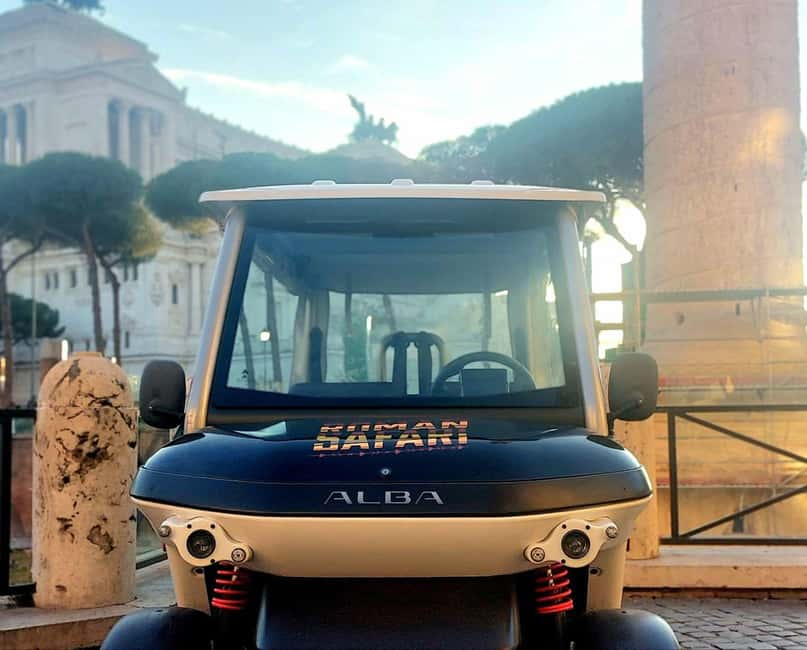
- Private electric transport: A silent, 100% electric golf cart carries your group through Rome’s central streets.
- Two tour lengths: Choose a fast 1.5-hour orientation or a fuller 2.5-hour route.
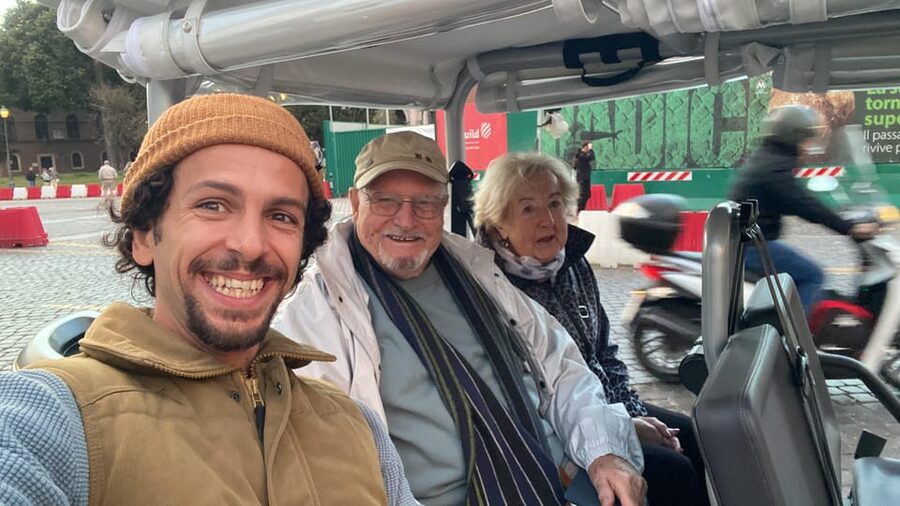
- Strong local guiding: Guides including Riccardo, Eduardo, Victor, and Vincenzo bring personal stories, history, humor, and practical advice.
- Major sights without the long walks: See the Colosseum, Roman Forum, Trevi Fountain, Piazza Navona, and more.
- Useful first-day tour: The route helps you get your bearings and decide where to spend more time later.
- Photo-friendly stops: You leave the cart at several locations, with time to walk, look around, and take pictures.
Why a golf cart works so well in Rome
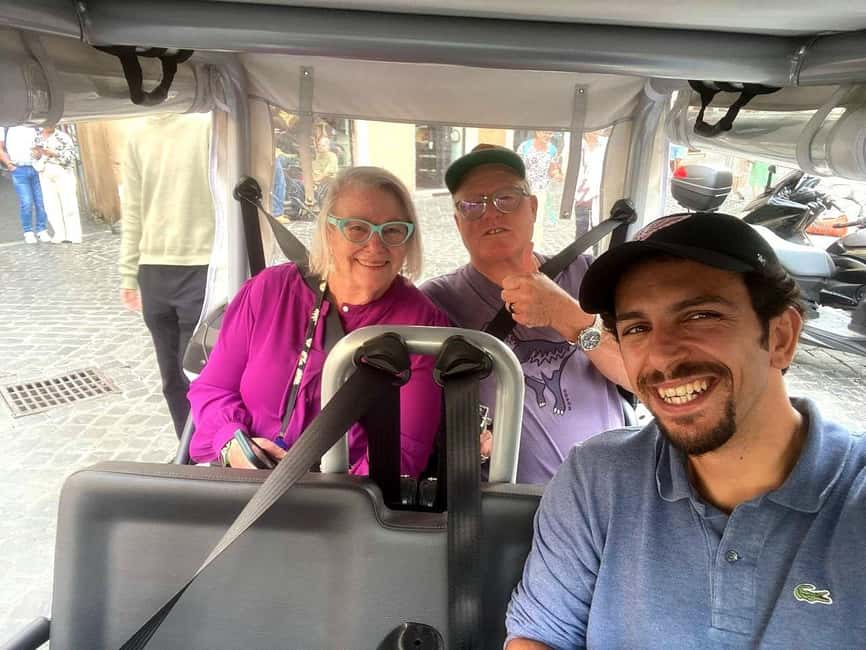
Rome’s center is compact on a map but tiring in real life. The distance from the Colosseum to the Trevi Fountain is manageable for a strong walker, yet the route includes uneven pavement, crowded crossings, hills, heat, and plenty of detours caused by closed streets or traffic.
A private electric golf cart solves much of that problem. You sit back while the guide handles the driving and chooses streets that ordinary tour buses cannot use. The cart can slip into narrow backstreets and get close to sights, saving energy for the places where you actually want to walk.
This is not a thrill ride. The appeal is practical. You see a broad sweep of Rome in a short time, hear the story behind each place, and stop often enough for photographs. The quiet electric motor also makes the ride less intrusive than a noisy vehicle, and you can hear the guide more easily while moving.
The tour is private, so you are not tied to a fixed group’s pace. That matters when one person wants more photographs, a child is interested in fountains, or you have already visited one of the headline sights. Several guides have been praised for asking what you had already seen and changing the route accordingly.
A few other Rome mornings to weigh against this
- Rome by Golf Cart Private Tour: Beyond the Landmarks
★ 5.0 · 4,361 reviews - Early Morning Vatican, Sistine, St. Peter’s Semi or Private Tour
★ 5.0 · 3,779 reviews - Rome on a Golf Cart Semi-Private Tour Max 6 with Private Option
★ 5.0 · 2,502 reviews
Choosing between 1.5 and 2.5 hours
The 1.5-hour option is best if you have just arrived, have a short stop in Rome, or want a broad introduction before choosing your priorities. It is a quick circuit of the city’s essential sights, with short stops for photographs and explanations.
The 2.5-hour option gives the guide more room to pause, answer questions, and include extra streets or viewpoints. If this is your first visit and you want the tour to function as a proper orientation, I would choose the longer version.
Do not expect either option to provide a full museum visit. The time is spent moving between sites and getting out at selected stops. The value comes from seeing more of Rome than you could comfortably cover on foot in the same period.
A night departure can be especially appealing. Several bookings were made for evening rides, when the fountains and monuments are lit and the traffic feels different. Night photography can be excellent, though you should remember that darkness changes the way you appreciate ancient ruins. For a first look at the city, daytime gives you more detail. For atmosphere and photographs, evening has the edge.
Roman Forum and the Rione Monti
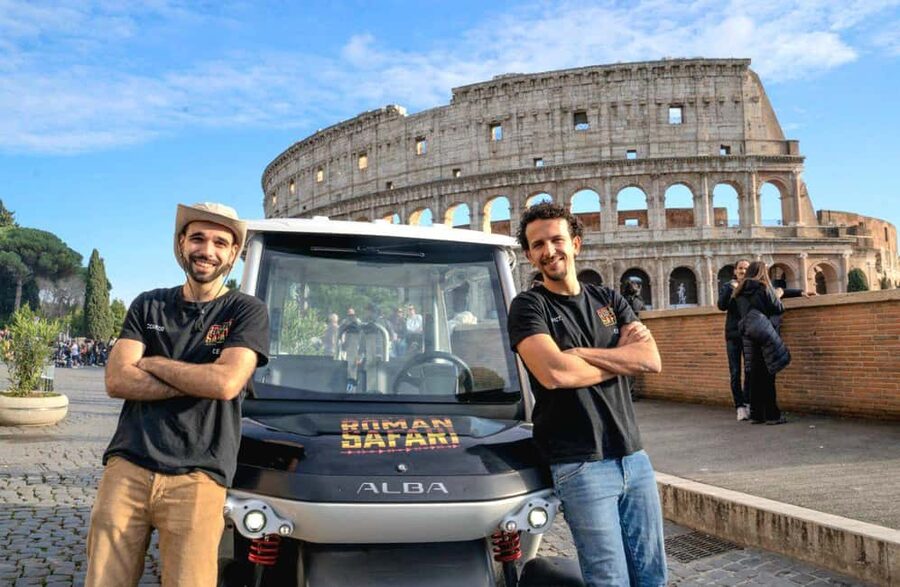
The Roman Forum is one of the tour’s most useful early stops. From outside and around the archaeological area, your guide can point out the remains of temples, basilicas, and public spaces that formed the heart of ancient Rome.
You get about ten minutes here for a break and photographs. That is enough for an introduction and a few good pictures, but not enough to explore the Forum’s paths or understand every ruin in detail. If the Forum is a top priority, plan a separate timed visit.
The cart then reaches Rione Monti, one of Rome’s oldest neighborhoods. Its narrow streets and local feel provide a welcome change from the grand monuments. You have a short photo stop here, and your guide can give the area a more personal context than you would get from simply passing through.
This is also a good example of what the tour does best. It links major attractions with ordinary Roman streets, so you see more than a checklist of monuments. The stay is brief, but it may help you decide to return later for a slower walk.
The Colosseum and the Altar of the Fatherland
The Altar of the Fatherland, also called the Vittoriano, is passed along the route rather than visited in depth. Its huge white structure dominates Piazza Venezia and is one of the easiest landmarks to spot from the cart.
Your guide can explain its role in modern Italian national identity and point out the surrounding traffic patterns and historic buildings. Since the stop is listed as a pass-by, treat it as a visual introduction, not a full visit.
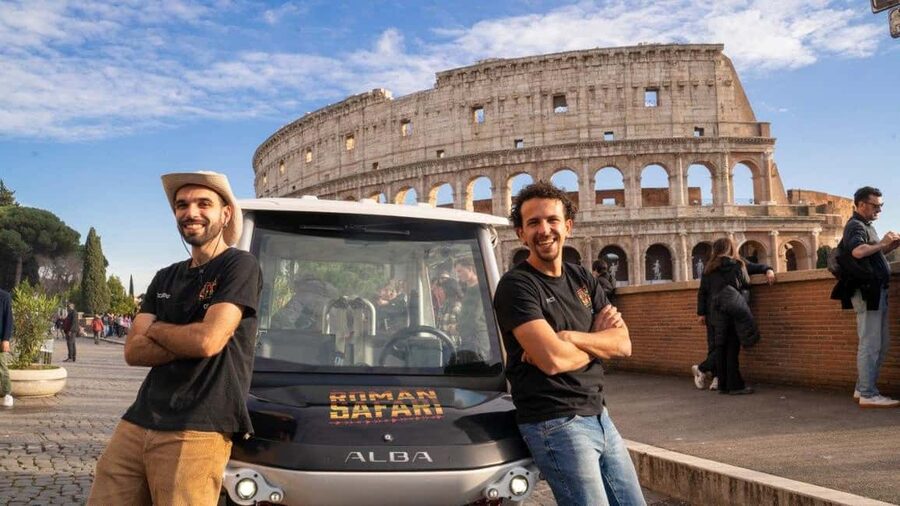
The Colosseum receives more time. You stop for photographs and walk around the outside for roughly fifteen minutes. The cart gets you close to the monument, which is useful when the surrounding streets are packed and you want to avoid a long approach.
This is one of Rome’s most powerful first impressions. The guide can explain how the amphitheater functioned, what happened inside, and how its later life shaped the city around it. Still, no entry ticket is included. You will not go inside as part of this tour, so arrange a separate reservation if you want the arena, upper levels, or nearby archaeological sites.
The short stop is ideal for orientation. You see the scale, take pictures, and learn what to look for when you return. It is less satisfying if you hoped to spend an hour examining the monument’s details.
Same city, an entirely different afternoon:
- Vatican Museums & Sistine Chapel Tour with Optional Basilica
★ 4.3 · 67,413 reviews - Colosseum, Roman Forum & Palatine Guided Tour
★ 4.7 · 63,148 reviews - Vatican Museums, Sistine Chapel & St Peter’s Basilica Guided Tour
★ 4.5 · 39,149 reviews - Rome: Colosseum, Palatine Hill and Roman Forum Guided Tour
★ 4.8 · 32,814 reviews
The Orange Garden and Rome’s best wide view
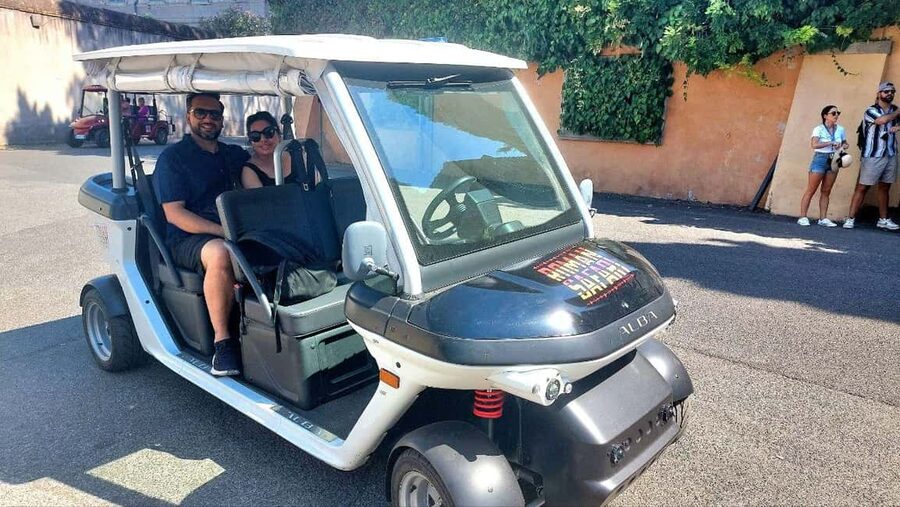
Giardino degli Aranci, or the Orange Garden, is one of the most memorable stops on the route. Perched on the Aventine Hill, it offers a broad view across Rome, with the city’s domes, rooftops, and distant landmarks spread out below.
You have about fifteen minutes here for walking, free time, and photographs. This is the scenic pause that can break up the parade of ruins and churches. It also gives your guide a natural place to explain Rome’s hills and the way the ancient and modern city fit together.
The stop involves getting out and walking, so comfortable shoes still matter. The golf cart reduces the amount of walking, but it does not remove it entirely. If you have limited mobility, discuss your needs before booking, since non-folding and electric wheelchairs are not allowed.
This viewpoint is one reason the tour works well early in a Roman visit. You gain a mental map of the city before you spend the next few days crossing it on foot. You also get a quieter pause away from the most crowded attractions.
Tossing a coin at the Trevi Fountain
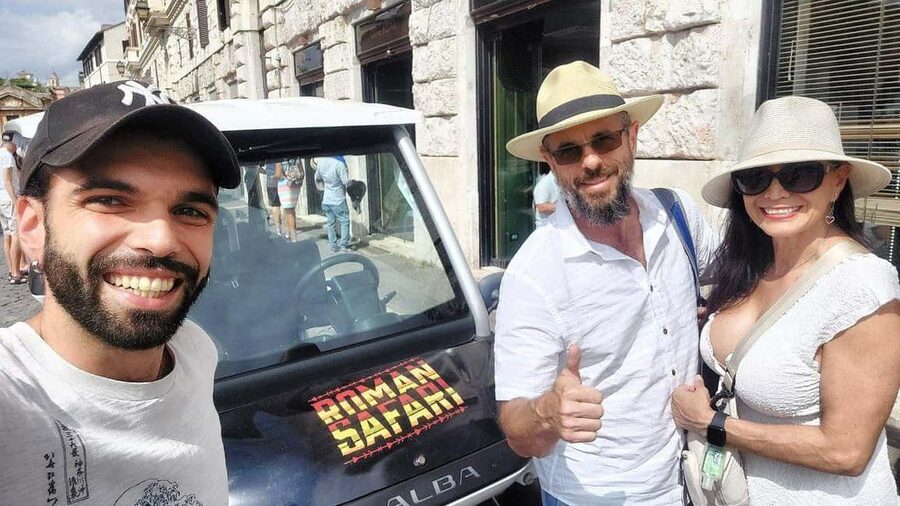
The Trevi Fountain is another scheduled walk and photo stop, with roughly fifteen minutes of free time. Your guide can explain the fountain’s design, its connection to ancient water systems, and the familiar coin-toss tradition.
The cart cannot make the fountain uncrowded. You should expect people, cameras, and a tight space around the basin. The advantage is that the guide takes you close, gives you the story, and lets you decide how much time to spend photographing the details.
Fifteen minutes is enough for a first look, but not for a leisurely study of the sculpture. If you want the calmest experience, ask about an evening departure or return on your own at a quieter time. The tour’s schedule may offer flexibility, but it cannot control the crowds.
The Trevi stop is also useful for practical planning. Once you know where the fountain sits in relation to the Pantheon, Piazza Navona, and the Spanish Steps area, later walks become easier to organize.
Santa Maria Maggiore and the Pantheon area
The route passes Basilica Papale di Santa Maria Maggiore, one of Rome’s important basilicas. The listed time is about ten minutes, mainly for a photograph and a pass-by view.
That brief treatment is sensible for a city overview. Rome has more churches than any short tour can enter, and spending too long at one basilica would mean losing time elsewhere. If church interiors are central to your plans, make a note of Santa Maria Maggiore and return separately.
The Pantheon is included in the overall highlights, though the detailed stop schedule does not list a separate Pantheon visit. You should clarify the exact route and stop pattern when arranging the tour if seeing the Pantheon up close is essential to you.
This is a useful point to keep in mind when comparing sightseeing products. The tour covers a great deal of ground, but the word visit can mean anything from a proper interior stop to a close pass with an explanation. Here, the main strength is the connected overview.
Piazza Navona and Sant’Ignazio
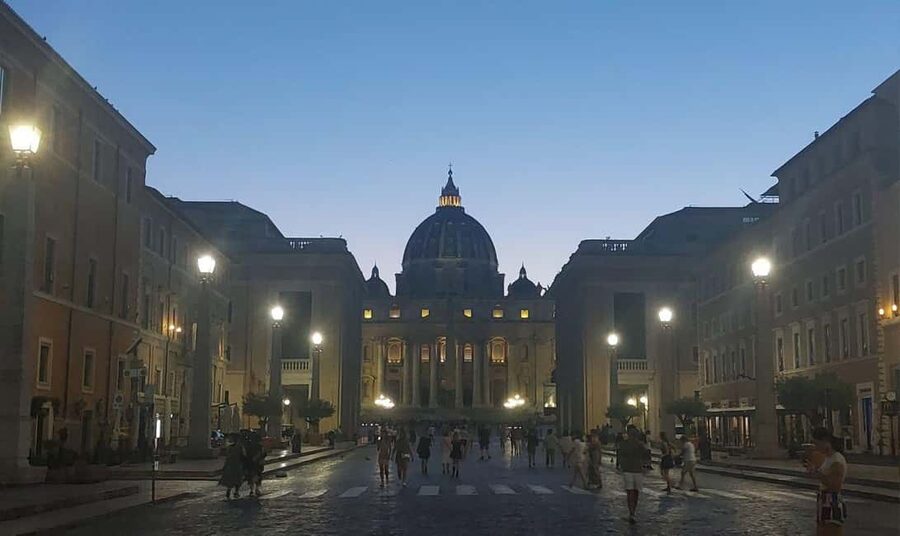
Piazza Navona receives about ten minutes for a visit, photographs, and a break. The long oval piazza follows the footprint of an ancient Roman stadium, and its fountains and Baroque churches make it one of the most handsome public spaces in central Rome.
Your guide can help you read the square rather than simply admire it. Look for the relationship between the fountains, the church facade, and the long shape of the piazza. Ten minutes is short, but it is enough to get the main story and take in the scene.
The Church of Sant’Ignazio di Loyola is another worthwhile stop. Its interior is known for an extraordinary painted ceiling that creates the illusion of architecture extending into the sky. The tour allows time to visit and photograph the church, although the precise time listed is about ten minutes.
This stop gives the route a welcome artistic turn. After the ancient Forum and Colosseum, you see how later Rome used painting, perspective, and theatrical design to create its own sense of grandeur.
What the guides add to the ride
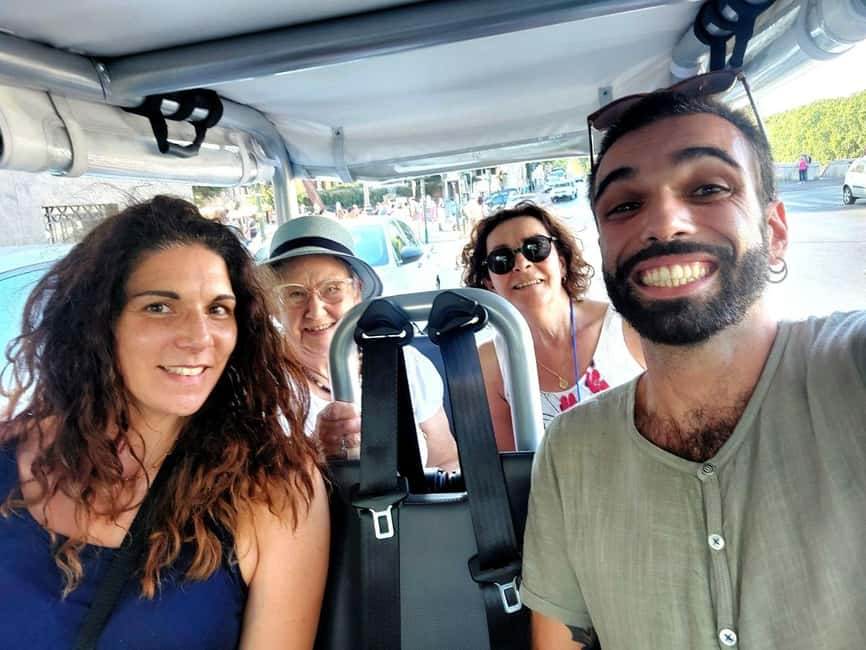
The strongest part of this experience is the human element. The guides are local drivers, and the business partners behind RomanSafari describe backgrounds in acting, directing, and music. That helps explain the lively presentation described throughout the experience.
Riccardo is repeatedly identified as a Roman local with strong knowledge of the city and its shortcuts. Eduardo and Edoardo are praised for useful facts, warmth, and the ability to adapt the route. Victor and Viktor are noted for being welcoming, safe, and good with families. Vincenzo is also praised for an easygoing and flexible approach.
Guide assignments can change, so you should not assume a particular person will lead your tour. Still, the pattern is clear: expect a guide who does more than point at monuments. You can ask questions, request a particular stop, and get suggestions for restaurants or places to revisit.
That flexibility is especially valuable for a private tour. One family asked to see fountains for a young child. Other groups used the ride to avoid sights they had already covered. A guide also adjusted a route around an unexpected street closure, helping the group keep its key stops.
Price, comfort, and what you receive
At $75 per person, the tour is not the cheapest way to see Rome. Public transport and walking cost far less, and a standard group bus may also come in below this price.
The comparison changes when you consider the private format, hotel pickup and drop-off, a live guide, bottled water, and the ability to move through narrow streets. You are paying for time saved, direct transport, and personal attention rather than simply for a vehicle seat.
For a family, older relatives, or a group with only one day in Rome, that can be good value. Several people used the tour after an overnight flight or as a first-day introduction, when navigating Rome independently would have been tiring.
The cart is described as comfortable, clean, fast, and safe by people who used it. You should still expect the normal bumps and outdoor conditions of a city ride. The vehicle is open enough that weather may affect your comfort, so check the forecast and dress sensibly.
Hotel pickup is a major benefit. Enter your pickup location accurately and stay reachable by phone or email on the day of the tour. The operator uses those details to organize the meeting, and clear communication matters in a city where traffic and street access can change.
Who should book this Roman golf cart tour
I would recommend it most strongly to:
- First-time visitors who want a city orientation
- Families with children who need a faster way to cross central Rome
- Older adults who want to reduce long walks
- Couples looking for a private and flexible introduction
- People with a short stay or a limited sightseeing window
- Anyone arriving tired and wanting an easy first look at Rome
- Visitors who enjoy local stories, jokes, and personal recommendations
It is less suitable if your main goal is entering major monuments. The Colosseum, Roman Forum, and other attractions require separate tickets and more time. It is also not the right choice if you want a slow archaeological tour with detailed study at every ruin.
Strollers are not allowed, and non-folding or electric wheelchairs cannot be accommodated. A small child may enjoy the ride, but confirm your group’s needs before reserving.
The activity has a 4.9 rating from 377 reviews, and the most consistent praise centers on the guides, easy pickup, safe driving, broad coverage, and personal adjustments. Those are the qualities that matter most here, because the monuments themselves are free to look at from the streets. The guide and the efficient route are what you are buying.
Should you book it?
Book this tour if you want to see Rome quickly without exhausting yourself. Choose 1.5 hours for a brisk overview, or 2.5 hours if you want more conversation, photographs, and chances to add personal requests.
I would especially consider it for your first day. You can learn the city’s layout, mark the places worth revisiting, and avoid wasting half a day figuring out how the center fits together. If you already know Rome well or prefer long museum visits, spend the money on timed entry and explore on foot instead.
For most first-time visitors, the combination of private transport, local storytelling, and hotel pickup makes this a smart orientation tour. Just book separate tickets for the monuments you want to enter, and treat the golf cart ride as the lively introduction rather than the entire Roman experience.
FAQ
How much does the private golf cart tour cost?
The listed price is $75 per person.
How long does the tour last?
You can choose a 1.5-hour or 2.5-hour option. Starting times depend on availability.
Is the golf cart private?
Yes. The activity is organized as a private group tour by golf cart.
Is hotel pickup included?
Yes. Pickup and drop-off at your hotel or another location in the city are included. You should provide your pickup location and remain reachable by phone or email on the day.
Which languages are available?
Live guiding is available in English and Portuguese.
Are entry tickets included?
No. Entry tickets are not included, and the tour does not provide admission to the Colosseum, Roman Forum, or other attractions.
Which Rome sights are included on the route?
The route includes or passes the Roman Forum, Rione Monti, the Altar of the Fatherland, the Colosseum, Giardino degli Aranci, Trevi Fountain, Santa Maria Maggiore, Piazza Navona, and the Church of Sant’Ignazio di Loyola. The listed highlights also include the Pantheon area.
Is water provided?
Yes. Water bottles are included.
Can I cancel for a full refund?
You can cancel up to 24 hours before the activity for a full refund.
Can I reserve now and pay later?
Yes. The booking option allows you to reserve your place and pay later.
Are strollers or wheelchairs allowed?
Baby strollers, non-folding wheelchairs, and electric wheelchairs are not allowed.
Fresh on the Rome list
- Rome: Guided Catacombs Tour & Capuchin Crypt (Audio Guide)★ 4.3 · 191 reviews
- Guided tour of the Colosseum, Roman Forum and Palatine in Spanish★ 4.5 · 191 reviews
- Rome: Borghese Gallery Guided Tour with Skip-the-Line Ticket★ 4.5 · 192 reviews
- Rome: Arena Colosseum Tour with Arena Access★ 4.6 · 193 reviews
- Colosseum, Forum, Palatine Hill with audio guide and Arena or Bus option★ 4.0 · 193 reviews
- Rome: Colosseum & Roman Forum Guided Tour★ 5.0 · 194 reviews
- Rome: Domus Aurea Guided Tour and Virtual Reality Experience★ 4.7 · 194 reviews
- Rome Vintage Fiat 500 car Tour With Photographer★ 5.0 · 194 reviews
Private, compared.
Como & Bellagio with Private Lake Como Cruise
Read our review →
Murano & Burano Islands Guided Small-Group Tour by Private Boat
Read our review →
Rome by Golf Cart Private Tour: Beyond the Landmarks
Read our review →
Early Morning Vatican, Sistine, St. Peter’s Semi or Private Tour
Read our review →
Private 3 hrs Venice Tour: St Mark’s, Walking tour & Boat tour
Read our review →