Reviewed · TICKETS
Rome: Pantheon Timeless Marvel Guided Tour with Entry Ticket
The Pantheon’s great trick is that it makes ancient engineering feel immediate. You walk beneath the world’s largest unreinforced concrete dome, look up through its open oculus, and see why this building still commands attention nearly two thousand years after its Roman rebuilding.
I like the short, focused format, which gives you solid context without taking half your day. I also like the chance to enter through a guided arrangement that skips the ticket line, especially when Rome’s streets and monuments are packed. The main consideration is that this is a brisk tour of one building, not a full ancient-Rome walk, and entrance can take longer during high season.
Key points to know before booking
- Look straight up at the oculus: The open circle at the dome’s center provides the Pantheon’s light and its most memorable view.
- Meet beside Bernini’s elephant: The starting point is Piazza della Minerva, next to the famous elephant statue.
- Hear the building’s full story: Your guide covers its Greek-inspired porch, Roman dome, Christian use, art, tombs, and engineering.
- Expect a compact visit: The tour lasts about 45 minutes to one hour, a good fit between other central Rome sights.
- Choose your language and group style: Tours are available in English, French, or Spanish, with private and small-group options.
- Dress for a church: Shorts, short skirts, and sleeveless shirts are not allowed, and every participant must provide an official full name.
Why the Pantheon works best with a guide
The Pantheon is easy to enter and admire on your own, but its scale can leave you with more questions than answers. Why does the front look like a Greek temple? How did Roman builders support such a huge dome? Why is Raphael buried here? A good guide gives you the answers while your eyes are still on the thing being explained.
That is the real value of this tour. You are not simply handed a ticket and left to circle the interior. The guide points out the building’s layers, from its massive Corinthian columns and original-looking bronze doors to the marble decoration and Christian furnishings inside.
The strongest guides also connect the Pantheon to Rome beyond this one structure. Rea, Realda, Alessandra, Jan, Leo, Henry, Laura, and other guides are repeatedly praised for clear storytelling, enthusiasm, patience, and a strong grasp of Roman history. Jan, who has an urban-planning background, is noted for explaining the Pantheon as both an ancient temple and a remarkable feat of city building and engineering.
That personal interpretation matters in a place where the main sights are easy to spot but harder to understand. You will see the dome, yet a guide can explain why its construction was so bold. You will see Raphael’s tomb, yet a guide can give the memorial a human meaning instead of leaving it as another name in a crowded itinerary.
A few other Rome mornings to weigh against this
- Rome: Pantheon Fast-Track Ticket and Official Audio Guide
★ 4.3 · 21,008 reviews - Rome:Hop-On Hop-Off Panoramic Open Bus Ticket 3 Circuits x 1
★ 4.0 · 15,405 reviews - Vatican Museums & Sistine Chapel Skip-the-Line Entry Ticket
★ 4.4 · 13,838 reviews
Meeting at Piazza della Minerva
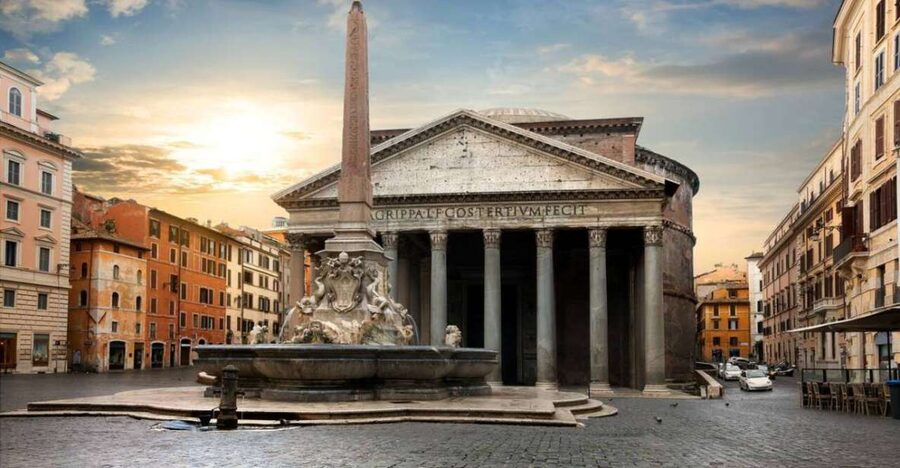
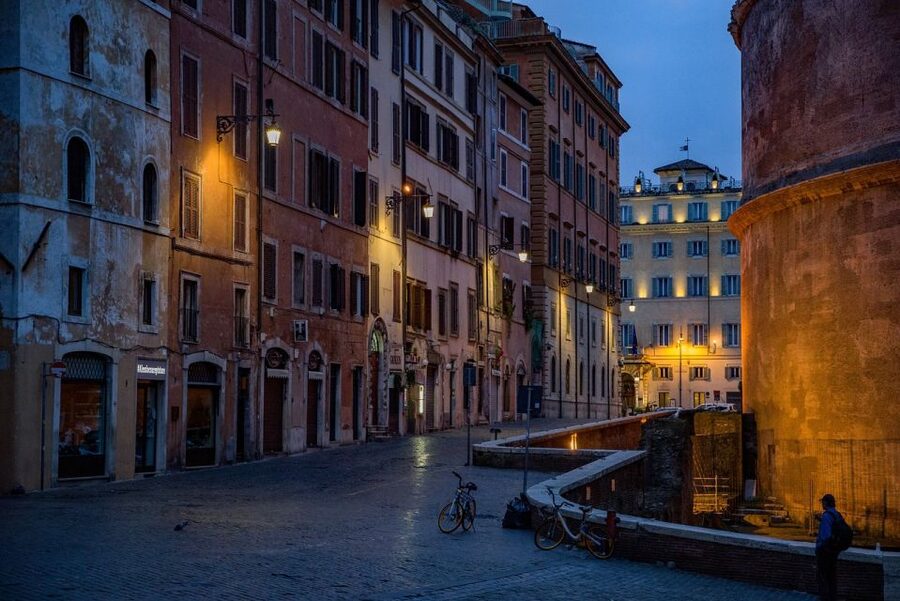
The tour begins in Piazza della Minerva, a small square beside the Pantheon. Look for the elephant statue, which carries a short Egyptian obelisk on its back. The exact meeting arrangement can vary with the option you book, so read your confirmation carefully before setting out.
The square is a useful place to get your bearings. You receive a brief introduction before walking to the Pantheon, giving you a basic outline before the building fills your view. This outside explanation is worthwhile because the Pantheon’s facade can be hard to take in all at once.
Give yourself time to locate the meeting point. Several departure options use the same piazza, and the tour company has helped people who were late or unsure where to go, but you should not rely on last-minute rescue. Arriving early leaves room to identify your guide and avoid beginning the tour flustered.
The Corinthian porch and original doors
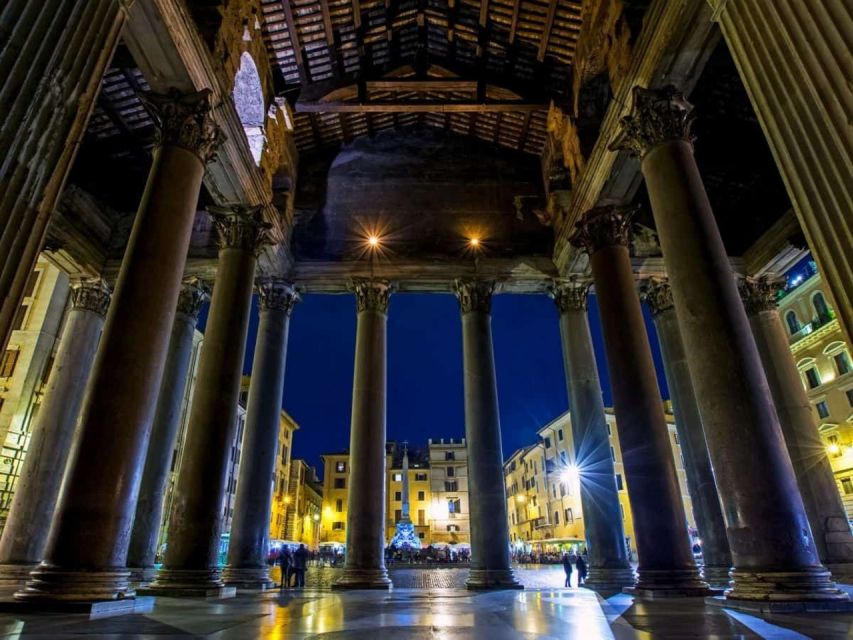
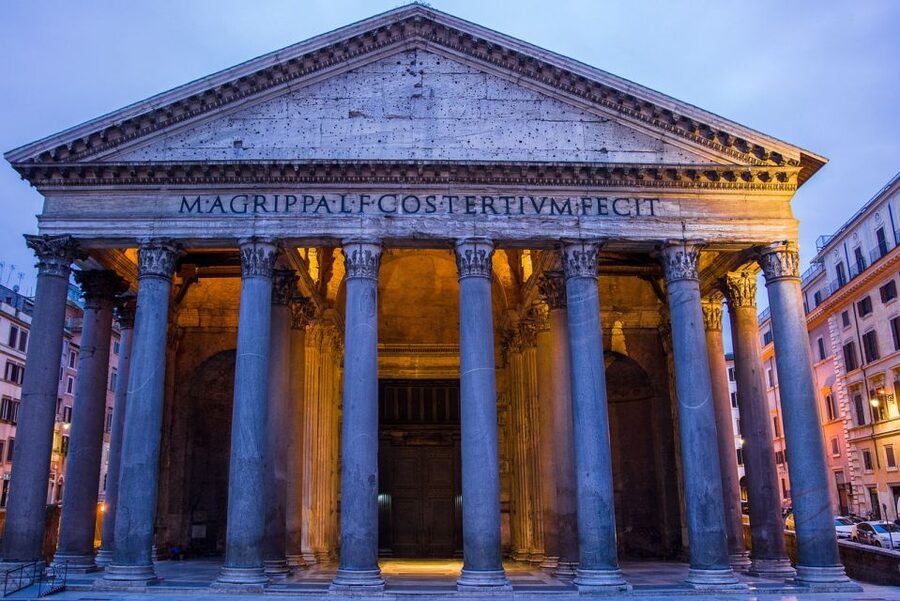
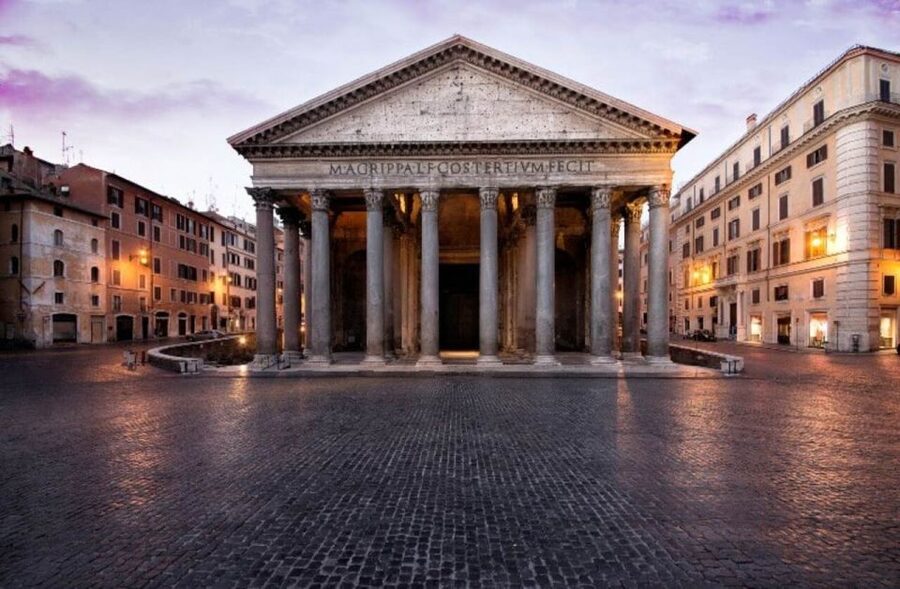
From the square, your guide takes you toward the Pantheon. The first sight is the grand porch, with its tall Corinthian columns and triangular pediment. The Greek appearance is deliberate. It gives the building the familiar front of a classical temple, even though the space behind it uses Roman ideas on a much larger scale.
This contrast is one of the most interesting parts of the visit. At the entrance, you see a traditional Greek architectural language. Behind it, the vast round interior and concrete dome reveal Roman confidence with structure and materials.
Take a moment to look at the doors. One of the most memorable details highlighted during the tours is that the bronze doors are original to the building’s construction. That small fact changes the way you view the entrance. It is no longer simply a grand doorway, but a surviving piece of ancient craftsmanship that people have passed through for centuries.
The outside portion is brief, so it does not replace a full architectural walk around the building. Still, it prepares you to notice the scale and the unusual blend of Greek and Roman design before you step inside.
Under the open oculus
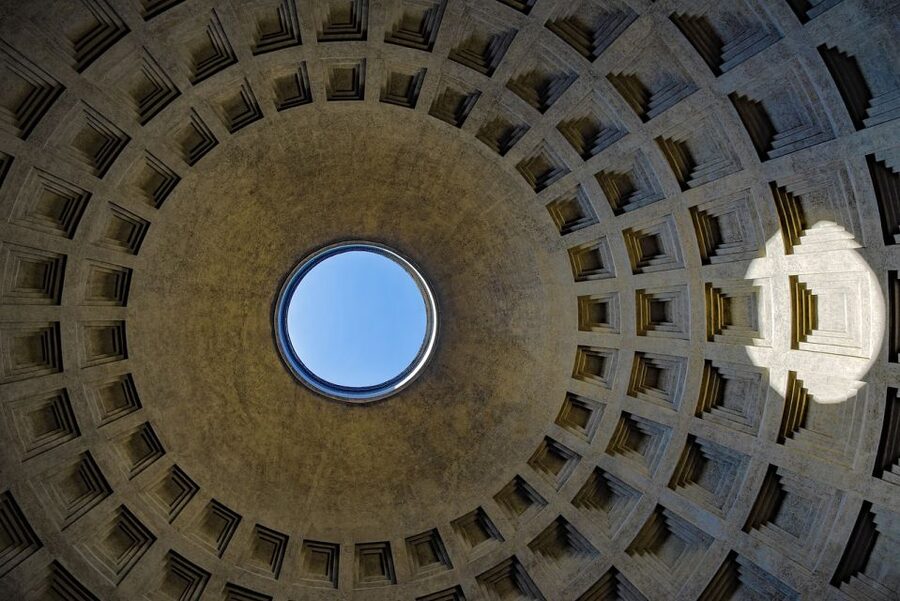
The interior is the heart of the tour. The dome rises above you with the oculus at its center, an open circular window that admits daylight and creates the building’s most famous visual effect. Depending on the weather, you might see a beam of sun or even rain falling through the opening.
One tour took place during heavy rain, giving the group a particularly striking view of water coming through the oculus. The floor has a drainage system, but the important point for you is simple: weather can become part of the experience rather than merely an inconvenience.
The oculus also gives the room its changing mood. The light moves across the interior during the day, drawing your eye upward and then back toward the walls, floor, and chapels. Your guide helps you connect this dramatic light source with the building’s original religious purpose and later use as a church.
The Pantheon is famous for its dome, but the dome is not just a photo opportunity. Its vast span, built without modern steel reinforcement, is a lesson in Roman materials and design. Guides explain details such as the concrete mixture and the way the structure becomes lighter toward the top. Specific technical points can vary by guide, but Jan was especially praised for discussing the cement recipe and the building’s engineering.
Same city, an entirely different afternoon:
- Vatican Museums & Sistine Chapel Tour with Optional Basilica
★ 4.3 · 67,413 reviews - Colosseum, Roman Forum & Palatine Guided Tour
★ 4.7 · 63,148 reviews - Vatican Museums, Sistine Chapel & St Peter’s Basilica Guided Tour
★ 4.5 · 39,149 reviews - Rome: Colosseum, Palatine Hill and Roman Forum Guided Tour
★ 4.8 · 32,814 reviews
Marble, mosaics, and painted chapels
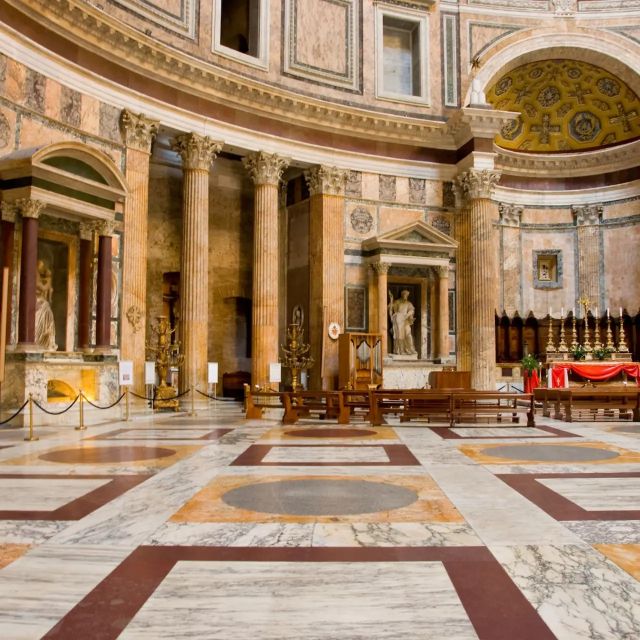
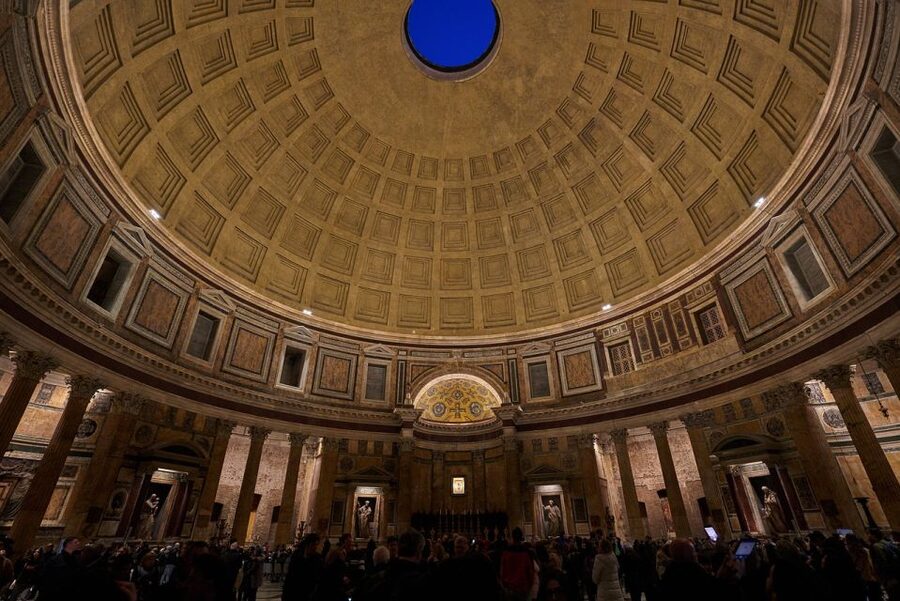
Once your eyes adjust from the bright oculus, look around the walls and floor. The tour draws attention to marble surfaces, mosaics, sculptures, and paintings. The interior is not a bare Roman shell. It reflects centuries of changes, repairs, decoration, and Christian worship.
That mixture can confuse you if you expect a perfectly preserved ancient temple. The building’s power comes partly from its survival and partly from its continued use. You are seeing Roman architecture, later religious art, and memorials to important Italian figures in the same room.
The guide’s job here is to help you separate those layers without turning the visit into a lecture. The most praised guides keep the information moving, answer questions, and point to small details you could easily miss while taking in the whole dome.
Speakers are used during some tours, and one participant specifically noted that they worked well. That can make a major difference inside a large, echoing space. In a small group, you should have a better chance of hearing the guide and asking a question without competing with a crowd.
Raphael, Italian kings, and the Pantheon as a church
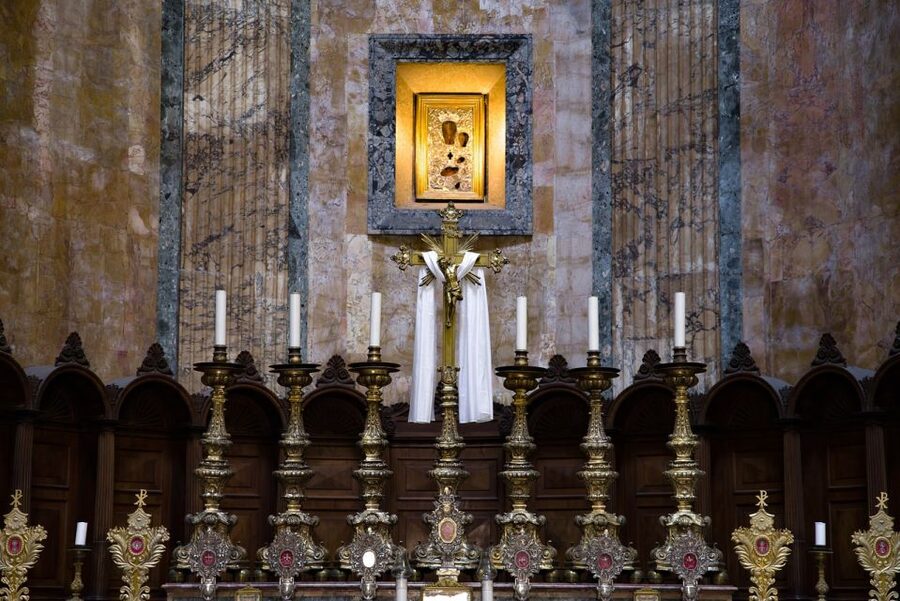
The Pantheon is a church today, so the atmosphere is both monumental and devotional. The tour includes time to acknowledge famous people buried inside, including the painter Raphael, Italian kings, artists, and other notable figures.
Raphael’s tomb is especially meaningful because the memorial connects the building to Renaissance Rome, not only to imperial Rome. A guide can explain why his resting place matters and help you read the inscription as more than a decorative panel. One well-received tour called attention to the moving inscription at his tomb.
You should treat the interior with the respect expected in an active church. Modest clothing is required. Shorts, short skirts, and sleeveless shirts are not permitted, so plan your outfit before leaving your hotel. This rule is easy to overlook when you think of the Pantheon mainly as an archaeological monument.
The church setting also means conditions may not be identical to a museum visit. Entrance can be delayed during high season, and the pace may need to accommodate worship or site procedures. Build a little flexibility into your Rome schedule instead of placing the tour immediately before a timed train or attraction.
A 45-minute to one-hour pace
The tour lasts about 45 minutes to one hour. I see this as one of its best features. You get enough time to understand the building, yet the visit remains manageable for children, older family members, or anyone planning several central Rome sights in one day.
The short length does mean the guide cannot cover every artistic and architectural detail. If you want an academic study of Roman concrete, every chapel, or the entire history of the neighborhood, you will need more time on your own. This tour aims for a clear and memorable introduction.
The pace is generally described as swift but packed with useful information. That suits you if you want the main ideas delivered in a lively way. It may feel fast if you prefer long periods of quiet looking or extensive questions.
Small-group and private options are available. A small group offers a useful middle ground: you gain the guide’s interpretation without the scale of a large crowd. A private option should suit you best if your party wants to ask many questions or needs a more personal pace, though the supplied price of $21 per person may not apply to every booking option.
Is $21 a good value?
At about $21 per person, this is a sensible add-on for a major Rome sight. The Pantheon itself is compact, and you could spend less time and simply look around, but the ticket plus a live guide gives you more than entry alone.
I think the value comes from three things. First, the ticket arrangement is designed to let you skip the ticket line, though high-season entry can still be delayed. Second, the guide explains details that are easy to miss, including the original bronze doors, the concrete, the tombs, and the building’s changing purpose. Third, the tour uses only 45 minutes to one hour, so it does not consume a large part of your day.
The price is less attractive if you already have a strong background in Roman architecture or want a long, slow visit. It is also worth checking the exact option before booking, since private and small-group formats can differ from the basic per-person rate.
The free-cancellation policy gives you room to adjust plans if you cancel at least 24 hours ahead. You can also reserve now and pay later, which helps when you are arranging a busy Rome itinerary.
Languages, names, and group choices
Tours are offered in English, French, and Spanish. If language clarity is important to you, choose carefully at booking rather than assuming every departure is multilingual.
The guide roster changes, but several names have drawn particular praise for their style. Realda and Rea are frequently described as warm, enthusiastic, and strong storytellers. Alessandra is noted for calm, clear explanations and a passion for Italian history. Jan brings an urban-planning background, while Leo is praised for lively conversation and storytelling.
Henry is described as especially energetic, and Laura is noted for patiently answering questions while explaining how the Pantheon was built and used over time. These details suggest a useful pattern: the experience depends heavily on the individual guide, but the provider has a deep bench of guides who bring different strengths.
A private group gives you more control. A small group can be the better value if you want interaction without paying for a fully private experience. For a first visit to Rome, I would choose the smallest practical group if the price difference is modest.
Practical clothing and identification rules
Bring a passport or identity card for yourself and one for each child. Every participant must enter their official full name during booking, and a mismatch can lead to denied entry at the monument.
Dress as you would for a church. Sleeveless shirts, shorts, and short skirts are not allowed. Pets, weapons, and sharp objects are also prohibited.
Wear comfortable shoes, particularly if rain is forecast. The tour itself is short, but you will likely reach the meeting point on foot through Rome’s historic center, and wet streets can make the approach less pleasant. The rain does not prevent the tour, and it may give you a memorable view through the oculus, but it is still wise to arrive prepared.
Who should book this Pantheon tour?
I would recommend it to a first-time Rome visitor who wants the building to make sense, not just appear in a photograph. It is also a good choice for families and couples who want a focused activity between meals, piazzas, and longer museum visits.
The tour suits you if you appreciate history delivered through stories and clear details. Guides such as Rea, Realda, Alessandra, and Jan have shown that the best parts are not only the headline facts, but also the small observations about the doors, materials, tomb inscriptions, and construction.
I would be more cautious if you dislike guided visits, prefer to set your own pace, or need a perfectly fixed schedule during high season. The Pantheon is not a huge site, and some people will feel satisfied with a self-guided look.
Should you book it?
For $21, this is a strong value if you want a quick, well-organized introduction to one of Rome’s most extraordinary buildings. I especially like the combination of skip-the-ticket-line access, a short duration, and a live guide who can explain why the dome, oculus, doors, and tombs matter.
Book it if you want the Pantheon to feel like a living place with several chapters, Roman, Renaissance, and Christian. Skip it only if you already know the building well or prefer to explore without a fixed guide. For most first visits, the extra context is worth the modest cost.
FAQ
How long does the Pantheon guided tour last?
The tour lasts approximately 45 minutes to one hour.
What is included in the booking?
The booking includes a live guide, the guided tour, and Pantheon entry tickets.
Where does the tour meet?
The meeting point is in Piazza della Minerva, next to the elephant statue. The exact meeting arrangement may vary depending on the option booked.
Is the Pantheon entry ticket included?
Yes. Pantheon entry tickets are included.
Can I skip the ticket line?
The activity includes skip-the-ticket-line access. Entrance may still be delayed during the high season.
Which languages are available?
The guided tour is available in English, French, and Spanish.
Are private tours available?
Yes. Private and small-group options are available.
What should I bring?
Bring a passport or identity card. Children must also have a passport or identity card.
What clothing is required?
The Pantheon is a church, so modest clothing is required. Shorts, short skirts, and sleeveless shirts are not allowed.
Can I cancel the tour?
You can cancel up to 24 hours in advance for a full refund. The reserve-now, pay-later option is also available.
Fresh on the Rome list
- Exclusive Golf Tour Private VIP with Local & Gelato o Wine★ 5.0 · 500 reviews
- Colosseum, Palatine Hill and Roman Forum with Guided Tour★ 5.0 · 500 reviews
- Rome Trastevere Pasta Making Class with Eating Europe★ 5.0 · 505 reviews
- Rome by Night Walking Tour★ 4.5 · 506 reviews
- Rome: Colosseum Express Tour with Forum & Palatine Access★ 4.5 · 511 reviews
- Rome Food Experience Max 6 People Group Tour | w/Private Option★ 5.0 · 516 reviews
- Rome: Navona Square Underground Ticket with Audio Guide★ 4.0 · 518 reviews
- Rome: Escorted Papal Audience Experience with Entry Ticket★ 4.4 · 518 reviews
Tickets, compared.
Vatican: Museums & Sistine Chapel Entrance Ticket
Read our review →
Cathedral and Duomo’s Terraces Entrance Ticket
Read our review →

Skip-The-Line Uffizi Gallery Timed Entry Ticket
Read our review →
Naples Underground Entry Ticket and Guided Tour
Read our review →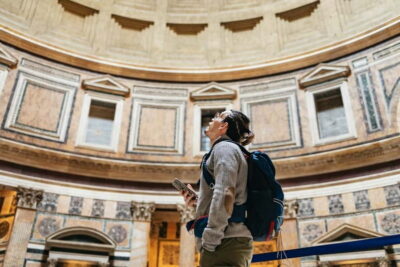
Pantheon Fast-Track Ticket and Official Audio Guide
Read our review →
Entry Ticket and Guided Tour with an Archaeologist
Read our review →