Reviewed · TICKETS
Rome: Palazzo Barberini Galleria Corsini Ticket & Audioguide
Rome keeps some of its best art in grand old palaces, and this ticket pairs two of them: Palazzo Barberini, filled with Bernini, Caravaggio, Raphael, and other major names, and the late-Baroque Corsini Gallery. The art is the headline, but the buildings are part of the show.
I like the freedom to explore at your own speed, and I like the two-for-one format. You get a look at different collections and two very different palaces for $19 per person. The digital audioguide adds useful context without tying you to a tour group.
The main catch is that a guided tour is not included. You exchange your smartphone voucher at the Barberini ticket office for the official entry ticket, then use the app audioguide on your own. Also check the date and time terms carefully, since the activity is described as valid for one day, while the ticket information also refers to one visit within 20 days of purchase.
Key points to know before you book
- Bernini and Caravaggio are the major draws: You will see important works by both artists, along with paintings by Raphael, Rubens, Titian, El Greco, and many others.
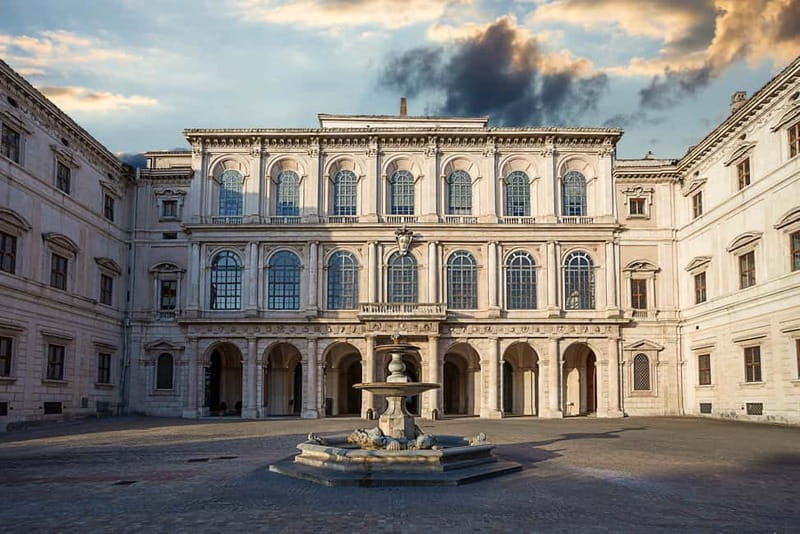
- Two palaces come with one ticket: Palazzo Barberini and Palazzo Corsini give you art in grand architectural settings, not plain gallery rooms.
- The audioguide is digital: Download the app to add background and explanation as you move through the collections.
- You set the pace: This is an independent visit, so you can linger over a favorite painting or move on when your attention fades.
- The ticket costs $19 per person: That is a fair price if you plan to see both galleries, especially for art lovers who want more than a quick single-museum visit.
- Allow for possible access changes: One area may occasionally be closed for a conference or special use, so not every room is guaranteed to be open.
Why this pairing works in Rome
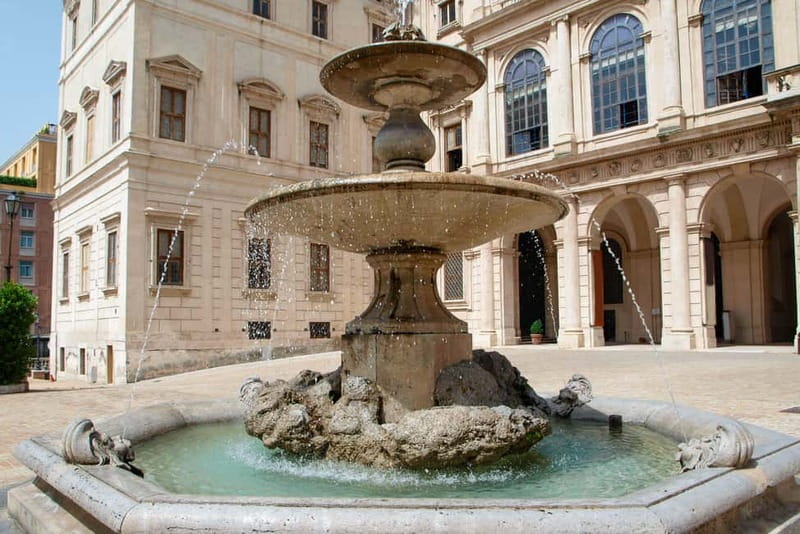
Many Roman museum visits focus on one famous work and little else. This ticket gives you a broader look at Italian and European painting, while also showing you two palaces shaped by powerful Roman families.
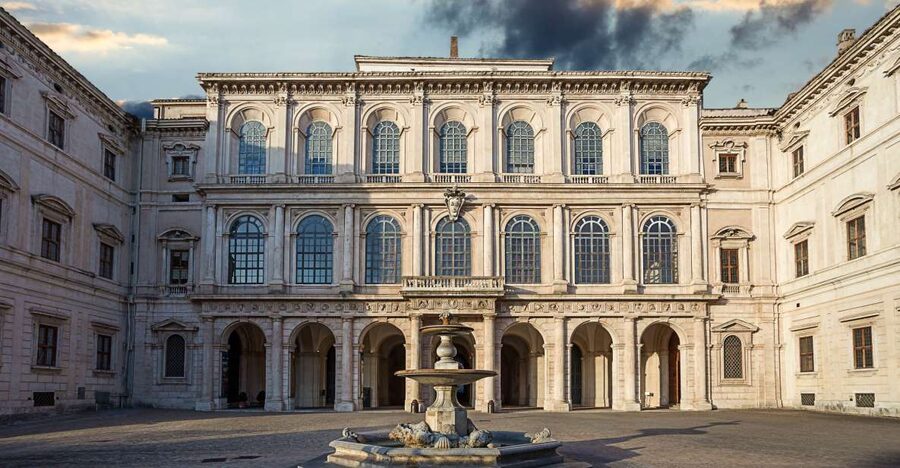
Palazzo Barberini was created for Pope Urban VIII, a member of the Barberini family. Carlo Maderno designed the building in the sixteenth century on the former site of Villa Sforza. That background matters because the palace was never just a container for art. Its scale, design, and connection to papal power help explain why the paintings inside were commissioned and collected.
The Corsini Gallery offers a different setting. Palazzo Corsini was built for the Corsini family between 1730 and 1740, with architecture based on designs by Ferdinando Fuga. It is a late-Baroque palace, and the rooms give you another view of how aristocratic families displayed art in Rome.
I like this combination because it lets you compare two grand homes rather than seeing one collection in isolation. If your Roman schedule has room for only one art stop, Palazzo Barberini is likely the stronger choice because of its famous names and larger artistic range. If you can spare the time, Corsini makes the ticket feel more worthwhile.
A few other Rome mornings to weigh against this
- Rome: Pantheon Fast-Track Ticket and Official Audio Guide
★ 4.3 · 21,008 reviews - Rome:Hop-On Hop-Off Panoramic Open Bus Ticket 3 Circuits x 1
★ 4.0 · 15,405 reviews - Vatican Museums & Sistine Chapel Skip-the-Line Entry Ticket
★ 4.4 · 13,838 reviews
Palazzo Barberini, where the building competes with the paintings
Start at the Barberini ticket office, where you exchange your smartphone voucher for the official entry ticket. The experience is designed to avoid the regular ticket line, though you should still allow time for the voucher exchange.
Inside, the first impression is architectural. Palazzo Barberini was built on the old Villa Sforza site for Pope Urban VIII, and its rooms reflect the ambition of the Barberini family. You are not walking into a simple modern museum. You are moving through a palace whose original purpose was closely tied to status, religion, and political influence.
That setting changes how you look at the art. A portrait by Van Dyck or a religious painting by Caravaggio feels different when displayed in rooms once connected to a papal household. You can pay attention to the work itself, then look up and consider the room around it.
The collection covers a wide span of artists and periods. You might encounter Beato Angelico, Filippo Lippi, Lorenzo Lotto, Mattia Preti, Nicolas Poussin, El Greco, Raphael, Tiepolo, Tintoretto, Rubens, Murillo, Ribera, and Titian. That list is useful because it tells you what kind of visit this is: not a narrow display built around one school or century, but a broad survey with major Italian and European figures.
Finding Bernini and Caravaggio
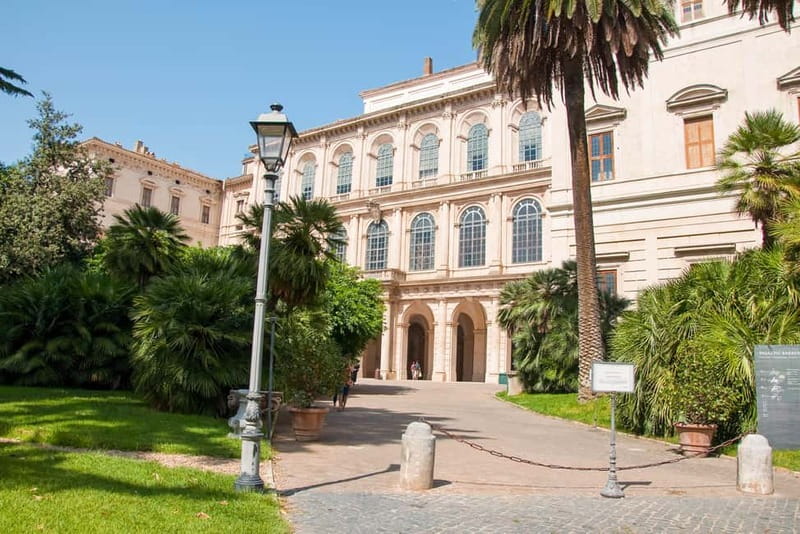
Bernini and Caravaggio are the names most likely to shape your plans, and both deserve focused time. The ticket specifically features works by these two artists, while the collection also includes important paintings by Raphael and many other well-known masters.
Bernini is best known to many visitors for sculpture and architecture, but seeing his work in the context of a palace collection helps you connect his artistic role with the Barberini family and papal Rome. Caravaggio brings a very different energy. His strong light, direct human presence, and dramatic scenes can pull your attention across a room.
The collection is particularly well suited to visitors who want to compare artists rather than simply check off one masterpiece. Look at how different painters handle light, gesture, faces, and religious subjects. The audioguide can help here, since it gives you more background than a quick label usually can.
The digital guide is accessed through an app, so prepare your smartphone before you start. This is not a live guide who adjusts the pace or answers questions. It is a self-directed tool, useful when you want context but less helpful if you prefer a conversation or a tightly planned route.
The Corsini Gallery and its late-Baroque rooms
The second part of the visit takes you to Galleria Corsini, inside Palazzo Corsini. The palace was erected for the Corsini family between 1730 and 1740, and Ferdinando Fuga’s designs give it a clear late-Baroque character.
The appeal here is partly the art and partly the sense of entering a former aristocratic residence. The building helps you imagine how a wealthy Roman family arranged its collection and presented itself to visitors. It is a quieter counterpart to the more famous Barberini setting.
The supplied details do not identify individual Corsini works, so you should treat this stop as a chance to see the palace and its collection rather than arrive with a fixed list of must-see paintings. The audioguide may add more detail once you are inside, but the key value is the pairing itself.
If you are mainly visiting for Caravaggio or Bernini, make Barberini your priority. If you enjoy architecture, decorative interiors, and the way art collections fit into historic homes, Corsini will add real value. The two sites also help break up a day of Roman sightseeing with something more focused and indoors.
Same city, an entirely different afternoon:
- Vatican Museums & Sistine Chapel Tour with Optional Basilica
★ 4.3 · 67,413 reviews - Colosseum, Roman Forum & Palatine Guided Tour
★ 4.7 · 63,148 reviews - Vatican Museums, Sistine Chapel & St Peter’s Basilica Guided Tour
★ 4.5 · 39,149 reviews - Rome: Colosseum, Palatine Hill and Roman Forum Guided Tour
★ 4.8 · 32,814 reviews
How to use the audioguide well
The digital app audioguide is included, but a guided tour is not. That distinction is important. You will not have a named guide leading you from room to room, and there is no live commentary included in the price.
Instead, download the app and use the extra content to shape your visit. I would avoid trying to listen to everything. Choose the artists or rooms that interest you most, then give yourself time to look at the paintings without audio in your ears.
The app works best as a supplement, not as the entire visit. Spend a few minutes with a work before starting its explanation. Notice the composition, color, expressions, and use of light first. Then listen for the information that helps you see more clearly.
A live tour can be more engaging for visitors who want questions answered or who prefer a set route. This ticket suits you better if you like independent museum visits and do not mind making your own choices.
Time, pace, and practical planning
The ticket is described as valid for one day, with starting times checked through availability. The details also state that tickets are for one visit and are valid for 20 days after purchase. Because those phrases describe validity in different ways, check the exact date and entry conditions at booking before you commit.
The visit ends back at the meeting point, and no transportation between the galleries is listed. Plan your own movement between the two attractions. The important point is that this is not a continuous guided itinerary with a group transfer. You are responsible for visiting each site within the stated conditions.
There is no fixed duration beyond the one-day validity. That is a benefit if you want flexibility, but it means you must manage your time. Art lovers can spend a long stretch at Barberini and then risk rushing Corsini. If both galleries matter to you, keep the second stop in mind from the start.
The galleries are wheelchair accessible, which makes the ticket workable for visitors who need step-free access. Still, the exact route through each building is not detailed, so anyone with specific mobility needs should confirm current access information before booking.
One area has sometimes been unavailable because of a conference. That is a useful warning for visitors with a strict must-see list. Historic museums can host private events, and a ticket does not always guarantee that every room will be open on the day.
Is $19 good value?
At $19 per person, this is a sensible purchase if you intend to visit both galleries. You are paying for two historic buildings, access to major artists, and a digital audioguide. Compared with buying only a single museum entrance, the combined format gives you more range.
The value depends on your interests and your pace. If you visit only Palazzo Barberini and leave without making time for Corsini, the price may feel less attractive. If you enjoy painting and palace interiors, the second gallery adds substance rather than filler.
I also see value in avoiding the normal ticket line, though you still exchange the smartphone voucher at the Barberini ticket office. That extra step is small, but it means you should not assume the phone voucher alone is your final admission ticket.
The non-refundable policy makes careful planning important. Do not buy until you are comfortable with the date, timing, and validity rules. The price is reasonable, but the lack of refunds reduces flexibility if your Roman plans change.
Who will enjoy this visit most?
This ticket is a good match for you if you want to see major art without spending an entire day on a guided tour. It works especially well for independent visitors, couples, and art-minded families who prefer to stop and start at their own pace.
It also suits anyone interested in the connection between art and power. Palazzo Barberini reflects papal and family influence, while Palazzo Corsini shows a later aristocratic setting. The buildings give the paintings a useful social and architectural frame.
You may want a different option if you need a live guide, a tightly organized route, or guaranteed access to every gallery room. The digital audioguide provides information, but it cannot replace a person who can respond to your questions.
The experience is also less suited to a rushed itinerary. Two galleries require planning, especially if you want to appreciate the architecture rather than race from one famous name to the next.
My booking advice
I would book this ticket if Bernini, Caravaggio, and historic Roman interiors are high on your list. The combination of Palazzo Barberini and Palazzo Corsini gives you more than a single highlight, and the $19 price is fair when you visit both.
Before paying, check the available starting time, the exact validity wording, and whether any temporary closure affects the rooms you most want to see. Book only when your schedule is firm because the activity is non-refundable.
Choose it for freedom, variety, and major art. Skip it if you want a live guide or only have enough time for one quick museum stop.
FAQ
What does this ticket include?
It includes entrance to Galleria Barberini, entrance to Galleria Corsini, and a digital app audioguide.
Is a guided tour included?
No. A guided tour is not included. You visit the galleries independently and use the digital audioguide app for additional content.
Which artists can I see at Palazzo Barberini?
The collection includes works by Bernini, Caravaggio, Van Dyck, Holbein, Beato Angelico, Lippi, Lotto, Preti, Poussin, El Greco, Raphael, Tiepolo, Tintoretto, Rubens, Murillo, Ribera, and Titian.
Where do I exchange the smartphone voucher?
You exchange your smartphone voucher at the Palazzo Barberini ticket office for the official entry ticket.
Does the ticket skip the ticket line?
The activity includes skip-the-ticket-line entry, but you still need to exchange the smartphone voucher at the Palazzo Barberini ticket office.
How long is the ticket valid?
The activity is described as valid for one day, with starting times based on availability. The ticket information also states that one visit is valid for 20 days after purchase, so check the exact terms for your booking.
Is the experience wheelchair accessible?
Yes. The activity is listed as wheelchair accessible.
Can I visit both galleries at my own pace?
Yes. The entrance tickets allow you to explore each attraction at your own pace rather than follow a guided group.
Can every room be guaranteed to be open?
No. An area may be unavailable because of a conference or other temporary use. Check current access conditions if a particular room is essential to your visit.
Fresh on the Rome list
- Rome: Guided Catacombs Tour & Capuchin Crypt (Audio Guide)★ 4.3 · 191 reviews
- Guided tour of the Colosseum, Roman Forum and Palatine in Spanish★ 4.5 · 191 reviews
- Rome: Borghese Gallery Guided Tour with Skip-the-Line Ticket★ 4.5 · 192 reviews
- Rome: Arena Colosseum Tour with Arena Access★ 4.6 · 193 reviews
- Colosseum, Forum, Palatine Hill with audio guide and Arena or Bus option★ 4.0 · 193 reviews
- Rome: Colosseum & Roman Forum Guided Tour★ 5.0 · 194 reviews
- Rome: Domus Aurea Guided Tour and Virtual Reality Experience★ 4.7 · 194 reviews
- Rome Vintage Fiat 500 car Tour With Photographer★ 5.0 · 194 reviews
Tickets, compared.
Vatican: Museums & Sistine Chapel Entrance Ticket
Read our review →
Cathedral and Duomo’s Terraces Entrance Ticket
Read our review →
Skip-The-Line Uffizi Gallery Timed Entry Ticket
Read our review →
Naples Underground Entry Ticket and Guided Tour
Read our review →
Pantheon Fast-Track Ticket and Official Audio Guide
Read our review →
Entry Ticket and Guided Tour with an Archaeologist
Read our review →