
Reviewed · WINE TASTINGS
Rome: Jewish Ghetto & Campo de Fiori by Night Food Wine Tour
Rome’s best evening meal may be a moving one. This tour threads through the Jewish Ghetto and Campo de’ Fiori, pairing Roman history with seven food stops, wine, pasta, pastries, and plenty of walking. I like the generous portions and the way the food comes with stories, not just a quick handoff at a counter. I also like the small group size, which makes it easier to talk with your guide and fellow diners.
The main consideration is diet. Vegetarian options are available, but this is not a kosher food tour and it cannot handle vegan, gluten-free, or dairy-free diets. You should also expect four hours on foot, rain or shine, over Rome’s uneven streets.
Key points to know before booking
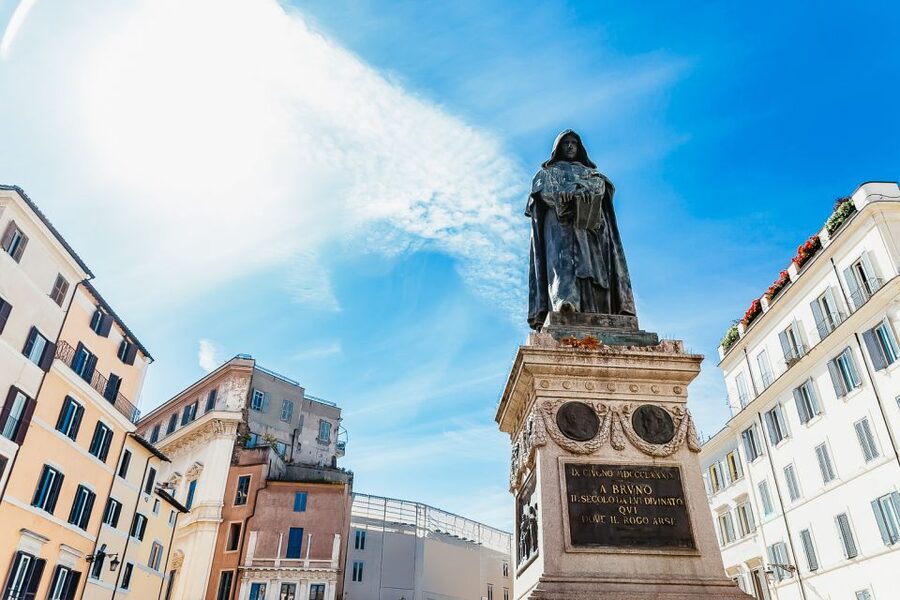
- Seven tasting stops: Expect up to 15 food samples, plus wine, beer, and soft drinks.
- A progressive dinner: The evening moves from small bites and appetizers to pasta, dessert, espresso, and gelato.
- History between courses: You visit the Jewish Ghetto, Piazza Navona, Campo de’ Fiori, Pompey Theatre, the Theatre of Marcellus, and the Portico of Octavia.
- Small group format: Groups are limited to 14 people except by special arrangement, keeping the experience personal.
- Strong guide roster: Guides including Fabrizia, Marco, Maria, Andrea, Matteo, and Julia have been praised for combining Roman history with warm, lively conversation.
- Plan for walking: The tour lasts four hours, includes no transportation, and is not suitable for wheelchair users.
Starting at the Turtle Fountain in Piazza Mattei
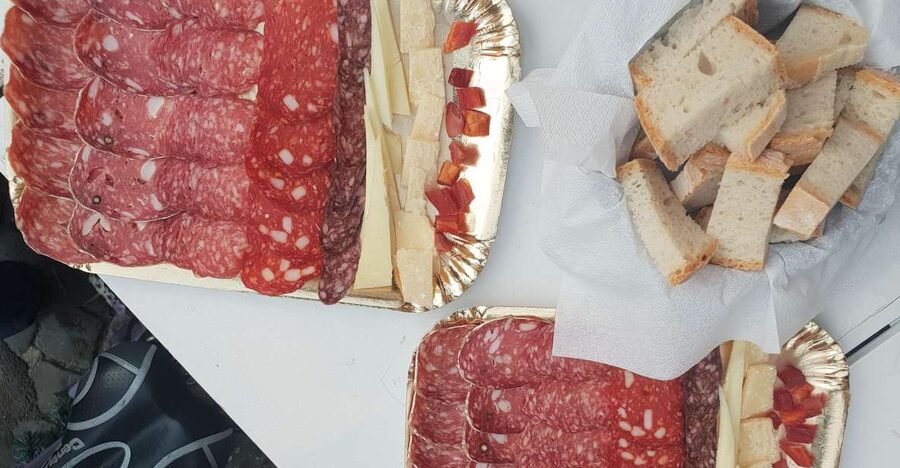
Meet your English-speaking guide at the Turtle Fountain in Piazza Mattei, a handsome little square in the Jewish Ghetto. This is a good starting point because the setting immediately feels different from the wide avenues around Rome’s biggest monuments.
The fountain gives you an easy landmark, but arrive with enough time to find the square. You will not be collected by a vehicle, and there is no transportation included. From here, the tour unfolds on foot, with food and history sharing equal billing.
That balance is important. A food tour can become a string of snacks with no sense of place. This one uses the neighborhood as its dining room. As you walk, your guide explains the Jewish community of Rome, the old streets, the buildings, and the customs that shaped local cooking.
Guides vary by date, but the experience has featured Fabrizia, Marco, Maria, Andrea, Matteo, Julia, Isabel, and others. The strongest guides bring both sides of the evening to life. Fabrizia, for example, has led groups through the Jewish Ghetto while explaining the area’s past in clear, lively English. Marco has been praised for answering odd questions with humor, while Maria has a knack for keeping the pace moving without rushing anyone.
More Wine Tastings in Rome
- Rome: Tuscany & Montepulciano Day Trip with Lunch & Wine Tasting
★ 4.5 · 5,232 reviews - Rome Food Tour: Unlimited Tastings with Fine Wine & Barolo
★ 5.0 · 3,365 reviews - Rome: Food Tour with Unlimited Food and Barolo Wine
★ 4.8 · 1,883 reviews
Jewish Ghetto flavors and local traditions
The Jewish Ghetto is the heart of the tour. It is one of Rome’s most atmospheric areas, with a long Jewish presence and a food tradition that has developed alongside Roman cuisine.
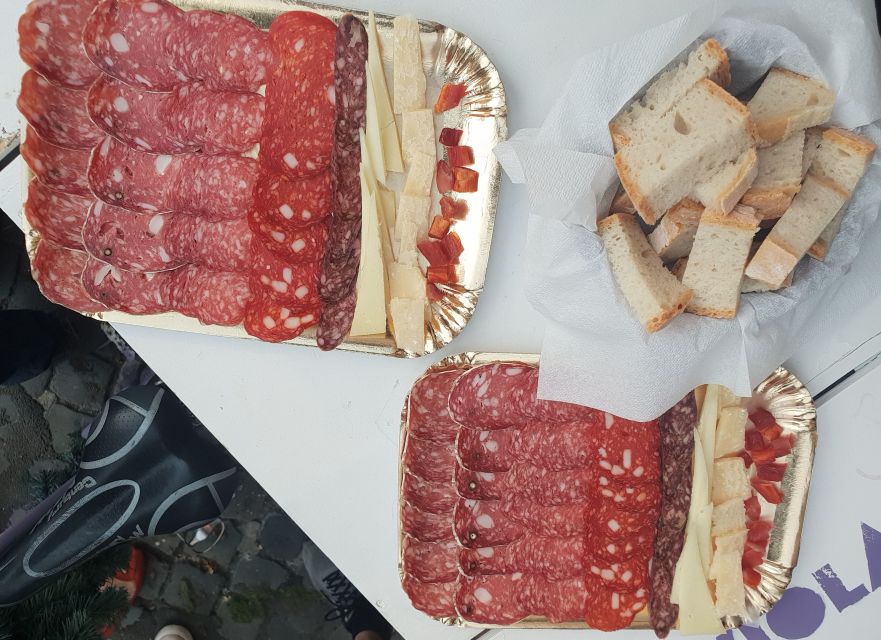
You might begin with appetizers, vegetables, fried specialties, or other small tastes tied to the neighborhood. The exact menu can change, but the format is generous. You are not simply offered one signature bite and sent along. The evening builds course by course, with as many as 15 samples spread among the stops.
One especially useful feature is the explanation behind the food. Your guide can connect recipes with family traditions, local ingredients, and the Jewish and Roman cultures that meet in this part of town. That gives you a better chance of recognizing dishes later in your trip, instead of treating every plate as an anonymous Italian sample.
Past tours have included fried artichokes, Jewish appetizers, pasta, tiramisu, gelato, and espresso. These details matter because Rome’s food is more than pizza and gelato. You get a broader taste of the city, including dishes you might not order on your own.
The tour also introduces you to the people behind the food. Stops may include restaurants, delicatessens, and other small food businesses where local producers, innkeepers, and food artisans take pride in old methods. That personal connection is one of the better reasons to choose a guided food walk over making a list of restaurants yourself.
Pompey Theatre and the place where Caesar died
Rome often delivers its history in fragments. A doorway, a column, or a street corner can mark a major event, and this tour takes advantage of that.
As you leave the Jewish Ghetto, your guide discusses Pompey Theatre and the death of Julius Caesar. The point is not to give you a full ancient Rome lecture. Instead, you get a short explanation in the actual setting, then continue walking toward another tasting stop.
This is where the tour earns its keep for people who want more than dinner. The food gives the route a pleasant rhythm, while the historical stops help you understand how the central neighborhoods fit together.
You also pass remains connected with the Theatre of Marcellus, the Temple of Apollo, and the Portico of Octavia. These are easy to overlook when you are focused on Rome’s headline sights. With a guide pointing them out, the route becomes a lesson in how ancient, medieval, Jewish, and baroque Rome overlap.
I like this structure because it avoids the fatigue of a long formal lecture. You listen for a few minutes, walk, eat, and talk. Then another square or monument gives you a fresh subject.
Piazza Navona after dark
Piazza Navona is one of the evening’s major visual stops. It occupies the site of the Stadium of Domitian and later served as a city market. Today, its long shape, fountains, statues, and grand buildings make it one of Rome’s most memorable public spaces.
The tour highlights baroque Rome here, including Bernini’s Fountain of the Four Rivers. At night, the square has a different mood from the daytime market streets. You can pause to look at the architecture, hear the story of the fountain, and take in the scene before moving on to the next food stop.
The timing also helps. Several people who took the tour during the evening appreciated seeing Rome when the streets were less crowded but still full of life. I would choose this tour early in a Rome visit if you want a broad orientation to the center. It links several districts and gives you places to return to later.
Do not expect a full sightseeing tour of every famous monument in Rome. The route concentrates on the Jewish Ghetto, Campo de’ Fiori, Piazza Navona, and nearby ancient remains. The reward is depth and continuity rather than a checklist of the Colosseum, Vatican, and Trevi Fountain.
Same city, an entirely different afternoon:
- Vatican Museums & Sistine Chapel Tour with Optional Basilica
★ 4.3 · 67,413 reviews - Colosseum, Roman Forum & Palatine Guided Tour
★ 4.7 · 63,148 reviews - Vatican Museums, Sistine Chapel & St Peter’s Basilica Guided Tour
★ 4.5 · 39,149 reviews - Rome: Colosseum, Palatine Hill and Roman Forum Guided Tour
★ 4.8 · 32,814 reviews
Campo de’ Fiori and the medieval market streets
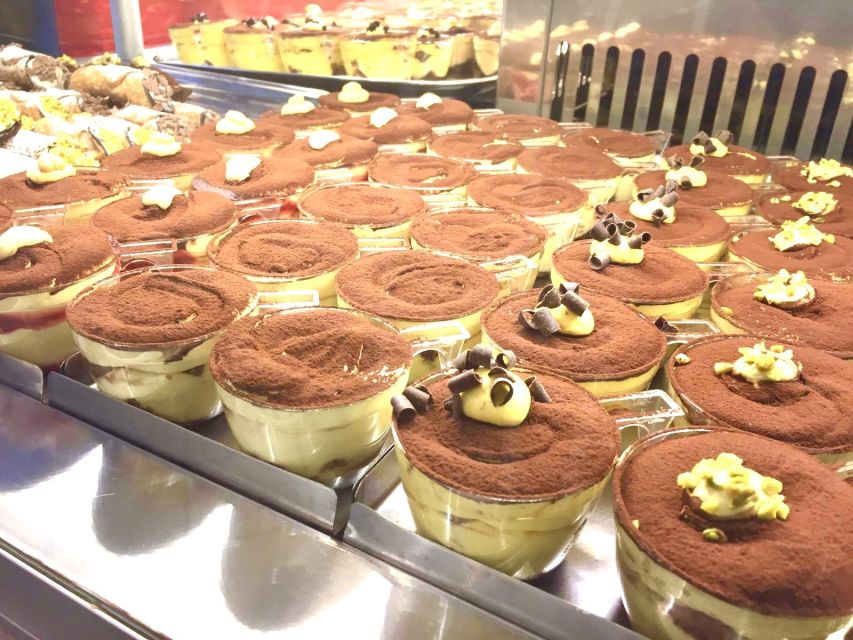
Campo de’ Fiori brings the tour into another layer of central Rome. The square served as a medieval market, and its identity remains tied to food, trade, and public life.
Here, your guide explains how the area developed and points out details you might pass without noticing. The square is also a useful reminder that Roman food culture is rooted in markets and small businesses, not only polished restaurants.
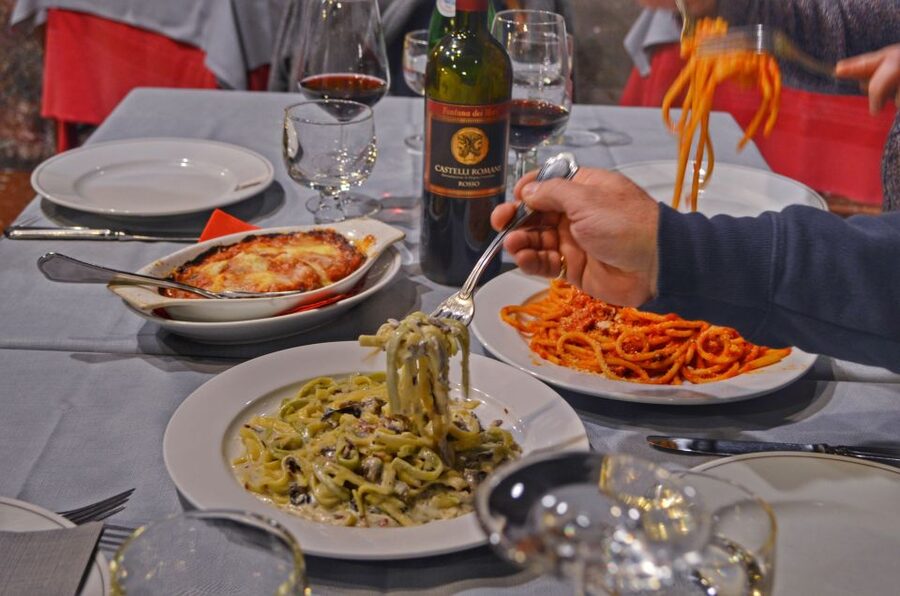
Food stops around this part of the route may include fresh vegetables, pizza, pasta, or other Roman staples. You should expect variety. One course may be a small taste eaten during the walk, while another may take place at a sit-down venue.
A sit-down pasta course is one of the evening’s most useful breaks. It gives you time to rest, compare what you have eaten, and watch the city change as the sun goes down. Past groups have described the meal as a progressive dinner, and that is the right way to picture it.
Come hungry, but do not skip food all day. The portions add up quickly. Some diners arrived unsure if a tasting tour would be filling and ended the evening very full. The pattern usually begins with lighter tastes, then gathers speed with pasta and dessert.
Seven stops, wine, and a serious amount of food
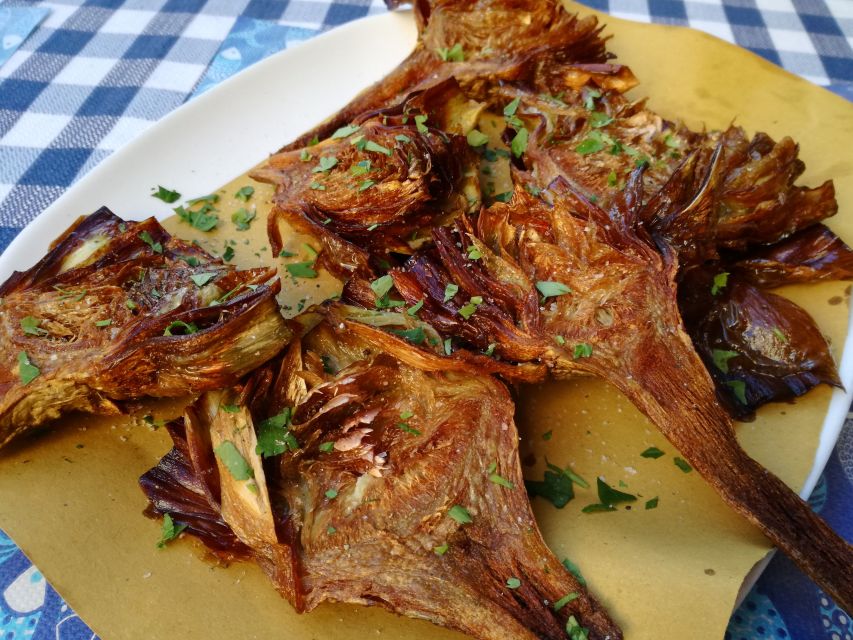
The tour includes seven tasting venues and up to 15 samples, along with wine, beer, and soft drinks. Exact dishes and businesses may change, so you should think of the number as a guide to the evening’s scale rather than a fixed menu.
The range is the appeal. You may move from an appetizer to fried vegetables, pizza, fresh produce, homemade pasta, pastries, tiramisu, gelato, and espresso. Not every group will receive exactly the same combination, but the experience is designed to cover a meal rather than offer a few token bites.
Wine is served as part of the experience, and beer and soft drinks are available too. That makes the tour easier for mixed groups, though anyone hoping for a dedicated wine tasting should choose a different activity. The focus here is Roman food, neighborhood culture, and informal pairing rather than detailed study of vineyards.
The amount of walking between stops also matters. You are given time to digest one course before the next. Still, wear comfortable shoes. Rome’s old streets are not made for delicate footwear, and the tour lasts about four hours.
The organization appears to be one of the practical strengths. Several guides have kept groups moving without making the evening feel rushed, and past groups have not had to wait long at the stops. That matters when you are fitting dinner, sightseeing, and conversation into one night.
What the price means at $105
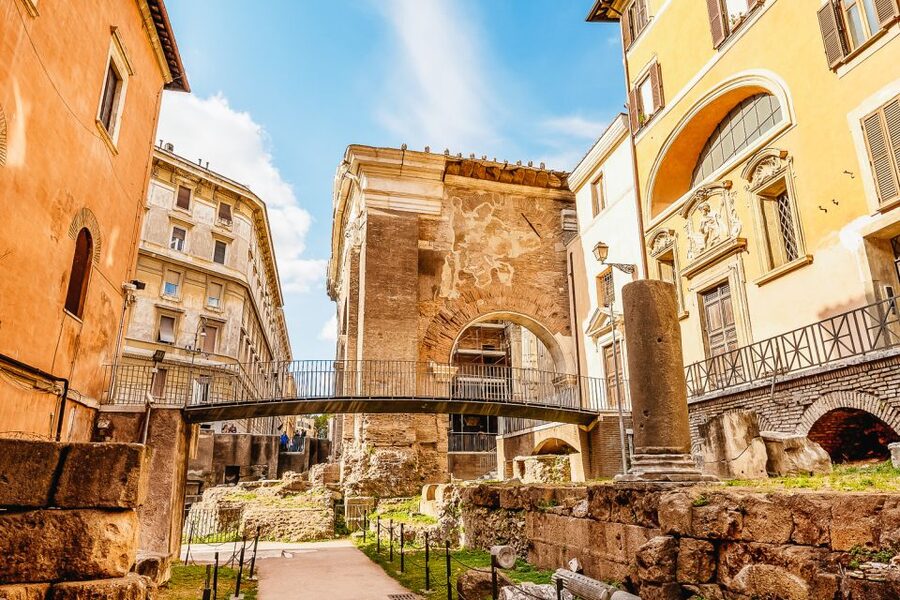
At $105 per person, this is not a cheap snack walk. It is closer to a guided evening meal with sightseeing included.
The value depends on how you use it. If you would otherwise pay for a full dinner, several drinks, dessert, and a separate neighborhood orientation, the price becomes easier to justify. You are also paying for access to a planned sequence of venues and for a guide who explains what you are eating and where you are walking.
The generous quantity is a major part of the calculation. You get up to 15 samples, wine, beer, and soft drinks, with enough food to leave you full. Several people have described the tour as one of the better food values they found in Rome, especially because it includes sit-down courses rather than only market tastes.
I would not book it if you want a formal culinary class or a narrow focus on kosher Jewish cuisine. This is a Roman food and culture walk that includes the Jewish Ghetto. It is also less useful for anyone who prefers to sit in one restaurant for the entire evening.
The reserve-now, pay-later option can help if your schedule is still changing, and cancellation is allowed up to 24 hours before the tour for a full refund. Those policies do not change the price, but they reduce some of the risk when you are planning a busy Rome itinerary.
Rain, group size, and dietary limits
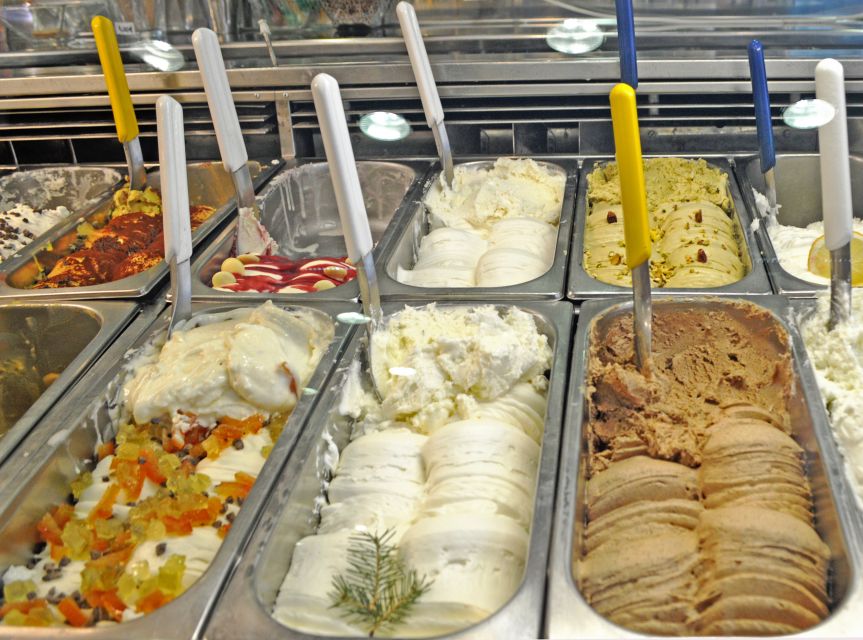
The maximum group size is 14 people, except by special arrangement. That is small enough for a guide to answer questions and keep the group together, while still large enough to create a social dinner atmosphere.
The tour runs rain or shine. Past guides have continued during heavy rain, using covered areas and umbrellas while keeping the historical storytelling going. Even so, bad weather can make Rome’s stone streets slippery and the walking less pleasant, so bring suitable footwear and a light rain layer when the forecast is uncertain.
Vegetarian options are available. The tour does not accommodate vegan, gluten-free, or dairy-free diets, and it is not a kosher food tour. If you have an allergy or strict dietary need, this is a poor choice unless the operator confirms an arrangement that is not stated here.
The tour is not suitable for wheelchair users. The route is a walking experience through older parts of the city, and the activity includes no transportation.
Who will enjoy this Roman evening most
I would recommend this tour to first-time visitors who want a quick feel for central Rome without spending the whole night inside a restaurant. It works especially well on your first evening because the route introduces several neighborhoods, gives you restaurant ideas, and helps you understand the city’s layered past.
It also suits couples, families with older children, and small groups of friends. Teenagers can stay engaged because the food arrives regularly, while the ancient and baroque stops keep the walk from feeling like a restaurant crawl.
Food-focused visitors will appreciate the variety, especially if you want to try Roman specialties but are unsure how to order them. History fans will enjoy the Jewish Ghetto, Pompey Theatre, the Theatre of Marcellus, and the Portico of Octavia, though you should not mistake the tour for a dedicated archaeology walk.
I would skip it if you need a fully accessible route, follow a vegan or allergen-free diet, or want an intimate private dinner. I would also skip it if you have already eaten a large meal that day. The food is substantial, and the later courses can be hard work when you are already full.
Should you book the Jewish Ghetto food tour?
Book it if you want Rome served in small, tasty chapters: a neighborhood story here, a fountain there, pasta at sunset, and dessert farther along the route. The combination of seven stops, drinks, a small group, and four hours of guiding makes $105 reasonable for a full evening rather than a simple tasting.
Choose an early date in your trip if possible. You will learn places to revisit, including restaurants and food shops that may not appear in a standard Rome plan. Wear comfortable shoes, arrive hungry but not stuffed, and confirm that the dietary restrictions work for you.
For most visitors who eat a regular diet and enjoy walking, this is a strong way to meet Rome through its streets and its table.
FAQ
Where does the tour meet?
Meet your guide at Piazza Mattei by the Turtle Fountain in Rome’s Jewish Ghetto.
How long does the tour last?
The tour lasts four hours.
What language is the tour conducted in?
The live tour guide speaks English.
How many food stops are included?
The tour visits seven different tasting venues, including restaurants, delicatessens, and other food businesses.
How much food is included?
You can receive up to 15 food samples, with tastings that may include appetizers, pasta, pastries, dessert, and other Roman specialties.
Are drinks included?
Yes. Wine, beer, and soft drinks are included.
Does the tour include transportation?
No. This is a walking tour, and transportation is not included.
Is the tour suitable for vegetarians?
Yes. Vegetarian options are available.
Can the tour accommodate vegan, gluten-free, or dairy-free diets?
No. The tour does not accommodate vegan, gluten-free, or dairy-free diets.
Is this a kosher food tour?
No. The tour explores Rome’s Jewish Ghetto, but it is not a kosher food tour.
What happens if it rains?
The tour operates rain or shine.
Is the tour suitable for wheelchair users?
No. The activity is not suitable for wheelchair users.
How large can the group be?
The tour can accommodate a maximum of 14 people per group, except by special arrangement.
Can I cancel for a refund?
Yes. You can cancel up to 24 hours in advance for a full refund.
More Evening Experiences in Rome
- Rome: City Highlights Open-Top Bus Night Tour
★ 4.1 · 2,038 reviews - Rome: Paranormal Night Walking Tour & Secret Backstreets
★ 4.9 · 1,921 reviews - Vespa Sidecar Tour By Night with Pickup
★ 5.0 · 1,803 reviews - Rome by Night – Ebike Small Group Tour – Food and Wine (Option)
★ 5.0 · 1,275 reviews
Fresh on the Rome list
- Rome: Guided Catacombs Tour & Capuchin Crypt (Audio Guide)★ 4.3 · 191 reviews
- Guided tour of the Colosseum, Roman Forum and Palatine in Spanish★ 4.5 · 191 reviews
- Rome: Borghese Gallery Guided Tour with Skip-the-Line Ticket★ 4.5 · 192 reviews
- Rome: Arena Colosseum Tour with Arena Access★ 4.6 · 193 reviews
- Colosseum, Forum, Palatine Hill with audio guide and Arena or Bus option★ 4.0 · 193 reviews
- Rome: Colosseum & Roman Forum Guided Tour★ 5.0 · 194 reviews
- Rome: Domus Aurea Guided Tour and Virtual Reality Experience★ 4.7 · 194 reviews
- Rome by Night Private Walking Tour★ 5.0 · 194 reviews
Wine Tastings, compared.
Tuscany Day Trip from Florence: Siena, San Gimignano, Pisa and Lunch at a Winery
Read our review →
Pisa, Siena, San Gimignano, and Chianti Experience
Read our review →
Small-Group Wine Tasting Experience in the Tuscan Countryside
Read our review →
Tuscany & Montepulciano Day Trip with Lunch & Wine Tasting
Read our review →
SMALL-GROUP Wine Safaris: Tuscan Wine Tasting Tours from Florence
Read our review →
Winner 2025 Florence Sunset Food & Wine Tour by Eating Europe
Read our review →
Siena, San Gimignano, Pisa & Lunch at Winery
Read our review →Browse the lists this tour appears in