
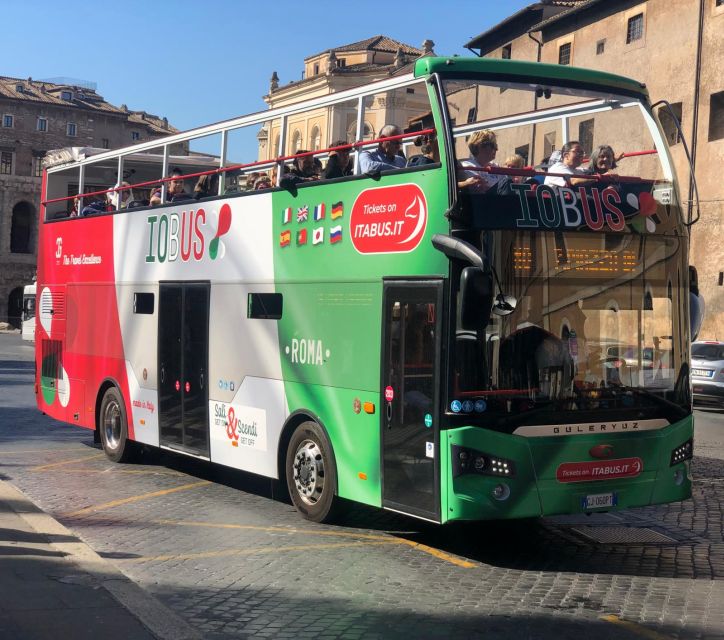
Reviewed · CITY TOURS
Rome: Hop-On Hop-Off Open-Top Bus City Tour
Rome’s grandest sights line up neatly on this open-top route, from the Colosseum and Circus Maximus to Vatican City and the Spanish Steps. You can stay aboard for a broad first look, then get off when a monument earns more of your time. The audio guide works on your phone, and free WiFi helps with maps and last-minute plans.
I like the freedom to board at any listed stop, especially when you have only one day in Rome. I also like the practical mix of recorded commentary, children’s audio, earphones, and walking tours in the app. The main catch is that the bus often gets you near a sight rather than directly beside it, and traffic can make the ride slow.
Key points at a glance
- The route links Rome’s big names: The Colosseum, Circus Maximus, Piazza Venezia, Vatican City, Spanish Steps, Trevi Fountain area, and Santa Maria Maggiore.
- Buses run about every 20 minutes: Service is scheduled from 9 AM to 5:50 PM, though Rome traffic and street restrictions can cause delays.
- Your phone becomes the audio guide: Commentary is offered in English, French, German, Spanish, Portuguese, Japanese, Russian, and Italian.
- The upper deck gives you the best city view: Watch your head under low sections, even if you are not tall.
- The bus passes near, not always beside, monuments: Trevi Fountain is part of the route, but you may not see the fountain from the road.
- The $34 price works best over several stops: A one-day ticket can be useful for orientation, while two or three days give you more time to hop off and walk.
What the Rome bus does best
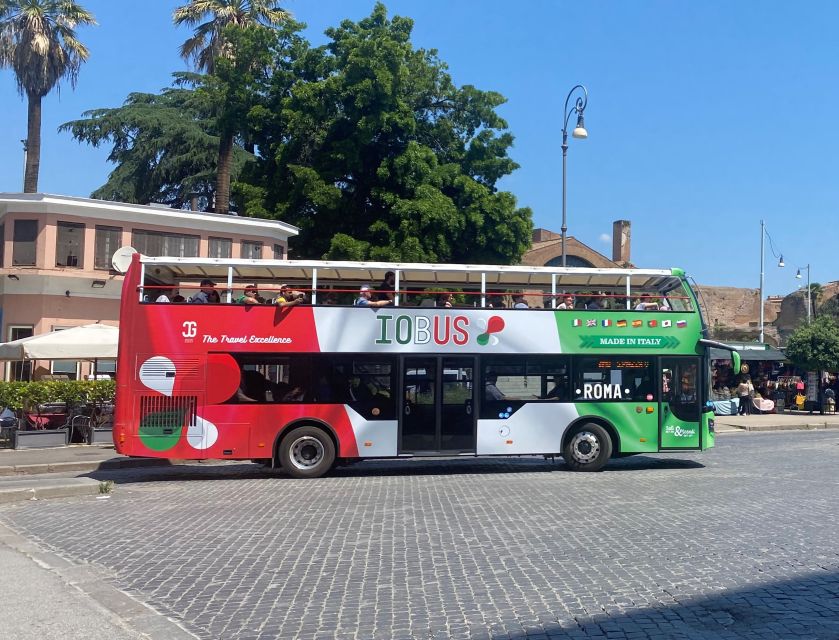
I see this tour as a moving introduction to Rome rather than a replacement for walking. Rome’s historic center can feel confusing at first, with grand piazzas, narrow lanes, traffic diversions, and monuments tucked around corners. From the upper deck, you get a simple visual outline of the city before choosing where to spend your feet-on-the-ground time.
The route also helps connect areas that are not next door to one another. Termini, the Colosseum, the Vatican, the Spanish Steps, and Circus Maximus all sit within the same broad sightseeing circuit, but walking between every one of them takes time and energy. The bus gives you a break between visits.
The strongest part of the experience is its flexibility. You can board at any stop, show your voucher to the hostess, and take a seat if space is available. That is especially useful if you are staying near Termini, starting at the Vatican, or finishing a museum visit near the Spanish Steps.
The limitation is just as important: this is not a private sightseeing vehicle that pulls up at every monument. Some stops require a walk, and a few attractions are visible only in passing or not visible from the bus at all. Plan to use the bus for connections and orientation, not as your only way to see Rome.
More City Tours in Rome
- Rome: City Sightseeing Hop-on Hop-off Bus with Audioguide
★ 4.0 · 16,045 reviews - City Sightseeing Rome Hop-On Hop-Off Bus Tour
★ 3.5 · 5,446 reviews - Rome: Fettuccine Pasta Cooking Class in Rome’s City Center
★ 4.8 · 2,414 reviews
Start at Termini and get your bearings
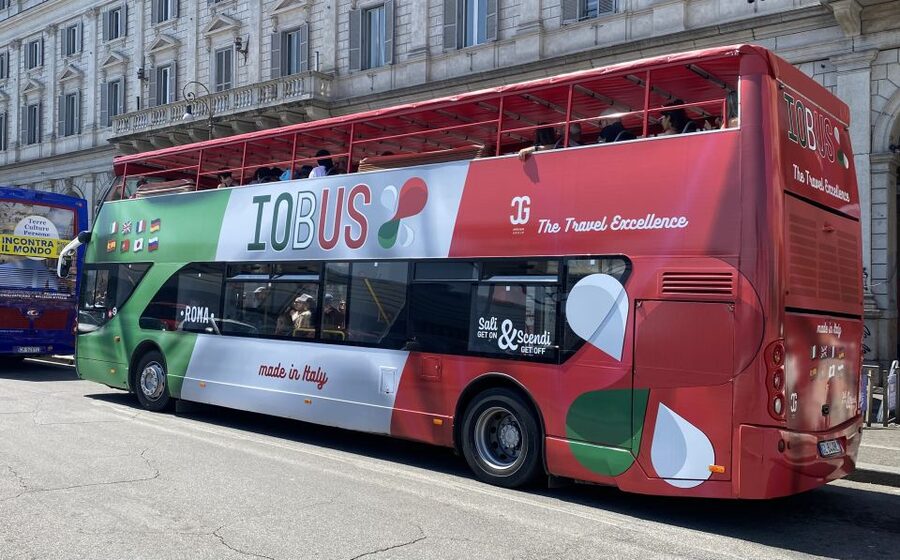
The main starting point is on Via Marsala near Termini Station, with Open Bus Roma, also identified as Io Bus. This is a practical place to begin if you arrive by train or are staying around the station.
The route also accepts boarding at its other stops. That sounds easy, and it is once you know the route, but finding the correct boarding point can take patience. Rome has several hop-on hop-off operators, and their buses and stops can look similar. Check the operator name and show the voucher to the hostess rather than simply boarding the first open-top bus you see.
A previous stop on Via Giolitti at Largo di Villa Peretti is cancelled because of Jubilee-related work. Do not plan your day around that stop. Santa Maria Maggiore is the useful nearby alternative.
The scheduled frequency is good on paper: a bus about every 20 minutes between 9 AM and 5:50 PM. Still, allow extra time. Traffic, road closures, ceremonies, and street restrictions can affect both arrival times and the route. If you have a timed Colosseum or Vatican entry, do not rely on one exact bus departure to get you there.
Santa Maria Maggiore and the first taste of old Rome
The Basilica Papale di Santa Maria Maggiore is one of Rome’s major churches and a worthwhile first stop if you want a quieter counterpoint to the city’s more famous ruins. The bus passes this area after Termini, making it easy to include before the route reaches the Colosseum.
The useful point here is location. Santa Maria Maggiore sits close enough to Termini for a practical start, but it also gives you an early look at Rome’s layers of religious and imperial history. If you get off, allow time for the walk around the church area and then return to the marked stop.
If you stay on the bus, listen to the audio guide and use this section to settle into the route. You may find the recorded commentary more useful once you have the buildings in front of you. The audio is available through your mobile phone, with earphones included, and Italian is among the eight language choices.
The Colosseum stop is the best place to hop off
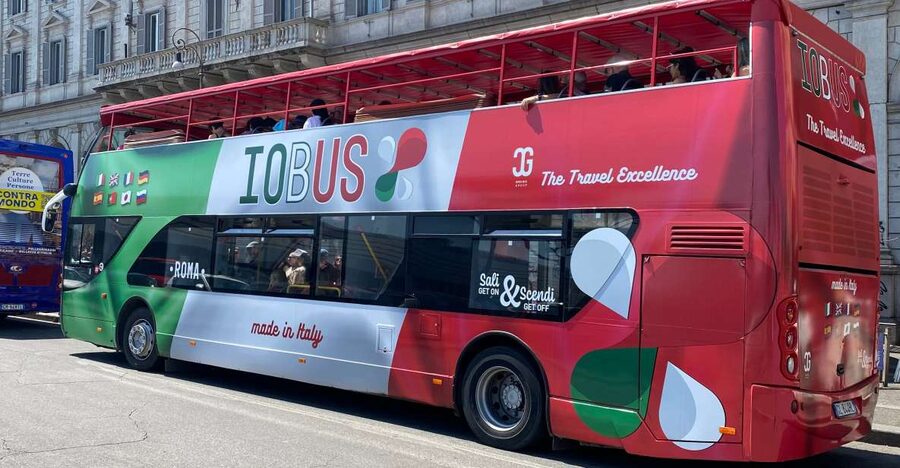
The Colosseum is the route’s most useful hop-off point. The bus does not include entry, but it brings you into the area so you can continue to the amphitheater on foot or connect with other nearby sights.
One useful orientation tip is that the Colosseum stop can be hard to spot at first. The stop is behind the Colosseum area, where the bus stops are numbered. Once you find the numbered stops, the system becomes much easier to understand.
The bus pass does not replace a Colosseum reservation or admission ticket. Think of it as transportation to the district. You will still need to walk from the stop and handle any separate entrance arrangements yourself.
If you are using a one-day ticket, this is a sensible place to get off for a long visit. If you have a two or three-day ticket, you can take a first pass around the circuit, return later, and avoid building your whole schedule around a single ride.
A few other Rome mornings to weigh against this
- Vatican City: Vatican Museums & Sistine Chapel Entry Ticket
★ 4.3 · 2,185 reviews - Rome: City Highlights Open-Top Bus Night Tour
★ 4.1 · 2,038 reviews - Rome City Small Group Bike Tour with quality Cannondale EBike
★ 5.0 · 1,380 reviews - Rome Highlights City Tour by Golf Cart with Gelato
★ 5.0 · 1,088 reviews
Circus Maximus gives you room to breathe
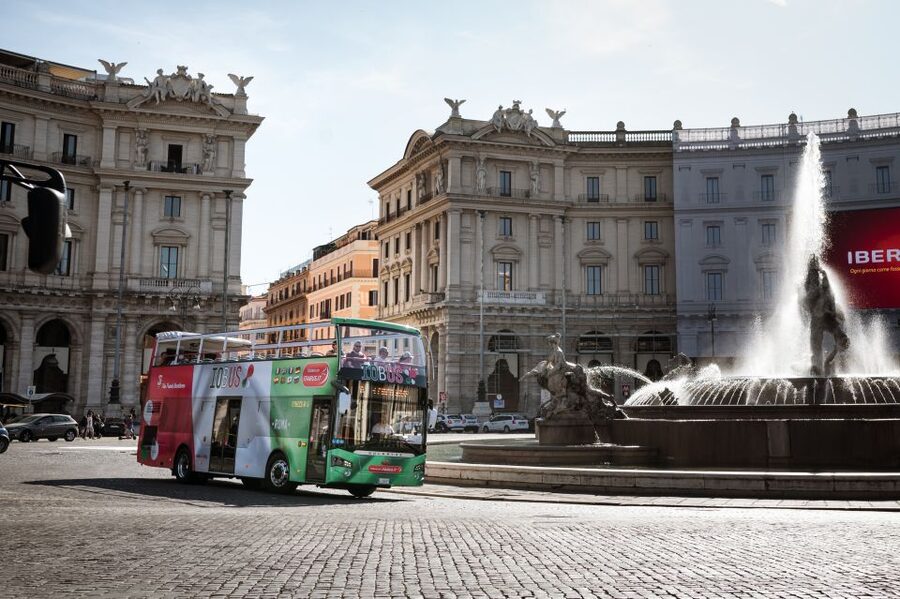
After the Colosseum, the bus continues toward Circus Maximus. This huge open space once hosted chariot races and now offers a broad view toward the Aventine Hill and the surrounding ruins.
Circus Maximus is different from the Colosseum because there is less to enter and inspect as a single monument. Its value comes from scale. You can understand how large the ancient entertainment grounds were simply by looking across the open area.
This is also a useful stop for a short break between busier sightseeing districts. You can get off for a walk, take photographs, and continue toward the next stop. The recorded audio gives you context while the open-top view lets you see how the ancient center fits together.
Nearby sights such as the Mouth of Truth and Marcello’s Theatre are part of what you can admire along this section of the route. The bus view is a preview, not a guided visit inside each place.
Piazza Venezia and the city’s central crossroads
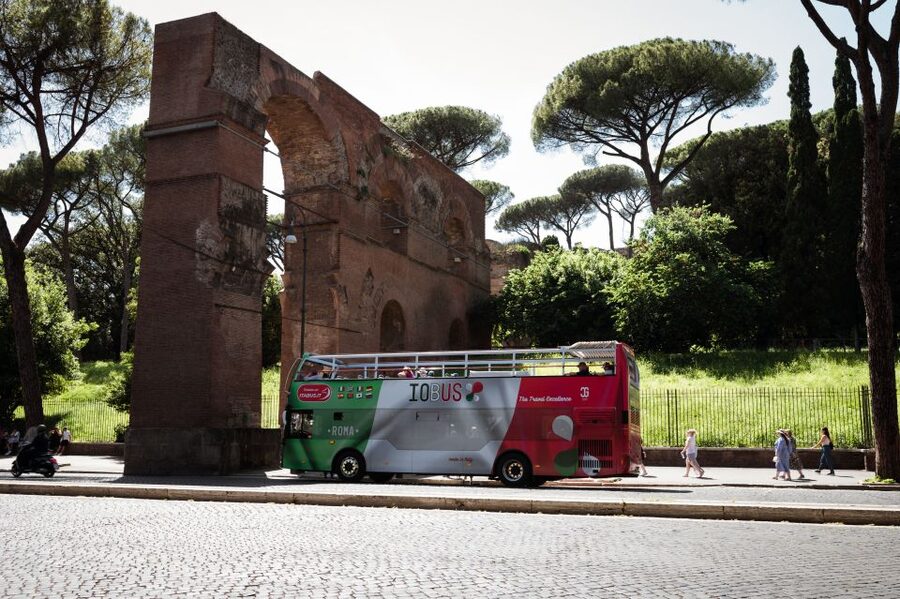
Piazza Venezia is one of Rome’s most recognizable traffic hubs. From the bus, you can see the monumental Vittoriano and the busy streets feeding into the historic center.
This stop is valuable for orientation. Rome’s center can seem like a collection of separate monuments until you see how the main roads connect them. Piazza Venezia helps you place the Colosseum, the Forum area, and the streets leading toward the Pantheon and Trevi district.
It is not the calmest place to linger beside traffic, so decide what you want before getting off. If you are using the bus mainly to see the sights from above, remain seated and let the audio guide do its work. If you want to explore on foot, use this stop as a starting point and confirm where you will rejoin the bus.
Vatican City requires a little planning

The Vatican stop is one of the most useful on the circuit, but the bus does not include admission to the Vatican Museums or St. Peter’s Basilica. It simply delivers you to the Vatican area, where you can continue on foot and follow any separate reservation you have made.
The distance between the bus stop and a particular entrance matters. The tour information makes clear that the bus may stop close enough to walk, rather than directly at the attraction entrance. Give yourself time for the walk, security procedures, and any queue.
If the Vatican is the main purpose of your day, do not assume the bus schedule alone will get you there on time. Traffic can slow the route, and buses board according to available seats. For a timed visit, leave a generous buffer.
For a general city tour, the Vatican section is still worthwhile from the upper deck. It lets you see the area in relation to the rest of Rome, then you can decide if you want to return for a longer visit.
Spanish Steps and the Trevi Fountain question
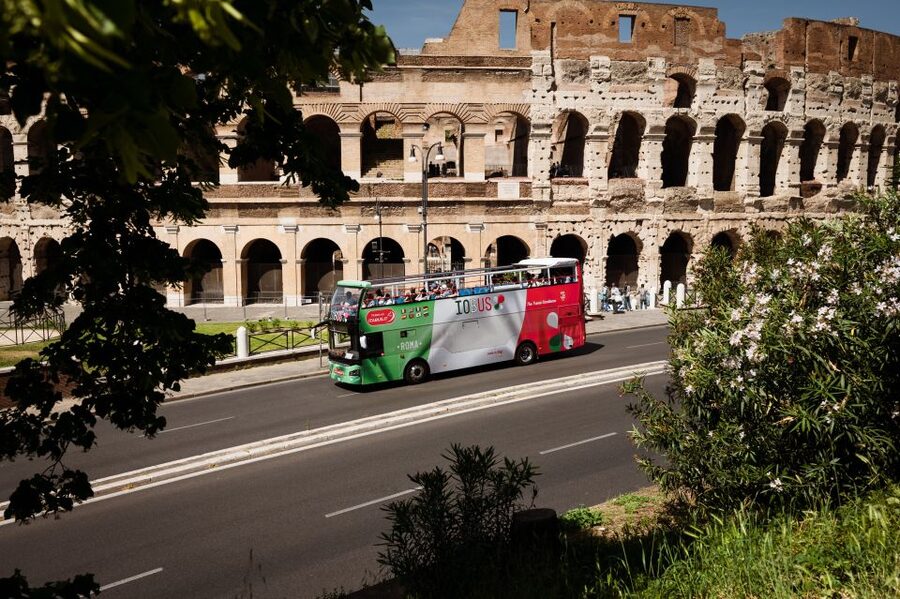
The Spanish Steps stop gives you access to one of Rome’s most famous meeting places. The steps themselves are not a private attraction included with the bus ticket, and the nearby streets can be crowded, but this is a good area for a short walk through central Rome.
Trevi Fountain requires closer attention to the route description. It is listed as a stop, but you may not see the fountain from the bus itself. The vehicle passes through the area, and you need to get off and walk if you want to reach the fountain.
That distinction is easy to miss. If your main goal is to toss a coin into the fountain, treat the bus as a way to reach the neighborhood, not as a sightseeing platform for the monument. The same advice applies to other attractions listed along the route: passing by is not the same as entering or getting a clear view.
The Spanish Steps and Trevi area work well together in a walking plan. Use the bus to get close, then explore on foot rather than expecting the upper deck to show every detail.
The open-top view is useful, but not perfect
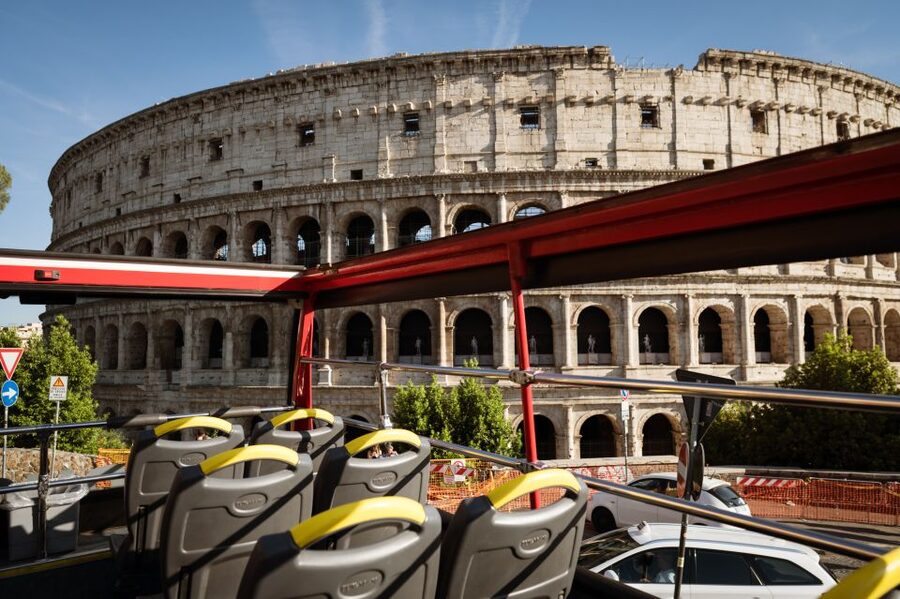
The upper deck is the reason to choose this kind of bus in Rome. You can look over walls, see domes and monuments from a higher angle, and watch the city change from ancient ruins to Baroque streets.
The view depends on the road. Buildings, trees, traffic signs, and low sections of the bus can block your sightline. Watch your head when moving around upstairs. Even a shorter passenger may need to duck beneath parts of the roof or other overhead sections.
Road traffic is another factor. Rome is not a quiet sightseeing park. A good view can disappear behind a delivery vehicle, and a short distance can take much longer than expected. I would treat slow stretches as a chance to listen to the commentary rather than as wasted time.
The bus offers free WiFi, which is handy for checking the next stop, opening a map, or sharing a photograph. Do not depend on it as your only navigation method. The app also includes a walking guide with special self-guided routes, which makes the service more useful once you get off.
Audio guide, children’s commentary, and onboard basics
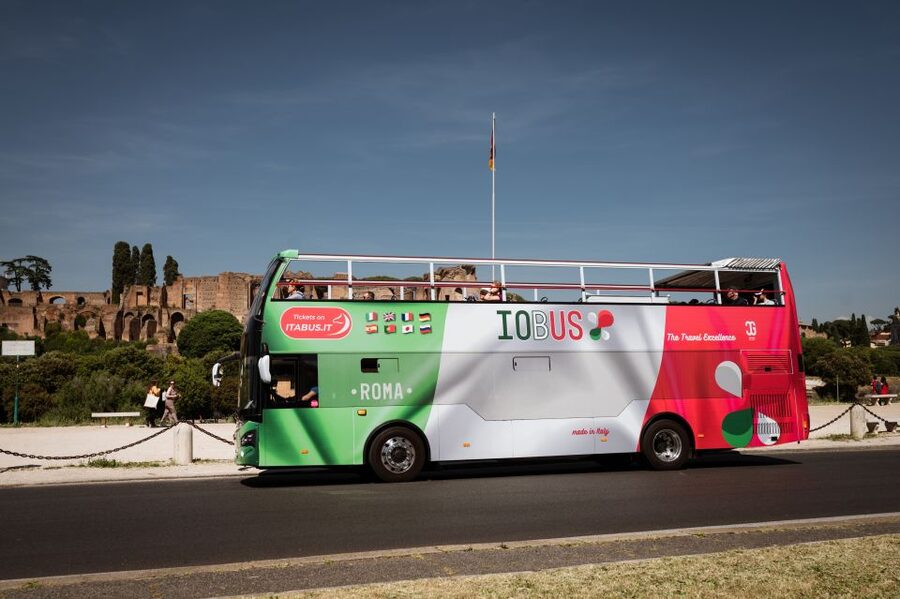
The audio guide is available in English, French, German, Spanish, Portuguese, Japanese, Russian, and Italian. You listen through your phone, and earphones are included. There is also an audio guide for children, a helpful option if your family needs shorter, simpler commentary.
The audio format gives you control. You can listen while staying on the bus, then switch to a walking tour in the app after getting off. I like that arrangement because a bus narration can explain the broad setting, while walking gives you time to look closely.
The host or greeter is Italian, and a hostess checks vouchers as you board. Staff friendliness is one of the practical strengths of the service, but do not expect a live guide to explain every monument personally. The information comes mainly through the recorded guide.
Food, drinks, alcohol, smoking, and drugs are not allowed in the vehicle. Hand sanitizer is provided onboard. A medical mask is listed among the items to bring, so pack one even if you are unsure whether you will need it during your visit.
How much value do you get for $34?
At $34 per person, the value depends on how actively you use the ticket. If you ride one circuit without getting off, you are paying for a broad city view and recorded commentary. That can be worthwhile for first-time orientation, but it is not the strongest financial use of the pass.
The price makes more sense when you use the bus to connect several districts. A one-day ticket can help you combine Termini, the Colosseum, Circus Maximus, the Vatican, and the Spanish Steps without arranging each connection yourself. Two or three days give you more breathing room and make it easier to use the bus as a backup between walking routes.
Read the selected ticket duration carefully. A once-around option has also been available, and that does not give you the same freedom to hop off and continue later. The phrase hop-on hop-off only helps if the ticket you choose actually includes repeated boarding during its validity.
The pass does not include entrance tickets. Add admission costs separately for the Colosseum, Vatican attractions, or any other paid site. For a visitor who wants a guided interior visit, this bus tour is transportation and orientation, not a complete sightseeing package.
Who will get the most from this tour?
I would recommend it to a first-time Rome visitor who wants to understand the city’s layout before tackling it on foot. It also suits anyone with limited time, tired legs, or a hotel near one of the route stops.
Families may appreciate the children’s audio guide and the simple option of staying onboard when younger children need a rest. The WiFi and app walking guide are useful extras for making decisions during the day.
It is less suitable if you want a detailed live tour at every monument. It is also a weaker match if you need a vehicle that stops directly beside each attraction or if walking from the stops is difficult.
The information says the buses are wheelchair accessible, but also marks the activity as not suitable for people with mobility impairments. That mixed guidance deserves a direct check before booking. Ask the provider about the specific bus, boarding method, and stop conditions for your needs.
Booking advice and final verdict
Book this tour if you want a flexible city outline, plan to use several stops, and understand that Rome’s traffic will set the pace. I would choose at least the one-day hop-on hop-off option rather than a single circuit if you want to visit the Colosseum, Vatican area, and central Rome with time to get off.
Before boarding, confirm the operator, the stop number, the ticket validity, and the direction of the route. At Trevi Fountain and the Vatican, allow walking time. At the Colosseum, look for the numbered stops behind the monument area.
At $34, this is a practical Rome introduction with friendly boarding staff, useful audio, and a well-chosen route. It works best as a flexible framework around your own sightseeing, not as a substitute for exploring Rome’s streets and entering its monuments.
FAQ
How long is the Rome hop-on hop-off ticket valid?
The ticket is available for one, two, or three days. Check the selected option and availability for the exact starting time and validity.
Where can I start the bus tour?
You can board at any stop along the route. The main starting point is Open Bus Roma, also called Io Bus, on Via Marsala near Termini Station.
How often do the buses run?
Buses are scheduled about every 20 minutes from 9 AM to 5:50 PM. Traffic and street restrictions can cause delays or route changes.
Which languages are available for the audio guide?
The audio guide is available in English, French, German, Spanish, Portuguese, Japanese, Russian, and Italian.
Is the audio guide included?
Yes. The tour includes the audio guide, earphones, and an audio guide for children. You use the guide on your mobile phone.
Does the ticket include attraction admission?
No. Entrance tickets for attractions are not included. The bus takes you to or near the sightseeing areas, but admissions must be arranged separately.
Can I see Trevi Fountain from the bus?
Trevi Fountain is part of the route, but the fountain may not be visible from the bus. Get off and walk to it if you want to see the monument directly.
Is WiFi available on the bus?
Yes. Free WiFi is included onboard, along with real-time bus monitoring and a walking guide through the app.
Is the tour wheelchair accessible?
The activity information says the buses are wheelchair accessible, but it also says the tour is not suitable for people with mobility impairments. Contact the provider before booking to confirm the boarding and bus arrangements for your needs.
Fresh on the Rome list
- Exclusive Golf Tour Private VIP with Local & Gelato o Wine★ 5.0 · 500 reviews
- Colosseum, Palatine Hill and Roman Forum with Guided Tour★ 5.0 · 500 reviews
- Rome Trastevere Pasta Making Class with Eating Europe★ 5.0 · 505 reviews
- Rome by Night Walking Tour★ 4.5 · 506 reviews
- Rome: Colosseum Express Tour with Forum & Palatine Access★ 4.5 · 511 reviews
- Rome Food Experience Max 6 People Group Tour | w/Private Option★ 5.0 · 516 reviews
- Rome: Navona Square Underground Ticket with Audio Guide★ 4.0 · 518 reviews
- Rome: Escorted Papal Audience Experience with Entry Ticket★ 4.4 · 518 reviews
City Tours, compared.

City Sightseeing Hop-On Hop-Off Bus with Audio Guide
Read our review →
City Sightseeing Rome Hop-On Hop-Off Bus Tour
Read our review →

Fettuccine Pasta Cooking Class in Rome’s City Center
Read our review →
Vatican Museums & Sistine Chapel Entry Ticket
Read our review →

City Sightseeing Florence Hop-On Hop-Off Bus Tour
Read our review →
Browse the lists this tour appears in