Reviewed · GUIDED
Rome: Domus Aurea Guided Group Tour
Rome’s Domus Aurea is one of the city’s strangest ancient sights: a buried palace where Nero’s grand rooms, painted walls, and soaring vaults survive beneath the modern city. The virtual reality experience helps you picture the lost palace, including the huge artificial lake and lavish grounds.
I like the small-group feel and the chance to enter an active archaeological site that is not part of the usual Colosseum circuit. I also like the English-speaking archaeologist guide, with past guides such as Valentina, Thomas, Brandon, Monica, and Marco praised for making the history clear and lively.
The main drawback is the physical setting. You’ll walk underground over steps, staircases, and uneven surfaces, and the palace is a ruin rather than a restored showpiece. Some visitors have also found certain guides hard to hear, so staying close to the guide matters.
Key points to know before booking
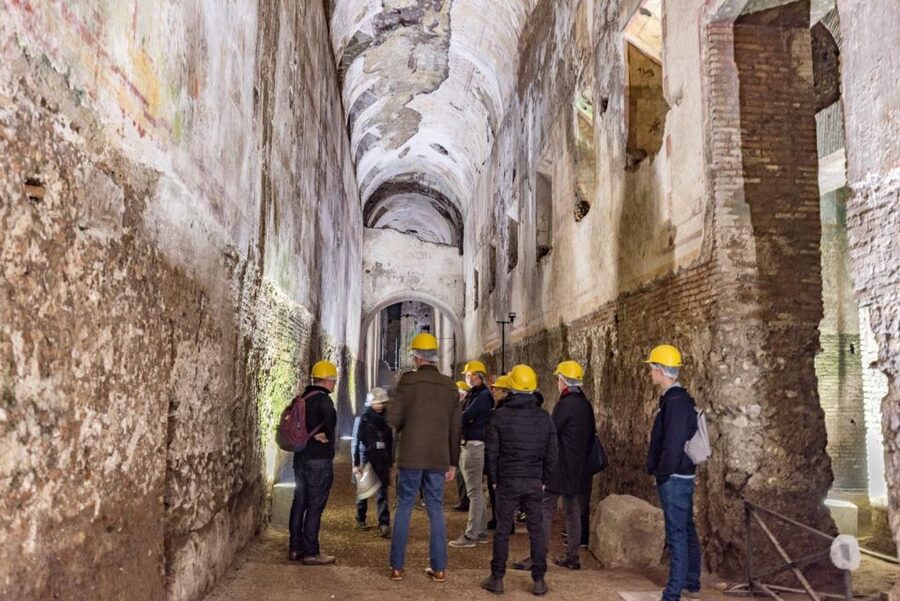
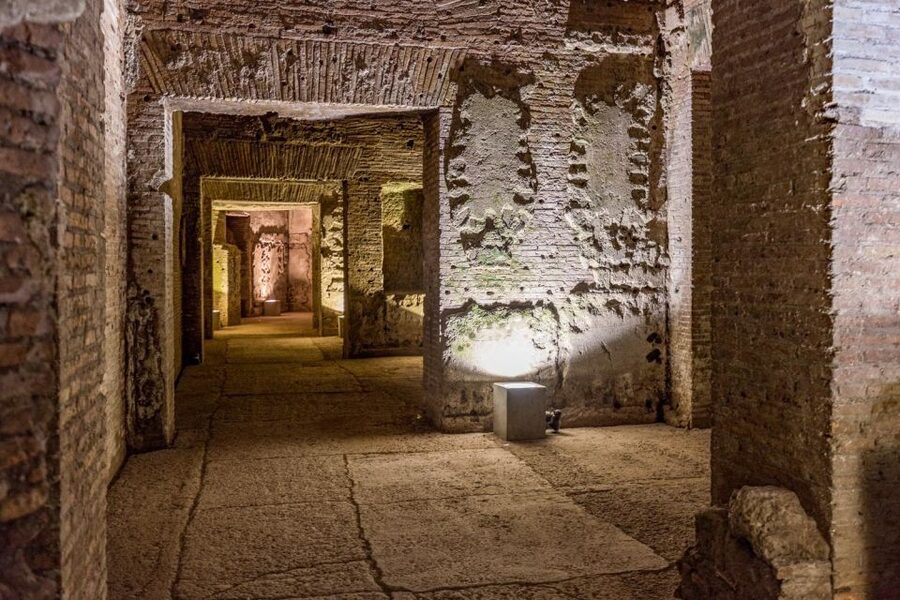
- The palace is underground: You descend into rooms buried after Nero’s death, with dark corridors, high vaults, frescoes, and unfinished excavation work.
- Virtual reality fills in the gaps: The headset and multimedia elements show how the palace and surrounding grounds may have looked in Nero’s time.
- An archaeologist leads the visit: The tour is in English, and guides such as Valentina, Thomas, Brandon, and Monica have been especially well regarded for their storytelling.
- The site is not a polished museum: You see conservation work, exposed ruins, uneven flooring, and rooms still being studied.
- It takes about two hours: The visit begins at Oppio Caffè and ends at the Domus Aurea, with no transportation included.
- Wear proper shoes: Large bags and luggage are not allowed, and the route is unsuitable for wheelchair users.
Why Nero’s Golden House is worth your Rome time
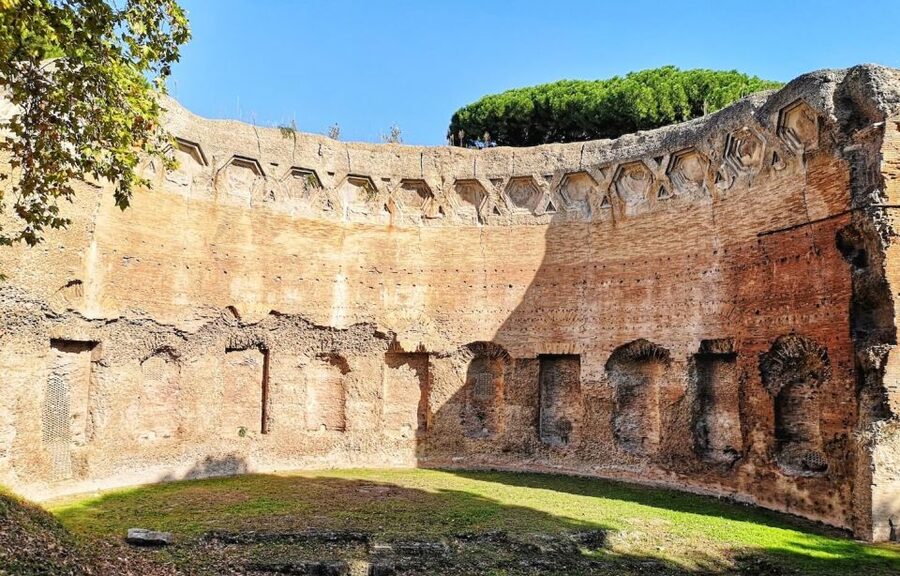
Most first-time visitors to Rome head straight for the Colosseum, Roman Forum, and Pantheon. That makes sense, but the Domus Aurea gives you a different view of imperial Rome. Instead of looking at a finished monument from outside, you enter the remains of a palace that was deliberately buried and erased.
The palace was built after the great fire of Rome in A.D. 64. Nero’s architects created an immense residence over parts of the burned city, a bold act even by Roman imperial standards. The name Domus Aurea means Golden House, a reference to the lavish decoration and precious materials associated with the complex.
Nero’s palace was not simply a large home. It was designed as a vast display of power, with spacious rooms, lofty ceilings, painted decoration, gardens, and an artificial lake. One especially extravagant feature was a rotating dining room open to the night sky.
That excess helps explain the palace’s fate. After Nero died in A.D. 68, his successors wanted to distance themselves from him and his unpopular rule. The palace was stripped, filled in, and covered over. The artificial lake was drained and later replaced by the Flavian Amphitheatre, now known as the Colosseum.
The buried rooms survived because they were no longer exposed to weather and daily use. Centuries later, Renaissance artists found their way into some of the underground chambers and copied the strange painted designs. Those decorations helped inspire the grotesque style of Renaissance art, with delicate figures, plants, animals, and fanciful architectural forms.
A few other Rome mornings to weigh against this
- Colosseum, Roman Forum & Palatine Guided Tour
★ 4.7 · 63,148 reviews - Vatican Museums, Sistine Chapel & St Peter’s Basilica Guided Tour
★ 4.5 · 39,149 reviews - Rome: Colosseum, Palatine Hill and Roman Forum Guided Tour
★ 4.8 · 32,814 reviews
Meeting your guide near Oppian Hill
The meeting point is on the corner of Via Nicola Salvi and Via delle Terme di Tito, in front of Oppio Caffè. The listed street address is Via delle Terme di Tito 72, and your guide should carry a Through Eternity sign or flag.
Give yourself enough time to find the café. The area sits beside major ancient attractions, and the streets around the Colosseum can be confusing, especially when crowds are moving between the Forum, Colosseum, and Oppian Hill.
The tour does not include transportation. You make your own way to Oppio Caffè and leave the group at the Domus Aurea after the visit. Since the starting and finishing points are at the same archaeological complex, this is easy to combine with nearby sights, but you should not expect a transfer to your hotel or the next stop.
The express security check is a useful part of the arrangement. It saves you from dealing with the regular entry process, though you still need to arrive at the right meeting point and follow the site’s security rules.
Descending into the buried palace
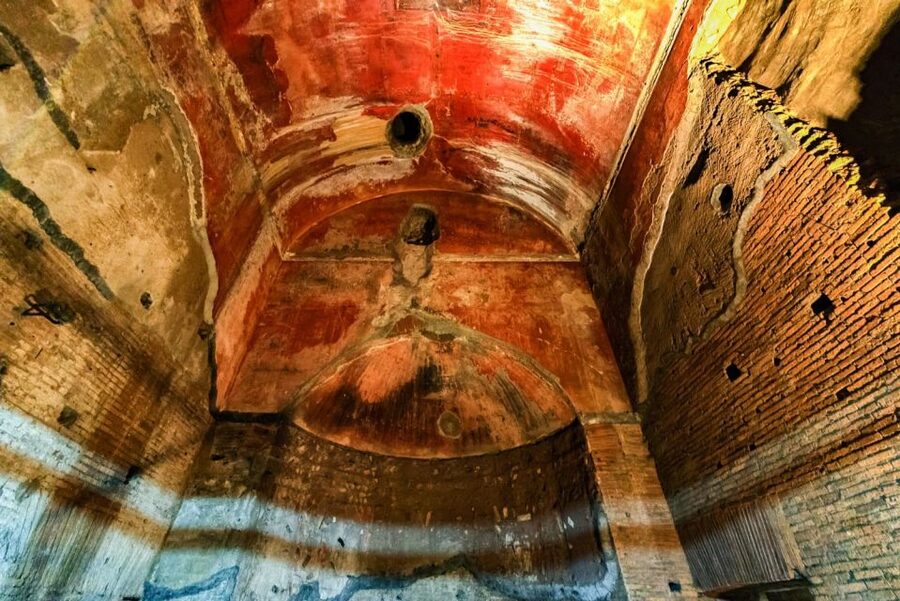
The opening part of the visit takes you underground. That change in setting is important. Above ground, Rome is noisy, sunny, and full of traffic. Below ground, the Domus Aurea feels cool, enclosed, and unfinished.
The route includes steps, staircases, and uneven surfaces. Comfortable shoes are essential, not just a nice extra. Warm clothing is also sensible because the underground rooms can feel chilly, even during a hot Roman afternoon. Bring water, but leave luggage and large bags behind.
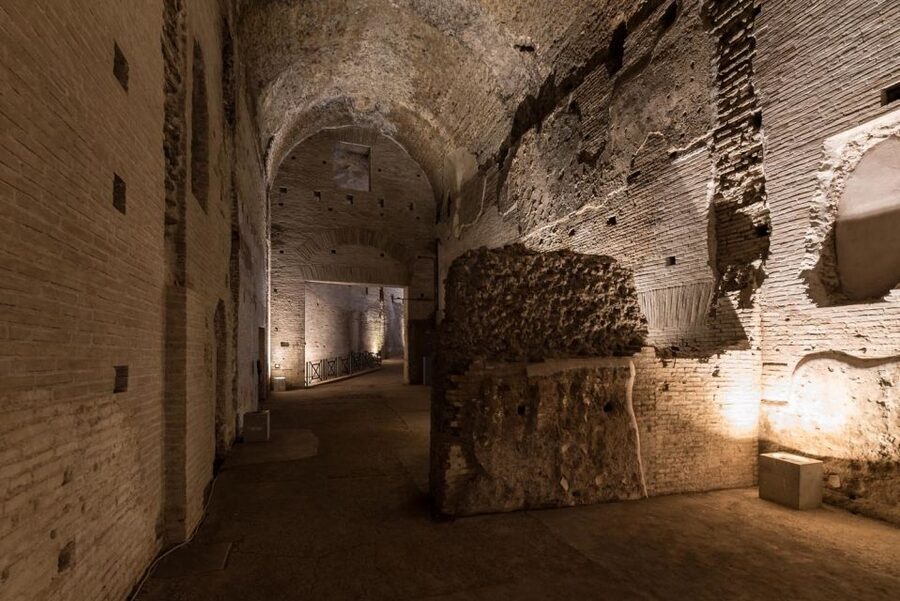
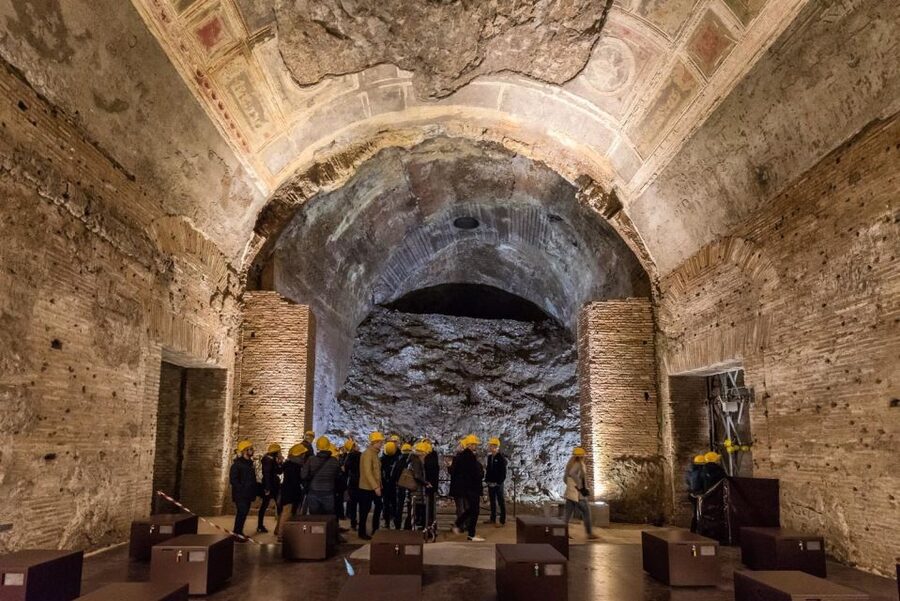
Inside, you see surviving sections of Nero’s palace rather than a complete residence. The rooms are stripped of much of their original marble, sculpture, and precious decoration, yet the scale remains striking. High vaults and broad chambers give you a sense of how ambitious the original project was.
The palace is also an active excavation and conservation site. You may see areas where preservation work is still under way, rather than a perfectly finished visitor route. I consider that part of the appeal. You are seeing archaeology in progress, not a stage set built to look ancient.
Frescoes, vaults, and the remains you can still see
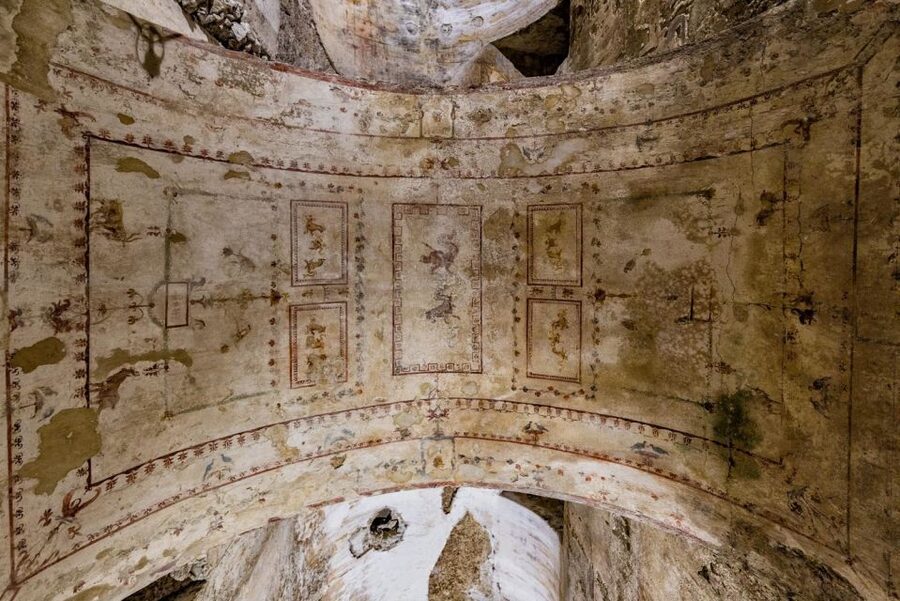
The surviving frescoes are among the strongest reasons to visit. They do not appear in every room, and the palace is not packed with intact decoration, but the fragments that remain can be remarkable.
Look for painted wall designs, decorative borders, and the playful figures and patterns that later influenced Renaissance artists. The works are especially effective when you notice their setting. A fresco in a dark, buried chamber feels different from one displayed under bright museum lighting.
Some areas include surviving wall paintings and tiled floors. These details may look modest beside the Colosseum, but they show how carefully the rooms were finished. The architecture itself is just as important. Broad passages, curved vaults, and large chambers reveal the technical skill behind the palace.
The guide gives these remains their context. A bare wall can be hard to read on your own, especially when the original room has lost its statues, marble facing, furniture, and roof. A good explanation helps you understand what is missing and why the surviving work matters.
Past visitors have singled out guides including Valentina, Thomas, Brandon, Monica, Renata, Elena, and Marco. Guide assignments can change, so you cannot book a particular person from the information provided. The key point is that the experience depends heavily on clear delivery. One guide may be superb at storytelling, while another may speak too softly for people at the back of the group.
Stay near the guide, especially in the first part of the visit. The underground acoustics can make speech difficult to follow, and no audio enhancement is listed for this tour.
Same city, an entirely different afternoon:
- Vatican Museums & Sistine Chapel Tour with Optional Basilica
★ 4.3 · 67,413 reviews - Rome: Guided Tour of Colosseum, Roman Forum & Palatine Hill
★ 4.7 · 27,897 reviews - Rome: Colosseum & Forum with Audio Guide App -Optional Arena
★ 4.2 · 24,770 reviews - Rome: Colosseum, Roman Forum and Palatine Hill Guided Tour
★ 4.5 · 23,903 reviews
The virtual reality reconstruction makes the ruins readable
The virtual reality section is not a throwaway extra. It is the part that helps most with scale and imagination.
A ruin can tell you that a palace was large, but it cannot easily show the full relationship between rooms, gardens, open spaces, and the artificial lake. The digital reconstruction gives you a picture of the site during Nero’s reign, when the complex was new and its decorative surfaces were still bright.
This is particularly helpful for families and visitors who do not spend much time studying Roman architecture. Instead of hearing only that Nero had an enormous palace, you can see how the complex may have occupied the center of Rome and why later emperors wanted to bury it.
The multimedia presentation also connects the underground rooms to the wider city. It helps explain how the lake was later filled and how the Colosseum was built in its place. That connection gives extra meaning to a visit to the amphitheater. You are not just seeing two separate monuments. You are seeing how one imperial project replaced another.
Several past visitors have called the VR and digital elements the most moving or memorable part of the experience. I would not book the tour expecting a full physical reconstruction, because none exists. Book it knowing that the technology supplies the missing visual information while the ruins provide the real historical evidence.
What the two-hour route feels like
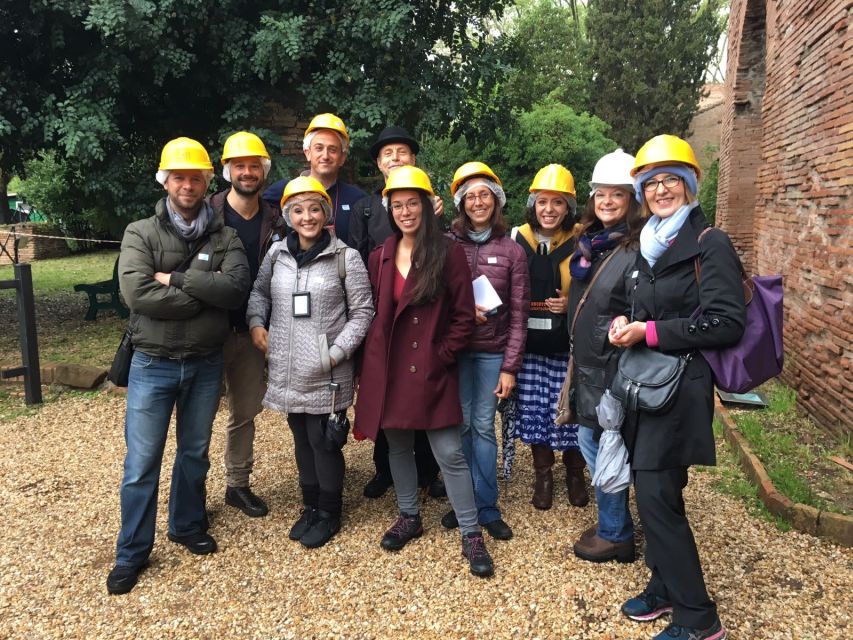
The advertised duration is two hours, which is a good length for this site. The visit is long enough for a proper explanation of Nero, the palace, its burial, and its later rediscovery without turning into an all-day commitment.
The route begins at Oppio Caffè, continues through the Domus Aurea with a guided visit, and finishes at the archaeological site. You will walk for most of the experience, with frequent stops to look at rooms, decoration, and structural features.
The pace has generally suited families and older visitors, but the physical route still requires care. If you have mobility concerns, tell the activity provider during booking so they can discuss possible arrangements. The tour is listed as unsuitable for wheelchair users, and the steps and uneven surfaces are a real limitation.
The underground setting may also affect how you feel during the visit. If enclosed spaces make you uncomfortable, consider that before paying, since much of the experience takes place inside buried rooms and corridors.
Is $55 a fair price?
At $55 per person, this is not the cheapest ancient sight in Rome. You are paying for more than basic admission, though. The price includes entry, reservation fees, express security access, an English-speaking guide, and the virtual reality experience.
The value depends on how much help you want interpreting ruins. If you already have strong knowledge of Roman architecture and enjoy reading archaeological displays on your own, you might find the guided format less essential. If you want the palace explained as you move through it, the fee is easier to justify.
The active excavation setting also matters. The Domus Aurea is not open like a normal public square where you can wander in at any hour. Access is controlled, and the special guided visit gives you a structured way into a site that was once mainly available to archaeologists.
I see the tour as good value for a visitor who has already set aside time for the Colosseum area and wants something more unusual. It adds a second layer to the imperial story without taking a whole day. The price is harder to justify if you are interested only in grand, intact monuments and do not enjoy partial ruins.
The booking is non-refundable, so check your schedule carefully before paying. Starting times vary, and availability must be checked for your chosen date.
Who will enjoy this tour most
I would recommend the Domus Aurea to anyone interested in Roman emperors, archaeology, architecture, or the way ancient sites change over time. It is also a strong choice for a return visit to Rome, when you have already seen the main monuments and want a less familiar experience.
Families can do well here because the VR section gives children a clear picture of the palace. Guides have also been praised for handling children’s questions and keeping the history lively. Still, younger children need to manage two hours of walking and repeated stops in dim, uneven surroundings.
The tour suits history-minded visitors who want more than the familiar story of Nero as a villain. You hear about his extravagant building program, his political downfall, and the effort by later emperors to erase his memory. The palace becomes a window into Roman power, propaganda, and changing public taste.
It is less suitable for anyone needing step-free access, anyone carrying large luggage, or anyone who wants a bright, open-air attraction. You should also think twice if you need every word to be amplified, since some parts may be difficult to hear from the back.
Practical tips for a smoother visit
- Arrive at the corner by Oppio Caffè with time to spare. Look for the Through Eternity sign or flag.
- Use the exact address, Via delle Terme di Tito 72, if your map app sends you toward the wrong side of the Colosseum area.
- Wear shoes with good support. The route includes steps, staircases, and uneven ground.
- Bring a light warm layer. Underground rooms can feel cool.
- Carry water, but do not bring luggage or a large bag.
- Stay close to the guide so you can hear the explanation in echoing rooms.
- If you are seeking a student discount, bring a valid student ID. Without it, the full entry price may be charged on the day.
- Tell the provider about mobility concerns during booking. Wheelchair users cannot take this tour.
- Check the starting time and date carefully because the booking cannot be refunded.
Should you book the Domus Aurea tour?
Book it if you want to see Rome’s ancient past from the inside, in a place that still feels like an archaeological worksite rather than a finished monument. The combination of real frescoes, enormous vaulted rooms, Nero’s extravagant story, and the virtual reconstruction makes this a strong two-hour addition to a Colosseum day.
Skip it if you want a completely accessible route, a self-guided visit, or a palace filled with intact furnishings and decoration. The Domus Aurea is fragmentary, cool, dim, and physically uneven.
For most visitors interested in Roman history, I think the $55 price is reasonable, especially because the guide and VR presentation solve the biggest problem with ancient ruins: understanding what you are looking at. Check the logistics, wear proper shoes, stay close enough to hear, and this can become one of the most memorable history stops in Rome.
FAQ
Where does the Domus Aurea tour meet?
The meeting point is in front of Oppio Caffè, on the corner of Via Nicola Salvi and Via delle Terme di Tito. The exact address is Via delle Terme di Tito 72.
How do I find the guide?
Your guide should have a Through Eternity sign or flag.
How long does the tour last?
The guided visit lasts two hours.
What language is the tour in?
The tour is conducted in English with a live English-speaking guide.
Is admission included in the price?
Yes. The price includes Domus Aurea admission, reservation fees, and exclusive access arranged for the tour.
Is virtual reality included?
Yes. A virtual reality experience is included and helps show the palace and surrounding area as they may have appeared during Nero’s reign.
Does the tour include transportation?
No. You must make your own way to the meeting point, and the tour ends at the Domus Aurea.
Can wheelchair users join?
No. The tour is listed as unsuitable for wheelchair users because the route includes steps, staircases, and uneven surfaces.
What should I wear and bring?
Wear comfortable walking shoes and bring warm clothing and water. Large bags and luggage are not allowed.
Can I get a student discount?
A valid student ID must be shown on the day of the tour. Without valid identification, the full ticket price may be charged for entry.
Fresh on the Rome list
- Exclusive Golf Tour Private VIP with Local & Gelato o Wine★ 5.0 · 500 reviews
- Colosseum, Palatine Hill and Roman Forum with Guided Tour★ 5.0 · 500 reviews
- Rome Trastevere Pasta Making Class with Eating Europe★ 5.0 · 505 reviews
- Rome by Night Walking Tour★ 4.5 · 506 reviews
- Rome: Colosseum Express Tour with Forum & Palatine Access★ 4.5 · 511 reviews
- Rome Food Experience Max 6 People Group Tour | w/Private Option★ 5.0 · 516 reviews
- Rome: Navona Square Underground Ticket with Audio Guide★ 4.0 · 518 reviews
- Rome: Escorted Papal Audience Experience with Entry Ticket★ 4.4 · 518 reviews
Guided, compared.
Colosseum, Roman Forum & Palatine Guided Tour
Read our review →
Vatican Museums, Sistine Chapel & St Peter’s Basilica Guided Tour
Read our review →
Colosseum, Palatine Hill and Roman Forum Guided Tour
Read our review →
Guided Tour of Colosseum, Roman Forum & Palatine Hill
Read our review →
Colosseum & Forum with Audio Guide App -Optional Arena
Read our review →
Colosseum, Roman Forum and Palatine Hill Guided Tour
Read our review →
Naples Underground Entry Ticket and Guided Tour
Read our review →