
Reviewed · COLOSSEUM & ROMAN FORUM TOURS
Rome: Colosseum, Roman Forum and Palatine Hill Guided Tour
The best part of this Rome tour is its focus: you move from the Colosseum’s arena to the political center of Ancient Rome, then up Palatine Hill, where Rome’s founding myths meet the remains of imperial palaces. Guides such as Ken, Teddy, Eni, and Daniela turn broken stone into stories about gladiators, emperors, temples, and power.
I like the short, efficient format, especially if you do not want a three or four-hour archaeological marathon. I also like the headsets, the organized entry process, and the built-in time to look around at your own pace. The main drawback is that queues can still appear, and the Forum and Palatine Hill may receive less detailed guiding than the Colosseum.
Key points at a glance
- About two hours of Ancient Rome: The experience can run from roughly 1 to 2.5 hours, depending on the chosen option and how much free time you use.
- Three essential sites in one visit: Your ticket covers the Colosseum, Roman Forum, and Palatine Hill.
- Strong English-speaking guides: Ken, Teddy, Eni, Tedros, and others are praised for clear speech, humor, energy, and good answers to questions.
- Headsets help in crowded spaces: You can hear the guide more easily inside the arena and among the ruins.
- Expect real walking: Uneven surfaces, steep steps, metal-detector checks, heat, and no large bags make preparation important.
- Good for a focused first visit: This suits you if you want the main story and monuments without spending half a day on site.
Why this compact Ancient Rome tour works
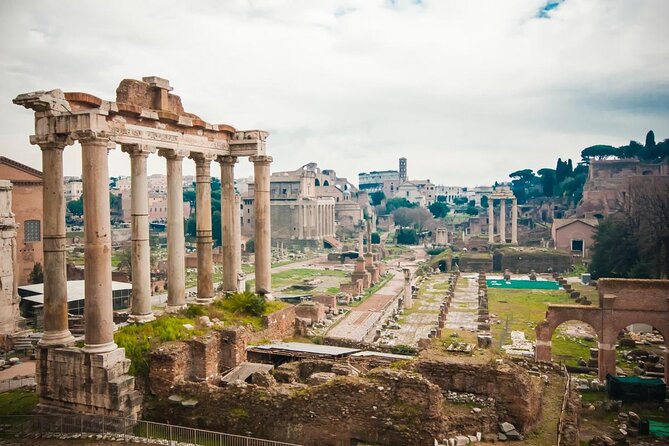
Rome’s ancient center can feel confusing at first. You see arches, columns, brick walls, and grassy ruins, but the original purpose of each building is not always clear. A guide gives the place a storyline, moving you from public spectacle to government, religion, and imperial power.
This experience is built around the three sites that best explain Ancient Rome. The Colosseum shows how emperors used entertainment and architecture to win public favor. The Roman Forum reveals where politics, law, religion, and commerce played out. Palatine Hill connects those public spaces with the private world of the Caesars and the legend of Rome’s birth.
The tour is priced at $70 per person. That is well above the adult archaeological admission fee of 18 euros, so the value depends on how much help you want. The extra cost covers the licensed guide, reservation arrangements, audio equipment, and tour services. If you already know the sites and prefer reading signs or using an audio guide alone, the price may feel high. If you want the complicated ruins explained clearly and want help with entry in a crowded season, the cost is easier to justify.
The format also helps you control your day. Several tours at the Colosseum are long and detailed. This one gives you a brisk introduction, then allows free time in parts of the complex. That makes it a good match for families, first-time visitors, and anyone fitting Ancient Rome between other appointments.
A few other Rome mornings to weigh against this
- Colosseum, Roman Forum & Palatine Guided Tour
★ 4.7 · 63,148 reviews - Rome: Colosseum, Palatine Hill and Roman Forum Guided Tour
★ 4.8 · 32,814 reviews - Rome: Guided Tour of Colosseum, Roman Forum & Palatine Hill
★ 4.7 · 27,897 reviews
Meeting at Via dei Fori Imperiali 25
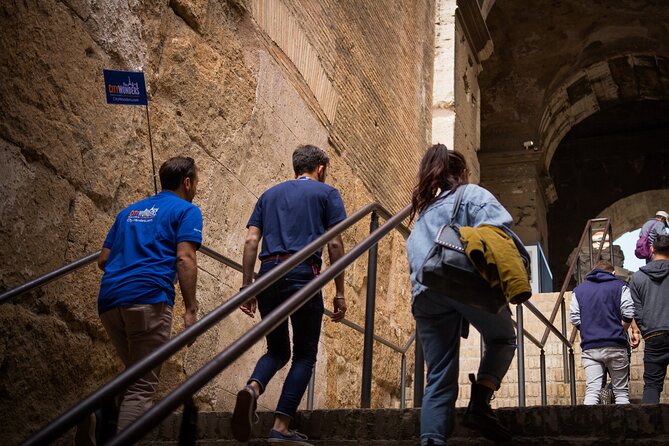
The stated meeting point is in front of the Tourist Information Point at Via dei Fori Imperiali 25, near the Colosseum and Roman Forum. Look for the Trip in Art flag, and arrive at least 30 minutes early.
That early arrival matters. You need time to find the staff, confirm the names on the booking, receive instructions, and join the correct group. The full names and ages of everyone booked must be supplied, and incomplete information can put entry at risk. Bring a passport or identity card, since identification is mandatory.
The meeting area can be busy, and one customer specifically found the signs less obvious than expected. Do not assume that the giant Colosseum will make the meeting point self-evident. Save the address, allow extra time, and keep the phone number connected if possible. The operator has contacted people who were having trouble finding the group, but it is better not to depend on a last-minute rescue call.
Transportation to the meeting point is not included. You make your own way there, and the tour ends at one of two nearby locations, Colosseo or Foro Romano. That is useful if you plan to continue sightseeing on foot, but you should not expect a ride back to your hotel.
Entering the Colosseum with a guide
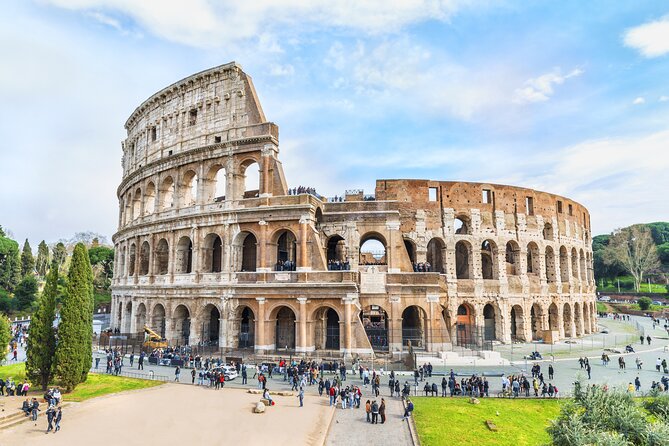
The Colosseum is the tour’s main event, and the first hour centers on it. Before and during entry, your guide explains the arena’s structure, purpose, and place in Roman public life.
The building once held crowds estimated at around 50,000 people, and the guide uses that scale to help you picture the sound and pressure of an event day. You hear about gladiators, emperors, armor, spectacle, and the political reasons rulers invested in public entertainment. The strongest guides do not treat the arena as a backdrop for random facts. They explain how architecture, crowd control, social rank, and imperial authority worked together.
Names praised for clear and engaging delivery include Ken, Teddy, Tedros, Eni, and Daniela. Ken is particularly good at mixing facts with humor and answering questions without losing the group’s pace. Teddy and Tedros are noted for their energy and friendly manner, while Eni is a strong choice for an efficient tour with little wasted time. You may not receive one of these specific guides, but the repeated pattern is clear: guide quality is a major part of the experience.
You receive headphones so you can hear the commentary in a crowded arena. That small item has real value. The Colosseum is rarely quiet, and the group must remain together. Without an audio device, you would miss parts of the explanation whenever another group passes or the guide pauses at a distance.
The entry process includes a metal-detector security check. Do not bring weapons, sharp objects, glass items, drones, pets other than assistance dogs, or large luggage. A small day bag is the safer choice, though the rules specifically warn against large bags.
Timed entry and group access can make the process faster, but skip the line does not mean every queue disappears. Security remains necessary, and on busy days you may wait outside before entering. One account describes a 20 to 25-minute wait at the Forum, while another notes an outside queue at the Colosseum despite reserved access. Your guide can use that time well, explaining the building before you enter, but you should still avoid booking this too tightly against another appointment.
Inside, you can expect a guided portion followed by some free time, depending on the option and group schedule. That balance is one of the tour’s better features. You get the essential explanation, then a chance to look at the arches, seating levels, arena floor area, and surviving masonry without having to listen every second.
The upper levels involve steep steps. An elevator is available to the left of the stairs for the upper floors, though you may still encounter uneven ground elsewhere. A moderate fitness level is required, and the tour is not suitable for wheelchair users or people with mobility impairments.
Walking through the Roman Forum
The Roman Forum is where the tour becomes less immediately obvious and more rewarding with explanation. The Colosseum announces its purpose. The Forum requires you to imagine a city center from scattered foundations, columns, temples, basilicas, and triumphal arches.
This was the public core of Roman life. Political speeches, legal business, religious ceremonies, commercial activity, and official processions all belonged here. Your guide points out what the surviving structures once did and helps connect individual ruins to the larger system of Roman government.
The Forum is also where a short tour can feel compressed. There is a great deal of ground to cover, and the ruins are spread across open paths. Some options include a guided hour here, while other formats provide group access and leave you more time to explore independently. Check the exact option before booking, especially if detailed Forum interpretation is your top priority.
One useful tip is to study a basic map of the Forum and Palatine Hill before arriving. The site map itself may offer only limited information, and a little preparation helps you recognize the main areas. You do not need to memorize names. Just knowing that the Forum was a connected civic center, rather than a single monument, will make the walk easier to follow.
Wear shoes with a firm sole. The paths are uneven, and the site includes slopes and stone surfaces. In hot weather, the open ruins can be tiring, with little relief from the sun. Carry water, since food and drinks are not included and there is no meal break built into the tour.
Same city, an entirely different afternoon:
- Vatican Museums & Sistine Chapel Tour with Optional Basilica
★ 4.3 · 67,413 reviews - Vatican Museums, Sistine Chapel & St Peter’s Basilica Guided Tour
★ 4.5 · 39,149 reviews - Rome: Colosseum & Forum with Audio Guide App -Optional Arena
★ 4.2 · 24,770 reviews - Rome: Colosseum, Roman Forum and Palatine Hill Guided Tour
★ 4.5 · 23,903 reviews
Palatine Hill and the view over Rome
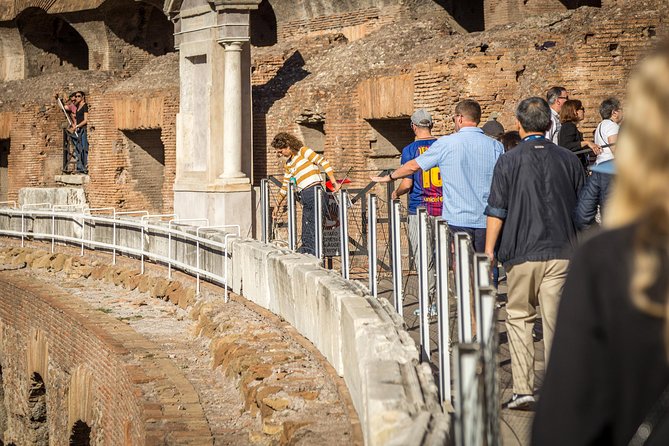
Palatine Hill gives the tour its best change of pace. After the arena and civic ruins, you climb to the hill associated with Rome’s foundation and the homes of emperors.
The traditional story places Romulus and Remus here, while archaeology shows centuries of settlement and later imperial construction. The guide helps you hold both ideas at once: Palatine Hill is a place of myth, but it is also a site of palaces, gardens, walls, and political authority.
The remains of the imperial residences are not as instantly readable as the Colosseum. Walls may look like simple fragments unless someone explains their scale and purpose. This is a place where free time can be especially valuable. Walk slowly, pause at the viewpoints, and use the space to take in the Forum below and the wider city beyond it.
The panoramic views are a genuine reward, but the climb and heat can make this section harder than expected. A summer visit requires comfortable clothing, water, and a realistic pace. If you are traveling with children, the open space can be a relief after the crowded arena, but the group may still need to stay together when moving between sites.
Some versions of the experience offer more independent time at Palatine Hill than at the Colosseum. That suits people who like to wander and photograph ruins, but it means the amount of formal explanation may feel uneven. If you want every structure identified by a guide, confirm that the Forum and Palatine guided option is selected.
Guide quality makes the biggest difference
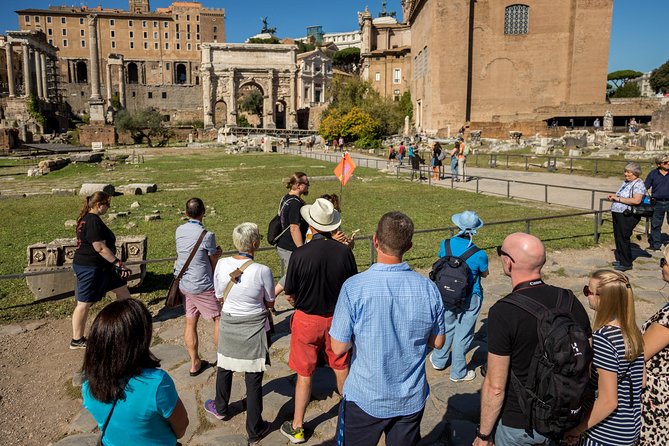
The archaeological sites are fixed, but your guide changes the feel of the visit. The strongest guides use short explanations, visual examples, humor, and questions to keep the group alert. Ken is praised for his warmth and ability to make complex material easy to follow. Eni is a good fit for visitors who want a brisk, direct presentation. Teddy and Tedros are noted for positive energy and clear English.
The audio equipment also helps guides maintain a natural speaking distance. You do not need to crowd around one person to hear. That matters when the group is moving through a packed entrance area or standing among several other tour groups.
There can still be variation in pace. One account found the explanation a little rushed, while another appreciated the concise approach. That is the tradeoff of an express-style visit. You gain time, but you may not get every answer or every side room covered.
The tour is conducted in English. If that is comfortable for you, the format is straightforward. If you need another language, this is not the right booking based on the stated information.
Timing, crowds, and the real meaning of skip-the-line entry
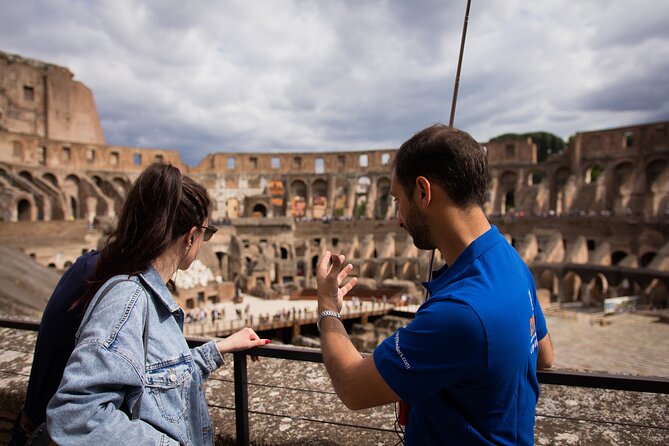
Rome’s major ancient sites draw heavy crowds, particularly around Easter and during summer. Reserved group entry can save you from standing in the general ticket line, but you still pass through security and may face a queue connected to your timed admission.
Arriving 30 minutes early is not needless caution. Late arrivals cannot be guaranteed entry, and the guide leads the group in and out of the monuments. You cannot simply catch up later if you miss the departure.
The total duration is listed as 1 to 2.5 hours. That broad range reflects different options, guided portions, entrance timing, and free exploration. The Colosseum portion is generally about an hour, Palatine Hill about 30 minutes in the stated plan, and the Forum about an hour when the guided option is included. In practice, some people finish in around 1.5 hours, while others take closer to two hours or more.
I would schedule this earlier than a restaurant reservation or train departure. Crowds, security, and group movement are outside your control. The short format is convenient, but it is not a license to cut the timing close.
Who will get the best value
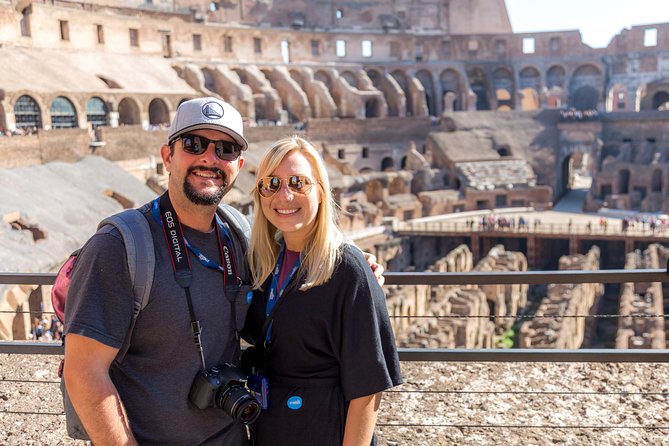
I would choose this tour if you want a clear introduction to Ancient Rome without giving the whole day to archaeology. It is especially suitable for:
- Families who need a manageable visit
- First-time visitors who want context before exploring alone
- People with a tight Rome schedule
- Anyone uneasy about navigating a crowded entry process
- Visitors who value a live guide more than a fully independent visit
The format also works well for people who enjoy a little independence. You receive the essential story, then have time to take photos and inspect the site at your own speed.
I would look elsewhere if you want a slow, highly detailed study of every Forum building, a private guide, or a fully accessible route. The moderate fitness requirement is real, and the uneven surfaces, slopes, steep steps, and heat can make the visit demanding.
What to bring and how to prepare
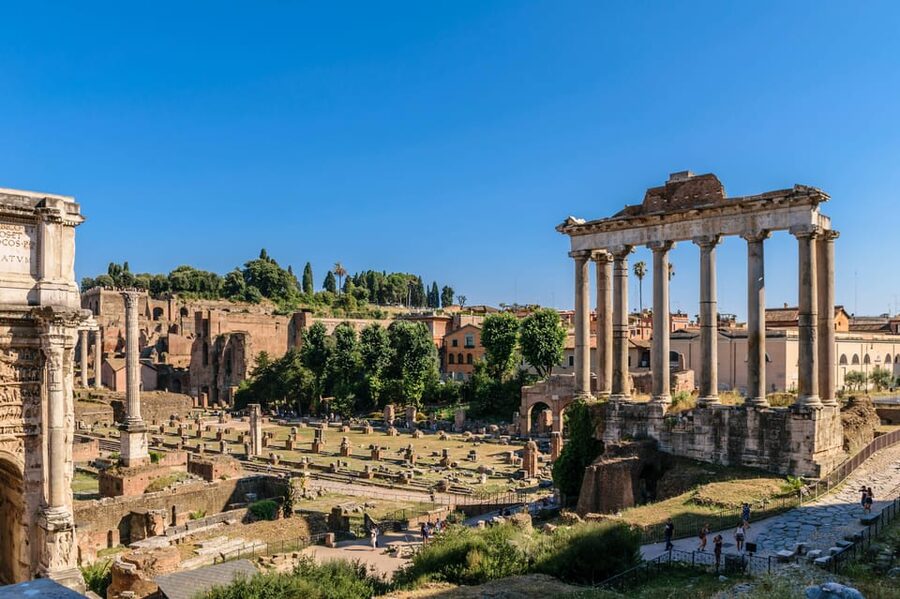
Bring your passport or identity card, comfortable shoes, and clothing suited to the weather. Rome’s ancient center is exposed, and conditions can change the experience more than you might expect.
Keep your bag small. Large luggage is not allowed, and security checks add time. Do not bring sharp objects, weapons, glass, drones, or pets, except for assistance dogs.
Before the tour, look at a simple map of the Forum and Palatine Hill. This takes only a few minutes and helps you understand the direction of the walk. You should also decide how much free time you want. The Colosseum is the main guided focus, while the outdoor ruins may reward independent wandering.
Cancellation is free up to seven days before the visit for a full refund. The tour runs in all weather, so your clothing and footwear need to match the forecast.
Should you book this Colosseum tour?
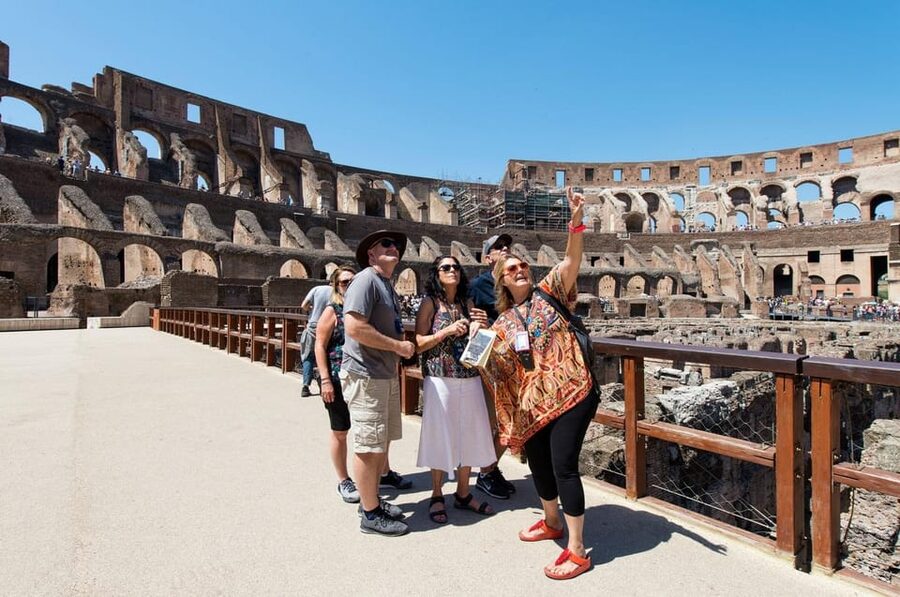
Book it if you want the three headline sites, an English-speaking guide, organized entry, and a compact schedule. At $70, the tour is not the cheapest way into Ancient Rome, but the guide, reservation service, headsets, and help with a crowded visit add practical value.
I would select the guided Forum and Palatine option if you want more than a Colosseum introduction. Choose this experience with realistic expectations: reserved entry can still involve security and waiting, and the group moves together. For a first visit, that is a fair trade. You get the essential story, the arena’s scale, the Forum’s political center, and Palatine Hill’s views without exhausting your entire day.
FAQ
Where does the tour meet?
The meeting point is in front of the Tourist Information Point at Via dei Fori Imperiali 25, 00186 Rome. Look for the Trip in Art flag.
How early should I arrive?
Arrive at least 30 minutes before the scheduled start time. Late arrivals are not guaranteed entry.
Which sites are included?
The experience includes entry to the Colosseum, Roman Forum, and Palatine Hill.
Is the tour conducted in English?
Yes. The stated tour language is English, with a live English-speaking guide.
How long does the experience last?
The listed duration is 1 to 2.5 hours. The exact length depends on the selected option, guided portions, entry timing, and free time.
Is skip-the-line entry included?
The tour includes reserved group entry arrangements, but you must still pass through Colosseum security. Busy days can involve a wait before entry.
What identification do I need?
Bring a passport or identity card. Identification is mandatory, and entry cannot be guaranteed without it.
Is the tour suitable for wheelchair users?
No. The experience is not suitable for wheelchair users or people with mobility impairments. A moderate fitness level is required.
Can I cancel for a refund?
Yes. You can cancel up to seven days in advance for a full refund.
Fresh on the Rome list
- Exclusive Golf Tour Private VIP with Local & Gelato o Wine★ 5.0 · 500 reviews
- Colosseum, Palatine Hill and Roman Forum with Guided Tour★ 5.0 · 500 reviews
- Rome Trastevere Pasta Making Class with Eating Europe★ 5.0 · 505 reviews
- Rome by Night Walking Tour★ 4.5 · 506 reviews
- Rome: Colosseum Express Tour with Forum & Palatine Access★ 4.5 · 511 reviews
- Rome Food Experience Max 6 People Group Tour | w/Private Option★ 5.0 · 516 reviews
- Rome: Navona Square Underground Ticket with Audio Guide★ 4.0 · 518 reviews
- Rome: Escorted Papal Audience Experience with Entry Ticket★ 4.4 · 518 reviews
Colosseum & Roman Forum Tours, compared.
Colosseum, Roman Forum & Palatine Guided Tour
Read our review →
Colosseum, Palatine Hill and Roman Forum Guided Tour
Read our review →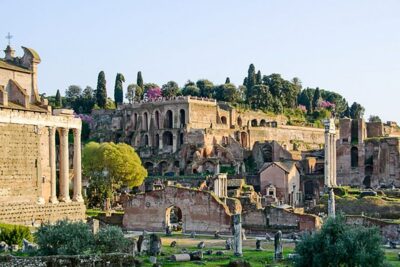
Guided Tour of Colosseum, Roman Forum & Palatine Hill
Read our review →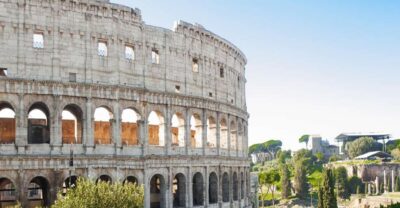
Colosseum & Forum with Audio Guide App -Optional Arena
Read our review →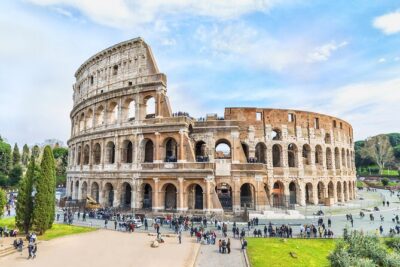
Colosseum, Roman Forum and Palatine Hill Guided Tour
Read our review →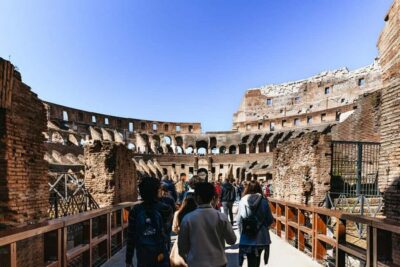
Colosseum, Forum & Palatine Hill Tour & Optional Arena
Read our review →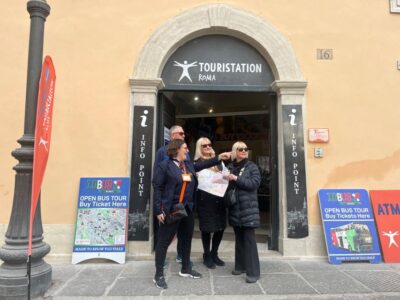
Colosseum, Roman Forum, Palatine with Multimedia Video
Read our review →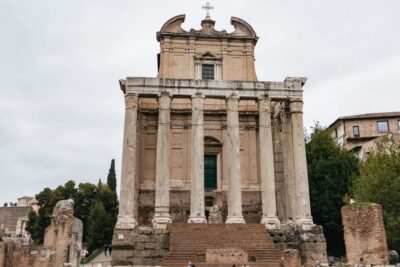
Colosseum, Palatine Hill & Roman Forum Guided Tour
Read our review →Browse the lists this tour appears in