
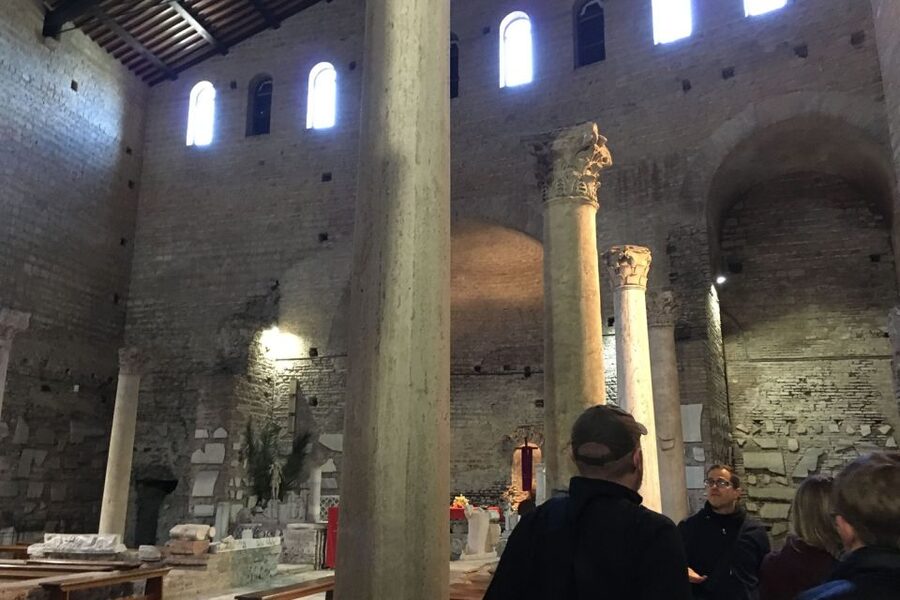
Reviewed · PRIVATE DRIVERS
Rome: Catacombs and Capuchin Crypt Guided Tour with Transfer
Rome’s most startling sight may be below street level: the Capuchin Crypt, where the bones of about 4,000 monks form careful patterns, chapels, and decorations. You then head outside the historic center to ancient Christian catacombs, where narrow passages and burial chambers reveal a quieter, grittier side of Rome.
I like the tour’s air-conditioned transfers, which save you the trouble of arranging transport to the Appian Way, and I like the way it joins two very different sites in one morning. Guides such as Monica, Fiona, Davide, Federica, Pia, and Maria have been praised for clear explanations and local tips. The main drawback is that some people find the catacombs visit rushed, and groups can make it hard to hear underground.
Key points to know before booking
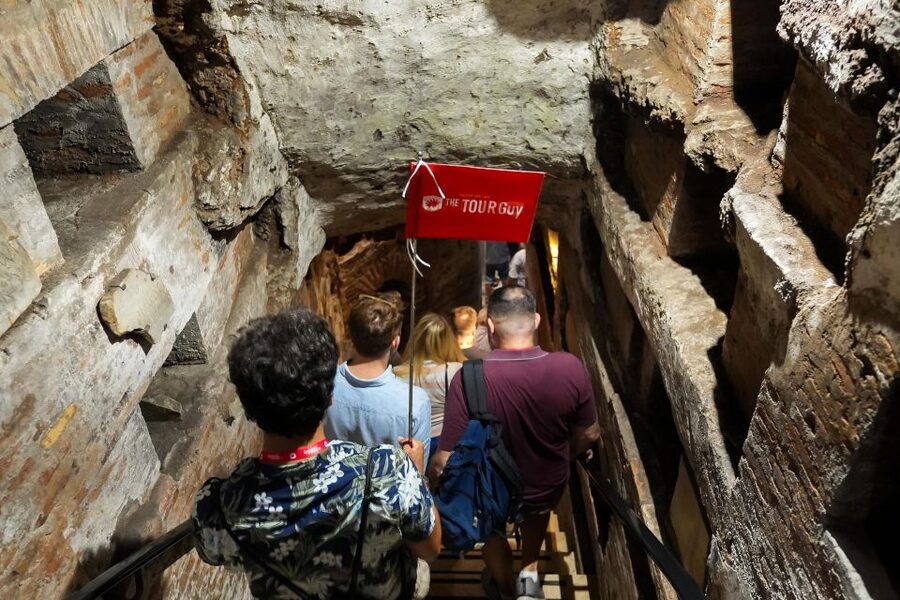
- Bones arranged as religious art: The Capuchin Crypt’s five Bone Chapels present human remains in a setting that is eerie, solemn, and carefully explained.
- Two underground experiences: The crypt is a compact museum and ossuary, while the catacombs are larger burial networks with painted chambers and papal tombs.
- Transport removes a major hassle: Air-conditioned vehicles carry you from central Rome to the catacombs and back.
- The catacomb site can vary: Opening days may affect which Roman catacombs you visit.
- Dress rules are strict: Cover your shoulders and knees, and leave your camera or phone in your pocket inside the religious sites.
- Not suitable for everyone: Narrow underground passages, stairs, and limited assistance make this a poor choice for wheelchair users, people with walking impairments, or anyone with claustrophobia.
Why Rome’s underground world is worth your morning
Rome can feel like one grand outdoor museum. Temples, fountains, churches, and imperial ruins sit in plain sight. This tour gives you a different Rome, one shaped by burial customs, religious belief, and the practical problem of placing thousands of bodies in a crowded ancient city.
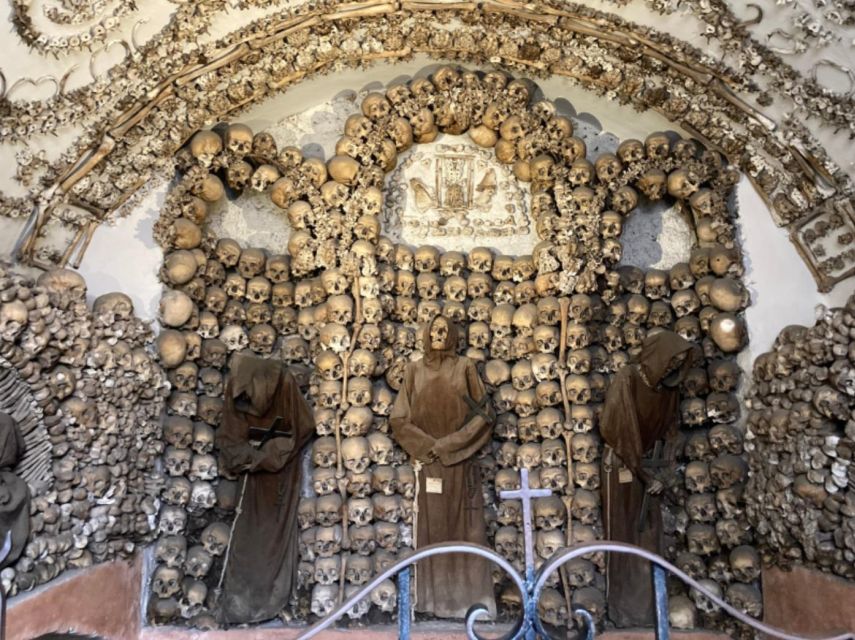
The Capuchin Crypt is the more dramatic opening. It is not simply a room filled with bones. The remains have been arranged into decorative designs inside five chapels, creating a place that is part memorial, part religious statement, and part unsettling work of art.
The catacombs offer a different mood. You leave central Rome and head toward the Appian Way, where early Christian burial sites lie beneath the ground. The passages are narrow, the setting is subdued, and the experience depends heavily on the guide’s explanation. You are not visiting a conventional museum with labels at every turn. You need someone to explain who was buried there, how the spaces were used, and what the surviving paintings mean.
At $41 per person, the price is sensible if you want both sites and do not want to arrange transport yourself. Entry fees and transfers are included, so you are paying for access, a guide, and the convenience of moving across Rome without working out buses or taxis. It is less compelling if you only want to see one site or prefer to explore slowly at your own pace.
More Private Drivers in Rome
- Rome Private Arrival Transfer: Fiumicino Airport to Hotel in Rome
★ 4.5 · 2,492 reviews - Rome: Catacombs Guided Tour with Transfer
★ 4.2 · 1,808 reviews - Transfer Fiumicino Airport – Rome City Centre
★ 4.5 · 1,070 reviews
Meeting near Piazza Barberini
The tour begins near the Fontana del Tritone in Piazza Barberini, though the exact meeting point depends on the option you book. Arrive with enough time to find the group, since central Rome can be crowded and the starting point may differ slightly between departures.
This is a practical location for a morning outing. Piazza Barberini is central, near major streets and public transport, and it puts you close to the Capuchin Crypt. Hotel pickup and drop-off are not included, so you need to reach the meeting point yourself.
The tour runs about 2.5 to 3.5 hours. The daytime version is listed at about 3.5 hours, while the VIP after-hours option lasts about 2.5 hours. Starting times vary, so check the schedule before planning lunch or another timed visit.
Entering the Capuchin Crypt
The Capuchin Crypt usually provides the strongest first impression. The site is associated with Capuchin friars, and its chapels are decorated with the bones of thousands of monks. The arrangement is deliberate rather than random: skulls, ribs, and larger bones form patterns and ornamental displays.
Your guide helps explain the religious thinking behind the decoration. The message is not simply that death is frightening. The crypt reflects the friars’ views on mortality, humility, and the temporary nature of earthly life. That context matters, because without it the rooms can seem like a macabre curiosity rather than a serious religious site.
The visit lasts about 50 minutes. That gives you enough time to see the museum and crypt, but it is not a slow, private examination of every display. Some people have wished for more time, particularly in the museum section. I suggest paying close attention to the introduction, then moving at the group’s pace through the five Bone Chapels.
The crypt is also a place where your reaction may be personal. Some people find the arrangement beautiful, others find it disturbing, and many feel both responses at once. A good guide does not force a particular response. Monica has been praised for presenting the site with humor and balance, while Fiona and Davide have been praised for making the material easy to follow.
Photography is not allowed inside. That rule is especially important here. You will need to experience the rooms without taking pictures, and you should not count on using your phone as a visual record afterward.
Dress modestly. Shoulders and knees must be covered because these are religious sites. Sleeveless shirts and shorts can lead to refused entry, so plan your clothing before leaving your hotel.
The 25-minute ride to the catacombs
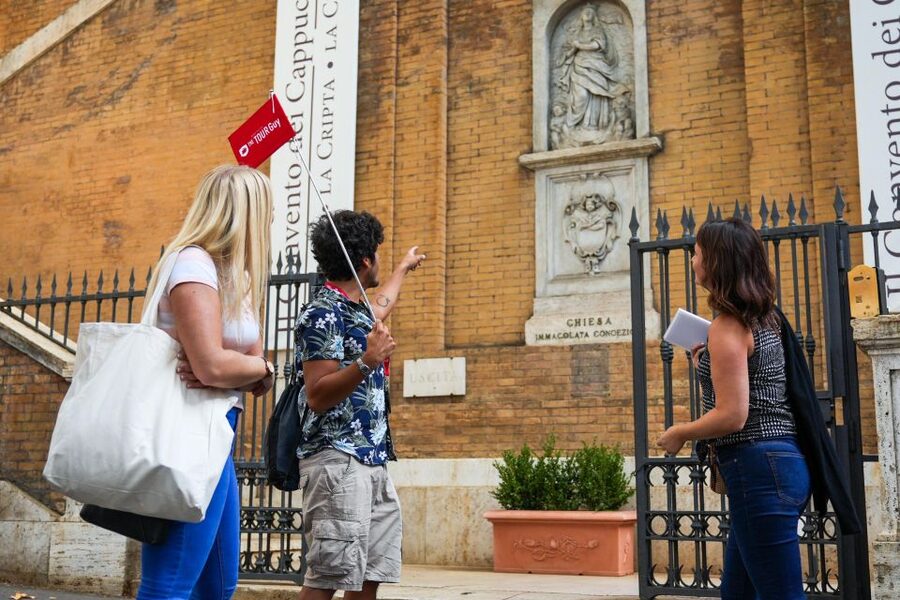
After the Capuchin Crypt, you board an air-conditioned vehicle for the trip toward the catacombs. The ride takes about 25 minutes, though traffic in Rome can affect the timing.
This transfer is one of the tour’s practical strengths. The catacombs are outside the central sightseeing zone, and reaching them independently takes more planning than visiting the Trevi Fountain or Pantheon. You avoid the stress of finding the correct bus, and you have a guide providing background about Rome along the way.
Several guides have used the travel time to explain other parts of the city, answer questions, and offer suggestions for food or nearby walks. Davide, Monica, Fiona, and Federica have all been praised for adding useful Roman context between the main stops. That extra commentary can turn a simple transfer into part of the tour rather than dead time.
The audio equipment has generally been useful, but it is not perfect. Microphones or receiver systems can cut in and out, particularly in moving vehicles. If you cannot hear, say so early rather than waiting until the group arrives.
Same city, an entirely different afternoon:
- Vatican Museums & Sistine Chapel Tour with Optional Basilica
★ 4.3 · 67,413 reviews - Colosseum, Roman Forum & Palatine Guided Tour
★ 4.7 · 63,148 reviews - Vatican Museums, Sistine Chapel & St Peter’s Basilica Guided Tour
★ 4.5 · 39,149 reviews - Rome: Colosseum, Palatine Hill and Roman Forum Guided Tour
★ 4.8 · 32,814 reviews
Walking through the Roman catacombs
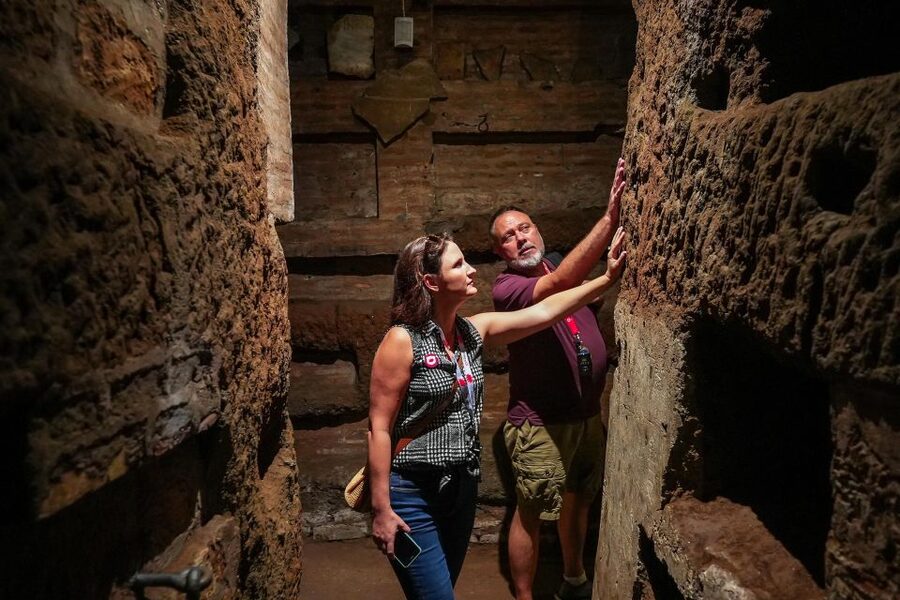
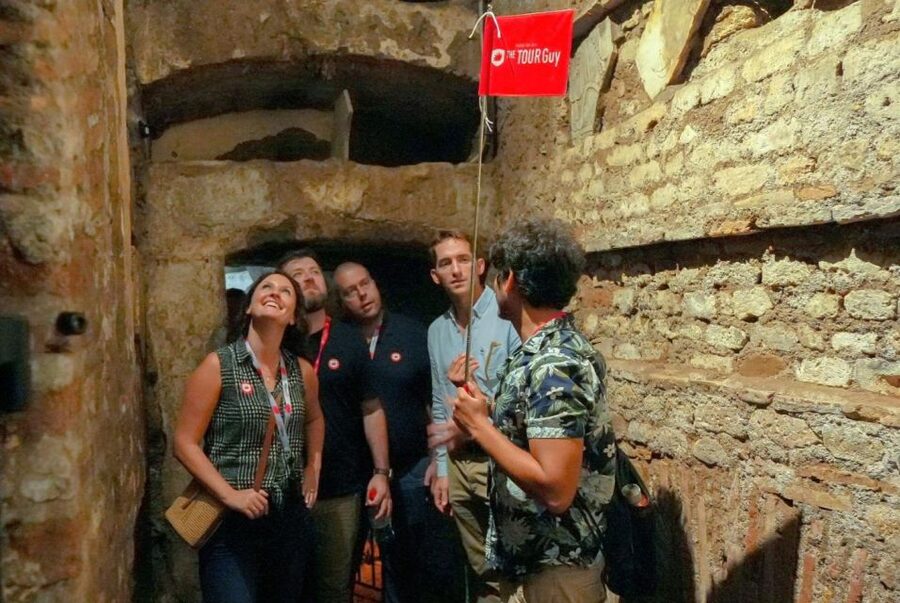
The catacombs are the heart of the tour for anyone interested in early Christianity. You first see the cemetery area from ground level, then descend into the underground passages with a site guide.
The exact catacomb complex can vary depending on opening days. The itinerary refers to the Catacombs of St. Callixtus, while some departures may visit another major site, such as the Catacombs of St. Sebastian. That variation is normal for a group tour, but it is worth knowing if one particular complex is your priority.
The underground network is extensive, with passages stretching for more than 10 miles. You will not walk all of it. The guided route takes you through selected corridors, burial areas, chambers, paintings, and crypts connected with martyrs and early church leaders.
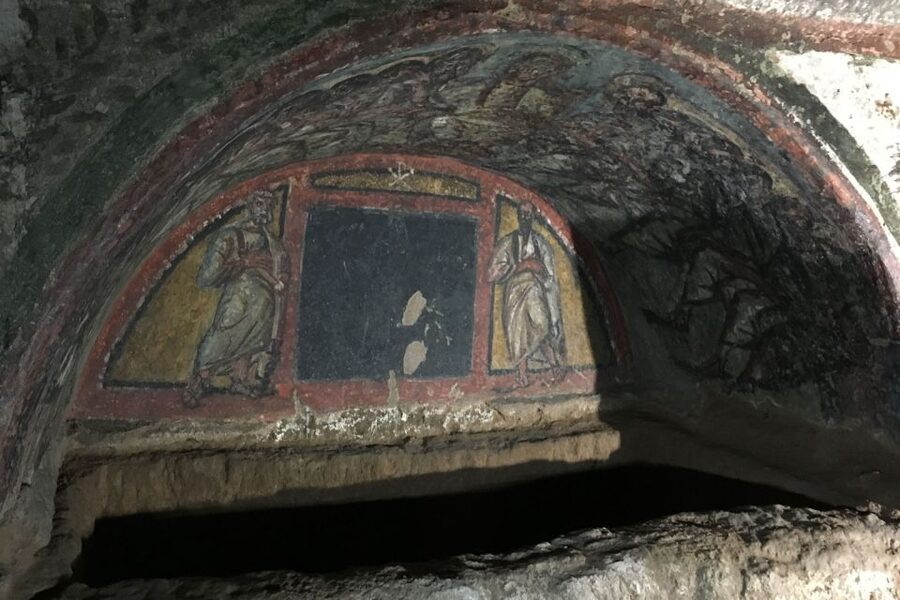
The most interesting feature is the scale of the burial system. Rows of niches were cut into the walls to hold the dead, creating an underground cemetery rather than a secret tunnel system built for dramatic effect. The guide explains how the spaces functioned and points out the surviving wall paintings.
You may also see the crypts of third-century popes. These details give the visit historical weight, but the atmosphere remains quiet and physical: cool air, close passages, rough walls, and the sense of walking through a place made for remembrance rather than public display.
The catacomb visit lasts about an hour. That is enough for a focused introduction, but you should not expect to wander freely or inspect every corridor. Some departures have felt rushed, and a larger group can make it difficult to hear the local catacomb guide, especially if you are at the back.
Stay near the guide and move forward when asked. In underground passages, the front of the group has a clear advantage. If hearing is important to you, ask about the audio receiver before leaving the vehicle and position yourself where you can follow the explanation.
The catacombs are not a good choice if you dislike enclosed spaces. The tour is also unsuitable for wheelchair users and people with walking impairments that require special assistance. Strollers and baby carriages cannot be accommodated.
Seeing the Appian Way and Aurelian Walls from the vehicle
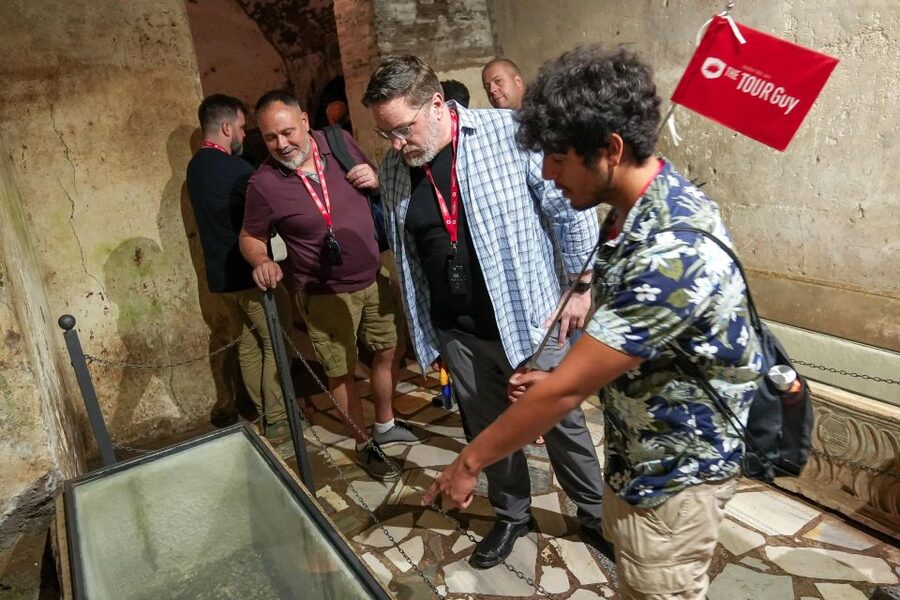
The return route includes views of the Appian Way and the Aurelian Walls. These are pass-by sights, not extended walking stops, so keep your expectations realistic.
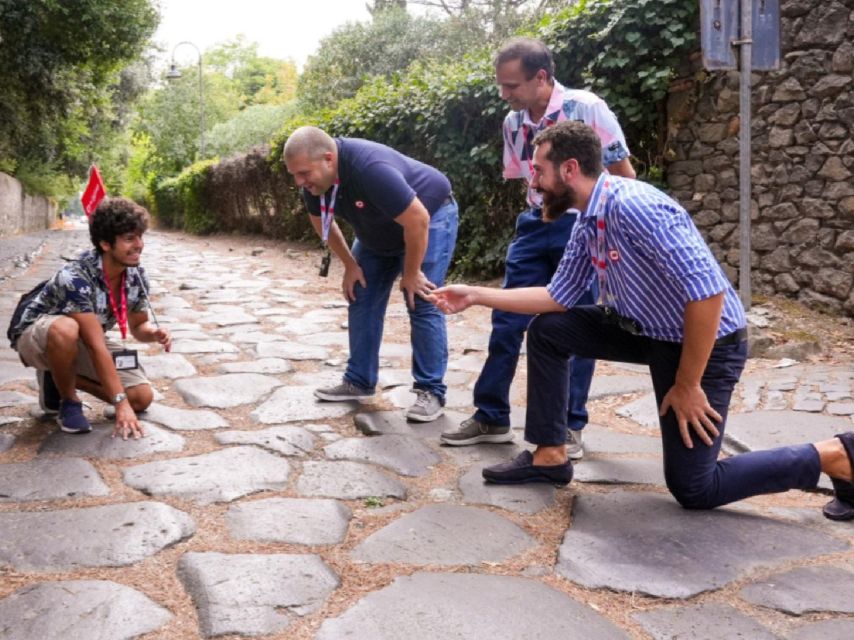
The Appian Way was a major Roman road and an important route during the empire. Seeing it in connection with the catacombs helps explain why so many burial sites developed in this area. Ancient Roman law generally kept burials outside the city center, and roads leading out of Rome became lined with tombs and cemeteries.
The Aurelian Walls offer another reminder of Rome’s changing needs. The city once felt secure behind its earlier defenses, but later emperors built a larger defensive circuit around a growing and increasingly threatened capital. You may only see the walls briefly from the vehicle, yet the guide’s commentary gives the passing view more meaning.
Do not book this tour expecting a leisurely Appian Way walk or photo stop. The road and walls are included as part of the route, with each pass lasting roughly five minutes. Their value lies in the connection they provide between the underground sites and Rome’s wider development.
Transport, timing, and the final drop-off
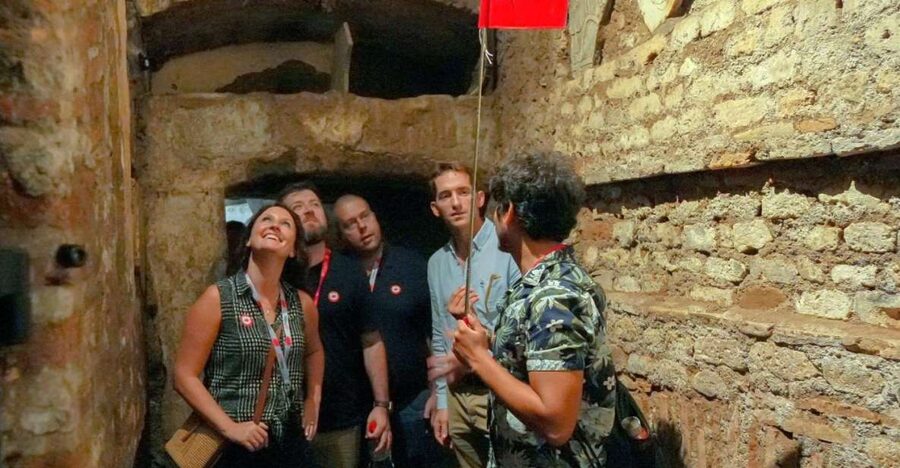
The vehicles are private, climate-controlled vans or cars used to move the group between central Rome and the catacombs. In summer, this is a real comfort. The Appian Way area can be exposed to strong sun, so bring sunscreen and water, along with comfortable shoes.
The tour ends at one of several central drop-off points, including Piazza Barberini, the Fontana del Tritone, or Santa Maria in Cosmedin. The drop-off location may not always match the exact place where you started. That matters if you are staying far from the center or have a bad knee, sore foot, or another reason to limit walking.
Before boarding the return vehicle, confirm where you will be left. Have your map or phone ready, and check the route to your hotel or next stop. The tour provides transportation back into central Rome, but it does not include hotel drop-off.
Children must remain seated under traffic rules. Car seats can be requested at least 72 hours ahead, which is essential if you are traveling with a young child.
Daytime or VIP after-hours?
The daytime tour is the better choice if you want the longer version and a straightforward morning or afternoon schedule. You get the Capuchin Crypt, transport, a catacomb visit, and passing views of the Appian Way and Aurelian Walls.
The VIP after-hours option lasts about 2.5 hours. It includes last-entry access to the Capuchin Crypt and a private after-hours catacomb visit as night approaches. This option may appeal to you if a quieter, more atmospheric setting matters more than a longer schedule.
The word VIP should not make you expect a different set of major sights. The central advantage is the private, after-hours setting. Compare the price of the specific option before booking, since the $41 rate applies to the standard activity details provided here and special options can differ.
Who will get the most from this tour?
I would choose this outing if you have already seen Rome’s headline ruins and want something less familiar. It suits adults, older children who can handle solemn material, and anyone interested in Christianity, Roman burial customs, archaeology, or the stranger corners of urban history.
It is also a good first-day choice if you want a guide to supply broad background about Rome. Several guides, including Monica, Fiona, Federica, and Davide, have been praised for explaining more than the formal stops and for offering food or neighborhood suggestions at the end.
I would skip it if you want to take photographs, avoid religious sites, or spend long periods at one attraction. I would also avoid it if narrow tunnels make you anxious or if stairs and uneven walking are a serious problem.
Wear comfortable shoes, a light jacket in spring or autumn, and clothing that covers your knees and shoulders. In summer, sunscreen is essential. The underground areas may feel cool compared with the streets, but the outdoor portions and transfers can still involve heat.
Is the $41 price good value?
At $41, the tour offers solid value for a visitor who wants both underground sites in one organized outing. Separate transport to the catacombs can take time and add cost, while a private vehicle keeps the day simple. Entry fees are included, as is skip-the-line entry to the Capuchin Crypt.
The price is less attractive if you are booking a basic visit to only the crypt. The catacombs are what make the package worthwhile, especially for first-time visitors who do not want to plan the route themselves.
The guide is an important part of the value. The crypt can be visually striking on its own, but the meaning behind the bone arrangements needs explanation. At the catacombs, a guide is even more useful because much of what you see is architectural and historical rather than immediately obvious.
Should you book it?
Book this tour if you want a well-organized look at Rome’s burial traditions, prefer air-conditioned transport, and enjoy sites that are serious, unusual, and a little eerie. The Capuchin Crypt is the memorable visual hit, while the catacombs provide the stronger sense of place and history.
Think twice if you need a fully accessible outing, dislike enclosed spaces, or expect a quiet private visit during the standard tour. For the best experience, dress correctly, stay close enough to hear the catacomb guide, confirm your drop-off point, and choose the VIP after-hours option only if its private nighttime setting is worth the added cost to you.
FAQ
Where does the tour start?
The starting point is near Piazza Barberini, with the Fontana del Tritone listed as one meeting location. The exact meeting point can vary according to the option booked.
How long does the tour last?
The daytime tour lasts about 3.5 hours. The VIP after-hours version lasts about 2.5 hours.
What sites are included?
The experience includes the Capuchin Crypt, a Roman catacomb complex, and pass-by views of the Appian Way and Aurelian Walls.
Is transportation included?
Yes. The tour includes air-conditioned transportation between central Rome and the catacombs when that option is selected.
Does the tour include hotel pickup?
No. Hotel pickup and drop-off are not included. You meet the group at the designated central meeting point and return to one of the listed central drop-off locations.
Can I take photographs inside?
No. Photography is not allowed inside the religious sites.
What should I wear?
You must cover your shoulders and knees. Comfortable shoes are required, and a light jacket is useful in spring and autumn. Sunscreen is recommended in summer.
Is the tour suitable for wheelchair users or people with claustrophobia?
No. The tour is not suitable for wheelchair users, people with mobility impairments requiring special assistance, or people with claustrophobia. Strollers and baby carriages are also not accommodated.
Fresh on the Rome list
- Exclusive Golf Tour Private VIP with Local & Gelato o Wine★ 5.0 · 500 reviews
- Colosseum, Palatine Hill and Roman Forum with Guided Tour★ 5.0 · 500 reviews
- Rome by Night Walking Tour★ 4.5 · 506 reviews
- Rome Trastevere Pasta Making Class with Eating Europe★ 5.0 · 505 reviews
- Rome: Colosseum Express Tour with Forum & Palatine Access★ 4.5 · 511 reviews
- Rome Food Experience Max 6 People Group Tour | w/Private Option★ 5.0 · 516 reviews
- Rome: Navona Square Underground Ticket with Audio Guide★ 4.0 · 518 reviews
- Rome: Escorted Papal Audience Experience with Entry Ticket★ 4.4 · 518 reviews
Private Drivers, compared.

Serravalle Designer Outlet Roundtrip Bus Transfer
Read our review →
Venice Marco Polo Airport Link Arrival Transfer
Read our review →
Rome Private Arrival Transfer: Fiumicino Airport to Hotel in Rome
Read our review →

Venice Marco Polo Airport Link Departure Transfer
Read our review →

Browse the lists this tour appears in