Reviewed · PRIVATE
Rome: Caracalla Baths & Circus Maximus — Private or Shared
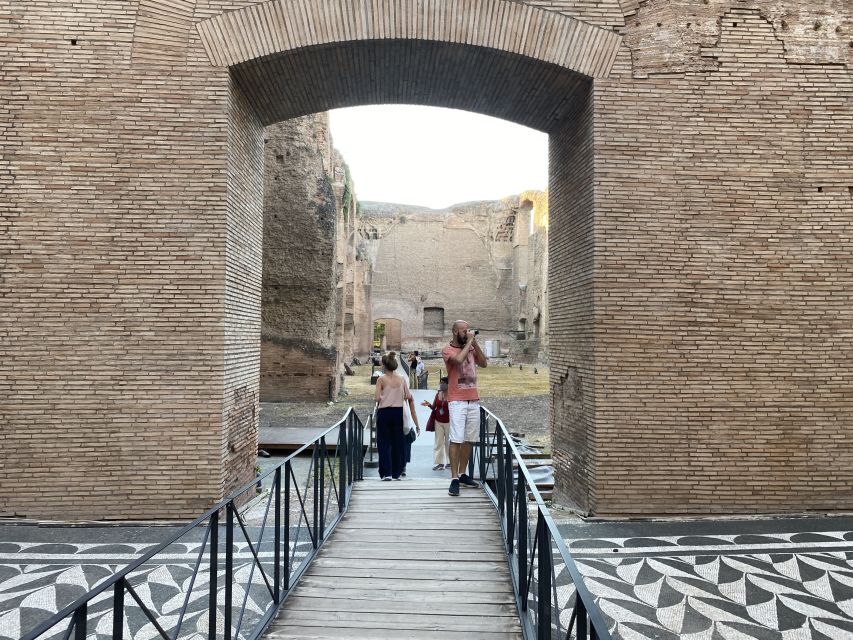
The Baths of Caracalla give you one of Rome’s clearest looks at daily life in Imperial Rome. Gigantic walls, broad halls, surviving mosaics, and the remains of an ingenious heating system make it easy to picture an ancient Roman spending hours here, not just taking a quick wash.
I like the tour’s small-group format, capped at 10 people, and the way a live archaeologist guide turns bare ruins into a working public complex. I also like the pairing with Circus Maximus, since you get both the private pleasures of the baths and the noisy public spectacle of chariot racing in one short visit.
The main consideration is Circus Maximus itself. The site is historically important, but little remains above ground compared with the baths, so your guide and your imagination do much of the work there. At $77 per person, the experience makes the most sense if you value expert explanation and prefer a quieter ancient-Rome stop over another crowded monument.
Key points to know before booking
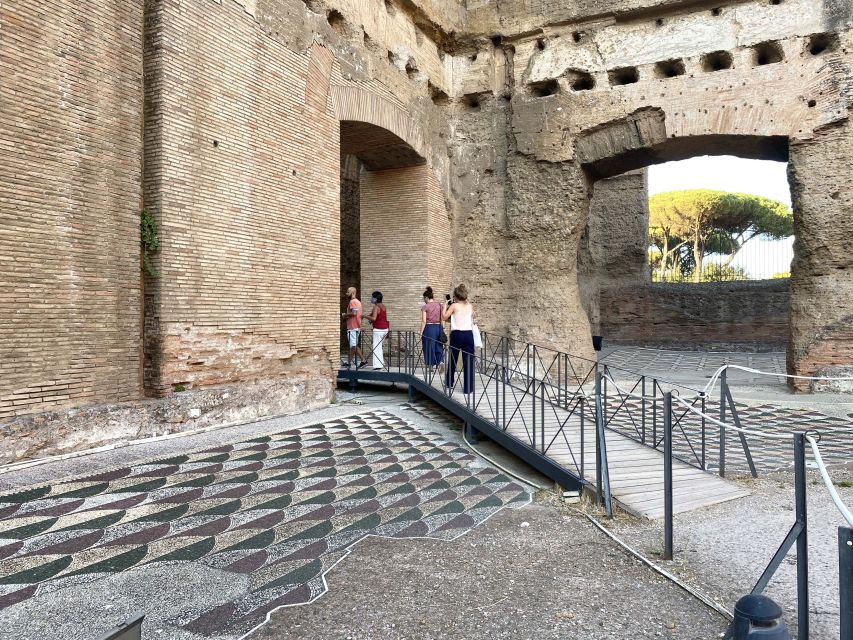
- The Baths of Caracalla are the main event: Expect towering ruins, impressive mosaics, and a clear explanation of how Roman baths worked.
- Circus Maximus is largely an open archaeological area: You will learn about its scale and spectacles, but you should not expect a complete stadium.
- The guide makes the difference: Guides including Chiara, Francesca, Lars, Anestis, Mario, and Samuele have been praised for clear explanations, warmth, humor, and strong archaeological knowledge.
- The tour lasts 90 minutes: About one hour is spent at the baths and 30 minutes at Circus Maximus.
- Small groups keep questions easy: The maximum group size is 10, with private and semi-private options available.
- Wear practical shoes: You will walk across an archaeological site, and large bags, trolleys, strollers, and pets are not allowed inside the monuments.
Why the Baths of Caracalla deserve your time
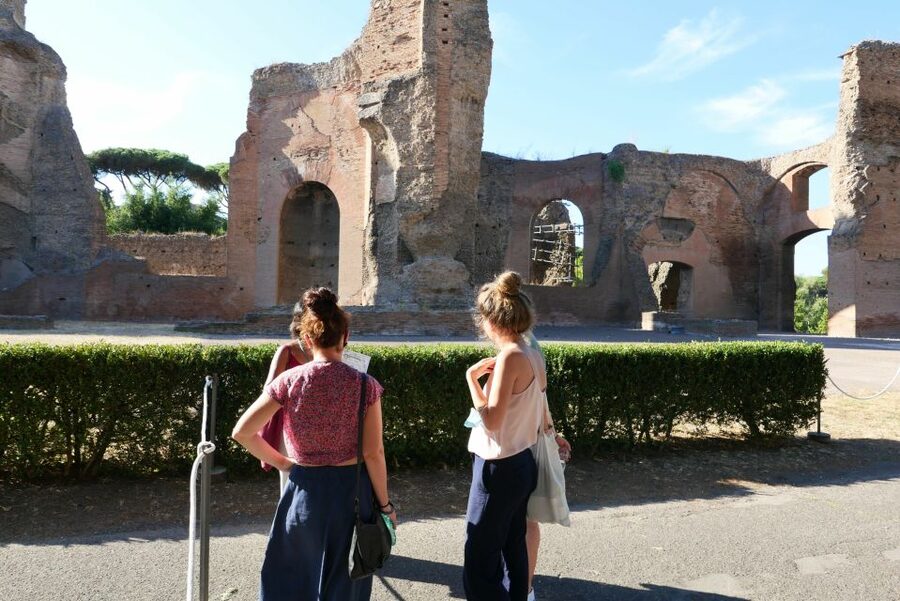
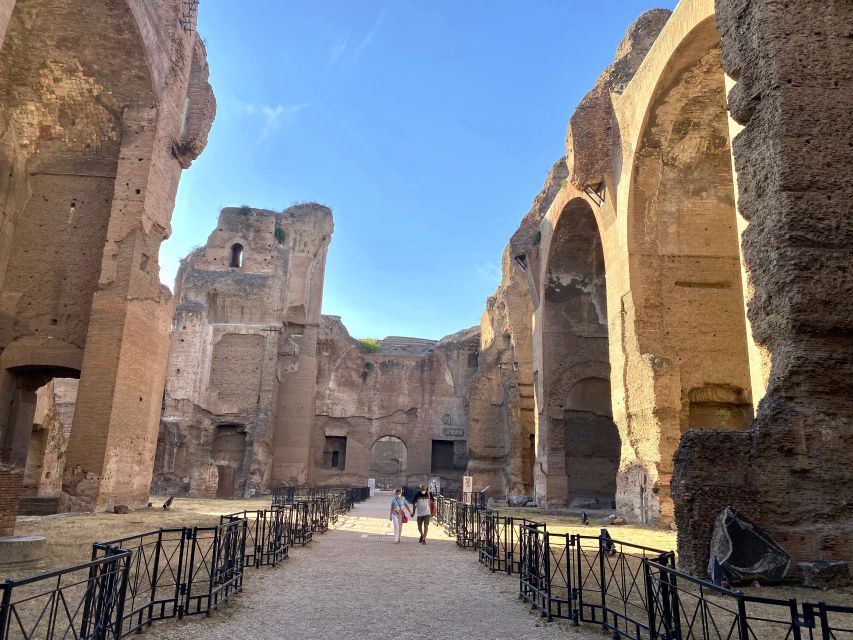
Rome can make ancient ruins feel like a checklist. The Baths of Caracalla are different. Their huge brick walls and open rooms give you a strong sense of scale, even when much of the original decoration is gone.
This was not a simple public washhouse. In the 3rd century AD, the complex offered a full day of leisure for body and mind. Romans came to bathe, exercise, meet friends, relax, and spend time in a grand public setting built by the imperial government.
Your guide walks you through the likely sequence of a typical visit. The point is not just to name rooms, but to help you understand how the complex operated. You learn how bathers moved through spaces with different temperatures and how Roman engineers maintained those conditions.
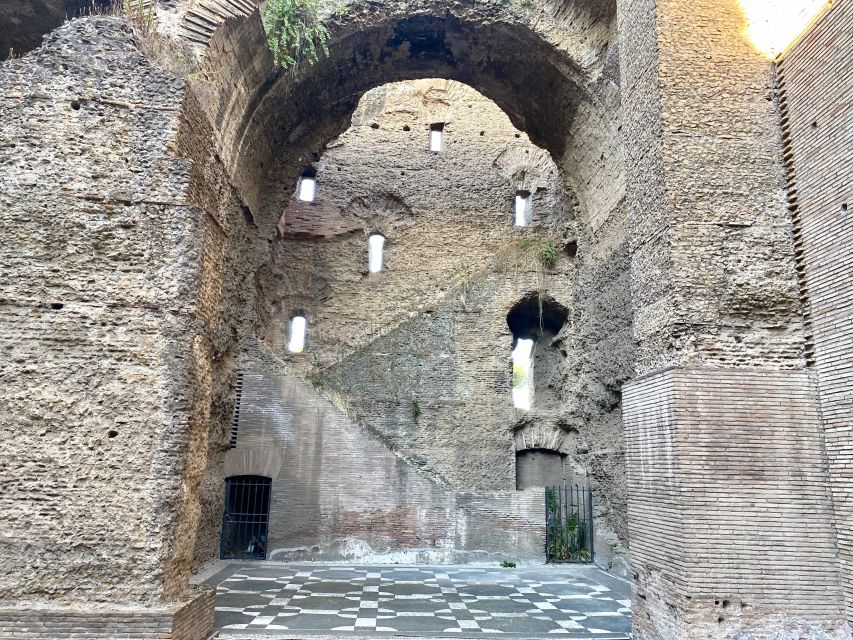
That practical explanation is one of the strongest parts of the tour. The underfloor heating system, known as a hypocaust, required a great deal of labor and careful design. Fires heated the air beneath raised floors, while workers had to keep fuel moving and temperatures under control.
The remains make this easier to grasp than a textbook would. You can look across the open structure and imagine the floors, ceilings, decoration, and crowds that once filled it. The architecture is so large that even fragmentary walls feel powerful.
A few other Rome mornings to weigh against this
- Rome by Golf Cart Private Tour: Beyond the Landmarks
★ 5.0 · 4,361 reviews - Early Morning Vatican, Sistine, St. Peter’s Semi or Private Tour
★ 5.0 · 3,779 reviews - Rome on a Golf Cart Semi-Private Tour Max 6 with Private Option
★ 5.0 · 2,502 reviews
What you actually see inside the Caracalla complex
The bath complex is known for its monumental rooms and enormous walls. You walk through the remains of spaces that once had a clear order and purpose, rather than wandering through an isolated pile of stones.
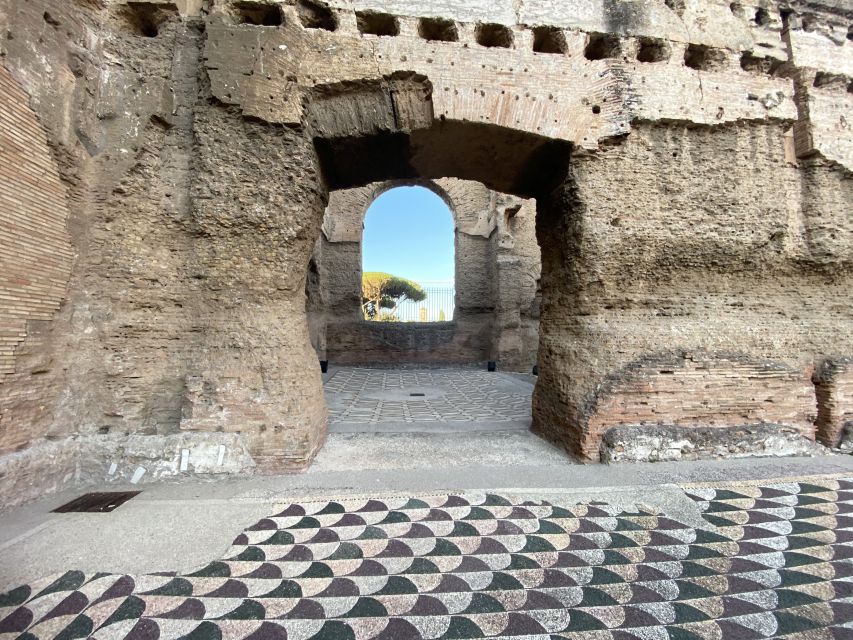
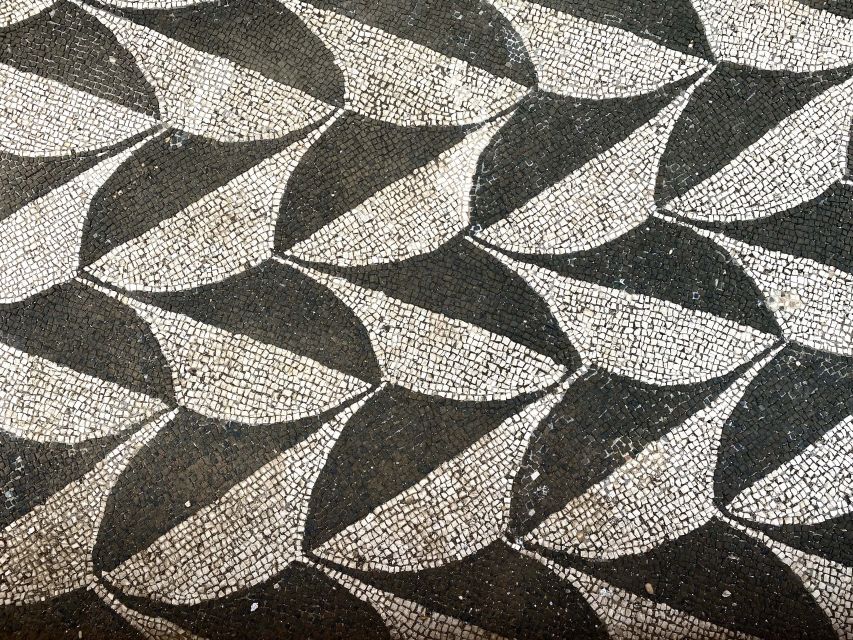
The surviving geometric mosaics deserve close attention. Some floors retain enough pattern and detail to show the level of workmanship that went into a place used by ordinary members of the public, not just the emperor.
Depending on the route and current site conditions, you might also see traces of wall decoration and colored surfaces. One especially useful part of the guide’s job is explaining how much more decorated the baths were when they were in use. Today, the exposed brick and broken vaults dominate the view, but the original complex was designed to impress every bather who entered.
A good guide helps you read the ruins. A doorway tells you about movement. A raised floor points to heating. A large chamber suggests the scale of public use. The tour turns these clues into a picture of an operating Roman institution.
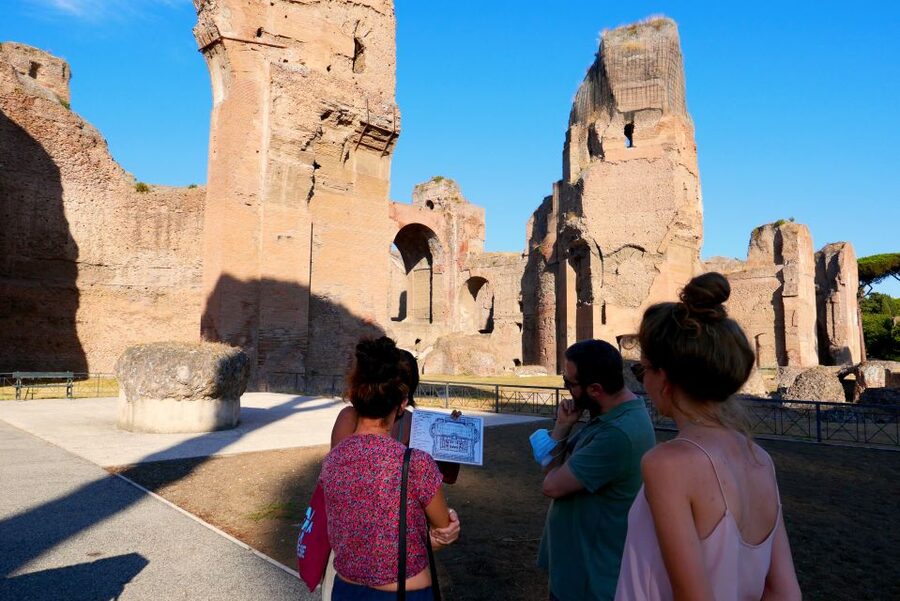
Several people have found that guides such as Anestis, Lars, Chiara, and Francesca are particularly good at answering questions and adjusting the pace. That matters here because the site rewards curiosity. If you want to know how Romans heated a room, why a chamber was built so large, or what a particular mosaic may have meant, a live guide gives you an answer in the moment.
The surprising social life of an ancient spa
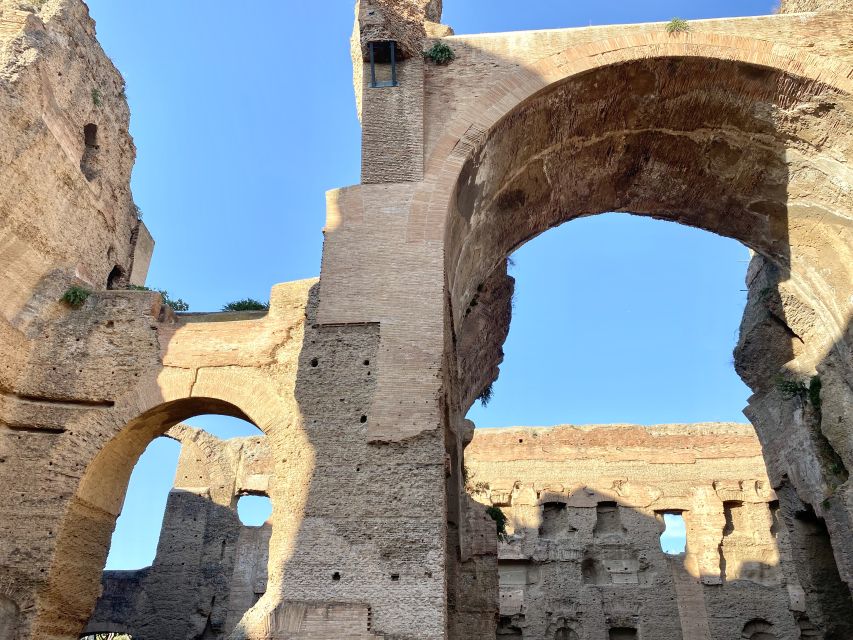
The baths can seem remote until you understand their social role. They were places to see and be seen, meet friends, talk business, exercise, and relax. The tour explains the range of services connected with this Roman idea of leisure.
That makes the visit useful even if you are not an ancient-history enthusiast. You are not simply looking at old masonry. You are learning how public life worked in a society where a bath complex could function as a social center.
I especially like this focus because it keeps the tour grounded. Imperial Rome is often presented through emperors, wars, and monuments. At Caracalla, you get a look at how people spent their free time and how the state provided grand public facilities.
The guide’s storytelling style can shape the experience. Mario has been praised for making an ancient day at the baths feel tangible, while Samuele is known for connecting the main subject with Rome’s art, architecture, reunification, and later history. You do not need every detail to enjoy the ruins, but these wider links can make the visit feel less isolated.
The site is also calmer than the Colosseum area. You are still close to the center of Rome, but the setting feels more open and peaceful. That gives you room to look up at the walls, study a mosaic, and listen without the same level of crowd pressure found at Rome’s busiest attractions.
Walking from the baths to Circus Maximus
After about an hour at the baths, the tour moves to Circus Maximus for roughly 30 minutes. The pairing works because the two sites show different sides of Roman leisure.
At Caracalla, the action was social and recurring. At Circus Maximus, the city gathered for major public spectacles. The site hosted the Roman Ludi, celebrations that could last several days and include chariot races, gladiatorial events, and other public performances.
Your guide explains the size of the circus and the noise that would have filled it. The structure is widely considered the largest venue for public games ever built, so the important thing here is scale. You need to picture a vast crowd, racing teams, officials, animals, performers, and the intense competition of the games.
The ground is also linked to Rome’s early myths and gods. The tour reaches back to the quasi-legendary era before Rome became the imperial city familiar from textbooks. That gives Circus Maximus a longer story than the visible remains alone can provide.
Here is where you should set your expectations carefully. The baths give you substantial physical remains, while Circus Maximus leaves far more to the imagination. One guide described the site as interesting but noted that there is not much to see compared with the baths. I agree with that basic assessment.
You will appreciate Circus Maximus most if you enjoy historical setting and explanation. If you need intact walls, decorated interiors, or a strong visual reconstruction, the second half may feel thin. The guide is essential because the open area does not explain itself.
Same city, an entirely different afternoon:
- Vatican Museums & Sistine Chapel Tour with Optional Basilica
★ 4.3 · 67,413 reviews - Colosseum, Roman Forum & Palatine Guided Tour
★ 4.7 · 63,148 reviews - Vatican Museums, Sistine Chapel & St Peter’s Basilica Guided Tour
★ 4.5 · 39,149 reviews - Rome: Colosseum, Palatine Hill and Roman Forum Guided Tour
★ 4.8 · 32,814 reviews
How much value do you get for $77?
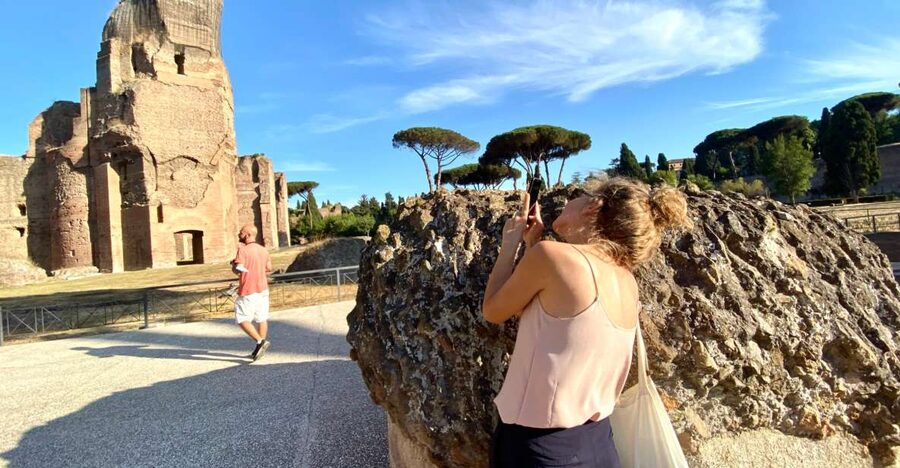
The listed price is $77 per person. That is not a bargain-basement Rome ticket, especially for a tour lasting 90 minutes. The value depends on what you want from the visit.
The fee includes admission to the Baths of Caracalla, a live archaeologist guide, sterilized headsets, and on-site assistance. You are paying mainly for interpretation, not for a long day of sightseeing or a large number of included attractions.
For the baths alone, the price can make sense if you want to understand what you are seeing. The ruins are impressive, but a self-guided visit may leave you with broad impressions rather than a clear picture of the heating, room sequence, engineering, and social purpose.
The calculation is less favorable if you regard Circus Maximus as a major standalone attraction. The site has great importance, but much of its power comes from the guide’s explanation. If you already know Roman history well and are happy reading signs or using your own guidebook, you may prefer to visit independently.
The private option can be good value for a family or a small group that wants to ask many questions. Several bookings have effectively become private experiences when no one else joined the selected language group, sometimes without a change in price. That cannot be guaranteed, but the small-group setup keeps the tour personal even when others attend.
At the other end, a shared group capped at 10 people is a sensible middle ground. You get the benefit of a specialist guide without the scale of a coach tour. Groups of eight or fewer are comfortable for moving around and asking questions, while a private booking gives you more control over pace and focus.
Meeting point, timing, and practical details
You meet at the exit of the Circo Massimo Metro station, in the direction of Laurentina, in front of the FAO building. Look for a yellow label with the local partner’s name.
Arrive at least five minutes early. That small buffer matters because you need to complete the sign-up process before the group leaves. The starting time varies, so check availability when you book.
The tour is wheelchair accessible, but the site is still an ancient archaeological complex. Comfortable walking shoes are important. Rome’s paved streets and archaeological ground can be tiring, and you will get more from the guide if you are not distracted by sore feet.
Do not bring pets, weapons, sharp objects, drones, baby strollers, luggage, large backpacks, or trolleys into the monuments. Food and drinks are not included, and there is no hotel pickup or drop-off.
The tour operates in English, Italian, French, Portuguese, Spanish, and German. If you are booking for anyone under 18, or for a European citizen under 25, carry an official document or a digital copy. This requirement is easy to overlook.
The activity may be canceled in poor weather. If that happens, you receive the choice of another date or a full refund. Free cancellation is available up to 24 hours before the start, and you can reserve now and pay later, which helps if your Rome schedule is still changing.
Who will enjoy this Rome tour most?
I would recommend it to anyone who has already seen the Colosseum and wants a quieter, less familiar side of ancient Rome. It also suits first-time visitors who want an expert framework for understanding Roman engineering and daily life.
Families can benefit from the storytelling, particularly with a private guide. The baths offer plenty of visual material, while Circus Maximus gives younger visitors an easy way into Roman spectacle through chariots, races, and crowds.
It is also a good choice for people who enjoy archaeology but do not want a full-day commitment. The 90-minute length leaves room for another attraction, lunch, or a walk toward the Colosseum and Aventine Hill.
I would be more cautious if your time in Rome is extremely short and you have not yet visited the Colosseum, Roman Forum, or Pantheon. Those sites usually deserve priority. I would also think twice if you want a tour packed with intact monuments. The Baths of Caracalla are substantial, but Circus Maximus is mainly a setting explained through words.
My verdict on Caracalla Baths and Circus Maximus
Book this tour if you want the Baths of Caracalla explained properly, not simply photographed. The ancient heating system, mosaics, room layout, and social customs are much easier to grasp with a strong guide, and the calmer setting is a welcome change from Rome’s busiest sights.
Choose the private or small-group option if your family has lots of questions or you want a slower pace. A shared group is still a practical choice, since the maximum is only 10 people.
I would not book it mainly for Circus Maximus. Treat that part as a historical extension of the baths, not as another fully preserved monument. At $77, the tour is best for people who value expert storytelling and archaeological context. If that sounds like you, this is a worthwhile way to spend an hour and a half in Rome.
FAQ
How long does the tour last?
The tour lasts 1.5 hours. About one hour is devoted to the Baths of Caracalla, followed by about 30 minutes at Circus Maximus.
Where does the tour meet?
Meet at the exit of the Circo Massimo Metro station, in the direction of Laurentina, in front of the FAO building. Look for a yellow label showing the local partner’s name.
Is admission to the Baths of Caracalla included?
Yes. The entrance fee to the Baths of Caracalla is included.
What languages are available?
The tour is offered in French, Portuguese, Spanish, English, German, and Italian.
Is this a private tour?
You can choose a private or small-group tour. Shared tours have a maximum of 10 participants.
What should I bring?
Bring comfortable walking shoes. Participants under 18 and European citizens under 25 should also carry an official document or a digital copy.
Can I cancel the booking?
Yes. You can cancel up to 24 hours before the tour for a full refund. You can also reserve now and pay later.
Fresh on the Rome list
- Exclusive Golf Tour Private VIP with Local & Gelato o Wine★ 5.0 · 500 reviews
- Colosseum, Palatine Hill and Roman Forum with Guided Tour★ 5.0 · 500 reviews
- Rome by Night Walking Tour★ 4.5 · 506 reviews
- Rome Trastevere Pasta Making Class with Eating Europe★ 5.0 · 505 reviews
- Rome: Colosseum Express Tour with Forum & Palatine Access★ 4.5 · 511 reviews
- Rome Food Experience Max 6 People Group Tour | w/Private Option★ 5.0 · 516 reviews
- Rome: Navona Square Underground Ticket with Audio Guide★ 4.0 · 518 reviews
- Rome: Escorted Papal Audience Experience with Entry Ticket★ 4.4 · 518 reviews
Private, compared.
Como & Bellagio with Private Lake Como Cruise
Read our review →
Murano & Burano Islands Guided Small-Group Tour by Private Boat
Read our review →
Rome by Golf Cart Private Tour: Beyond the Landmarks
Read our review →
Early Morning Vatican, Sistine, St. Peter’s Semi or Private Tour
Read our review →
Private 3 hrs Venice Tour: St Mark’s, Walking tour & Boat tour
Read our review →