
Reviewed · SCOOTER RENTALS
Rome Afternoon Sightseeing Vespa Sidecar Tour with Gourmet Gelato
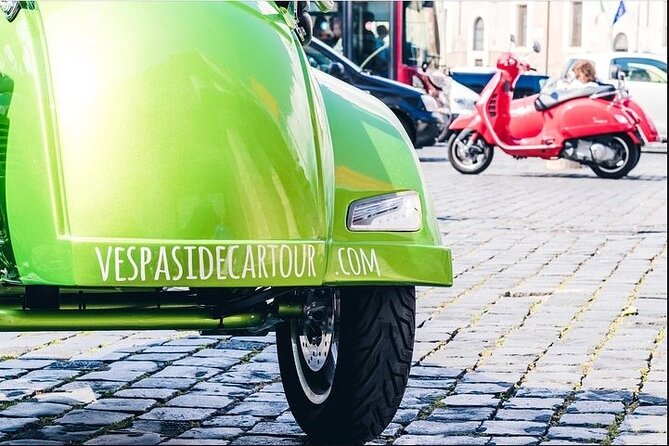
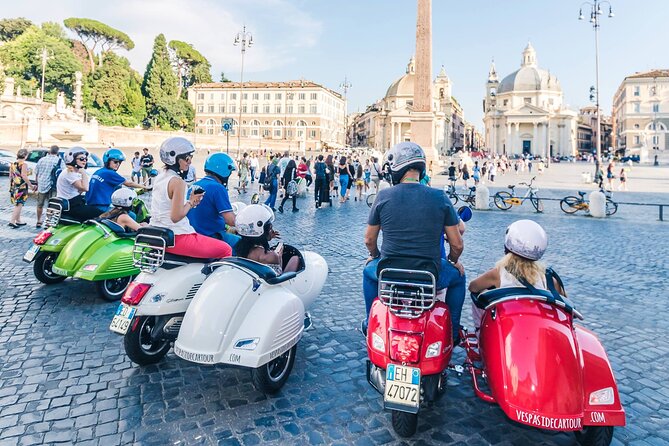
Rome is a city made for motion, and this tour gives you a wonderfully Roman way to get around. You sit in a classic Vespa sidecar while a licensed driver handles the traffic, narrow lanes, and cobblestones. In roughly four hours, you move from grand squares and ancient monuments to Trastevere and Janiculum Hill, with a guide explaining what you are seeing.
I especially like two things here: you cover a lot of ground without driving, and the small-group format keeps the outing personal. The sidecar is also steadier than a two-wheel Vespa, which makes the experience more relaxed for anyone who wants the fun of a scooter ride without taking control. A possible drawback is seating. Each Vespa carries two passengers, so one person sits behind the driver and the other in the sidecar, with opportunities to change places at stops.
Key points to know before you book
- No scooter license or driving skill needed: Professional drivers operate every Vespa.
- Rome’s best-known sights in one afternoon: The route includes the Trevi Fountain, Pantheon, St. Peter’s Square, Piazza Venezia, the Colosseum, and more.
- A sidecar is more stable than a standard Vespa: It offers an easier ride, though getting in and out may require some help.
- The Pantheon entrance is included: Other monuments are viewed from outside unless otherwise specified.
- The group is capped at 12 people: That is small enough for live commentary and help at stops.
- Gourmet gelato is part of the outing: You stop in a historic alley for a sweet break.
Why a Vespa sidecar works so well in Rome
Rome is spread out, and its major sights do not all sit neatly along one walking route. You can spend half a day moving between the Colosseum, the Vatican, Trevi Fountain, and Trastevere by foot or public transport. A Vespa sidecar lets you connect these areas quickly while still seeing the streets between the landmarks.
You are not being driven around in an enclosed vehicle. You feel the city, hear the traffic, and catch glimpses of daily life as you move through its lanes. At the same time, you avoid the stress of driving Rome yourself. That matters. Roman traffic is lively, streets can be tight, and many visitors would rather watch the city than negotiate it.
The sidecar setup also creates a bit of theater. You may attract smiles, waves, and cameras as the group passes. That is part of the fun, but it can feel exposed if you prefer to blend into the background. This is a sightseeing ride with personality, not a quiet private car transfer.
The tour starts at 2:30 p.m. in Piazza della Repubblica and returns to the same meeting point. The four-hour schedule gives you a broad introduction rather than long visits inside every monument. Think of it as a moving orientation to Rome, with selected stops where you get out, look around, and listen.
A few other Rome mornings to weigh against this
- Vespa Sidecar Tour By Night with Pickup
★ 5.0 · 1,803 reviews - Rome Morning Vespa Sidecar Tour in Rome with Cappuccino
★ 5.0 · 1,771 reviews - Rome Vespa Scooter Tour with Professional Photographer
★ 5.0 · 857 reviews
Piazza della Repubblica and the Quirinal Hill
Your first stop is Piazza della Repubblica, a grand circular square shaped by Rome’s 19th-century redevelopment after the city became Italy’s capital. The Fontana delle Naiadi sits at its center, surrounded by imposing buildings and the remains of the ancient Baths of Diocletian.
You get about 10 minutes here, enough for photographs and a first look at the contrast between modern Rome and its Roman foundations. The square is a good opening scene because it shows how Rome keeps different eras side by side.
The ride continues to the Quirinal Palace, one of the official residences of Italy’s president. The palace has served popes, kings, and presidents, and it sits on the Quirinal Hill, the highest of Rome’s traditional seven hills. The stop is brief, around five minutes, so expect an exterior view and commentary rather than a palace visit.
That short timing is worth noting. If you want detailed time inside each place, this tour will move too fast. If you want a broad sense of Rome’s scale and political history, the quick stops work well.
Trevi Fountain and the Pantheon
The Trevi Fountain receives a more generous 30-minute stop. That is useful because the fountain is often crowded, and you may need a little time to reach a good viewing spot, take photographs, and absorb the scene.
The fountain marks the end of the Aqua Virgo aqueduct, whose origins go back to 19 B.C. Its familiar Baroque form was completed in the 18th century after work by Nicola Salvi and Giuseppe Pannini. The name Trevi comes from Tre Vie, or three roads, referring to the streets that meet here.
Your guide can give you the story while you take in the details: the theatrical figures, rushing water, and huge stone setting squeezed into the city streets. The stop is free, but that does not mean it is quiet or spacious. Keep personal belongings secure and follow the guide’s instructions when the group moves on.
The Pantheon gets about 30 minutes, and the entrance ticket is included. This is one of the strongest parts of the tour because you are not only seeing the exterior. You can enter one of the best-preserved buildings from ancient Rome and look up at its famous oculus, the open circle in the dome that provides the main natural light.
The building was completed in 126 A.D. and began as a Roman temple. A half-hour is enough to appreciate the dome, columns, and interior proportions, though not enough for a slow architectural study. The guide’s explanation is especially helpful here. One past tour guide, Alessio, was singled out for making the Pantheon engaging for teenagers, which speaks to the value of having live commentary rather than simply passing by.
Piazza Navona and the route toward St. Peter’s
Piazza Navona appears as part of the route, with its long shape inherited from an ancient Roman stadium. Today, the square is known for Baroque architecture and Bernini’s Fountain of the Four Rivers.
The schedule does not assign a separate admission or fixed time here, so treat Piazza Navona as a sightseeing stop or drive-through rather than a guaranteed extended visit. You may get a look at the fountains and surrounding buildings, but the tour’s purpose is to connect many major places in a single afternoon.
Next comes St. Peter’s Square, one of the world’s most recognizable public spaces. Bernini designed the great curving colonnades in the 17th century, creating a dramatic approach to St. Peter’s Basilica. The square can hold hundreds of thousands of people, though your own visit will likely focus on the view, the architecture, and the guide’s explanation.
The tour does not include entry to St. Peter’s Basilica or the Vatican Museums. That is important when planning your day. You can use this ride to see the Vatican area and then reserve a separate visit if you want to go inside.
Same city, an entirely different afternoon:
- Vatican Museums & Sistine Chapel Tour with Optional Basilica
★ 4.3 · 67,413 reviews - Colosseum, Roman Forum & Palatine Guided Tour
★ 4.7 · 63,148 reviews - Vatican Museums, Sistine Chapel & St Peter’s Basilica Guided Tour
★ 4.5 · 39,149 reviews - Rome: Colosseum, Palatine Hill and Roman Forum Guided Tour
★ 4.8 · 32,814 reviews
Janiculum Hill delivers the best view
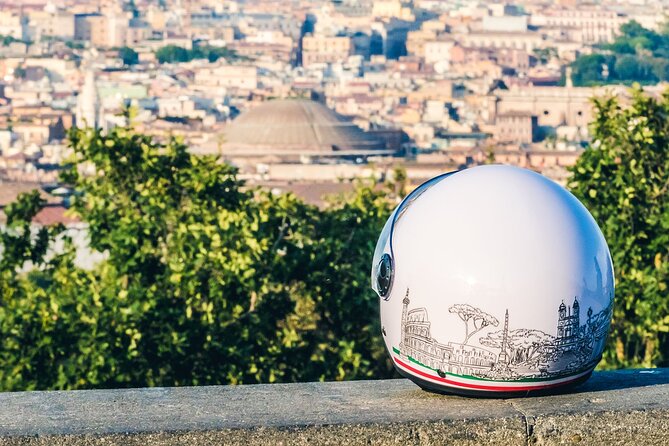
The stop at Terrazza del Gianicolo, or Janiculum Hill, is one of the most rewarding pauses. Janiculum is technically outside ancient Rome’s traditional seven hills, but many people call it the eighth hill. From the terrace, you get a wide view over the city.
You have about 15 minutes to stretch your legs and take photographs. After the tight streets and busy squares, the open view gives the afternoon a welcome change of pace.
The hill also carries an important part of Rome’s modern history. It was linked to Giuseppe Garibaldi and the defense of the city, and statues of Garibaldi and other figures line its paths. Your guide can connect the view with the battles and political changes that shaped modern Italy.
This is a good example of why the ride is more than a checklist of famous monuments. You are not only collecting photographs. You are seeing how Rome is arranged, from the historic center to the Vatican and the neighborhoods beyond it.
Trastevere, the Jewish Ghetto, and Piazza Venezia
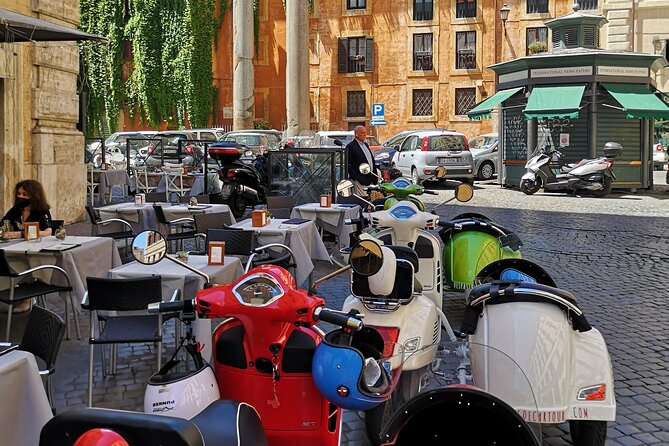
The route through Trastevere gives you a taste of Rome’s more local side. The neighborhood is known for narrow lanes, old buildings, traditional trattorias, and a bohemian feel. You ride through the streets rather than stopping for a full neighborhood walk, so this is an introduction, not a detailed food or architecture tour.
The drive also passes through the Jewish Ghetto, one of Rome’s distinctive historic quarters. This part of the route is valuable because it takes you away from the standard monument circuit. You see streets where people live, eat, shop, and meet, not just grand sites built for emperors or popes.
Piazza Venezia brings you back to monumental Rome. The enormous Monument to Victor Emmanuel II, also called the Altar of the Fatherland, was opened in 1911 in honor of the first king of unified Italy. It also contains the Tomb of the Unknown Soldier, guarded by soldiers beside an eternal flame.
The monument is hard to miss. Some people love its bright white scale, while others find it too imposing beside Rome’s older stone buildings. Either way, it provides a useful lesson in Italy’s national story and a strong view over the central city.
The Colosseum and Santa Maria Maggiore
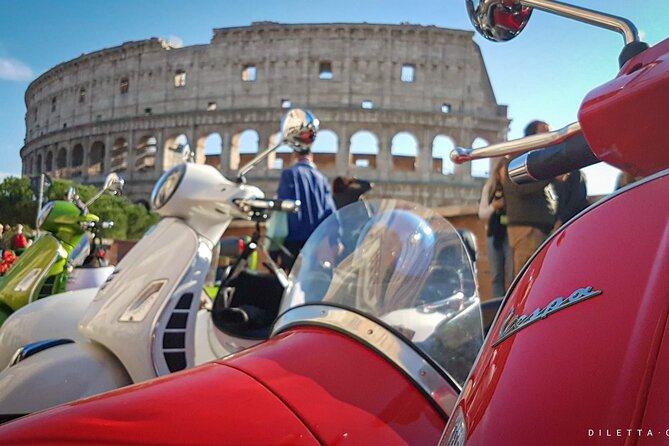
The Colosseum is included in the route, but the supplied schedule does not give it a separate admission or inside visit. You should expect to see Rome’s great ancient amphitheater from outside and hear about its place in the Roman Empire.
That distinction matters. The Colosseum deserves its own ticket and several hours if you want to explore the interior, underground areas, and upper levels. This tour gives you the efficient overview. You can then decide if you want to return for a dedicated visit.
The final listed monument is Basilica di Santa Maria Maggiore, one of Rome’s four major basilicas and one of the city’s largest churches dedicated to the Virgin Mary. Again, the tour presents the exterior and setting unless a separate entrance is specified.
Taken together, these stops show the range of Rome: imperial power at the Colosseum, Christian tradition at Santa Maria Maggiore, Baroque design at Trevi and Piazza Navona, national unity at Piazza Venezia, and neighborhood life in Trastevere.
Gelato is more than a quick sugar stop
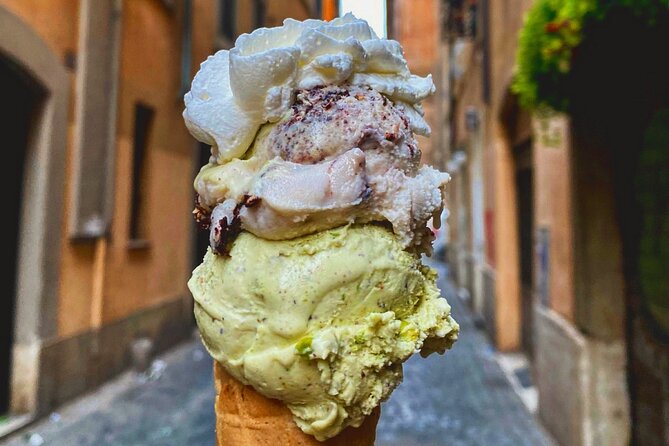
The tour includes a gourmet gelato stop in a historic alley. It is a small detail, but it improves the rhythm of a four-hour ride. You get a chance to pause, cool down, use the facilities, and enjoy one of Italy’s essential foods.
The gelato is especially welcome on hot afternoons. One group rode during temperatures of 38 degrees Celsius, and the drivers looked for shade where possible. Still, you should dress for heat and sun. The 2:30 p.m. start places much of the ride in the warmest part of the day.
Special dietary requirements should be noted when booking. The experience description does not specify every flavor or dietary option, so anyone with strict food needs should provide the information in advance.
Safety, seating, and comfort details
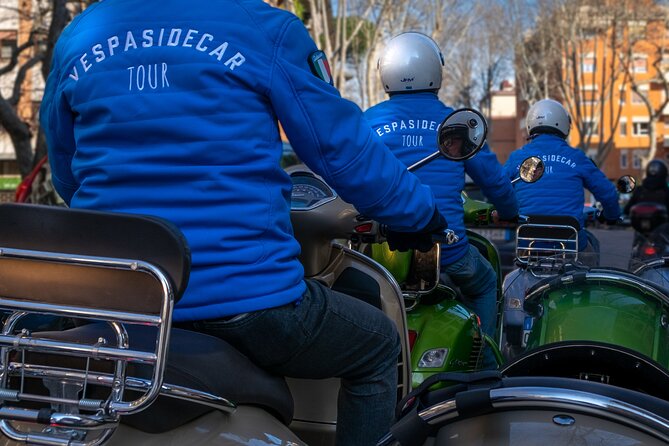
You do not drive. Each Vespa has a designated professional driver, and the tour includes CE-approved helmets with sterilized disposable head covers. Headsets let you hear the guide while riding, though clear audio may vary with traffic, wind, and personal hearing needs.
That last point deserves practical attention. Some riders have found the commentary harder to hear while moving, particularly without hearing aids. If you rely on hearing assistance, bring it and tell the staff if you are struggling to follow the explanation.
Each Vespa carries two people: one in the sidecar and one behind the driver. Seats can be swapped during stops so each person has the chance to sit in the sidecar. If you book one seat, you may share the vehicle with another person. With an odd-numbered booking, you accept that the sidecar seat will be shared in rotation.
The rear saddle has a maximum rider weight of 118 kilograms, or 260 pounds. The sidecar limit is 110 kilograms, or 242 pounds, with a maximum height of 1.90 meters. Children must be at least five years old and accompanied by an adult. A child may sit behind the driver only if taller than 150 centimeters. Otherwise, the child must use the sidecar.
The sidecar can be easier than a two-wheel scooter, but it is not the same as a low step-in vehicle. Getting in and out may require assistance, especially for older riders or anyone with limited mobility. Pregnant passengers are not permitted.
Is $163.26 a fair price?
At $163.26 per person, this is not a budget sightseeing ride. You are paying for a four-hour guided experience, professional drivers, helmets, headsets, a small group, the Pantheon entrance, and gelato.
The value is strongest if your time in Rome is short. In two days, you can use this as a city overview and mark places to revisit. You also get access to streets and viewpoints that are awkward to connect on foot. Several guides, including Matteo, Barbara, and Alessio, have been praised for mixing history with humor and keeping the ride lively.
The price is less attractive if you want long indoor visits. The Colosseum, Vatican, and Santa Maria Maggiore are not listed with included entry, while the Pantheon is the only clearly included interior ticket. You will still need separate plans for Rome’s biggest paid attractions.
The maximum group size of 12 helps justify the cost. It is not a private tour, but it is much more personal than a large coach. You can ask questions, receive help with seating, and hear live explanations at the stops.
Who should book this Rome ride?
I would recommend it to first-time visitors who want a fast, entertaining overview. It also works well for repeat visitors who have already seen the main interiors and want a different way to connect familiar places with less familiar streets.
Families with children from age five can consider it, provided the seating rules work for everyone. Teenagers are likely to enjoy the sense of occasion, and younger children may find the sidecar especially memorable.
It is also a good fit for older adults who do not want to walk all afternoon but can manage the sidecar entry and exit. Ask for help when needed. The tour team is accustomed to looking after riders, but you should be clear about your comfort level before setting off.
I would skip it if you are pregnant, uncomfortable on motorcycles, above the stated height or weight limits, or determined to tour the Colosseum and Vatican interiors during the same four hours. Weather matters too. The experience requires good conditions, and rain can lead to a new date or a full refund.
Should you book it?
Book this Vespa sidecar tour if you want a lively first look at Rome, especially if your visit is short and you like seeing a city from street level. The professional drivers remove the hardest part, while the sidecar adds the fun.
Before paying, check the seating rules carefully. If you are booking as a couple, plan to swap seats. If you want a guaranteed private ride, this is not the right product. If you accept those limits, the mix of major monuments, Janiculum views, Trastevere lanes, live commentary, Pantheon entry, and gelato makes the price reasonable for a memorable afternoon.
FAQ
Where does the Vespa sidecar tour begin?
The tour begins at P.za della Repubblica, 41, 00185 Roma RM, Italy.
What time does the tour start?
The scheduled start time is 2:30 p.m.
How long does the tour last?
The experience lasts approximately four hours.
Where does the tour finish?
The tour ends back at the original meeting point in Piazza della Repubblica.
Do I drive the Vespa?
No. Every Vespa has a designated professional driver, so you sit back and enjoy the ride.
How many people can join the tour?
The maximum group size is 12 people.
Is the Pantheon admission included?
Yes. Entrance to the Pantheon is included in the tour price.
Are Colosseum and Vatican admission tickets included?
The included services specify Pantheon entry only. Colosseum and Vatican admission are not listed as included.
Can children join the tour?
Children must be at least five years old and accompanied by an adult. Children taller than 150 centimeters may sit behind the driver. Otherwise, they must sit in the sidecar.
Can I cancel for a full refund?
Yes. You can cancel at least 24 hours before the start time for a full refund. Cancellations or changes made less than 24 hours before the start are not accepted for a refund, and poor weather may result in a new date or full refund.
More Scooter Rentals in Rome
- Rome: Highlights Vespa Sidecar Tour with Coffee and Gelato
★ 4.9 · 747 reviews - Rome Vespa Tour with Professional Photoshoot
★ 5.0 · 576 reviews - Florence Vespa Tour: Tuscan Hills and Italian Cuisine
★ 5.0 · 4,019 reviews - Chianti Vespa Tour with Lunch from Florence & E-car Option
★ 5.0 · 1,453 reviews
Fresh on the Rome list
- Exclusive Golf Tour Private VIP with Local & Gelato o Wine★ 5.0 · 500 reviews
- Colosseum, Palatine Hill and Roman Forum with Guided Tour★ 5.0 · 500 reviews
- Rome Trastevere Pasta Making Class with Eating Europe★ 5.0 · 505 reviews
- Rome by Night Walking Tour★ 4.5 · 506 reviews
- Rome: Colosseum Express Tour with Forum & Palatine Access★ 4.5 · 511 reviews
- Rome Food Experience Max 6 People Group Tour | w/Private Option★ 5.0 · 516 reviews
- Rome: Navona Square Underground Ticket with Audio Guide★ 4.0 · 518 reviews
- Rome: Escorted Papal Audience Experience with Entry Ticket★ 4.4 · 518 reviews
Scooter Rentals, compared.
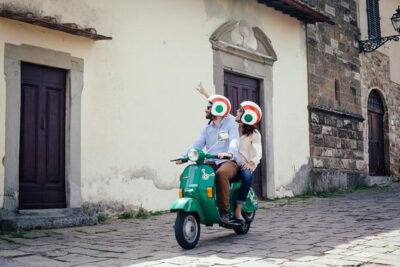
Florence Vespa Tour: Tuscan Hills and Italian Cuisine
Read our review →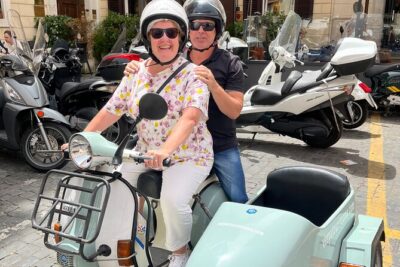
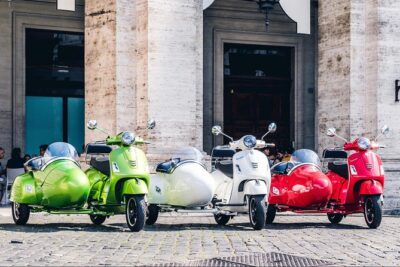
Rome Morning Vespa Sidecar Tour in Rome with Cappuccino
Read our review →
Chianti Vespa Tour with Lunch from Florence & E-car Option
Read our review →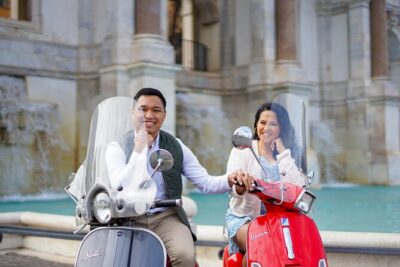
Rome Vespa Scooter Tour with Professional Photographer
Read our review →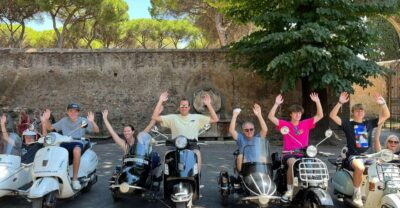
Highlights Vespa Sidecar Tour with Coffee and Gelato
Read our review →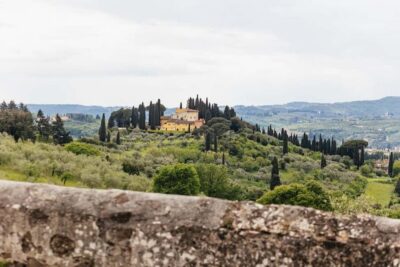
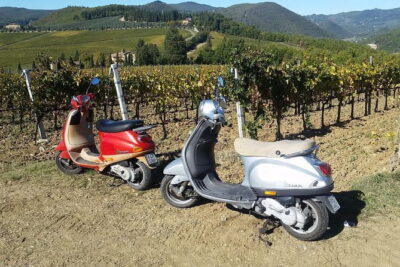
Tuscany Vespa Tour: Lunch & Wine Tasting, Countryside Roads
Read our review →Browse the lists this tour appears in