
Reviewed · ROME TOURS
Roman Gladiator School: Learn How to Become a Gladiator
The best part of this experience is that you do not just look at Roman weapons behind glass. You put on a tunic, grip a training sword, learn basic moves, and finish with a mock battle in an arena. The short museum visit gives the swordplay a useful link to the world you see at the Colosseum.
I like the hands-on history, especially the chance to examine helmets, armor, weapons, and shields before training. I also like the small-group format, with no more than 15 people, since instructors such as Patricio, Ivan, Mirkos, and Flama can keep the class lively and personal. The main drawback is the location: it is outside the old city center, down a driveway that can be easy to miss, and mosquitoes can be a problem.
Key points to know before booking
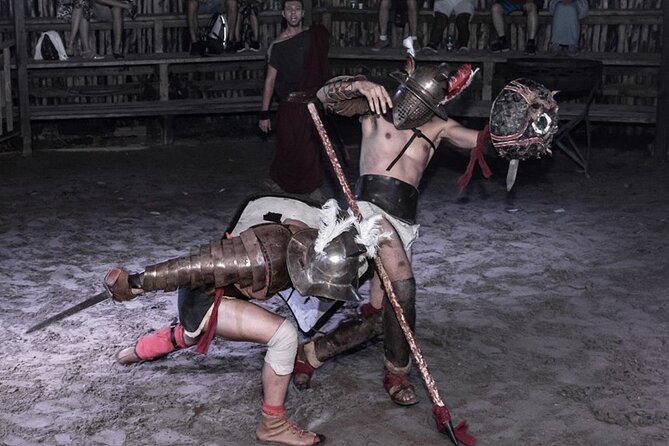
- Two hours of active Roman history: Start in the museum, then move to warm-ups, sword instruction, and an arena battle.
- Suitable for children age 6 and up: The class is built with families in mind, but younger children may find the mock fighting too physical.
- Near the Colosseum, but not right beside it: The school is at Via Appia Antica 18, outside the ancient city walls.
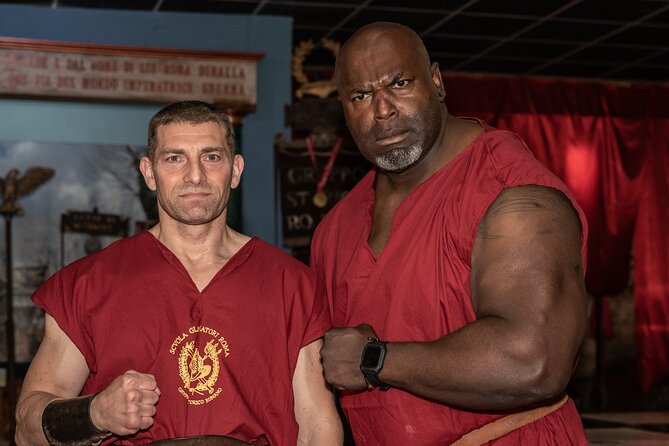
- Costumes and weapons are supplied: You receive a tunic, belt, leather gloves, and training sword for the lesson.
- A tournament may be offered: You can join an optional contest, with a prize for the winner, while everyone receives a certificate.
- Plan your arrival carefully: A taxi or the 118 bus may be easier than walking, and insect repellent is a smart extra.
What the gladiator class is really like
This is a playful history lesson with a physical finale. You arrive at the Gladiator School of Rome and begin by learning about Roman soldiers and gladiators. The school is run by members of the Historic Group of Rome, a group focused on Roman life and combat reenactment.
The instructors use weapons, helmets, shields, armor, and display pieces to explain how Roman fighters looked and fought. You may also get to try on some of the gear, which makes the museum portion more than a quick look around. For children who have just seen the Colosseum, this gives names and shapes to the equipment they have been imagining.
After the introduction, you put on your own costume. The outfit includes a traditional belt, tunic, leather gloves, and a training sword called a rudis. The supplied equipment is part of the fun, and it also helps turn a normal family activity into a small piece of theater.
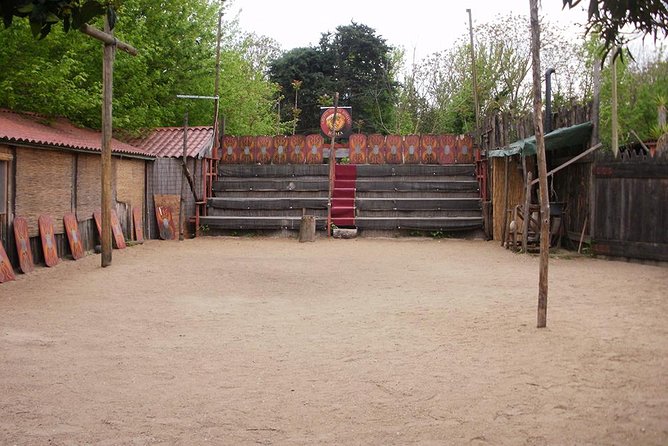
The lesson then moves outdoors for warm-ups and basic training. You learn simple offensive and defensive movements with a wooden sword and shield. The class can include agility exercises, an obstacle course, and a mental game designed to get you thinking like a fighter.
The final stage takes place in the arena. You use the moves from the lesson in mock matches against other members of the group. The tone is meant to be comic and friendly, but it is still physical. Children may get carried away, and one family reported that several young children cried after being hurt during the fighting. I would remind children that this is pretend combat, not a free-for-all.
You can also join an optional tournament, complete with a prize for the winner. If you prefer to watch, friends and family can use the viewing platform. Every participant receives a certificate at the end, so even those who do not win the final contest leave with a small souvenir.
A few other Rome mornings to weigh against this
- Vatican Museums & Sistine Chapel Tour with Optional Basilica
★ 4.3 · 67,413 reviews - Colosseum, Roman Forum & Palatine Guided Tour
★ 4.7 · 63,148 reviews - Vatican Museums, Sistine Chapel & St Peter’s Basilica Guided Tour
★ 4.5 · 39,149 reviews
The museum adds meaning to the swordplay

The museum is not the main reason to book this activity, but it makes the lesson much better. Without it, the class could feel like costume play with wooden swords. With it, you first see the equipment and hear how it fits into Roman military and gladiator life.
The display includes gladiator weapons and other artifacts. The school also has helmets, armor, uniforms, shields, and small scenes that help explain ancient combat. Several children enjoyed being able to see or handle pieces of the gear before heading outside.
I especially like this order: history first, activity second. After visiting the Colosseum, you already have the setting in your mind. At the school, the instructor can point out the difference between a gladiator and a Roman soldier, explain the purpose of certain weapons, and then show you how those tools were used.
Allow enough time for the museum portion. One adult group enjoyed the training but wished it had had longer to inspect the displays. The total class lasts about two hours, so the balance depends on the instructor and the size of your group. If your family loves objects and explanations, ask questions early rather than waiting until the end.
Instructors make the difference
The Historic Group of Rome provides the teachers, and their approach shapes the whole session. The strongest classes combine clear history with humor, movement, and encouragement. Names praised in individual experiences include Mirkos, Patricio, Ivan, and Flama.
Mirkos was described as especially warm and attentive during a quiet December class. Patricio worked well with two families and explained the material in an engaging way. Ivan drew praise for keeping children involved while sharing his enthusiasm for the subject. Flama mixed lessons about Roman soldiers and gladiators with physical training and jokes.
You should expect an instructor who plays a role as well as teaches. That is useful here. A dry lecture would lose most children quickly, while pure entertainment would miss the point. The best version gives you a few solid facts, then lets you act them out.
The group limit of 15 matters. It is small enough for the teacher to watch the action and help with the sword movements. In quieter periods, a family or pair may have an almost private lesson. At busier times, you will share the arena with other families and people from different countries.
Adults can take part, and many do. Still, the activity is designed most clearly for children and families. Adults in their 20s enjoyed it by treating it as an adventure, but you should not expect a serious martial arts lesson or a demanding historical reenactment.
Who will enjoy it most
I would put this near the top of the list for families with children from about 6 through the early teens. Kids who like swords, role-playing, Roman stories, or active games usually have plenty to do. The class also worked well for children who had just visited the Colosseum and wanted something more physical.
The official minimum age is 6. One account includes a 4-year-old who enjoyed the activity, but that does not change the stated age rule. If your child is close to the minimum, consider temperament as much as age. A child who likes rough-and-tumble games may enjoy the arena, while a child who dislikes contact may prefer watching from the platform.
The class can also work well for mixed-age families because adults may participate or watch. Parents can join the training, take photos in costume, or observe from the side. Children with autism were also reported to enjoy the staff and the clear activity structure, though you know your child’s comfort level best.
History fans without children are not excluded. Two adults who booked an early morning session enjoyed the museum, costumes, obstacle course, and sword-and-shield practice. The experience is less about age than about your willingness to play along.
Same city, an entirely different afternoon:
- Rome: Colosseum, Palatine Hill and Roman Forum Guided Tour
★ 4.8 · 32,814 reviews - Rome: Guided Tour of Colosseum, Roman Forum & Palatine Hill
★ 4.7 · 27,897 reviews - Rome: Colosseum & Forum with Audio Guide App -Optional Arena
★ 4.2 · 24,770 reviews - Rome: Colosseum, Roman Forum and Palatine Hill Guided Tour
★ 4.5 · 23,903 reviews
Getting to Via Appia Antica 18

The meeting point is Via Appia Antica 18, Rome, and the activity ends there. It is described as near the Colosseum, but do not treat it as a quick stop directly beside the amphitheater. The school sits outside the old Roman walls on the Appian Way.
Getting there deserves planning. One family walked from the Colosseum and found the route tricky. Another estimate put the walk at about 45 minutes, which may be fine if you want to explore on foot, but less appealing in summer or with small children.
The 118 bus on Via Appia is one reported option. Buses do not run especially often, so check your timing and leave a cushion. A taxi is simpler, though the ride can add noticeably to the cost. The entrance may be at the end of a long driveway rather than exactly where a map pin seems to place it.
I would arrive early, especially for a morning class. Confirmation is provided at booking, and the activity offers several lesson times during the day, but a flexible schedule does not remove the need to allow for Rome traffic and a slightly confusing final approach.
What to wear and bring
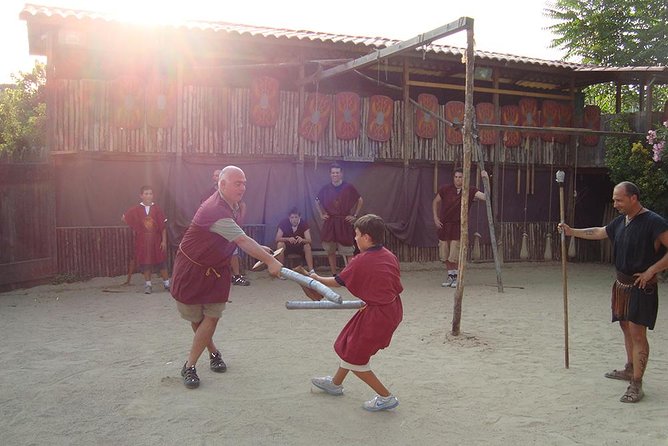
Wear comfortable clothes and shoes. You will warm up, move around, use a sword and shield, and take part in mock matches. Loose clothing that allows movement is more useful than anything stylish, and sturdy casual shoes are a better choice than sandals.
Bring mosquito repellent. This is the most repeated practical warning in the available feedback. The outdoor arena area can have mosquitoes, and some people received several bites. Apply repellent before the lesson if you have it, and consider bringing more for children.
Food is another planning point. A drink is listed among the inclusions, although one participant reported that no drink was provided. Treat the beverage as a possible inclusion, not your entire refreshment plan. Several people advised eating before arrival because there are no real food options nearby, even though snacks may be available.
Friends and family who do not participate can watch from the viewing platform. That makes the activity easier for a group with mixed interest, but remember that only booked participants receive the costume and weapon hire.
Is the $108.16 price good value?
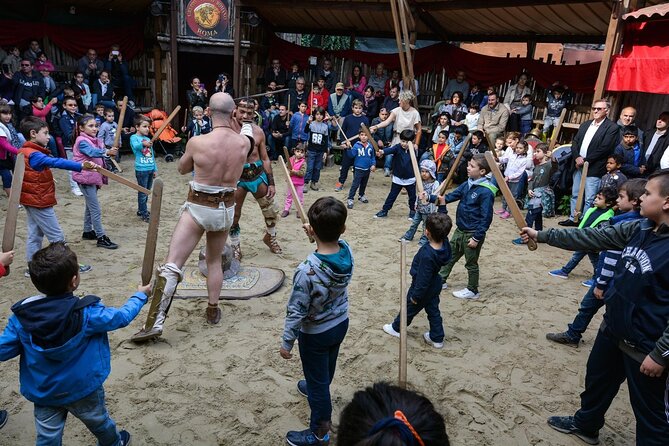
At $108.16 per person, this is not a cheap add-on. The price covers about two hours, instruction, the museum, costume and weapon hire, and a certificate. A drink is also listed as included, though I would confirm that detail if it matters to you.
The value comes from combining several small experiences in one visit. You get a museum introduction, a history talk, a costume session, physical instruction, and an arena finale. If you bought a simple museum visit and then paid for a separate family activity, the comparison would look better.
The cost is easiest to justify when several people in your group will actively participate. A family that loves Roman history and wants a memorable shared activity may find it worthwhile. It is harder to justify for an adult who prefers quiet museum time, or for a child too young or cautious for mock combat.
Group discounts may help reduce the total. Check the price for your party before booking, particularly if you have several children. With a maximum of 15 participants, you are paying for an organized small-group class rather than a large, anonymous show.
What can make the experience less successful
The main risks are not the history or the training. They are arrival, weather, insects, and expectations.
First, the school is not as central as the phrase near the Colosseum may suggest. A missed driveway or an infrequent bus can make the start stressful. Second, the outdoor portion means heat, cold, or mosquitoes can affect your comfort.
Third, the mock combat is physical. The teacher should guide the activity, but children still swing swords, block with shields, and face one another in an arena. Explain the rules before the class and tell your child that it is fine to step back or watch.
Finally, do not book this expecting a long museum tour. The museum is a useful introduction, but the school’s main purpose is participation. If you want hours of artifact study, choose a traditional museum instead.
Booking and cancellation details
You can choose from lesson times throughout the day, which helps you fit the school around the Colosseum and other Rome plans. The activity is offered in English, confirmation arrives at booking, and most people can participate according to the supplied information.
Free cancellation is available up to 24 hours before the start time for a full refund. Changes or cancellations made less than 24 hours before the start time are not accepted for a refund, and the cut-off uses Rome local time.
Because the experience is booked an average of 52 days ahead, popular dates may fill early. I would reserve in advance for school holidays, then leave enough travel time before the lesson.
Should you book the Roman Gladiator School?
Book it if you want your Rome itinerary to include one active, family-friendly experience rather than another hour of looking at monuments. The combination of artifacts, costume, sword instruction, and a final arena match gives children a clear role in the story of ancient Rome.
I would especially recommend it after a Colosseum visit, when the amphitheater and its fighters are still fresh in your mind. It also suits adults who enjoy historical reenactment and do not mind looking a little silly while learning.
Skip it if your group dislikes physical play, cannot manage the trip to Via Appia Antica, or wants a serious museum tour. For younger children, remember the official minimum age of 6 and the possibility that the combat may feel rough.
For families who are ready to dress up, listen, move, and laugh together, this is one of the more distinctive activities you can add to a Rome schedule. Just bring repellent, plan the route, eat first, and keep the sword fighting friendly.
FAQ
Where does the Roman Gladiator School experience take place?
The class takes place at the Gladiator School of Rome at Via Appia Antica 18, 00179 Roma RM, Italy. The activity ends at the same meeting point.
How long does the gladiator class last?
The class lasts approximately two hours. That time includes the museum visit, costume preparation, instruction, training, and the arena activity.
What is included in the price?
The experience includes the two-hour Roman Gladiator in a Day class, instruction from members of the Historic Group of Rome, gladiator clothing, training weapons, and a certificate of accomplishment. A drink is listed as included, though this has not always been provided.
Is the museum visit included?
Yes. Admission to the Gladiator School of Rome Museum is included. You can see gladiator weapons and other Roman equipment before the training begins.
What equipment do participants wear?
Participants receive a traditional belt, tunic, leather gloves, and a training sword called a rudis. Training weapons are supplied for the duration of the lesson.
Can friends and family watch without taking part?
Yes. Friends and family can watch the class from the viewing platform. Only booked participants take part in the training and receive the included equipment.
What is the minimum age?
The minimum age is 6 years. Most people can participate, but the mock fighting is physical, so parents should consider a child’s comfort with active play.
How many people can join one class?
The maximum group size is 15 participants. Smaller classes may allow the instructor to give more personal attention.
Is hotel pickup included?
No. Hotel pickup and drop-off are not included. You must make your own way to Via Appia Antica 18.
Can I cancel for a refund?
Yes. You can cancel at least 24 hours before the experience start time for a full refund. Cancellations or changes made less than 24 hours before the start time are not accepted for a refund.
Fresh on the Rome list
- Exclusive Golf Tour Private VIP with Local & Gelato o Wine★ 5.0 · 500 reviews
- Colosseum, Palatine Hill and Roman Forum with Guided Tour★ 5.0 · 500 reviews
- Rome Trastevere Pasta Making Class with Eating Europe★ 5.0 · 505 reviews
- Rome by Night Walking Tour★ 4.5 · 506 reviews
- Rome: Colosseum Express Tour with Forum & Palatine Access★ 4.5 · 511 reviews
- Rome Food Experience Max 6 People Group Tour | w/Private Option★ 5.0 · 516 reviews
- Rome: Navona Square Underground Ticket with Audio Guide★ 4.0 · 518 reviews
- Rome: Escorted Papal Audience Experience with Entry Ticket★ 4.4 · 518 reviews
Rome Tours, compared.

Vatican Museums & Sistine Chapel Tour with Optional Basilica
Read our review →
Colosseum, Roman Forum & Palatine Guided Tour
Read our review →
Vatican Museums, Sistine Chapel & St Peter’s Basilica Guided Tour
Read our review →
Colosseum, Palatine Hill and Roman Forum Guided Tour
Read our review →
Guided Tour of Colosseum, Roman Forum & Palatine Hill
Read our review →
Colosseum & Forum with Audio Guide App -Optional Arena
Read our review →
Colosseum, Roman Forum and Palatine Hill Guided Tour
Read our review →