
Reviewed · POMPEII & VESUVIUS TOURS
Pompeii: Small-Group Guided Tour with Skip-the-Line Ticket
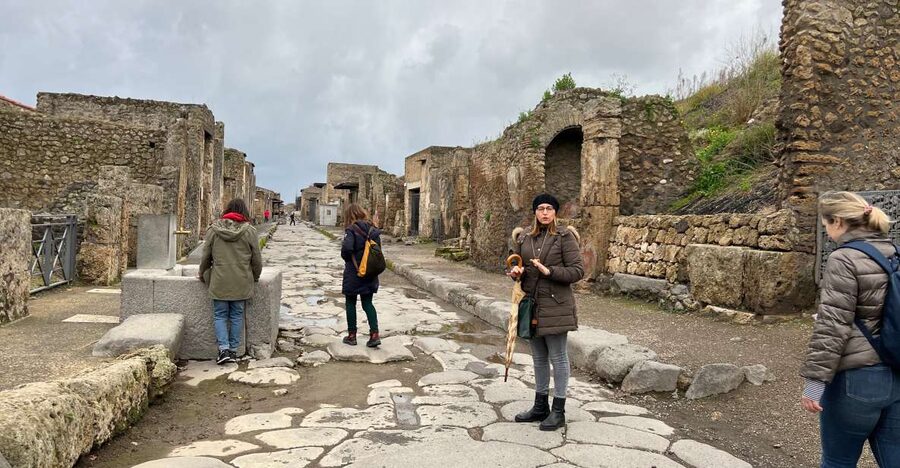
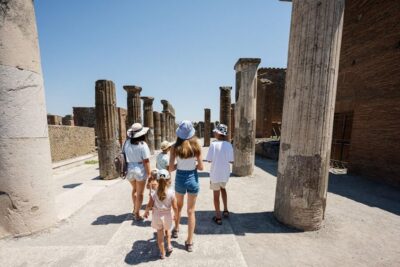
Pompeii’s power comes from its ordinary details: shop counters, painted walls, worn roadways, baths, and homes still arranged as they were nearly 2,000 years ago. Volcanic ash from Mount Vesuvius preserved this Roman city and its people, giving you an unusually direct look at daily life in 79 AD. The plaster casts of the victims are sobering, but they help explain the human cost behind the ruins.
I like the separate skip-the-line entrance, which matters at a large archaeological site, and I like the small private group format. Guides such as Glauco, Vito, Alessia, Caterina, and Vincenzo are praised for clear English, humor, and the ability to adjust the route around crowds or your interests. The main drawback is the short two-hour limit. Pompeii is enormous, so you will see the key areas, not every street.
Key points to know before booking
- The route ends with the Forum: You save one of Pompeii’s grandest spaces for the final stop, when the city’s civic center makes more sense.
- It is a private group experience: The listed price is $282.08 for up to two people, so the value is strongest for a couple or a small party sharing the cost.
- The guide makes the difference: Glauco, Vito, Alessia, Alicia, Laura, and other guides are praised for strong English, humor, and attention to detail.
- The two-hour route is tightly planned: You cover the amphitheater, House of the Faun, Temple of Apollo, an ancient food shop, Garden of the Fugitives, and Forum.
- Late afternoon can be a smart choice: One 4 pm visit was cooler and less crowded, while a 9 am tour also benefited from lighter crowds early on.
- Bring water, a hat, and valid ID: The site is exposed, late arrivals cannot join, and every person, including children, must show identification at entry.
Why a guide helps at Pompeii
Pompeii is not a compact collection of ruins. It is a full ancient city, with streets, homes, public buildings, shops, religious spaces, and entertainment venues spread across a large area. Without context, you can easily admire a mosaic or column without understanding what it meant.
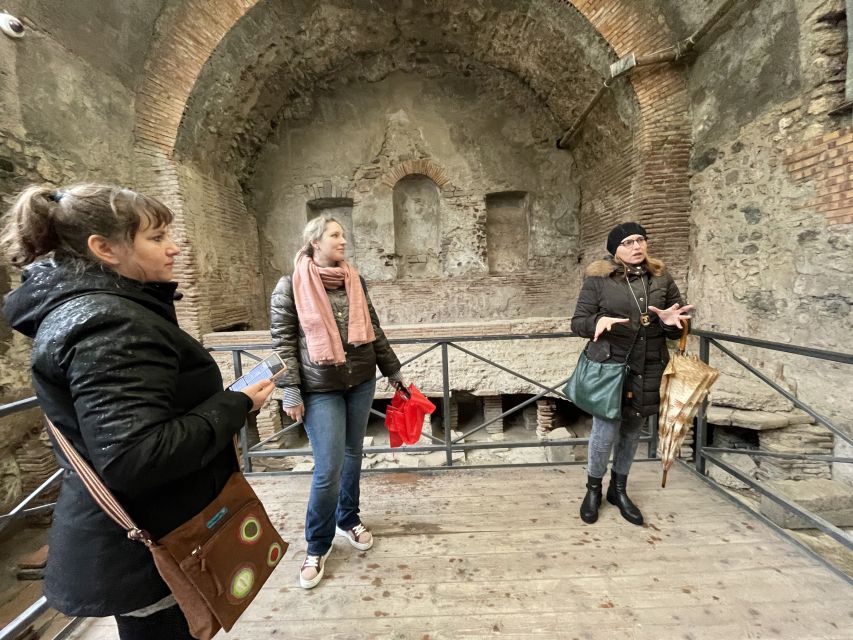
A good guide turns scattered stones into a readable town. You learn how homes were arranged, where citizens relaxed, how shops served food, and why the Forum mattered. The strongest guides on this tour use small details rather than giving you a long lecture. They point out features you might otherwise walk past, answer questions, and adjust the pace when the heat rises.
That personal approach is especially useful for families and mixed-age groups. Alessia, for example, is praised for engaging both adults and teenagers. Other guides kept the mood light while still treating the site and its victims with respect.
The tour is listed as a private group, and some departures may have only your party. That gives you room to ask about a particular building, stop for photographs, or request a route that avoids a dense crowd. It is a different experience from following a large flag through the ruins.
More Skip-the-Line Tickets in Naples
- Herculaneum: Skip-the-Line Guided Tour with Archaeologist
★ 4.8 · 3,439 reviews - Mount Vesuvius: Skip-the-Line Ticket and Smart Digital Guide
★ 4.2 · 2,780 reviews - From Naples: Pompeii Skip-the-Line Entry Ticket and Tour
★ 4.4 · 2,753 reviews
Meeting at Piazza Immacolata
The meeting point is in the piazza opposite the entrance gate of Piazza Anfiteatro. Look for the guide by the statue of the Virgin Mary holding a Walks In Europe sign.
Arrive five to ten minutes early. This matters because joining after the tour has started is not possible. Pompeii’s entrance area can be busy, and you do not want to begin your visit by searching for a guide or rushing through the gate.
There is no hotel pickup or drop-off. You make your own way to the meeting point, and the tour returns there at the end. The guide can then suggest where to continue if you still have time and energy.
Entering Pompeii with skip-the-line access
The pre-reserved ticket includes entry to Pompeii Archaeological Park and access through a separate entrance. This does not make the site small or effortless, but it cuts down the time spent waiting outside.
That is valuable in Campania’s strong sun, particularly during the warmer part of the day. It also protects your limited touring time. A two-hour guided visit is already selective, so standing in a long ticket queue would take away from the streets, houses, and public buildings you came to see.
Bring a hat and water. The information specifically advises both, and the route has limited shade. You also need valid identification for every member of your group, including children. Keep it handy rather than packed deep in a bag.
The tour is in English with a live guide. Wheelchair users should note that the activity is not suitable for them.
The amphitheater: Pompeii’s first major stop
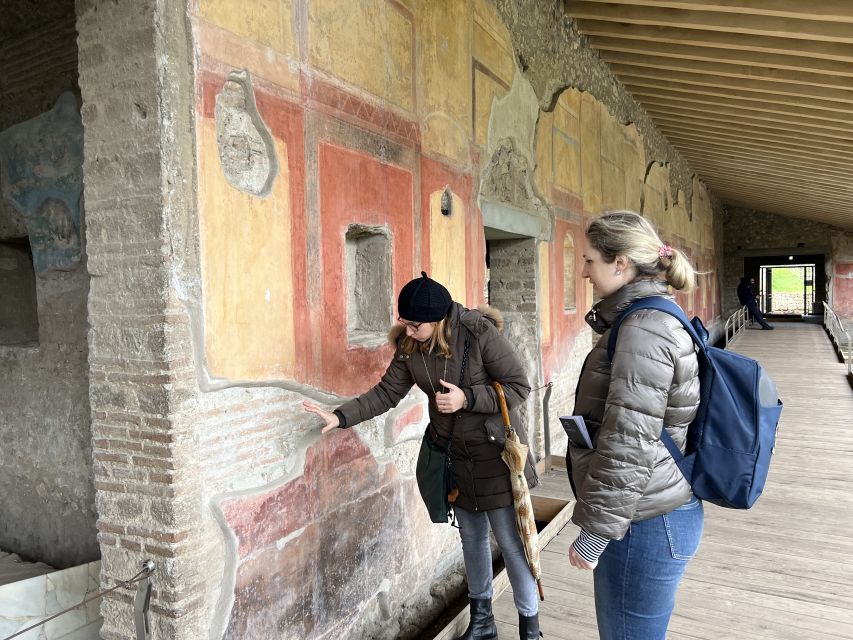
The route begins inside Pompeii Archaeological Park and then reaches the Amphitheater of Pompeii. This is where you get a clear sense of the city’s scale and public life.
The amphitheater was built for gladiatorial contests and other spectacles. Your guide explains how the venue fit into Roman society, helping you see it as more than a surviving oval of stone. The stop lasts about 20 minutes, enough for a guided look without letting one building consume the entire visit.
This early stop is also useful for orientation. You begin to understand that Pompeii was a functioning city with entertainment, commerce, religion, and government, not simply a disaster site preserved by ash.
A few other Naples mornings to weigh against this
- From Naples: Pompeii Ruins & Mount Vesuvius Day Tour
★ 4.3 · 11,459 reviews - Naples or Sorrento: Full-Day Pompeii and Mount Vesuvius Tour
★ 4.6 · 4,235 reviews - Pompeii & Mt.Vesuvius Day Tour from Naples with Pizza Lunch
★ 4.0 · 2,901 reviews - Naples: Pompeii & Mt Vesuvius All-Inclusive Small Group w/ Lunch
★ 4.5 · 2,748 reviews
House of the Faun and its impressive mosaics
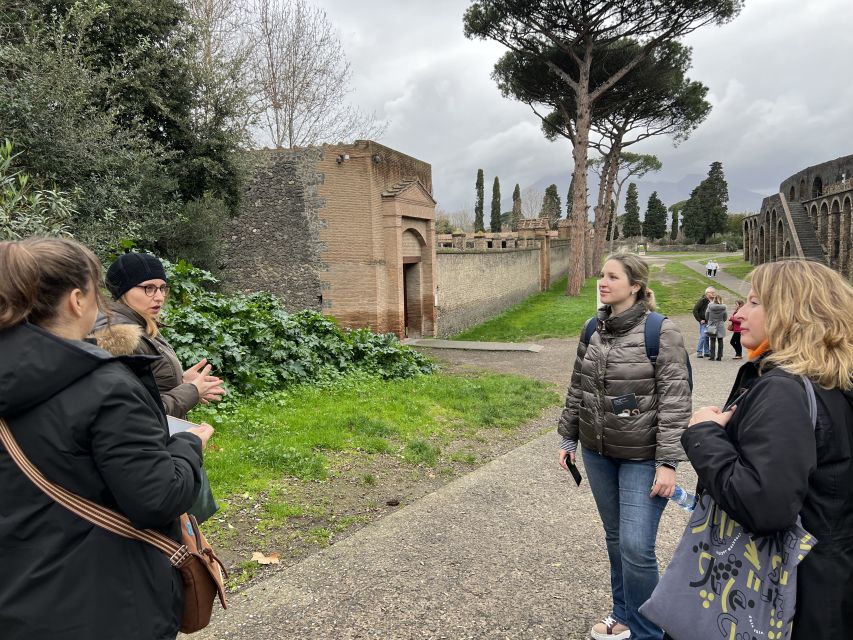
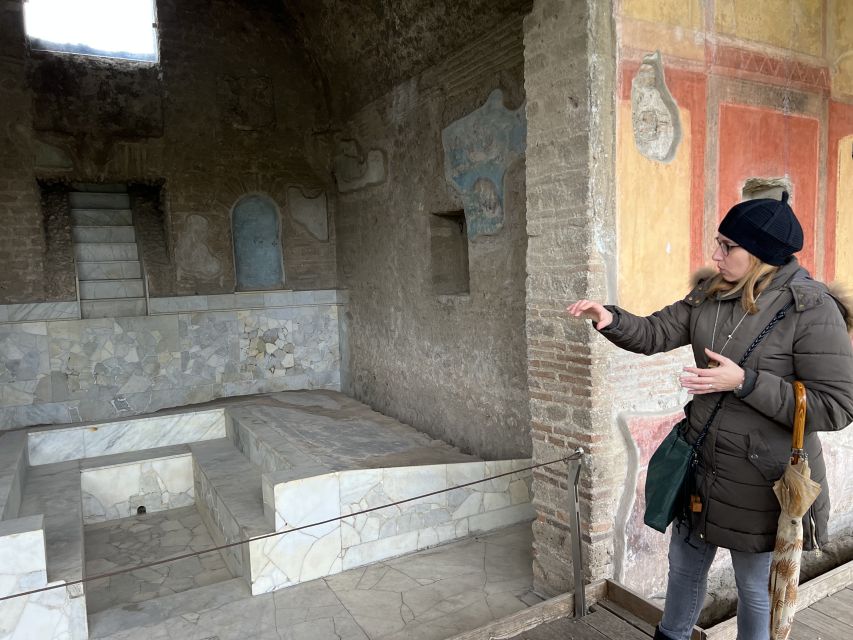
The House of the Faun is one of Pompeii’s grand private residences and a highlight for anyone interested in Roman domestic life. The name comes from the faun statue associated with the house, while the building itself helps show how wealthy residents lived.
Expect around 20 minutes here. The guide explains the layout and draws attention to the surviving artwork and mosaics. Pompeii is famous for these details, and a guide can tell you what you are looking at instead of leaving you to guess from a sign.
This is one of the stops where the private format pays off. You can ask how a Roman home differed from a shop or public building, or pause for a photograph without holding up a large group. If you want to see every room in great detail, however, two hours will feel brief.
Temple of Apollo and the city’s religious center
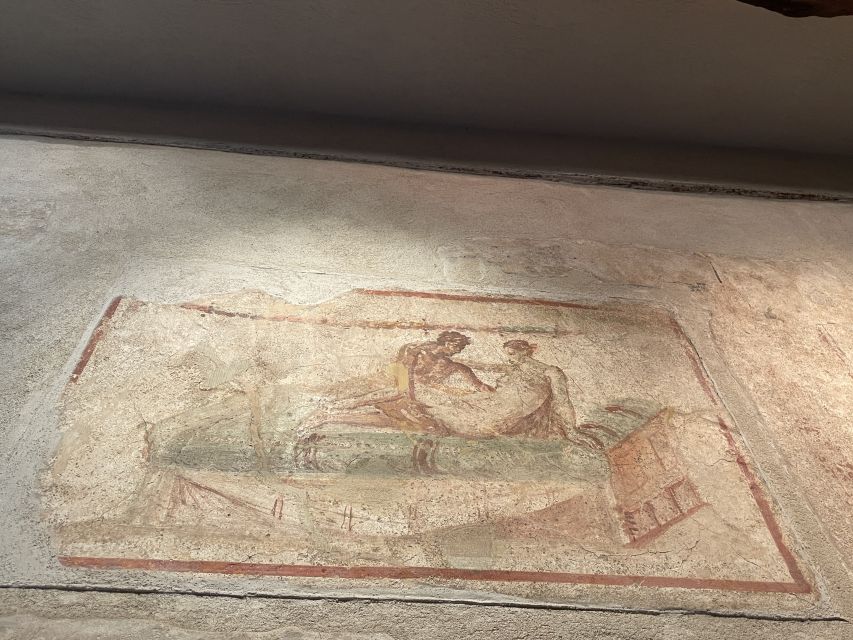
The Temple of Apollo gives the tour a different angle. After the private house and public amphitheater, you see a major religious space near the heart of Pompeii.
The guided visit lasts about 20 minutes. Your guide connects the temple with the wider civic center and explains how religion was part of everyday public life. The columns and open space photograph well, but the explanation is what gives the site meaning.
This stop also prepares you for the Forum later in the route. Instead of seeing each ruin as an isolated monument, you begin to read Pompeii as a connected city.
Vetutius Placidus House and Thermopolium
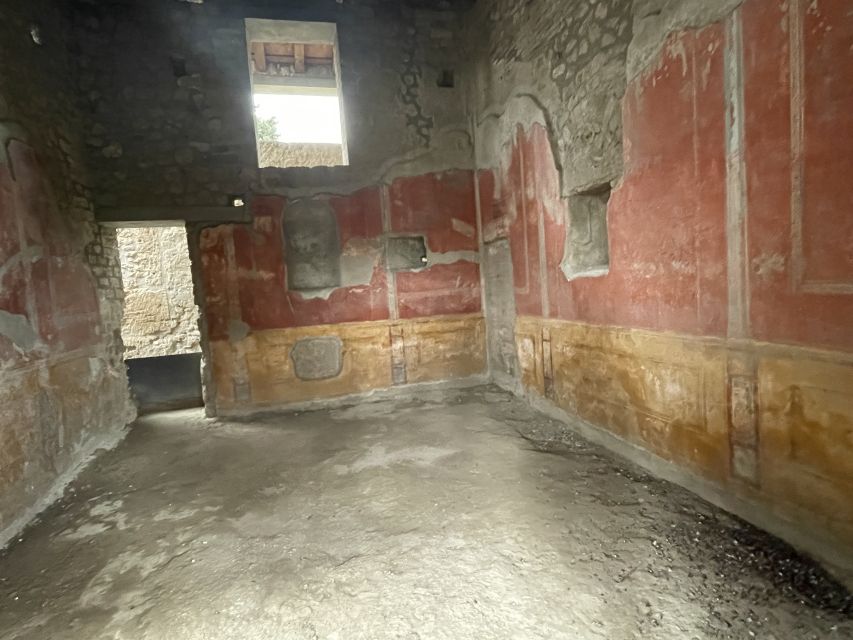
The House of Vetutius Placidus and its thermopolium offer one of the most relatable stops. A thermopolium was an ancient food and drink counter, a useful reminder that ordinary Pompeii residents bought meals and refreshments outside their homes.
The stop lasts about 10 minutes, so it is a quick look rather than a long examination. Still, this may be one of the most memorable parts of the tour because it brings daily routine into focus. The counter, shop setting, and household connection help you picture people eating, working, and socializing in the same streets you are walking.
I would pay close attention here. Grand temples and villas attract the eye, but an ancient food shop often tells you more about regular life.
Garden of the Fugitives and the human cost
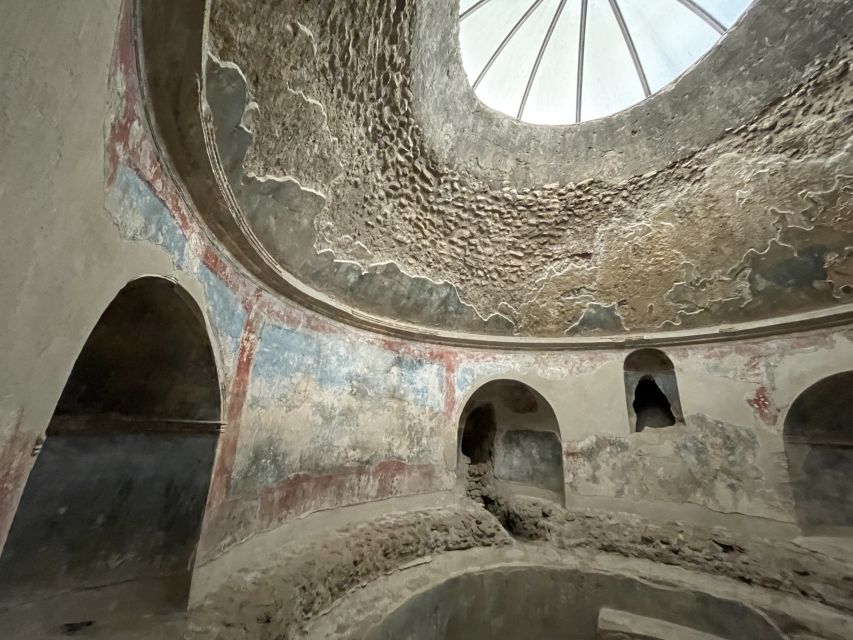
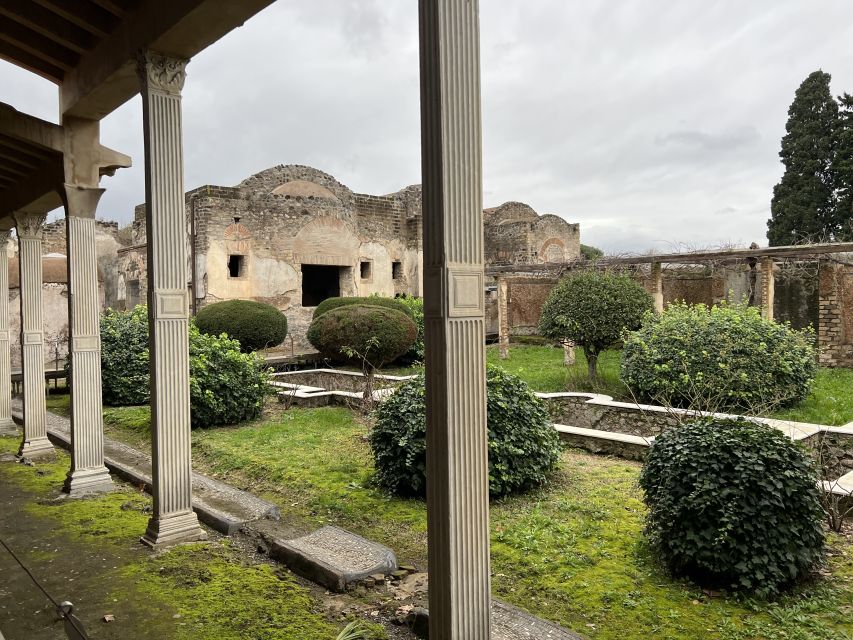
The Garden of the Fugitives is the most emotionally difficult part of the route. It is associated with the plaster-cast remains of people caught in the eruption.
The casts were made from voids left in the hardened ash, preserving the positions and forms of victims. They are not simply archaeological objects. They make the eruption personal, and the quiet garden setting gives the guide room to explain what happened with care.
The scheduled visit lasts about 20 minutes. This is a place to slow down and listen. The experience can be upsetting for children or anyone sensitive to human remains, though the guide can provide the needed historical context.
Pompeii is often presented as a remarkable time capsule, but the Garden of the Fugitives keeps the human tragedy in view. That balance is important.
Finishing at the Forum
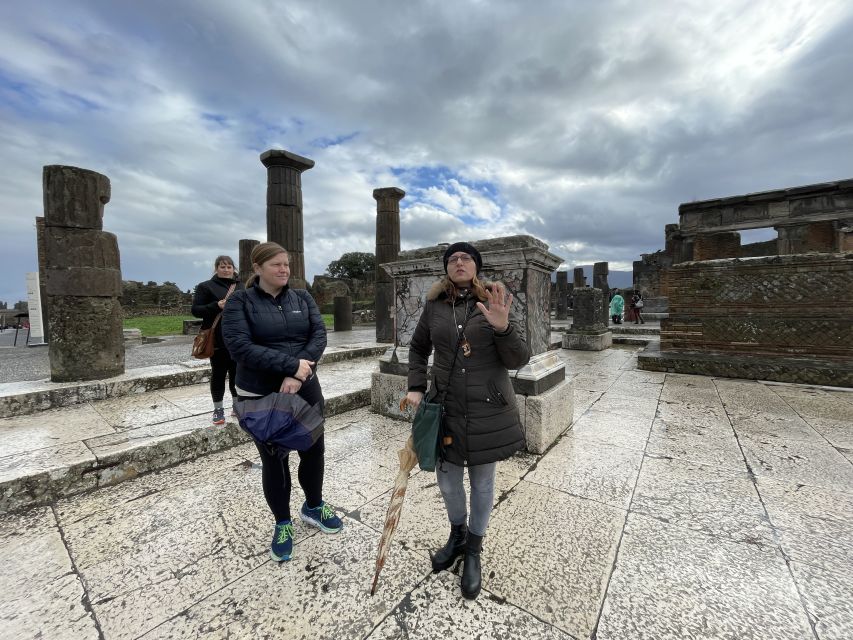
The final stop is the Foro Civile di Pompei, or Forum. This was the heart of civic life, surrounded by important public and religious buildings.
Ending here works well. By this point, you have seen a home, a food shop, an amphitheater, a temple, and the victims of the eruption. The Forum brings those pieces together in one large public space. You can better understand how politics, commerce, religion, and social life met in the center of town.
The guided Forum visit lasts about 20 minutes. Several people especially liked finishing here because it felt like a grand final view of Pompeii. Afterward, you return to the meeting point, with the option to continue exploring independently.
A route designed for two hours
The listed stops add up to a brisk but logical route:
- Pompeii Archaeological Park, about 10 minutes
- Amphitheater, about 20 minutes
- House of the Faun, about 20 minutes
- Temple of Apollo, about 20 minutes
- Vetutius Placidus House and Thermopolium, about 10 minutes
- Garden of the Fugitives, about 20 minutes
- Forum, about 20 minutes
The route covers major themes: entertainment, private wealth, religion, food, tragedy, and civic life. That is a strong selection for a first visit.
The tradeoff is depth. You will not have time to linger at every open house or wander far beyond the planned path. One person wished the tour lasted longer, though still considered it a strong use of time. If Pompeii is your main reason for visiting the region, plan to remain after the guided portion if the site rules and your ticket allow it, and ask the guide what to see next.
The guide may also make small route changes. Glauco was praised for avoiding larger crowds, and Vito suggested walking on a platform near ongoing archaeological work, which became a memorable part of that visit. These touches depend on current conditions, but they show why a private group can be more flexible than a fixed large-group walk.
Choosing the best time of day
Starting times vary, so check availability before booking. Morning and late afternoon both have advantages.
A 9 am tour can begin before the site grows busier, and one early visit stayed ahead of larger crowds for much of the route. A 4 pm departure was praised as cooler and quieter, with the guide using the conditions well.
Your choice depends on your wider schedule and tolerance for heat. The site has limited shade, so late afternoon may be more comfortable in hot weather. Morning is a good choice if you want to keep the rest of the day open or continue exploring after the tour.
Do not arrive late simply because you choose an earlier departure. The group cannot be admitted once the tour has begun.
Price and who gets the best value
The listed price is $282.08 per group of up to two people. Entry, skip-the-line access, and the guided tour are included, but transport, food, and hotel transfers are not.
That is a substantial price for two hours, especially for a solo visitor. For two people, the cost buys a private guide rather than just an admission ticket. The value improves if you care about interpretation, want to ask many questions, or have limited time in Pompeii and need a well-planned route.
It can also make sense for a small family or group sharing the cost, though the listed maximum is two people. Compare the price with a larger group option if you are mainly looking for entry and a basic overview.
The strongest reason to pay more is not simply the skip-the-line ticket. It is the combination of a small format, a route through the main highlights, and a guide who can explain what you are seeing. Guests especially praised Glauco, Vito, Alessia, Alicia, Laura, Giovanni, Kiara, and others for clear explanations, patience, humor, and passion for Pompeii.
Who should book this Pompeii tour
I would choose this tour if you are visiting Pompeii for the first time and want the main story without getting lost. It suits couples, small parties, families with teenagers, and anyone who prefers questions and conversation over a scripted lecture.
It is also a good fit if you have only a short window in the archaeological park. The route gives you a sensible introduction to the city and points you toward further areas to explore.
You might choose something else if you want a slow, full-day examination of Pompeii, need wheelchair access, or are uncomfortable paying a premium for a private two-hour visit. The tour is focused, not exhaustive.
Should you book it?
Book it if your priority is understanding Pompeii rather than simply walking through ruins. The small group format, separate entrance, and strong English-speaking guides help you make good use of a large and sometimes confusing site.
The main question is price. At $282.08 for up to two people, this is not the budget choice. But for a couple who wants a personal route, clear explanations, and the chance to avoid the worst queues, it offers solid value. Choose an early morning or late afternoon time when possible, bring water and a hat, arrive early with ID, and expect a focused introduction rather than a complete tour of every corner.
FAQ
How long does the Pompeii tour last?
The guided tour lasts two hours. The route includes several major areas of Pompeii, and you may continue exploring independently after returning to the meeting point.
Where does the tour meet?
Meet in Piazza Immacolata, in the piazza opposite the entrance gate of Piazza Anfiteatro. The guide will be near the statue of the Virgin Mary and will hold a Walks In Europe sign.
Where does the tour end?
The activity ends back at the meeting point.
Is entry to Pompeii included?
Yes. The price includes a Pompeii entry ticket, pre-reserved admission, and skip-the-line access through a separate entrance.
Is the tour private?
Yes. The group type is listed as private, with the price covering up to two people.
What language is the tour in?
The tour is conducted in English with a live guide.
Do I need identification?
Yes. All visitors, including children, must provide valid ID when entering the Pompeii Archaeological Site.
What should I bring?
Bring water and a hat. You should also arrive five to ten minutes before the scheduled start time.
Is the tour suitable for wheelchair users?
No. The activity is listed as not suitable for wheelchair users.
Fresh on the Naples list
- Sorrento, Positano and Amalfi: Private Tour of Coastal Gems★ 5.0 · 196 reviews
- Naples Shore Excursion: Pompeii and Sorrento Day Trip★ 3.5 · 198 reviews
- Naples Walking Tour: Old Town and Spaccanapoli★ 5.0 · 200 reviews
- Naples Pizza & Drinks Tour: A Slice of Naples with Eating Europe★ 5.0 · 203 reviews
- From Naples: Ruins of Pompeii★ 4.3 · 204 reviews
- Tour of the island of Ischia in schooner★ 5.0 · 208 reviews
- Naples: Historic Center and Sansevero Chapel Walking Tour★ 4.8 · 208 reviews
- From Naples: Tour of the Amalfi Coast, Sorrento, and Pompeii★ 5.0 · 211 reviews
Pompeii & Vesuvius Tours, compared.

Entry Ticket and Guided Tour with an Archaeologist
Read our review →


Pompeii Small Group Tour with an Archaeologist
Read our review →
Pompeii, Amalfi Coast and Positano Day Trip from Rome
Read our review →Browse the lists this tour appears in