
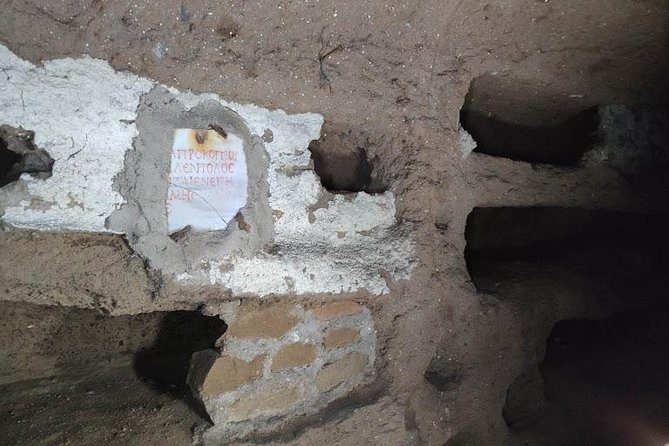
Reviewed · 3-HOUR EXPERIENCES
Jewish Ghetto and Synagogues with Jewish Roman Guide 3 Hours
Rome’s Jewish quarter tells a story that reaches back 22 centuries, from the city’s earliest Jewish community to the Second World War and modern neighborhood life. This three-hour experience combines the Jewish Museum, the Great Synagogue, the Spanish Synagogue, and a walk through the former ghetto with a Roman Jewish guide who can explain the place from personal as well as historical experience.
I like the access to two synagogues and the museum, and I like the chance to meet people connected with the neighborhood rather than simply passing through old streets. The main consideration is pace: the former ghetto is a small area, so visitors who prefer a quick architectural walk may find three hours longer than necessary.
I also like the human side of the tour. Guides including Michaela, Daphna, Dafna, Yael, Michelle, and Hannah have been praised for clear English, warmth, humor, and personal family stories. The drawback is that admission costs extra, and the booking requires at least six participants.
Key points about Jewish Rome in three hours

- The Great and Spanish Synagogues: See both houses of worship as part of a guided visit arranged by Jewish Roma guides.
- A museum visit with context: The Jewish Museum’s collection makes the community’s long story easier to understand than a street walk alone.
- The former ghetto on foot: Follow narrow streets through the area where Rome’s Jewish population was confined for about 330 years.
- Personal Roman Jewish perspectives: Guides share family and neighborhood stories, including accounts connected with the Second World War.
- A small-group format: The group can range from a minimum of six people to a maximum of 17.
- A useful time commitment: Three hours gives you a serious introduction without taking up an entire day in Rome.
Why this part of Rome matters

Rome’s Jewish presence is not a side note to the city’s Roman and Christian past. It is one of the oldest continuous Jewish communities outside Israel, and the tour gives that fact a human scale.
The former ghetto was created as a place of forced segregation. Jewish residents were confined there for roughly 330 years, living under restrictions that shaped daily life, housing, work, and worship. You do not simply see a few old buildings and move on. A good guide explains how the neighborhood functioned and how Jewish life continued under pressure.
That long span is what makes this experience different from a standard sightseeing walk. Ancient Rome often gets the grand monuments, while the Jewish quarter asks you to pay attention to continuity, survival, and family memory.
I would especially value the local angle. Several guides are Roman Jewish themselves, and some have families rooted in the area for generations. That does not replace historical evidence, but it gives the walk a personal voice.
The subject also includes painful material. Stories of persecution, Nazi deportation, and family loss are part of the visit. Guides have been praised for presenting difficult events with care and for keeping the explanation suitable for different ages, but this is not a light stroll through picturesque lanes.
A few other Rome mornings to weigh against this
- Eat Like a Local: Venice 3-Hour Small-Group Food Tasting Tour
★ 5.0 · 3,137 reviews - Naples: The Holy Mile 3-Hour Guided Tour
★ 4.9 · 711 reviews - Tour of the Costa degli Dei by boat, 3 hours with aperitif included
★ 5.0 · 667 reviews
Starting at the Great Synagogue
The meeting point is the Tempio Maggiore, Rome’s Great Synagogue, on Lungotevere de’ Cenci. Arrive with time to spare. The location is near public transportation, but the tour requires a minimum of six participants, and confirmation is subject to availability.
Beginning here makes sense. The synagogue is both a place of worship and the clearest modern symbol of Rome’s Jewish community. From this point, the guide can introduce the neighborhood before leading you into the museum and synagogue visits.
The tour provider says Jewish Roma guides are authorized to take visitors privately inside the synagogues and Jewish Museum. That specialized access is a major reason to book this experience rather than simply walk around the quarter alone.
The group size is capped at 17. That is not the same as a private tour for just your party, but it is small enough for the guide to speak directly to the group. Some past outings have used hearing devices, which can help when the streets are noisy or the group is spread out, though you should not assume they are guaranteed on every departure.
The Jewish Museum and two synagogues
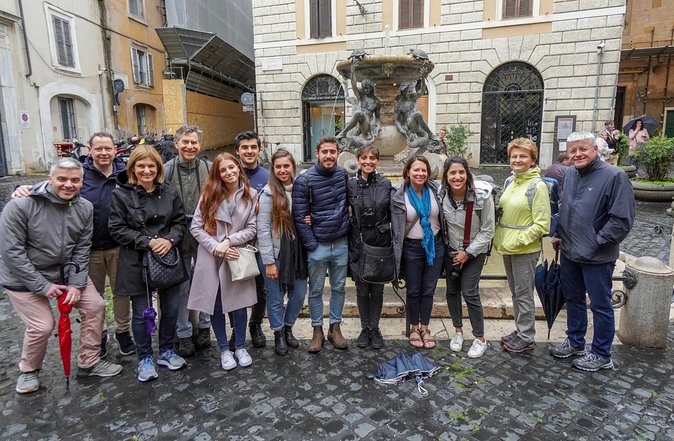
The first main section lasts about 1 hour and 15 minutes. It includes the Jewish Museum, the Great Synagogue, and the Spanish Synagogue.
The museum gives you objects and visual evidence to support the story. Without that foundation, a walking tour can become a string of dates and names. Inside the museum, the collection helps connect religious practice, family life, community organization, and the long presence of Jews in Rome.
You then visit the two synagogues. The Great Synagogue is the principal building, while the Spanish Synagogue offers a different setting and reflects the varied traditions within Jewish life. Seeing both is worthwhile because the tour is not presenting the community as a single, unchanging group.
The advertised price does not include museum admission. The separate ticket cost is €12 per person. The information also lists an entrance fee of €12, which appears to refer to the same museum admission, so confirm the payment procedure when your booking is confirmed.
This section is the strongest part of the experience for anyone who wants both cultural understanding and a visit to active religious spaces. It is also the part most dependent on opening arrangements and access rules. Synagogues are functioning places of worship, not museum sets, so the visit may be subject to normal security or scheduling requirements.
The guides named in the supplied information include Michaela, Micaela, Daphna, Dafna, Michelle, Yael, Hannah, and Daniela. Names and assignments can change, but the repeated praise for guides such as Michaela and Daphna points to the kind of leadership you can expect: clear explanations, personal connection, humor, and a strong command of Roman Jewish history.
Walking the former ghetto
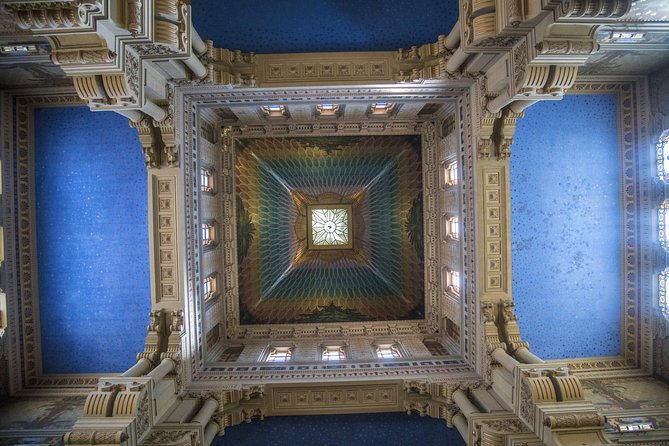
The second main section lasts about 1 hour and 15 minutes. You walk through the narrow streets of the former Jewish ghetto, where Jews were segregated for centuries and where members of the community still live today.
Do not expect a huge district with a long list of major monuments. The area is compact. That is the one clear limitation of the route, and one person felt the walk could have been shortened to two hours because there is not a great deal of territory to cover.
The value is in the explanation, not the distance. A guide can show you where the old boundaries were, describe the conditions imposed on residents, and explain how the neighborhood changed over time. You might otherwise pass through these lanes, admire the old stonework, and miss the story beneath it.
The walk also connects the past with the present. You hear about people who still live in the area, meet local residents when possible, and may encounter someone with a direct family connection to the events being discussed. One especially moving account involved meeting an elderly survivor whose family had been taken during the Nazi period. Another guide introduced a local author who spoke about his family and his childhood during the war.
Those moments cannot be promised, and they should not be treated as staged parts of the tour. Still, they explain why a local Jewish guide can add something a general city guide may not provide.
The walk is also where the guides’ personalities matter most. Michaela has been described as a lively storyteller with strong personal ties to the neighborhood. Other guides, including Michelle and Yael, have been praised for making complicated history understandable. If you are traveling with children or with people new to Jewish history, the guide’s ability to explain rather than lecture will make a real difference.
Same city, an entirely different afternoon:
- Vatican Museums & Sistine Chapel Tour with Optional Basilica
★ 4.3 · 67,413 reviews - Colosseum, Roman Forum & Palatine Guided Tour
★ 4.7 · 63,148 reviews - Vatican Museums, Sistine Chapel & St Peter’s Basilica Guided Tour
★ 4.5 · 39,149 reviews - Rome: Colosseum, Palatine Hill and Roman Forum Guided Tour
★ 4.8 · 32,814 reviews
What the personal stories add
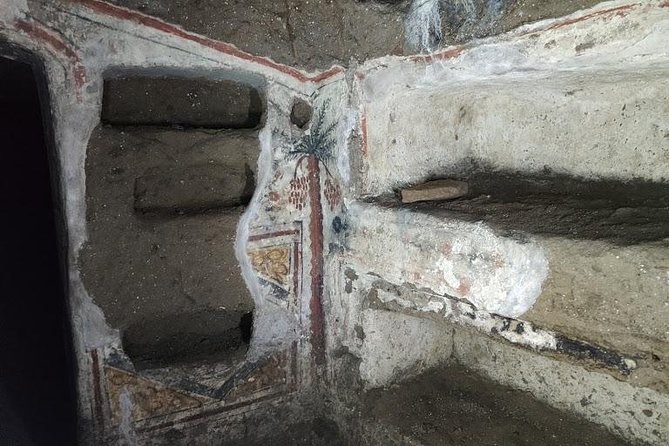
The tour’s central strength is the link between broad history and individual lives. Rome’s Jewish community has endured for centuries, but the story becomes easier to grasp when it is attached to families, buildings, and streets.
You may hear about relatives who were killed at Auschwitz, families who escaped Nazi persecution, and the continuing effect of the Second World War on Roman Jewish life. These accounts are emotional, but they are not separate from the neighborhood. They explain why certain places matter and why memory remains visible in present-day Rome.
The personal side also covers ordinary life. The Jewish quarter is not only a memorial site. It is a living neighborhood with residents, businesses, religious institutions, and social connections. The guides can show you the difference between a community preserved in a museum and one that still functions in the city.
This is where the tour suits both Jewish and non-Jewish visitors. If you have Jewish family roots or an interest in Jewish communities around the world, you will find many points of connection. If you do not share that background, the tour gives you a clearer view of Rome’s religious and social history beyond the usual ancient and Catholic landmarks.
Price, group size, and overall value
The listed cost is $193.49 per person. That is a high price for a three-hour walking experience, especially because the €12 museum ticket is extra.
The price makes more sense if you place a high value on specialist access and a guide with personal ties to Roman Jewish life. You are paying for more than directions between buildings. The experience brings together the museum, two synagogues, historical interpretation, and a local perspective that would be difficult to reproduce on your own.
It is less compelling if you mainly want to see the outside of the synagogue and take a short walk through the quarter. In that case, the compact size of the district and the added museum fee may make the experience feel expensive.
The maximum group size of 17 is reasonable for a walking tour, though the minimum of six creates a practical risk. Your booking is confirmed within 48 hours, subject to availability, and the provider accepts the request only after reaching the minimum number of participants through its booking channels.
The tour is offered in English and uses a mobile ticket. Most people can take part, and service animals are allowed. The route is near public transportation, but the provided details do not promise a fully accessible route or describe the amount of walking in exact distance, so ask ahead if you have mobility concerns.
Who should book this experience
I would choose this tour if Jewish history is an important part of your trip, or if you want to understand Rome through a community that has often been overlooked by standard sightseeing routes.
It is also a strong choice for first-time visitors who have already planned the Colosseum, Roman Forum, Vatican Museums, and other major sights. The Jewish quarter adds a different layer to Rome, one focused on community and memory rather than imperial power.
Families can benefit from the guide’s storytelling, although parents should be ready for serious material about persecution and wartime loss. The tour has been described as appropriate for different ages, but the subject itself is not easy.
I would be more hesitant if you have limited time in Rome and prefer landmark-heavy sightseeing. Three hours is a meaningful block of your day, and the ghetto walk is compact. The experience rewards attention and conversation, not a long checklist of buildings.
Book as early as you can if your dates are fixed. The average booking lead time is 81 days, and the minimum group requirement means a last-minute request may not be accepted.
Practical advice before you go

Meet at the Great Synagogue, not at a separate office. Check the confirmation carefully because the tour ends back at the same meeting point.
Budget the extra €12 museum admission per person. Since the price is listed in dollars while the ticket is charged in euros, keep both costs in mind when comparing this tour with other guided walks.
Wear comfortable shoes for the narrow-street portion. The tour lasts about three hours, and even though the neighborhood is compact, you will be on foot for both the museum and outdoor sections.
Give yourself a little arrival time. One person had trouble reaching the meeting point during a taxi strike and crowded public transportation, although the guide stayed in contact and helped them join. That kind of communication is useful, but it is still wiser not to cut the timing close.
Cancellation is free up to 24 hours before the start time for a full refund. If the minimum number is not reached and the activity is canceled, you are offered another date or experience, or a full refund.
Should you book the Jewish Ghetto and Synagogues tour?
Book it if you want a serious, human account of Jewish Rome and value a guide who can connect public history with family and neighborhood stories. The museum, Great Synagogue, Spanish Synagogue, and former ghetto create a well-shaped three-hour introduction.
Think twice if you want a fast walk, a large number of sights, or a low-cost activity. The district is small, admission costs extra, and the minimum group requirement can complicate confirmation.
For the right audience, this is one of Rome’s most meaningful cultural experiences. It gives you a better understanding of the city by showing how a small, enduring community has lived within it for more than two thousand years.
FAQ
How long does the Jewish Ghetto and Synagogues tour last?
The experience lasts approximately three hours. The museum and synagogue portion takes about 1 hour and 15 minutes, followed by about 1 hour and 15 minutes walking through the former ghetto, with the remaining time used for transitions and discussion.
Where does the tour begin?
It begins at the Tempio Maggiore, Rome’s Great Synagogue, on Lungotevere de’ Cenci, 00186 Rome, Italy.
Where does the tour end?
The activity ends back at the meeting point at the Great Synagogue.
Is the tour offered in English?
Yes. English is the stated language for the experience.
Does the price include Jewish Museum admission?
No. Museum admission is listed separately at €12 per person.
Which places are visited?
You visit the Jewish Museum of Rome, the Great Synagogue, the Spanish Synagogue, and the former Jewish ghetto neighborhood.
How many people are required for the tour to operate?
The tour requires a minimum of six participants. The maximum group size is 17 people.
Can service animals take part?
Yes. Service animals are allowed.
Can I cancel for a full refund?
Yes, if you cancel at least 24 hours before the experience start time. Cancellations made less than 24 hours before the start time are not refunded.
Fresh on the Rome list
- Exclusive Golf Tour Private VIP with Local & Gelato o Wine★ 5.0 · 500 reviews
- Colosseum, Palatine Hill and Roman Forum with Guided Tour★ 5.0 · 500 reviews
- Rome Trastevere Pasta Making Class with Eating Europe★ 5.0 · 505 reviews
- Rome by Night Walking Tour★ 4.5 · 506 reviews
- Rome: Colosseum Express Tour with Forum & Palatine Access★ 4.5 · 511 reviews
- Rome Food Experience Max 6 People Group Tour | w/Private Option★ 5.0 · 516 reviews
- Rome: Navona Square Underground Ticket with Audio Guide★ 4.0 · 518 reviews
- Rome: Escorted Papal Audience Experience with Entry Ticket★ 4.4 · 518 reviews
3-Hour Experiences, compared.
Eat Like a Local: Venice 3-Hour Small-Group Food Tasting Tour
Read our review →
Tour of the Costa degli Dei by boat, 3 hours with aperitif included
Read our review →
Pompeii Private Tour with an Archaeologist and Skip The Line – 3 hours
Read our review →
3 Hour Group Tour by Boat to the Caves of Santa Maria di Leuca
Read our review →Browse the lists this tour appears in