Reviewed · ROME TOURS
I Love Rome : Hop on Hop off Open Bus Tour
Rome reveals itself in grand fragments: a basilica here, an ancient arch there, then suddenly the dome of St. Peter’s appears beyond the rooftops. This I Love Rome hop-on hop-off bus gives you a useful first look without making you wrestle with Rome’s traffic, hills, and confusing streets. I like the route’s coverage of Vatican City, Piazza Venezia, Santa Maria Maggiore, the Spanish Steps, and Trevi Fountain. I also like the easy audio commentary, available in 12 languages, and the choice of pass durations.
The main catch is timing. The advertised ride takes about two hours, but buses can be late, stops can be hard to identify, and service ends fairly early, especially outside the main season. I would use this as a city orientation tool and a practical link between major sights, not as a complete substitute for walking Rome.
Key points to know before you board
- Eight central stops: The route links Termini, Santa Maria Maggiore, Circus Maximus, Piazza Venezia, Vatican City, the Spanish Steps, and Trevi Fountain.
- Best for a first look: The full circuit helps you decide which monuments deserve your limited sightseeing time.
- Multilingual audio: Headsets provide commentary in 12 languages, though timing and sound quality may vary by seat.
- Passes allow repeat rides: Multi-use tickets let you board again, except for the one-run option.
- Plan around early service: Buses run from 8:30 AM, with the final departure at 5:40 PM in the winter period and 6:40 PM during the longer operating season.
- Expect city traffic: Road closures, special events, summer congestion, and weekends can alter the route or slow the buses.
Why this bus can make Rome easier
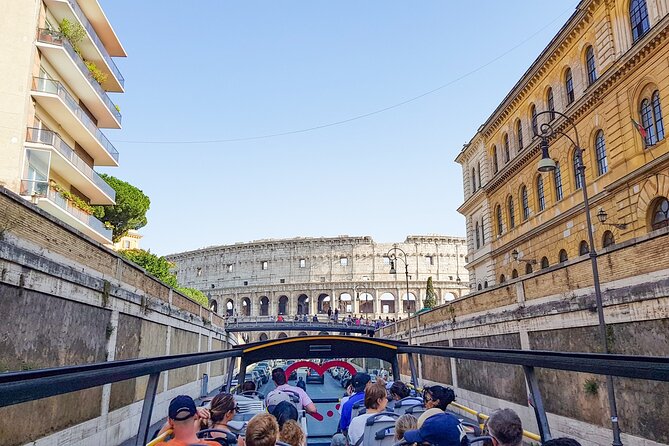
Rome is not difficult because its sights are far apart. It is difficult because the best route between them is not always obvious, sidewalks can be uneven, and the area around major monuments can feel like a maze. A hop-on hop-off bus gives you a simple framework.
At $21.12 per person, the tour is priced as an inexpensive introduction to the city. The value improves if you use the bus several times over a day or choose a longer pass. A single ride is less impressive as a transport purchase, since Rome also has public buses, Metro service, taxis, and plenty of walkable routes.
I especially like the first full circuit. Stay aboard and use the audio to match monuments with their stories. Then choose two or three stops for a closer look. This approach works well if you have only a day in Rome, or if you want to save your legs for museums and archaeological sites.
The bus is not a guided walking tour. Admission to the Vatican Museums, Sistine Chapel, Colosseum, Roman Forum, and other monuments is not included. The recorded commentary also cannot replace time on the ground. From the upper deck, you get a broad view, but some of Rome’s best details are tucked down narrow lanes or behind high walls.
A few other Rome mornings to weigh against this
- Vatican Museums & Sistine Chapel Tour with Optional Basilica
★ 4.3 · 67,413 reviews - Colosseum, Roman Forum & Palatine Guided Tour
★ 4.7 · 63,148 reviews - Vatican Museums, Sistine Chapel & St Peter’s Basilica Guided Tour
★ 4.5 · 39,149 reviews
Starting at Termini, then Santa Maria Maggiore
The official starting point is Via Giovanni Giolitti 32, near Termini Station. This is a practical place to begin if you arrive by train, but finding the exact pickup point can take patience. Look for the route information and confirm the stop before settling in. Other bus companies operate nearby, and the different colors and branding can make the area confusing.
The first stop is near Santa Maria Maggiore, one of Rome’s major churches. The basilica is worth more than a quick photograph. It is a good early stop if you want an impressive interior without immediately tackling the crowds around the Colosseum or Trevi Fountain.
This area also illustrates the main strength of the route: you are being placed near major monuments rather than dropped in a random part of town. Still, the stop names do not always tell you the precise walking route to the entrance. Keep the map handy, and do not assume the bus will stop directly in front of the sight.
Circus Maximus and the Orange Garden
The route then reaches Giardino degli Aranci, the Orange Garden, and Circus Maximus. This is one of the more pleasant sections for a ride because the ancient racing ground gives you a sense of Rome’s scale. Circus Maximus is a vast open space, and the bus offers a useful view before you walk into the archaeological area.
The Orange Garden is on the Aventine Hill, so getting off here changes the pace. You can look toward the city from an elevated setting and explore one of Rome’s quieter corners. The route information also lists a stop on Via del Circo Massimo for Circus Maximus and the Bocca della Verità, the famous Mouth of Truth.
You should check the map carefully before choosing between these stops. They serve nearby but different goals. The Orange Garden is about the view and hilltop setting. Circus Maximus is about the ancient stadium and open space. The Bocca della Verità is linked to Santa Maria in Cosmedin, and its fame can mean a line for the traditional hand-in-the-mouth photograph.
Piazza Venezia and the Roman Forum area
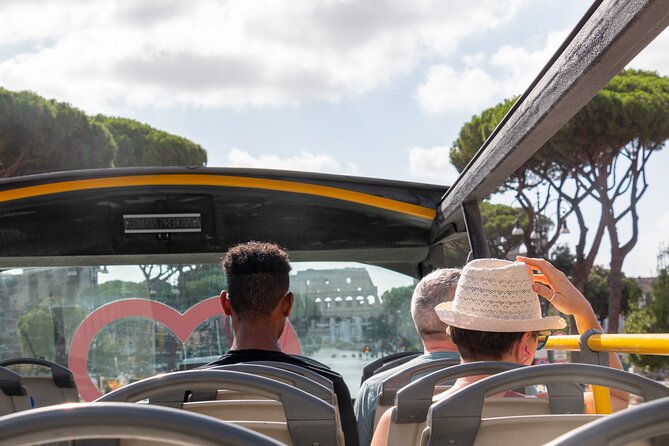
The stop on Via del Teatro di Marcello serves Piazza Venezia and the Roman Forum area. This is one of the most useful places to leave the bus if ancient Rome is your priority.
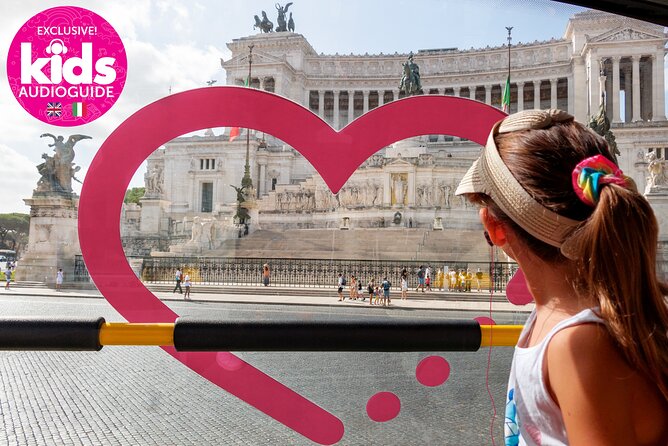
Piazza Venezia is dominated by the Victor Emmanuel II Monument, a huge white structure that provides one of the clearest visual markers in central Rome. From here, you are close to the Roman Forum and the archaeological zone, though the walking route and entrance arrangements may not be as direct as first-time visitors expect.
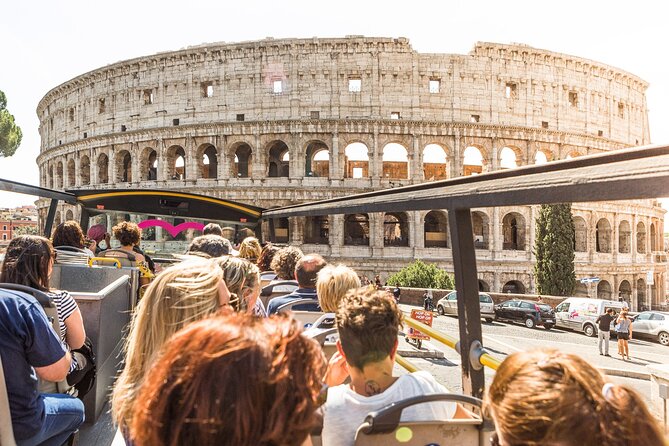
One important warning: the Colosseum Archaeological Area stop is closed indefinitely. Do not plan on stepping off at a stop that is no longer operating. Instead, use the available route near Piazza Venezia and check the current walking directions for the archaeological sites.
The bus cannot solve every access problem around the ancient center. Streets may close for ceremonies, public events, or heavy traffic. If you have a timed entry for the Colosseum or Forum, allow plenty of extra time and avoid treating the bus schedule as exact.
Same city, an entirely different afternoon:
- Rome: Colosseum, Palatine Hill and Roman Forum Guided Tour
★ 4.8 · 32,814 reviews - Rome: Guided Tour of Colosseum, Roman Forum & Palatine Hill
★ 4.7 · 27,897 reviews - Rome: Colosseum & Forum with Audio Guide App -Optional Arena
★ 4.2 · 24,770 reviews - Rome: Colosseum, Roman Forum and Palatine Hill Guided Tour
★ 4.5 · 23,903 reviews
Vatican City and the Sistine Chapel stop
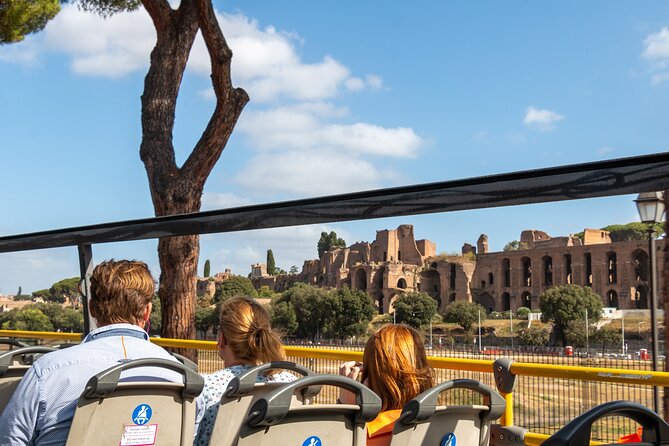
The Vatican stop is on Lungotevere Tor di Nona, between Via Panico and Via Mastro. It serves Vatican City and the Sistine Chapel, but remember that the bus ticket does not include admission.
This is a practical stop for combining transport with a museum visit. If you have tickets for the Vatican Museums, you can use the bus to get near the area, then continue on foot. You will need to confirm the precise entrance location separately because the Vatican Museums and St. Peter’s Basilica do not share the same access point.
The riverside setting also means the stop may not feel self-explanatory at first. Rome’s streets curve, bridges create barriers, and large monuments can appear close on a map while requiring a longer walk than expected. Use the supplied route map and allow time to orient yourself.
The Vatican section is one of the reasons the pass can pay off. Reaching it from Termini or the historic center by ordinary public transport can require transfers or a good deal of walking. The bus gives you a direct sightseeing route, with commentary along the way.
Spanish Steps and the shopping streets
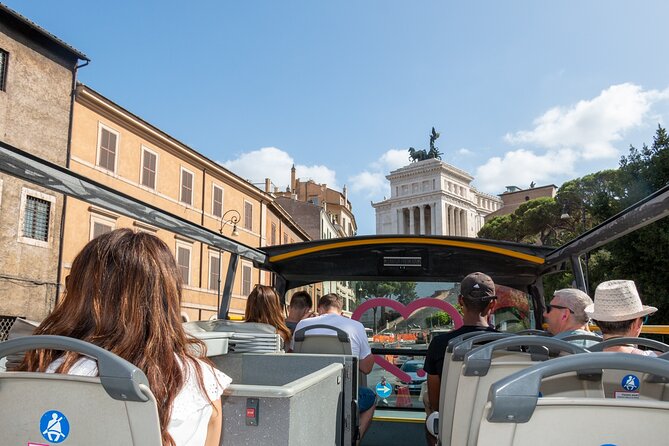
The stop at Via Ludovisi 73 serves the Spanish Steps and the shopping area. This is a good place to leave the bus if you want a mix of famous views, elegant streets, and central shopping.
The Spanish Steps themselves are best treated as a short stop rather than a full afternoon plan. You can walk down toward Piazza di Spagna, look up at the staircase, and continue into the surrounding streets. The nearby shopping zone makes this section useful if you want a break from ruins and churches.
Via Ludovisi is not necessarily the same point as the steps, so check directions before walking off. Several operators share central Rome, and it is easy to board the wrong bus if you focus only on the color or general destination. Keep the paper ticket issued on board. A barcode from your booking app may not be enough for reboarding if the staff has replaced it with a separate white slip.
Barberini and Trevi Fountain
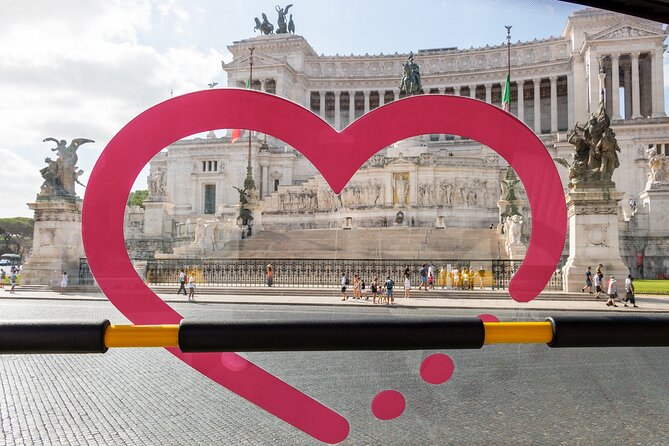
The final listed stop is on Via Barberini 12, serving Barberini and Trevi Fountain. This is an important stop, but it has a practical limitation: the fountain itself is not necessarily right at the bus curb. You will need to walk from the stop, and the exact route can be less obvious during construction or road changes.
The Trevi Fountain is one of Rome’s most crowded sights. The bus gets you into the right part of the city, but it does not spare you the crowd. Go early if you want a calmer look, and keep a close watch on bags in packed areas.
Barberini gives the stop a second purpose. The piazza and nearby streets offer a change from the fountain crush, and you can use this area as a link toward other central sights. If you are short on time, this is one of the stops I would keep, along with the Vatican and Piazza Venezia.
Audio commentary, seats, and the ride itself
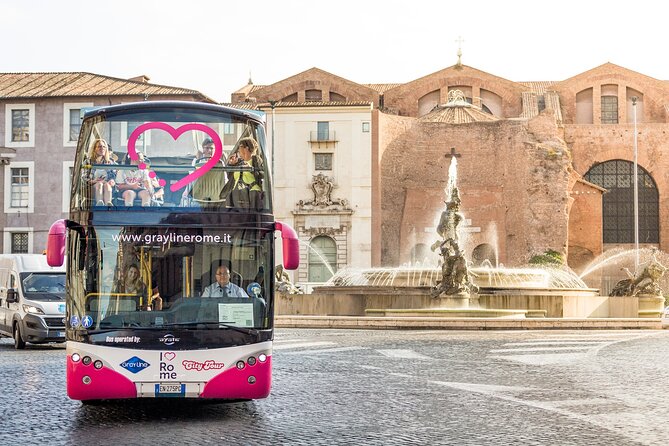
The tour includes a multilingual headset with commentary in 12 languages. The narration is generally clear and informative, and it adds useful context to a ride that might otherwise become a simple parade of monuments.
The main weakness is synchronization. The description sometimes fails to line up with the building you are passing, and the sound can be poor at certain seats. Bring your own wired earphones only if the onboard connection accepts them, and do not assume every seat will provide the same audio quality.
The open top is the best place for photographs and broad views, but secure your hat. Wind can turn a relaxing ride into a chase down the street. The lower level is more sheltered and may be the better choice in hot sun, rain, or heavy traffic.
Bus conditions appear to vary. Some rides are clean and comfortable, while other departures have had door problems or luggage taking up the wheelchair space. If you are traveling with a wheelchair, contact the operator before relying on this service, and confirm that the arriving bus can board you safely.
Small dogs are allowed only when secured in a kennel. Larger pets are not included in the stated admission rules.
Pass lengths, schedules, and waiting time
The tour offers different pass durations, and multi-use tickets allow repeated boarding, except for the one-run ticket. A longer pass is useful if you want to spread sightseeing across two days. One five-star experience used a 48-hour pass to get an overview first, then return to selected stops later.
The published operating period matters. From March 15, 2025, buses run from 8:30 AM until the last bus leaves Termini at 6:40 PM. From November 3, 2025 through March 31, 2026, the final departure is earlier, at 5:40 PM. From April 1 through November 1, 2026, the final Termini departure returns to 6:40 PM.
Those are not late hours. If you are visiting monuments during the afternoon, watch the clock. A long lunch, a museum queue, or a delayed bus can leave you without a ride back.
Waits are often manageable, with reports of roughly 15 minutes at several stops, but Termini waits can reach about 25 minutes. Delays are possible during weekends, summer holidays, special events, and road closures. The service is intended to run frequently, but Rome traffic has the final word.
How this compares with walking and public transport
I would not use this bus for every trip across Rome. The route is limited to eight listed stops, and the bus cannot reach the small streets where Rome feels most personal. For the Pantheon, Campo de’ Fiori, Trastevere, and many churches, walking or public transport may be more direct.
I would use it for three specific jobs:
- Getting an overview on your first morning
- Connecting large sightseeing zones without exhausting yourself
- Giving children or older family members a break from long walks
The tour is also useful for deciding where to spend the rest of your visit. Stay aboard for the full circuit, listen to the commentary, then return to the stops that interest you most. You will see less detail than on foot, but you will gain a fast sense of how Rome fits together.
Who should book I Love Rome?
I think this tour suits first-time Rome visitors, families, people with limited time, and anyone who wants a simple sightseeing framework. The $21.12 starting price is fair if you use the bus repeatedly, especially compared with several taxi or rideshare journeys between distant landmarks.
I would be more cautious if you need exact departure times, step-free boarding, or a stop directly beside every monument. Reports of unclear stop locations, late buses, missed announcements, broken doors, and uneven staff communication are important to consider. The experience can work well, but it rewards flexible planning.
Book only if you are happy to treat the bus as a moving introduction to Rome rather than a precision transport system. Start at Termini, complete a circuit, use the map to plan your stops, and leave extra time before any timed admission. With that approach, you get the route’s real value: a low-cost overview of Rome’s great sights, with the freedom to step off when the city catches your eye.
FAQ
Where does the I Love Rome bus start?
The first stop is at Via Giovanni Giolitti 32 near Termini Station. You may also board at any of the other indicated stops along the route.
How long does the bus tour take?
The full ride takes approximately two hours, depending on traffic and road conditions.
What attractions are served by the route?
The route serves Termini, Santa Maria Maggiore, Circus Maximus, the Bocca della Verità area, Piazza Venezia, the Roman Forum area, Vatican City, the Spanish Steps, the shopping area, Barberini, and Trevi Fountain.
Does the ticket include entry to the Vatican Museums or other monuments?
No. Admission to attractions, monuments, and museums is not included.
Is commentary available in languages other than English?
Yes. The tour provides audio commentary through headsets in 12 languages. English is one of the languages offered.
Can I use the ticket more than once?
Multi-use hop-on hop-off tickets allow repeated boarding. The one-run ticket is the exception.
What happens if I need to cancel?
You can receive a full refund if you cancel at least 24 hours before the experience start time. Cancellations or changes made within 24 hours are not accepted for a refund.
Fresh on the Rome list
- Exclusive Golf Tour Private VIP with Local & Gelato o Wine★ 5.0 · 500 reviews
- Colosseum, Palatine Hill and Roman Forum with Guided Tour★ 5.0 · 500 reviews
- Rome Trastevere Pasta Making Class with Eating Europe★ 5.0 · 505 reviews
- Rome by Night Walking Tour★ 4.5 · 506 reviews
- Rome: Colosseum Express Tour with Forum & Palatine Access★ 4.5 · 511 reviews
- Rome Food Experience Max 6 People Group Tour | w/Private Option★ 5.0 · 516 reviews
- Rome: Navona Square Underground Ticket with Audio Guide★ 4.0 · 518 reviews
- Rome: Escorted Papal Audience Experience with Entry Ticket★ 4.4 · 518 reviews
Rome Tours, compared.

Vatican Museums & Sistine Chapel Tour with Optional Basilica
Read our review →
Colosseum, Roman Forum & Palatine Guided Tour
Read our review →
Vatican Museums, Sistine Chapel & St Peter’s Basilica Guided Tour
Read our review →
Colosseum, Palatine Hill and Roman Forum Guided Tour
Read our review →
Guided Tour of Colosseum, Roman Forum & Palatine Hill
Read our review →
Colosseum & Forum with Audio Guide App -Optional Arena
Read our review →
Colosseum, Roman Forum and Palatine Hill Guided Tour
Read our review →