
Reviewed · GONDOLA RIDES & VENICE BOAT TOURS
Glass Blowing Show Visit Murano Glass Factory & Showroom OMG
Molten glass becomes a vase in minutes, then a Murano master shapes a small horse from solid glass. That quick transformation is the heart of this visit, and it gives you a clear look at a craft that is much harder than the finished pieces suggest. I like the low $5 price and the chance to see both glassblowing and solid-glass sculpture in one stop.
I also like the 500-square-metre gallery, where you can browse everything from small souvenirs to custom art. The catch is time: the demonstration may last only five to fifteen minutes, and some people find it hard to hear the guide or see around the audience. If you make the trip to Murano mainly for this, plan to enjoy the island afterward.
Key points at a glance
- Two techniques in one short show: Watch glassblowing for a vase or glass, followed by solid-glass modeling for a horse or another small sculpture.
- A real Murano furnace: The demonstration takes place at the Original Murano Glass OMG factory on Murano Island, not in central Venice.
- Very strong budget value: The ticket costs $5 per person, and that amount can be used as a coupon toward an order above €90.
- Large gallery afterward: The showroom covers 500 square metres and includes historical pieces, souvenirs, and original collections.
- Frequent starting times: Demonstrations are scheduled every half hour from 9:30 to 13:00, then from 14:00 to 15:30.
- Short but easy to add to a day out: The factory visit is a quick stop, so combine it with time to walk around Murano.
What the Murano glass show actually offers
This is a compact factory visit, not a long workshop or a full-day class. You arrive at Original Murano Glass OMG, at Fondamenta San Giovanni dei Battuti 4b, and join a guided presentation inside the furnace area.
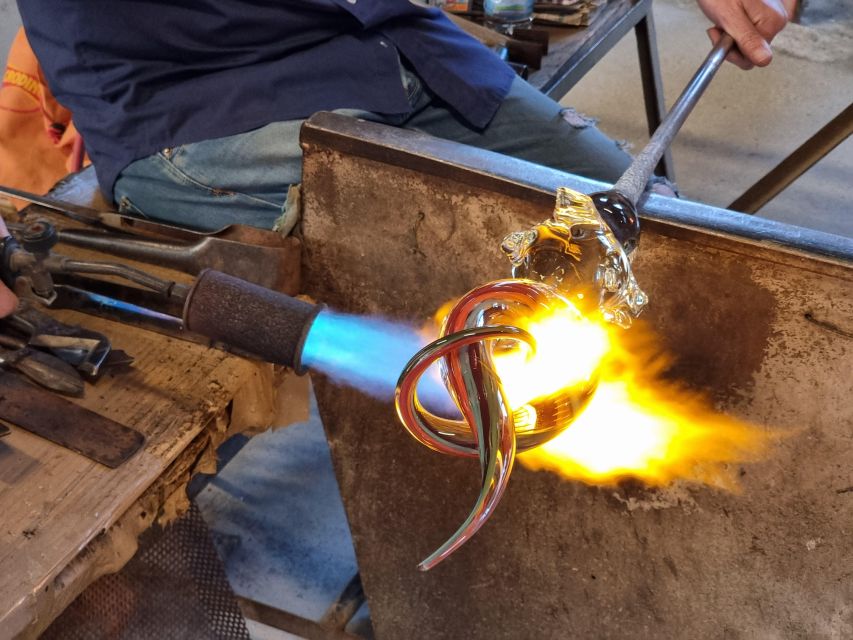
The master glassmaker demonstrates two distinct methods. First comes glassblowing, in which air is blown into hot glass to form a vase, glass, or similar object. Then comes the solid-glass technique, used to build and shape a small sculpture such as the familiar glass horse.
That contrast is useful. Glassblowing shows you how a hollow form takes shape from a glowing lump of material. Solid-glass modeling shows a different kind of control, with the master adding and shaping hot glass into a recognizable figure. The horse is often made in under five minutes, so you see the whole process without waiting through a long production sequence.
The presentation is designed for a general audience. You do not need previous knowledge of glassmaking to follow it, and the guide explains what is happening in Italian, English, or Spanish. The best moments are visual: the furnace heat, the quick turns of the tools, and the way a shapeless mass begins to look like a vase or animal.
A few other Venice mornings to weigh against this
- Venice: Grand Canal Gondola Ride with App Commentary
★ 4.1 · 18,908 reviews - Boat Trip: Glimpse of Murano, Torcello & Burano Islands
★ 4.3 · 15,699 reviews - Venice: Grand Canal by Gondola with Live Commentary
★ 4.1 · 13,681 reviews
The 15-minute factory visit
The stated guided tour length is about 15 minutes, though several recent accounts describe the actual demonstration as closer to five or ten minutes. I would treat the time as flexible rather than expecting a fixed quarter-hour performance.
That is not necessarily a problem at $5. The show gives you the essential sight: a master at work, close enough to understand the basic motions, without asking you to spend half a day inside a workshop. Still, the short length matters if you are paying for a vaporetto ride from Venice only to see this one activity.
Try to arrive ready for a brief, focused presentation. The staff normally gathers people for the next scheduled session, with shows every 30 minutes. The listed times are 9:30, 10:00, 10:30, 11:00, 11:30, noon, 12:30, 13:00, then 14:00, 14:30, 15:00, and 15:30. There is a lunch gap, and no 13:30 session is listed.
The presentation is easy to fit around a wider Murano visit. You can choose a morning time, look around the island, and return to Venice later. Or, if your schedule is tight, make the factory your planned stop and keep your expectations in proportion to the short show.
Watching the vase take shape
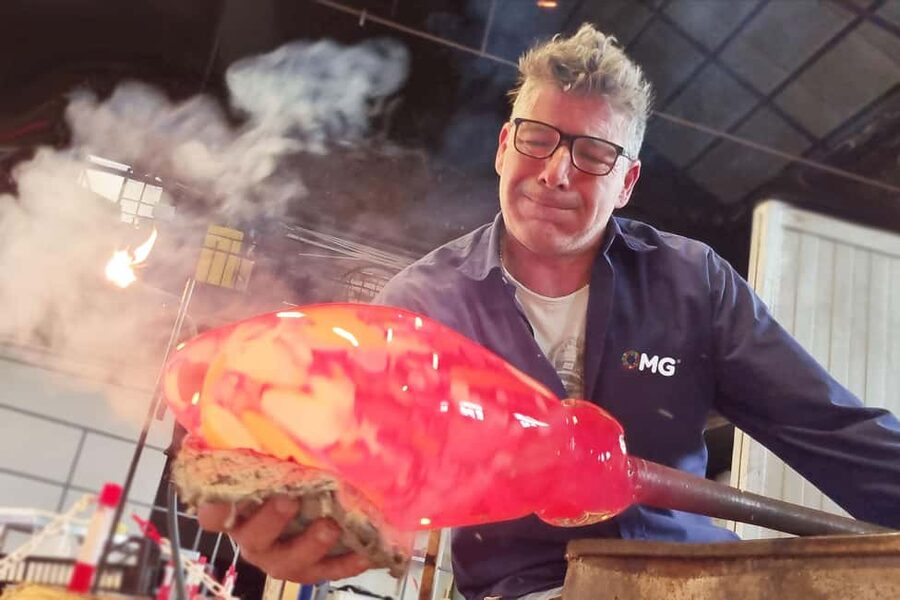
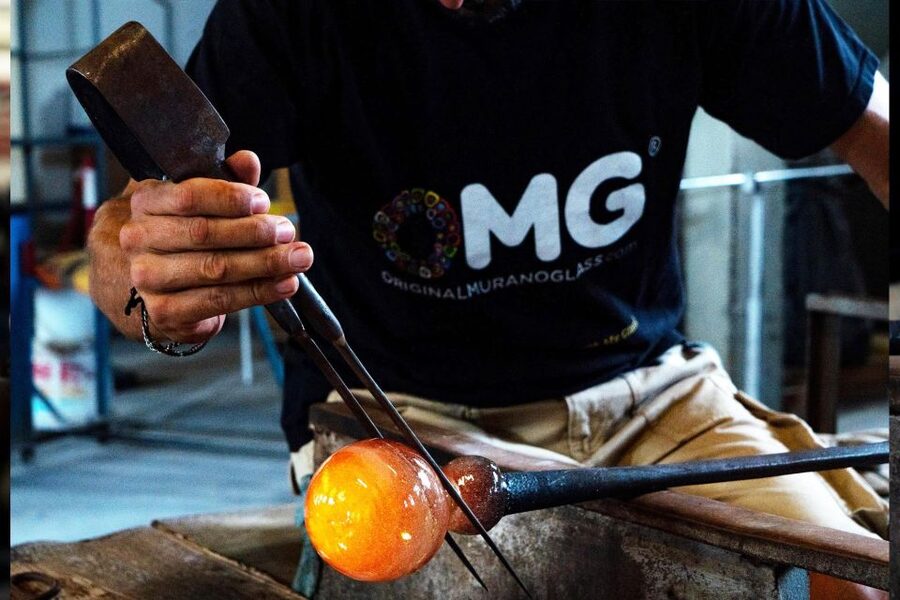
Glassblowing is the part most people picture when they think of Murano. The master gathers hot glass and uses controlled breath, rotation, and shaping tools to turn it into a hollow object.
You will see a vase or glass formed in front of you. The work looks fast because the glass must remain workable while it is hot. Every movement has a purpose, and the master needs to keep the shape balanced as it develops. The result is a practical lesson in why handmade glass costs more than an ordinary factory-made drinking glass.
The guide’s narration helps connect each movement to the finished object. Several people have found the presentation easy to follow, but the factory setting can be noisy. If you are standing toward the back, you may have trouble hearing every word. Move closer when possible, and do not assume that the best audio position is also the best viewing position.
The room itself may not win any beauty prizes. The interior has been described as plain or unattractive, which is worth knowing if you expect a polished museum setting. I see that as a tradeoff: this is a working glass facility with a showroom, not a grand historic palace.
The small glass horse and solid-glass modeling
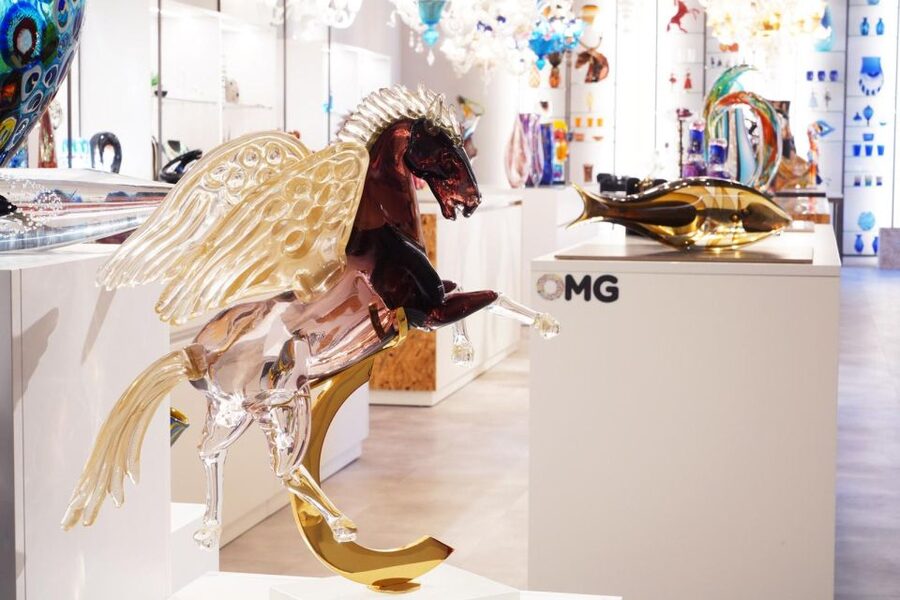
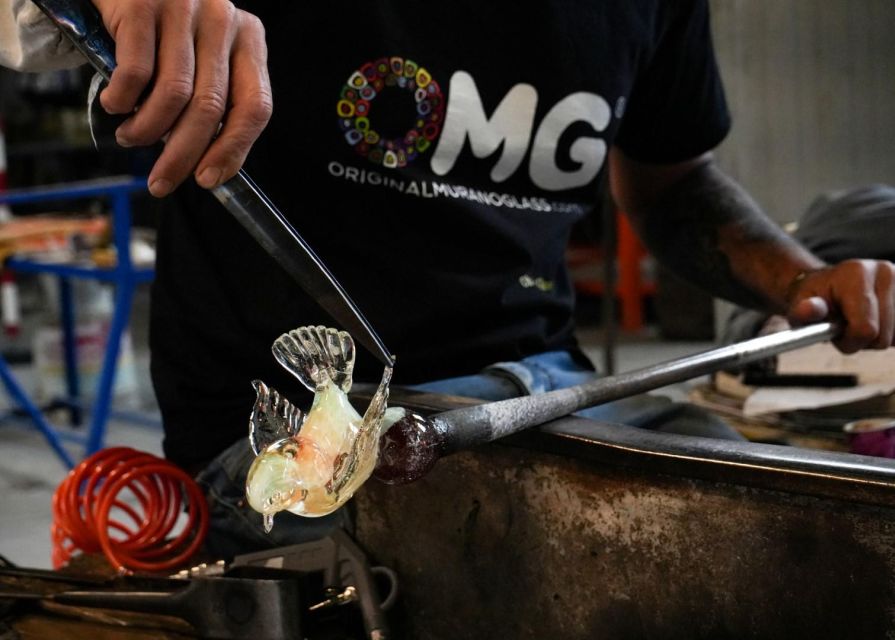
The second technique is often the most memorable. Instead of blowing a hollow form, the master models solid glass into a little sculpture, commonly a horse.
The horse can appear in less than five minutes. That speed is part of the appeal, but do not mistake it for simplicity. The master is working with hot material and making quick decisions about proportion, legs, body, and posture. You get to watch a recognizable object emerge from a compact piece of glass.
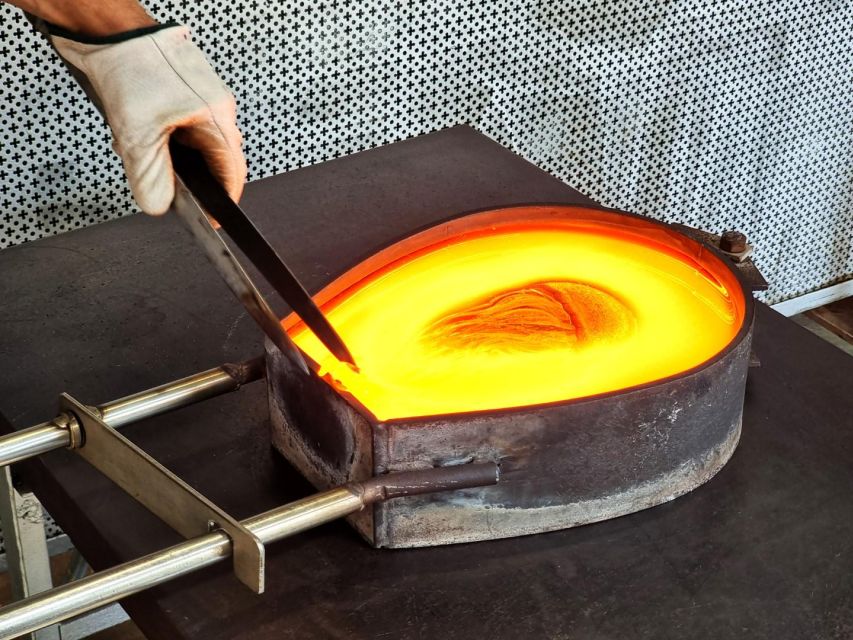
This is also the clearest moment to appreciate the physical demands of the craft. The furnace operates at temperatures above 1,000 degrees Celsius, while the finished sculpture looks delicate and light. The contrast between the harsh heat and the graceful final piece gives the demonstration its punch.
If you are visiting with children, the horse is likely to hold attention better than a long technical explanation. If you are interested in craft, design, or traditional production, the two methods together make the visit more worthwhile than a glassblowing-only presentation.
Same city, an entirely different afternoon:
- Venice: Doge’s Palace Reserved Entry Ticket
★ 4.6 · 42,716 reviews - Venice: La Fenice Opera House Entry Ticket with Audio Guide
★ 4.6 · 11,742 reviews - Doge’s Palace & St. Mark’s Basilica with Terrace Access Tour
★ 4.7 · 10,697 reviews - Venice: Burano, Torcello & Murano Boat Tour w/Glassblowing
★ 4.4 · 10,245 reviews
The 500-square-metre OMG showroom
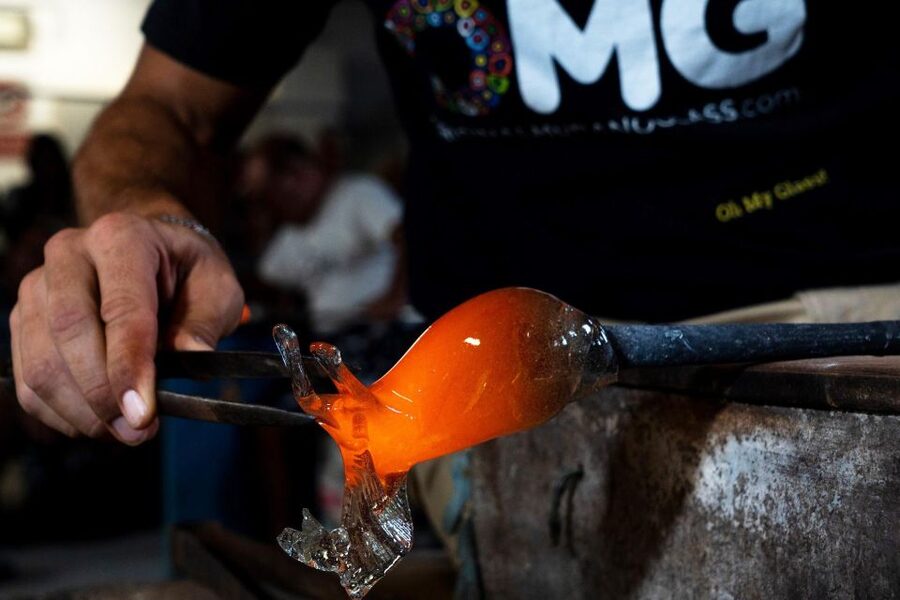
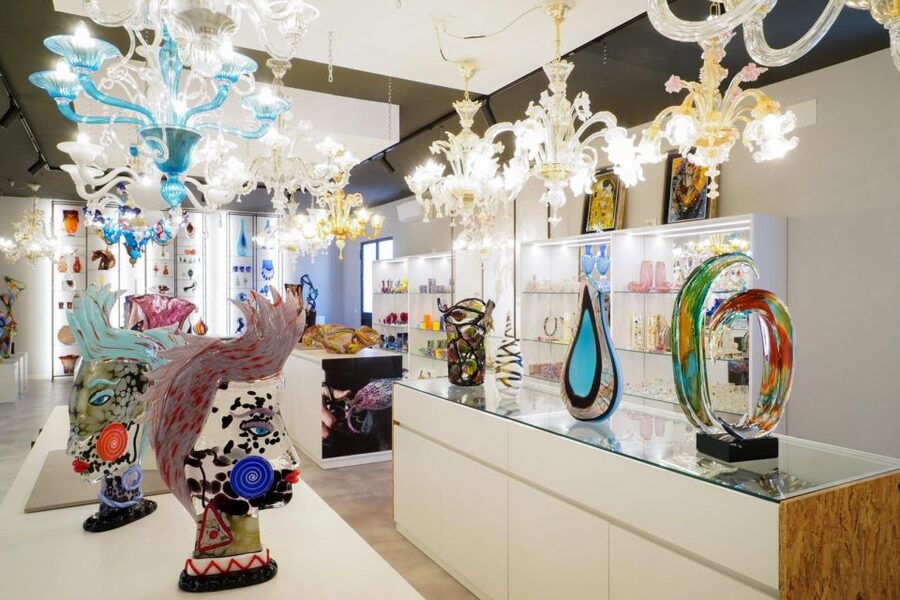
After the furnace show, you can visit the showroom and gallery. The exhibition space covers 500 square metres, giving you much more to see than the brief demonstration itself.
The collection ranges from small souvenirs to unique and customizable works of art. You might find practical gifts, decorative objects, historical works, and larger pieces produced in the company’s furnace. This is where the visit becomes useful for comparing styles, colors, sizes, and prices before deciding if you want to buy.
The gallery also puts the demonstration in context. It is one thing to watch a vase made in a few minutes. It is another to see finished pieces with careful decoration, unusual forms, or more elaborate construction. Looking at the completed work helps you understand how much design and finishing matter after the hot-glass stage.
You are not required to buy anything. Staff can arrange direct home delivery, which may help if you are considering a larger or fragile piece. The showroom has been described as offering reasonably priced glass alongside more expensive art, so you can browse at different price levels rather than assuming everything is beyond a normal souvenir budget.
How the $5 price works
At $5 per person, this is one of the easier Murano activities to justify. You receive the furnace presentation, the modeling demonstration, access to the gallery, and a coupon equal to the booking cost for an order above €90.
That coupon changes the value calculation if you already expect to purchase a substantial piece. A $5 ticket is not simply an admission fee in that case, since the amount can be applied toward an eligible purchase. Be sure the final order exceeds €90, and confirm the coupon details with the shop before buying.
If you do not plan to spend €90, the price is still modest, but you should judge it as a short introduction. The biggest cost may be getting to Murano. One visitor felt that the vaporetto expense was high compared with a demonstration lasting around ten minutes. That is a fair concern, especially if you have little interest in seeing the island itself.
For better value, combine the visit with other Murano sights and give yourself time to walk along the canals and foundations. The factory is only a few minutes from Venice in practical travel terms, but it is still on another island, so the transport cost and time should be part of your planning.
Getting there and planning the stop
The meeting point is Original Murano Glass OMG, Fondamenta San Giovanni dei Battuti 4b, 30141 Murano Venezia. The experience is listed as appointment only, so book a scheduled start rather than simply assuming you can walk in at any time.
The company can organize water taxi transport to and from its premises and can provide directions for reaching the factory. That may suit a private group or anyone carrying fragile purchases, though the supplied information does not give a standard water taxi fare.
The activity is wheelchair accessible. Live guidance is available in Italian, English, and Spanish. You can reserve and pay later, and cancellation is allowed up to 24 hours before the visit for a full refund. Those policies are useful if your Venice plans depend on weather, transport, or a changing schedule.
Because the demonstration is short, punctuality matters. If you arrive just after a show begins, you may need to wait for the next half-hour slot. I would choose a time that leaves room for the journey to Murano rather than trying to make the final available session after a packed day.
What the experience does well
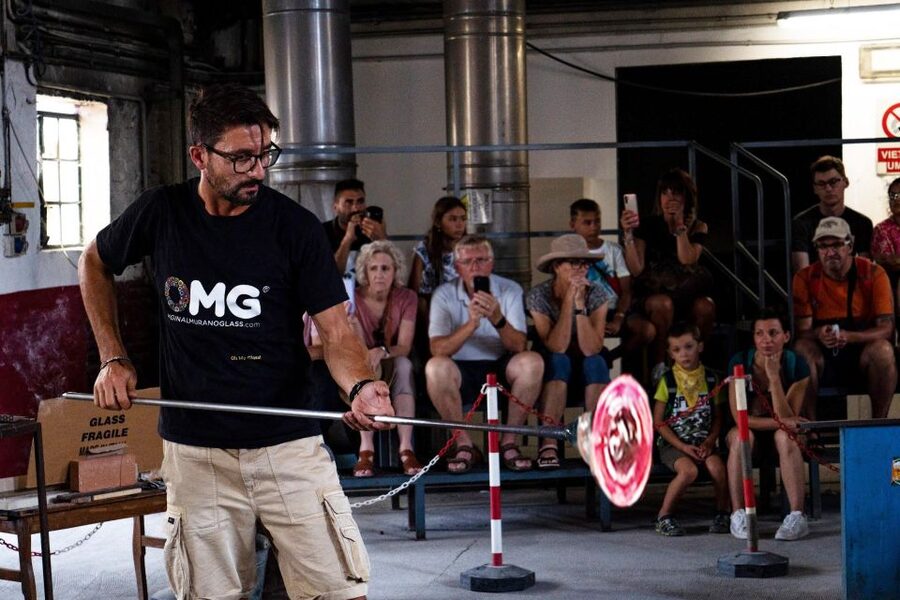
The master’s skill is the clear strength. The movement from molten material to finished vase or horse happens quickly, and the visual change is easy to understand even if you only catch part of the spoken explanation.
The staff also receives strong marks for being friendly and efficient. The presentation is described as well narrated and easy to follow, which makes a difference in a brief show. You are not left guessing what the master is doing at each stage.
The gallery adds useful time without forcing you into another paid attraction. You can look at finished work, ask about pieces, and consider direct delivery if you decide to buy. For people who want a Murano souvenir, this is more useful than simply seeing a performance and leaving.
The setting also feels more connected to production than a display in Venice proper. You are on Murano, in a furnace and showroom operated by a glass company, watching working craftsmen demonstrate techniques tied to the island’s identity.
Where you should lower your expectations
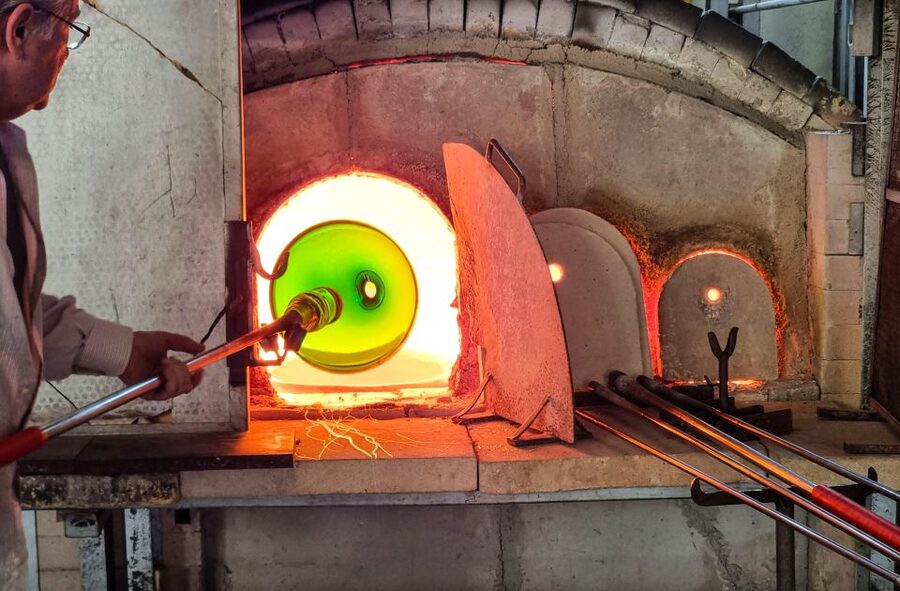
Do not book this expecting a full factory tour with every step of production. The advertised guided tour is about 15 minutes, and the actual presentation may be shorter. There is no indication that you will see a long production line, a hands-on lesson, or a private conversation with a master.
Sightlines can be uneven. A crowded position may leave your view partly blocked, and the guide can be difficult to hear in the factory. If seeing every detail matters to you, arrive early for the scheduled session and try to stand where both the work area and guide are visible.
The interior is functional rather than attractive. The gallery is the more polished part of the visit, while the furnace area may feel plain. That is not unusual for a working craft site, but it is worth noting if you prefer elaborate museum interiors.
Finally, the coupon may encourage shopping. That can be useful if you want glass, but it should not pressure you into spending €90 just to recover a $5 ticket. Buy only if you find something you genuinely want.
Who should book this Murano visit?
I would recommend it to anyone already planning to visit Murano, especially first-time visitors who want a direct look at glassmaking before browsing the island’s shops and galleries. The price is low, the time commitment is small, and the two techniques provide a clear introduction.
Families may appreciate the quick pace and the glass horse. Art, design, and craft enthusiasts will get more from comparing the live process with the finished pieces in the gallery. Shoppers who want a Murano piece can also make practical use of the showroom and possible home delivery.
I would be more cautious if you have only a few hours in Venice and are not otherwise interested in Murano. The boat journey can take more time and money than the show itself. In that case, book it only if seeing a master work at a real furnace is high on your list.
Should you book the OMG glass show?
Book it if you want a cheap, authentic introduction to Murano glass and can combine it with a wider visit to the island. The vase and horse demonstrations are visually striking, and the showroom gives the short presentation more value.
Skip it if you expect an extended factory tour, a detailed museum visit, or a hands-on class. The best approach is to see it as a brief window into a demanding craft, then spend time exploring Murano and deciding if any glass in the gallery deserves space in your suitcase or a delivery address.
FAQ
Where does the glass demonstration take place?
It takes place at Original Murano Glass OMG, Fondamenta San Giovanni dei Battuti 4b, 30141 Murano Venezia.
How much does the experience cost?
The listed price is $5 per person.
How long does the factory visit last?
The guided tour is listed as approximately 15 minutes. Some accounts describe the actual demonstration as lasting around five to ten minutes.
What will I see being made?
You will see a master glassmaker blow a vase, glass, or similar object, then model a small solid-glass sculpture such as a horse.
What languages are available?
Live guidance is available in Italian, English, and Spanish.
When are the demonstrations held?
Sessions are scheduled every half hour at 9:30, 10:00, 10:30, 11:00, 11:30, 12:00, 12:30, 13:00, 14:00, 14:30, 15:00, and 15:30.
Can the ticket price be used toward a purchase?
Yes. The booking cost can be used as a coupon toward an order above €90.
More Show in Venice
- Rome: Welcome To Rome Immersive Multimedia Show
★ 4.6 · 3,161 reviews
Fresh on the Venice list
- Murano: Glass Blowing Demonstration and Artistic Glass Gift★ 4.6 · 507 reviews
- From Venice: Dolomites, Lake Misurina, and Cortina Day Trip★ 4.6 · 508 reviews
- Venice Islands: Murano Glass & Burano Colors Guided Visit★ 4.5 · 510 reviews
- The Majestic Teatro La Fenice: Guided Tour in Venice★ 4.3 · 513 reviews
- Real Venetian Kayak – Tour of Venice Canals with a Local Guide★ 4.5 · 518 reviews
- Venetian Carnival Mask Making Class in Venice, Italy★ 4.5 · 525 reviews
- Half Day Murano and Burano Island Tour by Private Boat★ 4.5 · 529 reviews
- Venice Trilogy: Murano, Burano & Torcello by Lagoon Boat★ 4.5 · 532 reviews
Gondola Rides & Venice Boat Tours, compared.
Grand Canal Gondola Ride with App Commentary
Read our review →
Boat Trip: Glimpse of Murano, Torcello & Burano Islands
Read our review →

Burano, Torcello & Murano Boat Tour w/Glassblowing
Read our review →
Murano and Burano Boat Tour with Glass Factory Visit
Read our review →
Murano, Burano and Torcello Half-Day Sightseeing Tour
Read our review →
Murano & Burano Islands Guided Small-Group Tour by Private Boat
Read our review →
Browse the lists this tour appears in