Reviewed · ROME TOURS
Fettuccine and Tiramisu Masterclass in the Heart of Rome
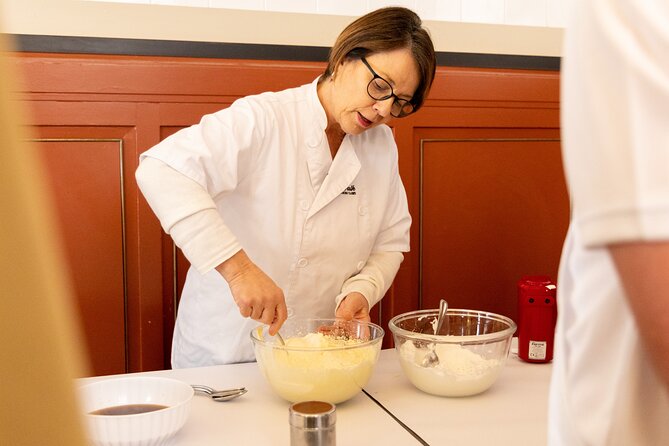
Fresh pasta is the star here, but the clever part is that you begin with dessert. You’ll whip eggs and mascarpone for tiramisu, then work flour and eggs into dough before cutting your own fettuccine. I like that the meal is not just a demonstration, and I like the friendly, funny teaching style praised by guests who worked with Leo, Furio, and Carlotta.
The main consideration is that you make the pasta and tiramisu, but not the sauce. The chefs cook your fettuccine for you, which keeps the meal smooth, but anyone hoping to learn a full Roman sauce recipe may find the class a little limited.
Key points about the Rome pasta class

- You make two classic dishes: fresh egg fettuccine and tiramisu, both from basic ingredients.
- The class is hands-on: you knead, roll, shape, and cut the pasta yourself.
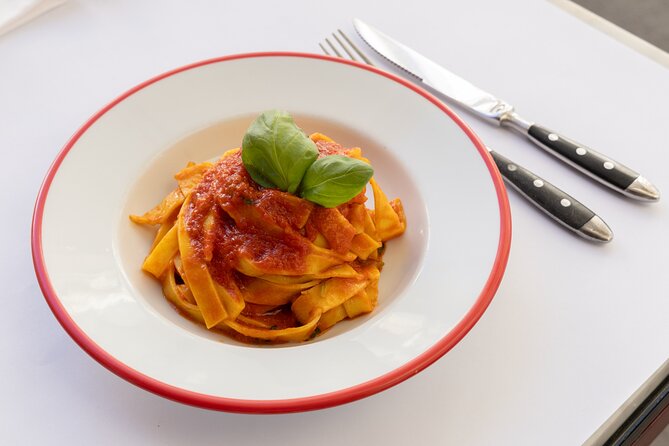
- You choose your sauce: Amatriciana, Cacio e Pepe, or Pomodoro e Basilico.
- The chef cooks the pasta for you: you can sit down and enjoy the finished dish without worrying about timing.
- The meal includes drinks: wine or a soft drink, water, and either limoncello or hot coffee.
- The group is capped at 14 people: small enough for a more personal lesson than a large cooking show.
What the 2-hour-30-minute experience feels like
This is a compact cooking lesson followed by a proper meal. The meeting point is Via Giuseppe Zanardelli, 14, in central Rome, and the class returns to that same location at the end.
The setting is a historic Roman restaurant, so this is not a cooking lesson in a private home or a market kitchen. That gives the experience a restaurant rhythm. You prepare the food, the kitchen handles the cooking, and you finish at the table with wine, coffee, or limoncello.
The class is offered in English. That matters when you are working with dough, since the useful instruction comes in small steps: how the mixture should feel, when to knead, how thin to roll, and how to cut the strands. You do not need previous cooking experience. The class is also suitable for families, based on the way the instruction is described and the experience of groups with no pasta-making background.
The group limit of 14 is a sensible size. It is large enough to create a social meal, but not so large that the class has to become a stage show. You may share the table with people you did not arrive with, which is part of the appeal. It also means the experience may feel less private if you want one-on-one time with the chef.
The activity is usually booked well ahead, on average 41 days in advance. That is useful planning information, especially if your Rome dates are fixed. I would not treat this as a last-minute filler if you have your heart set on a particular day or time.
A few other Rome mornings to weigh against this
- Vatican Museums & Sistine Chapel Tour with Optional Basilica
★ 4.3 · 67,413 reviews - Colosseum, Roman Forum & Palatine Guided Tour
★ 4.7 · 63,148 reviews - Vatican Museums, Sistine Chapel & St Peter’s Basilica Guided Tour
★ 4.5 · 39,149 reviews
Starting with tiramisu before the pasta
Beginning with tiramisu is a practical choice. The dessert needs time to come together before you eat it, so preparing it first lets the flavors settle while you make the pasta.
You will whip eggs and mascarpone into a creamy mixture, then layer it with biscuits and cocoa. The process is simple enough for a first-time cook, but it still teaches the basic structure of the dessert. You get to see how a few familiar ingredients become the soft, coffee-friendly finish of a Roman meal.
The tiramisu is made by you rather than handed over as a ready-made portion. That gives the dessert real value in a cooking class. You leave with a method you can repeat, not only a sweet course you happened to eat once.
I also like the order of the class because it keeps the pace varied. Tiramisu involves mixing and layering. Pasta requires physical work, patience, and attention to texture. Switching between the two keeps the lesson from feeling like two hours of rolling dough.
Do not expect a pastry-school lesson. The focus is on preparing a classic dessert in a relaxed group setting. If you want a detailed discussion of coffee, cocoa, biscuit types, or regional tiramisu variations, this may not be the right format. You are here to make and eat the dish, not study every version of it.
Turning flour and eggs into fettuccine
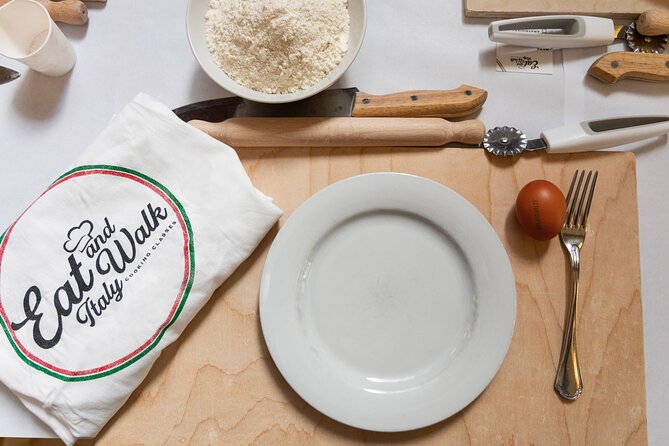
The pasta portion is the heart of the class. You begin with flour and eggs, then knead the dough by hand. From there, you roll it, shape it, and cut it into fettuccine.
This simple ingredient list is one of the best reasons to take the class. Fresh pasta can look mysterious when it arrives on a plate, but flour and eggs make the process understandable. You can feel the dough change as you work it, and the chef can correct your technique along the way.
Rolling is the part that rewards patience. The dough has to reach the right thickness before it becomes noodles. You will not simply watch a chef feed pasta through a machine. Your hands do the important work, which makes the final bowl more satisfying.
The chef also introduces other traditional pasta shapes. The supplied details center on fettuccine, so that is the result you should expect to eat. One account of the experience also described making ravioli and pairing it with butter and sage sauce, but this should be treated as a possible part of the class flow rather than a guaranteed feature of every session.
That distinction matters when you book. Choose this experience for handmade fettuccine and tiramisu. Consider any extra pasta shape a pleasant bonus, not part of the firm promise.
The class works well for couples, families, and friends because everyone has a task. People with no experience can take part without feeling behind, while confident cooks still get the pleasure of handling fresh dough in a Roman restaurant.
Choosing between three Roman sauces
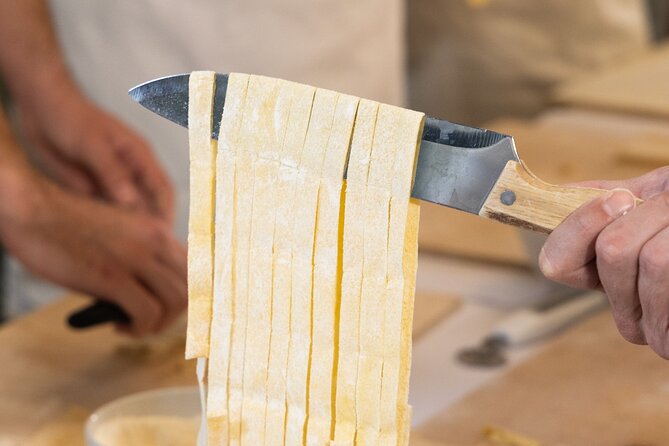
You choose the sauce for your fettuccine from three familiar options:
- Amatriciana, a tomato-based Roman sauce with a savory, stronger flavor
- Cacio e Pepe, built around cheese and black pepper
- Pomodoro e Basilico, a straightforward tomato and basil sauce
The chef then uses your choice to finish the pasta. You do not make the sauce yourself, so the decision is mainly about the flavor you want on the plate.
If you prefer a classic Roman taste with plenty of character, Amatriciana is the natural pick. Cacio e Pepe is the most stripped-down option, and that makes it a good test of the pasta itself. Pomodoro e Basilico is the safe choice for a lighter, familiar tomato flavor.
A useful tip is to think about the rest of the meal. If the class includes ravioli on your date and that pasta comes with butter and sage, choosing a red sauce for the fettuccine gives you more contrast. This was specifically recommended by a couple who enjoyed that combination.
The kitchen cooks your pasta for you. That is convenient and probably improves the final result, since fresh pasta needs careful timing. The tradeoff is educational: you do not practice judging the cooking point yourself. If your goal is to learn every stage from dough to sauce to boiling, ask about the exact class format before booking.
Same city, an entirely different afternoon:
- Rome: Colosseum, Palatine Hill and Roman Forum Guided Tour
★ 4.8 · 32,814 reviews - Rome: Guided Tour of Colosseum, Roman Forum & Palatine Hill
★ 4.7 · 27,897 reviews - Rome: Colosseum & Forum with Audio Guide App -Optional Arena
★ 4.2 · 24,770 reviews - Rome: Colosseum, Roman Forum and Palatine Hill Guided Tour
★ 4.5 · 23,903 reviews
Sitting down to eat what you made
After the hands-on work, you sit down to eat your fettuccine with the sauce you selected. The meal includes water and one glass of red or white wine, with a non-alcoholic beverage available instead.
This meal is an important part of the value. You are not paying only for a lesson and then finding your own dinner afterward. The class turns your work into a complete evening activity, which is useful in central Rome when you want a break from sightseeing.
You also get your freshly made tiramisu. Then you can finish with a shot of limoncello or hot coffee. Espresso makes sense if you want a short Italian-style finish, while limoncello gives the meal a more leisurely restaurant feel.
Extra food and drinks are not included. Keep that in mind if you arrive very hungry or expect several glasses of wine. The included drink is enough to complete the meal, but this is not an unlimited food-and-drink event.
The social side is part of the experience. You may eat with people you met during the class, rather than rushing away as soon as the cooking ends. That shared table helps make this a good choice for solo visitors and couples who enjoy meeting others. It is less ideal if you want a quiet, private dinner.
The chefs make the difference
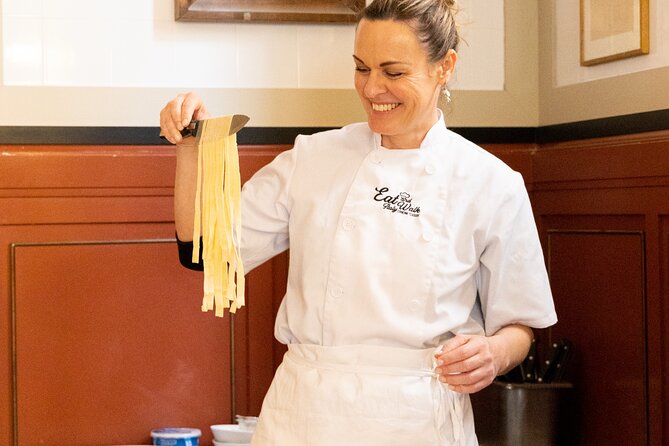
The chef leads the lesson in English and guides the group through both dishes. The teaching style matters more here than a long lecture, because pasta dough is best learned by watching, trying, and getting a quick correction.
Leo is described as a clear, encouraging, and attentive teacher, particularly good with a large group. Furio is praised for a warm approach and an easygoing way of helping people through the process. Carlotta is credited with making the class a fun change of pace from Rome’s crowded streets.
Those names are useful because the exact chef may vary. You should expect a friendly professional chef, but you may not know in advance whether Leo, Furio, or Carlotta will lead your session.
The strongest praise centers on the atmosphere and the guidance. People with zero experience were able to complete both dishes, and families found the class approachable. That tells you more than a simple promise to learn Italian cooking: the lesson is structured so beginners can succeed.
The class is not meant to turn you into a restaurant chef in one afternoon. Its value is that you learn a few repeatable techniques, share the work with a small group, and eat the result while the instructions are still fresh in your mind.
Is $67.75 a fair price?
At $67.75 per person, this sits in the reasonable middle for a central Rome food activity. The price covers about two and a half hours, instruction from a professional chef, the ingredients for two dishes, your cooked fettuccine, tiramisu, water, wine or a soft drink, and limoncello or coffee.
The best value comes from the combination of lesson and meal. If you would pay for dinner anyway, the class replaces part of that evening expense while adding an activity. You also avoid paying for a separate cooking demonstration that leaves you hungry afterward.
The value is weaker if you mainly want a detailed sauce workshop or a private class. The sauce is not made by participants, and the group can include up to 14 people. You are paying for a shared, social lesson rather than custom instruction.
I would compare it with the cost of a central Rome dinner plus a separate activity. For a couple, it can serve as both an evening meal and a memorable break from monuments. For a family, the hands-on format gives children and adults something to do together, provided everyone is comfortable working at a shared table.
The perfect score from 366 reviews and a recommendation rate of 100 percent suggest very strong satisfaction, especially with the chefs, the tasty pasta, and the tiramisu. Still, price value depends on what you want to learn. This is a practical introduction, not a full culinary course.
Who should book this class?
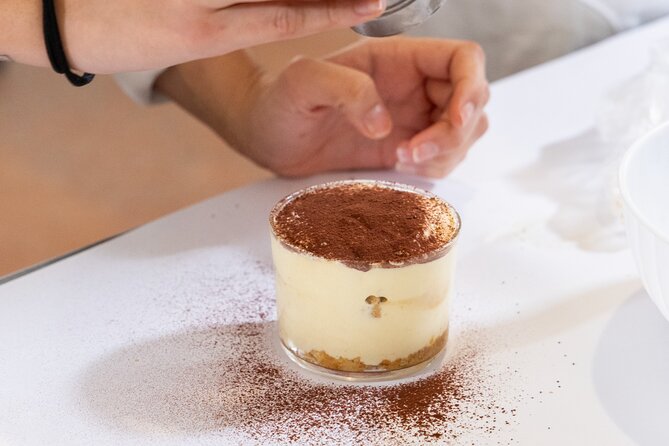
I would recommend it to you if you want to do more than photograph food in Rome. You make the pasta by hand, choose your sauce, and eat the finished dish soon afterward. That connection between work and meal is the main pleasure.
It is a particularly good fit for:
- Couples looking for a relaxed activity away from major sights
- Families wanting a structured food experience with no prior skill required
- Solo visitors who enjoy a shared meal and meeting people at the table
- First-time pasta makers who want clear instruction in English
- Food lovers who want to learn a few dishes they can repeat at home
You may want another type of class if you need a private setting, advanced technique, or instruction on making Roman sauces. You should also check the exact format if ravioli is important to you, since fettuccine is the clearly stated main pasta.
The central location near public transportation makes it easy to fit into a day in Rome, though the precise travel time depends on where you are staying. The meeting and ending point are the same, so you do not need to arrange a second pickup location.
Free cancellation is available until 24 hours before the start time for a full refund. Changes or cancellations inside that window are not accepted or refunded, and the cut-off follows Rome’s local time. Confirmation arrives at booking, and the ticket is mobile, which keeps the arrival process simple.
Should you book the fettuccine and tiramisu class?
Book it if you want a friendly, hands-on Roman food activity with a meal built in. The strongest reasons are the beginner-friendly teaching, the chance to work fresh egg dough by hand, and the complete finish of pasta, tiramisu, wine or a soft drink, and limoncello or coffee.
I would especially choose it for a family, couple, or small group that wants a change from museums and crowded streets. The class has enough structure to keep everyone involved, but enough social time to make the dinner feel relaxed.
Skip it if your main goal is to master sauces, attend a private lesson, or study several regional pasta styles in depth. For most visitors seeking a practical taste of Italian cooking in central Rome, though, $67.75 is a fair price for an activity that teaches, feeds, and gives you something useful to recreate at home.
FAQ
How much does the Fettuccine and Tiramisu Masterclass cost?
The price is $67.75 per person.
How long does the cooking class last?
The experience lasts approximately 2 hours and 30 minutes.
Where does the class start?
It starts at Via Giuseppe Zanardelli, 14, 00186 Rome, Italy.
Where does the experience end?
The activity ends back at the meeting point on Via Giuseppe Zanardelli.
Is the class offered in English?
Yes. The experience is offered in English.
What pasta sauces can I choose from?
You can choose Amatriciana, Cacio e Pepe, or Pomodoro e Basilico, also described as tomato and basil.
Do I make the sauce during the class?
No. You make the fettuccine, but the sauce is not made by participants. The chefs use your selected sauce to cook the pasta.
What drinks are included?
You receive water, one glass of red or white wine or a non-alcoholic beverage, and your choice of limoncello or hot coffee.
Can I cancel for a full refund?
Yes. You can cancel at least 24 hours before the experience start time for a full refund. Cancellations or changes made less than 24 hours before the start time are not accepted, and the cut-off uses Rome’s local time.
Fresh on the Rome list
- Rome: Guided Catacombs Tour & Capuchin Crypt (Audio Guide)★ 4.3 · 191 reviews
- Guided tour of the Colosseum, Roman Forum and Palatine in Spanish★ 4.5 · 191 reviews
- Rome: Borghese Gallery Guided Tour with Skip-the-Line Ticket★ 4.5 · 192 reviews
- Rome: Arena Colosseum Tour with Arena Access★ 4.6 · 193 reviews
- Colosseum, Forum, Palatine Hill with audio guide and Arena or Bus option★ 4.0 · 193 reviews
- Rome: Colosseum & Roman Forum Guided Tour★ 5.0 · 194 reviews
- Rome: Domus Aurea Guided Tour and Virtual Reality Experience★ 4.7 · 194 reviews
- Rome Vintage Fiat 500 car Tour With Photographer★ 5.0 · 194 reviews
Rome Tours, compared.

Vatican Museums & Sistine Chapel Tour with Optional Basilica
Read our review →
Colosseum, Roman Forum & Palatine Guided Tour
Read our review →
Vatican Museums, Sistine Chapel & St Peter’s Basilica Guided Tour
Read our review →
Colosseum, Palatine Hill and Roman Forum Guided Tour
Read our review →
Guided Tour of Colosseum, Roman Forum & Palatine Hill
Read our review →
Colosseum & Forum with Audio Guide App -Optional Arena
Read our review →
Colosseum, Roman Forum and Palatine Hill Guided Tour
Read our review →