
Reviewed · WALKING TOURS
Ferrara: City Highlights Walking Tour with Local Guide
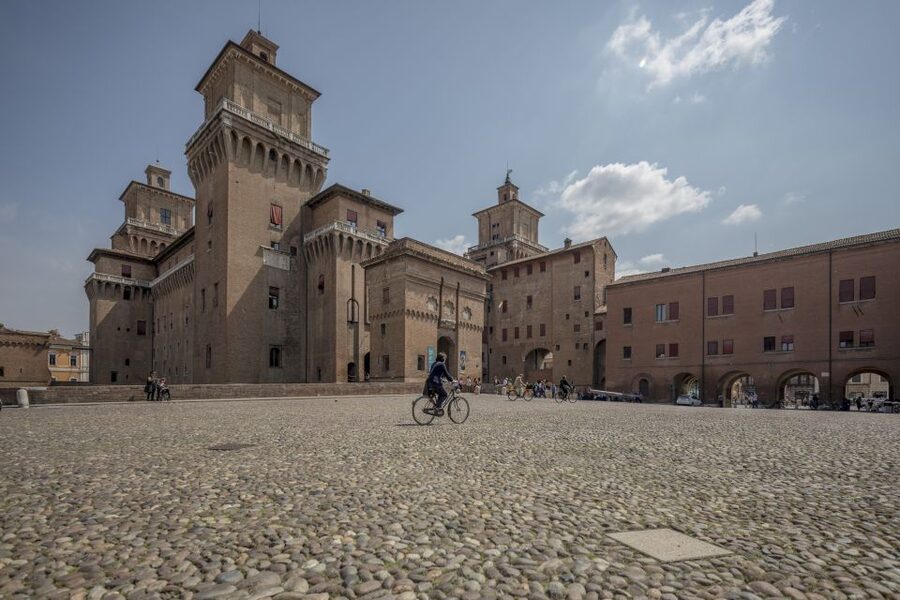
Ferrara’s appeal comes into focus on foot, where a medieval court city opens into one of Italy’s clearest Renaissance plans. This tour links Estense Castle, Palazzo dei Diamanti, and Corso Ercole I d’Este before reaching quieter parks, a former Carthusian church, and Piazza Ariostea.
I like the way the route shows both grand architecture and ordinary city scale. I also like the chance to hear the legends of the Este family while moving through the urban expansion designed by Biagio Rossetti. The main consideration is that the guide and audio support are in Italian, and entrance tickets are not included.
Key points at a glance
- Castle-to-Renaissance route: Begin in the courtyard of Estense Castle and follow Corso Ercole I d’Este toward the northern walls.
- Biagio Rossetti’s city plan: See how Ferrara’s late-15th-century expansion created broad streets and carefully placed palaces.
- Palazzo dei Diamanti: Stop at Ferrara’s famous diamond-pointed palace in the heart of the Renaissance addition.
- Quiet northern sights: Continue through Massari Park and toward the former Carthusian complex at San Cristoforo alla Certosa.
- Italian-led experience: The live guide and included audio guide are in Italian. Guide Maria Chiara is one of the guides praised by name.
- Good short introduction: Two hours gives you a useful first look at Ferrara without taking over your day.
Why Ferrara makes a fine walking city
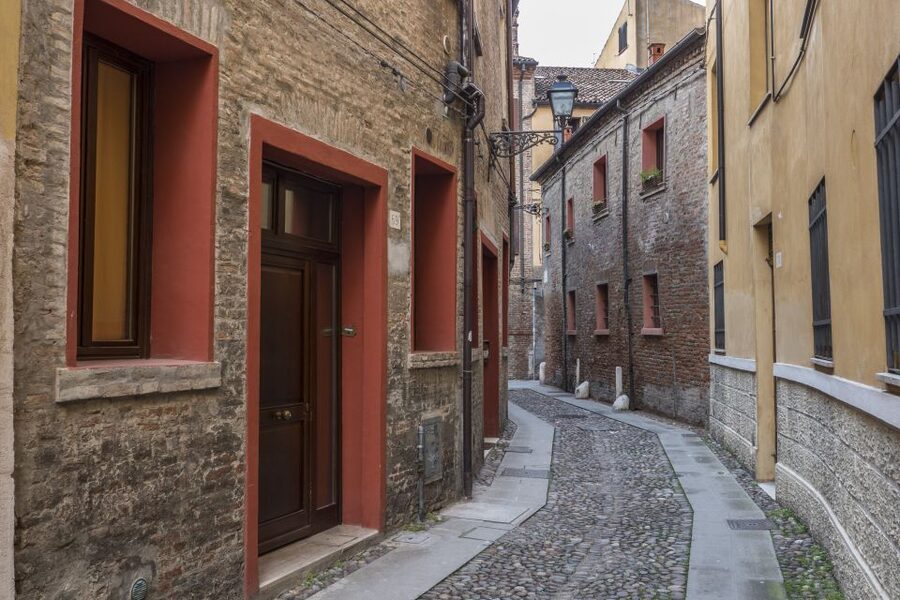
Ferrara is unusually easy to understand on foot. The historic center is compact, the major sights sit within a connected route, and the city’s medieval and Renaissance chapters are visible in the streets rather than locked away in a museum display.
The Este family ruled Ferrara for centuries, and their mark is everywhere. The castle recalls the defensive court of the Middle Ages. The wide northern streets reflect a later ambition: Ferrara was being reshaped into a planned Renaissance capital.
That change is the central idea of the tour. You are not simply ticking off a castle, a palace, a park, and a square. You are watching Ferrara change from a fortified medieval center into a more spacious and ordered city.
I find that a local guide is most useful here because the buildings alone do not explain why the streets look so different. The stories of the Este family, the urban plan commissioned by Ercole I d’Este, and the role of Biagio Rossetti give the route a clear thread.
The pace should suit you if you like looking up at buildings, pausing for explanations, and walking between sights instead of being rushed from one entrance to another. It is still a city walk, so comfortable shoes and an umbrella on wet days are sensible choices.
More walking tours in Italy:
- Milan: Guided Walking Tour & Last Supper Visit with Ticket
★ 4.7 · 5,409 reviews - Naples: Street Food Walking Tour with Local Guide
★ 4.8 · 4,256 reviews - Venice Walking Tour and Gondola Ride
★ 3.5 · 3,630 reviews
Meeting the guide at Estense Castle
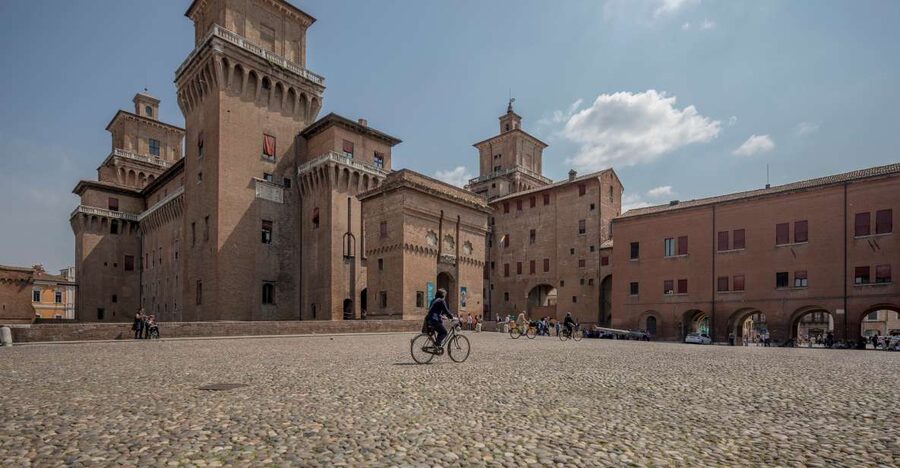
The tour begins in the courtyard of Estense Castle, near the loggia. This is a practical meeting point because the castle is Ferrara’s best-known landmark and an easy place to orient yourself.
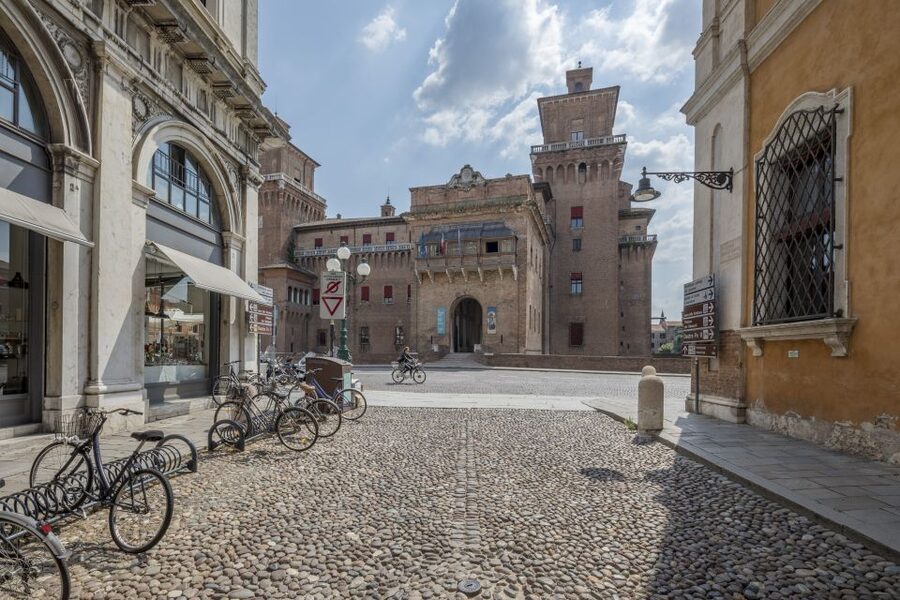
The castle itself is the right opening scene. Its towers, moat, and heavy presence recall Ferrara’s medieval power, while its connection with the Este court points toward the cultural life that followed. The route uses the castle as a starting point rather than making an extended interior visit.
That distinction matters. Entrance tickets are not included, so you should not assume that this walking tour provides a full castle admission. If entering the castle is important to you, check the available arrangements before booking or plan a separate visit.
The guide’s role here is to set up the city’s story. You can expect attention to the Este family, including the secrets and legends connected with the dynasty. The experience is offered in Italian, with an Italian audio guide included, so you should be comfortable following explanations in that language.
Named guide Maria Chiara has been singled out for her preparation, precision, and warm manner. Other recent feedback also points to guides who are courteous and engaging. Since guide assignments can change, treat Maria Chiara as a possible guide rather than a guarantee.
Following Corso Ercole I d’Este
From the castle, the route looks toward Corso Ercole I d’Este, the long road connecting the castle with the northern gate of Ferrara’s walls. This is one of the most useful parts of the walk because the street lets you read the city plan in real time.
The road crosses the Addizione Erculea, the major Renaissance extension commissioned by Duke Ercole I d’Este. Biagio Rossetti, a Ferrarese architect, designed the expansion at the end of the 15th century.
For you, the value is visual. The older city and the later addition do not feel like the same kind of place. The Renaissance section gives buildings and streets more room, creating a measured sense of order. The guide can connect that physical change with the ambitions of the Este court.
Corso Ercole I d’Este is also a good reminder that a city plan can be a political statement. Ferrara was not merely adding houses at the edge of town. It was presenting itself as a sophisticated court city with space for palaces, churches, gardens, and formal routes.
Take your time with the upper floors, doorways, and street views. A two-hour tour cannot stop at every building, so the guide will need to choose the most useful examples. If architecture interests you, listen for the explanation of how Rossetti’s plan fits together rather than treating the street as just a pretty walk.
Seeing Palazzo dei Diamanti up close
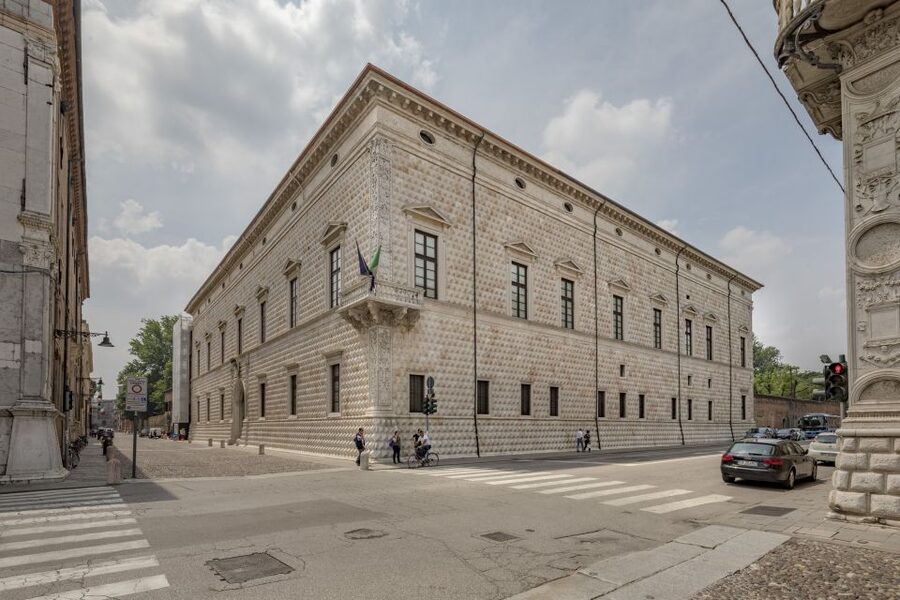
The route continues to Palazzo dei Diamanti, the best-known building in the Addizione Erculea. Its facade is covered with diamond-shaped stone points, which catch the light and give the palace its memorable texture.
This is the kind of stop that works well on a walking tour. You can see the palace in its urban setting and understand that it was designed as part of a wider Renaissance plan, not placed at random in an already finished neighborhood.
The building is described as original, which is useful because Ferrara’s appeal depends on its preserved architectural character. You are seeing one of the defining faces of the city’s Renaissance expansion, with the surrounding streets helping explain its scale and purpose.
The tour does not include entrance tickets. That means the focus here is the exterior and the guide’s explanation unless a separate admission arrangement is made. If you want to explore the palace interior, set aside additional time and budget.
I would not call this a weakness of the walk. A two-hour city introduction has to make choices, and Palazzo dei Diamanti is valuable even from outside. Still, you should know that this is not a museum-focused tour. It is about the relationship between Ferrara’s buildings, streets, and past.
A few other Italy mornings to weigh against this
- Rome: City Sightseeing Hop-on Hop-off Bus with Audioguide
★ 4.0 · 16,045 reviews - Milan: City Sightseeing Hop-On Hop-Off Bus with Audio Guide
★ 4.0 · 6,256 reviews - City Sightseeing Rome Hop-On Hop-Off Bus Tour
★ 3.5 · 5,446 reviews - Bologna: City Center Walking Tour
★ 4.5 · 3,478 reviews
The historic crossroads and Massari Park
After the palace, the route continues from Ferrara’s historic crossroads toward Massari Park. This change of mood is one of the walk’s nicest features.
The park is marked by old cedars of Lebanon and substantial plant life. It gives you a pause from palace facades and formal streets, while the University Botanical Garden lies nearby. The setting helps show that Ferrara’s Renaissance identity is not limited to stone and brick.
For me, this section adds welcome variety. A tour made only of churches and palaces can blur together, especially after a busy morning. Massari Park gives your eyes a rest and makes the city feel more human in scale.
The route description presents the park as a place facing the Botanical Garden, not as a guided garden visit. You should expect to pass through or along this green area rather than receive a full botanical tour.
This is also a good spot to notice how Ferrara avoids becoming a single-note sightseeing stop. Its appeal comes from the change between defensive walls, court architecture, quiet greenery, and open civic spaces. The guide’s commentary can help you see those parts as one city rather than separate attractions.
San Cristoforo alla Certosa and the Carthusian past
A few steps from the park, the route reaches the monumental complex of San Cristoforo alla Certosa. The site has changed over time and now functions as a Monumental Cemetery, but its original identity was tied to the Carthusian monks.
The complex opens onto a square framed by elegant arcades. That arrangement creates a quieter, more reflective atmosphere than the castle or the main Renaissance avenue. It is a strong example of how Ferrara’s religious buildings continue to shape the city even after their original use has changed.
The tour includes an internal visit to the Renaissance church. This is an important distinction from the exterior stops. You get to see the former temple of the Carthusian monks, who were brought to Ferrara by Duke Borso d’Este in the mid-15th century.
Because entrance tickets are not included in the tour price, confirm how the church visit is handled on your date. The route specifically includes the interior visit, but the general ticket policy means you should not assume every possible admission is covered.
The church gives the tour a different kind of historical focus. At the castle, power feels defensive and dynastic. At San Cristoforo, the story turns to religious life, patronage, and the way the Este rulers shaped institutions as well as streets.
The arcades and square should also appeal to photographers, though this is not a photography tour. The important thing is the transition from an active city route to a place designed for quiet and recollection.
Ending in Piazza Ariostea
The final stop is Piazza Ariostea, a historic square named for the poet Ludovico Ariosto. His statue rises above the central column, giving the space a clear literary focus.
The square offers a relaxed ending. Rather than finishing at another crowded monument, the route ends under the loggia beside the green area. That makes sense after two hours of walking and gives you time to absorb the connection between Ferrara’s court, its writers, and its public spaces.
Piazza Ariostea is also a useful place to continue exploring on your own. You can end the tour with a better mental map of the northern part of Ferrara, including the Renaissance addition, Massari Park, the Certosa complex, and the route back toward the castle.
The final stop will appeal most if you enjoy the cultural side of a city. If your priority is a long interior visit to major museums, this walk may feel light on admissions. If you want to understand Ferrara as a whole, the square provides a fitting close.
What the $17 price really buys you
At $17 per person, the tour is priced as an affordable introduction rather than a full-day cultural program. You are paying for two hours with an Italian-speaking guide, an organized route, an Italian audio guide, and interpretation that ties the sights together.
That is good value if you are visiting Ferrara for the first time and want help choosing what deserves more of your time. The guide can explain why Corso Ercole I d’Este matters, how the Addizione Erculea changed the city, and where the Este family fits into the story.
The value is less clear if you speak no Italian or want extensive access to interiors. The live tour and audio guide are both in Italian, and entrance tickets are not included. In that case, you may need additional visits after the walk.
Two hours is also a useful length. It is long enough to cover a substantial route, but short enough to fit around lunch, a museum visit, or onward travel. You will be walking through streets, parks, and squares, so the experience is not a bus tour or a seated lecture.
The booking terms add flexibility. You can cancel up to 24 hours before the activity for a full refund, and you can reserve now while paying later. Those policies are helpful when your Emilia-Romagna plans are still moving around.
Who should book this Ferrara walk
I would choose this tour if you want a clear first look at Ferrara’s medieval and Renaissance sides in one outing. It suits you especially well if you enjoy architecture, urban planning, local legends, and short walks with regular points of interest.
It is also a good choice for a couple or family group that wants a gentle introduction before exploring independently. Ferrara can seem quiet and spread out compared with larger Italian cities, but this route gives the city shape.
The tour is wheelchair accessible, which is useful information for planning. You should still check the exact conditions of the route and any ticketed interior access when booking, since historic buildings can have different arrangements.
I would hesitate if you need an English-language tour, since the listed live guide and audio guide are in Italian. I would also look elsewhere if your main goal is to spend most of your time inside Estense Castle or Palazzo dei Diamanti.
Bring an umbrella if rain is possible. The walk is outdoors for much of its length, and Ferrara’s appeal depends on seeing the streets, facades, park, and squares directly.
Should you book it?
Book this tour if you want an inexpensive, well-shaped introduction to Ferrara and you can follow Italian. The route covers the city’s key Renaissance ideas without ignoring quieter places such as Massari Park and San Cristoforo alla Certosa.
Skip it if you need English commentary or a ticket-heavy itinerary focused on interiors. For everyone else, the $17 price, two-hour length, accessible format, and castle-to-Ariostea route make this a sensible way to get your bearings before exploring Ferrara on your own.
FAQ
Where does the Ferrara walking tour meet?
The meeting point is in the courtyard of Estense Castle, near the loggia.
How long does the walking tour last?
The tour lasts two hours.
What language is the tour offered in?
The live tour guide speaks Italian, and the included audio guide is also in Italian.
Are entrance tickets included?
No. Entrance tickets are not included in the activity price.
Does the route include San Cristoforo alla Certosa?
Yes. The itinerary includes an internal visit to the Renaissance church at San Cristoforo alla Certosa.
Is the tour wheelchair accessible?
Yes, the activity is listed as wheelchair accessible.
Fresh on the Italy list
- Rome: Guided Catacombs Tour & Capuchin Crypt (Audio Guide)★ 4.3 · 191 reviews
- Guided tour of the Colosseum, Roman Forum and Palatine in Spanish★ 4.5 · 191 reviews
- Stories of Pompeii: Small Group tour with archeology expert guide★ 5.0 · 191 reviews
- Bolgheri: Winery Tour with Wine Tasting★ 4.7 · 191 reviews
- Palinuro: Costa del Mito Boat Tour★ 4.9 · 191 reviews
- From Palau/La Maddalena: All inclusive Yacht Tour★ 4.8 · 191 reviews
- Small-Group Cooking Class in Positano: Gnocchi, Tiramisù & Drinks★ 5.0 · 191 reviews
- Semi Private Deep Wine Chianti and San Gimignano from Florence★ 5.0 · 191 reviews
Walking Tours, compared.
Guided Walking Tour & Last Supper Visit with Ticket
Read our review →
Rialto Bridge & Offbeat Unusual Venice Walking Tour
Read our review →
Private 3 hrs Venice Tour: St Mark’s, Walking tour & Boat tour
Read our review →
Skip the line: Uffizi and Accademia Small Group Walking Tour
Read our review →Browse the lists this tour appears in