
Reviewed · FOOD TOURS
Eternal Rome Food Tour: Campo de Fiori, Jewish Ghetto, Trastevere
Rome’s best food lesson may happen between the famous sights. This four-hour walk links Campo de’ Fiori, the Jewish Ghetto, and Trastevere, with stops for porchetta, fried cod, supplì, ricotta pie, artichokes, pasta, wine, and gelato. You get a meal, a neighborhood tour, and a useful look at how Roman food fits into the city’s past.
I like the small group cap of 12, which gives your guide room to talk with you instead of herding everyone from bite to bite. I also like the variety: this is not just a pizza-and-pasta crawl, but a mix of market food, Jewish-Roman specialties, wine, pastry, and gelato.
The main thing to consider is the amount of walking and the price, $143.97 per person. That can be fair if you value a full meal, several drinks, local guidance, and a compact introduction to three neighborhoods, but it is more than a casual snack tour. Come hungry, and do not plan a full dinner afterward.
Five things to know before you book
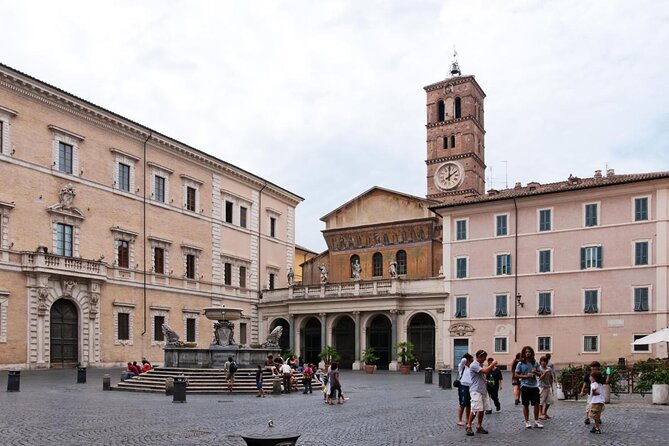
- Three neighborhoods in four hours: You move from Campo de’ Fiori across the Tiber and into the Jewish Ghetto and Trastevere.
- A serious amount of food: Tastings can include porchetta, pie, fried cod, supplì, artichoke, pasta, wine, and gelato.
- The wine cellar is a highlight: Spirito di Vino offers access to a cellar said to be more than 2,000 years old.
- The group stays small: A maximum of 12 people makes conversation with guides such as Edma, Gianluca, Yanira, and Katherine more likely.
- The menu can change: Stops and dishes vary by season and day, so treat the published tasting list as a guide, not a guarantee.
Why this Rome food walk works
This tour is built around a smart idea: food gives you a reason to enter neighborhoods you might otherwise cross quickly. Campo de’ Fiori is often treated as a photo stop, the Jewish Ghetto as a short historical detour, and Trastevere as an evening restaurant district. Here, each area becomes part of a connected meal.
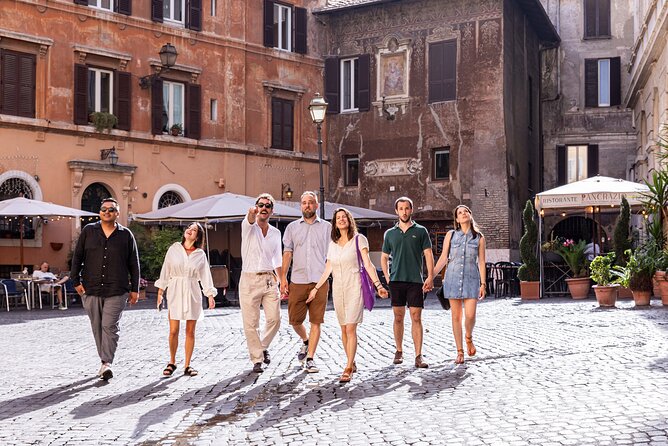
You start in the center of Rome and finish in Trastevere. The route is useful early in a visit because it helps you get your bearings while showing you where Romans eat, what foods are tied to local traditions, and how much of Rome’s character is found away from the headline monuments.
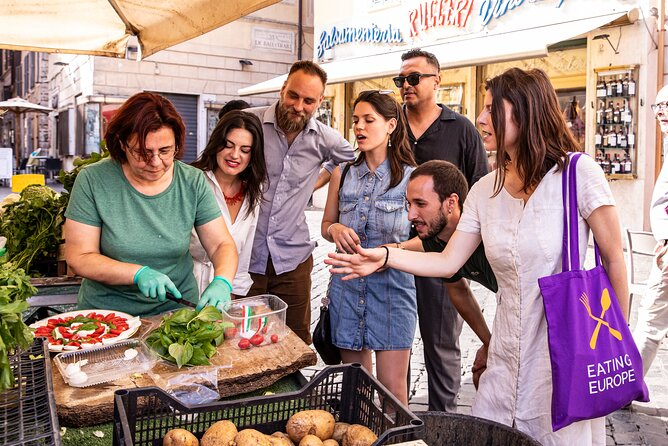
The English-speaking guide is an important part of the value. The company has used guides including Edma, Gianluca, Yanira, and Katherine. A strong guide can explain why a dish matters, manage the timing at busy food stops, and answer the practical question you will soon face in Rome: where should I eat next?
The schedule also leaves room for conversation. One guide, Gianluca, was praised for mixing walking history with food and drink without letting either side take over. That balance is what I would want from this tour. You are not simply standing at counters while someone lists ingredients, and you are not walking past restaurants while hearing a long lecture.
More Food Tours in Rome
- Winner 2025 Rome Twilight Trastevere Food Tour by Eating Europe
★ 5.0 · 5,157 reviews - Rome: Trastevere or Jewish Quarter Street Food Tour
★ 4.8 · 3,839 reviews - Rome Food Tour: Unlimited Tastings with Fine Wine & Barolo
★ 5.0 · 3,365 reviews
Campo de’ Fiori and the porchetta opening
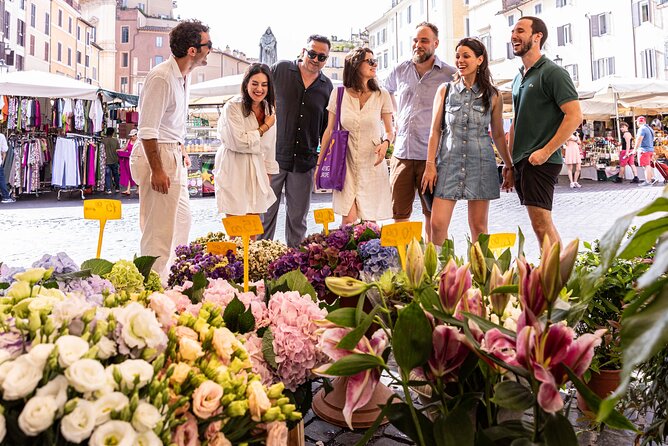
The tour begins at Piazza Campo de’ Fiori, one of Rome’s most recognizable central squares. Morning departures visit the market, so the setting can change depending on your start time. Market stalls, restaurants, and the open square make this an easy place to begin a food-focused morning.
Your first named food stop is Norcineria Viola dal 1890. The tasting is a porchetta sandwich in pizza bianca, served with a glass of red wine. Porchetta is roast pork seasoned with herbs, and pizza bianca is the soft, lightly seasoned Roman bread used here as the sandwich base.
This is a good first bite because it is filling without being fussy. You can expect savory meat, bread, and wine rather than a small decorative sample. The 20-minute stop gives the guide time to explain the food and lets you eat at a relaxed pace.
If you are planning to eat a large breakfast before the tour, I would reconsider. The first sandwich is only the beginning, and the later tastings add up quickly.
A short passage and a change of pace
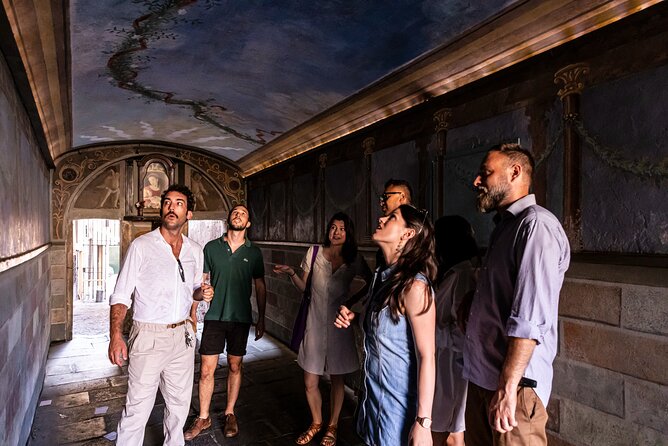
After Campo de’ Fiori, the route takes you through Passetto del Biscione. This narrow passage is a small change of rhythm after the open square and food counter. It is included as a quick 10-minute walk, giving you a glimpse of a less obvious side of central Rome.
This part is not a major attraction that needs a long visit. Its value is in the contrast. Rome often rewards you for looking down side lanes and through passages rather than staying only on the main streets. Your guide can use the walk to connect the city’s streets with the areas you are about to visit.
The tour is not a sit-down meal at one restaurant. It keeps moving, with short stops and food breaks. If you prefer long meals with plenty of time at the table, this format may feel brisk. If you like seeing more of Rome while eating along the way, the pace makes sense.
The Jewish Ghetto’s pastry and fried specialties
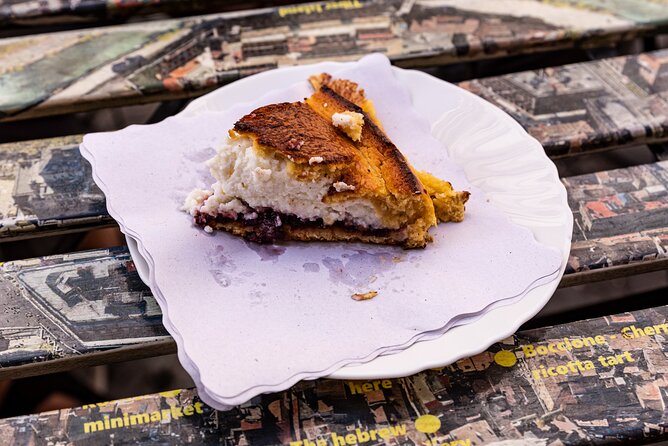
The Jewish Ghetto gives the tour its clearest food identity. At Pasticceria Boccione, you try the traditional ricotta and sour cherry pie, paired with Prosecco. The pastry is a strong example of how Rome’s Jewish food traditions remain part of the city’s everyday eating culture.
The stop lasts about 25 minutes. That is enough time to enjoy the pastry and hear some context, though you should not expect a long bakery visit. Boccione is known for traditional baked goods rather than a modern café experience, so the focus stays on the food.
Next comes Taverna del Ghetto, where the tasting includes crispy fried cod, supplì, and white wine. Supplì is a fried rice croquette, often filled with tomato and mozzarella. Together, the cod and supplì show two sides of Roman street and comfort food: crisp outside, soft and savory inside.
I like this section because it moves beyond the familiar Roman trio of carbonara, cacio e pepe, and amatriciana. Those pastas are worth eating, but a food tour should also show you the city’s fried snacks, pastries, and neighborhood traditions.
The fried cod and supplì are also practical tastings. They are easy to understand, strongly flavored, and satisfying in small portions. The drawback is that fried foods, wine, bread, pastry, and pasta arrive in the same four-hour window. Guests with sensitive stomachs should pace themselves and use the walking time between stops.
Same city, an entirely different afternoon:
- Vatican Museums & Sistine Chapel Tour with Optional Basilica
★ 4.3 · 67,413 reviews - Colosseum, Roman Forum & Palatine Guided Tour
★ 4.7 · 63,148 reviews - Vatican Museums, Sistine Chapel & St Peter’s Basilica Guided Tour
★ 4.5 · 39,149 reviews - Rome: Colosseum, Palatine Hill and Roman Forum Guided Tour
★ 4.8 · 32,814 reviews
Ancient Rome beside the Jewish Ghetto
The route also pauses near a striking ancient Roman structure in the Jewish Ghetto, built in the first century BC. The information supplied for the tour does not name the structure, but the stop is intended as an archaeological reminder of how much older Rome is than the restaurants around it.
This is one of the tour’s better ideas. You are not being moved from one food counter to another with no sense of place. The historic stops show how layers of Rome sit together: ancient ruins, later religious and neighborhood traditions, and modern restaurants serving old recipes.
The tour then reaches Tiber Island, the only island in the Tiber River within Rome’s city limits. It has a place in Roman history and mythology, and crossing or pausing here helps connect the Jewish Ghetto with Trastevere.
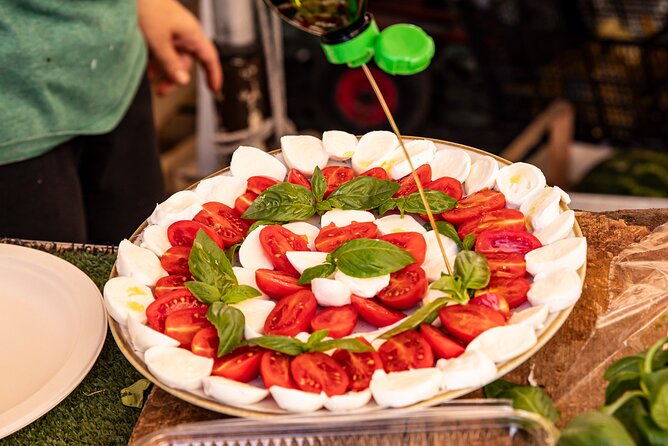
One evening route included sparkling wine and caprese salad on the island, though the company notes that tastings change by day and season. Do not book expecting that exact pairing, but do expect the island to be part of the wider route and the food selection to adapt.
Trastevere’s fried artichoke at Da Enzo
In Trastevere, the tour stops at Trattoria Da Enzo for a Jewish-style fried artichoke to go. This is a classic Roman Jewish specialty: a whole artichoke fried until the leaves and outside become crisp.
The stop is listed as about 10 minutes, so this is a quick hand-held tasting rather than a full meal at the trattoria. That suits the dish. You get to eat it while moving through Trastevere, instead of spending the afternoon at a table.
Da Enzo is also one of the places that can be very busy. One guide arranged food in advance for the group at a time when a long line had formed outside. That detail matters because it shows where the small-group format can pay off. You may not have to spend valuable touring time waiting for every plate.
Still, the restaurant access should not be misunderstood. You are not guaranteed a full restaurant reservation or a long sit-down meal. The experience centers on a prepared tasting and the guide’s handling of the stop.
Spirito di Vino and the ancient cellar
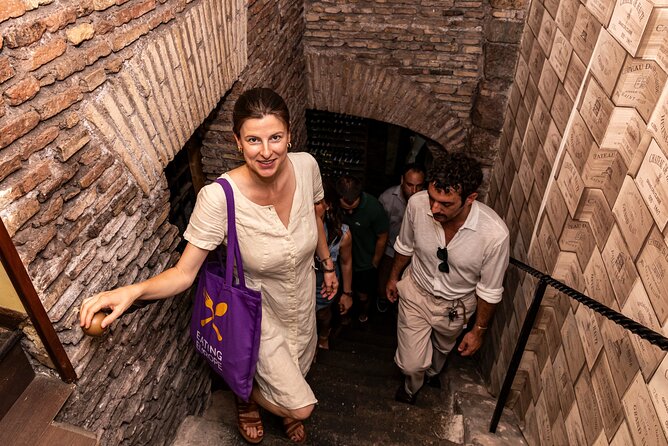
The longest food stop is at Spirito di Vino, where you taste pasta with beef ragu and sample wine in a cellar said to be older than the Colosseum. The cellar is more than a backdrop. It gives the food a physical connection to Rome’s long past, with old stone and a dining setting that feels different from a standard restaurant visit.
The stop lasts about 35 minutes, making it the best chance to sit, slow down, and enjoy a more substantial dish. The included food may feature pasta such as amatriciana, while the stated tasting on this route is pasta with beef ragu. Since dishes can change, you should expect Roman pasta rather than one guaranteed recipe.
This is also where the tour begins to feel like dinner. Wine is served at several stops, and the meal keeps building from sandwich to pastry, fried food, artichoke, pasta, and dessert. I would plan the tour as a late lunch or early dinner, depending on the start time.
Extra drinks are not included. The included wine pairings are part of the tour, but if you want additional glasses, you pay separately. That is worth remembering when judging the total cost.
Finishing with real gelato at Fatamorgana
The final stop is Fatamorgana, an artisan gelato shop in Trastevere. You taste gelato and learn how to recognize a properly made product, including authentic Italian flavors and signs of quality.
Ending with gelato is more than a pleasant finish. It gives the guide a chance to explain a food you will see everywhere in Rome. The point is not simply to choose the tallest, brightest mound in a case. You learn to pay attention to how gelato is presented and what separates a careful product from a tourist-focused one.
The tasting lasts about 25 minutes. Since gelato is the last stop, you can enjoy it without worrying about spoiling the next course. It also gives you a final taste of Trastevere, where the tour ends on Via Roma Libera.
What $143.97 buys you
At $143.97 per person, this is not a cheap way to grab a few snacks. The price makes more sense when you count the full package: about four hours, a guide, several food stops, wine pairings, neighborhood walking, and access to the old wine cellar.
You are also paying for coordination. A guide has to move a small group between restaurants, arrange tastings, keep the route on time, and explain the food. At a popular stop such as Da Enzo, advance planning can save you from standing in a long queue.
The value is strongest if you would otherwise pay for a substantial lunch or dinner and would like help choosing local food. It is weaker if you are a light eater, do not drink wine, or prefer to order exactly what you want at one restaurant.
Group discounts are available, and the group is capped at 12. If you are traveling with family or friends, check the current group pricing before booking. The tour also includes a digital guide to Rome’s food scene and insider food tips, which can help you plan meals after the walk.
Tips for the guide are not included. Hotel pickup and drop-off are not included either, so you need to reach Campo de’ Fiori on your own and arrange your return from Trastevere.
Walking, timing, and dietary needs
The tour lasts approximately four hours and involves a fair amount of walking. You should wear comfortable shoes and leave room in your schedule for a route that crosses several central neighborhoods. The end point is in Trastevere, not back at Campo de’ Fiori.
Morning tours visit the Campo de’ Fiori market. Other start times may offer a different atmosphere, and the food stops can shift. The company makes clear that the published dishes are a sample of what it often serves, not a fixed promise for every departure.
Vegetarian and gluten-free needs can be discussed by email or added at booking, and the company will try to accommodate them. The tour is not suitable for severe or life-threatening allergies to ingredients served along the route, and the company does not accept responsibility for food allergies or intolerances.
Children under four can join free, but their food is not included. Paid tickets with food are available from age four. Most people can take part, service animals are allowed, and the meeting point is near public transportation.
You receive confirmation when booking. The tour requires at least two people, and if that minimum is not met, the company offers a new date, another experience, or a refund. Free cancellation is available up to 24 hours before the start time. Canceling or changing the booking inside that window is not accepted for a refund.
Who should book this tour
I would choose this tour for a first or second day in Rome, especially if you want food to help organize your sightseeing. It is a good match for couples, families with older children, and friends who enjoy trying many small portions instead of ordering one predictable meal.
It also suits anyone curious about the Jewish Ghetto and Trastevere but unsure how to explore them. The route gives you a reason to cross the river, enter food shops, and notice places you might pass on a standard sightseeing walk.
You should think twice if you have severe food allergies, dislike wine, want a slow restaurant lunch, or find four hours of walking difficult. The tour is generous with food, but the schedule is active and the menu is not fully fixed.
Should you book the Eternal Rome Food Tour?
Yes, if you want a filling introduction to Roman food with a strong neighborhood component. The best reasons to book are the small group, the mix of Jewish-Roman and classic Roman dishes, the old wine cellar, and the chance to finish with gelato after crossing three very different parts of the city.
Book it early if your dates are fixed, since it is often reserved well ahead of time. I would make it one of the first food experiences in Rome, then use the digital guide and the guide’s tips to choose your later meals.
At $143.97, it asks for a meaningful part of your food budget. But if you count the meal, wine, history, route planning, and access to busy food stops, it offers solid value for someone who wants more than a quick taste and a list of restaurants.
FAQ
How long does the Eternal Rome Food Tour last?
The tour lasts approximately four hours.
Where does the tour begin and end?
It begins at Piazza Campo de’ Fiori in Rome and ends at Via Roma Libera 11 in Trastevere.
How many people can join the tour?
The tour has a maximum of 12 participants. It requires at least two guests to operate.
Is food included in the tour price?
Yes. Food tastings and selected drinks are included. Extra drinks and tips for the guide are not included.
Can dietary requirements be accommodated?
Vegetarian and gluten-free requests can be shared by email or added at booking, and the company will try to accommodate them. The tour is not suitable for people with severe or life-threatening food allergies to ingredients served during the experience.
Can children join the tour?
Children under four can join free, but food is not included for them. Paid tickets with food are available for children aged four and up.
Fresh on the Rome list
- Rome: Guided Catacombs Tour & Capuchin Crypt (Audio Guide)★ 4.3 · 191 reviews
- Guided tour of the Colosseum, Roman Forum and Palatine in Spanish★ 4.5 · 191 reviews
- Rome: Borghese Gallery Guided Tour with Skip-the-Line Ticket★ 4.5 · 192 reviews
- Rome: Arena Colosseum Tour with Arena Access★ 4.6 · 193 reviews
- Colosseum, Forum, Palatine Hill with audio guide and Arena or Bus option★ 4.0 · 193 reviews
- Rome: Colosseum & Roman Forum Guided Tour★ 5.0 · 194 reviews
- Rome: Domus Aurea Guided Tour and Virtual Reality Experience★ 4.7 · 194 reviews
- Rome Vintage Fiat 500 car Tour With Photographer★ 5.0 · 194 reviews
Food Tours, compared.
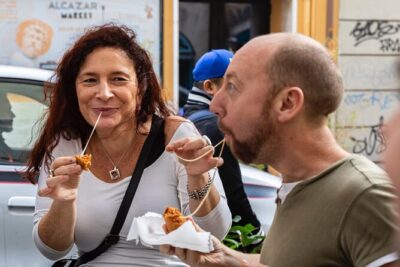
Winner 2025 Rome Twilight Trastevere Food Tour by Eating Europe
Read our review →
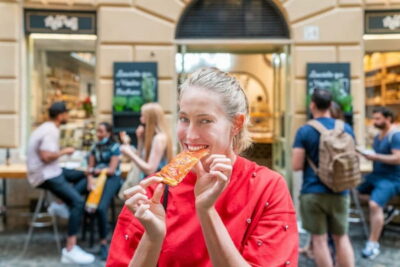
Trastevere or Jewish Quarter Street Food Tour
Read our review →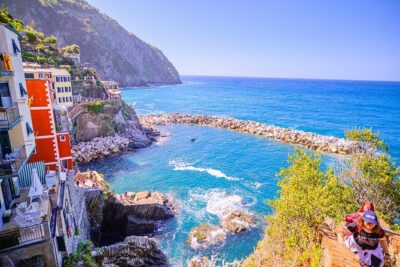
Cinque Terre Park Day Trip with Optional Street Food
Read our review →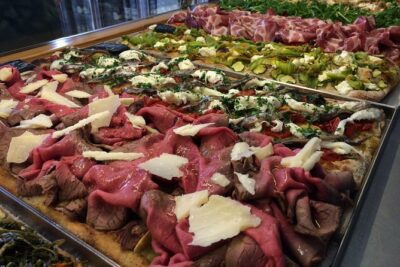
Rome Food Tour: Unlimited Tastings with Fine Wine & Barolo
Read our review →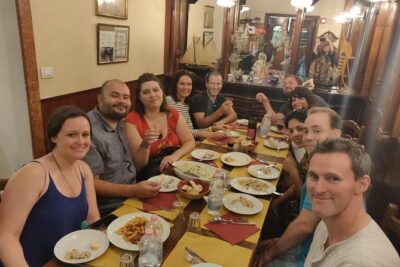
Eat Like a Local: Venice 3-Hour Small-Group Food Tasting Tour
Read our review →
Trastevere Food tour with Free-Flowing Fine Wine
Read our review →
Trastevere & Campo de Fiori Street Food Walking Tour
Read our review →Browse the lists this tour appears in