
Reviewed · WALKING TOURS
Cagliari: Underground Cagliari Walking Tour
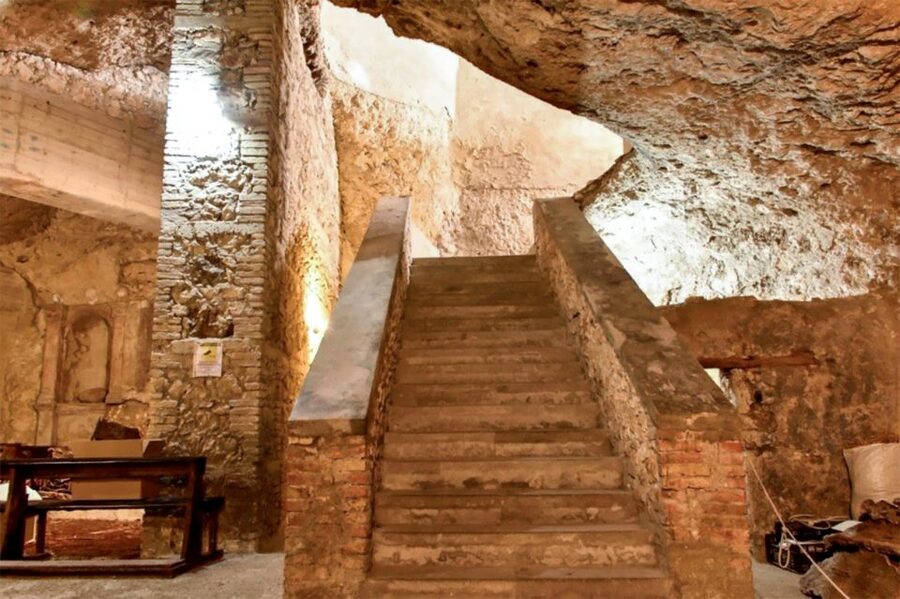
Cagliari keeps some of its best stories below street level. This tour takes you into a 120-meter WWII bomb shelter, the candle-lit crypt of Santa Restituta, and Roman remains beneath Saint Eulalia church. Between sites, you walk through Stampace and Marina, two old districts that make the city’s history easier to place.
I like the mix of recent wartime history and ancient archaeology, and I like that the three underground stops are different rather than three versions of the same cave. The guides, including Francesca, Valentina, Federico, and Silvia, are praised for clear explanations and a good sense of humor. The main drawback is that the tour uses both English and Italian, so explanations may take longer in a large group.
Key points
- A 120-meter private WWII shelter: Walk through a school tunnel once used as a bomb shelter, with a striking candle-lit atmosphere.
- Three distinct underground sites: Visit the Salesian School shelter, Santa Restituta’s crypt, and Saint Eulalia’s archaeological area.
- Roman remains under a church: See a paved Roman road and other ruins beneath Saint Eulalia.
- A useful city walk between stops: Short walks through Stampace and Marina connect the sites and add street-level context.
- Flexible finish: Choose an Old Town walk, or add a wine tasting with Sardinian snacks.
- Good value at $35: The price includes a guide and entrance to all three underground sites, though optional additions cost more.
Why Cagliari’s underground matters
Cagliari is sunny, open, and coastal, but its past is packed into spaces you cannot see from the main streets. Over the centuries, people used the rock and spaces beneath the city for worship, burial, storage, shelter, and construction. This tour gives you a practical way to connect those layers.
You are not entering one large underground attraction. You visit three separate places, with outdoor walking between them. That matters because the experience feels like a small history walk through Cagliari rather than a single cave visit.
The format also helps you see how the city changed over time. The WWII shelter brings you into the 20th century. Santa Restituta takes you back to an early Christian and pagan setting. Saint Eulalia then brings Roman engineering into view. The order creates a simple timeline, even if the city itself is much more complicated.
The tour lasts about two to four hours, depending on the option you choose. The three guided site visits are listed at roughly 40 minutes each, with short 10-minute walks through Stampace and Marina. If you add the Old Town walk or food and wine option, plan on the longer end of that range.
More walking tours in Italy:
- Milan: Guided Walking Tour & Last Supper Visit with Ticket
★ 4.7 · 5,409 reviews - Naples: Street Food Walking Tour with Local Guide
★ 4.8 · 4,256 reviews - Venice Walking Tour and Gondola Ride
★ 3.5 · 3,630 reviews
The Salesian School shelter and its candle-lit tunnel
The first major stop is the private tunnel shelter beneath the Salesian School, also known as Istituto Salesiano Don Bosco. At about 120 meters long, it gives you a strong sense of the scale needed for a wartime refuge.
This is not a polished museum display. The appeal comes from the tunnel itself, its enclosed shape, and the reminder that local people once came here during air raids. The candle-lit setting adds atmosphere without turning the visit into a theatrical show. You can expect a quiet, slightly eerie walk through a place built for fear and safety rather than sightseeing.
I find this stop especially useful for visitors who know little about Cagliari during World War II. Ancient ruins often get most of the attention in Sardinia, but the shelter shows how the city’s underground spaces continued to matter in modern times.
You should wear sturdy, comfortable shoes. The tour description specifically advises this, and it is good advice for all three locations. If enclosed spaces make you uncomfortable, think carefully before booking. The experience is not suitable for people with claustrophobia, and the shelter may feel tight even though it is a long tunnel.
The meeting point is connected with Via Sant’Ignazio da Laconi and the Salesian School, but the exact starting point can vary with the option you book. Arrive 10 minutes early, since finding the right entrance in an old city is easier when you are not rushing.
Walking through Stampace to Santa Restituta
After the shelter, you walk for about 10 minutes through Stampace toward the crypt of Santa Restituta. This outdoor section is short, but it prevents the tour from becoming a string of disconnected rooms.
Stampace is one of Cagliari’s old districts, and the walk gives your guide a chance to point out how the underground sites fit into the city above. You are moving through an inhabited neighborhood, not a preserved archaeological park. That contrast is part of the appeal. Ancient and modern Cagliari share the same streets.
Santa Restituta’s crypt is one of the most atmospheric parts of the experience. The space includes surviving frescoes, dripping water, and signs of pagan worship connected with the fifth century. The damp sounds and rough surfaces help you understand that this was not simply a room later converted into a tourist stop.
The guide’s role matters here. A crypt can look like a dark stone chamber if you do not know what you are seeing. A clear explanation helps you notice the frescoes, understand the religious changes that took place in the space, and picture how people used it over time.
This is also where the tour’s bilingual format can affect the pace. The guide speaks in English and Italian, and that arrangement makes the experience accessible to both language groups. In a group of around 25 people, one visitor found it would have been easier to split the languages between two guides. If you prefer a quieter, more focused visit, ask about the private group option.
Roman paving beneath Saint Eulalia
The final underground stop is MUTSEU, the Museo del Tesoro e Area Archeologica di Sant’Eulalia. Beneath Saint Eulalia church, you see Roman remains including a paved Roman road.
This site gives you the clearest physical link to the Roman city. A road is especially helpful because it is easy to read. You can look at the paving and understand that people once moved through this exact underground level as part of an organized urban system.
The archaeological area also adds variety after the darker shelter and crypt. You are still below the modern city, but the focus shifts from refuge and worship to infrastructure and daily movement. That change keeps the tour from feeling repetitive.
The Saint Eulalia stop may also suit you if you want to visit the archaeological museum connected with the site. One participant had planned to see the archaeology museum separately and was pleased to find it included in the tour. Check the exact arrangement of your booked option, since opening times can affect which underground sites are available.
The three site visits are each listed at about 40 minutes. That is long enough for proper explanations without making the tour feel like a full-day archaeology course. If you enjoy ancient sites and want time to study every detail, you may still wish for more time. For a first look at Cagliari’s buried remains, the pace is sensible.
A few other Italy mornings to weigh against this
- Cagliari: Devil’s Saddle Boat Tour with Spritz and Chips
★ 4.9 · 1,193 reviews - Cagliari: Boat Tour with 4 Swim Stops, Snorkeling & Prosecco
★ 4.9 · 865 reviews - Cagliari: Walking Tour of the Old City
★ 4.8 · 560 reviews - Cagliari: Boat Tour, 4 Stops, Swim, Snorkeling, & 1 Spritz
★ 4.8 · 539 reviews
The Old Town option adds useful street-level context
If you choose the option with a guided Old Town walk, the experience continues after the underground sites. You stroll through the historic center and see key parts of Cagliari with your guide.
This is a good add-on if you are new to the city. After hearing about the layers below the streets, you can look at the streets and districts above them with a better sense of place. The walk also gives you a chance to ask questions that may not fit naturally inside the crypt or archaeological area.
I would choose this version early in a Cagliari visit. It can help you get your bearings, and it combines three focused site visits with a broader introduction to the center. The shorter underground-only version makes more sense if you already know the old town or have limited time.
The tour ends at one of several central drop-off points, including the Saint Eulalia area, Piazza Jenne, Via del Collegio, and Piazza Yenne. Since the ending point can differ by option, check the booking details before planning a tight connection afterward.
What the food and wine option really includes
Some versions add a wine tasting and snack. The included food is described as Sardinian snacks with wine, but you should set your expectations correctly. One participant felt the experience was closer to one glass of wine with snacks than a broad tasting of several wines.
That does not make it a poor addition. It simply means you should see it as a light local finish rather than a full food tour. If you are hoping to compare several Sardinian wines or eat a substantial meal, this option may feel limited.
The tasting can work well after the walking tour, especially if you like ending a history outing with something local and social. Just confirm what is included in your selected version, since the wine and snack stop is not part of every booking.
Guides, languages, and group size
The tour is led in English and Italian. Several guides receive strong praise for their delivery. Francesca is described as an excellent guide, Valentina as enthusiastic and well informed, Federico as engaging and humorous, and Silvia as a warm guide for the optional tasting.
The most important point is not the name of the individual guide, since assignments can change. It is the format: you get a live local guide rather than a recorded explanation, and the guide moves between two languages.
That bilingual setup has clear advantages. You can book even if your group includes English and Italian speakers, and you have a chance to hear local terms and place names in both languages. The tradeoff is time. In a large group, each explanation may be repeated, and it can be harder to hear or ask questions.
Private groups are available. If you care about a slower pace, want to ask lots of questions, or dislike crowded tours, the private option may be worth the extra cost. At the standard group size, expect a more social outing, with less control over how long you spend at each detail.
Is $35 a fair price?
At $35 per person, the basic tour offers solid value. The fee includes the guide, the bilingual walking tour, and entrance to all three underground sites. Paying separately for three entrances and arranging a guide would likely be less convenient, even before adding the local history and navigation between districts.
The value is strongest if you are interested in more than one period of Cagliari’s past. A visitor focused only on Roman archaeology may find that the WWII shelter and Santa Restituta take up time that could be spent at another ancient site. On the other hand, the mix is exactly what makes this outing useful for a first visit.
The longer options may cost more, depending on what you select. Compare the Old Town and tasting versions carefully. The Old Town addition offers more sightseeing, while the wine option offers a short food break. Neither should be chosen simply because it sounds like a larger package. Pick the one that fits your day.
Free cancellation up to 24 hours before the start and the option to reserve now and pay later make the booking less risky. Still, the practical details matter more than the flexible payment: check the meeting point, arrive early, and allow time for outdoor walking.
Who should book this underground tour?
I would recommend it to you if you want a compact introduction to Cagliari that goes beyond churches, viewpoints, and beaches. It is a particularly good match for history-minded visitors who enjoy seeing how one city can hold Roman, religious, wartime, and modern layers in the same small area.
It also suits anyone who prefers a guide to explain archaeological spaces. The crypt and Roman ruins will mean more when someone points out what survived and why the site matters.
You should think twice if you use a wheelchair, have significant mobility limitations, or have visual impairment. The tour is not suitable for those needs. Claustrophobia is another clear concern, especially in the tunnel shelter and crypt.
Comfortable shoes are essential, and an umbrella is sensible in rainy weather because the route includes outdoor walking. The visit is not entirely underground, so dress for ordinary city conditions rather than assuming you will remain indoors.
My verdict: book it for the mix, not just the caves
Book this tour if you want to see three different sides of Cagliari in one well-organized outing. The WWII shelter is unusual, Santa Restituta supplies the atmosphere, and Saint Eulalia gives you a clear Roman connection. The short walks through Stampace and Marina make the sites feel connected to the living city.
Choose the Old Town version if this is your first time in Cagliari. Choose the underground-only option if you already know the center or want to keep the day shorter. Add the wine and snacks only if you want a light local finish, not a full tasting meal.
The bilingual format and possible larger group are the main compromises. Even so, the strong overall rating, the consistently positive comments about guides such as Francesca, Valentina, and Federico, and the inclusion of three entrance fees make $35 a reasonable buy for most able-bodied visitors interested in Cagliari’s past.
FAQ
How long does the Cagliari Underground Walking Tour last?
The tour lasts between two and four hours. The exact length depends on the option you choose, including whether you add the Old Town walk or the food and wine option.
What underground sites are included?
The standard experience visits the tunnel shelter beneath the Salesian School, the crypt of Santa Restituta, and the archaeological area beneath Saint Eulalia church.
Is the entire tour underground?
No. You visit three underground sites, but you also walk outside between them through the Stampace and Marina districts.
Is the tour offered in English?
Yes. The live guide speaks English and Italian. The tour is run in both languages.
Are entrance fees included?
Yes. Entry to the three underground sites is included in the tour price.
What is the WWII shelter like?
It is a private tunnel shelter beneath the Salesian School, about 120 meters long. It was used as a bomb shelter during World War II and is visited in a candle-lit setting.
What can I see in Santa Restituta’s crypt?
You can see surviving frescoes and the setting associated with pagan worship during the fifth century. The crypt is also known for its damp atmosphere and dripping water.
What Roman remains are at Saint Eulalia?
The underground archaeological area includes Roman ruins such as a paved Roman road.
Can I add a food and wine experience?
Yes, some booking options include wine and Sardinian snacks. The tasting may consist of a glass of wine and light snacks rather than several wine samples or a full meal.
Is the tour suitable for wheelchair users?
No. The activity is not suitable for wheelchair users, people with mobility impairments, people with claustrophobia, or people with visual impairments.
Fresh on the Italy list
- Florence: Uffizi Guided Tour with Skip-the-Line Entry Ticket★ 4.8 · 499 reviews
- Milan: Last Supper and Sforza Castle Guided Tour★ 4.6 · 498 reviews
- Boat trip La Maddalena Archipelago – Departure from Palau★ 4.5 · 499 reviews
- Exclusive Golf Tour Private VIP with Local & Gelato o Wine★ 5.0 · 500 reviews
- Turin: Egyptian Museum Skip-the-Line Group Tour★ 4.7 · 500 reviews
- Itria Valley: Polignano, Ostuni, and Locorotondo, from Bari★ 4.6 · 502 reviews
- Colosseum, Palatine Hill and Roman Forum with Guided Tour★ 5.0 · 500 reviews
- Catania: Etna Nature Tour with Hiking, Cave Visit, & Tasting★ 4.7 · 502 reviews
Walking Tours, compared.
Guided Walking Tour & Last Supper Visit with Ticket
Read our review →
Rialto Bridge & Offbeat Unusual Venice Walking Tour
Read our review →
Private 3 hrs Venice Tour: St Mark’s, Walking tour & Boat tour
Read our review →
Skip the line: Uffizi and Accademia Small Group Walking Tour
Read our review →Browse the lists this tour appears in