
Reviewed · MUSEUMS
Borghese Gallery, Canova’s Masterpieces Skip-the-Line Guided Tour
The Borghese Gallery is one of Rome’s finest places to see great art without the scale and strain of the Vatican Museums. Inside this elegant villa, Bernini’s marble figures seem ready to move, Caravaggio’s dark paintings hold your eye, and Canova’s polished sculpture gives the collection a graceful finish. The timed entrance helps you avoid the worst lines, and the English-speaking guide adds the story behind the objects.
I like the small-group format, with no more than 20 people, and I like the way the tour focuses on major works while still explaining the rooms, ceilings, floors, and collection. Guides such as Mattia, Agnese, Guido, Silvia, and Valentina have earned special praise for clear explanations and lively storytelling. The main caution is time: two hours goes quickly, and some sessions may give you closer to 90 minutes inside the gallery.
Key points to know before booking
- Bernini takes center stage: See Apollo and Daphne, David, and The Rape of Proserpina with an art-focused explanation.
- Caravaggio is well represented: Look for Young Sick Bacchus and Boy with a Basket of Fruit.
- Canova is part of a wider tour: Paolina Bonaparte appears, but this is not a Canova-only visit.
- Timed entry saves effort: The gallery limits admission, so you avoid the long general queue.
- The gardens add breathing room: You get a short introduction, then walk Villa Borghese Gardens without a guide.
- Pack light: Small and large bags are not permitted in the gallery and must go to the cloakroom.
Why the Borghese Gallery deserves two hours
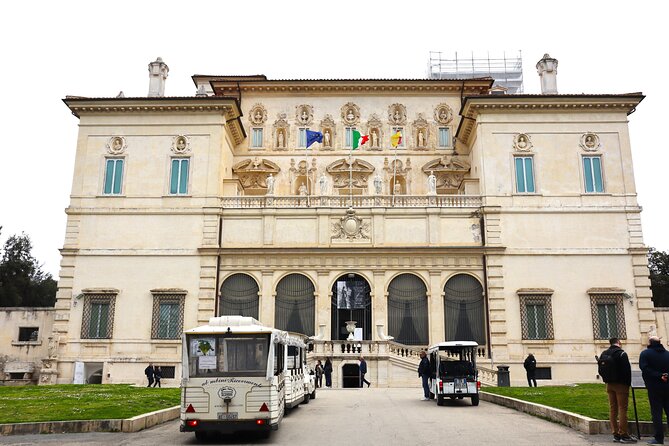
Rome has plenty of grand museums, but the Borghese Gallery feels more manageable. Cardinal Scipione Borghese built his collection around the artists he admired, and the result is unusually concentrated. You do not spend the afternoon crossing endless halls to find one famous painting. The major works are close together, placed in richly decorated rooms that are works of art themselves.
That concentration makes a guided visit especially useful. You can walk through the gallery on your own, but it is easy to look at a marble statue, admire the shine, and miss the movement, politics, religious ideas, and technical skill packed into it. A good guide gives you a way to read what you are seeing.
The tour costs $59.26 per person. That is more than a simple museum admission, but the price includes the guided visit, timed access, and the guide’s interpretation. I consider it reasonable for someone who wants help making sense of Italian art, particularly if this is your first serious look at Bernini or Caravaggio.
More Museums in Rome
- Vatican Museums & Sistine Chapel Tour with Optional Basilica
★ 4.3 · 67,413 reviews - Vatican Museums, Sistine Chapel & St Peter’s Basilica Guided Tour
★ 4.5 · 39,149 reviews - Rome: Vatican Museums, Sistine Chapel & Basilica Tour
★ 4.3 · 13,872 reviews
Meeting at Piazzale del Museo Borghese
The tour begins at Piazzale del Museo Borghese, in Villa Borghese. The meeting point is near public transportation, but you should allow enough time to find the museum entrance and the group. A late arrival is a poor gamble when admission is tied to a set time.
The activity is offered in English, and the group can reach 20 people. That is not a private tour, but it is small enough for a guide to speak to the group without shouting across a vast hall. The best guides use the audio equipment well, which helps you hear the explanation even when other groups are nearby.
Wear smart casual clothes. You do not need formal dress, but comfortable walking shoes make sense because the experience includes the gallery and Villa Borghese Gardens. Food, drinks, hotel pickup, and hotel drop-off are not included, so plan those around the meeting time.
A short introduction to Villa Borghese Gardens
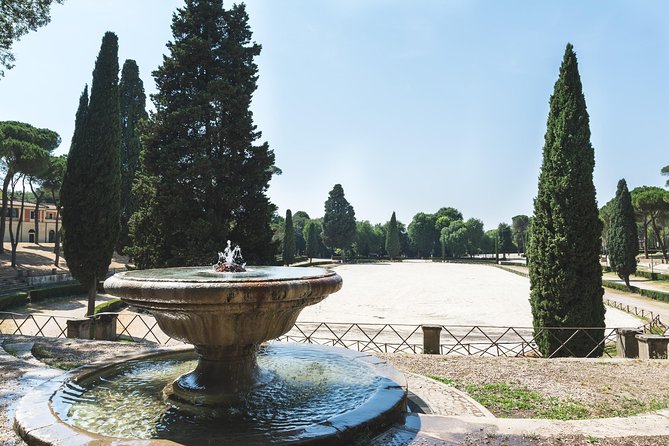
The first stop lasts about 15 minutes and introduces Villa Borghese. The park is Rome’s third-largest public park, and it offers a welcome change from the city streets around the Spanish Steps and Piazza del Popolo.
The marble inscription at the villa presents the gardens as a place of freedom. Its message invites people to go where they like, ask what they wish, and leave when they want, while warning that courtesy still matters. It is a charming bit of local character, and it gives the park more personality than a simple green space between museum buildings.
Do not expect a full garden tour at this point. The introduction is brief. The longer garden walk comes after the gallery, and that portion is not guided. This matters if you are booking because you want detailed information about the park’s design, monuments, or plants. The real art commentary happens inside the museum.
Inside the Borghese Gallery with Bernini
Bernini is the reason many people remember this museum long after leaving. His sculptures are not meant to be viewed from one fixed angle. They ask you to move around them and notice how stone becomes flesh, hair, fabric, and sudden action.
Apollo and Daphne is the key example. The scene captures Daphne changing into a laurel tree as Apollo reaches for her. Look closely at the fingertips becoming leaves, the bark rising along her body, and the contrast between Apollo’s forward motion and Daphne’s escape. A guide can point out how the sculpture works from different viewpoints and how Bernini creates movement in marble.
David has a different force. This is not a calm hero posing after victory. Bernini shows David in the act of throwing the stone, with his body twisted and his face focused on the target. The work brings the viewer into the action. You become part of the space David is using to launch his attack.
The Rape of Proserpina is another technical marvel. Bernini carved the pressure of Pluto’s fingers into Proserpina’s thigh, a detail that has become famous because it seems impossible in hard stone. The scene is emotionally troubling, and a responsible guide should help you see both the beauty of the carving and the violence of the story.
The collection includes works by other sculptors as well, including Algardi. This is one reason the experience is broader than its title suggests. If you book expecting a tour devoted mainly to Canova, you may be surprised. Canova is important here, but Bernini, Caravaggio, Raphael, and the building itself receive substantial attention.
More Skip-the-Line Tickets in Rome
- Vatican Museums & Sistine Chapel Skip-the-Line Entry Ticket
★ 4.4 · 13,838 reviews - Skip-the-Line Group Tour of the Vatican, Sistine Chapel & St. Peter’s Basilica
★ 4.5 · 12,779 reviews - Vatican, Sistine Chapel & St. Peter’s Skip-the-Line Tour
★ 4.5 · 7,770 reviews - Skip-the-Line Vatican, Sistine Chapel & St. Peter’s | Small Group
★ 5.0 · 7,060 reviews
Caravaggio’s paintings and the power of contrast
Caravaggio’s pictures reward a few quiet minutes in front of them. His figures often emerge from dark backgrounds under sharp light, as if a stage lamp has caught them at a private moment. The effect is direct and human rather than polished and distant.
Young Sick Bacchus shows the artist’s unusual eye for real faces and imperfect bodies. The figure is not an idealized god from an ancient tale. He looks tired, pale, and physically present. That tension between classical subject matter and ordinary human appearance makes the painting memorable.
Boy with a Basket of Fruit gives you another chance to study Caravaggio’s attention to texture. The fruit, leaves, skin, and fabric are painted with a physical presence that can pull you toward the canvas. A guide can explain how light, composition, and the arrangement of objects shape your response before you even think about the subject.
Caravaggio’s pictures also help place the Borghese collection in the artistic world of early seventeenth-century Rome. You see how dramatic lighting and naturalistic figures changed painting. Several guides, including Mattia and Agnese, have been praised for connecting individual works to their period and later influence rather than treating each painting as an isolated object.
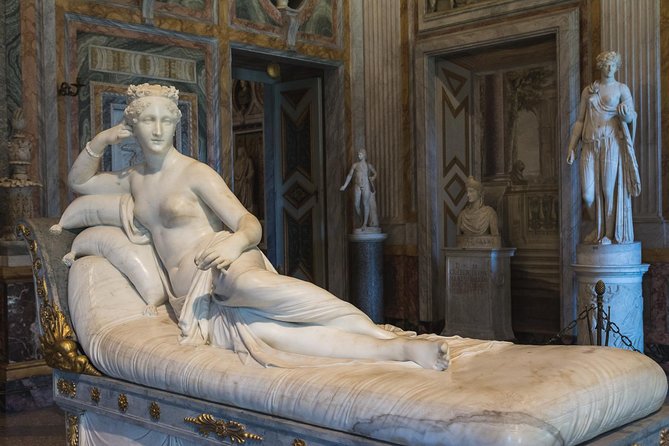
Canova’s Paolina Bonaparte
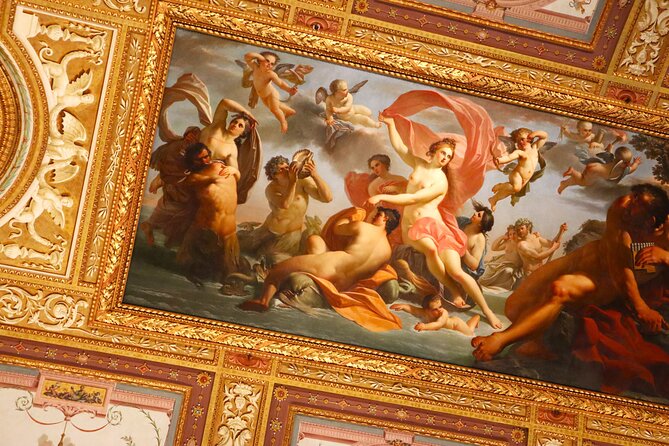
The tour title gives Canova special billing, so you should know what to expect. Paolina Bonaparte is the major Canova work highlighted in the visit, but the tour is not limited to his sculptures.
Paolina reclines on a couch as Venus Victrix, holding the apple awarded to Venus in the ancient myth. Canova’s surface is remarkably smooth, and the figure seems soft despite being carved from marble. The contrast between the cold material and the relaxed pose is part of the work’s appeal.
The sculpture also carries a political and social story. Paolina was Napoleon’s sister, and presenting her as Venus linked her image to beauty, power, and classical culture. Your guide may also help you think about the gap between the public image of an ideal beauty and the private person represented by the portrait.
If Canova is your main reason for booking, check your expectations. This experience includes one major Canova highlight within a wider route. If Bernini and Caravaggio also interest you, that broader focus is a strength.
Raphael’s Entombment and the rooms around it
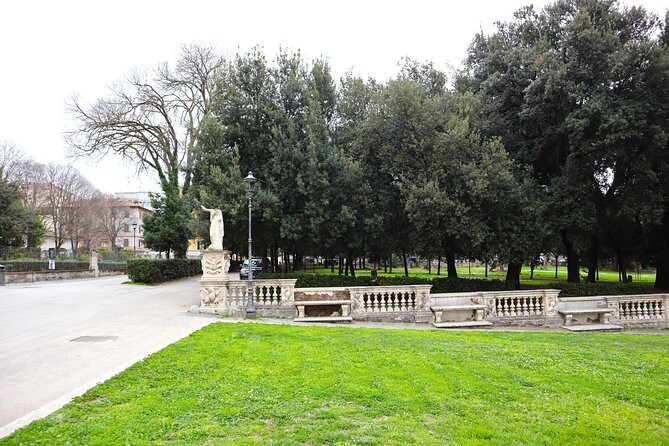
Raphael’s Entombment gives the tour a different kind of drama. Compared with Bernini’s three-dimensional action and Caravaggio’s strong shadows, Raphael’s painting rewards attention to balance, gesture, and the arrangement of figures.
The guide also helps connect the painting to the collection’s original purpose. Cardinal Scipione Borghese gathered important works as a collector with strong personal tastes, not as the director of a modern public museum. That background explains why the gallery feels so focused and why certain artists receive such careful attention.
Do not rush past the architecture. The frescoed rooms, ceilings, floors, and decorative details can compete with the paintings and sculptures below them. One of the easiest mistakes is to keep looking straight ahead. I would pause often and look up. The building was designed to impress from every direction.
How the 90-minute reality affects the visit
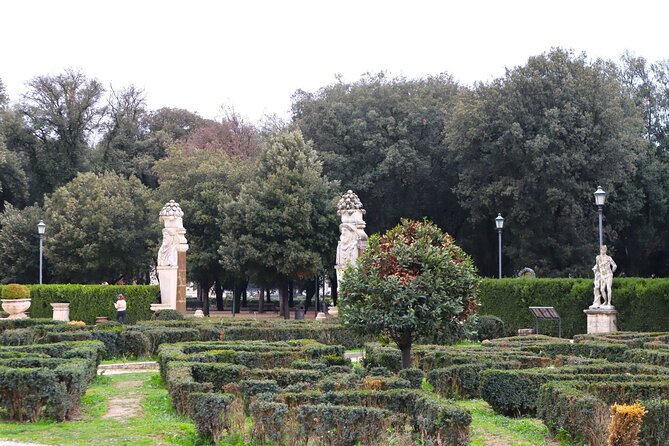
The advertised duration is about two hours, but the time available inside the museum can vary. One scheduled session reportedly ran from 5:45 to 7:45, even though the museum closed at 7:00. Other sessions may feel closer to 90 minutes once meeting, entry, and exit are counted.
This is not necessarily a flaw in the tour, but it affects your planning. The Borghese Gallery uses timed admission and controls how long people remain inside. You cannot assume that paying for a guided visit means you can stay as long as you want afterward.
For that reason, I would not book this tour on a day when you need to inspect every room slowly. It works best when you want the principal works explained in a clear order. If a guide spends extra time answering questions, you may gain a better discussion but lose time for another gallery.
The final walk through Villa Borghese
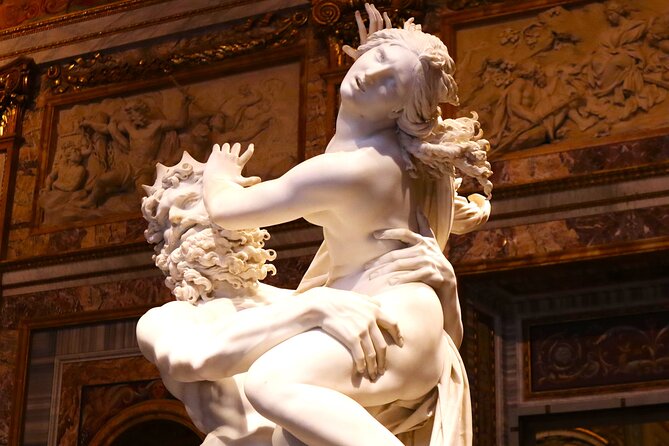
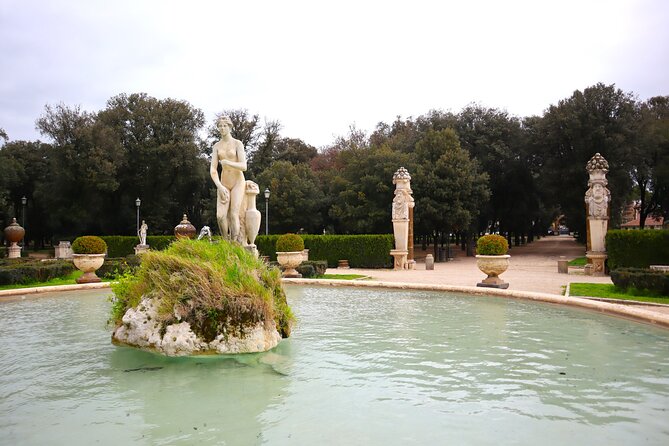
After the gallery, you walk through Villa Borghese Gardens. The park is calm compared with central Rome, and it gives your eyes a rest after intense viewing. This is a pleasant ending, especially if you have spent the day among crowded streets and noisy piazzas.
The garden portion is not guided, so treat it as a chance to wander rather than a second art-history lesson. You can enjoy the paths and atmosphere at your own pace, but you should not expect the guide to explain every feature. The inclusion is valuable because it adds open space to a museum visit, not because it provides a detailed park tour.
The activity ends back at the meeting point. Since no hotel transport is included, you are free to continue into the park or make your own way elsewhere in Rome afterward.
What the guide adds to the price
The guide is the main reason to choose this experience over simply arranging museum admission. Strong guides such as Guido, Mattia, Agnese, Silvia, Valentina, Virginia, and Alicia have been singled out for clear English, careful answers, and storytelling that brings the art into context.
Several guides have also been praised for making the museum accessible to people with only a basic grounding in Italian art. That is important here. You do not need to arrive knowing the difference between Baroque and Renaissance art, or already understand the Borghese family. The guide can give you the basic framework and then show how the objects fit into it.
Quality can vary. One account describes a guide who struggled with English words, moved between ideas too quickly, and did not answer questions directly. That is a useful warning: the tour depends heavily on the person leading it. The overall rating is 4.7 from 1,162 ratings, with 92 percent recommending it, but no guided product guarantees the same guide each time.
Practical details that can make or break the visit
Pack only what you need. Small and large bags are not permitted inside the Borghese Gallery and must be checked at the cloakroom. Excessive-sized bags can create problems before the tour starts, so do not arrive with luggage or a full daypack.
A mobile ticket is provided, and confirmation arrives at booking. The tour is available in English only. Most people can take part, and one guide has helped a wheelchair user navigate the experience, but the supplied details do not promise full accessibility for every route or group.
The activity has free cancellation if you cancel at least 24 hours before the local start time. Changes or cancellations inside that window are not accepted for a refund.
Who should book this Borghese tour?
I would choose this tour if you want the major works explained without spending hours preparing in advance. It suits first-time visitors to the gallery, people curious about Bernini and Caravaggio, and anyone who prefers a compact museum visit with a calm park walk afterward.
It is also a good choice before visiting the Vatican Museums. The Borghese Gallery gives you a more intimate introduction to the Borghese family, Renaissance painting, Baroque sculpture, and the role of powerful patrons. That background can make the Vatican’s larger collection easier to understand.
I would hesitate if Canova is your only priority, if you dislike fixed museum times, or if you want to study every room at your own pace. I would also think twice if you need a full two hours inside the gallery, since the actual viewing period may be shorter.
Should you book the $59.26 experience?
Yes, if you value explanation as much as admission. The Borghese Gallery is beautiful enough to justify a visit on its own, but a skilled guide can help you notice why Bernini’s marble feels alive, why Caravaggio’s light hits so hard, and how Canova turns a portrait into an image of classical beauty.
Book it for the art, the focused setting, and the chance to avoid the long entry line. Just bring a small bag, keep your expectations broad rather than Canova-only, and accept that the museum’s time limit may leave you wishing for another half hour.
FAQ
Where does the tour begin?
The tour begins at Piazzale del Museo Borghese, 00197 Roma RM, Italy.
Where does the activity end?
The activity ends back at the meeting point.
How long does the tour last?
The stated duration is approximately two hours. The time available inside the museum may be shorter during some sessions because the gallery has fixed closing and entry times.
Is the tour offered in English?
Yes. The tour is offered in English and includes an English-speaking guide.
How many people can join the group?
The maximum group size is 20 people.
Can I bring a bag into the Borghese Gallery?
Small and large bags are not permitted inside the gallery. Bags that cannot enter must be checked at the cloakroom and collected afterward.
What happens if I need to cancel?
You can cancel for a full refund if you do so at least 24 hours before the experience starts. Cancellations or changes made less than 24 hours before the start time are not accepted for a refund.
Fresh on the Rome list
- Exclusive Golf Tour Private VIP with Local & Gelato o Wine★ 5.0 · 500 reviews
- Colosseum, Palatine Hill and Roman Forum with Guided Tour★ 5.0 · 500 reviews
- Rome Trastevere Pasta Making Class with Eating Europe★ 5.0 · 505 reviews
- Rome by Night Walking Tour★ 4.5 · 506 reviews
- Rome: Colosseum Express Tour with Forum & Palatine Access★ 4.5 · 511 reviews
- Rome Food Experience Max 6 People Group Tour | w/Private Option★ 5.0 · 516 reviews
- Rome: Navona Square Underground Ticket with Audio Guide★ 4.0 · 518 reviews
- Rome: Escorted Papal Audience Experience with Entry Ticket★ 4.4 · 518 reviews
Museums, compared.
Vatican: Museums & Sistine Chapel Entrance Ticket
Read our review →
Vatican Museums & Sistine Chapel Tour with Optional Basilica
Read our review →
Vatican Museums, Sistine Chapel & St Peter’s Basilica Guided Tour
Read our review →
Skip-The-Line Uffizi Gallery Timed Entry Ticket
Read our review →
Vatican Museums, Sistine Chapel & Basilica Tour
Read our review →
Vatican Museums & Sistine Chapel Skip-the-Line Entry Ticket
Read our review →Vatican Museums, Sistine Chapel & Basilica Tour
Read our review →
Vatican Museums & Sistine Chapel Guided Tour
Read our review →Browse the lists this tour appears in