
Reviewed · LUNCH EXPERIENCES
Appian Way Aqueducts Bike Tour (Catacombs & Lunch Option)
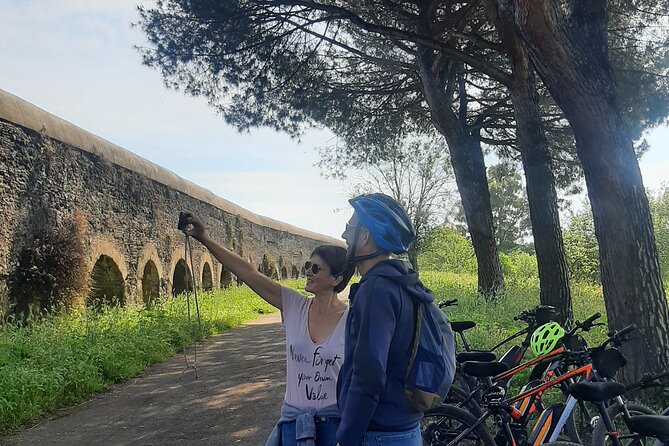
The best part of this Rome tour is the sudden change of scene. You start near the Colosseum, pedal through city traffic, pass the Aurelian Walls, and soon find yourself on rough ancient stones, quiet country paths, and open parkland beneath Roman aqueducts. It is hard to believe you are still in Rome.
I especially like the chance to see the Appian Way and Aqueduct Park in one ride, and I like that electric assistance takes the sting out of hills and heat. Guides such as Alex, Ava, Chris, Iman, Paolo, and Ricardo are praised for keeping groups together and explaining the ruins in an entertaining way. The catch is simple: this is still a long bike ride, with traffic, dirt paths, big cobbles, and a sore seat possible by the end.
Key points to know before booking
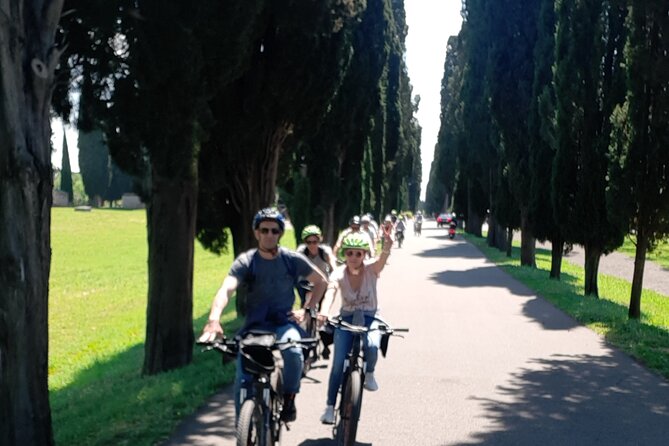
- Ancient Rome beyond the city center: Ride beside the Appian Way, mausoleums, Roman villas, aqueducts, the Circus of Maxentius, and the Baths of Caracalla.
- The five-hour option adds the Catacombs of St. Callixtus: The guided underground visit lasts about 50 minutes and is the better choice if early Christian Rome interests you.
- E-bikes help, but do not do all the work: You need to ride a bicycle well and handle rough surfaces, short hills, and city streets.
- Small groups keep the ride manageable: The maximum group size is 12 people, although group sizes can vary in practice.
- Lunch or an aperitif is included in the longer tour: The exact food format depends on the departure time, with a morning lunch and an afternoon aperitif listed for the five-hour version.
- Plan for practical comfort: Wear sturdy clothes and shoes, bring water, and expect several hours in the saddle.
From the Colosseum to Porta San Sebastiano
The meeting point is Roma STARBIKE on Via dei SS. Quattro, a short distance from the Colosseum. You meet your guide and group there, receive a helmet, and get fitted to a high-quality electric bike. A phone holder and handlebar holder are included, which is useful if you need to follow directions or keep your phone accessible.
The first part takes you through Rome’s streets. This is not the quietest section of the ride. You need to pay attention, follow the guide’s signals, and be comfortable stopping and starting around traffic. Guides such as Alex, Ava, Chris, and Iman receive repeated praise for giving clear instructions and checking that riders are safe.
That opening ride can feel slightly tense, especially if you have not cycled in city traffic for years. Give yourself time to get used to the brakes and electric assistance before you settle into the pace. Once the group reaches Porta San Sebastiano, the experience begins to feel much more spacious.
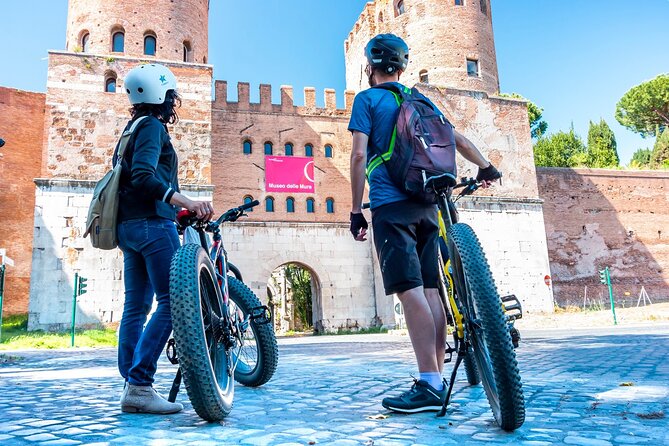
Porta San Sebastiano is one of the southern gates in Rome’s Aurelian Walls, built around 275 AD. It also marks the start of the historic Via Appia Antica. Your guide may point out the medieval graffiti left by pilgrims who passed through over many centuries. It is a small detail, but it helps turn an old stone gateway into a place shaped by real movement and use.
More Bike Tours in Rome
- Rome EBike Tour: Appian Way, Catacombs & Roman Aqueducts
★ 5.0 · 1,766 reviews - Rome: Top Highlights & Hidden Gems Tour by Cannondale E-Bike
★ 4.9 · 1,760 reviews - Rome: Appian Way, Catacombs, & Roman Aqueducts E-bike Tour
★ 4.9 · 1,421 reviews
Riding through Parco della Caffarella
From the gate, the route enters Parco della Caffarella. This large green area is part of the Appian Way Regional Park and gives you a welcome break from the hard surfaces and noise of central Rome.
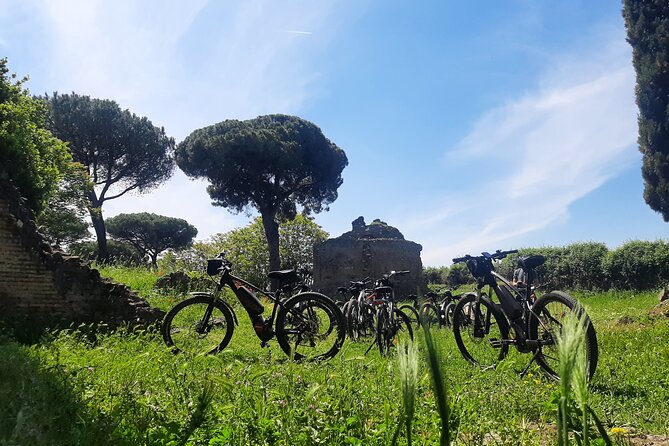
The park is not simply a pleasant cycling route. Ancient remains appear among paths, trees, and open fields, giving you a sense of how much of Rome’s past sits outside the usual sightseeing circuit. You might see farm animals and other signs of the park’s rural character, including goats, chickens, and turtles noted along the route.
This is one reason I think the tour works so well after a few crowded days in Rome. You still get substantial Roman history, but you are not moving from one packed piazza to another. The air feels fresher, the pace is slower, and the guide has room to stop and explain what you are seeing.
The surface can change quickly. Some sections are paved, while others are dirt or uneven stone. The e-bikes used on the tour have suspension according to the ride descriptions, which helps, but suspension does not make a rough trail smooth. Keep both hands ready and do not treat the bike like a scooter.
The Appian Way, Rome’s Queen of Roads
The Via Appia Antica was begun in the fourth century BC under the censor Appius Claudius, known as the Blind. The first route ran from Rome toward Capua and was later extended as far as Brindisi, the major port in southern Italy.
Riding here gives you a better sense of the road than simply viewing a fragment in a museum. You see the route as a working piece of infrastructure, cutting across the countryside and connecting Rome with the rest of the ancient world. Your guide adds the political and military context, along with stories about the people who used the road.
The ancient paving is also the ride’s biggest physical challenge. The stones can be very large, with deep gaps between them. At times, you can ride on dirt beside the stones. At other points, you need to take the cobbles slowly and keep your balance.
This is where the tour description’s moderate fitness requirement matters. You do not need to be a serious cyclist, but you must know how to ride a bike well. The ride includes several hours of pedaling, and even electric assistance cannot prevent fatigue in your hands, back, or seat. One useful piece of advice is to choose the four-hour version if you have not ridden for a long time.
Egeria’s spring and the Mausoleum of Cecilia Metella
The Ninfeo di Egeria provides a quieter stop along the route. It is linked to the story of the nymph Egeria and Numa Pompilius, Rome’s second king. According to the legend, Egeria’s grief after Numa’s death produced a spring through her tears.
The stop lasts about 20 minutes. It is not one of Rome’s grandest monuments, but it gives the ride a different tone. Alongside roads built for armies and tombs built for wealthy families, you encounter a place shaped by myth and water.
The Mausoleum of Cecilia Metella is far more imposing. This first-century BC pagan tomb is one of the best-preserved mausoleums on the Appian Way. It later became part of the medieval Castrum Caetani, a fortified complex associated with the Caetani family.
You can also see the remaining perimeter walls of the church of San Nicola. The mix of Roman tomb, medieval fortification, and church ruins shows how later generations reused ancient structures instead of treating them as isolated monuments. The stop is relatively short, so listen closely when the guide sets the scene.
More bike days in Rome:
- Rome City Small Group Bike Tour with quality Cannondale EBike
★ 5.0 · 1,380 reviews - Rome by Night – Ebike Small Group Tour – Food and Wine (Option)
★ 5.0 · 1,275 reviews - Rome:Appian Way E-bike Tour with Catacombs, Aqueducts & Food
★ 4.9 · 1,210 reviews - Rome: E-Bike Night Tour with Food and Wine Tasting
★ 4.9 · 1,131 reviews
The Catacombs of St. Callixtus on the five-hour tour
The Catacombe di San Callisto is included only in the five-hour version. The guided visit lasts about 50 minutes and takes you into one of Rome’s largest underground burial complexes.
The corridors extend for roughly 20 kilometers. The site dates to the second century BC, takes its name from the deacon Callixtus I, and became a burial place for more than 50 martyrs and 16 popes. Hundreds of thousands of Christians were buried there over time.
This is a formal guided visit, not a casual wander through tunnels. The catacombs add a strong early Christian chapter to a day already filled with roads, tombs, and imperial engineering. If you want the clearest connection to Rome’s religious past, pay for the longer option.
The extra time is worth considering carefully. The five-hour tour is not just four hours plus a quick add-on. It combines a lengthy bike ride with an underground visit, so you need enough energy for both. If you enjoy historic sites but dislike cycling for extended periods, the catacombs do not solve that problem. They make the day longer.
Aqueduct Park and the longer tour’s meal
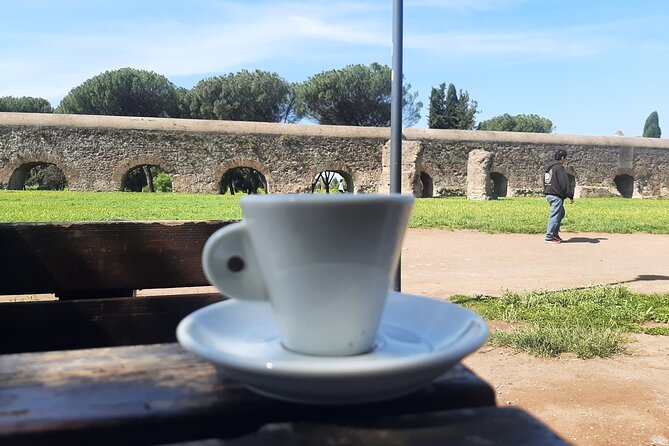
Parco degli Acquedotti is the visual high point for many people. Here, the remains of Roman aqueducts cross broad open space, offering the kind of wide view that is difficult to find in the city center.
The aqueducts show Roman engineering at a huge scale. Some sections are well preserved, and some water channels are still in operation. The tour allows time to stop and look rather than simply pedal past. Guides explain how the network supplied Rome and why these structures were placed across this part of the countryside.
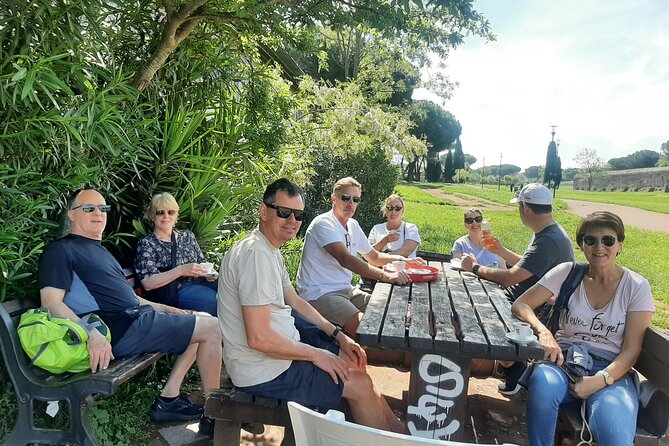
The five-hour version includes time for food at the aqueduct park. The details describe lunch on the morning departure and an aperitif in the afternoon. The experience information also refers to a simple meal in a sit-down restaurant rather than only a packed box, so check the exact departure details when booking if the meal matters to you.
The food is a useful pause, not the main reason to choose the tour. It breaks up the ride, gives your legs time to recover, and means you do not have to organize a separate meal during the outing. The four-hour version does not include lunch or an aperitif, so bring enough water and plan your meal afterward.
The Circus of Maxentius and the ride back
The Circus of Maxentius is another Appian Way highlight. It is considered the best surviving example of an ancient Roman circus, and the central spina is still visible. The obelisk that once stood there was later moved to Piazza Navona, where it became part of the Fountain of the Four Rivers.
This stop helps you picture the Appian Way as more than a road lined with tombs. It was also a setting for large public buildings, imperial projects, and displays of power. The guide’s storytelling matters here because the remaining walls alone can be difficult to interpret.
The route then turns back toward the ancient city. You pass the Baths of Caracalla, built by the emperor of the same name and once the largest public baths in Rome. Much of the structure remains, giving you a strong final look at the size and ambition of Roman public works.
The baths were supplied by the Aqua Marcia through the Antoninian aqueduct. Small remains can also be seen near Porta San Sebastiano. After the Baths of Caracalla, the group returns to the bike shop to leave the e-bike and helmet.
How hard is the ride?
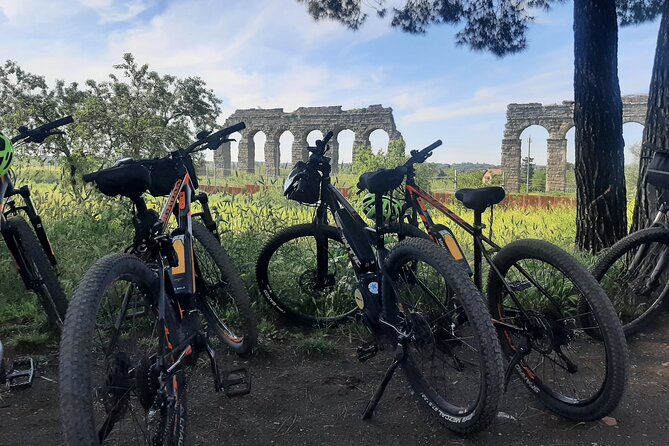
The e-bike makes the route more practical, particularly on short hills and in warm weather. It does not turn the outing into a passive sightseeing trip. You still pedal, steer, brake, and absorb the bumps.
The toughest sections are the city traffic at the beginning and end, uneven dirt trails, downhill paths, and the broad stones of the Appian Way. The route is mostly flat with a few short hills, but rough ground can be tiring even when the elevation is modest.
I would rate this as a good choice for an active adult who cycles regularly or can confidently handle a bike. It can work for families, too. A child seat is included for children up to 25 kilograms, and the child reduction for ages 6 to 10 applies only to children under 143 centimeters, who use a trailer bike rather than riding alone.
The maximum rider weight is 120 kilograms, or 265 pounds. Children and adults alike need to meet the physical and cycling requirements. The operator specifically requires you to know how to ride a bike well, so do not book this as a first cycling experience.
Guides, group size, and the value of personal attention
The maximum group size is 12 people. That is small enough for a guide to manage road crossings, watch the back of the group, and answer questions without turning the ride into a moving crowd.
The guides are a major part of the experience. Alex is praised for safety checks, historical storytelling, and patience in traffic. Ava is described as friendly and attentive, while Chris receives high marks for explaining the route without rushing people. Iman is both an experienced cyclist and a historian, and Paolo is noted for keeping the mood light while helping after a fall.
Those details matter because a cycling guide has two jobs. The guide must explain Roman sites, but also control the pace, signal hazards, and make sure nobody gets separated. The strongest part of this experience is the combination of those roles.
Still, guide quality cannot remove the physical demands. A patient guide can help you feel safer, but cannot make sharp stones comfortable or reduce a five-hour ride to a stroll.
Is $78.60 a fair price?
At $78.60 per person, the tour is reasonably priced for a four to five-hour small-group outing that includes the e-bike, helmet, phone holder, and child seat. You are paying for equipment, route planning, a guide, and access to several widely separated parts of Rome without arranging taxis or public transport between them.
The five-hour version offers better value if you want the Catacombs of St. Callixtus and the included meal or aperitif. It packs a lot into one day: the Aurelian Walls, Caffarella Park, the Appian Way, Cecilia Metella, the aqueducts, the Circus of Maxentius, the Baths of Caracalla, and the catacombs.
The four-hour version makes more sense if you mainly want the ride and outdoor ruins, or if you are concerned about stamina. You give up the catacombs and food, but you also reduce the time in the saddle.
The tour is often reserved well in advance, with an average booking lead time of about 38 days. If your Rome dates are fixed, do not leave it until the last minute.
Practical advice for a smoother ride
Wear clothing that lets you move freely and shoes suitable for pedals and uneven ground. Bring water, even if you choose the longer option with food. A phone holder is provided, but you should still keep your attention on the road rather than the screen.
Arrive ready to be fitted to the bike. The meeting point is near public transportation and close to the Colosseum, but the ride begins at the bike shop and ends there, so allow time to reach it before departure.
Expect Rome’s weather to affect the schedule. The activity requires good weather. If poor conditions force cancellation, you are offered another date or a full refund. You can cancel for a full refund up to 24 hours before the start time, but changes or cancellations inside that window are not accepted.
The ride is offered in English and uses a mobile ticket. Tips are optional and not included.
Should you book the Appian Way Aqueducts Bike Tour?
Book it if you want to trade crowded central Rome for open parks, ancient roads, and huge aqueducts, and if you are comfortable spending several hours on a bicycle. It is especially good for repeat visitors, active families with suitable children, and anyone who wants Roman history with fresh air and movement.
Choose the five-hour option if the catacombs are a priority and you want food included. Choose four hours if you are unsure about your endurance or have not cycled recently.
Skip it if rough cobblestones, city traffic, or a sore backside would spoil your day. This is not an easy sightseeing ride. For the right rider, though, it is one of the most satisfying ways to see the older, quieter edges of Rome.
FAQ
Where does the Appian Way bike tour start and finish?
It starts and ends at Roma STARBIKE, located at Via dei SS. Quattro, 58, near the Colosseum in central Rome.
How long does the tour last?
The tour lasts approximately four to five hours. The five-hour version includes the catacombs and meal or aperitif.
Are the Catacombs of St. Callixtus included?
The guided visit to the Catacombs of St. Callixtus is included only in the five-hour tour. It lasts about 50 minutes.
Is lunch included?
Lunch or an aperitif is included in the five-hour version only. The morning departure includes lunch, while the afternoon departure includes an aperitif. Food is not included in the four-hour version.
Are bikes and helmets provided?
Yes. A high-quality electric bike and helmet are included. A mobile phone holder, handlebar holder, and child seat are also provided.
Can children join the tour?
Children can join under the stated conditions. The child seat is suitable up to 25 kilograms, and the reduced fare for ages 6 to 10 applies only to children under 143 centimeters, who use a trailer bike rather than a bike alone.
How fit do I need to be?
You need moderate physical fitness and must know how to ride a bike well. The route includes city streets, dirt paths, short hills, and uneven Appian Way cobblestones.
More Lunch Experiences in Rome
- Pompeii and Mount Vesuvius Day Trip from Rome with Pizza Lunch
★ 4.5 · 6,151 reviews - Rome: Tuscany & Montepulciano Day Trip with Lunch & Wine Tasting
★ 4.5 · 5,232 reviews - From Rome: Pompeii Day Trip with Optional Vesuvius and Lunch
★ 4.6 · 5,067 reviews - Rome to Pompeii Guided Tour with Wine & Lunch by High Speed Train
★ 5.0 · 1,379 reviews
Fresh on the Rome list
- Exclusive Golf Tour Private VIP with Local & Gelato o Wine★ 5.0 · 500 reviews
- Colosseum, Palatine Hill and Roman Forum with Guided Tour★ 5.0 · 500 reviews
- Rome Trastevere Pasta Making Class with Eating Europe★ 5.0 · 505 reviews
- Rome by Night Walking Tour★ 4.5 · 506 reviews
- Rome: Colosseum Express Tour with Forum & Palatine Access★ 4.5 · 511 reviews
- Rome Food Experience Max 6 People Group Tour | w/Private Option★ 5.0 · 516 reviews
- Rome: Navona Square Underground Ticket with Audio Guide★ 4.0 · 518 reviews
- Rome: Escorted Papal Audience Experience with Entry Ticket★ 4.4 · 518 reviews
Lunch Experiences, compared.
Tuscany Day Trip from Florence: Siena, San Gimignano, Pisa and Lunch at a Winery
Read our review →
Pisa, Siena and San Gimignano Day Trip with Lunch
Read our review →
Pompeii and Mount Vesuvius Day Trip from Rome with Pizza Lunch
Read our review →
Pisa, Siena and San Gimignano Day Trip with Lunch & Wine Pairing
Read our review →
Tuscany & Montepulciano Day Trip with Lunch & Wine Tasting
Read our review →
Pompeii Day Trip with Optional Vesuvius and Lunch
Read our review →
Cooking Class and Lunch at a Tuscan Farmhouse with Local Market Tour from Florence
Read our review →
Siena, San Gimignano, Pisa & Lunch at Winery
Read our review →Browse the lists this tour appears in